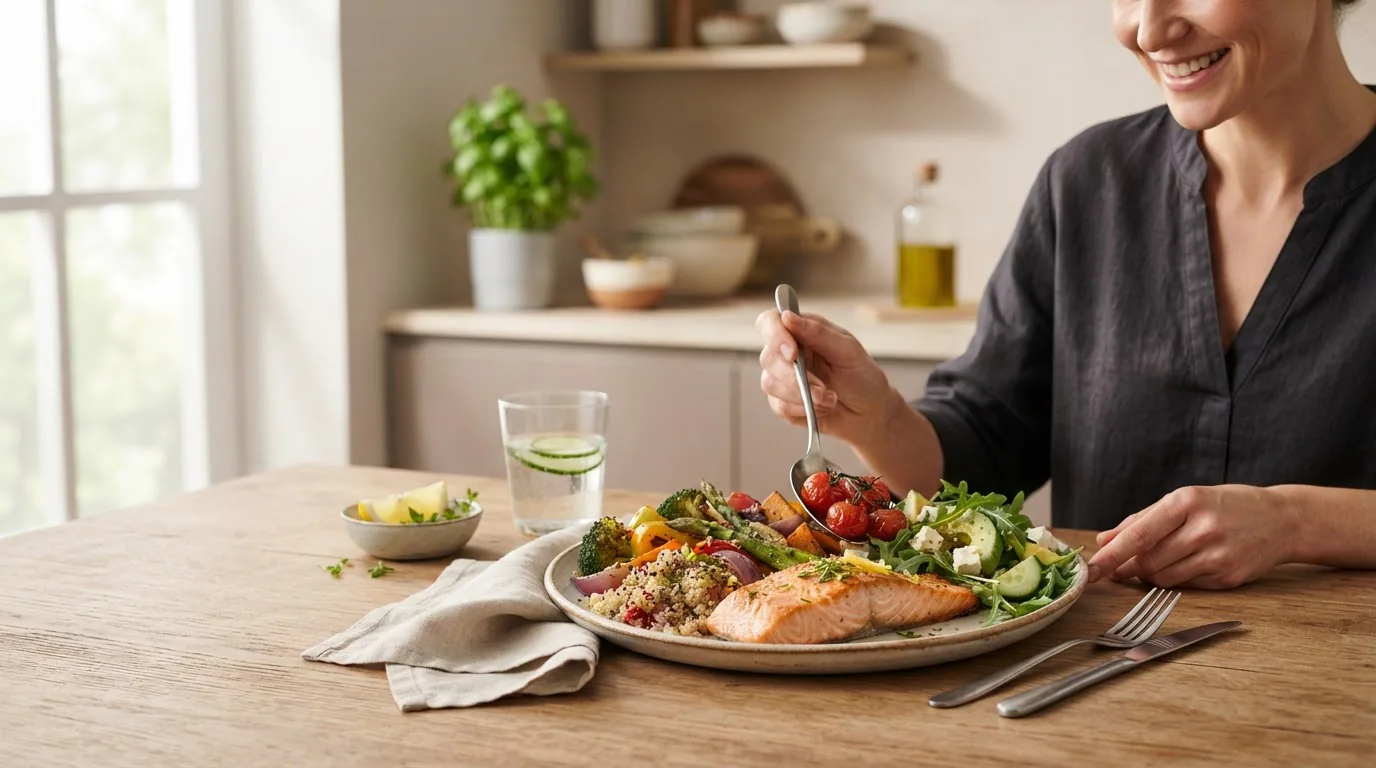
Portion plate for weight loss is a practical visual tool that helps adults reduce calories while keeping meals balanced and nutrient-dense. This guide shows exactly what your plate should look like, the plate requirements to target fat loss, and step-by-step ways to apply the plate method to real meals.
Introduction to Portion Plates for Weight Loss
The portion plate concept is a simple, visual approach to portion control: divide a standard dinner plate into zones for vegetables, proteins, carbohydrates, and fats so each meal is balanced and lower in energy density. When used consistently, portion plates can create a sustainable calorie deficit without formal calorie counting, because they prioritize nutrient-dense foods and portion size control.
Why portion control matters for weight loss: sustained weight loss requires a negative energy balance — burning more calories than you consume. Portion plates reduce unintentional overeating by giving you a default structure for each meal, reducing decision fatigue and helping you choose higher-volume, lower-calorie foods (more vegetables) and appropriate protein and healthy fats.
How this article is different: many resources describe MyPlate-style ratios or single-meal portion guides. This guide emphasizes using a portion plate specifically for fat loss in adults — with explicit plate requirements, macronutrient considerations, and practical meal examples tailored for weight-loss goals. We’ll also contrast widely used healthy eating plates like ADA MyPlate and the standard plate method so you can pick the version that best supports fat loss.
diet definition guide and requirements
Who this is for: adults aiming to lose body fat while preserving muscle and nutrition quality. If you have specific medical needs, please consult a healthcare professional before making major diet changes; portion plates are guidance, not individualized medical prescriptions.
Transition: Now that you understand the purpose of the portion plate, the next section shows exactly what your plate should look like for weight loss and the specific plate requirements to follow.
What the Portion Plate Should Look Like for Weight Loss
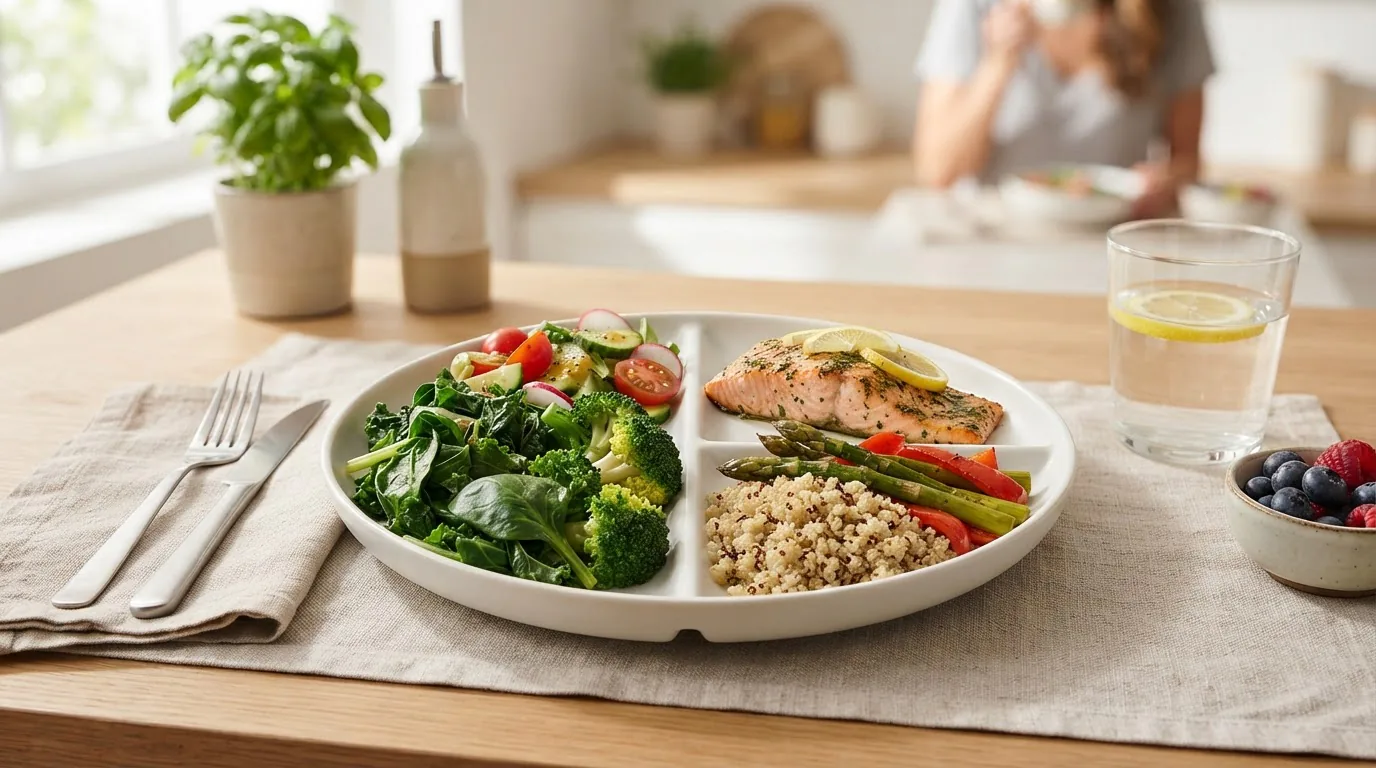
To design a balanced plate for weight loss, visualize a standard 9–10 inch plate as a pie chart divided into clear zones. Below are precise proportions and illustrative examples to use at each meal. These proportions prioritize vegetables and lean protein, moderate whole grains, and controlled healthy fats.
-
50% Vegetables and Salad (Non-starchy)
Plate requirement: Half your plate should be non-starchy vegetables and salad — raw or cooked. These provide fiber, volume, vitamins, and minerals with low calorie cost. Examples: leafy greens, broccoli, cauliflower, peppers, zucchini, tomatoes, cucumbers, green beans, and mixed salad. Aim for 2–3 cups of vegetables per meal depending on appetite.
-
25% Lean Protein
Plate requirement: One quarter of the plate should be lean protein to promote satiety and preserve muscle mass. Examples: skinless poultry, fish, lean beef, eggs, low-fat dairy, tofu, tempeh, legumes (when combined with vegetables), or a measured serving of nuts/seeds. Typical portion size: 3–5 ounces cooked (about the size of a deck of cards) for most adults; adjust for body size and activity level.
-
20–25% Whole Grains/Starchy Vegetables
Plate requirement: Keep starchy carbohydrates to about one-fifth to one-quarter of the plate. Choose whole grains and fiber-rich starchy vegetables that support fullness and stable blood sugar: brown rice, quinoa, farro, whole-wheat pasta, sweet potato, corn, or legumes. A practical portion is 1/2 to 1 cup cooked, or a fist-sized serving.
-
5–10% Healthy Fats (Added)
Plate requirement: Use modest amounts of fat for flavor and nutrient absorption. Examples: 1 tablespoon olive oil, 1/4 avocado, a sprinkle of nuts, seeds, or 1–2 teaspoons of nut butter. Fat is calorie-dense; keep to small portions to avoid exceeding energy targets.
Visual rules and plate portion guide:
- Use a standard plate (9–10 inch) — large plates encourage larger portions.
- Make vegetables the largest section: they should occupy visually half the plate.
- Protein should be roughly the size and thickness of your palm (3–5 oz cooked).
- Carbs should fit comfortably in the remaining quarter — think a cupped hand or fist for cooked grains/starches.
- Limit visible fats to a small spoonful; include healthy fats within protein or on vegetables.
Illustrative examples (for a standard adult meal):
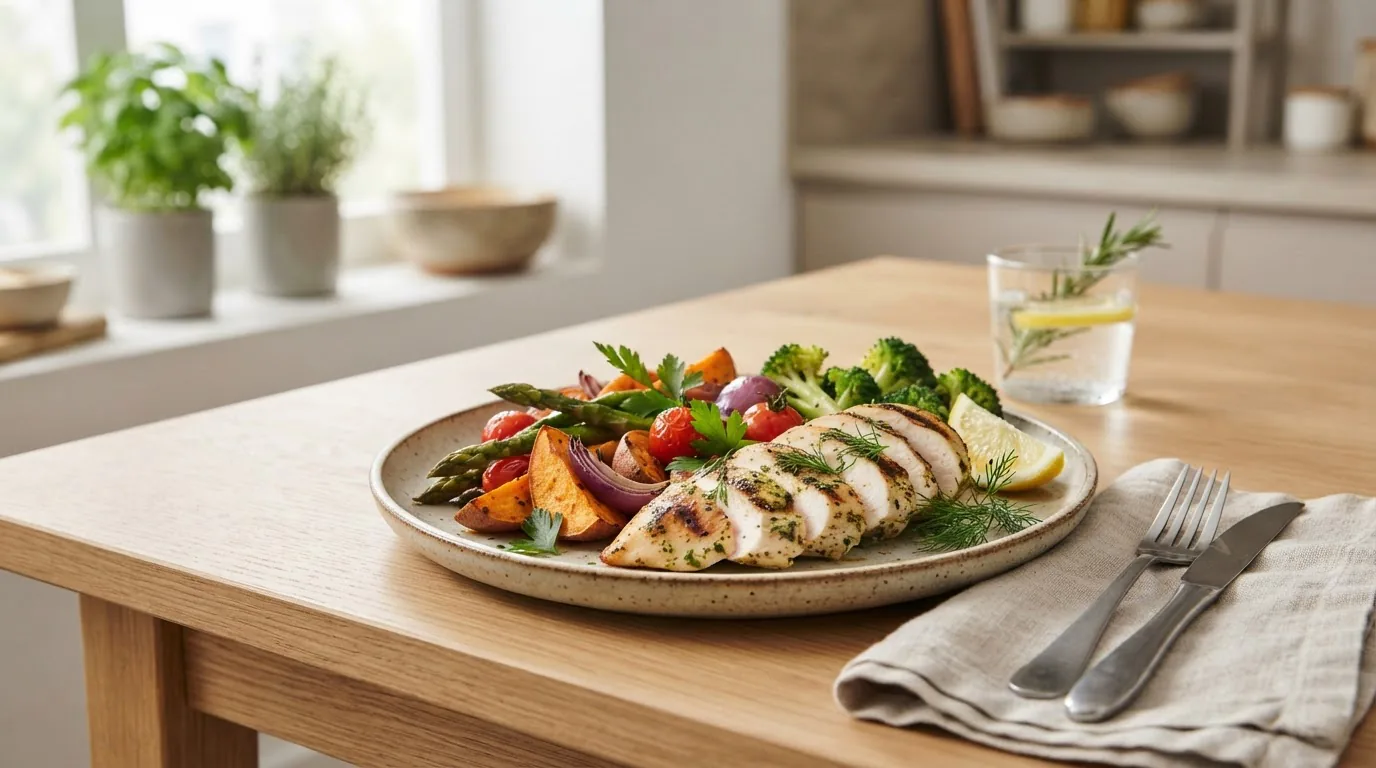
- Chicken, Roasted Veg, Brown Rice — Half plate roasted mixed vegetables (2 cups), quarter plate grilled chicken breast (4 oz), quarter plate brown rice (3/4 cup), 1 tsp olive oil drizzled.
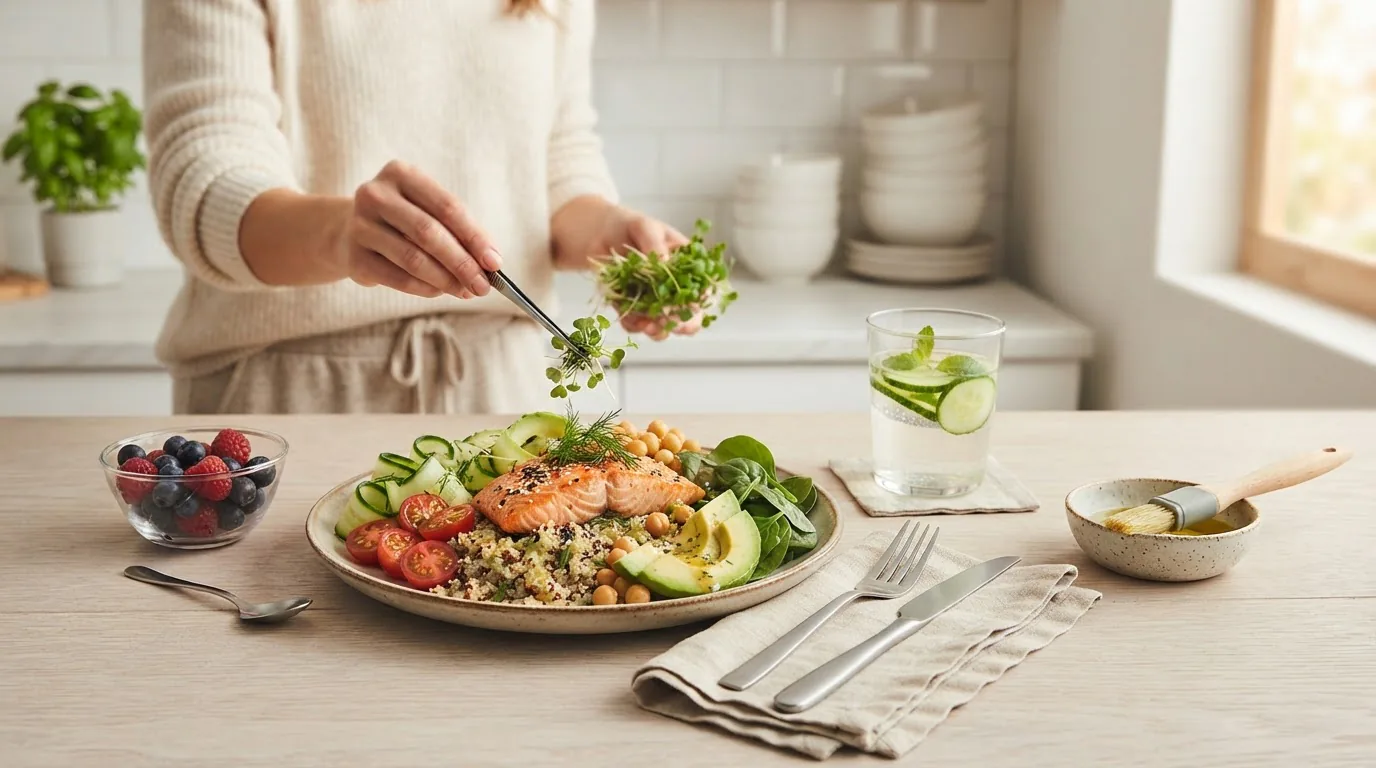
- Salmon Salad Bowl — Half plate mixed greens + colorful veggies (3 cups), quarter plate grilled salmon (4 oz), quarter plate quinoa (1/2 cup), 1/4 avocado sliced.
- Vegetarian Stir-Fry — Half plate stir-fried non-starchy veg (2–3 cups), quarter plate tofu or tempeh (4 oz), quarter plate brown rice or soba (1/2–3/4 cup), 1 tbsp sesame seeds/peanut sauce (small portion).
How to adjust for weight-loss plate requirements:
- If you need a larger calorie deficit, increase vegetables and reduce the grain/starch portion first.
- To preserve muscle on a weight-loss plan, prioritize the protein portion and ensure you meet daily protein targets (see Nutritional Requirements section).
- For higher satiety, add non-starchy vegetables and include a source of fiber at each meal — this helps reduce snacking and total daily calories.
Special note on meal timing and distribution: aim for regular meals and include protein and vegetables in each sitting to stabilize hunger and blood sugar. But portion plates are flexible: a hearty vegetable-based breakfast (omelet with added veggies) or a dinner plate can both follow these proportions.
Transition: With the ideal plate proportions clear, the next section compares the plate method to other healthy-eating plates so you can choose which model best matches your weight-loss goals.
Exploring the Plate Method and Its Variations
| Model | Typical Plate Divisions | Strengths for Weight Loss | When to Use |
|---|---|---|---|
| Standard Plate Method | 50% non-starchy veg, 25% protein, 25% grains/starches | Simple, flexible, emphasizes vegetables — easy to apply without measuring | Everyday weight-loss meals for general adult population |
| USDA MyPlate | Approx. 50% fruits/vegetables combined, 25% protein, 25% grains + dairy separately | Clear public-health messaging and emphasis on variety | Population-level guidance; adapt by increasing vegetables and moderating grains for weight loss |
| ADA Plate Method | Half non-starchy veg and fruit, one quarter carbs, one quarter protein | Built for blood-sugar control; practical for people with diabetes | Adults managing diabetes or glucose-focused weight loss |
| Macronutrient-Focused Plate | Custom %s (e.g., 40% carbs, 30% protein, 30% fat) represented visually | Useful for athletes or those tracking macros | Active adults or those following a macro plan |
The table contrasts common healthy plate approaches. Each model is useful, but for adults primarily focused on fat loss, the standard plate method with a strong emphasis on non-starchy vegetables typically produces the best practical balance between calorie reduction and nutrient adequacy. For authoritative visuals and federal guidance, see the USDA MyPlate resources.
The ADA MyPlate variation emphasizes portions suitable for blood-sugar management and often pairs well with weight-loss objectives for people with prediabetes or diabetes; see the American Diabetes Association for clinical guidance on portioning and carbohydrate distribution: American Diabetes Association.
How to choose between models for weight loss:
- Choose the standard plate method if you want a simple, daily tool emphasizing vegetables and protein.
- Use ADA MyPlate if you have diabetes or significant insulin-resistance concerns — it balances carbs intentionally for blood-sugar control.
- Consider a macronutrient-focused plate if you track macros closely for athletic performance or body-composition goals; pair it with a macro planner.
Practical comparison for adults trying to lose weight: the differences often come down to carbohydrate quantity and precision. The standard plate method is easiest to implement and adapt — increase vegetables and reduce grain portions to intensify calorie deficit without sacrificing nutrition.
Transition: Next, we’ll walk through how to use a portion plate effectively at home — step-by-step actions you can take at each meal and day planning tips that promote fat loss.
How to Use a Portion Plate Effectively for Weight Loss
Using a portion plate effectively requires structure plus simple habits. Follow this step-by-step guide to portion meals, choose foods that support fat loss, manage meal timing, and apply mindful-eating techniques to reduce overeating.
-
Prepare Your Plate Before Eating
Always assemble your plate before you sit down. Put vegetables on first to fill half the plate, then add protein and grains. This prevents double-serving and reduces plate-clearing behavior that leads to overeating.
-
Portion Proteins by Palm Size
Use your palm to estimate cooked protein: 3–5 oz per meal for many adults. Taller or more active adults may need larger portions. Prioritize lean sources and vary protein types across the week for nutrient breadth.
-
Measure Carbs by Fist or Cupped Hand
Cooked grains/starches: a fist or 1/2–1 cup per meal depending on activity. If you need faster weight loss, reduce to 1/2 cup and add extra vegetables to maintain meal volume.
-
Limit Added Fats
Use fats for flavor and satiety but measure them. A tablespoon of olive oil or 1/4 avocado is usually sufficient. Avoid pouring oil or nut butter directly from the jar; measure into a spoon first.
-
Time Your Meals Strategically
Aim for consistent meal timing (e.g., breakfast within an hour of waking, then every 3–5 hours) to prevent extreme hunger and binges. If you prefer intermittent fasting, ensure meals still follow the plate proportions.
-
Snack Strategy
Choose protein- and fiber-rich snacks (Greek yogurt + berries, raw veggies + hummus, small handful of nuts) to sustain fullness between plates. Snacks should be mini-plates in concept: include fiber and protein.
-
Practice Mindful Eating
Eat slowly, chew thoroughly, and pause halfway through your plate — wait 10–15 minutes to gauge satiety before deciding if you need more. Mindful eating reduces habitual second helpings.
-
Use Visual Cues and Tools
If you don’t have a portion plate, use smaller plates, pre-portioned containers, or the hand/fist/palm estimates described. See the “How can I measure food portions without a special portion plate?” FAQ for alternatives.
-
Plan Meals Weekly
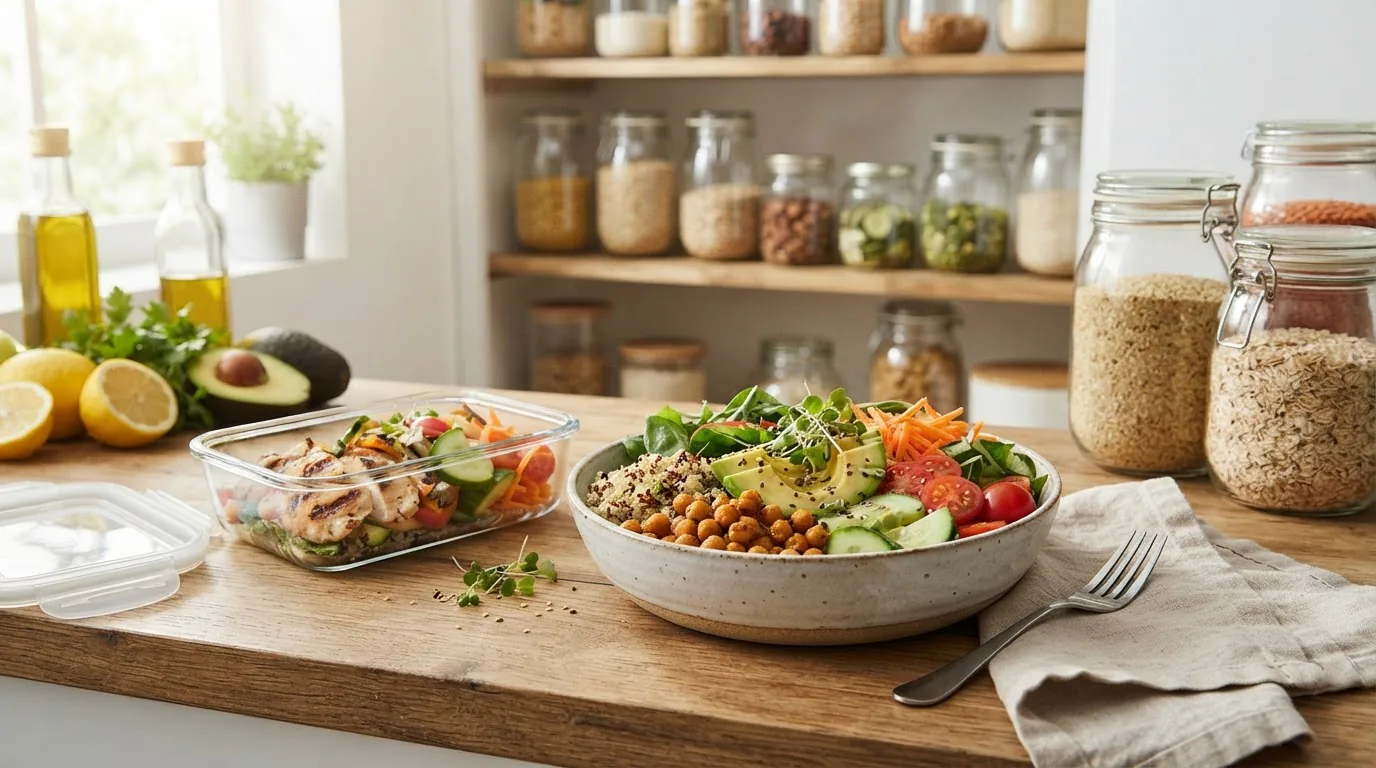
Batch-cook proteins and grains and pre-cut vegetables so assembling a compliant plate takes minutes. Use a worksheet or printable guide to track meals; the healthy diet worksheet guide and printable meal requirements helps with planning.
-
Track Progress, Not Perfection
Use the plate consistently for several weeks and monitor weight trends, energy, and hunger. If weight stalls after 2–4 weeks, reduce carbohydrate portion slightly or increase daily activity. For calorie-based structure, pair the plate with a calorie plan like the 1400 calorie meal plan guide if appropriate.
portion control for weight loss guide and portion requirements
healthy diet worksheet guide and printable meal requirements
Practical daily checklist for plate success:
- Start every meal with vegetables.
- Measure or estimate protein with your palm.
- Keep starch portions modest (1/2–1 cup cooked).
- Measure fats and use sparingly.
- Pause mid-meal to assess fullness.
Transition: Understanding how to build plates is one thing; ensuring nutrient needs while losing weight is another. The next section covers calorie ranges, macronutrient guidance, vitamins and minerals to track while using portion plates.
Nutritional Requirements to Consider When Using Portion Plates
Portion plates simplify meal composition, but you still need to meet daily nutritional requirements for health and sustainable weight loss. The guidance below outlines caloric ranges, macronutrient targets, and micronutrient priorities for adults using portion plates.
Calorie needs overview (high level):
- Average calorie ranges for adults vary by age, sex, body size, and activity. For many adult women, weight-loss calorie targets often fall between 1,200–1,600 kcal/day; for many adult men, between 1,600–2,000 kcal/day. These are generalized ranges; individual needs may differ.
- For structured calorie plans, consult a controlled plan such as the 1400 calorie meal plan guide (example reference) to align portions with energy targets.
- According to a 2024 USDA report, plate-based guidance remains preferable for many adults as it emphasizes nutrient density over strict calorie counting; use calorie targets combined with plate proportions for best results (USDA MyPlate).
Macronutrient ranges for weight loss (practical application):
- Protein: 20–35% of total daily calories (roughly 0.6–1.2 g/lb body weight depending on activity and age). Prioritize lean proteins on your plate to preserve lean mass during weight loss. For evidence-based macro planning, see the macro meal planner guide and macronutrient requirements.
- Carbohydrate: 35–50% of calories for many adults; lower-carb strategies (20–40% carbs) can be effective for some people managing appetite or insulin, but focus on whole-food carbs and fiber.
- Fat: 20–35% of calories, with an emphasis on unsaturated fats (olive oil, nuts, seeds, fatty fish). Because fats are calorie-dense, measure them when using a portion plate to avoid excess energy intake.
Micronutrient and fiber priorities:
- Fiber: Aim for 25–38 g/day for most adults — vegetables, legumes, whole grains, fruits, nuts, and seeds on your plate help meet this.
- Vitamin and mineral focus: ensure adequate iron, calcium, vitamin D, B12 (especially for vegetarians/vegans), and potassium. Use a wide variety of foods and consider a multivitamin if dietary gaps exist; reference the healthy food vitamin chart guide and vitamin requirements for details.
varied diet guide and requirements
consistent carb diet guide and requirements
energetic diet plan guide and energy food requirements
Special considerations for adults:
- Older adults (50+) often need higher protein per pound to preserve muscle mass; prioritize lean protein on each portion plate.
- Individuals with medical conditions (e.g., kidney disease) should adapt protein targets with a clinician’s guidance.
- Vegetarian and vegan adults can meet protein needs with legumes, soy, seitan, nuts, seeds, and dairy or fortified products — ensure B12 and iron monitoring.
Tools & resources: for daily vitamin targets and more granular macronutrient planning, consult the balanced nutrition guide and meal requirements for health pillar page.
Evidence and official guidance: The plate approach aligns with public-health guidance from the USDA and clinical recommendations used by diabetes organizations. For population-level nutrient recommendations and plate visuals, see USDA MyPlate and for clinical portioning adaptations, see the American Diabetes Association. For general obesity and chronic disease prevention statistics related to portion size and caloric intake, refer to the CDC obesity resources.
Transition: With macronutrient and micronutrient priorities in mind, the next section shows concrete sample plates for breakfast, lunch, and dinner that follow the weight-loss plate requirements.
Examples of Balanced Portion Plates for Weight Loss
Below are actionable sample plates for different meals, including estimated portion sizes and alternatives for common dietary preferences. Use these as templates and adjust portions to your calorie target and hunger.
balanced diet images guide and printable nutrition charts
Breakfast Examples
- Vegetable Omelet Plate — Half plate sautéed spinach, mushrooms, and tomatoes (1.5–2 cups); quarter plate 2–3 eggs or 4 oz egg whites with cheese optional; quarter plate roasted sweet potato or steel-cut oats (1/2 cup cooked). Optional 1/4 avocado.
- Greek Yogurt Bowl — Half plate mixed berries + sliced cucumber/greens (1.5–2 cups); quarter plate 6 oz plain Greek yogurt (protein); quarter plate 1/2 cup granola or 1/2 cup cooked oats; 1 tbsp chopped nuts.
Lunch Examples
- Chicken Grain Bowl — Half plate mixed greens and roasted veggies (2–3 cups); quarter plate grilled chicken (4 oz); quarter plate quinoa (1/2 cup cooked); 1 tbsp olive-based dressing.
- Bean & Veggie Salad — Half plate big salad with mixed greens, radish, peppers (3 cups); quarter plate mixed beans (1/2 cup); quarter plate whole-grain pita or brown rice (1/2 cup); 1 tbsp tahini dressing.
Dinner Examples
- Salmon & Veggies — Half plate steamed broccoli + carrots (2 cups); quarter plate baked salmon (4 oz); quarter plate wild rice (1/2 cup); 1 tsp olive oil and lemon.
- Stir-Fry — Half plate mixed non-starchy vegetables (2–3 cups); quarter plate tofu or chicken (4 oz); quarter plate brown rice or whole-wheat noodles (1/2 cup cooked); 1 tbsp low-sodium sauce.
Dietary Preference Alternatives
- Vegetarian: Replace animal protein with tofu/tempeh, lentils, or high-protein dairy; ensure B12 and adequate iron.
- Low-carb: Reduce grain portion to 1/4 or remove; increase non-starchy vegetables and protein to maintain satiety.
- Mediterranean-style: Focus on olive oil, fish, legumes, whole grains, and generous vegetables; keep added fats measured.
Sample portion sizes summary (visual cues):
- Vegetables: two cupped hands (2–3 cups cooked or raw depending on density)
- Protein: one palm (3–5 oz cooked)
- Starches/Grains: one fist (1/2–1 cup cooked)
- Fats: thumb size or 1 tbsp
Transition: Real-world use of portion plates can run into challenges. The next section addresses common problems and practical troubleshooting strategies.
Common Challenges and Troubleshooting Portion Plate Usage
Using portion plates can be straightforward, but users commonly face behavioral and practical hurdles. Below are the most frequent issues and clear fixes.
Q: I keep going back for seconds — how do I stop?
Tip: Wait 10–15 minutes after finishing your plate before deciding on seconds. Fill up initially with vegetables, and drink a glass of water during the pause. Mindful pauses cut impulse seconds.
Q: I don’t have a portion plate — what can I do?
Use a smaller plate (8–9 inch), or apply hand/fist/palm portions to any plate. You can also pre-portion food into containers or use measuring cups until estimates become intuitive.
Q: Social eating makes it hard to follow my plate plan.
Choose vegetables and protein first when serving, and avoid “clean your plate” pressure. Bring a healthy dish to share, and focus on conversation rather than finishing every item on your plate.
Q: I’m still hungry on this plate — what then?
Increase non-starchy vegetables and protein slightly, and check hydration and sleep. If still hungry consistently, review total daily calories or distribute calories across more frequent small meals.
Other common mistakes
- Overestimating “healthy” fats — they’re calorie dense and easy to overserve.
- Relying on processed low-calorie “diet” foods rather than whole nutrient-dense options.
- Ignoring protein needs — inadequate protein lowers satiety and risks muscle loss.
- Using oversized plates, which subconsciously increase portions.
Practical tools for troubleshooting:
- Use kitchen scales briefly to calibrate palm/fist estimates.
- Keep pre-portioned snacks to avoid impulse high-calorie choices.
- Plan meals with a worksheet or weekly menu to reduce last-minute poor choices.
Transition: To close, here’s an FAQ section that answers common short questions about portion plates for weight loss.
Frequently Asked Questions
What is a portion plate for weight loss?
A portion plate for weight loss is a visual tool dividing a standard plate into sections—typically half non-starchy vegetables, one quarter lean protein, and one quarter whole grains/starches—plus a small measured portion of healthy fats to reduce calories while supporting nutrition.
How does a portion plate differ from the traditional MyPlate?
The portion plate used for weight loss emphasizes a larger vegetable section and often reduces grain portions compared with USDA MyPlate; MyPlate is population guidance, while the weight-loss plate intentionally shifts proportions to lower energy density.
What does a healthy plate look like for weight loss?
A healthy plate for weight loss typically shows 50% non-starchy vegetables, 25% lean protein (3–5 oz cooked), 20–25% whole grains or starchy vegetables (about 1/2–1 cup cooked), and a small measured portion of healthy fat.
How can I measure food portions without a special portion plate?
Use simple hand-based estimates: palm = protein (3–5 oz), fist = carbohydrates (1/2–1 cup cooked), two cupped hands = vegetables (2–3 cups), thumb = fats (1 tbsp). Alternatively, use smaller plates or pre-portioned containers.
How long does it take to see results using portion plates for weight loss?
Weight loss timelines vary, but consistent plate use plus a caloric deficit typically shows measurable changes in 2–6 weeks. Track bodyweight, body composition, and energy levels to assess progress rather than expecting immediate results.
What are the common mistakes when using a portion plate?
Common mistakes include overserving calorie-dense fats, using oversized plates, neglecting protein needs, and not filling the plate with enough vegetables, which reduces satiety and stalls weight loss.
Are portion plates safe for people with dietary restrictions or diabetes?
Portion plates can be adapted for most dietary restrictions and diabetes; the ADA MyPlate adaptation is useful for blood-sugar control. Consult a healthcare provider for personalized adjustments if you have medical conditions.
How can I make my own healthy portion plate at home?
Create your own by using a standard 9–10 inch plate and visually dividing it: half for vegetables, one quarter for protein, one quarter for grains/starches, and a small measured fat. Use hand estimates until measuring tools are available.