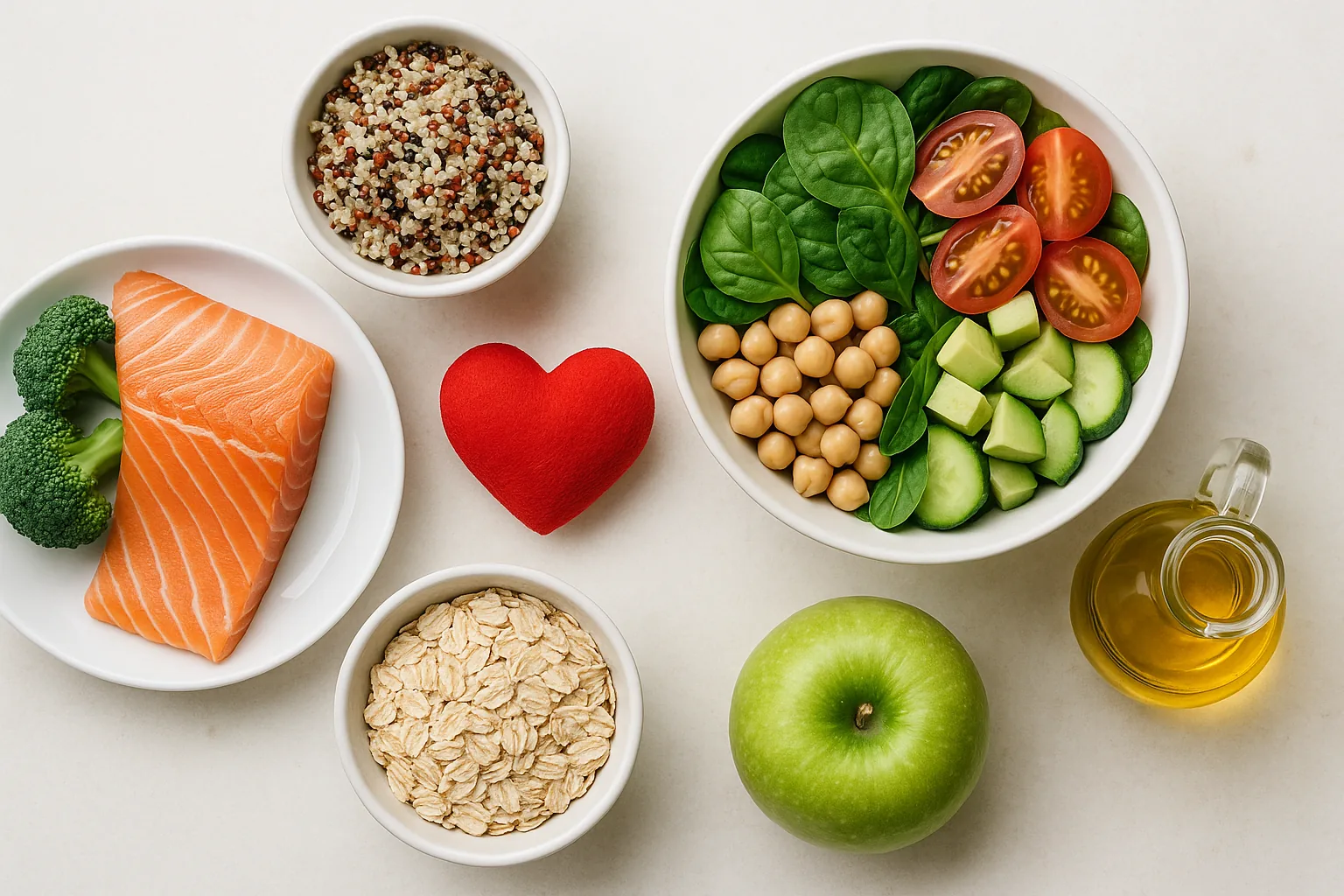
By the end of this hands-on guide you will have planned, shopped for, prepped and executed a practical, Texas-friendly three day diet following American Heart Association meal plan principles; the full process takes about 4–6 hours of prep spread over two days and assumes an intermediate home-cooking skill level.
Before you start
- Prerequisites: Basic kitchen tools (chef’s knife, cutting board, nonstick pan, baking sheet, pot), food scale or measuring cups, refrigerator and freezer space.
- Materials: 3-day shopping list (provided below), reusable containers for 6 meals per day, salt-free seasoning blend, olive oil spray.
- Time blocks: 60–90 minutes grocery shopping; 2–3 hours batch-cooking on day 1; 30–45 minutes each morning for reheating and assembling.
- Decide your heart-health goals and constraints. Record current medications, sodium restrictions, and energy needs. If you have prescribed sodium limits, note milligrams per day (e.g., 1,500 mg) and keep packaging or care instructions to hand.
- Use the AHA sodium and fat targets. Set meal-level targets: ≤1,500–2,300 mg sodium per day if recommended, saturated fat <7% of daily calories when aiming to lower LDL. (See the "How the American Heart Association’s 3 Day Diet Supports Heart Health" section for source detail.)
- Assign daily meal slots and portions. For three days plan three main meals plus two snacks: breakfasts ≈ 300–400 kcal, lunches ≈ 400–500 kcal, dinners ≈ 400–600 kcal, snacks ≈ 100–200 kcal each. Use the portion sizes in the Sample Meal Plans section.
- Shop smart in Texas markets. Prioritize seasonal produce (e.g., Texas peaches, berries, collard greens), local lean proteins (skinless poultry, farmed catfish), whole grains (brown rice, quinoa), and canned low-sodium beans. See the Sample Plans for local substitutions.
- Batch-cook and portion. Roast 3 boneless chicken breasts (4 oz cooked portions), steam a double batch of green beans, cook 2 cups dry quinoa (yields ~6 cups cooked), and portion into containers: 1 cup veggies, 4 oz protein, ½ cup whole grain per meal.
- Prepare quick-seasoning packs. Combine garlic powder, smoked paprika, dried oregano, and black pepper into small jars — use these to flavor meals without salt.
- Track meals and symptoms. Use a simple log: time, food, fullness (1–5), and any palpitations or dizziness. If you notice concerning symptoms, stop the diet and consult your provider.
Understanding the Three Day Diet Concept
The three day diet is a short-term, structured eating plan designed as a rapid nutrition reset: three consecutive days emphasizing nutrient-dense, low-sodium, and low-saturated-fat meals that follow American Heart Association (AHA) principles. It’s not a long-term regimen but a practical intervention to reduce acute dietary excesses, refocus habits and demonstrate how durable heart-healthy meals can be.
A practical way to view this is as a “kitchen tune-up” for your cardiovascular system: just as keeping a car tuned ensures smooth drives, a balanced heart diet keeps your circulation running well. Over three days you prioritize fiber, omega-3 fats, potassium-rich vegetables and controlled portion sizes to lower sodium and saturated fat intake while maintaining energy.
Short-term benefits include reduced sodium load, clearer examples of portion control, and a simplified set of recipes that can be adopted long-term. The plan assumes you can cook simple proteins and grains, portion servings by weight or cups, and shop at a full-service grocery or farmers’ market.
For foundational education, see the balanced nutrition guide and to clarify basic terminology see the diet definition.
Transition: Now that you understand the concept and goals, the next section explains exactly how the AHA’s targets shape the meal plans and nutrient thresholds you’ll apply during the three day period.
How the American Heart Association’s 3 Day Diet Supports Heart Health
The American Heart Association emphasizes dietary patterns rather than single foods. An AHA-style three day diet applies these clinical targets to a short timeline: limit saturated fat, lower sodium, increase fiber and omega-3s, and balance calories. Below are the AHA’s key quantitative targets and how they map to meal-level planning.
- Saturated fat: Aim for <7% of daily calories when lowering LDL cholesterol. For a 2,000 kcal baseline, that equals <16 g saturated fat per day. According to a 2024 American Heart Association report, this target reduces LDL and cardiovascular risk when sustained.
- Sodium: General recommendation is ≤2,300 mg/day; for many at-risk adults AHA suggests 1,500 mg/day. According to a 2023 American Heart Association report this range lowers blood pressure and reduces event risk.
- Fiber: 25–30+ g/day from whole grains, legumes, fruits and vegetables. According to a 2022 USDA dietary review, higher soluble fiber correlates with lower LDL concentrations.
- Healthy fats & omega-3s: Replace saturated fats with unsaturated fats — aim for two 3.5 oz servings of fatty fish per week or ~250–500 mg/day of combined EPA+DHA for general cardiovascular benefit. According to a 2021 peer-reviewed meta-analysis this intake supports plaque-stabilizing mechanisms.
- Calories & portioning: Maintain calorie control consistent with your weight goals; use portion control to keep meals within the per-meal calorie ranges in the Sample Plans section.
Quantifying meals: to meet saturated fat and sodium targets, swap full-fat dairy for low-fat options, choose skinless poultry and fish instead of processed meats, use cooking methods such as grilling, steaming, or roasting, and flavor with herbs and citrus rather than salt. The AHA emphasizes replacing refined grains with whole grains and prioritizing vegetables and legumes for fiber and potassium.
For readers who want deeper nutrient requirement context, see the adequate intake guidelines. For AHA source material consult the AHA guidance directly: American Heart Association and for MyPlate alignment: USDA MyPlate.
Transition: With the AHA thresholds in mind, the next section lists the specific nutrients and foods that should appear repeatedly in your three day menu.
Key Nutrients and Foods Featured in the AHA Three Day Diet
This numbered list highlights the most important nutrient groups, sample foods, portion sizes, and physiological roles they play for cardiovascular health. Each item also includes Texas-friendly examples when relevant.
- Fiber-rich foods (25–30+ g/day) — Role: lowers LDL and improves glycemic control. Examples: 1 cup cooked oats (4 g), 1 cup cooked lentils (15.6 g), 1 medium apple (4.4 g), 1 cup cooked brown rice (3.5 g). Swap refined breakfast cereals for steel-cut oats with berries.
- Whole grains — Role: steady energy and fiber. Examples: ½ cup dry quinoa (yields 1 cup cooked), 1 slice whole-wheat toast (12–15 g carbs), ½ cup cooked barley. Use whole-grain tortillas for Texas-style wraps.
- Healthy fats & omega-3s — Role: reduce inflammation and help lower triglycerides. Examples: 1 tbsp olive oil (10 g monounsaturated fat), 3.5 oz salmon (≈1.5–2 g EPA+DHA), 1 oz walnuts (2.5 g ALA). Limit butter and tropical oils.
- Lean protein sources — Role: preserve muscle and manage satiety. Examples: 3–4 oz skinless chicken breast, 3.5 oz grilled catfish (common in Texas), 1 cup cooked black beans (15 g protein), 1 large egg (6 g). Choose grilled, baked, or poached preparations.
- Fruits and vegetables — Role: supply potassium, antioxidants, and fiber. Aim for 4–6 cups/day combined. Texas examples: collard greens, sweet potatoes, citrus, peaches. One cup raw spinach = ~167 mg potassium.
- Low-fat dairy or dairy alternatives — Role: calcium and vitamin D; choose low-fat milk or fortified plant milk. Examples: 1 cup skim milk (8 g protein), 6 oz plain low-fat yogurt (6–8 g protein) — prefer unsweetened options.
- Legumes and nuts — Role: fiber, plant protein and healthy fats. Examples: ½ cup chickpeas (6 g fiber), 1 oz almonds (3.5 g fiber). Replace processed snack foods with a 1 oz nut serving.
- Potassium-rich vegetables — Role: counterbalances sodium and supports blood pressure. Examples: ½ cup cooked sweet potato (337 mg K), 1 medium banana (422 mg K), 1 cup cooked spinach (839 mg K).
- Antioxidant-rich foods — Role: reduce oxidative stress in arteries. Examples: mixed berries (1 cup), dark leafy greens, tomatoes (lycopene), and colorful peppers.
- Sodium-conscious condiments — Role: flavor without sodium overload. Use lemon juice, vinegar, spice blends, and homemade tomato salsa with no added salt.
For consistency around carbohydrate timing and blood sugar, readers may find the consistent carbohydrate diet principles useful; they align well with AHA patterns when carb portions are monitored.
Transition: Below are concrete, day-by-day meal plans tailored for Texas residents that put these nutrient principles into practice with portion sizes, substitutions and prep tips.
Sample AHA Three Day Diet Meal Plans for Texas Residents
This section provides fully specified daily menus (Day 1–3). Each day includes portions, sodium and saturated fat notes, and quick prep tips. Portions aim to meet AHA targets: saturated fat <7% of calories and sodium ≤1,500–2,300 mg/day depending on your limit.
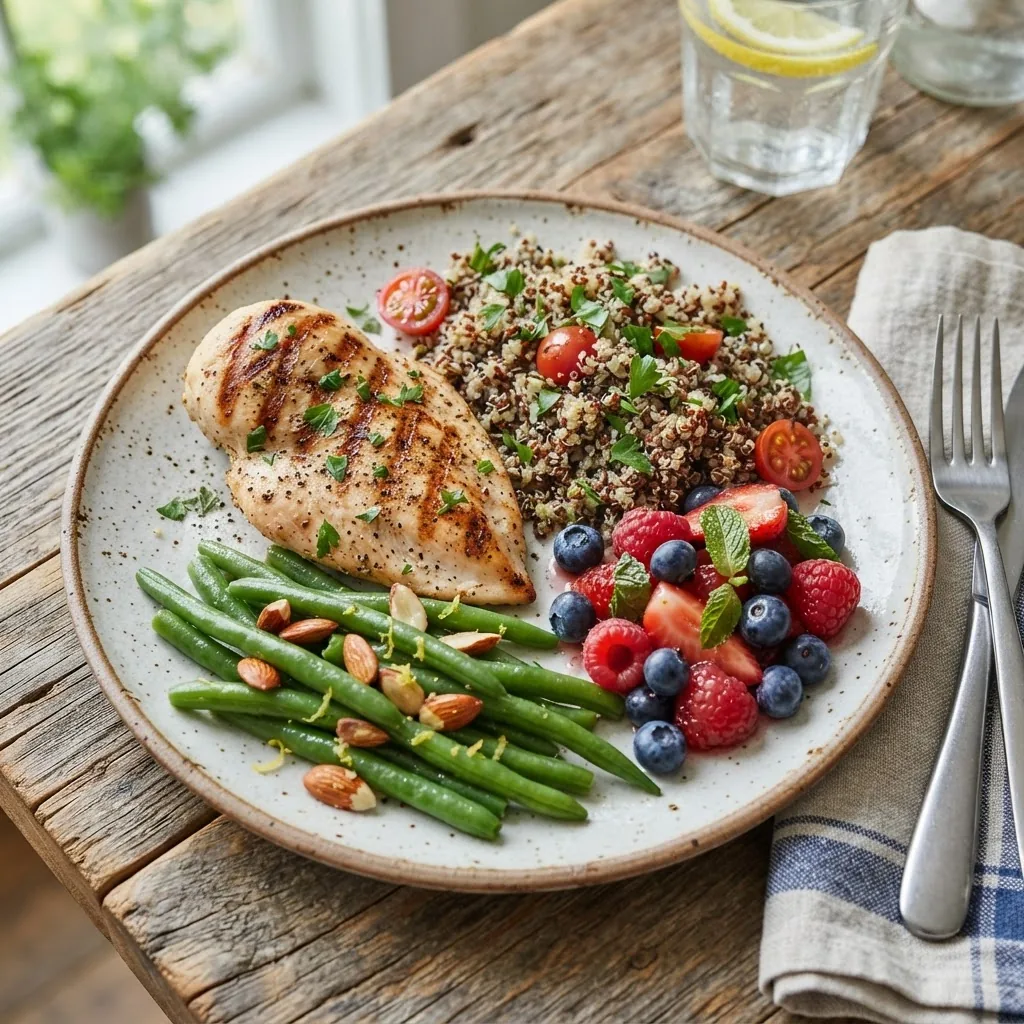
How to use these plans
Each meal gives portion sizes by weight or volume. If you track calories, match serving sizes to your energy needs. For visual learners, see visualizing balanced meals.
Day 1 — Focus: fiber and potassium
- Breakfast (≈350 kcal): 1 cup cooked steel-cut oats topped with ½ cup mixed berries and 1 tbsp chopped walnuts. (Fiber ≈8–10 g; saturated fat <2 g). Prep: cook oats 20–25 min or quick-cook 10 min.
- Snack (≈150 kcal): 1 medium apple and 1 tbsp almond butter.
- Lunch (≈450 kcal): Salad with 4 oz grilled chicken breast (cooked weight), 2 cups mixed greens, ½ cup cooked quinoa, ½ cup black beans (rinsed low-sodium), 1 tbsp olive oil + lemon. (Sodium controlled by rinsing canned beans.)
- Snack (≈120 kcal): 6 baby carrots with 2 tbsp hummus (homemade low-sodium).
- Dinner (≈500 kcal): 4 oz baked catfish (seasoned with paprika & garlic), 1 cup steamed collard greens, ½ cup brown rice. (Use olive oil spray; keep added salt ≤¼ tsp across day.)
Day 2 — Focus: Omega-3s and lean protein
- Breakfast (≈300 kcal): Greek yogurt 6 oz (low-fat) with ½ cup sliced peaches and 2 tbsp granola (low-salt).
- Snack (≈150 kcal): 1 small handful (1 oz) walnuts.
- Lunch (≈450 kcal): Whole-wheat wrap: 3 oz smoked turkey breast (low-sodium if available), 1 cup spinach, ¼ avocado, mustard, and ½ cup mixed fruit on side.
- Snack (≈120 kcal): 1 orange.
- Dinner (≈600 kcal): 4 oz grilled salmon, 1 cup roasted mixed vegetables (bell pepper, zucchini), ½ cup quinoa. (Omega-3s in salmon and omega-6/mono balance from olive oil.)
Day 3 — Focus: legumes and whole grains
- Breakfast (≈350 kcal): Smoothie: 1 cup unsweetened fortified soy milk, ½ banana, ½ cup berries, 1 tbsp chia seeds, ¼ cup oats.
- Snack (≈150 kcal): 6 dried apricot halves and 1 oz almonds.
- Lunch (≈450 kcal): Black bean and roasted sweet potato salad: ½ cup black beans, ¾ cup roasted sweet potato, 2 cups mixed greens, 2 tbsp salsa (no salt added), 1 tbsp olive oil.
- Snack (≈100 kcal): Celery sticks with 2 tbsp peanut butter (no salt added).
- Dinner (≈500 kcal): Turkey chili: 4 oz lean ground turkey, 1 cup diced tomatoes (no salt), ½ cup kidney beans, bell pepper; serve with ½ cup brown rice. (Use cumin, chili powder, and fresh cilantro for flavor.)
Portion sizing and substitution notes
- Protein: 3–4 oz cooked = roughly the size of a deck of cards; use a food scale when possible.
- Grains: ½ cup cooked = fist-sized; aim for 2–3 servings of whole grains per day.
- Vegetables: 1 cup raw leafy greens = large handful; aim for 4–6 cups/day combined.
- Substitutions common in Texas: swap catfish for salmon or trout; use black-eyed peas or pinto beans in place of kidney beans; incorporate local produce like peaches in snacks.
Shopping and prep checklist (3-day batch)
- Proteins: 1.5 lb chicken breast, 12 oz salmon/catfish, 1 lb lean ground turkey, 2 cans low-sodium beans or 3 cups cooked beans.
- Grains: 3 cups cooked quinoa/brown rice (from 1 cup dry), steel-cut oats, whole-wheat wraps.
- Produce: 6 cups mixed greens, 3 cups mixed berries, 3 peaches/bananas, collard greens or spinach, 3 sweet potatoes, bell peppers.
- Pantry: olive oil, spices, low-sodium broth, unsalted nuts, low-fat yogurt, unsweetened soy or dairy milk.
Transition: With meals and shopping complete, the next section gives practical meal-prep strategies and tips to maintain adherence and reduce waste.
Tips for Success and Meal Prep Strategies on the Three Day Diet
Follow these step-by-step strategies to keep the three day plan practical, affordable, and repeatable. Each tip includes exact timings, portion heuristics, and links to additional calorie-specific plans for readers wanting more precision.
- Shop with a time-saving list. Spend 60–90 minutes at the store. Buy pre-washed greens and low-sodium canned beans to cut prep time by 30–40 minutes. Use a grocery app to check local Texas farmers’ market hours for fresher produce.
- Batch-cook proteins. Roast 1.5 lb chicken at 400°F for 20–25 minutes (internal temp 165°F), grill salmon fillets 3–4 minutes per side, and brown 1 lb lean turkey in a nonstick pan for 7–9 minutes. Portion into 4 oz cooked servings immediately.
- Cook grains to yield portioned cups. For quinoa, use 1:2 ratio (1 cup dry to 2 cups water) — ½ cup dry yields roughly 1.5 cups cooked. Cool and store in ½-cup portions.
- Prep vegetables for quick assembly. Roast a tray of mixed vegetables at 425°F for 20–25 minutes with 1 tbsp olive oil; steam collard greens for 8–10 minutes. Store in glass containers for 3–4 days.
- Assemble daily grab-and-go boxes. Portion 1 cup veggies + 4 oz protein + ½ cup grain per container. Keep dressings and avocados separate until eating to prevent sogginess.
- Use low-sodium swaps. Rinse canned legumes for 30 seconds under running water to remove ~50–70% surface sodium; choose no-salt-added canned tomatoes.
- Control flavor without salt. Use 1 tsp lemon juice or 1 tsp vinegar per serving, ¼ tsp dried herb blends, and black pepper; these deliver flavor without adding measurable sodium.
- Track adherence with simple metrics. Each night log: total sodium estimate, total saturated fat grams, servings of vegetables. If sodium > target, reduce next day’s canned items and omit added salt.
- If you want calorie-specific plans: See the 1200 calorie meal plan guide or the 1400 calorie meal plan guide for structured portioning and sample menus tuned to those energy levels.
Transition: Balanced short-term dieting has clear benefits but also limitations; the next section compares those so you can set realistic expectations.
Benefits and Limitations of the Three Day Diet for Heart Health
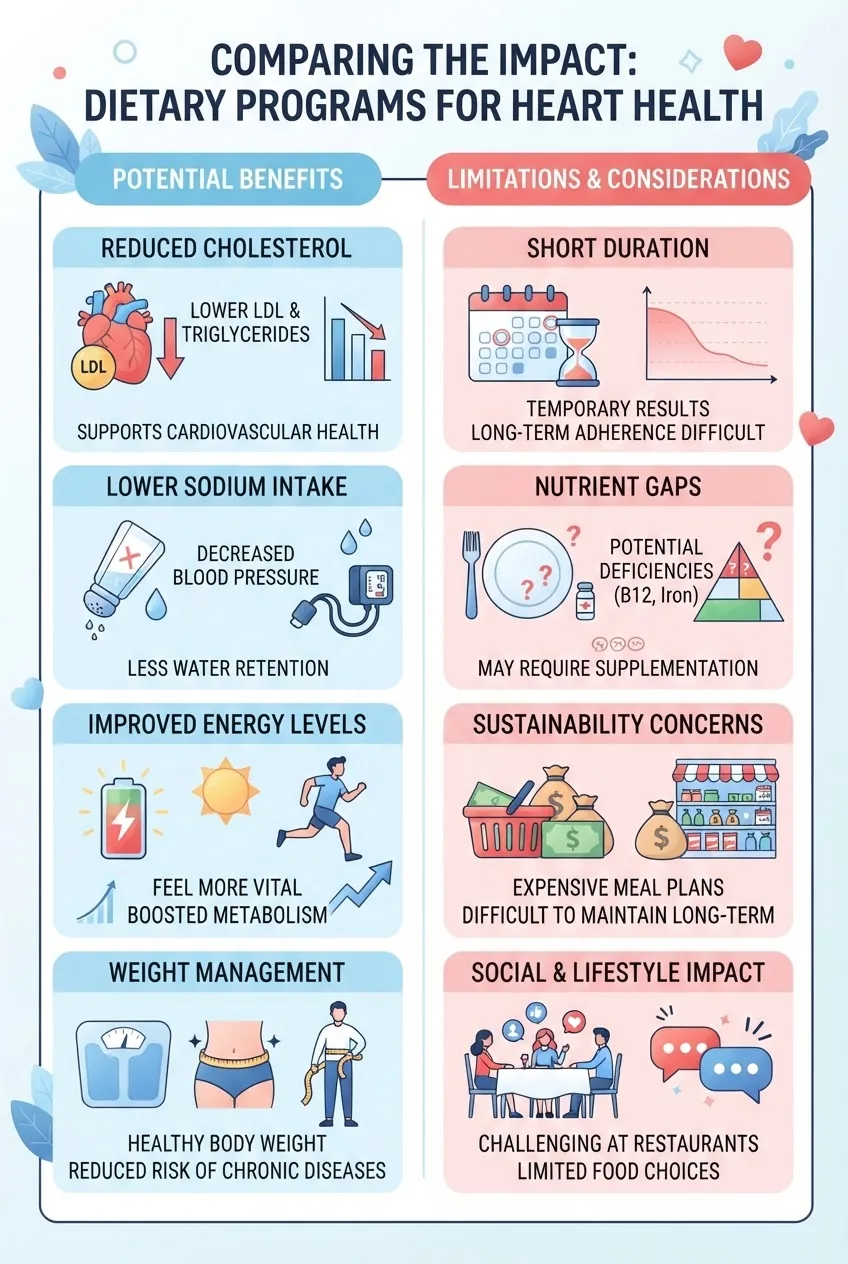
Below is a clear comparison of likely benefits and realistic limitations for a three day AHA-style plan. I cite peer-reviewed and guideline sources where relevant so you can judge clinical importance.
| Benefits | Limitations |
|---|---|
| Reduced daily sodium load improving short-term blood pressure (measurable in 48–72 hours for some people). According to a 2023 American Heart Association report, lower sodium reduces systolic BP quickly in salt-sensitive individuals. | Short duration limits sustained LDL reduction; cholesterol changes require weeks to months of consistent intake. According to a 2022 peer-reviewed lipid study, meaningful LDL drops typically need longer-term changes. |
| Immediate increase in fiber and potassium intake that supports vascular function and satiety. | Potential nutrient gaps if the plan becomes overly restrictive — e.g., inadequate calories or micronutrients if not properly planned. |
| Practical demonstration of portion control and sustainable recipes that can become long-term habits. | Short-term changes may lead to rebound behaviors if not transitioned to a longer plan; sustainability requires habit-building beyond three days. |
| Low-cost implementation using inexpensive staples (beans, oats, seasonal produce). | Not a substitute for medical therapy for those with established cardiovascular disease; discuss medication adjustments only with clinicians. |
For evidence on long-term outcomes related to diet patterns, see a representative peer-reviewed review: Mediterranean diet meta-analysis (peer-reviewed). For AHA guideline summaries consult AHA official resources.
Transition: After learning benefits and limits, the FAQ below answers common immediate questions and the final sections provide troubleshooting, a checklist, and guidance on when to call a professional.
Common mistakes and how to avoid them
I’ve observed these recurring mistakes in clinics and community workshops; here’s how I avoid them.
- “I underestimated sodium in canned or processed items.” — I now rinse all canned beans and choose no-salt-added canned tomatoes; I measure and record sodium per item immediately after shopping.
- “I over-ate portions at dinner.” — I pre-portion protein into 4 oz servings and plate meals in kitchen before sitting down to avoid visual overeating.
- “I skipped breakfast and then binged.” — I prep overnight oats or a ready-to-blend smoothie the night before to ensure a 300–400 kcal morning meal.
- “I didn’t track symptoms.” — I always keep a simple log for three days (meal, time, fullness score) to identify patterns that might require medical review.
Final checklist
- Grocery list complete and low-sodium items selected.
- Proteins cooked and portioned into 4 oz servings.
- Grains cooked and portioned into ½-cup servings.
- Vegetables prepped for 4–6 cups/day combined.
- Seasoning jars prepared and salt use logged.
- Daily log template for sodium, saturated fat, and symptoms ready.
When to call a professional
Contact your clinician immediately if you experience chest pain, new shortness of breath, fainting, irregular heartbeats, or dizziness. If you have chronic kidney disease, advanced heart failure, insulin-dependent diabetes, or are pregnant, consult a registered dietitian or physician before starting a restrictive three day plan.
Conclusion: A three day AHA-style diet is a practical, evidence-informed way to reset sodium and saturated fat intake, practice portion control, and test heart-healthy recipes in a short window. Use the meal plans above, batch-cook as directed, and transition to longer-term pattern changes when ready. Ready to start? Gather your shopping list, pick a two-hour batch-cook block, and begin day 1.