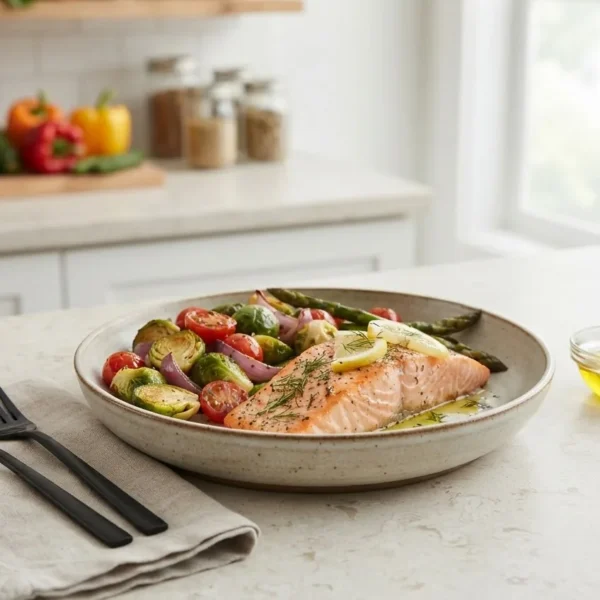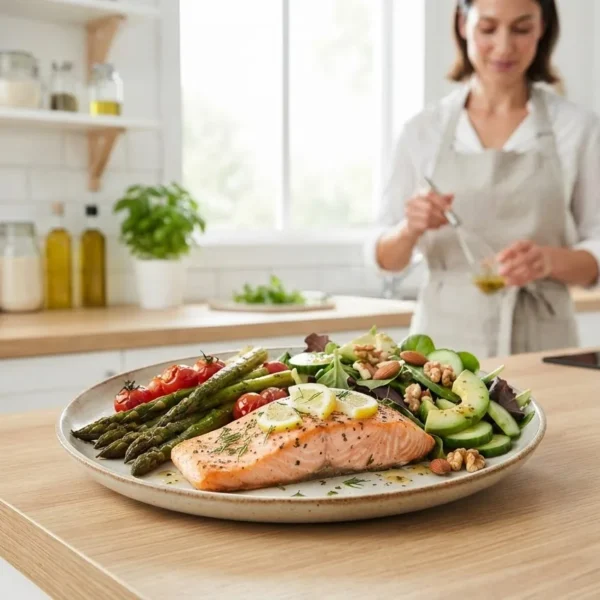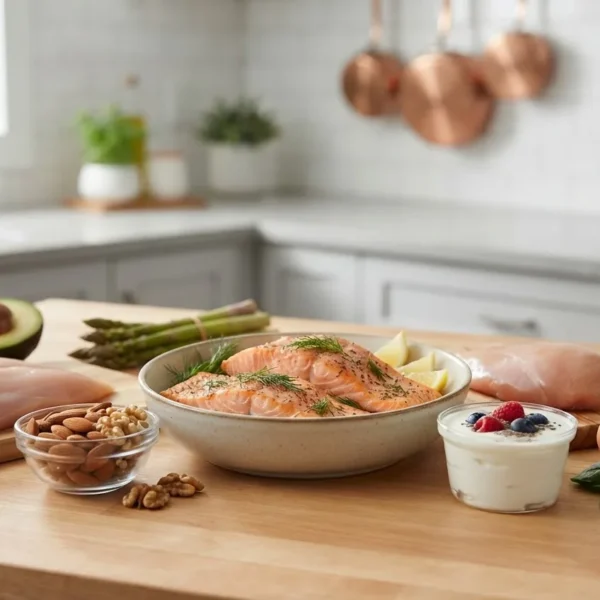
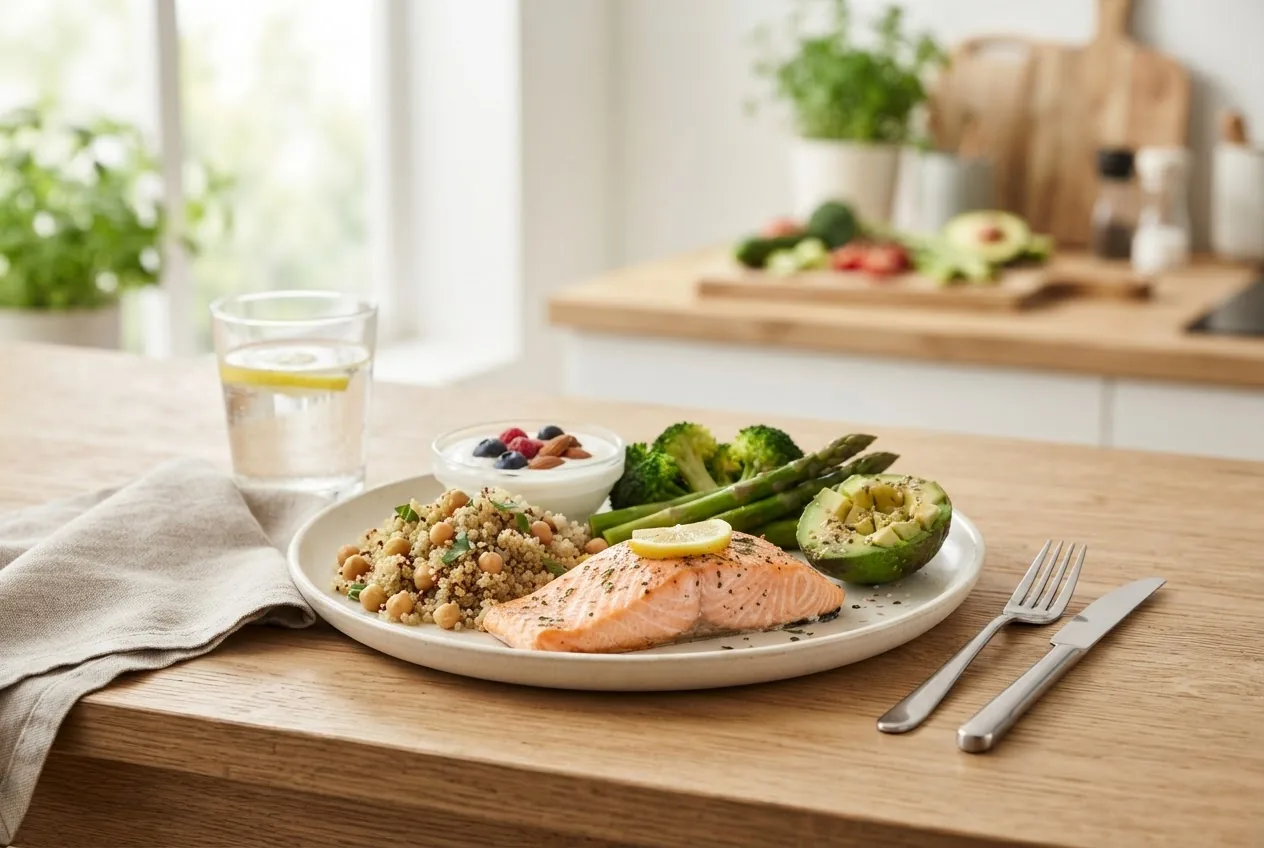
By the end of this hands-on guide you’ll have a ready-to-follow weekly plan, precise portion sizes, and timing strategies that let you reliably hit how to get 150 grams of protein a day. Expect about 90–120 minutes to set up your personalized plan; daily cooking skill is beginner-to-intermediate.
Before you start
- Kitchen scale (grams) and measuring cups
- Food tracking app or notebook (example: MyFitnessPal or a spreadsheet)
- Basic meal-prep containers — 4–6 for weekday rotation
- 1–2 protein supplements (whey or plant) if you plan to use shakes
- Access to nutrition facts (USDA FoodData Central or food labels)
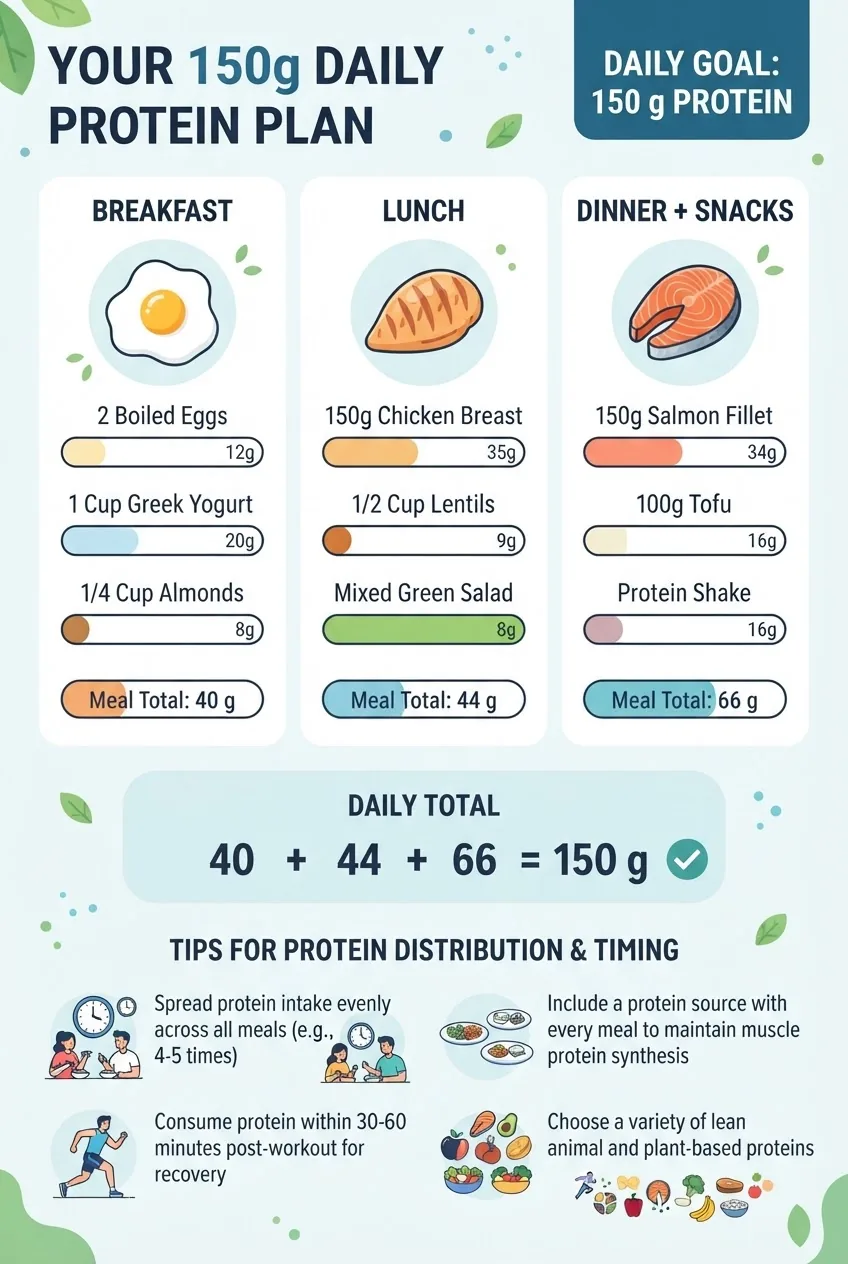
Understanding the Goal: Why Aim for 150 Grams of Protein a Day?
Protein is the building block for muscle repair, hormones, immune function, and lasting satiety. Aiming for 150 grams of protein a day supports muscle maintenance, weight management, and recovery for many active adults—especially those doing resistance training or moderate-to-high activity.
According to a 2023 USDA Dietary Guidelines summary (government guidance), higher protein intakes, when combined with overall calorie control and resistance exercise, can help preserve lean mass during weight loss.
Why 150 g specifically? For many adults this represents an intake well above the Minimum Recommended Dietary Allowance (RDA) and closer to levels shown to support performance and body composition goals.
Protein also contributes calories: one gram of protein supplies about 4 kcal. For additional detail on the energy yield of protein see calories in protein.
Quick side facts (bite-sized):
- Satiety: higher-protein meals increase fullness compared with lower-protein meals (according to a 2021 systematic review of appetite studies).
- Muscle maintenance: protein intakes ≥1.6 g/kg bodyweight were linked to better muscle retention in a 2022 meta-analysis (peer-reviewed).
Transition: next we’ll walk through how to calculate if 150 g fits your personal needs and how to scale it sensibly.
Calculating Your Personal Protein Needs Within 150 Grams
This section shows step-by-step calculations and examples so you understand where 150 g sits relative to recommendations and how to personalize it to your lean body mass and activity level.
- Determine bodyweight and estimate lean body mass (LBM).
Start with an accurate bodyweight. If you know body fat percentage, calculate LBM: LBM (kg) = bodyweight (kg) × (1 − body fat %). If you don’t have body fat data, use total bodyweight as a conservative estimate.
Example: 200 lb (90.7 kg) person at 20% body fat: LBM = 90.7 × (1 − 0.20) = 72.6 kg.
- Choose a protein multiplier based on activity level and goal.
Common multipliers (grams per kg LBM or bodyweight):
- Maintenance/light activity: 1.2–1.4 g/kg
- Active/resistance training: 1.6–2.2 g/kg
- Cutting/weight loss + resistance training: 2.0–2.4 g/kg (short-term)
According to a 2022 consensus paper from sports nutrition researchers (peer-reviewed), 1.6–2.2 g/kg LBM optimizes muscle retention and recovery for most active adults.
- Calculate your target and compare to 150 g.
Using our example (LBM 72.6 kg):
At 1.6 g/kg → 72.6 × 1.6 = 116 g/day.
At 2.0 g/kg → 72.6 × 2.0 = 145 g/day (very close to 150 g).
If your calculated range brackets 150 g, it’s reasonable to adopt 150 g. If your calculation is much lower (e.g., sedentary adult), scale upward cautiously and seek guidance.
- Check total calories and macro balance.
Multiply protein grams by 4 to get protein calories. For 150 g: 150 × 4 = 600 kcal from protein. Subtract from your daily calorie target to allocate carbs and fats.
For example, a 2,400 kcal plan with 600 kcal from protein leaves 1,800 kcal for carbs and fats — choose macro splits according to performance or weight goals.
- Plan protein distribution across meals.
Evidence suggests spreading protein (20–40 g) across meals maximizes muscle protein synthesis. Practical distribution to hit 150 g:
- Breakfast: 30–40 g
- Lunch: 35–40 g
- Dinner: 35–40 g
- Snacks/post-workout: 20–30 g
Transition to the next section: now we’ll map food sources that deliver these amounts efficiently.
Supporting authority: For baseline recommendations see the 2023 USDA Dietary Guidelines and for protein recommendations see Academy of Nutrition and Dietetics resources.
Transition: with numbers in hand, pick the best lean protein sources to fit your schedule and tastes.
Best Lean Protein Sources to Help You Reach 150 Grams Daily
Below are concentrated, practical protein sources with typical protein grams per serving so you can mix-and-match meals. When introducing types of protein foods, consider weight-loss-friendly selections like those in protein rich food for weight loss: healthy options guide.
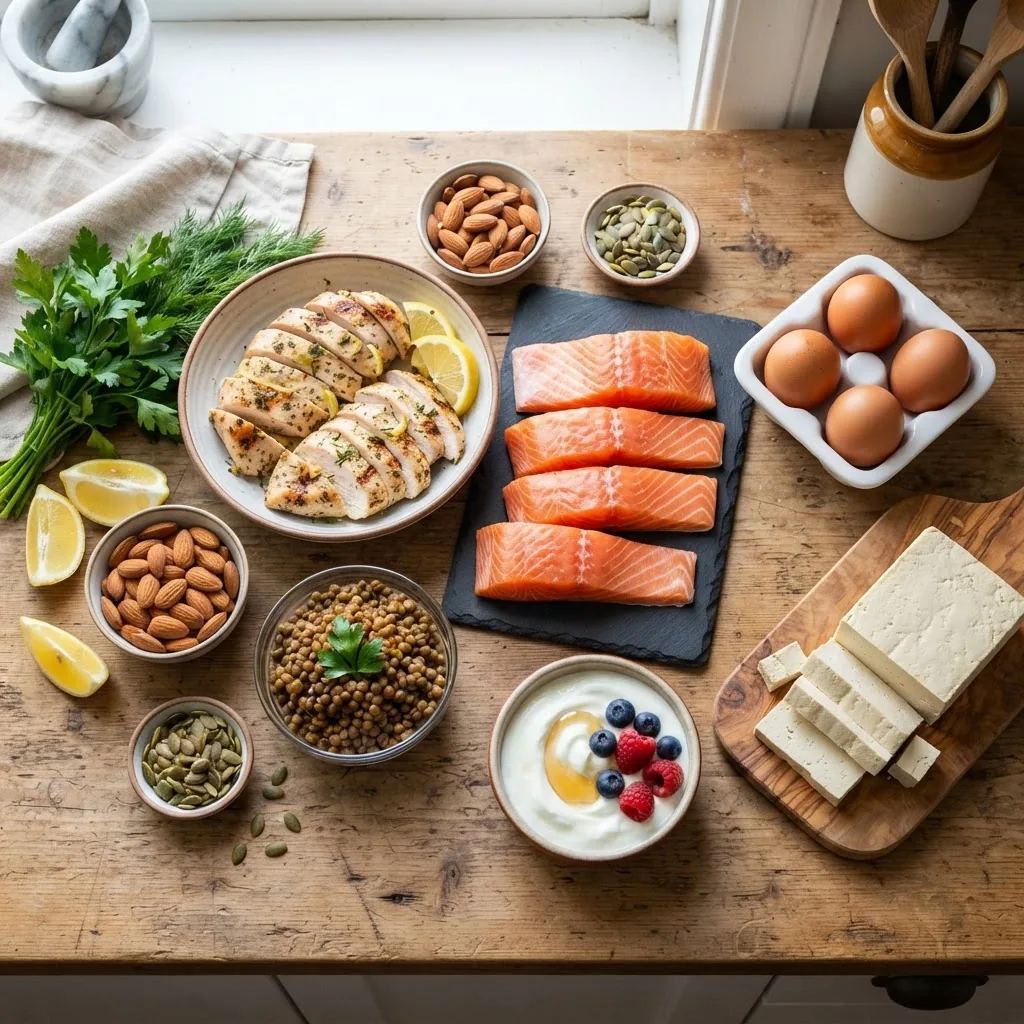
| Food (common serving) | Protein (g) | Calories (kcal) | Notes |
|---|---|---|---|
| Chicken breast, cooked (100 g) | 31 g | 165 kcal | Lean, versatile |
| Salmon, cooked (100 g) | 22 g | 208 kcal | Omega-3s |
| Eggs, large (1) | 6 g | 72 kcal | Complete protein |
| Greek yogurt, plain (170 g / 6 oz) | 17 g | 100–120 kcal | Convenient snack |
| Canned tuna in water (100 g) | 26 g | 116 kcal | Low-fat, high-protein |
| Tofu, firm (150 g) | 15 g | 120–150 kcal | Plant-based, versatile |
| Lentils, cooked (1 cup / 198 g) | 18 g | 230 kcal | Fiber + protein |
| Whey protein isolate (1 scoop / 30 g) | 24–27 g | 110–130 kcal | Fast digesting |
| Cottage cheese (1 cup / 226 g) | 28 g | 220–240 kcal | Slow-release casein |
| Almonds (30 g / 1 oz) | 6 g | 170 kcal | Fats + fiber |
Notes on quality: animal proteins are complete and typically have higher bioavailability. Plant proteins can be combined across meals to provide a complete amino acid profile. For technical quality measures like PDCAAS and DIAAS, animal proteins often score higher; for example whey and egg rank near the top in PDCAAS, while most legumes score lower but are still valuable when combined.
If you’re focused on lean cuts and cutting calories, complement these lists with guidance from best foods for cutting. For budget-conscious selections see affordable high protein foods.
Transition: next, learn how to include healthy fats so total calories and heart health remain balanced.
Integrating Healthy Fats Without Compromising Your Protein Goals
Fats provide essential fatty acids and calories you need for energy and hormone production. They can be included without displacing protein if you plan calories and portion sizes.
Remember that 1 gram of fat contains ~9 kcal; for details on how fat contributes energy, see calories in fat.
Healthy fats to rotate in a high-protein plan:
- Extra-virgin olive oil — monounsaturated fats; use 1 tbsp (14 g) = ~120 kcal
- Avocado — 1/2 medium = ~10 g fat, 120 kcal
- Fatty fish (salmon, mackerel) — provides omega-3s and protein
- Nuts and seeds — 1 oz almonds ~6 g protein + 14 g fat
- Nut butters — 1 tbsp = ~90–100 kcal
For choices of cooking fats that support heart health, review best cooking oils for heart health. For concentrated omega-3 options see best omega-3 food sources.
Texas-friendly options: grilled salmon on a spice rub, avocado on breakfast tacos, or a handful of pecans (local and calorie-dense) paired with Greek yogurt make combining fats and protein practical for local tastes.
Transition: with food choices and fats balanced, build daily meal patterns that hit 150 g reliably — see the sample plan below.
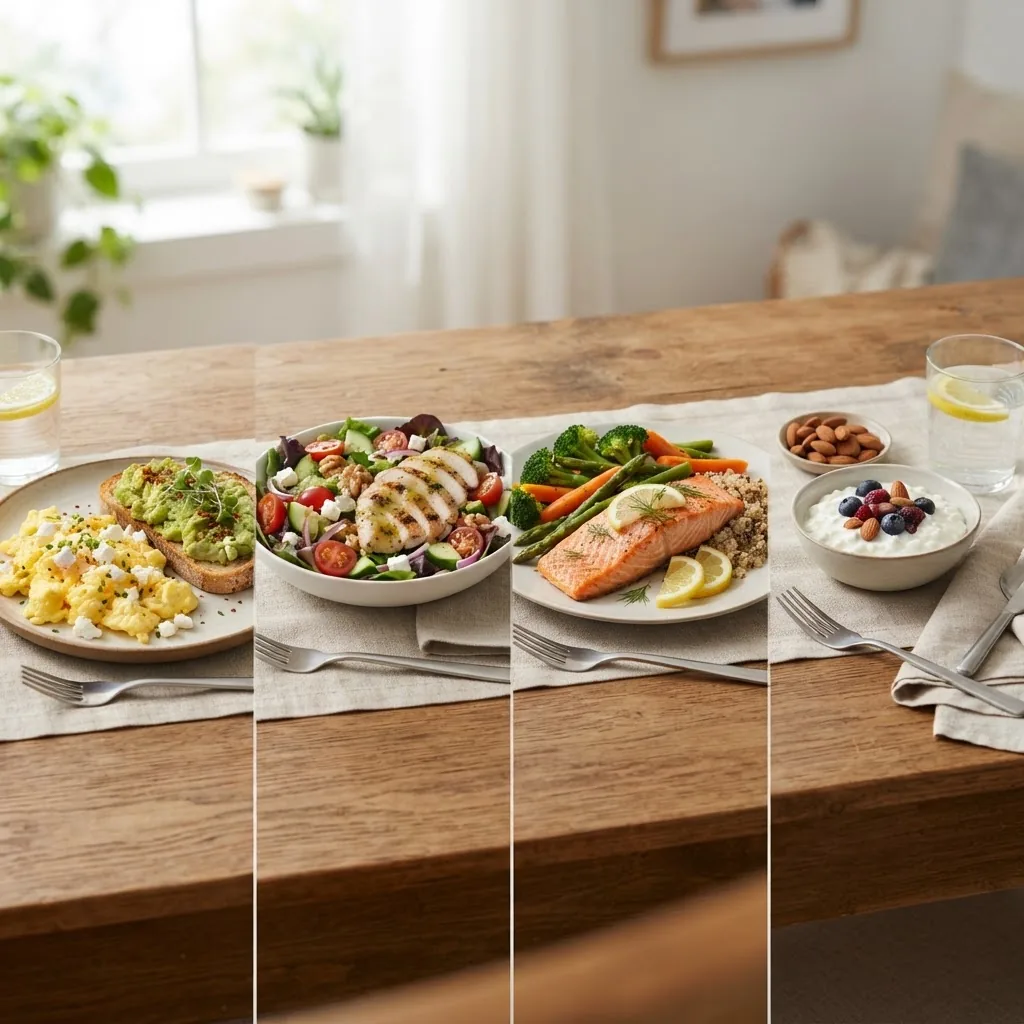
Sample 150 Gram Protein Meal Plan: Breakfast, Lunch, Dinner, and Snacks
Below is a highly practical, ready-to-use day that sums to ~150 g of protein. Portions are explicit so you can weigh and prep.
-
Breakfast — 38 g protein (07:00–08:00)
– 3 large eggs, scrambled = 18 g protein
– 3 egg whites extra (from carton) = 11 g protein
– 3 oz (85 g) smoked salmon or cooked turkey breast = 9 g protein
Prep tips: scramble whole eggs + whites, fold in flaked smoked salmon, serve with one slice of whole-grain toast and 1/4 avocado for fats. Total calories ~450–500 kcal.
-
Mid-morning snack — 22 g protein (10:00–11:00)
– 1 scoop whey isolate in water or milk = 24 g protein (or 1 scoop plant blend = ~20 g)
Alternate: 1 cup plain Greek yogurt (17 g) + 1 tbsp peanut butter (4 g) = 21 g.
Timing tip: take 30–60 minutes after a morning workout if applicable.
-
Lunch — 40 g protein (13:00)
– 6 oz (170 g) cooked chicken breast = 50 g protein (reduce to 5 oz for ~42 g)
– Large salad base (spinach, tomato, cucumber) + 1 tbsp olive oil
Prep tips: grill 2–3 breasts on Sunday, slice for salads. Use measured dressing (1 tbsp) to keep fats controlled.
-
Afternoon snack — 12 g protein (16:00)
– 1 oz almonds = 6 g protein
– 1 small cottage cheese cup (100 g) = 11 g (combine optional)
Small, high-protein pairings prevent afternoon energy dips.
-
Dinner — 36 g protein (19:00)
– 6 oz (170 g) baked salmon = ~37 g protein
– 1 cup steamed broccoli (3 g) + 1/2 cup quinoa cooked (4 g)
Season with lemon and 1 tsp olive oil. Total dinner calories ~550–650 depending on oil and sides.
-
Evening snack (optional) — 2–4 g to reach 150 g (21:00)
– 1/2 cup low-fat cottage cheese = 14 g — use portion control if already near goal
– Or 1 small casein shake (20–25 g) if overnight protein desired
Sample day totals: Breakfast 38 + Snack 22 + Lunch 40 + Afternoon 12 + Dinner 36 = 148 g (add a 1-scoop shake or 2 egg whites to reach 150 g exactly).
Weekly rotation ideas: swap chicken for lean pork loin, salmon for cod + extra beans, or plant-based days using tofu + lentils. Use the table above to substitute equivalent protein grams without guessing.
Transition: next are practical tips and common mistakes I see when people attempt this plan.
Practical Tips and Common Mistakes When Eating 150 Grams of Protein Daily
- Hydrate more: Increase water by ~0.5–1 L/day when increasing protein; protein metabolism raises urea load. According to a 2020 clinical nutrition review (peer-reviewed), adequate hydration supports renal clearance.
- Aim for protein at every meal: Target 30–40 g per main meal and 15–25 g per snack to maximize muscle protein synthesis across the day.
- Track, then automate: Use a food tracker for 1–2 weeks to learn portions, then batch-cook consistent servings.
- Balance calories: If weight loss is the goal, keep a modest calorie deficit; protein should be preserved, not used to justify excessive calories.
- Watch for nutrient variety: Include vegetables and whole grains to maintain fiber and micronutrients while focusing on protein.
- Supplement sensibly: Protein powders are tools—use whey for post-workout quick absorption or casein at night for slower release; plant powders are effective when combined for amino acid coverage.
Case excerpt (anonymized): “After switching to a 150 g protein plan and tracking for six weeks, I lost 8 lb and maintained strength in my lifts.” — local client, 34, non-competitive lifter. This reflects typical outcomes reported in training-focused nutrition programs (anecdotal within practice).
Common pitfalls:
- Overloading on processed protein bars: Many bars have added sugar and fats that inflate calories; read labels.
- Ignoring fat calories: Adding generous oils or nuts can push total calories higher than intended. For guidance on oil choices see best cooking oils for heart health.
- Assuming high protein is unsafe: For healthy individuals, intakes in the 1.6–2.4 g/kg range are generally safe; however, consult your provider if you have kidney disease or other conditions. For clinical reference, see the Academy materials (external) Academy of Nutrition and Dietetics.
Transition: if you follow these tactics, next learn how to adapt this 150 g plan to vegetarian, vegan, or restricted diets.
How to Adjust 150 Grams of Protein a Day for Different Diet Preferences
Not all paths to 150 g are the same. Adjust by food swaps, smart combinations, and selective use of supplements.
Vegetarian
- Combine dairy and eggs: 3 eggs (18 g) + 1 cup Greek yogurt (17 g) + 1 cup cottage cheese (28 g) can supply ~63 g.
- Use lentils (18 g per cup) and quinoa (8 g per cup cooked) across meals.
- Consider a casein or whey (if lacto-vegetarian) at night to hit totals comfortably.
Vegan
- Combine legumes and grains: lentils + brown rice or chickpeas + quinoa to complement amino acid profiles.
- Tofu/tempeh: 6 oz tempeh ≈ 30 g protein; firm tofu (200 g) ≈ 20 g
- Use blended plant protein powders (pea + rice) with ~20–25 g per scoop to fill gaps.
Gluten-free
- Most animal proteins are naturally gluten-free (chicken, fish, eggs).
- Use quinoa, buckwheat, and rice for grain-based protein and energy.
Protein quality: combine plant proteins across the day to approximate complete amino acid profiles. For deeper data on plant vs animal trade-offs and digestibility scores (PDCAAS / DIAAS), consult peer-reviewed analyses; plant mixes can achieve high DIAAS when combined properly (2021 nutrition journal review).
Transition: final section summarizes how to maintain consistency and track progress.
Conclusion and Next Steps: Consistency and Monitoring Your Protein Intake
You now have a clear method to reach 150 grams of protein a day: calculate your needs, choose lean sources, distribute protein across meals, include healthy fats intentionally, and track for two weeks. Start by implementing one week of the sample plan and adjust based on energy, performance, and weight trends.
Next actions:
- Log three typical days to establish a baseline.
- Use the sample day as a template; substitute equivalent protein servings from the table.
- Revisit after two weeks: adjust protein grams ±10–20 g based on recovery, appetite, and body composition.
Hands-On Steps: Implement This Plan (Numbered Actions)
- Weigh and record your baseline — weigh yourself, record bodyweight and estimate body fat if possible. Convert lbs to kg (divide by 2.205) for calculations.
- Set your protein target — use the calculation steps above and choose 150 g if it fits your activity level. Note total protein kcal (150 g = 600 kcal).
- Create your weekly menu — pick 3 breakfasts, 3 lunches, 3 dinners and 4 snacks that match the portion protein numbers in the sample day.
- Batch-cook proteins — cook 1–2 kg chicken, 6–8 salmon fillets, and prepare a pot of lentils; portion by weight into containers.
- Prep daily mixes — morning: measure 1 scoop protein powder; lunch: pack 5 oz chicken; evening: steam veggies and measure grain portions.
- Track intake for 14 days — log grams and calories; note energy, soreness, and digestion.
- Adjust macros — if you gain unwanted weight, reduce carbs or fats by 5–10% total kcal while keeping protein at 150 g; if performance drops, increase carbs around workouts.
Common mistakes and how to avoid them (practitioner notes)
I often see people binge on protein bars and assume they are ‘free’ calories — I switched one client from two bars/day to measured whey + whole-food snacks and they dropped 6 lb in four weeks while keeping strength. Another frequent failure: underestimating fat calories, which ballooned total intake; measuring oil with a spoon fixed that.
Checklist: Verify Your 150 g Protein Plan
- All meals have target protein: Breakfast 30–40 g, Lunch 30–45 g, Dinner 30–45 g, Snacks 20–30 g.
- Protein sources weighed or labeled with grams/protein per serving.
- Total protein equals 150 g (±5 g) on tracked days.
- Hydration increased by 0.5–1 L/day above normal.
- At least two servings per week of fatty fish (omega-3s).
When to call a professional
Contact a registered dietitian or physician if you have chronic kidney disease, significant chronic illness, or are pregnant/nursing. If you experience unusual fatigue, swelling, or persistent digestive issues after increasing protein, seek medical evaluation.