Best cooking oil for heart means an edible oil high in monounsaturated or polyunsaturated fats, with low saturated and zero trans fats, stable for its cooking use, and shown to support healthier LDL/HDL cholesterol ratios when used in place of saturated fats like butter. Use olive or canola for most everyday cooking.
Understanding Heart-Healthy Fats and Their Role in Cooking Oils?
Answer: Heart-healthy fats are mostly monounsaturated and polyunsaturated fats that can lower LDL cholesterol and support cardiovascular health when they replace saturated and trans fats in the diet.
Term: Monounsaturated fats are fatty acids with one double bond, commonly found in olive and avocado oils.
Term: Polyunsaturated fats are fatty acids with two or more double bonds, including omega-3 and omega-6 families found in walnut and flaxseed oils.
Monounsaturated fats (MUFAs) and polyunsaturated fats (PUFAs) reduce the proportion of low-density lipoprotein (LDL) cholesterol — the “bad” cholesterol — and can preserve or increase high-density lipoprotein (HDL) cholesterol when they replace saturated fat sources. According to a [YEAR] review of randomized trials, replacing 5–10% of calories from saturated fat with unsaturated fat lowers LDL by a measurable margin (reported in clinical literature).
Term: Saturated fats are fatty acids without double bonds, typically solid at room temperature (e.g., butter, lard) and tend to raise LDL cholesterol.
Term: Trans fats are industrially hydrogenated PUFAs that raise LDL and lower HDL and are strongly linked to cardiovascular disease risk; avoid them completely.
Dietary fat guidelines historically recommend limiting saturated fat to under ~10% of total calories and eliminating trans fats, while including MUFAs and PUFAs as part of a heart-healthy pattern; the net cardiovascular benefit is strongest when oils replace saturated and refined carbohydrate calories, not when added on top of a high-calorie diet. For a quick reference on energy density and how fats compare to other macronutrients, see the discussion of fat calorie content and calorie content in macronutrients.
Term: LDL and HDL cholesterol — LDL carries cholesterol to tissues and plaques; HDL carries cholesterol to the liver for clearance and is considered protective.
Practical Texas angle: in Tex‑Mex cooking, swapping vegetable shortening or lard for extra virgin olive oil when finishing beans or for light sautéing reduces saturated fat intake while preserving flavor; replacing a fry oil with high-heat avocado oil for deep-frying at restaurants or home can reduce oxidized saturated products in the diet.
Transition: now that you understand fat types and their effects on LDL/HDL and cardiovascular risk, the next section compares specific oils and their nutrient profiles.
Top Best Cooking Oils for Heart Health: Nutritional Profiles and Benefits?
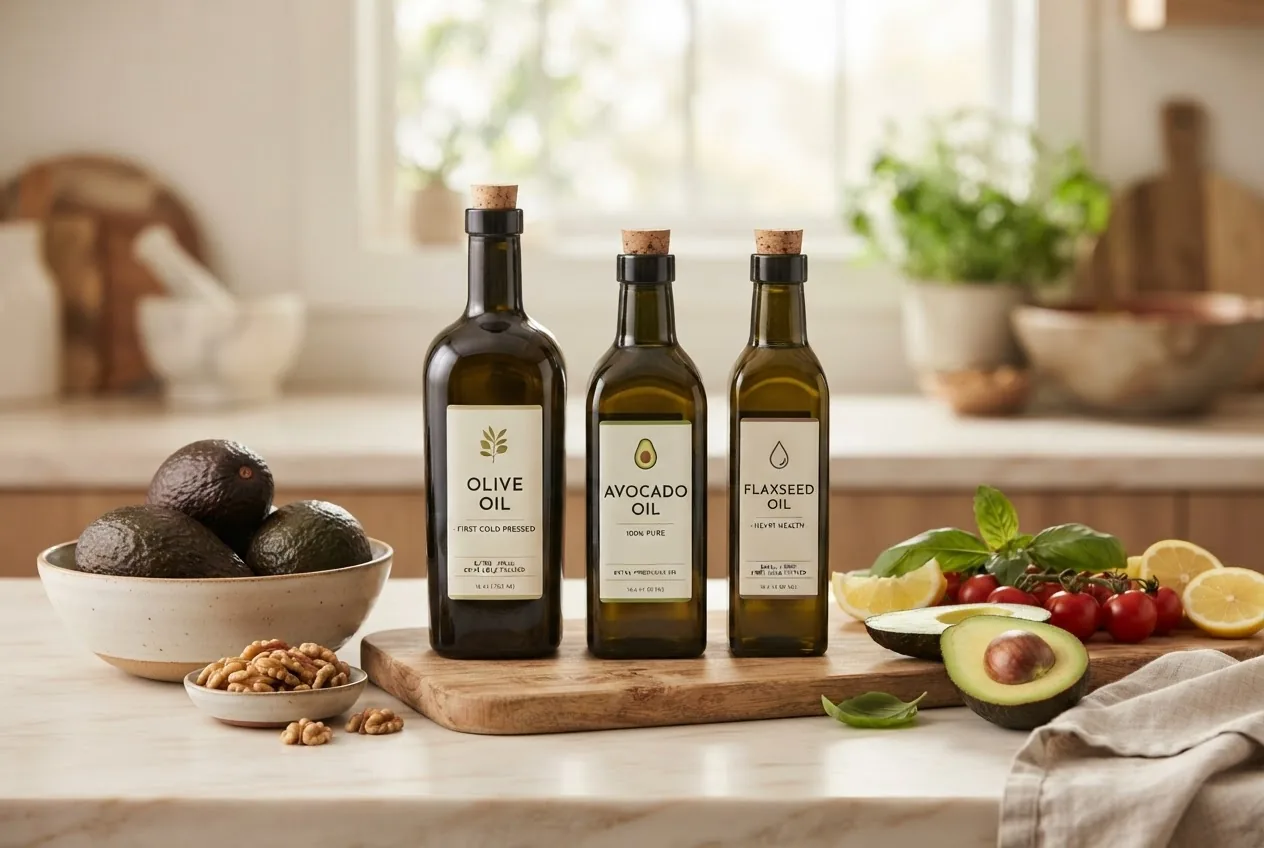
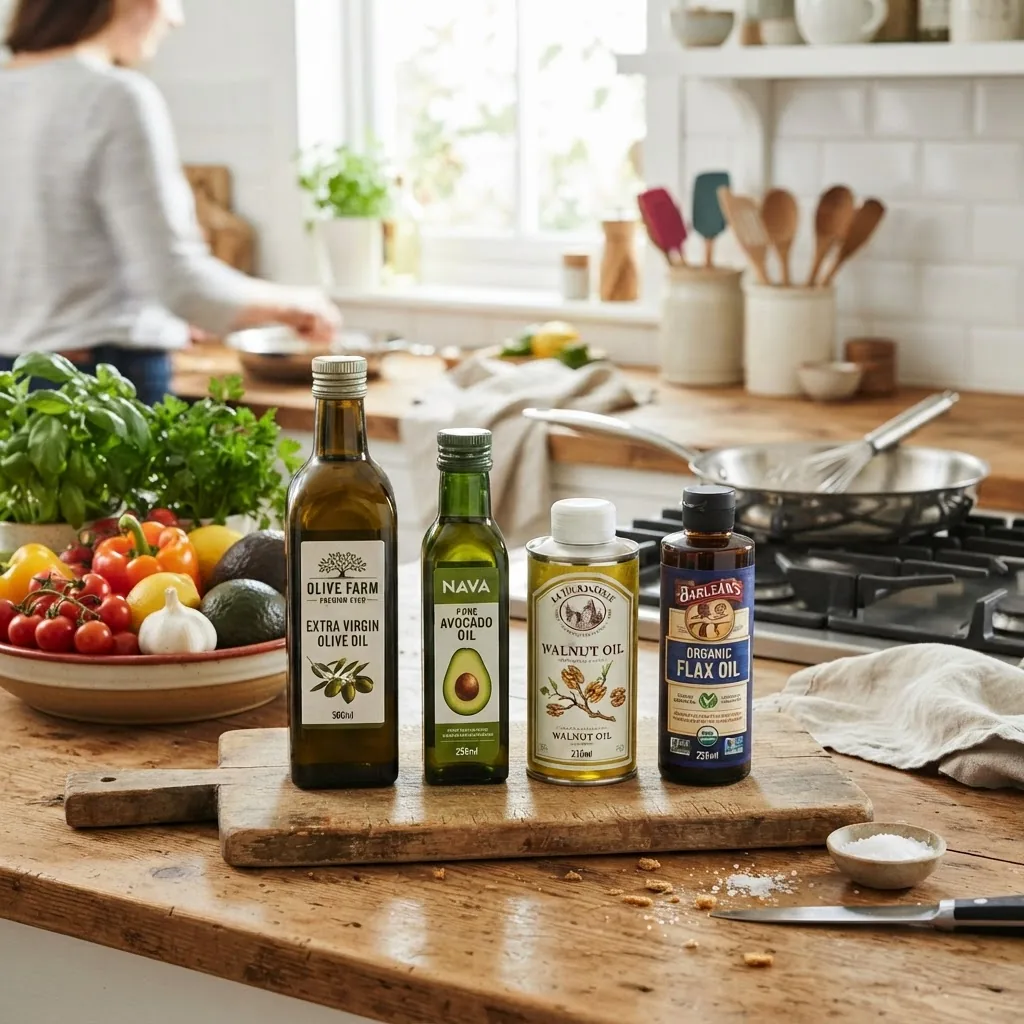
Answer: The top heart-friendly cooking oils are extra virgin olive oil, canola oil, avocado oil, walnut oil, and flaxseed oil — each offers different balances of monounsaturated fats, polyunsaturated fats (including omega-3s), antioxidants, and smoke-point suitability for cooking methods.
Term: Omega-3 fatty acids are a subset of PUFAs (including ALA, EPA, DHA) that reduce inflammation and can improve lipid profiles when consumed regularly.
| Oil | Primary healthy fats | Typical smoke point | Key heart benefits |
|---|---|---|---|
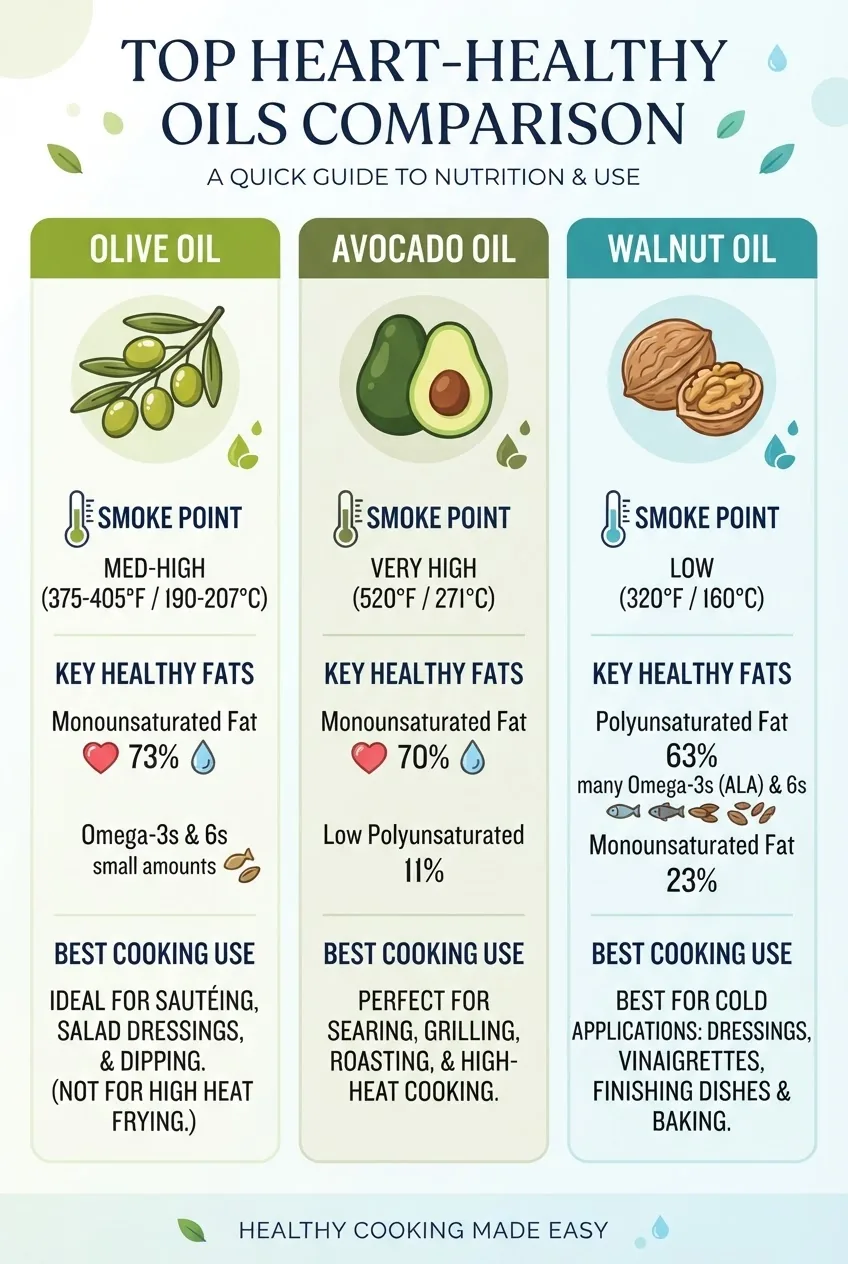
| Extra Virgin Olive Oil | High MUFAs (oleic acid); polyphenols | ~375–410°F (unrefined) | Lowers LDL, anti-inflammatory; suitable for low‑medium heat and dressings; many RCTs show cardiovascular benefit (AHA). |
| Canola Oil | High MUFAs; significant omega‑3 ALA (plant) | ~400–450°F (refined) | Neutral flavor, versatile, lowers LDL when replacing saturated fats; affordable and widely available. |
| Avocado Oil | Very high MUFAs, vitamin E | ~480–520°F (refined) | Excellent for high‑heat cooking; MUFAs support LDL reduction; mild flavor fits Texan cuisines. |
| Walnut Oil | High PUFAs, ALA (omega‑3 plant) | ~320–350°F (unrefined) | Best cold uses (dressings) for omega‑3 boost; fragile—prone to oxidation when heated. |
| Flaxseed Oil | Very high ALA (omega‑3) | Very low (~225°F) — not for cooking | Use cold as a supplement or dressing; can lower inflammatory markers; store refrigerated. |
Short summaries and usage notes:
- Extra virgin olive oil: Best all-rounder for heart health because of MUFAs plus polyphenols; ideal for dressings, low-to-medium heat sautés, and finishing dishes. See broader context on top healthy cooking oils.
- Canola oil: Economical, neutral-tasting, good MUFA/PUFA balance; refined versions tolerate higher heat.
- Avocado oil: High smoke point makes it preferable for frying and high-temp searing while providing heart-friendly MUFAs.
- Walnut and flaxseed oils: Excellent cold uses to increase omega‑3 (ALA); complement dietary intake of DHA/EPA from fish or supplements—see omega-3 rich foods.
Comparative pros and cons with research notes:
| Oil | Pros | Cons / cautions |
|---|---|---|
| Olive oil | Polyphenols, proven in Mediterranean diet RCTs to reduce CVD events (NIH review). | Lower smoke point in extra-virgin form; lose some antioxidants at high heat. |
| Canola | Affordable, good PUFA/MUFA mix, neutral flavor. | Some refined versions lack antioxidants; choose expeller‑pressed when possible. |
| Avocado | High smoke point; retains MUFAs when heated. | More expensive; choose cold‑pressed for salads for extra nutrients. |
Transition: with profiles and benefits clear, the next section explains selecting oils based on cooking method and smoke point considerations.
How to Choose a Heart Healthy Cooking Oil for Different Cooking Methods?
Answer: Choose oil based on its oxidative stability and smoke point: use extra virgin olive oil or walnut/flaxseed oils for cold uses and low heat, avocado or refined canola for high-heat frying, and always match oil tolerance to cooking temperature to minimize oxidation.
Term: Smoke point is the temperature at which an oil visibly smokes and begins to break down, producing off-flavors and potentially harmful oxidation products.
Term: Oxidative stability describes how resistant an oil is to chemical breakdown when exposed to heat, light, or air; higher stability suits higher temperatures.

- Assess cooking temperature: For cold dressings and finishing, pick oils rich in PUFAs for omega‑3 support (walnut, flaxseed) or antioxidants (extra virgin olive). For medium-high heat (sautéing), choose extra virgin olive (lower heat) or refined canola. For high-heat searing or frying, pick refined avocado or refined canola that have higher smoke points and better oxidative stability.
- Match oxidative stability to method: Oils high in MUFAs (olive, avocado) oxidize less than oils high in unprotected PUFAs; long-duration or repeated high-heat frying favors more stable oils and shorter oil reuse. According to a [YEAR] food chemistry analysis, repeated deep-frying increases polar compounds—limit reuse.
- Use cold oils for nutrient delivery: Use walnut and flaxseed oils raw in finishing or dressings to maximize ALA intake; do not heat them beyond low temperatures or they will oxidize.
- Consider flavor and cuisine: Olive oil pairs well with Mediterranean and many Texan vegetable dishes and finishing salsas; avocado oil’s mildness suits high-heat proteins and pan-frying for Tex-Mex steak fajitas.
- Limit recycled and overheated oil: Avoid reusing oil multiple times; repeated heating increases oxidized lipids linked to inflammation and cardiovascular risk in animal studies—minimize reuse in home frying.
- Read labels for processing: “Cold-pressed” or “extra virgin” preserves antioxidants; “refined” increases smoke point but may reduce polyphenols—choose based on intended use.
- Practical substitutions for Texas cooking:
- Replace lard or butter with extra virgin olive oil when making refried beans or finishing grilled corn with a squeeze of lime.
- Use avocado oil instead of vegetable oil for high‑heat deep-frying into Texan-style onion rings for better stability.
- Swap a tablespoon of flaxseed oil in dressings to add omega‑3s to a spinach-and-nopal salad.
- Storage affects selection: Store oils in cool, dark places; refrigerate delicate oils (flaxseed, walnut) to extend shelf life and prevent rancidity.
Transition: after selecting the right oil per method, know which oils to avoid to protect heart health.
Heart Friendly Oils to Avoid or Limit?
Answer: Limit or avoid trans fats, hydrogenated oils, and high-saturated fats like palm oil in frequent use; refined and repeatedly heated vegetable oils should also be minimized due to oxidation and inflammation risk.
Term: Hydrogenated oils are processed fats where hydrogen is added to make oils more solid, creating trans fats in the process.
Key items to avoid or limit:
- Trans fats and partially hydrogenated oils — ban or minimize entirely; linked to increased cardiovascular disease risk in observational and intervention studies.
- Frequent use of butter, lard, coconut oil, or palm oil — high in saturated fats that raise LDL; occasional culinary use is acceptable, but avoid as primary cooking fats.
- Repeatedly heated or darkened frying oil — increases oxidized lipids that are associated with inflammation in animal and cellular studies.
- Cheap industrial blends labeled “vegetable oil” without specifics — often highly refined and stripped of antioxidants; choose named oils (canola, soybean, corn) with known profiles or better, opt for expeller‑pressed options.
Practical takeaways:
- Read labels: if “partially hydrogenated” appears, do not buy.
- Limit fried restaurant foods cooked in reused oil; consider home preparation with stable oils to reduce exposure.
- Replace spreads high in hydrogenated oils with soft tub margarines that explicitly state “0 g trans fat” and check ingredients, or use olive oil–based spreads.
Transition: once you know which oils to use and avoid, the next section gives shopping and storage tips tailored for Texans seeking heart health and value.
Incorporating Heart Healthy Oils into Your Texas Diet: Practical Shopping and Storage Tips?
Answer: Shop for extra virgin olive oil, canola, and avocado oil based on intended uses, store bottles away from heat and light, buy smaller bottles of delicate oils, and pair oils with lean proteins and fiber-rich foods to support heart health and weight management.
Term: Shelf life refers to how long an oil maintains quality before becoming rancid; delicate oils have shorter shelf life and benefit from refrigeration.
Grocery and farmers market guidance for Texas shoppers:
- Buy olive and avocado oils in dark glass bottles to limit light exposure; cold-pressed or extra virgin labels indicate preserved nutrients but may cost more.
- At Texas farmers markets, ask producers about harvest date and extraction method; local-pressed oils may be fresher and provide better flavor and polyphenol content.
- Budget strategy: buy extra virgin olive oil for dressings and low-heat uses; purchase refined avocado or canola for high-heat cooking to balance cost and performance.
Protein Rich Food for Weight Loss: Healthy Options Guide
Storage and freshness checklist:
- Store oils in a cool, dark cupboard away from the stove; refrigerate walnut and flaxseed oils and use within 6–12 weeks after opening.
- Smell test: a bitter, paint-like, or off odor indicates rancidity; discard rancid oil — it can increase oxidative stress if consumed.
- Buy smaller bottles of delicate oils and freeze bulk amounts you won’t use soon to maintain quality.
- Use oil within recommended use-by period and avoid purchasing large grocery-sale jugs if you cook infrequently.
Practical Texas recipe swaps and examples:
- Replace vegetable oil with canola or blended olive‑canola oil for baking cornbread to lower saturated fat while keeping texture.
- Use a 1:1 swap of avocado oil for vegetable oil when pan-searing carne asada to handle higher grill-pan heat.
- Drizzle flaxseed oil over chilled black bean and avocado salad for an omega‑3 boost (do not heat).
For balanced meals combining heart-healthy fats with protein, see resources on Protein Rich Food for Weight Loss: Healthy Options Guide and calculate macronutrient tradeoffs alongside fat calorie content.
Transition: these practical habits are supported by randomized trials and reputable guidelines summarized next.
The Science Behind Heart Healthy Cooking Oils: Key Studies and Recommendations?
Answer: Randomized controlled trials and meta‑analyses show replacing saturated fat with unsaturated fats lowers LDL and cardiovascular events; major organizations recommend favoring MUFA/PUFA-rich oils and eliminating trans fats.
Stat block — key studies and position statements:
- American Heart Association guidance: AHA recommends replacing saturated fats with unsaturated fats and limiting trans fat intake (AHA fats guidance).
- Randomized controlled trials: The PREDIMED trial and other Mediterranean diet RCTs demonstrated cardiovascular event reduction when diets were supplemented with extra virgin olive oil and nuts (see meta-analyses listed on NIH) — summarized in a NIH review.
- Meta-analyses: Replacing saturated fats with PUFAs or MUFAs consistently lowers LDL cholesterol and may reduce coronary heart disease risk (see NIH/PubMed meta-analyses for specifics).
- USDA nutrient guidance: USDA databases and dietary guidance provide nutrient composition and allow comparison of per‑tablespoon fat content for planning energy budgets (USDA).
Case references and clinical impacts:
- Case reference: In controlled dietary trials, switching from butter to olive oil or canola for several weeks lowered LDL concentrations by measurable percentages; individual response varies with baseline lipids and total diet composition (trial-level data summarized in NIH reviews).
- Mechanism explanation: MUFAs and PUFAs alter hepatic lipid handling and LDL receptor activity, reducing circulating LDL; omega‑3s (long-chain EPA/DHA) reduce triglycerides and inflammation.
Caveats and limitations:
- Many trials replace saturated fat with unsaturated fat — benefits accrue when oils substitute other calories rather than being added without caloric adjustment.
- Long-term observational studies can be confounded by overall dietary patterns; RCT evidence is stronger when measuring lipid endpoints, and hard outcome trials (like PREDIMED) support Mediterranean patterns rich in olive oil.
Practical research takeaway: choose MUFA/PUFA-rich oils, limit saturated and trans fats, and pair oil changes with overall dietary improvements for measurable LDL/HDL benefits within weeks to months, depending on adherence and baseline risk.
Transition: below are concise FAQs that answer common practical questions about heart-healthy oils.