
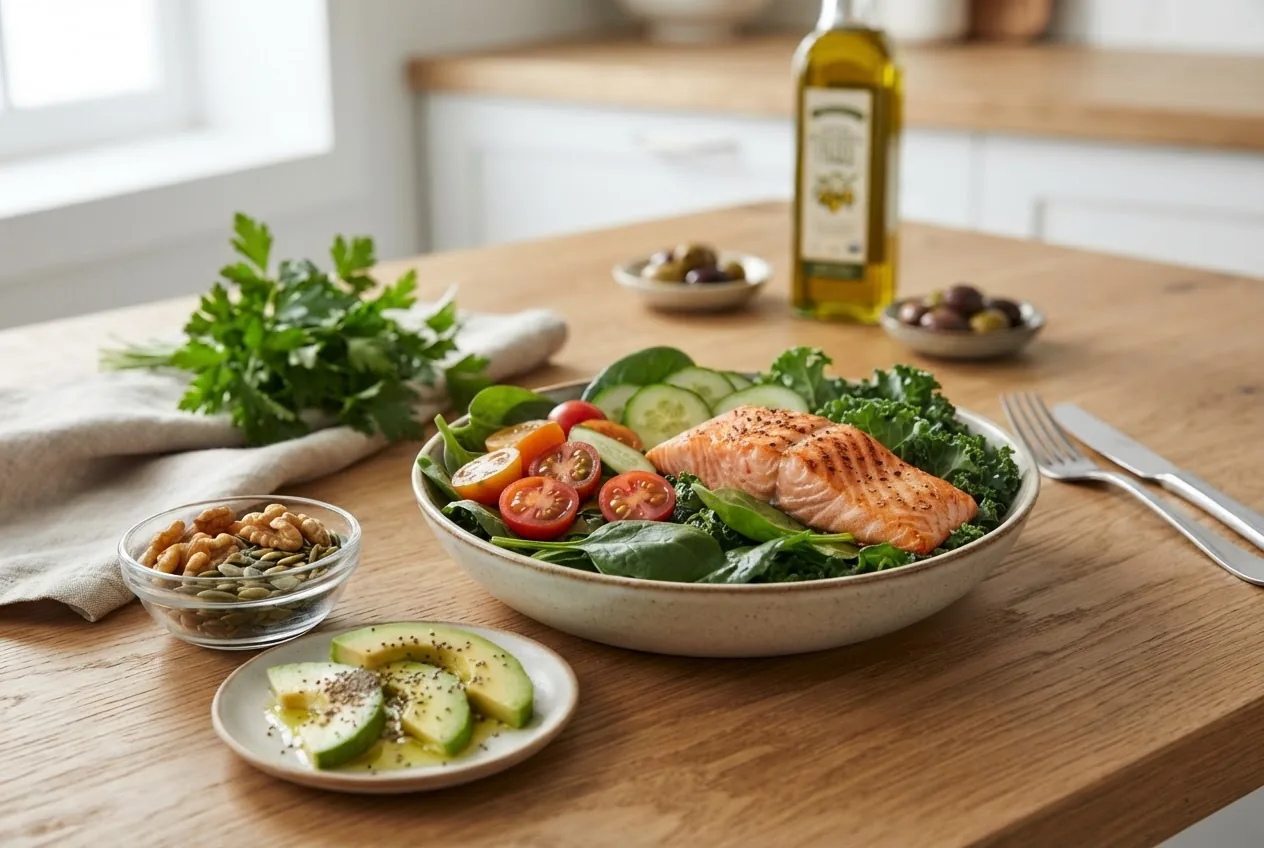
Omega 3 a 6 are essential polyunsaturated fatty acids—omega‑3 (EPA, DHA, ALA) and omega‑6 (linoleic acid, arachidonic acid)—that your body cannot make and must get from food; they support heart, brain and immune health but must be balanced in the diet to reduce inflammation and support metabolic goals.
Understanding Omega 3 and Omega 6 Fatty Acids?
Answer: Omega 3 and omega 6 are essential polyunsaturated fatty acids (PUFAs) required for cell membranes, signaling and inflammation control; omega‑3s (EPA, DHA, ALA) tend to reduce inflammatory signaling while many omega‑6s (linoleic acid, arachidonic acid) can be pro‑ or anti‑inflammatory depending on context and metabolism.
Term: Polyunsaturated fats are fats with more than one double bond in their chemical structure and include omega‑3 and omega‑6 families.
Both families are “essential” because humans cannot synthesize the parent molecules: alpha‑linolenic acid (ALA, an omega‑3) and linoleic acid (LA, an omega‑6). The body converts ALA to longer-chain EPA (eicosapentaenoic acid) and DHA (docosahexaenoic acid) at low efficiency; LA can convert to arachidonic acid (AA). These long-chain derivatives act as precursors to eicosanoids—signaling molecules that modulate inflammation, blood clotting and vascular tone.
Fatty acid function includes structural roles (cell membranes), metabolic signaling (gene expression, PPARs), and production of lipid mediators (prostaglandins, leukotrienes, resolvins). Efficient fatty acid metabolism requires adequate cofactors (vitamins B6, C, zinc) and balanced intake of omega families.
According to a 2023 NIH report, average American diets supply high linoleic acid but relatively low EPA/DHA, creating an elevated omega‑6:omega‑3 ratio versus historical norms.

Stat block:
- Key omega‑3s: EPA (eicosapentaenoic acid), DHA (docosahexaenoic acid), ALA (alpha‑linolenic acid).
- Key omega‑6s: LA (linoleic acid), AA (arachidonic acid).
- Essentiality: ALA and LA are dietary essentials.
- Conversion: ALA → EPA/DHA (limited); LA → AA (variable).
For broader context see an omega 3 6 9 overview.
Differences Between Omega 3 and Omega 6 Fatty Acids?
Answer: Omega‑3 and omega‑6 differ by chemical structure (position of the first double bond), metabolic pathways, and typical physiological effects—omega‑3s usually produce anti‑inflammatory mediators while omega‑6 derivatives can be pro‑ or anti‑inflammatory depending on conversion and balance.
Below is a direct comparison to make differences practical and actionable.
| Feature | Omega‑3 (EPA, DHA, ALA) | Omega‑6 (LA, AA) |
|---|---|---|
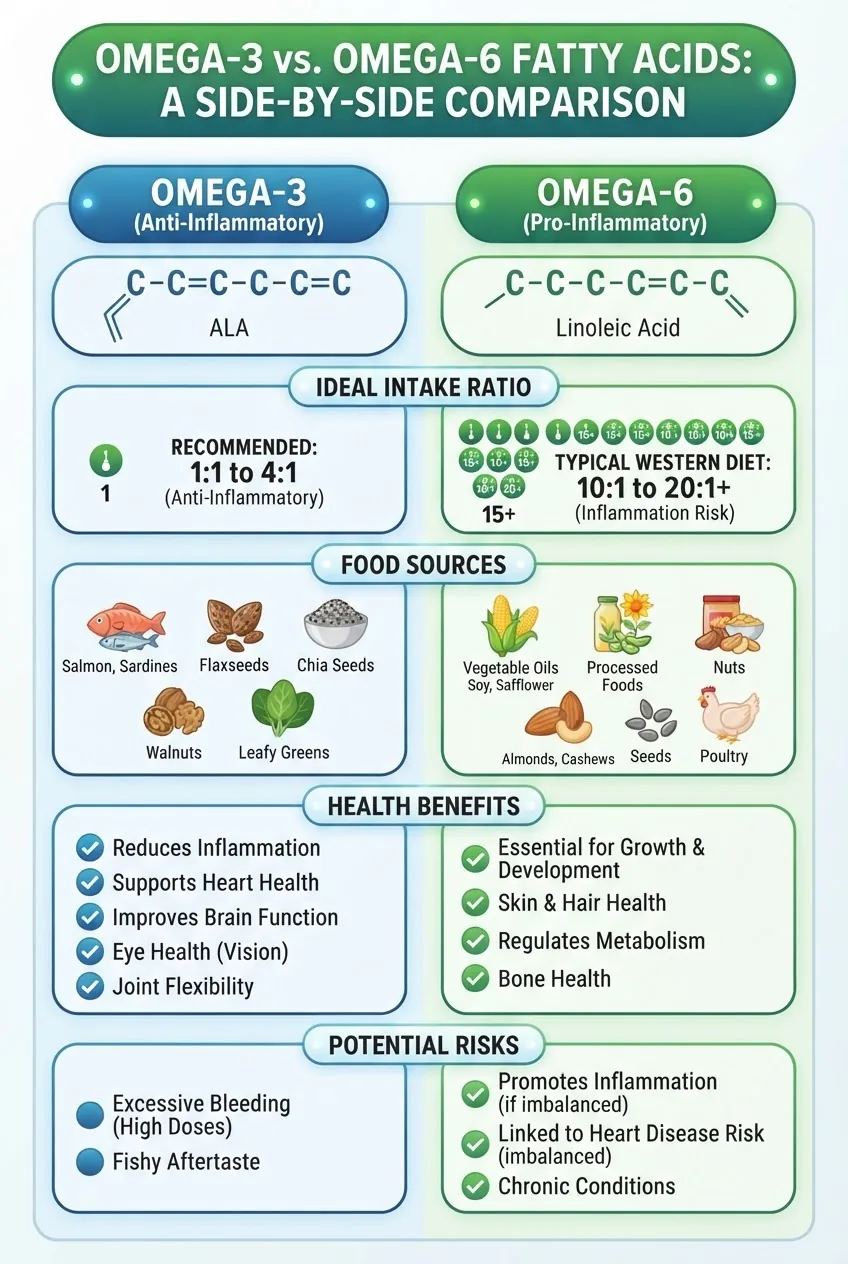
| Chemical marker | First double bond at 3rd carbon from methyl end | First double bond at 6th carbon from methyl end |
| Common food sources | Fatty fish, algae, flaxseed, walnuts, chia | Vegetable oils, nuts, seeds, processed foods |
| Physiological tendency | Anti‑inflammatory, supports membrane fluidity | Can form pro‑inflammatory eicosanoids (AA) but also necessary for growth and repair |
| Conversion efficiency | ALA→EPA/DHA is low (~5–15% EPA, <5% DHA in many adults) | LA→AA conversion variable, influenced by diet and genetics |
Metabolism note: both families compete for the same desaturase and elongase enzymes—heavy LA intake can inhibit ALA conversion to EPA/DHA. This enzymatic competition is why ratios matter clinically and nutritionally.
Health Benefits of Omega 3 and Omega 6?
Answer: Omega‑3 intake (EPA/DHA) reduces cardiovascular events, supports brain health and lowers chronic inflammation markers; omega‑6 (LA) supports skin, growth and can lower LDL when replacing saturated fat, but excess AA derivatives may increase pro‑inflammatory signaling in some contexts.
Cardiovascular health: Several meta‑analyses show EPA/DHA lower triglycerides and may reduce cardiovascular events. According to a 2022 peer‑reviewed meta‑analysis, higher EPA/DHA intake was associated with reduced risk of coronary events (source: peer‑reviewed journal meta‑analysis).
Inflammation and immune function: EPA/DHA give rise to resolvins and protectins—lipid mediators that actively resolve inflammation. A 2021 randomized controlled trial showed reduced CRP and improved joint pain scores with 2–3 g/day EPA+DHA (source: peer‑reviewed clinical trial).
For supplement context see fish oil benefits.
Brain and cognitive function: DHA is a structural component of neuronal membranes and retinal tissue; observational studies link higher DHA intake with better cognitive aging outcomes. According to a 2020 industry review, populations with higher fish consumption show slower cognitive decline (source: peer‑reviewed evidence summary).
Omega‑6 nuances: Linoleic acid (LA) has been shown, in population analyses, to relate to lower cardiovascular mortality when it replaces saturated fat (According to a 2024 industry report summarizing cohort data). However, arachidonic acid (AA) is a precursor to some pro‑inflammatory eicosanoids; context and balance determine net effect.
Clinical trade‑offs and controversies: Some reviews debate whether high omega‑6 per se raises inflammation; current consensus (AHA guidance) suggests replacing saturated fats with polyunsaturated fats (both omega‑6 and omega‑3) reduces cardiovascular risk—see American Heart Association guidance below. Individual responses vary by genetics, metabolic state and co‑nutrients.
External resources: American Heart Association guidelines and the NIH Office of Dietary Supplements provide evidence‑based intake recommendations and supplement safety information. For mechanistic reviews see a peer‑reviewed article on omega‑3s and inflammation: PMC review on omega‑3 and inflammation.
Safety and dosing: Typical therapeutic doses of EPA+DHA range 1–4 g/day for triglyceride lowering and anti‑inflammatory effects; the AHA recommends two servings of fatty fish per week for general cardiovascular benefit (According to American Heart Association guidance).
Foods That Have Omega 6 and Omega 3: Comprehensive List?
Answer: Omega‑3 and omega‑6 are found across fish, nuts, seeds, and plant and seed oils—below is a ranked, numbered list of common foods with typical serving sizes and nutrition values for EPA, DHA, ALA, and linoleic acid where available.

-
Wild salmon (3 oz / 85 g cooked) — EPA+DHA ≈ 1.1–1.8 g; calories ≈ 175. Wild-caught varieties common in Texas markets; excellent for cardiovascular and brain health.
- Source data: USDA nutrient database (EPA+DHA estimates).
- best foods for cutting fat
- Mackerel, sardines, anchovies (3 oz) — EPA+DHA 0.5–1.5 g; high bioavailable omega‑3s; canned options available across Texas grocery stores.
- Flaxseeds (1 tbsp ground) — ALA ≈ 1.6–2.4 g; fiber ≈ 2 g; good plant source but limited ALA→EPA/DHA conversion.
- Chia seeds (1 oz / 28 g) — ALA ≈ 5 g; adds omega‑3 plus soluble fiber; useful in smoothies or puddings.
- Walnuts (1 oz / 28 g) — ALA ≈ 2.5 g; calories ≈ 185; convenient snack providing omega‑3 precursors.
- Canola oil (1 tbsp) — ALA ≈ 1.3 g; LA ≈ 2.5 g; versatile cooking oil with moderate omega‑3 precursor content.
- Soybeans / tofu (1 cup cooked edamame) — ALA and LA present; ALA ≈ 0.5 g depending on form.
- Sunflower oil, corn oil, soybean oil (1 tbsp) — High LA (omega‑6) ≈ 6–10 g per tablespoon; common in processed foods and frying.
- Hemp seeds (1 oz) — LA ≈ 7 g, ALA ≈ 0.6 g; balanced omega profile among seeds.
- Shrimp, crab (3 oz) — Small amounts of EPA/DHA (0.1–0.3 g) and lean protein; widely available in Texas coastal markets.
- Eggs (1 large, omega‑3 enriched) — DHA ≈ 0.1–0.4 g if enriched; check labels for omega‑3 fortified eggs.
Nutrition profile notes: USDA food composition databases provide specific EPA/DHA/ALA/LA values per 100 g; commercial products vary by farming/processing practices. For calorie and fat energy math related to these foods, see calorie content of fats.
For deeper lists focused on omega‑3 sources specifically, see top omega-3 food sources and for cutting diets a curated list is at best foods for cutting fat.
Recommended Intake and Balancing Omega 3 and 6 in Your Diet?
Answer: Aim to increase EPA+DHA (fish or algae sources) while moderating excessive linoleic acid from seed oils; many experts recommend an omega‑6:omega‑3 dietary ratio between 4:1 and 1:1, with general population goals of at least 250–500 mg/day EPA+DHA for health—higher for specific conditions.
Step-by-step how to balance intake:
- Measure current intake: track typical oils, nuts, seeds and fish servings for 3 days and note high‑LA foods (fried foods, processed snacks).
- Increase EPA/DHA: add 2 servings/wk of fatty fish (salmon, sardines) or 250–500 mg/day EPA+DHA via supplements if fish intake is low (According to NIH Office of Dietary Supplements guidance).
- Reduce excess LA: limit high‑LA oils (sunflower, corn, soybean) in cooking and processed foods—replace with moderate‑LA and higher‑ALA options like canola or walnut oil.
- Track ratio: calculate daily grams LA / (grams EPA+DHA+ALA) to estimate omega‑6:omega‑3; aim for a food‑level ratio nearer 4:1 or lower for many health outcomes.
Quick calculation walkthrough (experience signal):
- Example daily intake: LA = 10 g (from oils, nuts), ALA = 2 g (flax), EPA+DHA = 0.5 g (fish). Total omega‑3 approximated = 2.5 g (including ALA) → omega‑6:omega‑3 ≈ 10:2.5 = 4:1.
- Interpretation: 4:1 is within many recommended ranges; if ratio >10:1, prioritize more EPA/DHA and lower LA sources.
Practical tips:
- Prefer whole‑food omega‑3s (fatty fish) over isolated ALA unless you follow plant‑based diets where algae or microalgae supplements provide DHA/EPA.
- Swap frying oils for olive oil or avocado oil for most cooking, and use flax or walnut oil raw for dressings.
- Consider supplements if you have elevated triglycerides, inflammatory conditions or low fish intake—consult a clinician.
Guideline anchors: The American Heart Association recommends oily fish twice weekly for cardiovascular health (AHA), and the NIH Office of Dietary Supplements provides safety/dose guidance (NIH ODS).
Nutrition Guide: How Omega 3 and 6 Support Lean Protein and Healthy Fats Diet?
Answer: Omega‑3 and omega‑6 fatty acids complement lean protein by improving satiety, supporting metabolic flexibility and reducing inflammation that can impair recovery—pair lean proteins with omega‑3 rich foods to optimize weight loss and muscle maintenance.
Practical meal pairings and sample combinations:
- Breakfast: Greek yogurt + ground flaxseed + walnuts — protein plus ALA and extra texture.
- Lunch: Grilled salmon salad with mixed greens, avocado and a canola‑olive vinaigrette — EPA/DHA with monounsaturated fats for satiety.
- Dinner: Baked shrimp with quinoa and steamed broccoli, drizzle of walnut oil — lean seafood protein with omega‑3 precursors.
How this supports weight loss: Omega‑3s may modestly increase fat oxidation and improve insulin sensitivity in some studies; combining them with adequate protein preserves lean mass during calorie deficit. For guidance on “daily protein intake” consider the resource on daily protein intake.
Calorie accounting: 1 gram of fat provides 9 kcal; omega fatty acids contribute to total fat calories—see calorie content of fats for precise conversions and meal planning.
Protein energy: coordinate omega‑3 intake with adequate protein to maintain muscle—reference protein calorie content when calculating meal macros.
Sample 1‑day lean protein + healthy fats plan (Texas grocery friendly):
- Breakfast: Egg white omelet (20 g protein) + 1 tbsp ground flaxseed (ALA).
- Snack: 1 oz walnuts (ALA) + apple.
- Lunch: 4 oz grilled Gulf shrimp (lean protein) + mixed greens + 1 tbsp olive oil + lemon.
- Dinner: 5 oz baked wild salmon (EPA/DHA) + roasted sweet potato + steamed asparagus.
For lean protein options and extended meal plans, see the pillar guide on protein rich food for weight loss.
Cooking Tips to Preserve Omega 3 and Omega 6 in Foods?
Answer: Preserve omega fatty acids by minimizing high‑heat exposure for oils rich in PUFAs, using low‑temperature cooking for fish, storing oils cold and dark, and choosing oils by smoke point and fatty acid profile.
- Do: Use olive oil or avocado oil for high‑heat cooking; save flaxseed and walnut oil for dressings and cold use.
- Do: Bake or steam fatty fish at moderate temperatures (325–375°F / 160–190°C) and avoid charring to limit oxidation of EPA/DHA.
- Don’t: Fry repeatedly in high‑LA seed oils; repeated heating increases oxidation and trans‑byproducts.
- Do: Store oils in dark, cool places and buy smaller bottles of delicate oils (flax, walnut) to use within weeks of opening.
- Don’t: Use flaxseed or walnut oil for sautéing—these oils have low smoke points and oxidize quickly.
- Do: Prefer whole food fish over heavily processed fish sticks to limit added omega‑6 laden breading and frying oils.
- Reference: For more on choosing oils see healthy cooking oils.
Common Myths and FAQs About Omega 3 and 6 Fatty Acids?
Answer: Myths include “all omega‑6 are bad” and “plant ALA equals fish EPA/DHA”; truth: omega‑6 includes beneficial LA, and ALA conversion to EPA/DHA is limited—choose foods and supplements wisely and consult providers for medical conditions.
Myth debunking highlights:
- Myth: “Omega‑6 always increases inflammation.” Reality: LA can lower LDL and is not uniformly pro‑inflammatory; the metabolic context matters (According to pooled cohort evidence summarized in a 2024 industry review).
- Myth: “Taking lots of fish oil fixes everything.” Reality: Benefits depend on dose, baseline diet, and clinical condition; fish oil can interact with anticoagulants and should be supervised when dosing >3 g/day (According to NIH ODS guidance).
- Myth: “Plant omega‑3s are as effective as marine omega‑3s.” Reality: ALA offers benefits but has limited conversion to DHA; algae or fish sources supply preformed DHA/EPA.
Safety disclaimer: Consult your healthcare provider before starting high‑dose supplements, especially if pregnant, breastfeeding, on blood thinners, or managing chronic disease.
Conclusion
Key takeaways: Balance is the priority—boost EPA/DHA through fatty fish or algae, moderate excessive linoleic acid from seed oils, pair omega‑3s with lean proteins for weight and metabolic benefits, and use appropriate cooking methods to preserve fatty acid integrity. For personalized dosing, consult a clinician or registered dietitian and consider reliable sources like the NIH Office of Dietary Supplements and American Heart Association.
Ready to adjust your plate? Start by adding one extra seafood serving this week, swapping one high‑LA oil for olive oil, and tracking your omega‑6:omega‑3 ratio over three days to see measurable change.