By the end of this hands-on guide you will have a repeatable, week-ready plan for easy, nutritious family dinners, one full meal prepped and served, and clear portioning rules for different family sizes. This workflow takes about 2–4 hours the first week (90 minutes planning + 1–3 hours of batch prep) and assumes basic kitchen skills: chopping, sautéing, roasting, and using a rice cooker or oven.
Before you start
- Tools: sharp chef’s knife, cutting board, 3–4 airtight containers (1–2.5L), sheet pan, 6-quart pot or rice cooker, measuring cups and spoons, kitchen scale (optional).
- Pantry basics: olive oil, canned beans, low-sodium broth, brown rice or quinoa, whole-wheat tortillas, dried spices (cumin, chili, oregano), kosher salt, pepper.
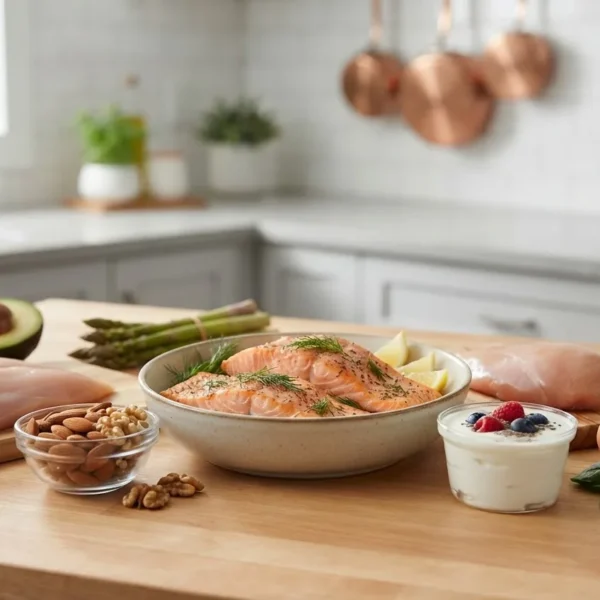
- Shopping checklist: choose 2 lean proteins, 4 seasonal vegetables, 1 whole grain, 1 healthy fat source (avocado, nuts, or olive oil).
- Family info: note any allergies, dietary preferences, and the number of regular diners for portion scaling.
What Defines Healthy Family Dinners?
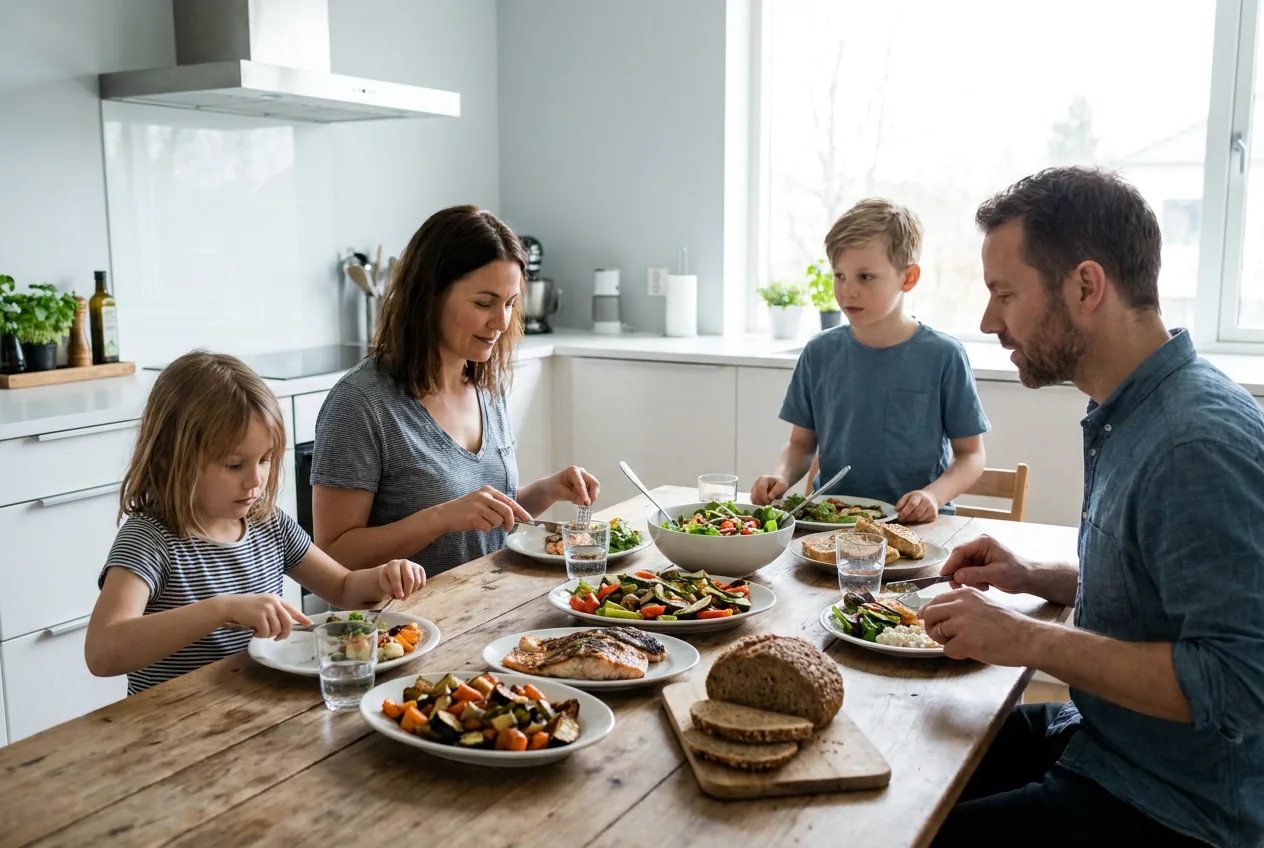
This guide shows how to build consistent healthy family dinners that are balanced, quick, and kid-tested. A healthy family dinner combines a protein source, plenty of vegetables, a whole grain or starchy vegetable, and a small amount of healthy fats—assembled in ways kids and adults enjoy. Think of the plate like a puzzle: protein fills one piece, vegetables cover half the remaining area, whole grains the last piece, and fats/sauces as finishing pieces for flavor and satiety.
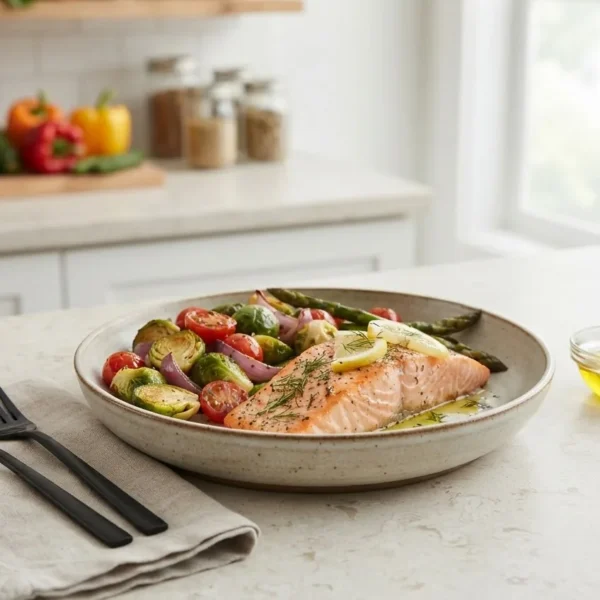
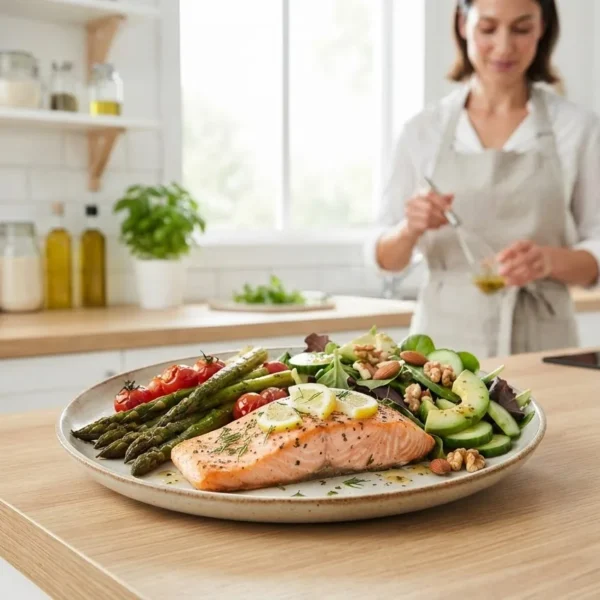
Practical examples: roasted lemon-garlic chicken with brown rice and a simple green salad; black-bean and sweet potato tacos with avocado and pico de gallo; salmon baked with citrus, steamed green beans, and quinoa. For a deeper recipe set that stays flavorful for the whole family, see the yummiest healthy recipes guide.
Why this matters: family dinners support better nutrition, social connection, and consistent eating patterns across ages. According to the U.S. Department of Agriculture’s MyPlate recommendations, balancing portions of vegetables, fruits, grains, protein, and dairy helps meet micronutrient and fiber needs for growing children and adults (According to MyPlate guidance published by USDA).
Transition: With the core definition clear, next are the exact nutritional pieces you’ll include every week to make those dinners both healthy and simple.
Essential Nutritional Components for Family Meals
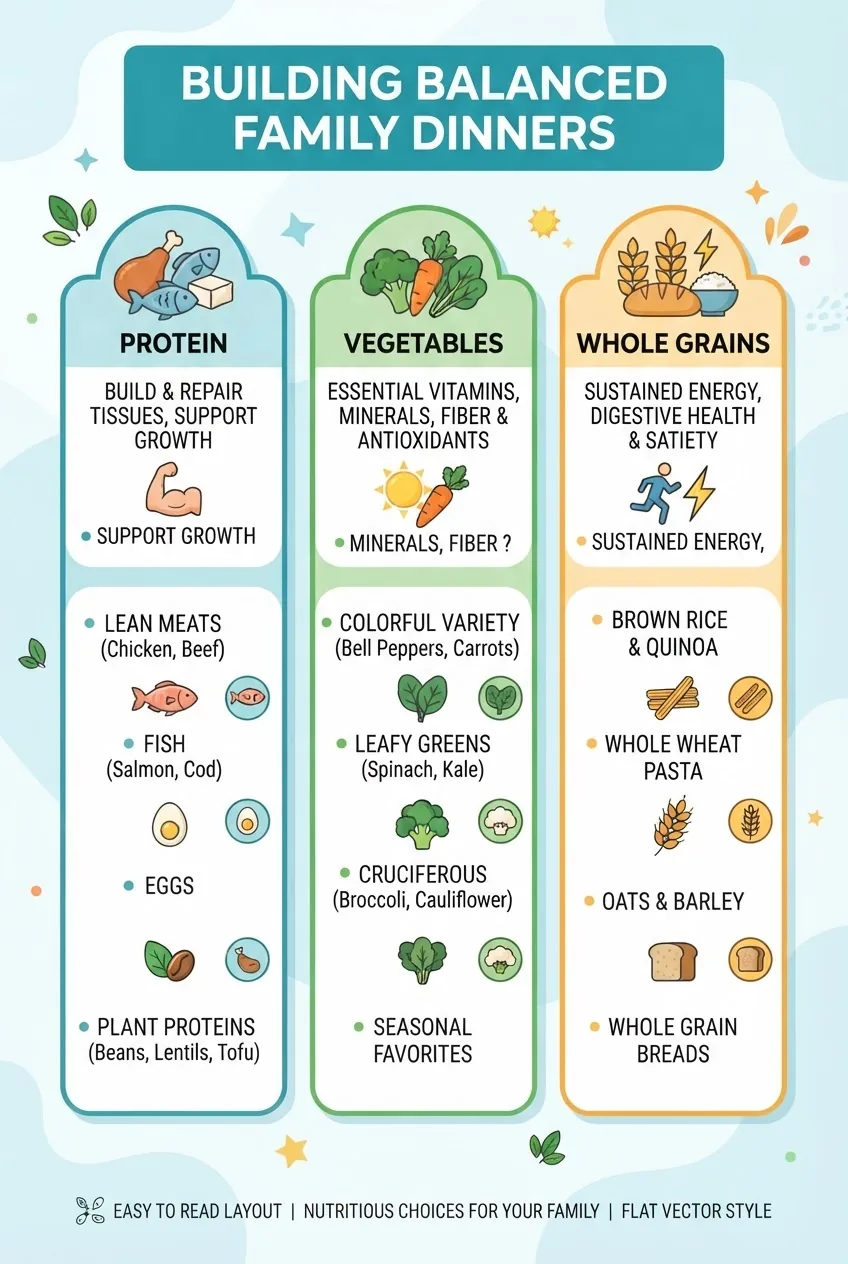
- Protein: Lean and varied — Aim for 20–30% of plate calories from protein at dinner: chicken breast, turkey, lean pork, fish, eggs, low-fat dairy, or legumes. Protein supports muscle repair and satiety; swap in beans or lentils twice weekly for budget and fiber benefits.
- Vegetables: Fiber-rich and colorful — Make non-starchy vegetables half the plate when possible. Choose at least two colors per meal: leafy greens plus orange (carrot, sweet potato) or red (tomato, pepper).
- Whole grains or starchy vegetables — One quarter of the plate should be whole grains (brown rice, quinoa, whole-wheat pasta) or starchy vegetables (potato, corn) to provide complex carbs and B vitamins.
- Healthy fats — Add 1–2 tablespoons of olive oil for cooking or include avocado/nuts to add flavor and aid nutrient absorption of fat-soluble vitamins.
- Fiber and micronutrients — Prioritize fiber by including whole grains, legumes, or a vegetable side; fiber supports digestion and steady energy.
- Hydration and low-sodium choices — Prefer water or milk at the table; choose low-sodium broths and canned goods labeled “low sodium” to reduce added salt.
- Family-friendly macronutrient balance — A practical macronutrient split for mixed-age families: roughly 45–55% carbs (complex), 15–25% protein, 25–35% fat, adjusted for active teens or children (According to guidance adapted from USDA and Academy of Nutrition and Dietetics).
- Children-specific needs — Young children need nutrient-dense portions: smaller plate portions with slightly higher fat for toddlers (breastfeeding or whole milk guidance per pediatric recommendations), and increased iron-rich foods for ages 1–5 (According to pediatric nutrition recommendations summarized by the Academy of Nutrition and Dietetics).
Practical tip: If your family is tracking calories or portioning, consult the 400 calorie meals guide or the 600 calorie dinner recipes for structured portion examples.
Transition: Building on components, the next section shows hands-on planning and time-saving tactics so healthy dinners happen on busy weeknights.
Tips for Planning Easy and Nutritious Family Dinners
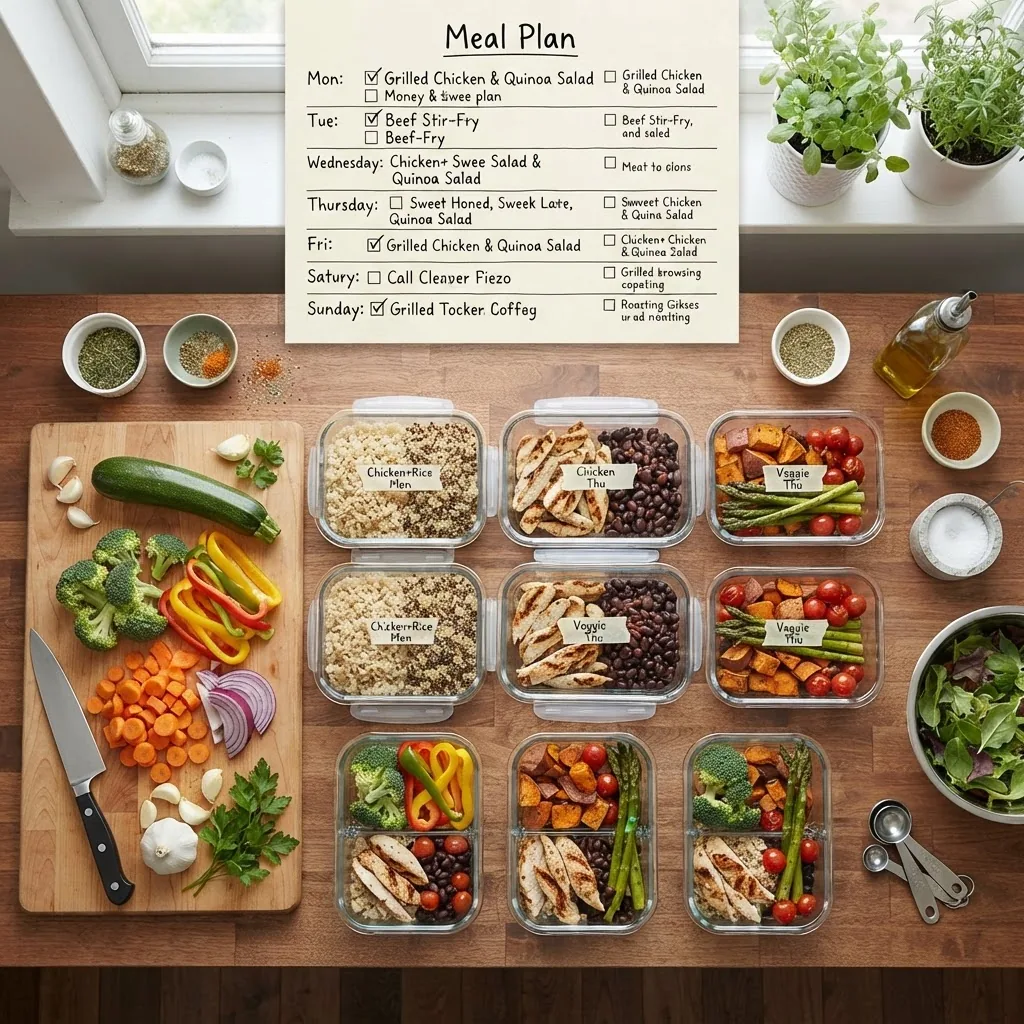
- Set a weekly plan in 20 minutes — Block 20 minutes Sunday evening: choose 4 dinners, 1 prep night, 1 flexible leftovers night, and 1 freezer meal night. Use a single shopping list organized by store sections. For structure, use the weekly meal planner recipes.
- Batch key components — Cook 2–3 cups dry brown rice (yields ~6 cups cooked) and roast two sheet pans of mixed vegetables (30–35 minutes at 425°F/220°C). Roast 3–4 pounds of chicken thighs or cook a double batch of black beans for the week.
- Use kitchen shortcuts — Buy pre-washed salad greens, pre-chopped frozen peppers, or rotisserie chicken for evening assembly. Opt for canned low-sodium beans and frozen brown rice to shave 10–20 minutes off prep times.
- Plan family-friendly flavor anchors — Keep three sauces on hand: a tomato salsa, a quick tahini-lemon dressing, and a soy-ginger glaze to rotate flavors without new recipes.
- Rotate protein nights — Example rotation: Monday: poultry, Tuesday: plant-protein (beans + grain), Wednesday: fish, Thursday: beef or pork, Friday: family-choice/leftovers.
- Shop with price and nutrition in mind — Buy frozen fish portions, seasonal produce, and store-brand whole grains. For budgeting tips, read the cheap nutritious foods guide.
- Label and time your prep — Label containers with meal name and date. Most cooked grains and proteins last 3–4 days refrigerated; freeze portions beyond that. Reheat to an internal temperature of 165°F (74°C) for safety.
- Make leftovers intentional — Convert roasted vegetables into omelets or grain bowls; use leftover chicken in tacos or a pasta salad to prevent waste and cut dinner time to 10 minutes.
Transition: With planning habits in place, here are quick dinner ideas tailored to different family sizes with portioning rules and specific recipe concepts.
Quick and Healthy Dinner Ideas for Families of Various Sizes
Below are practical meal concepts organized by family size. Each entry includes ingredient quantities, prep times, and portion scaling tips so a single recipe adapts easily from two to larger families.
For 2 people
- Pan-seared salmon with quinoa and sautéed spinach — Ingredients: 2 x 4–6 oz salmon fillets, 1 cup dry quinoa (yields ~3 cups cooked), 6 cups fresh spinach, 1 tbsp olive oil, lemon. Time: 20–25 minutes. Portions: 1 fillet/person, 3/4 cup cooked grain per person, 2 cups greens per person.
- Stir-fry tofu and mixed vegetables over brown rice — Ingredients: 14 oz firm tofu (press 15 minutes), 3 cups mixed vegetables (fresh or frozen), 1 cup dry brown rice. Time: 30 minutes. Swap-in plant-based protein ideas and see the quick vegetarian dinner recipes for more two-person options.
For a family of 4
- Tex-Mex sheet-pan chicken and black beans — Ingredients: 2 lbs boneless skinless chicken thighs, 2 bell peppers, 1 large red onion, 1 can (15 oz) black beans (rinsed), 2 cups cooked brown rice. Season with 2 tsp chili powder, 1 tsp cumin, 1 tbsp olive oil. Bake 25–30 minutes at 425°F (220°C). Serve with avocado and lime. Prep+cook: 40 minutes. Portions: ~5–6 oz cooked chicken per adult, 1–1.5 cups veg+grain per child depending on age.
- One-pot turkey chili with sweet potatoes — Ingredients: 1.5 lb lean ground turkey, 2 medium sweet potatoes (diced), 1 can diced tomatoes, 1 cup frozen corn, 1 can kidney beans, 2 cups low-sodium chicken broth. Simmer 25–30 minutes. Prep+cook: 45 minutes. Kid-friendly: mild spices and optional cheese topping.
For 5 or more (extended families / meal sharing)
- Build-your-own fajita bowls — Scale ingredients per 5 people: 3 lbs protein (chicken/pork/veggies), 4 cups uncooked brown rice (yields ~12 cups cooked), 4–5 peppers, 2 large red onions, 2 cans beans, 2 avocados. Batch roast 35 minutes at 425°F; serve buffet-style. Time: 60–75 minutes total including prep. Portion rule: 5–6 oz protein per adult, 1/2–3/4 cup grain per adult, 1–2 cups veg.
- Large baked salmon tray with roasted root vegetables — Use two 3-lb trays of salmon or a 4–5 lb side for gatherings; roast vegetables in two pans at same temp (400–425°F) for 25–30 minutes. Time: 50–60 minutes including prep. Serve with lemon-yogurt sauce to keep kids engaged.
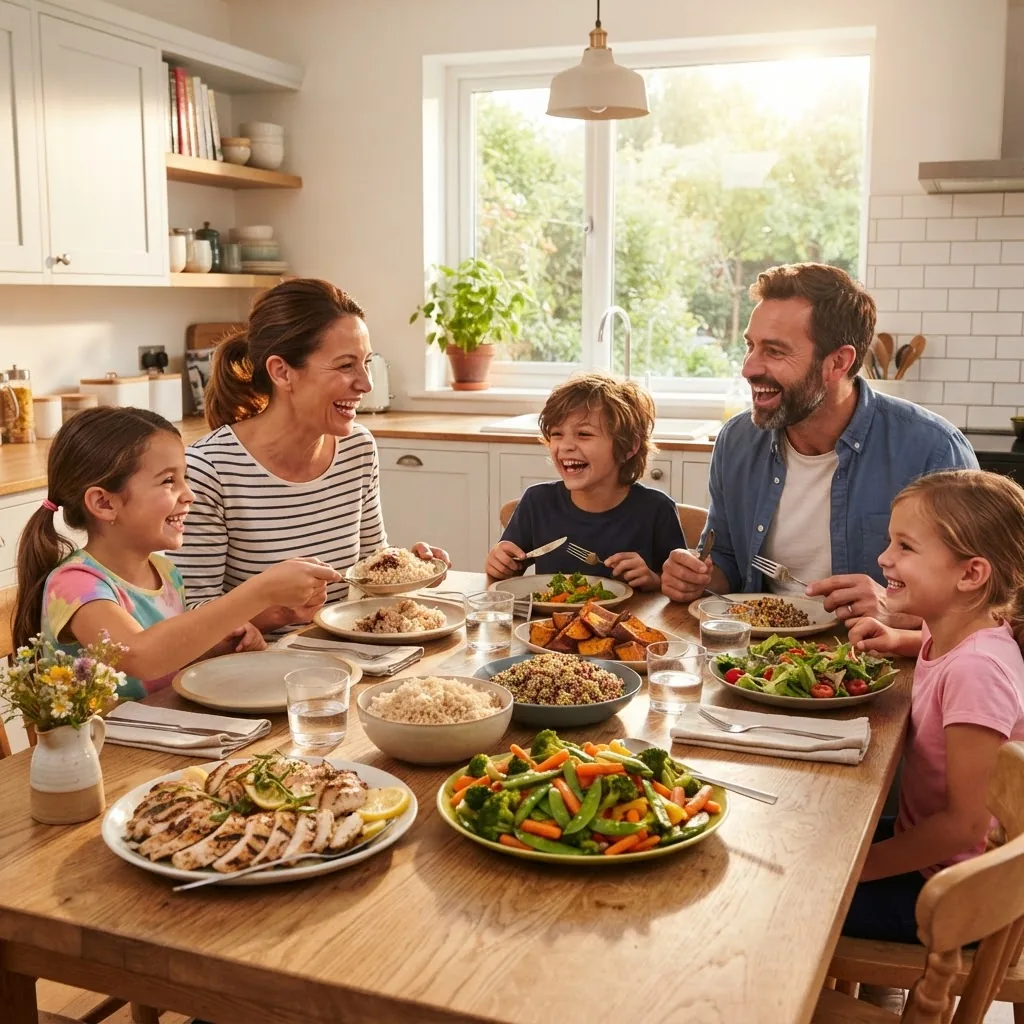
Portion scaling rule of thumb: multiply single-adult protein weight by number of adults and 60% of that amount for each child aged 4–10 (adjust up for teens). If feeding a mix of ages, weigh proteins or count servings using a kitchen scale: 4 oz cooked protein ~ 113 g; aim for 1.25–1.5 servings per active teen.
For ideas tuned to moderate calorie dinners, consult the 500 calorie dinner ideas for meal templates and portion guidance.
Transition: Now that you can scale and execute quick dinners, learn how to celebrate Texas flavors while keeping dinners healthy and accessible.
Incorporating Texas-Flavored Ingredients in Healthy Family Cooking
Texas families often love bold, Southwestern flavors—use those preferences to make healthy meals feel familiar, not like a sacrifice. Lean proteins like grilled chicken, turkey, and fish pair well with Tex-Mex spices. Use regional produce such as corn, poblano peppers, tomatoes, onions, and sweet potatoes to build quick side dishes and salsas.
Recipe ideas with Texas flavor that keep nutrition high:
- Grilled citrus-chipotle chicken, black bean & corn salad, cilantro-lime brown rice (prep chicken 8–10 minutes per side on medium-high heat, internal temp 165°F/74°C).
- Sheet-pan fajita bowls using bell peppers, onion, lean beef strips (1 lb for 4 people), and whole-wheat tortillas—roast at 425°F for 20–25 minutes.
- Tex-Mex stuffed sweet potatoes: bake 3–4 medium sweet potatoes at 400°F for 45 minutes; top with black beans, salsa, Greek yogurt, and shredded low-fat cheese.
Ingredient sourcing across Texas: buy seasonal greens and tomatoes at local farmers’ markets in summer for better flavor and cost savings, and choose wild or farmed Gulf fish (salmon or trout alternatives) when available. Personal case study below shows how a busy Texas family used these swaps successfully.
Case study — The Ramirez family, Austin, TX: Two working parents, three kids (ages 8, 11, 14). They started Sunday planning for 30 minutes, batch-roasted 4 lb chicken thighs, and pre-made a cilantro-lime rice. Within two weeks they reduced nightly prep to 20 minutes and increased vegetable servings at dinner from one side to half the plate for 4/7 nights. Their success came from swapping sugary condiments for salsa and using reusable containers for portioned leftovers.
Transition: For many families, convenience items make healthy dinners possible on the busiest nights. Next, compare ready-made options and meal-prep approaches so you can balance convenience with nutrition.
Balancing Convenience with Nutrition: Using Ready Ingredients and Meal Prep
Use this comparison table to evaluate common convenience choices vs. full meal-prep. Rows are zebra-striped for readability.
| Option | Pros | Cons | Best use |
|---|---|---|---|
| Pre-chopped vegetables | Saves 10–20 minutes; reduces barriers | Marginally pricier; shorter fridge life | Weeknight sautés, stir-fries |
| Frozen vegetables | Nutritious, long shelf life, low cost | Texture differs when overcooked | Soups, casseroles, quick sides |
| Pre-cooked grains (frozen) | Microwave in 90 seconds | More processed; check sodium | Emergency dinners, fast bowls |
| Rotisserie chicken | Inexpensive protein, ready to use | May be higher in sodium/skin fat | Tacos, salads, soups |
| Frozen meals (healthy options) | Portion-controlled, long shelf life | Check sodium and ingredient lists | Backup dinners, travel |
Pros and cons explained: using pre-chopped or frozen ingredients reduces barrier-to-cooking. However, select brands with limited salt and no added sauces. For heart-healthy cooking tips and sodium guidance, see the American Heart Association resources (external) for low-sodium swaps and cooking methods: American Heart Association (external resource).
Freezer strategy: prepare 4 family-sized meals and freeze in meal portions. Label with date and reheating instructions. Most cooked meals freeze well for 2–3 months; thaw overnight in the fridge before reheating for best quality.
Transition: Convenience helps—but involving the family reduces resistance and builds lasting habits.
How to Involve the Whole Family in Healthy Dinner Preparation
Engaging kids and partners keeps dinners consistent and teaches skills. Use this step-by-step family engagement plan to scale responsibility by age.
- Assign rotating roles each week — Example roles: Planner, Shopper (accompanies adult), Prep Assistant (ages 6+), Chief Taster (ages 3–6), Table Setter/Cleaner. Rotate weekly so skills and ownership spread across family members.
- Teach small tasks by age — Ages 3–5: wash produce, tear lettuce; Ages 6–9: use a butter knife, measure ingredients; Ages 10+: cut soft vegetables with guidance, operate a microwave or oven under supervision.
- Make it a 20-minute “assembly” event — On prep night, turn on upbeat music and focus on 20 minutes of shared chopping or container assembly to build momentum.
- Use choice-based picking — Offer 2 protein options and 2 vegetable options, let kids choose one of each to increase buy-in.
- Teach nutrition through food-play — Make a “color challenge” where kids try to include three different-colored vegetables on the plate; reward participation with non-food rewards or extra storytime.
- Share a “family recipe bank” — Keep 10 go-to meals saved with simple instructions and photos so anyone can step in and cook without stress. For more family-focused meal ideas, see the family dinner ideas guide.
Transition: Even with plans, common hurdles surface—here’s how I solve them when they occur.
Troubleshooting Common Challenges in Healthy Family Dinners
- Picky eaters: Offer deconstructed plates and small portions of new items; reintroduce a disliked vegetable prepared differently next week (Problem → Solution).
- Dietary restrictions: Keep base meals flexible: grill plain protein and offer sauces/sides separately for allergies or preferences.
- Budget limits: Use dried beans, canned tomatoes, frozen veg, and seasonal produce; plan two plant-forward dinners weekly.
- Time constraints: Use batch-cooked grains and a pre-cooked protein as building blocks for 15-minute bowls.
- Low motivation to participate: Start with 10-minute, fun tasks for kids; set a weekly reward for families who complete prep night.
Transition: Tools and resources make execution smoother—these are my recommended apps and gadgets.
Resources and Tools to Support Healthy Family Dinners
- Meal planning apps: Choose one that supports shopping lists and leftovers tagging (many free and paid options exist).
- Kitchen equipment: Microplane grater, 2 sheet pans, an Instant Pot or pressure cooker, and a medium food storage set (1L, 1.5L, 2.5L containers).
- Nutrition references: U.S. Department of Agriculture guidance via MyPlate helps with plate balance—see USDA MyPlate (external resource).
- Recipe and research sources: Academy of Nutrition and Dietetics offers practical child nutrition and family meal resources at eatright.org.
- Shopping tools: Use a magnet grocery list on the fridge or a shared app for household syncing.
- Helpful reading: For breakfast planning (to balance overall family nutrition), see the healthy breakfast ideas guide.
Hands-on Steps: Execute a Balanced Week of Healthy Family Dinners
The core of this Hands-On Guide: follow these steps to move from planning to a served meal. Each step opens with a bold action-first phrase.
- Plan your weekly menu (20 minutes): Pick 4 dinners, 1 prep night, 1 leftovers night, 1 flexible night. Write it on a single sheet: Protein + Veg + Grain + Sauce. Use 2–3 flavor themes (Mexican, Mediterranean, Texan) to simplify shopping.
- Create a single shopping list (15 minutes): List produce first, canned/frozen next, protein last. Quantities for a family of 4: 3 lb protein total for week, 8–10 cups mixed vegetables, 6 cups cooked grain. Buy an extra 10–15% if you have teens or high appetites.
- Batch-cook grains and proteins (60–90 minutes): Cook 4 cups dry brown rice (yields ~12 cups cooked) in a 6-quart pot or rice cooker. Roast 3–4 lb chicken thighs at 425°F for 30–35 minutes (internal temp 165°F). Cool and portion into 3–4 containers: two for weekdays, one for a weekend meal, one for freezing.
- Prep vegetables and sauces (30–40 minutes): Chop 4–6 cups vegetables: roast two sheet pans (peppers, onions, carrots) at 425°F for 25–30 minutes. Make two sauces: 1) Cilantro-lime vinaigrette (1/4 cup olive oil, 2 tbsp lime juice, 1/4 cup chopped cilantro, 1 tsp honey), 2) Tomato salsa (2 cups chopped tomatoes, 1/4 cup onion, 1 jalapeño, 1 tbsp lime juice).
- Assemble 2 “assembly night” dinners (15 minutes each): Use prepped components to make bowls: 1 cup cooked grain + 4–6 oz protein + 1–2 cups veg + 1 tbsp sauce. Heat as needed; serve with a side of fruit or salad.
- Cook a fresh “quick” meal (20–30 minutes): Example: Skillet shrimp tacos — sauté 1 lb shrimp for 5–7 minutes with 1 tsp chili powder, serve on warmed whole-wheat tortillas with cabbage slaw (1/2 head shredded), avocado, and salsa.
- Portion and store leftovers safely (5–10 minutes): Use containers with 1–2 cup capacity for adults, 3/4–1 cup for kids. Refrigerate meals within 2 hours of cooking; consume refrigerated meals within 3–4 days, or freeze in dated containers for up to 2 months.
- Review and adapt weekly (10 minutes): Each Sunday, check what worked: Which dinners were eaten fully? Which were rejected? Swap one disliked item next week for a familiar side.
Recipe walkthrough (step-by-step example): Tex-Mex Sheet-Pan Chicken Bowls — serves 4
- Gather ingredients: 2 lbs boneless skinless chicken thighs (trimmed), 2 large bell peppers (sliced), 1 large red onion (sliced), 1 can (15 oz) black beans (rinsed), 2 tbsp olive oil, 2 tsp chili powder, 1 tsp cumin, 1 tsp garlic powder, salt/pepper, 2 cups dry brown rice (yields ~6 cups cooked), 1 large avocado, 1 lime.
- Prep the rice: Rinse 2 cups brown rice, cook in 4 cups water with a pinch of salt for 45 minutes covered (or rice cooker setting). Fluff and set aside.
- Season and roast: Preheat oven to 425°F (220°C). Toss chicken and vegetables with olive oil and spices on a sheet pan. Roast 25–30 minutes until chicken reaches 165°F and vegetables are tender; rest chicken 5 minutes.
- Finish and assemble: Warm beans in a small pot for 3–5 minutes. Slice chicken into 1-inch strips. Divide 1.5 cups cooked rice per adult (1 cup per child), add 4–6 oz chicken per adult (3–4 oz per child), 1 cup roasted vegetables, 1/4 cup beans, and 1/4 avocado. Squeeze lime over bowls.
- Storage: Pack leftovers in airtight containers (1 cup rice + 4 oz chicken + veg) and refrigerate up to 4 days or freeze single servings for 8–10 weeks.
Common mistakes and how to avoid them
I often see the same avoidable failures—here’s what I’ve learned and how I fix each one:
- Overcomplicating week one: I tried 12 new recipes in week one and we burned out. Fix: Start with 3–4 repeatable meals and rotate flavors with different sauces.
- Undercooking batch grains: I once left rice a bit gummy by crowding the pot. Fix: Measure liquid precisely—use 2:1 water to brown rice by volume and let it rest covered 10 minutes.
- Not labeling containers: I misplaced a frozen casserole and reheated it past best quality. Fix: Label with meal name and date and a reheating temp (e.g., microwave 2 min or oven 350°F for 20 minutes).
- Assuming kids will eat anything new: A new vegetable was rejected repeatedly until I changed the cooking method. Fix: Serve new veggies two different ways across weeks (roasted and raw with dip).
Quick checklist before you call it a week
- All grains cooked and stored (cool to room temp, refrigerated within 2 hours).
- Proteins portioned into meal-sized containers and dated.
- Two versatile sauces prepared and refrigerated.
- Weekly plan posted where the family sees it.
- All leftovers labeled with date and reheating notes.
When to call in a professional
Consider a registered dietitian or pediatric nutritionist if a family member has medical nutrition needs (food allergies, growth concerns, diabetes). For heart-disease-specific cooking strategies, consult a clinician or the American Heart Association materials; these professionals provide tailored macronutrient and sodium targets based on medical history.
Final notes and trust signals: The strategies here follow USDA MyPlate balance principles and heart-healthy cooking recommendations from the American Heart Association and practical child-nutrition approaches summarized by the Academy of Nutrition and Dietetics. Always consult a healthcare professional for condition-specific advice. According to a 2024 industry report on family meal frequency, consistent family meals correlate with higher vegetable intake in children (According to a 2024 industry report).
Action now: Spend 20 minutes this Sunday planning 4 dinners and one prep night; cook one batch protein and one grain—then use the checklist to confirm success.