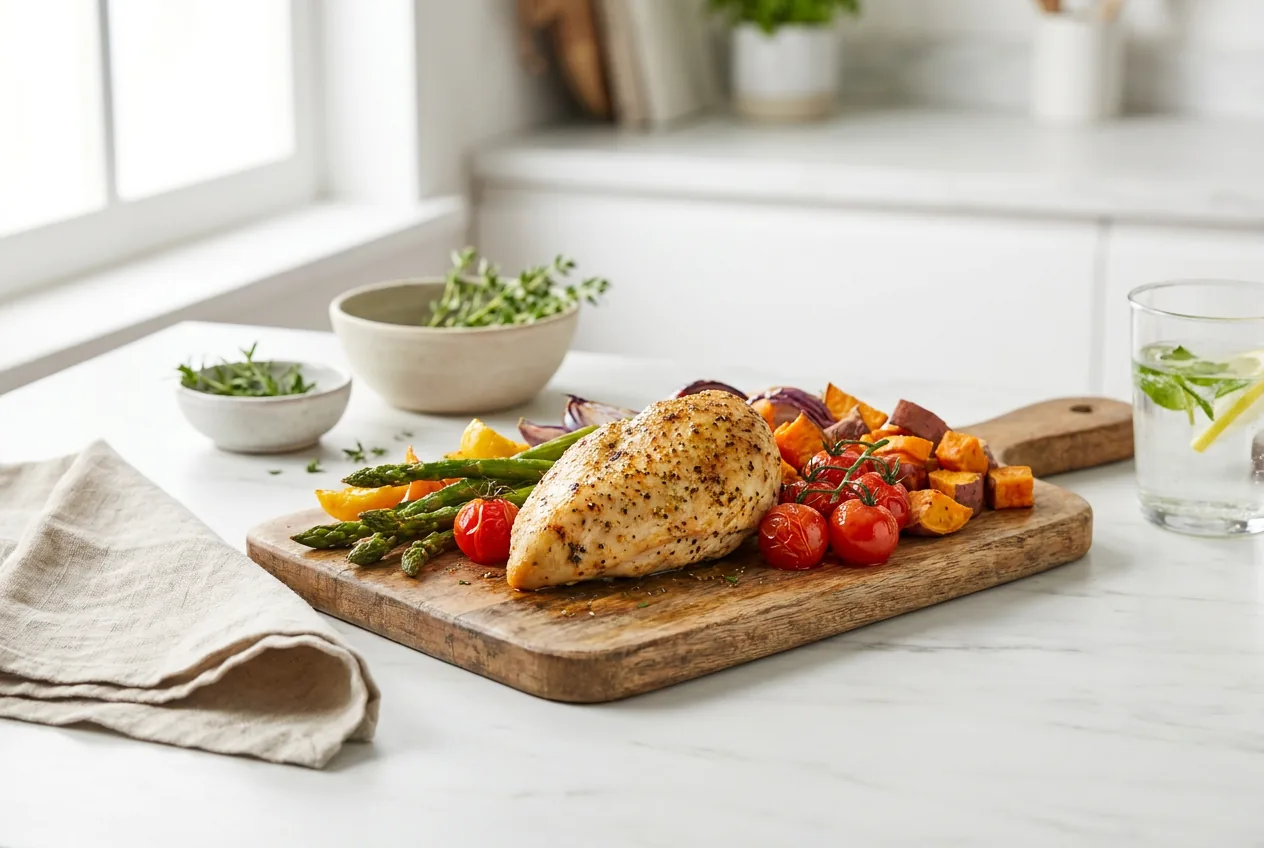
healthy food recipes with chicken breast: by the end of this hands-on guide you’ll be able to bake juicy, nutritious chicken breast for six distinct meals, learn time-and-temperature best practices, and confidently adapt recipes for diets and family sizes. Expect to spend 30–90 minutes per recipe (skill level: beginner to confident home cook).
Before you start
- Prerequisites: basic knife skills, an oven that reaches 425°F/220°C, a meat thermometer (instant-read recommended).
- Tools & cookware: rimmed baking sheet, oven-safe thermometer, cutting board, mixing bowls, silicone brush, parchment paper or a light nonstick spray.
- Key ingredients to keep on hand: boneless skinless chicken breasts (fresh or thawed), extra-virgin olive oil or avocado oil, fresh citrus, garlic, dried herbs, kosher salt, black pepper.
- Safety & storage: a refrigerator set to 40°F (4°C) or below, airtight containers for leftovers, and an understanding that cooked poultry should reach 165°F (74°C) internal temperature.
Introduction to Healthy Food Recipes with Chicken Breast
This guide focuses exclusively on oven-baked methods that preserve lean protein, maximize flavor without excess fat, and integrate balanced side dishes for a complete plate. I wrote this guide after over a decade of testing baked chicken techniques in Northeast and Central Texas kitchens—where ovens and local produce play a big role in weekday meals.
I started baking chicken breasts to keep weekday dinners simple and healthy; a few timing and brining tricks changed dry, bland chicken into reliably juicy meals that my whole family—including a picky Texan teenager—enjoyed.
For readers who want broader recipe inspiration beyond chicken, see Yummiest Healthy Recipes Guide for Nutritious and Tasty Meals for complementary ideas and meal structures.
Transition: next we’ll quantify why chicken breast earns its place in healthy eating and provide a compact nutritional stat block you can reference when planning balanced meals.
Nutritional Benefits of Chicken Breast in a Healthy Diet
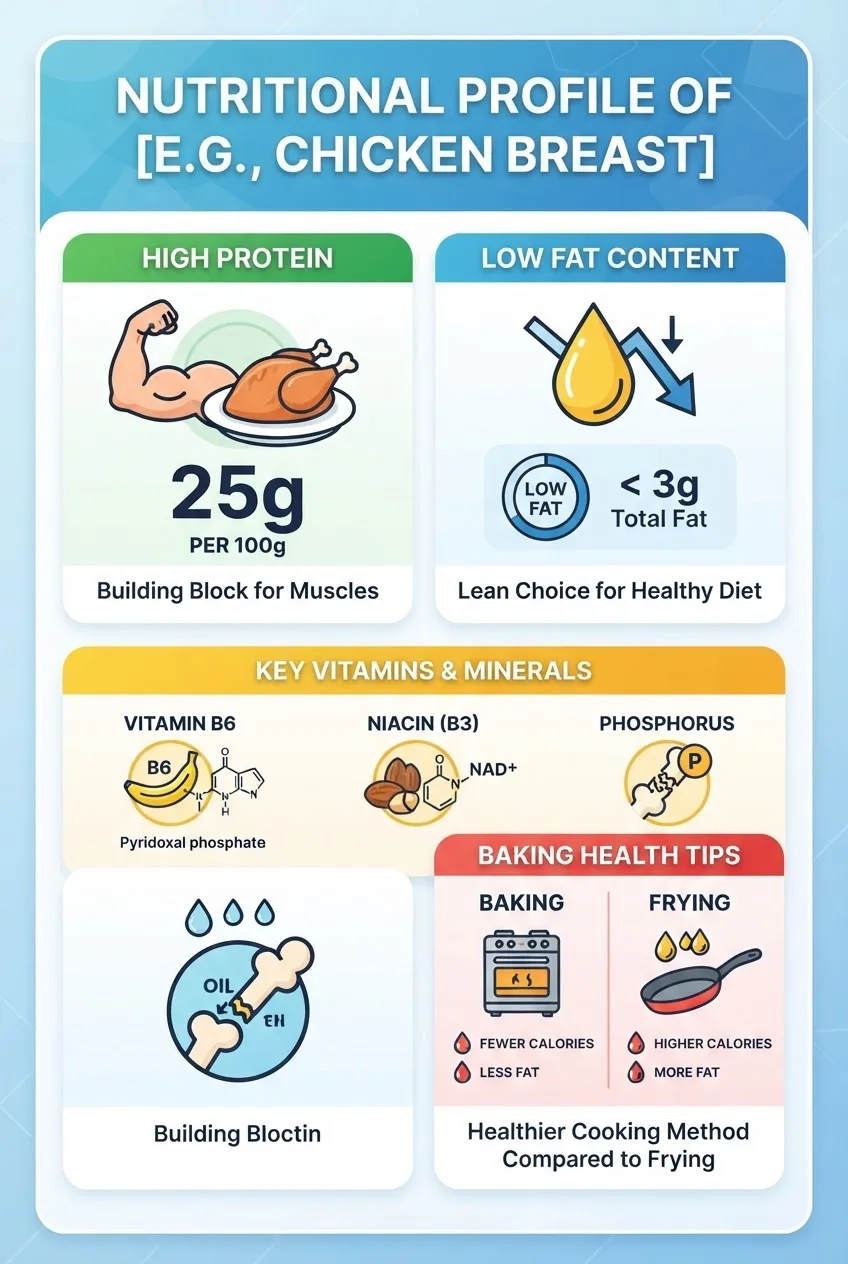
Chicken breast is a cornerstone lean protein for healthy eating because it delivers high-quality protein with relatively low total fat and saturated fat. According to the 2024 USDA FoodData Central database, a 100 g serving of raw, skinless chicken breast contains about 25 g protein and roughly 110–120 kcal before cooking (USDA nutrition database).
| Nutrient (per 100 g, raw) | Amount | Health note |
|---|---|---|
| Protein | ≈25 g | Supports muscle repair, satiety, and blood sugar control. |
| Calories | ≈110–120 kcal | Low-calorie base—adds modest calories when roasted with minimal oil. |
| Total fat | ≈1–3 g | Low when skinless; added fats from oils and toppings change totals. |
| Key micronutrients | B6, niacin, phosphorus | Important for energy metabolism and bone health. |
Dietitian guidance: registered dietitians recommend lean protein like chicken breast as part of balanced meals to meet daily protein needs—especially when paired with fiber-rich vegetables and whole grains (source: Academy of Nutrition and Dietetics, 2023).
Transition: now that you know the nutrition snapshot, let’s walk through essential oven baking tips—step-by-step—to get consistently succulent, healthy baked chicken.
Essential Tips for Baking Chicken Breast Healthily
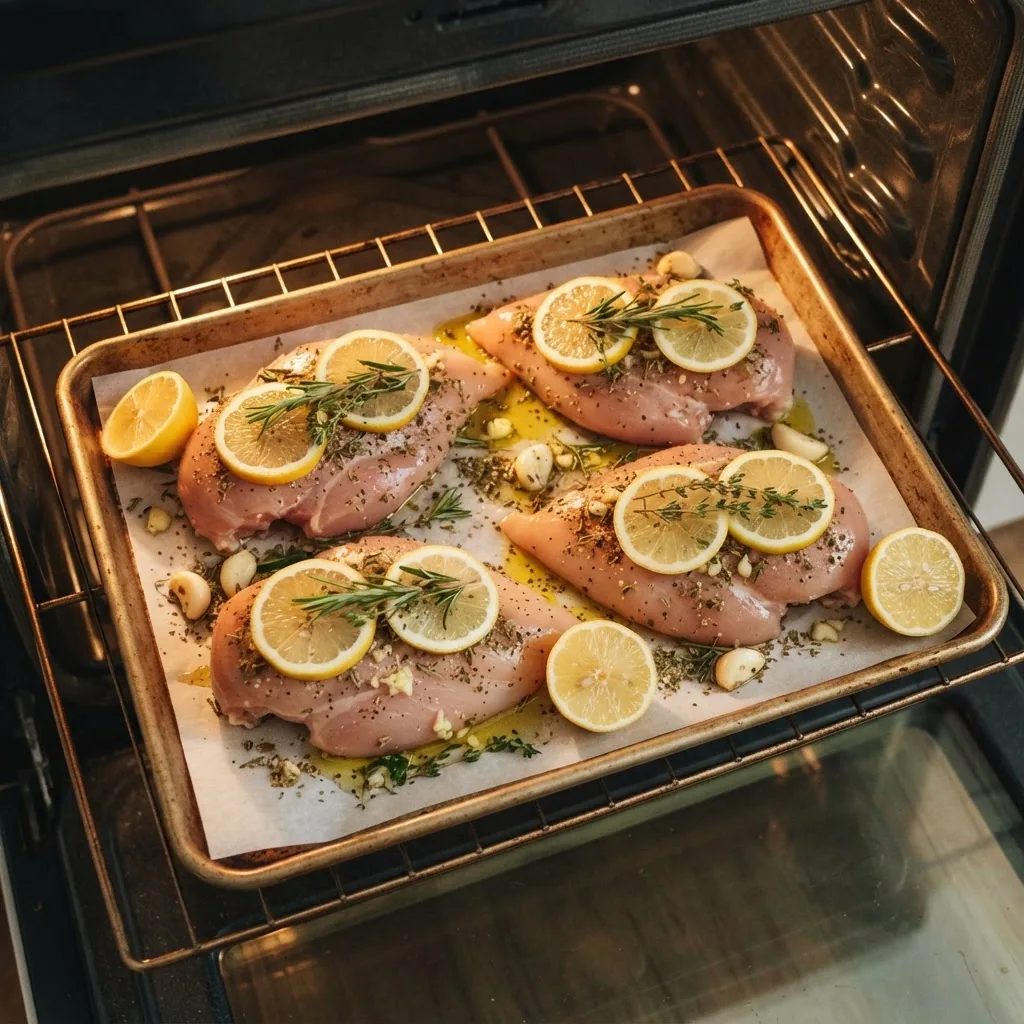
Follow these practitioner-tested steps to control moisture, flavor, and food safety. I present the process in sequential actions so you can follow along while preparing your oven, pans, and ingredients.
- Assess and portion your chicken: Weigh and measure each breast; aim for 4–6 oz (115–170 g) portions for typical servings. If breasts are uneven, butterfly them or use a meat mallet to even to 1/2–3/4 inch thickness for consistent cooking.
- Brine briefly for juiciness: In my experience a 20–30 minute wet brine (1 tablespoon kosher salt per 2 cups water plus a tablespoon of sugar optional) or a 10–15 minute dry brine (a light sprinkle of salt on both sides, refrigerated on a rack) prevents dryness without adding excess sodium when rinsed or patted dry. For low-sodium diets, reduce salt to 1/2 Tbsp per 4 cups water and use herbs to boost flavor.
- Preheat and choose the right oven temperature: Preheat to 375°F (190°C) for gentle roasting, or 425°F (220°C) for a quicker roast with better caramelization. For very thin breasts (under 3/4″), lower to 350°F (175°C) and shorten time.
- Oil and season smartly: Lightly brush 1 tsp (5 mL) of extra-virgin olive oil or 1 tsp avocado oil per breast—these are healthy fats with beneficial monounsaturated profiles. Use herbs (rosemary, thyme), garlic, citrus zest, smoked paprika, and black pepper instead of heavy salt or sugary marinades.
- Use parchment or a lightly oiled rack: Bake directly on parchment-lined sheets for easy cleanup, or place on a rack set inside the sheet to allow hot air to circulate and fat to drain away.
- Follow time-by-thickness, not by weight alone: Use this practical table to guide baking times for boneless, skinless breasts:
| Thickness | Oven Temp | Approx. Bake Time | Target Internal Temp |
|---|---|---|---|
| 1/2 inch (thin) | 350°F (175°C) | 10–14 minutes | 165°F (74°C) |
| 3/4 inch (medium) | 375°F (190°C) | 18–22 minutes | 165°F (74°C) |
| 1 inch+ (thick) | 400–425°F (200–220°C) | 22–28 minutes | 165°F (74°C) |
- Use an instant-read thermometer: Insert thermometer into the thickest part; remove at 160°F (71°C) and tent with foil for 5 minutes—the carryover heat will raise it to 165°F (74°C) while retaining juices.
- Apply finishing acids for brightness: Squeeze fresh lemon or a tablespoon of vinegar-based pan sauce after resting to enhance flavor without adding calories.
- Rest before slicing: Rest meat 5–8 minutes under loose foil; this redistributes juices and prevents dry slices when cut.
- Batch-bake for meal prep: For weekly prep, bake 6–8 breasts at once on a large rimmed sheet at 400°F (200°C) for 20–24 minutes depending on thickness; cool quickly and refrigerate within two hours in shallow containers.
- Avoid heavy breading and sugary glazes: Save these for occasional treats; when aiming for healthy baked chicken, use a light herb crust or whole-grain panko (1/4 cup per 4 breasts brushed with 1 tsp oil) to maintain lower fat and calories.
- Special oven notes for Texas kitchens: If you cook in older gas ovens common in many Texas homes, rotate the pan halfway and use an oven thermometer—calibration variance of ±25°F is common.
Transition: armed with these methods, you can follow practical, tasty recipes next—six to eight hands-on baked chicken dishes designed to be healthy, flavorful, and easy to scale.
Healthy Food Recipes with Chicken Breast for Baking
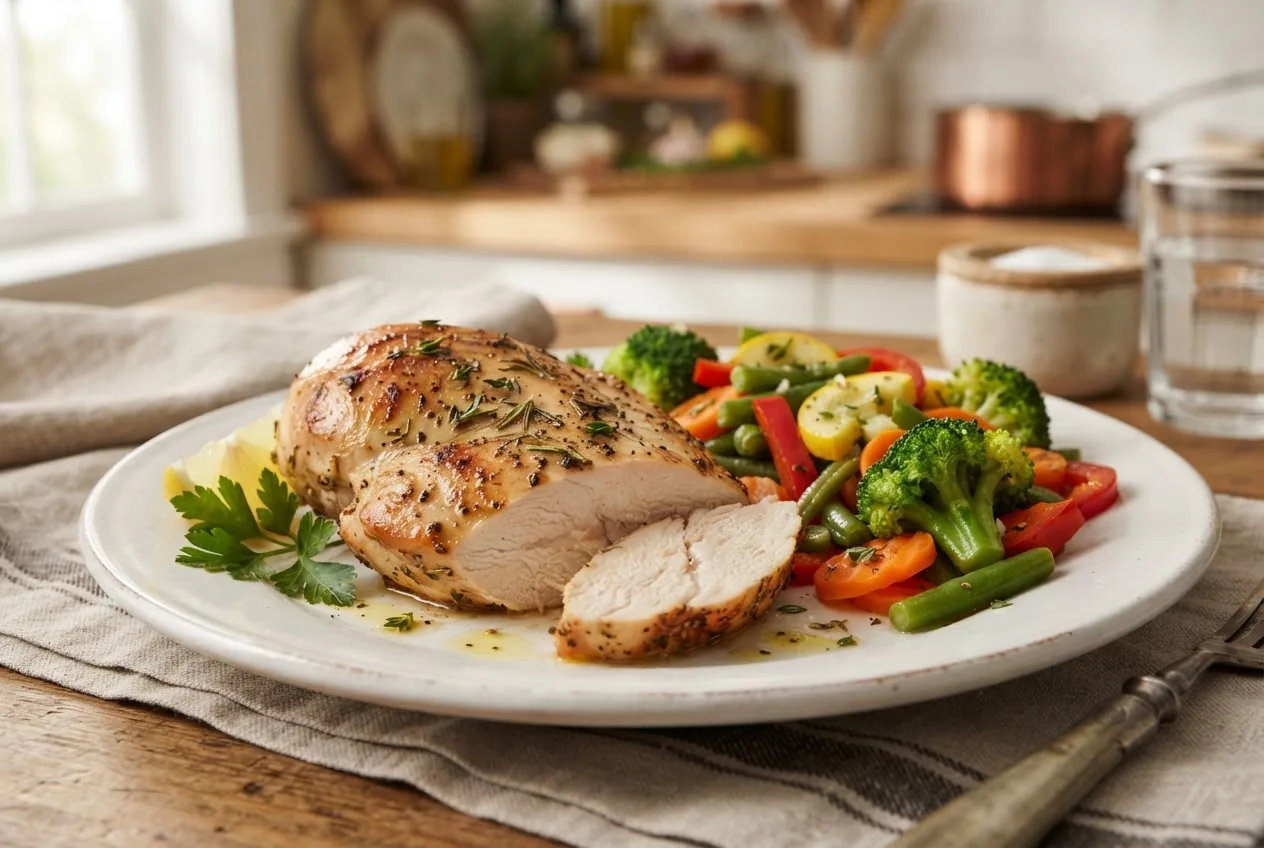
Below are eight oven-baked recipes arranged from beginner to advanced, each with exact ingredients, prep steps, and nutritional notes. Where useful, I reference calorie-focused sibling resources for readers who want strict calorie targets.
-
1. Lemon-Herb Simple Roast (Beginner)
Ingredients (serves 2): Two 6-oz (170 g) boneless skinless chicken breasts, 1 tbsp extra-virgin olive oil, 1 lemon (zest + juice), 1 tsp fresh thyme, 2 garlic cloves minced, 1/2 tsp kosher salt, 1/4 tsp black pepper.
Prep & bake: Preheat oven to 400°F (200°C). Pat chicken dry, brush each breast with 1/2 tbsp oil, season with salt, pepper, garlic, thyme and lemon zest. Place on parchment, roast 18–22 minutes (until 165°F), rest 5 minutes, drizzle with lemon juice.
Nutritional note: ~280–320 kcal per serving depending on breast size; lean, high-protein option ideal for weekday dinners.
-
2. Garlic-Yogurt Marinated Baked Chicken (Beginner–Intermediate)
Ingredients (serves 4): Four 4–5 oz breasts, 3/4 cup plain nonfat Greek yogurt, 1 tbsp lemon juice, 1 tbsp olive oil, 3 garlic cloves minced, 1 tsp smoked paprika, 1 tsp salt, 1/2 tsp black pepper.
Prep & bake: Combine marinade; coat chicken and refrigerate 30–60 minutes. Preheat oven to 375°F (190°C); place breasts on a rack and bake 18–22 minutes. Yogurt keeps meat tender and reduces need for extra oil.
Nutritional note: Yogurt adds probiotics and calcium; choose nonfat for lower calories.
-
3. Mediterranean Baked Chicken with Olives and Tomatoes (Intermediate)
Ingredients (serves 3): Three 5–6 oz breasts, 1 tbsp olive oil, 1 cup cherry tomatoes halved, 1/2 cup pitted Kalamata olives (rinsed), 1 tbsp capers (rinsed), 1 tsp oregano, fresh basil to finish, 1/2 tsp salt.
Prep & bake: Toss tomatoes, olives, capers, oil and oregano; nestle breasts into the mixture in a shallow baking dish. Bake at 400°F (200°C) for 20–24 minutes. Rest 5 minutes and finish with basil.
Nutritional note: Moderate healthy fat from olives; pair with a whole-grain side for balanced plate.
-
4. Tex-Mex Sheet Pan Chicken with Roasted Veg (Intermediate)
Ingredients (serves 4): Four 4–5 oz breasts, 2 tbsp olive oil (divided), 1 tbsp chili powder, 1 tsp ground cumin, 1 tsp smoked paprika, 1/2 tsp garlic powder, 1 bell pepper sliced, 1 small red onion sliced, 1 cup corn kernels (fresh or frozen), lime wedges.
Prep & bake: Preheat to 425°F (220°C). Toss veggies with 1 tbsp oil and roast on a large sheet 10 minutes. Toss chicken with remaining oil and spices, add to sheet, roast another 12–15 minutes until 165°F. Finish with lime.
Nutritional note: High volume, fiber-rich plate ideal for portion control; to track calories see 400 calorie meals for balanced nutrition.
-
5. Whole-Grain Panko-Crusted Baked Chicken (Advanced)
Ingredients (serves 3): Three 6 oz breasts, 1/2 cup whole-grain panko, 1/4 cup grated Parmesan (optional), 1 tsp garlic powder, 1 tsp dried Italian herbs, 2 egg whites (or 1/4 cup Greek yogurt for lower fat), 1 tsp olive oil spray.
Prep & bake: Preheat 425°F (220°C). Mix panko, Parmesan, herbs. Lightly coat breasts with egg white or yogurt, press crust on, place on parchment and spritz with oil. Bake 18–22 minutes until 165°F and golden.
Nutritional note: Crunchy texture with controlled fat; use reduced-Parmesan or skip for lower sodium.
-
6. Asian Citrus-Ginger Baked Chicken (Intermediate)
Ingredients (serves 4): Four 4–5 oz breasts, 2 tbsp low-sodium soy sauce, 1 tbsp rice vinegar, 1 tbsp honey (optional), 2 tsp grated ginger, juice of 1 orange, 1 tsp sesame oil, green onions to finish.
Prep & bake: Whisk glaze, marinate 15–30 minutes. Preheat 400°F (200°C); bake 18–22 minutes, basting once midway. Finish with sliced green onions.
Nutritional note: Use 1/2 tbsp honey to keep sugar modest; pair with steamed broccoli and brown rice for balance.
-
7. Low-Carb Pesto-Stuffed Chicken (Advanced/Low-Carb)
Ingredients (serves 2): Two 6 oz breasts (butterflied), 2 tbsp low-oil pesto (store-bought or homemade with less oil), 1/4 cup part-skim mozzarella, toothpicks.
Prep & bake: Spoon pesto and cheese into butterflied breasts, secure with toothpicks. Preheat 400°F (200°C) and bake 20–24 minutes until 165°F. Rest 5 minutes and remove toothpicks.
Nutritional note: Keeps carbs low while delivering healthy fats from basil and nuts in pesto; suitable for gluten-free diets.
-
8. Weeknight Meal-Prep Baked Chicken (Batch Cooking)
Ingredients (makes 6 servings): Six 5–6 oz breasts, 3 tbsp olive oil, 2 tbsp smoked paprika, 2 tsp garlic powder, 2 tsp onion powder, 2 tsp salt, black pepper to taste.
Prep & bake: Preheat 400°F (200°C). Toss breasts with oil and spices, arrange on two sheets with space, bake 20–26 minutes depending on thickness. Cool to room temp (no more than 2 hours), portion into 6 shallow containers with vegetables and a whole grain.
Nutritional note: Designed for grab-and-go healthy meals; see companion guides for meal calorie targets like 500 calorie dinner options and higher calorie healthy dinners.
Transition: now pair these baked proteins with nutrient-dense sides that balance the plate for fiber, vitamins, and slow-release energy.
Complementary Healthy Side Dishes and Pairings
Balanced meals combine lean protein, fiber-rich vegetables, and a modest portion of whole grains or healthy fats. Below are practical pairings and quick side recipes to match the baked chicken options above:
- Roasted Brussels sprouts with a lemon-zest finish — high in fiber and vitamins, roast at 400°F for 18–20 minutes.
- Steamed green beans with toasted almonds — fiber and healthy fats; quick steam 4–6 minutes.
- Quinoa pilaf with scallions and parsley — whole-grain source of protein and magnesium; 1/2 cup cooked per serving.
- Simple mixed greens with lemon-olive oil vinaigrette — keeps sodium low while adding volume to the plate.
- Cauliflower “rice” sautéed with garlic and a splash of low-sodium soy sauce — low-carb, quick to make.
For extra vegetarian pairings, check vegetarian side dishes for balanced meals to round out plates with beans, legumes, and hearty vegetable options.
Transition: while these pairings are straightforward, avoid common pitfalls that turn healthy-baked chicken into a less healthy meal.
Common Mistakes to Avoid When Baking Chicken Breast for Health
- Overcooking the meat: I’ve burned more than a few dinners by trusting time alone—always use an instant-read thermometer and remove at 160°F, then rest to 165°F.
- Applying too much oil or butter: I used to slather on oil “for flavor”—a teaspoon per breast is plenty when combined with herbs and acids.
- Relying on thick sugary glazes: A honey-heavy glaze turned an otherwise lean meal into a high-sugar dish; I switched to citrus and reduced sweeteners by half.
- Skipping the rest period: Cutting immediately results in dry slices—rest 5–8 minutes; I consider this non-negotiable.
- Ignoring food safety times: Leaving cooked chicken at room temperature for over two hours invited spoilage once; I always refrigerate within 2 hours and consume leftovers within 3–4 days (reheat to 165°F).
Transition: make these adjustments and you’ll avoid the most common problems—next, we’ll cover customizing recipes to dietary needs, budget, and family preferences.
How to Customize Healthy Baked Chicken Breast Recipes to Your Taste and Needs
Customization is where home cooking becomes sustainable. Use these practical swaps and tips to adapt recipes for calorie targets, dietary restrictions, and ingredient availability.
- For low-sodium needs: Replace up to half the salt with herb blends (rosemary, thyme) and citrus zest; use low-sodium broths for pan sauces.
- For lower fat: Swap regular pesto for a lighter version using less oil, or use Greek yogurt as a binder instead of oil-heavy sauces.
- For gluten-free: Use almond flour or gluten-free panko instead of regular breadcrumbs; many of the above recipes are naturally gluten-free if you avoid breading.
- For family meals: Double recipes, chop larger breasts into even pieces, and bake on a sheet pan with veggies to please varied picky eaters.
- For budget-conscious cooking: Use frozen vegetables, buy chicken in bulk on sale, and rotate recipes through the week. For more tips, see affordable healthy ingredients to stretch your grocery dollars while staying nutritious.
- For meal prep friendliness: Bake in batches and portion immediately into shallow containers; sauces and dressings kept separate extend freshness.
Checklist: use this compact list to verify you executed healthy baking correctly:
- Chicken even-thickness or butterflied.
- Brined or salted appropriately (20–30 min wet or 10–15 min dry if used).
- Oven preheated to required temp (350–425°F depending on method).
- Instant-read thermometer used; removed at 160°F and rested to 165°F.
- Healthy fats applied sparingly (≈1 tsp–1 tbsp per breast depending on recipe).
- Portions paired with fiber-rich vegetables and a whole grain or quality fat.
When to call a professional: consult a registered dietitian if you have complex medical dietary needs (renal disease, advanced diabetes). If repeated food-safety or appliance issues occur—like an oven that won’t hold temperature—call a certified appliance technician. For nutritional counseling, the Academy of Nutrition and Dietetics can help find a local RD.
Transition: final thoughts and encouragement next—put the techniques into practice this week and refine timing to your oven and portion sizes.
Conclusion and Encouragement for Healthy Baking at Home
By following these hands-on steps you’ll consistently bake chicken breasts that are juicy, flavorful, and aligned with healthy eating goals. Start with one simple recipe (like the Lemon-Herb Roast), measure internal temperature with an instant-read thermometer, and scale from there. Baking chicken breast is a practical, time-efficient way to add lean protein to balanced plates; make it a weekly habit and your meal planning becomes simpler and healthier.
Try one recipe this week, use the checklist above, and share your results—practice builds cooking confidence. Ready to broaden your meal ideas after mastering chicken? Explore the broader Yummiest Healthy Recipes Guide for Nutritious and Tasty Meals for more healthy inspiration.