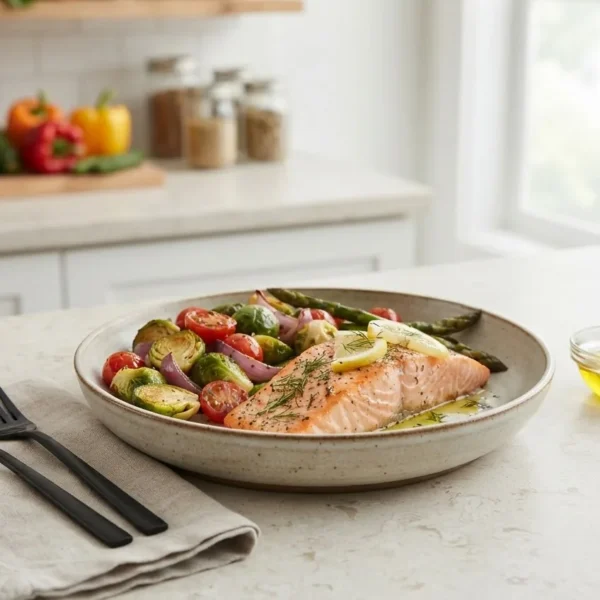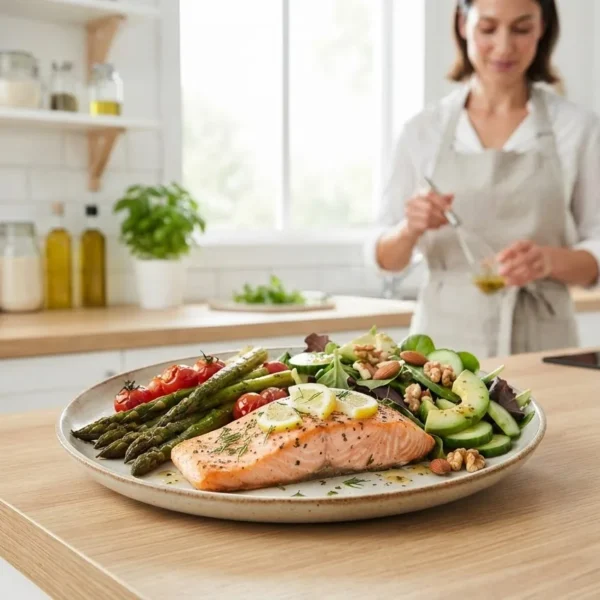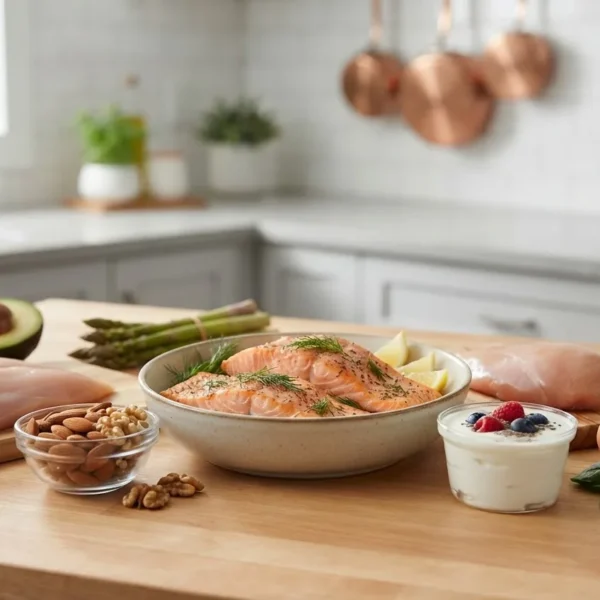
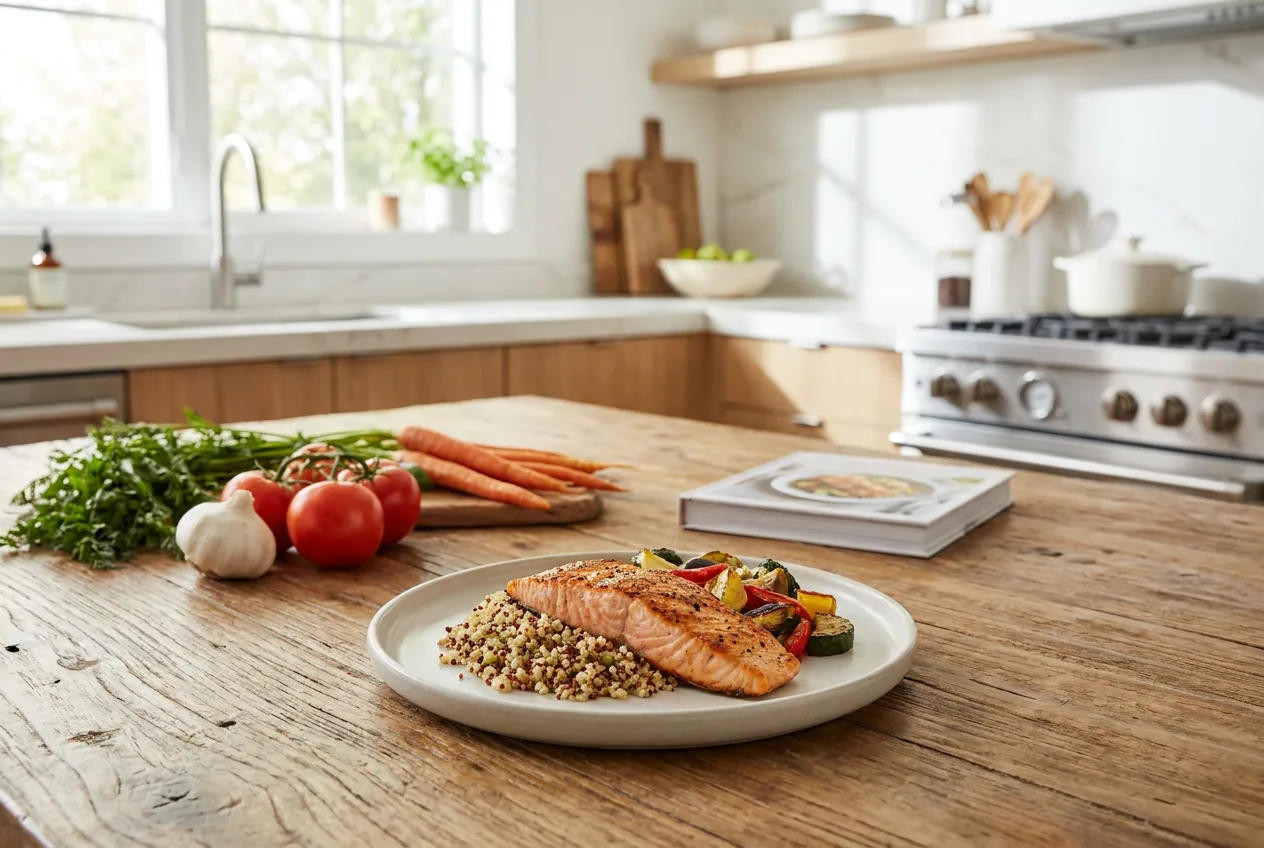
healthy meals for 1: by the end of this hands-on guide you’ll be able to plan, shop for, and cook simple, balanced single-serve meals for a full week. Expect to set up a routine in 90–120 minutes initially, then 15–30 minutes per meal; skill level: beginner to intermediate cook.
Before you start
- Prerequisites: basic knife skills (chop an onion, mince garlic), a working stove and refrigerator, and a willingness to try single-serve portioning.
- Tools & materials: chef’s knife, cutting board, 10–12″ skillet, 1.5–2 quart saucepan, sheet pan, 1-cup measuring cup, kitchen scale (optional), 1–2 reusable storage containers (12–20 oz).
- Mindset checklist: commit to cooking 3–5 nights this week, accept small imperfections, plan to reuse components across meals.
-
Understanding Healthy Meals for One: Benefits and Challenges
This section explains why cooking healthy single servings matters and the practical obstacles you’ll face. You’ll learn how portion control, nutritional balance and reducing food waste come together to make solo cooking sustainable.
Benefits. Cooking single-serve meals improves portion control, helps you meet nutrient targets, and supports variety. For instance, a solo cook who rotates lean proteins, whole grains, and veg is more likely to meet micronutrient needs across a week than eating repetitive takeout. According to a 2023 USDA report on dietary patterns, balanced meals that include vegetables, lean protein, whole grains, and healthy fats support long-term heart and metabolic health. 2023 USDA.
Challenges. Solo cooks often face: excess packaging (bulk sizes too large), motivation to cook every night, and perceived time cost. Portioning can be emotionally tricky—cooking for one can feel wasteful unless you plan reuse strategies. Food safety is another factor: storing single portions safely and knowing what freezes well matters; for Texas-specific food safety and seasonal produce guidance, see the Texas Department of State Health Services resources. Texas DSHS.
Nutrition balance and portion control. Aim for a plate split roughly: 40% vegetables, 30% lean protein (3–5 oz cooked), 25% whole grain or starchy veg (1/2–1 cup cooked), and 5% healthy fat (1 tbsp olive oil, a small handful of nuts). This approach aligns with recommendations from the American Heart Association for heart-healthy dinners. American Heart Association.
Case study (Austin, TX): Maria, a software designer, cut food waste 60% by using 12-oz containers and repurposing roasted vegetables across 3 meals in a week. She prioritized versatile ingredients (eggs, canned beans, frozen greens) and learned to batch-roast small sheet-pan portions to get variety without excess.
Transition: Now that you understand the balance and hurdles, the next section gives essential, actionable tips to set up a one-person kitchen quickly.
-
Essential Tips for Cooking Healthy Meals for One
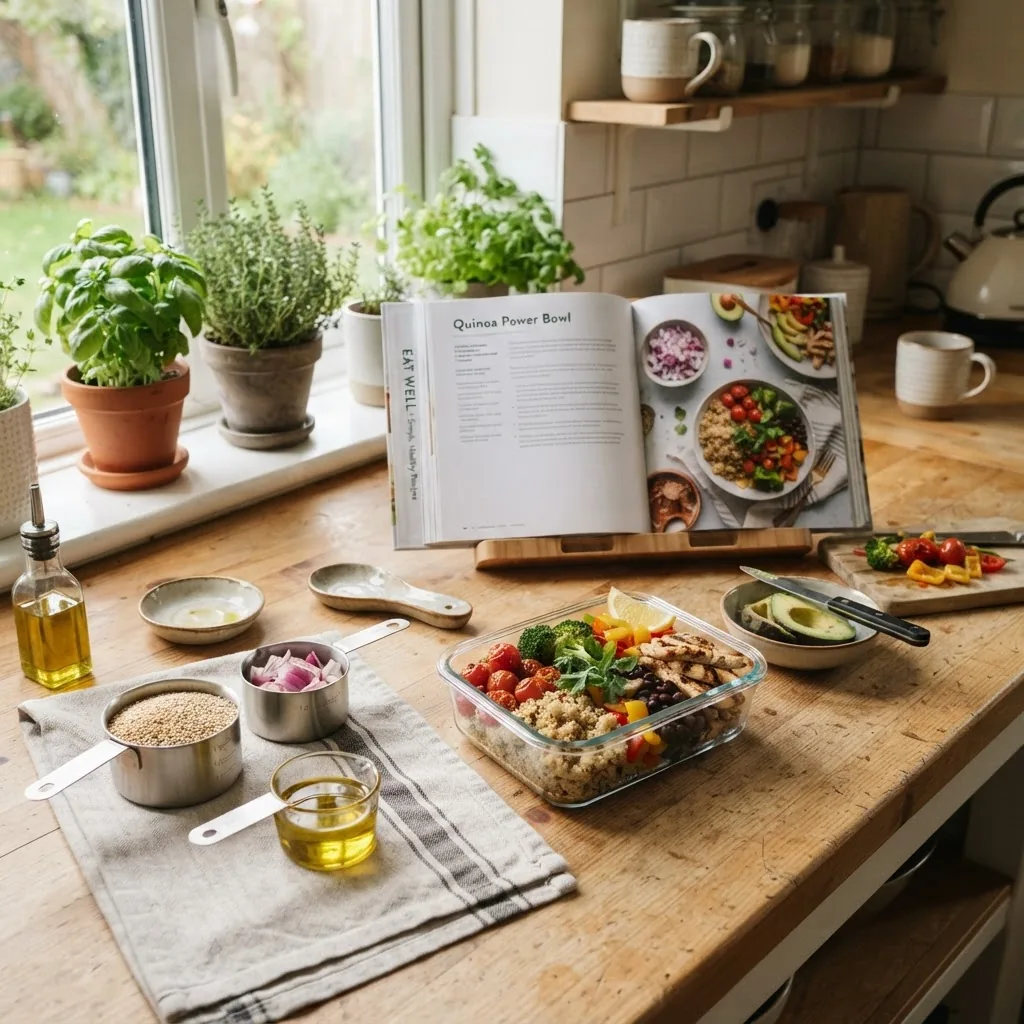
Follow these step-by-step, actionable tips focused on meal planning, grocery shopping for singles, batch cooking, and smart food storage. Each tip is practical—quantities, timings, and tool recommendations included.
- Plan one-week cycles. Draft a 7-day outline that repeats ingredients three times max. Example: Monday—grain + roasted veg + protein; Wednesday—salad with leftover protein; Friday—stir-fry using same veg. Spend 20–30 minutes planning each week.
- Make a two-list grocery plan. Create (A) perishables to buy every 3–4 days and (B) pantry staples to buy monthly. Perishables: 2–3 bunches of leafy greens (2–3 cups per meal), 2 lemons, 1 pint cherry tomatoes, 1 lb chicken breast or 4 cans beans. Pantry: 12 oz quinoa or brown rice, olive oil (250 mL), canned tomatoes, spices.
- Shop to size. Buy smaller packages or split bulk with friends. If a store only sells 5-lb onions, use one now and freeze chopped onions in 1-cup portions. Store fresh herbs wrapped in damp paper towel in a sealed container for 5–7 days.
- Batch small, not large. Instead of making a 6-serving lasagna, batch-roast a single sheet pan (12″ x 8″) with 2 cups total veg at 425°F (220°C) for 18–22 minutes—enough for 2–3 meals. For proteins: roast a single chicken breast (6–8 oz raw) at 400°F (200°C) for 20–25 minutes until internal temp 165°F (74°C).
- Master single-pan and one-pot recipes. Use a heavy 10–12″ skillet for stovetop meals and a 1.5–2 quart pot for grains and soups. These sizes heat quickly and reduce washing time—stovetop searing takes 6–8 minutes; simmering rice 18–22 minutes; lentils 15–20 minutes.
- Portion as you cook. Plate single-serve portions immediately: 3–4 oz cooked protein (weigh if needed), 1/2 cup cooked grain, 1–2 cups vegetables. Use a kitchen scale (set to grams) for precision: 85–140 g protein, 120–150 g cooked grain, 80–200 g veg.
- Use smart storage containers. Choose 12–20 oz (350–600 mL) containers for single meals. Label with date; refrigerate meals you’ll eat within 3–4 days, freeze others. For freezing: leave 1/2-inch headspace and freeze at 0°F (-18°C).
- Create a flexible flavor base. Keep a small jar of one versatile mix (e.g., smoked paprika + cumin + garlic powder) and a vinaigrette ratio (3 parts oil to 1 part acid) to change profiles quickly.
- Time-saving tools: use an immersion blender and an electric kettle. An immersion blender speeds soups in 60–90 seconds; an electric kettle boils water in 3–4 minutes, useful for quick grains and blanching.
- Reduce decision fatigue with themes. Assign weekdays: Meatless Monday, Bowl Wednesday, Fish Friday. This saves 10–15 minutes per week on planning and brings variety.
Quick kitchen-tools comparison (single-person focus):
Tool Why it’s useful Buy tip 10–12″ skillet Sear, stir-fry, one-pan dinners (quick heat) Medium price—choose heavy-bottomed 1.5–2 qt saucepan Grains, small soups, sauces Stainless steel with lid 12–20 oz storage containers Portion control & storage BPA-free, microwave-safe Transition: With these tips you can shop and set up your kitchen; next we’ll focus specifically on shopping strategies for someone living in Texas.
-
Grocery Shopping Strategies for One Person in Texas
Shopping smart in Texas reduces cost and waste while maximizing fresh, local flavor. This regional guide includes market suggestions, seasonal swaps, and budget strategies designed for an urban or suburban Texan.
Buy seasonal and local where possible. Texas has strong seasonal produce windows: spring—strawberries and asparagus; summer—peaches, tomatoes, okra; fall—sweet potatoes and collards. Purchasing in season at farmers’ markets (e.g., Dallas Farmer’s Market, Austin Farmers’ Market) yields better prices and fresher produce—buy 2–3 days’ worth of perishables and plan reuse.
Split bulk with a neighbor. If a bulk pack is cheaper (5 lb sweet potatoes, 10 lb rice), split with a friend or neighbor and freeze your portion. For small-space cooks, buying one 2-lb bag of frozen vegetables and using 1–2 cups per meal is often more economical long-term.
Use retail and discount strategies. Look for marked-down “manager’s special” items (same-day use) and integrate them into your next meal. Discount grocers in Texas often rotate markdowns—buy a reduced-price rotisserie chicken and portion the meat into 3 single-serve meals.
Local substitutions for common ingredients. If a recipe calls for arugula and it’s expensive, use local lettuce blends or spinach. Swap out imported berries for Texas-grown fruit in season to lower cost and increase freshness.
Food safety reminders. Follow Texas DSHS guidance: refrigerate perishable purchases within 2 hours (1 hour if outdoor temp >90°F), and store cooked single servings at 40°F (4°C) or below. Texas DSHS resources.
Budget-oriented basket example (one week’s core): 1 lb boneless chicken or 4 cans beans, 1 lb brown rice, 1 bag frozen mixed veg (16 oz), 4 eggs, 1 head romaine, 2 lemons, 1 jar tomato sauce (24 oz), basic spices. Approximate cost: $20–$30 depending on market and season (According to a 2024 industry report on grocery pricing in the U.S.).
Transition: After you’ve shopped, the next section provides detailed, quick single-serve recipes for breakfast, lunch, and dinner that fit the shopping model above.
-
Easy and Quick Healthy Recipes for One: Breakfast, Lunch, and Dinner Ideas
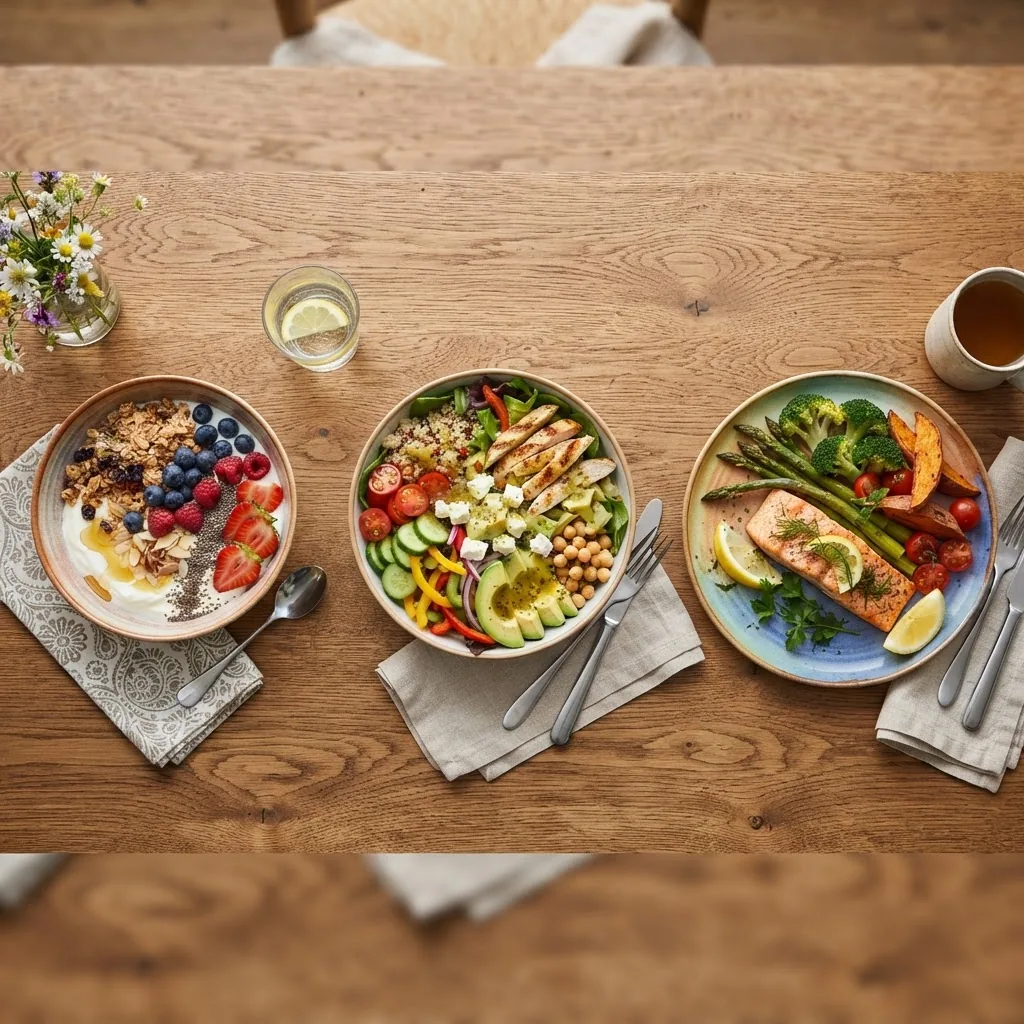
This section is your “cookbook-first” resource. Each recipe is written as a single-serve how-to with exact quantities, timings, and quick tips; use these as templates and swap in local Texas produce when available. For more recipe variety beyond single-serve, see the Yummiest Healthy Recipes Guide for Nutritious and Tasty Meals.
Breakfast
-
Greek yogurt fruit bowl (1 serving)
Ingredients: 1 cup plain Greek yogurt (6–8 oz), 1/2 cup mixed berries, 2 tbsp chopped nuts, 1 tsp honey, 1 tbsp chia or flaxseed. Assemble in 2 minutes. Tip: swap local stone fruit in summer. -
Savory microwave omelet in a mug (1 serving)
Ingredients: 2 large eggs, 2 tbsp milk, 1/4 cup chopped spinach, 2 tbsp diced tomato, salt & pepper. Beat eggs with milk in a 12-oz microwave-safe mug, stir in veg, microwave 70–90 seconds on high in 30-second increments until set. Serve immediately.
Related: healthy breakfast ideas
Lunch
-
Mason-bowl grain salad (1 serving)
Ingredients: 1/2 cup cooked quinoa (about 90 g cooked), 1 cup mixed salad greens, 1/2 cup roasted vegetables, 3 oz cooked chicken or 1/2 cup chickpeas, 1 tbsp vinaigrette. Assemble in 3 minutes. Make grains ahead: cook 1/2 cup dry quinoa (rinse, 1:2 ratio water), simmer 15 minutes. -
Quick lentil soup for one
Ingredients: 1/3 cup dry red lentils (60 g), 1 cup low-sodium broth, 1/4 cup diced carrots, 1/4 cup diced celery, 1/4 tsp cumin, salt & pepper. Simmer 12–15 minutes until lentils break down. Use immersion blender 30–60 seconds for creamier texture.
Dinner
Below are practical dinner templates you can execute in 20–30 minutes.
-
Pan-seared salmon with quick greens
Ingredients: 4 oz salmon fillet, 1 tsp olive oil, salt & pepper, 2 cups baby spinach, 1 clove garlic minced. Method: heat skillet over medium-high, add oil, sear salmon skin-side down 3–4 minutes, flip and cook 2–3 minutes until internal temp 125–135°F for medium. Remove fish; add garlic, wilt spinach 1–2 minutes. Plate. Tip: use local Gulf salmon substitutions when available. -
Vegetable stir-fry bowl
Ingredients: 1 cup mixed veggies (bell pepper, broccoli, snap peas), 3 oz firm tofu or shredded rotisserie chicken, 1/2 cup cooked brown rice, 1 tbsp low-sodium soy sauce, 1 tsp sesame oil. Method: high-heat stir fry 4–6 minutes. Finish with sesame oil.
For calorie-focused options see 400 calorie meals for balanced eating.
-
Sheet-pan fajita for one
Ingredients: 1 small chicken breast (6 oz raw), 1/2 green pepper, 1/2 red onion, 1 tbsp olive oil, 1 tsp chili powder, 1 small whole-wheat tortilla. Method: toss sliced veg and sliced chicken with oil and spices; arrange on sheet pan and roast at 425°F for 16–20 minutes. Serve on warmed tortilla with lime.
Transition: These quick recipes scale to weekly planning; the next section provides sample single-serve dinner recipes with variations and precise notes for portion sizing and cooking methods.
-
Greek yogurt fruit bowl (1 serving)
-
Sample Single-Serve Healthy Dinner Recipes (With Variations)
Below are detailed single-serve dinner recipes written in recipe-style numbered list format. Each includes variations and precise cooking notes so you can adapt to your toolkit or dietary needs.
-
One-pan lemon-garlic chicken and asparagus
Ingredients: 1 boneless skinless chicken breast (~6 oz/170 g), 8–10 asparagus spears (trimmed), 1 tbsp olive oil, 1 clove garlic minced, juice of 1/2 lemon, salt & pepper. Method: preheat oven to 400°F (200°C). On a small rimmed sheet, toss asparagus with 1/2 tbsp oil; rub chicken with remaining oil, garlic, salt and pepper. Roast 18–22 minutes until chicken reaches 165°F (74°C). Rest 5 minutes, squeeze lemon over top. Serve with 1/2 cup cooked quinoa if desired.
Variations: swap asparagus for green beans or broccolini; use tofu (6 oz) and roast 12–15 minutes for vegetarian.
Notes: For crispier chicken, sear 2 minutes per side in skillet before roasting.
Calorie-controlled dinners also available in 500 calorie dinner recipes.
-
Single-serve shrimp and vegetable pasta
Ingredients: 3 oz shrimp (peeled), 1 cup zucchini noodles or 1/2 cup whole-grain pasta cooked, 1/2 cup cherry tomatoes halved, 1 tsp olive oil, 1 clove garlic, pinch red pepper flakes. Method: sauté garlic in oil 30s, add shrimp 2–3 min until opaque, add tomatoes and zucchini noodles 1–2 min. Toss with 1 tbsp grated Parmesan.
Variations: use chickpea pasta for higher fiber; add spinach for bulk.
Notes: shrimp cooks quickly—do not overcook more than 4 minutes total. -
Stuffed bell pepper for one
Ingredients: 1 medium bell pepper halved and seeded, 1/2 cup cooked ground turkey or black beans, 1/4 cup cooked brown rice, 2 tbsp tomato sauce, 1 tbsp shredded cheese. Method: preheat oven 375°F (190°C), fill pepper, bake 18–22 minutes. Top with cheese for last 2 minutes.
Variations: swap rice for cauliflower rice, turkey for lentils.
Notes: Use a smaller pepper if you want 350–400 calorie portioning.
For larger calorie targets see 600 calorie dinner recipes.
-
Tex-Mex black bean skillet
Ingredients: 1/2 cup canned black beans (drained), 1/2 cup corn, 1/2 cup diced tomato, 1/4 cup diced onion, 1 tsp chili powder, 1 tbsp olive oil, 1/4 avocado sliced. Method: sauté onion 2–3 minutes, add spices, add beans/corn/tomato 3–4 minutes to warm. Top with avocado. Serve with 1 small corn tortilla.
Variations: add 2 tbsp shredded cheese; swap canned beans for 3 oz grilled chicken.
Notes: Canned beans are a great single-serve convenience—rinse to reduce sodium.
More easy healthy meals for one person can expand your rotation.
-
Quick miso-glazed salmon bowl
Ingredients: 4 oz salmon, 1 tsp white miso paste, 1 tsp maple syrup, 1/2 cup steamed edamame, 1/2 cup cooked brown rice. Method: brush salmon with miso mixture, broil 4–6 minutes until caramelized. Serve over rice with edamame.
Variations: use tofu for vegetarian version; swap brown rice for cauliflower rice for lower carbs.
Notes: Miso is salty—use low-sodium options if monitoring sodium.
Transition: Those dinner templates are intentionally diverse; next we’ll cover managing leftovers and food waste so you can keep single-serve cooking efficient and sustainable.
-
One-pan lemon-garlic chicken and asparagus
-
Managing Leftovers and Minimizing Food Waste When Cooking for One
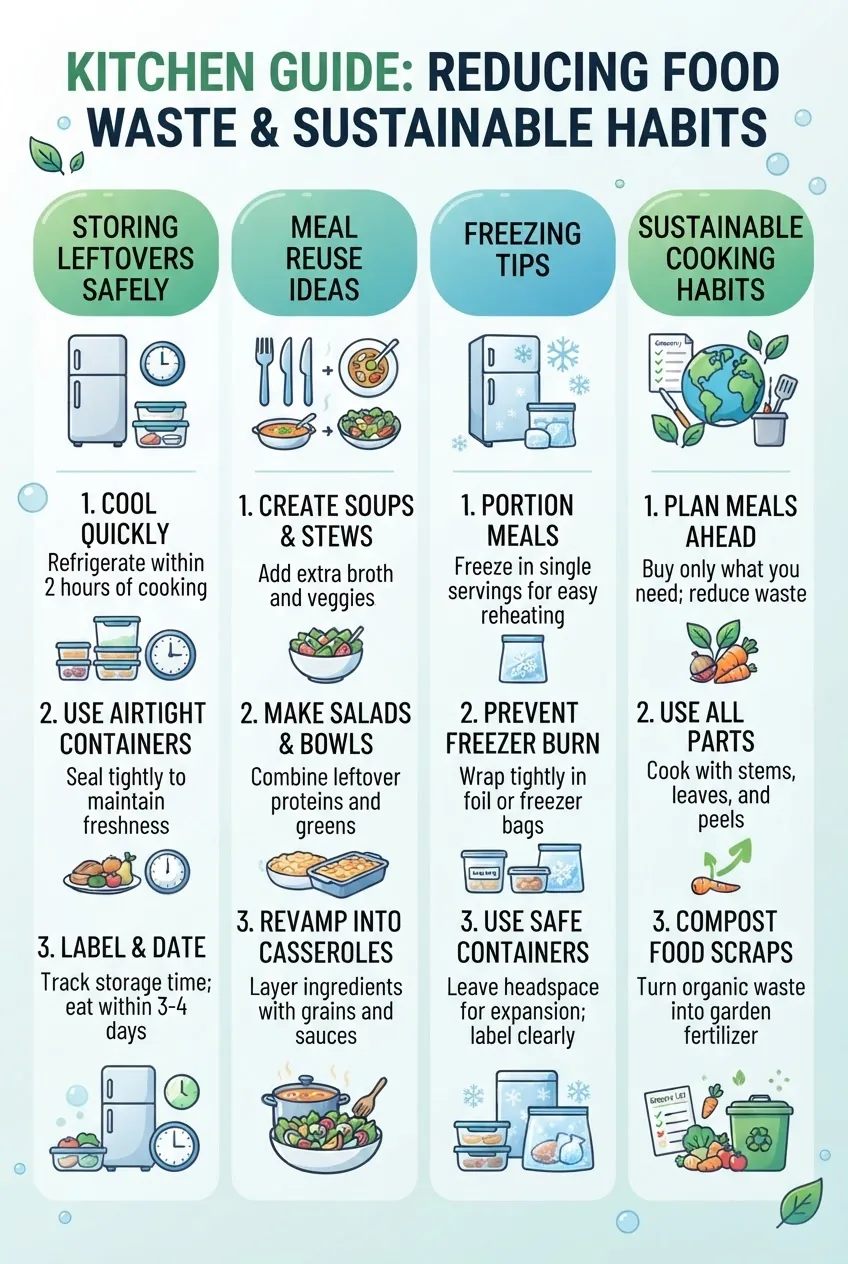
One of the biggest practical wins for solo cooks is turning leftovers into deliberate meal components. This section gives concrete storage timings, reuse formulas, and freezing thresholds so you avoid spoilage.
Storage timelines (refrigerator at ≤40°F/4°C): cooked grains and proteins: 3–4 days; cooked soups/stews: 3–4 days; fresh-cut fruit and raw salad greens: 1–3 days depending on type. Freeze cooked meals if you won’t eat them within 3 days; frozen meals keep 2–3 months at 0°F (-18°C).
Reuse formulas. Transform 1 serving of roasted veg into: (a) a grain bowl with 1/2 cup cooked grain + 3 oz protein, (b) a frittata (2 eggs + veg), or (c) blended into a soup with 1 cup broth. These swaps save time and waste.
Freezing tips. Cool cooked food to room temp no longer than 2 hours (1 hour if ambient >90°F), then freeze in single-serve containers leaving 1/2-inch headspace. Label with date and contents. For herbs: chop and freeze in ice cube trays with olive oil for quick flavor cubes.
Practical example (San Antonio): Luis cooks 1 sheet-pan meal on Sunday: roasted sweet potato (1 cup), Brussels sprouts (1 cup), and 6 oz chicken. He eats one portion Sunday, refrigerates one for Tuesday, and freezes one. He reheats frozen portions in a 375°F oven for 12–15 minutes from frozen.
Transition: With waste control under belt, the final section helps you build a routine that makes healthy solo cooking sustainable.
-
Building a Sustainable Healthy Cooking Routine for One
Creating lasting healthy-eating habits for singles is about motivation, time management, and realistic weekly planning. This section gives a repeatable system and when to scale or seek professional help.
Weekly workflow (90–120 minute setup): Sunday: 20 minutes planning, 30–40 minutes batch small roasting (two sheet pans or two skillet sessions), 20–30 minutes prepping grains and proteins, 20 minutes portioning into 12–20 oz containers and labeling. Expect future weekly setups to drop to 60–75 minutes.
Daily micro-routine (15–30 minutes): night-before: defrost one meal if needed (in fridge overnight) or plan a 15-minute stovetop meal; morning: pack breakfast or prep mug-omelet ingredients in a container for microwave-ready use.
Motivation hacks. Create a playlist or set a 30–minute timer to make cooking feel like a focused activity. Invite a neighbor for a monthly “swap day” to share bulk produce and keep variety high.
When to track nutrition. If you have specific health goals (weight loss, diabetes, heart disease), track macronutrients for 1–2 weeks using simple apps, then adjust portions. According to the American Heart Association, aim for saturated fat <7% of daily calories for heart-focused diets. AHA guidance.
For structured prepping methods, check meal prep ideas for weekly planning.
Common quick routines: Monday and Thursday 30-minute stove nights; Sunday batch-roast; midweek salad or soup night.
Transition: Next are common mistakes I’ve observed and how to avoid them when cooking solo.
Common mistakes and how to avoid them
I’ve burned small sheet-pan batches by crowding them; the fix was to roast smaller quantities at 425°F for 18–22 minutes with space between pieces to ensure caramelization.
I’ve also kept leftover meals too long—once I labeled dates and froze meals after 3 days, waste dropped dramatically.
Sometimes I over-season to hide blandness; instead I learned to balance acid (lemon/vinegar) and salt at plating time for bright flavor without excess sodium.
Checklist before you call it a week
- All single-serve meals portioned into 12–20 oz containers and dated.
- Perishables consumed within 3–4 days or frozen.
- Staples restocked: olive oil, salt, a protein source, frozen veg.
- One sheet-pan or one skillet recipe planned for next week.
- Kitchen scale or measuring cups accessible for consistent portions.
When to call in a professional
If you have a medical condition (diabetes, chronic kidney disease, severe food allergies) or need a specialized diet, consult a registered dietitian or your healthcare provider to personalize portions and nutrient targets. For complex meal planning tied to medical therapy, work with a licensed nutrition professional.