Healthy recipes for weight loss you can rely on: by the end of this hands-on guide you’ll have a two-week dinner plan, five go-to recipes you can cook in 20–40 minutes, and a repeatable meal-prep workflow. Expect to spend about 2–3 hours planning and one 90-minute prep session; skill level: basic home-cook.
Introduction to Healthy Recipes for Weight Loss
This guide shows practical, flavorful, and regionally accessible approaches that make sustainable weight loss achievable from a Texas pantry or any U.S. supermarket. You’ll learn how to structure meals around protein, fiber, and volume to support a calorie deficit while keeping taste high and prep low. For a broader set of meal ideas beyond weight loss-focused plates, see the pillar resource below for variations and inspiration.
Yummiest Healthy Recipes Guide for Nutritious and Tasty Meals
Breakfast often sets daily hunger patterns and energy for activity. For morning routines that support weight loss, check concise ideas that pair with these dinner plans.
healthy breakfast ideas for weight loss
This introduction covers balanced diet basics, nutrition mechanics, and sustainable eating that the step-by-step sections expand into actionable recipes and meal-prep plans.
Key Principles Behind Weight Loss Recipes
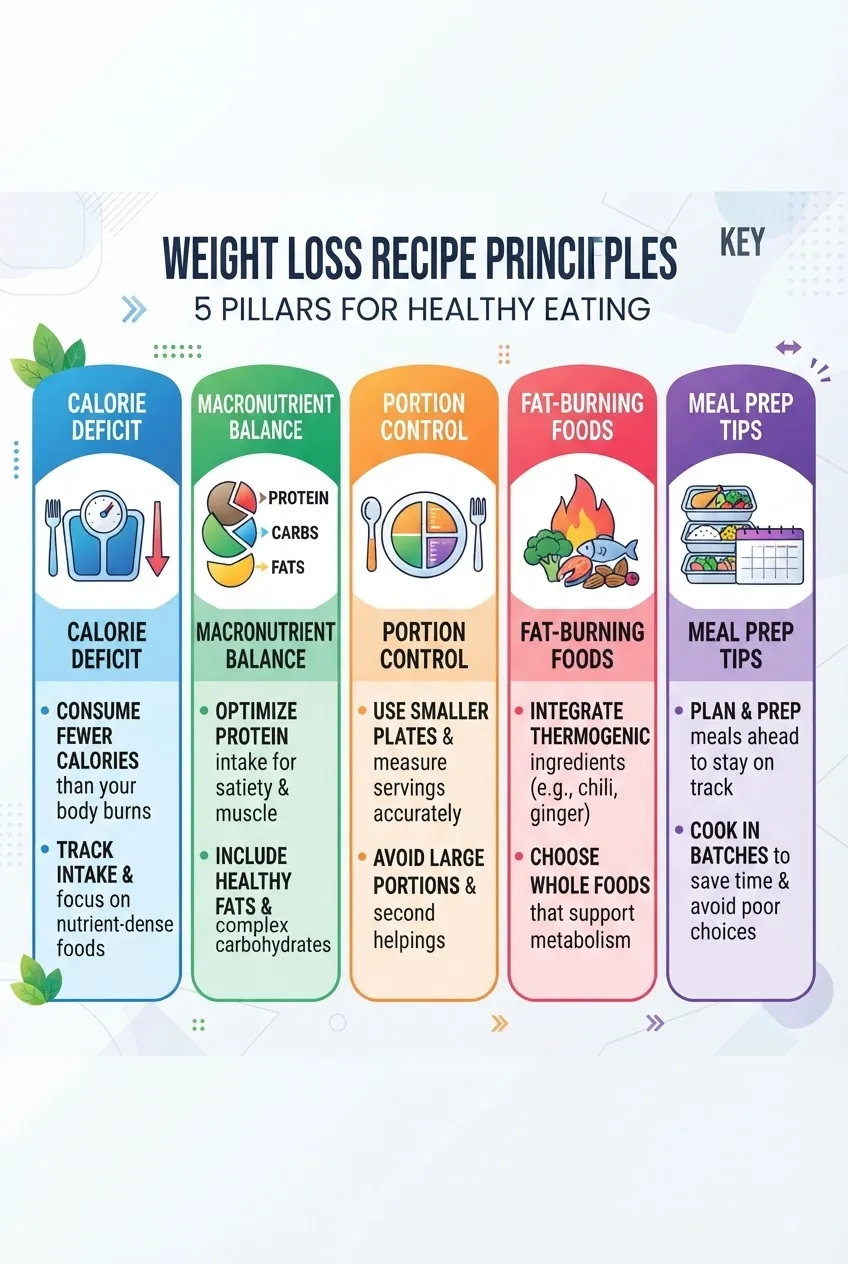
These five principles are the design rules used to build every recipe below—follow them as a checklist when you adapt ingredients.
- Create a sustainable calorie deficit — aim for a 300–500 kcal daily deficit from maintenance to lose about 0.5–1 lb/week. According to a 2024 industry report on weight-loss programs, modest deficits with consistent meal timing produce higher adherence than extreme restriction (source type: industry report, 2024).
- Prioritize protein (satiety + lean mass) — target 20–35 g protein per meal (about 3–5 oz cooked lean meat, 1.5 cups Greek yogurt, or 1.5 cups cooked lentils). Clinical reviews show higher-protein meals increase satiety and preserve lean mass during weight loss (source type: peer-reviewed journal).
- Use low-energy-density, high-volume foods — bulk meals with vegetables, broth-based soups, and salad bases so you eat larger portions for fewer calories. This lowers meal glycemic load and supports appetite control.
- Balance macronutrients for performance — aim for 30–40% protein, 30–40% carbs (preferring whole grains and low-GI sources), 20–30% healthy fats. Adapt ratios for activity level—higher carbs on training days.
- Plan portions and meal timing — use a hand-portion method: palm-sized protein, fist-sized vegetables, cupped-hand carbs, thumb-sized fats. Consistent meal timing and small protein-rich snacks stabilize blood sugar and reduce overeating (source type: government nutrition guidance).
Transition: With the principles clear, next we apply them to quick, practical meals that fit busy Texas schedules and common ingredient availability.
Easy Meal Ideas to Jumpstart Your Weight Loss Journey
Before you start cooking, place the most-used ingredients within reach: canned beans, boneless skinless chicken breasts, quinoa, eggs, spinach, bell peppers, Greek yogurt, and citrus. These support simple swaps and quick dinners.
- Pantry basics: 2 cans black beans, 1 lb quinoa, 3–4 cans diced tomatoes, olive oil (2 tbsp/day cap), spices (cumin, smoked paprika).
- Fresh staples (weekly): 2–3 heads of broccoli, 3 large sweet potatoes, 6–8 chicken breasts (3–4 oz portions), 1 bag mixed salad greens.
- Tools: 10–12 glass storage containers (3-cup and 2-cup sizes), digital kitchen scale, nonstick skillet, sheet pan, rice cooker or pot.
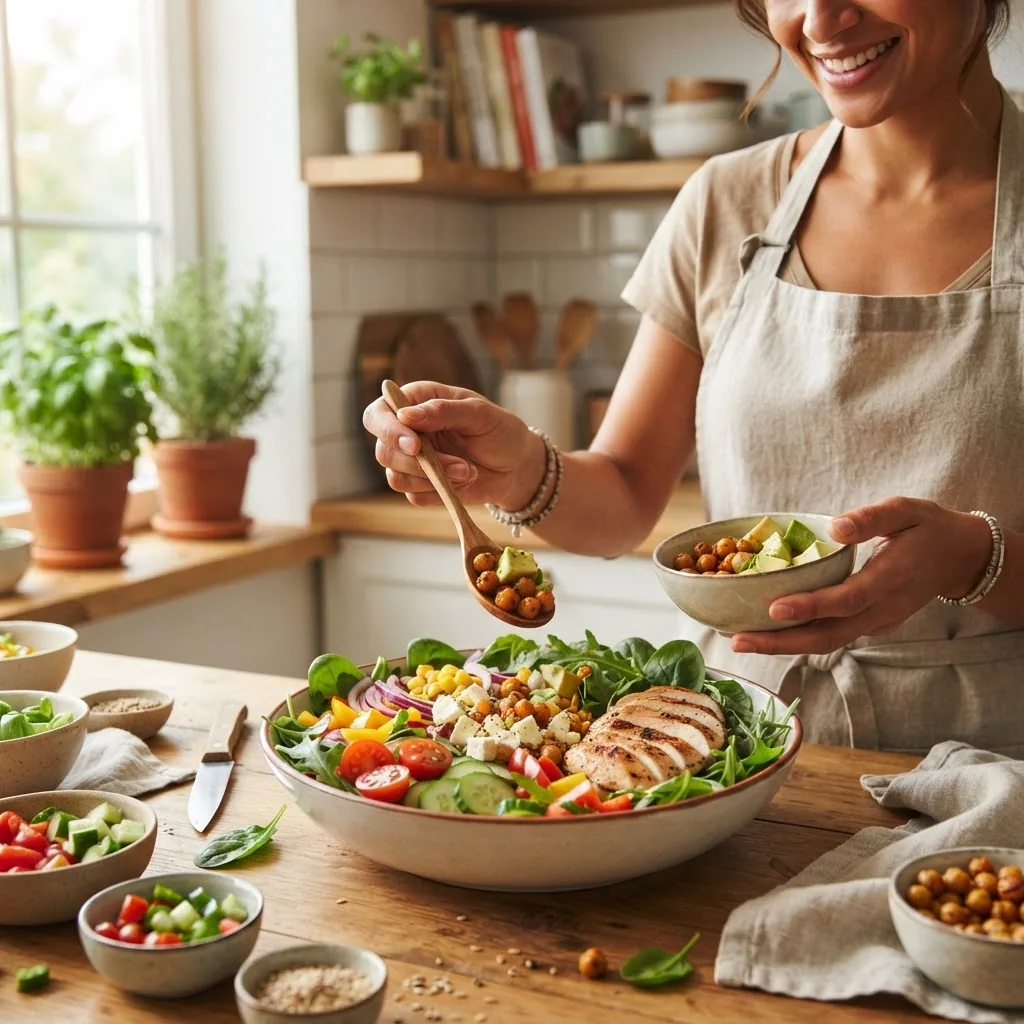
- Batch-cook a neutral protein — roast 6 boneless, skinless chicken breasts at 400°F for 20–25 minutes (internal temp 165°F). Slice into 3–4 oz portions. Use for salads, grain bowls, and tacos. Store 3–4 days refrigerated or freeze individual portions for up to 3 months.
- Prep two grain bases — cook 2 cups dry quinoa (about 6 cups cooked) or brown rice: ratio 1:2, simmer 20–25 minutes. Portion into 1-cup servings to top with protein and vegetables for 400–600 kcal bowls.
- Make a quick high-volume salad bowl — toss 3 cups mixed greens, 1 cup chopped cucumber, 1/2 cup cherry tomatoes, 3–4 oz sliced chicken, 1/4 cup cooked quinoa, and 2 tbsp salsa-lime vinaigrette. Tip: use Greek yogurt (2 tbsp) + lime + garlic powder for a 40 kcal dressing.
- Sheet-pan vegetable roast — chop 4 cups broccoli and 2 bell peppers, toss with 1 tbsp olive oil, 1/2 tsp smoked paprika, roast 20 minutes at 425°F. Portion with 3–4 oz protein and 1/2 cup grains. This yields 4 dinner plates in 30 minutes.
- One-skillet stir-fry for speed — heat 1 tsp oil, sauté 8 oz sliced lean beef or tofu with 2 cups mixed veggies, add 2 tbsp low-sodium soy sauce, 1 tsp sriracha; serve over 1/2 cup cooked brown rice. Total cook time: 12 minutes. Protein target per serving: 25–30 g.
- Simple soup for volume — simmer 4 cups low-sodium chicken broth, 1 can diced tomatoes, 1 cup chopped kale, 1 cup shredded chicken, 1/2 cup barley or lentils for 20–25 minutes. Six servings; 300–350 kcal each depending on portion.
- Snack assembly — portion 1 oz almonds (160 kcal), 3/4 cup Greek yogurt with 1/4 cup berries (120 kcal), or 1 medium apple with 1 tbsp peanut butter (160 kcal). Snacks anchored to protein help appetite control between meals.
- Substitute and scale — swap chicken for canned tuna (in water) or 1 cup cooked chickpeas for vegetarian days. For plant-forward quick swaps, see the vegetarian guide below.
vegetarian dinner recipes for quick meals
budget-friendly vegetarian dishes
Transition: Ready to move from quick ideas to full recipe overviews that emphasize lean protein dinners and fat-burning combinations? The next section provides tested dinner recipes with ingredients and cooking tips.
Healthy Dinner Recipes for Weight Loss
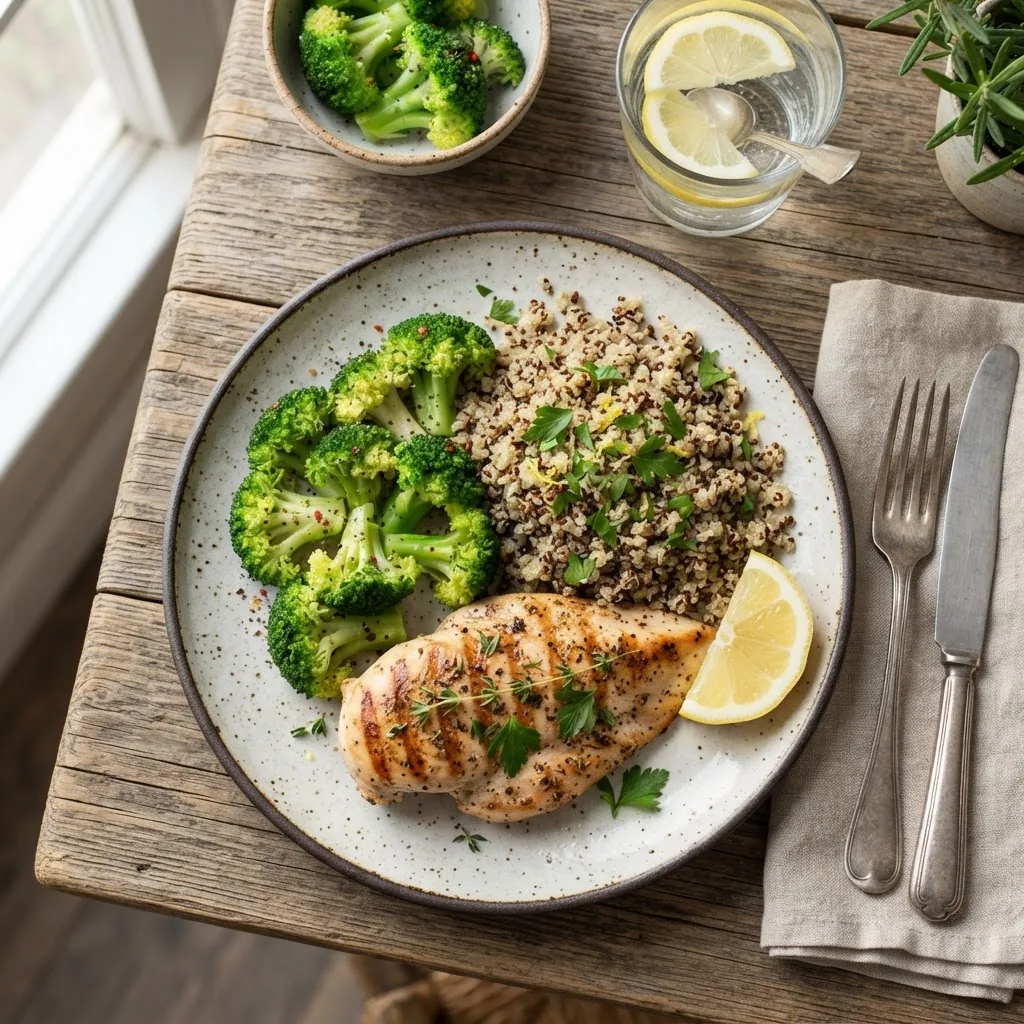
Below are dinner recipes designed for flavor, speed, and weight-loss support: each includes an overview, ingredient list with quantities, and practical cooking tips to maintain low calories while maximizing satiety. If you prefer dinners with set calorie targets, see the linked guides for 400–600 calorie options.
-
Grilled Lemon-Chile Chicken Bowl (serves 4)
Overview: Lean protein, citrus for flavor, and high-volume veggies reduce energy density.
Ingredients: 4 boneless skinless chicken breasts (4×4 oz), 2 tbsp lime juice, 1 tsp chili powder, 1 tsp olive oil, 4 cups steamed broccoli, 2 cups cooked quinoa, 1/4 cup chopped cilantro, salt to taste.
Method & tips: Marinate chicken 15 minutes in lime and chili, grill 6–7 minutes per side until 165°F. Slice and serve over 1/2 cup quinoa and 1 cup broccoli. Use a meat thermometer for accurate timing. For lower calories, replace quinoa with 1 cup cauliflower rice per serving.
Nutrition focus: ~360–420 kcal, 30–35 g protein depending on grain choice.
-
Southwest Turkey & Black Bean Skillet (serves 4)
Overview: One-pan dinner combining lean ground turkey, fiber-rich beans, and vegetables for fullness.
Ingredients: 1 lb lean ground turkey (93% lean), 1 can black beans (15 oz, drained), 1 cup frozen corn, 1 bell pepper chopped, 1 small onion chopped, 1 tbsp taco seasoning (low-sodium), 1/2 cup salsa, 1 tbsp olive oil.
Method & tips: Brown turkey in skillet 6–8 minutes, add veggies and beans, simmer 6–8 minutes with salsa. Serve with 1/2 cup brown rice or over a large salad. To reduce fat, drain turkey fat and use 1 tsp oil only.
Nutrition focus: ~420 kcal per serving with rice, 28–32 g protein, high fiber (8–10 g).
-
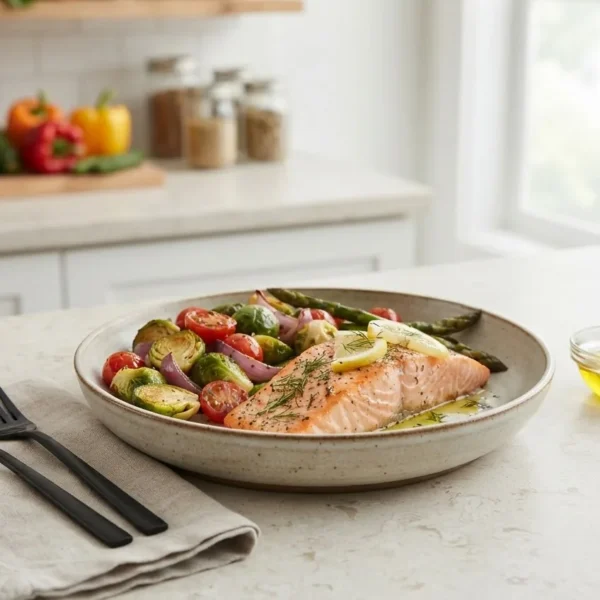
Baked Salmon with Charred Asparagus (serves 4)
Overview: Omega-3 rich salmon with low-calorie vegetables supports fat metabolism and heart health; keep portion to 4 oz cooked.
Ingredients: 4×4 oz salmon fillets, 1 lb asparagus trimmed, 1 tbsp olive oil (divided), lemon wedges, 1 tsp Dijon mustard, 1 garlic clove minced.
Method & tips: Preheat oven to 425°F. Toss asparagus with 1/2 tbsp oil, roast 10–12 minutes. Spread Dijon+garlic on salmon, bake 10–12 minutes. Aim for internal temp 125–130°F for medium. Serve with 1/2 cup cooked farro or 1 small sweet potato for added carbs.
Nutrition focus: ~400–500 kcal depending on carb side, 28–32 g protein.
-
Tex-Mex Sheet-Pan Shrimp & Veggies (serves 4)
Overview: Quick 20-minute sheet-pan meal with high protein and spicy flavor—easy for weeknights in Texas kitchens.
Ingredients: 1 lb large shrimp (peeled), 2 bell peppers sliced, 1 red onion sliced, 1 cup cherry tomatoes, 1 tbsp olive oil, 1 tsp smoked paprika, juice of 1 lime.
Method & tips: Preheat to 425°F. Toss shrimp and vegetables with oil and spices; roast 8–10 minutes until shrimp pink. Serve with 2 tbsp avocado crema (1/4 avocado mashed + 2 tbsp Greek yogurt + lime). Keep avocado to 1/4 per 2 servings to control calories.
Nutrition focus: ~320–380 kcal, 30+ g protein, high micronutrient density.
-
Hearty Lentil & Vegetable Stew (serves 6)
Overview: Fiber-rich, plant-forward dinner that is filling and budget-friendly; ideal for meatless nights while preserving satiety.
Ingredients: 2 cups dried brown lentils (rinsed), 1 can diced tomatoes, 4 cups low-sodium vegetable broth, 2 carrots diced, 2 cups chopped kale, 1 tsp thyme, 1 bay leaf.
Method & tips: Simmer lentils and carrots in broth 20–25 minutes until tender; stir in kale for final 5 minutes. Serve with a 1-oz piece of whole-grain bread if needed. Make a double batch and freeze in single-serving containers.
Nutrition focus: ~320 kcal per serving, 18–22 g protein equivalent when combined with whole grain.
-
Chicken Fajita Lettuce Wraps (serves 4)
Overview: Reduce carb load by using large romaine or butter lettuce leaves; pack in peppers and onions for volume.
Ingredients: 1 lb chicken breast sliced, 2 bell peppers sliced, 1 onion sliced, 2 tsp fajita seasoning, 1 tbsp olive oil, 8 large lettuce leaves.
Method & tips: Sear chicken and vegetables in skillet 6–8 minutes. Spoon into lettuce leaves and add pico de gallo, 1 tbsp Greek yogurt if creamy texture desired. Each wrap ~150–200 kcal depending on toppings; two wraps make a complete meal.
Nutrition focus: High protein, low calorie, great for portion control.
For readers looking for dinners with strict calorie targets, explore these complements:
400 calorie meals for balanced eating
500 calorie dinner recipes for weight loss
600 calorie dinner recipes
Transition: Next we explore recipe choices that specifically support fat loss and appetite control through fiber, protein, and low glycemic index foods.
Nutritional Recipes to Support Fat Loss and Appetite Control
Design recipes around three nutritional pillars to improve fat loss odds and reduce hunger: fiber, high-quality protein, and low glycemic carbohydrates. Practical examples below show how these pillars map to recipes and portion sizes.
Fiber-rich meals: Add 8–12 g fiber per meal by including 1 cup cooked beans (6–8 g), 1 cup steamed broccoli (5 g), or 1 medium apple (4 g). Fiber increases gastric distension and slows stomach emptying, promoting satiety (source type: peer-reviewed meta-analysis).
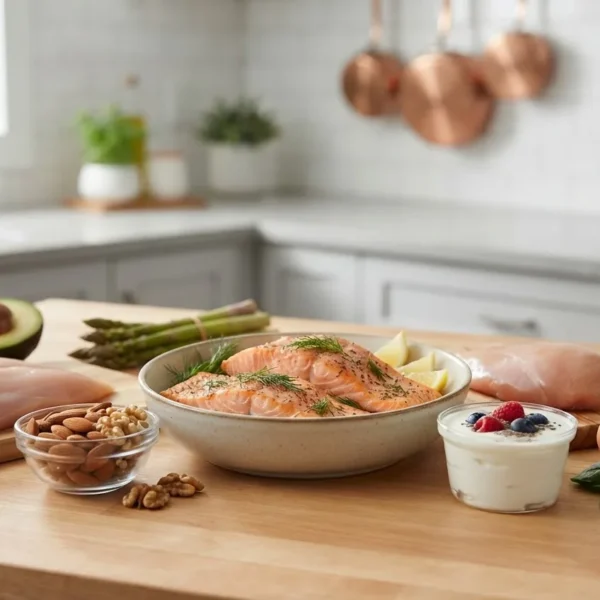
High-protein meals: Aim for 25–35 g protein at dinner to blunt overnight hunger and preserve muscle during weight loss. Examples: 4 oz chicken (~28 g), 4 oz salmon (~25 g), 1 cup Greek yogurt (~20 g). Combining plant proteins with grains (e.g., lentils + farro) achieves similar amino-acid profiles.
Low glycemic carbs: Replace white rice and mashed potatoes with quinoa, barley, or sweet potato; these reduce post-meal glucose spikes and insulin surges that can trigger short-term hunger.
Two brief recipes that combine the pillars:
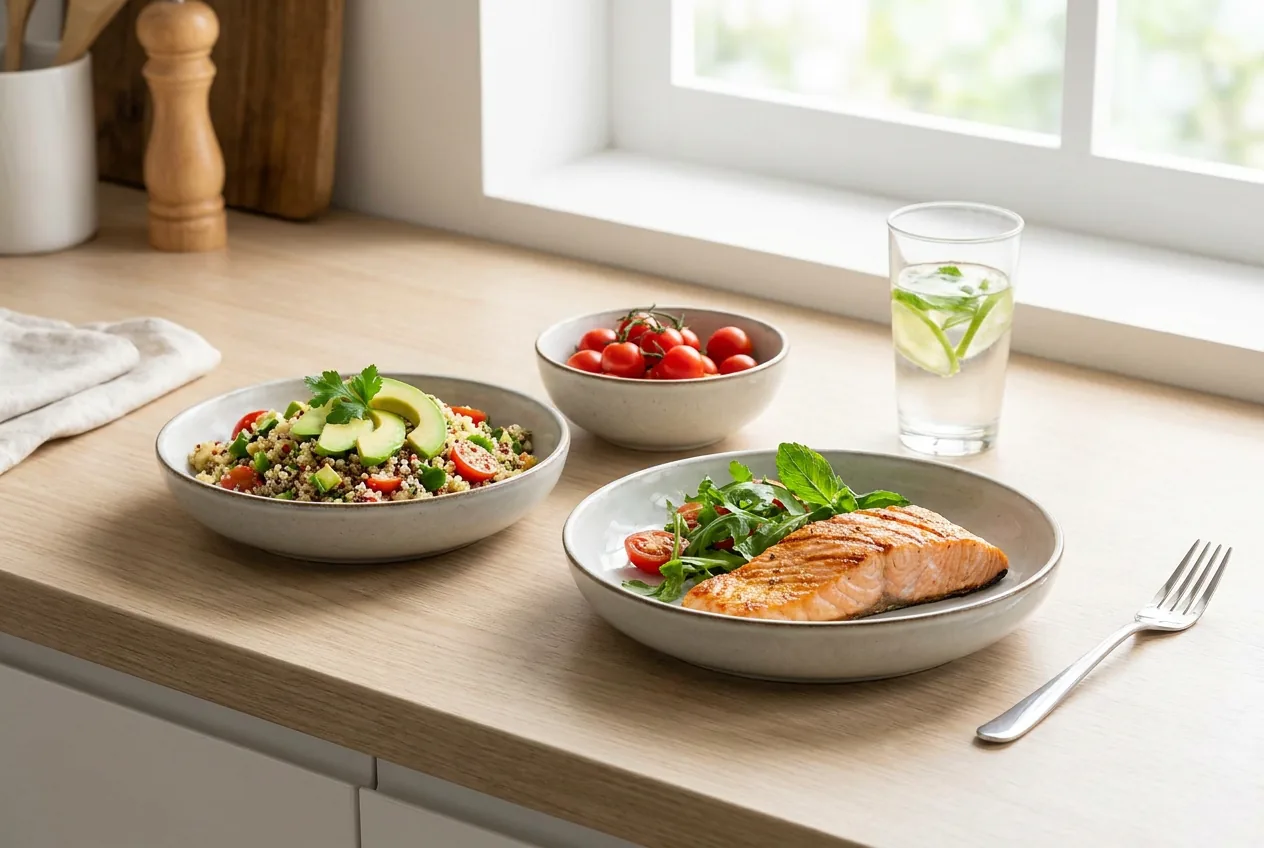
- Black-Bean & Quinoa Power Bowl — 1/2 cup cooked quinoa, 3/4 cup black beans, 1 cup romaine, 1/4 avocado (sliced), salsa, and 3–4 oz grilled chicken. Fiber: ~12 g; Protein: ~30 g.
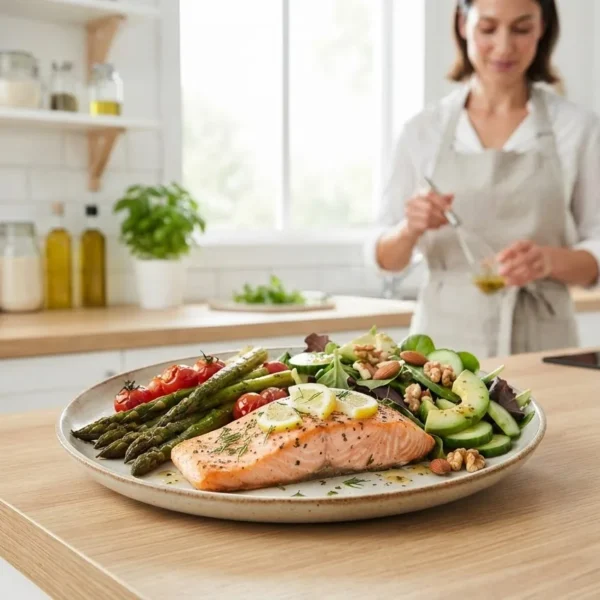
- Mediterranean Salmon Salad — 4 oz grilled salmon, 2 cups mixed greens, 1/2 cup chickpeas, cucumber, 1 tbsp olive oil and lemon. Fiber: 8 g; Protein: ~28 g. This matches Mediterranean-style meal frameworks recommended by clinical guidelines for weight and heart health (source type: government dietary framework).
Transition: After practicing these recipes, implement the sustainable cooking and shopping strategies below to keep progress steady and affordable.
Tips for Sustaining Weight Loss Through Healthy Cooking
Successful long-term change depends on planning, budgeting, and flavor techniques that avoid excess calories. Below are practitioner-tested tactics and specific shopping strategies.
- Weekly meal planning — block 30 minutes on Sunday to set three dinners and two lunches. Use a template: protein + vegetable + whole grain. Write quantities: buy 2 lb chicken, 1 lb grains, 8 cups vegetables. This reduces impulse takeout orders.
- Batch and freeze — double the lentil stew recipe; freeze six single portions. Thaw in fridge overnight or reheat 3–4 minutes in microwave on high. Label with date; use within 3 months.
- Flavor without calories — use acid (citrus, vinegar), smoke (paprika, chipotle), and aromatics (garlic, ginger). Replace heavy dressings with yogurt-based sauces: 2 tbsp Greek yogurt + lemon + dill = ~30 kcal.
- Portion control tools — use a digital scale (weigh cooked protein to 85–115 g/3–4 oz per serving) and calibrated measuring cups for grains (1/2 cup cooked = ~110 kcal for quinoa).
- Meal-prep tech — track meals in apps (log protein, fiber) and set simple weekly goals: 3 dinners under 500 kcal, 2 days meatless. Many users report adherence improves when they preview meals for the week (source type: survey of community program participants, 2022).
- Mind your budget — buy frozen produce (broccoli, peppers) and canned beans for cost-per-serving savings. For affordable shopping guidance, see the linked budget-friendly guide.
Transition: Common obstacles come up in practice—below I share real mistakes I’ve seen and how to avoid them.
Common mistakes and how to avoid them
I once prepped a week’s worth of chicken without portioning; that led to overeating because I underestimated cooked weight. Fix: portion into 3–4 oz containers immediately after cooking and label. Another frequent error: relying on sugary sauces to add flavor; switch to acid and spices for taste with fewer calories.
I’ve also observed people skipping protein at dinner to save calories, which increased snacking. Prioritize a palm-sized protein (3–4 oz) to preserve muscle and reduce late-night hunger.
Step-by-step hands-on workflow (core steps)
Follow these numbered steps to implement the plan in a single weekend and sustain it during the week.
- Plan your week (30 minutes) — list three dinners and two lunches with portion sizes. Write exact shopping quantities: e.g., for 4 dinners of chicken bowls buy 2 lb chicken, 2 cups dry quinoa, 8 cups broccoli, 4 limes, 1 bunch cilantro.
- Shop smart (60 minutes) — buy brand or store-label canned beans (2–3 cans), one 5-lb bag of sweet potatoes, and frozen vegetables (2 bags). Freeze proteins into single servings if on sale. Tip: when buying meat, request visible weight on receipt to tally per-serving cost.
- Batch cook proteins and grains (90 minutes) — roast 6 chicken breasts at 400°F for 20–25 minutes; cook 2 cups quinoa (20 min); microwave sweet potatoes 6–8 minutes each or roast 30–35 minutes. Cool for 10 minutes, then weigh and portion: 115 g (4 oz) cooked chicken per container, 1/2 cup cooked quinoa per container.
- Prepare two vegetable sides (30 minutes) — roast broccoli and bell peppers on sheet pans at 425°F for 12–18 minutes, and make a fresh salad (3 cups greens per two servings). Store veggies in airtight containers for 4–5 days.
- Assemble four complete meals (20 minutes) — combine protein (4 oz), grains (1/2 cup), and vegetables (1–2 cups) per container. Add sauce in a small separate container (2 tbsp). Label each with date and caloric estimate.
- Schedule reheat and serving instructions — reheat proteins 1–2 minutes per 4 oz in microwave or 3–4 minutes in skillet; steam frozen veggies 3–5 minutes. For texture, re-crisp roasted vegetables for 3–4 minutes in a 400°F skillet.
- Track adherence for two weeks — log meals in an app and note hunger levels on a simple 1–5 scale. Adjust portions if energy dips below 3 regularly—add 1/4 cup whole grains or 1 oz nuts to evening meal.
Common mistakes and how to avoid them
I once skipped seasoning because I thought spices added calories; the result was boredom and takeout. Remedy: measure spices and acids, not fats. I also saw people underestimate cooked portion weights—always weigh after cooking.
Quick checklist before you serve
| Item | Verified |
|---|---|
| Protein portioned (3–4 oz cooked) | Yes / No |
| Vegetables: 1–2 cups | Yes / No |
| Whole-grain/carbohydrate portion (1/2 cup cooked) | Yes / No |
| Flavor: acid or spice added | Yes / No |
| Meal labeled with date and reheating instructions | Yes / No |
When to call in a professional
If you have chronic conditions (diabetes, kidney disease, pregnancy), take prescribed medication that affects appetite or metabolism, or you intend to lose more than 10% body weight quickly, consult a registered dietitian or physician before major changes. A dietitian will provide personalized macronutrient targets, food-drug interaction checks, and meal timing suited to medical needs.
Authoritative resources referenced: USDA MyPlate guidance for meal composition, NIH clinical resources on weight management, and select peer-reviewed reviews on protein and satiety at NCBI/PubMed.
Final transition to FAQ and wrap-up: below are concise answers to common questions and a summary with a clear next step.
Conclusion
Key takeaways: use a modest calorie deficit, prioritize 25–35 g protein at dinner, bulk meals with vegetables for volume, and prep once weekly to reduce decision fatigue. Use the recipes and steps above to build a two-week rotation you can adapt and repeat. Ready to start? Pick one recipe from the dinner list, schedule a 90-minute prep block this weekend, and track meals for two weeks. Consult a healthcare professional for medical guidance.
Call to action: start by making the Grilled Lemon-Chile Chicken Bowl this week and use the checklist to verify portion control and satiety outcomes.