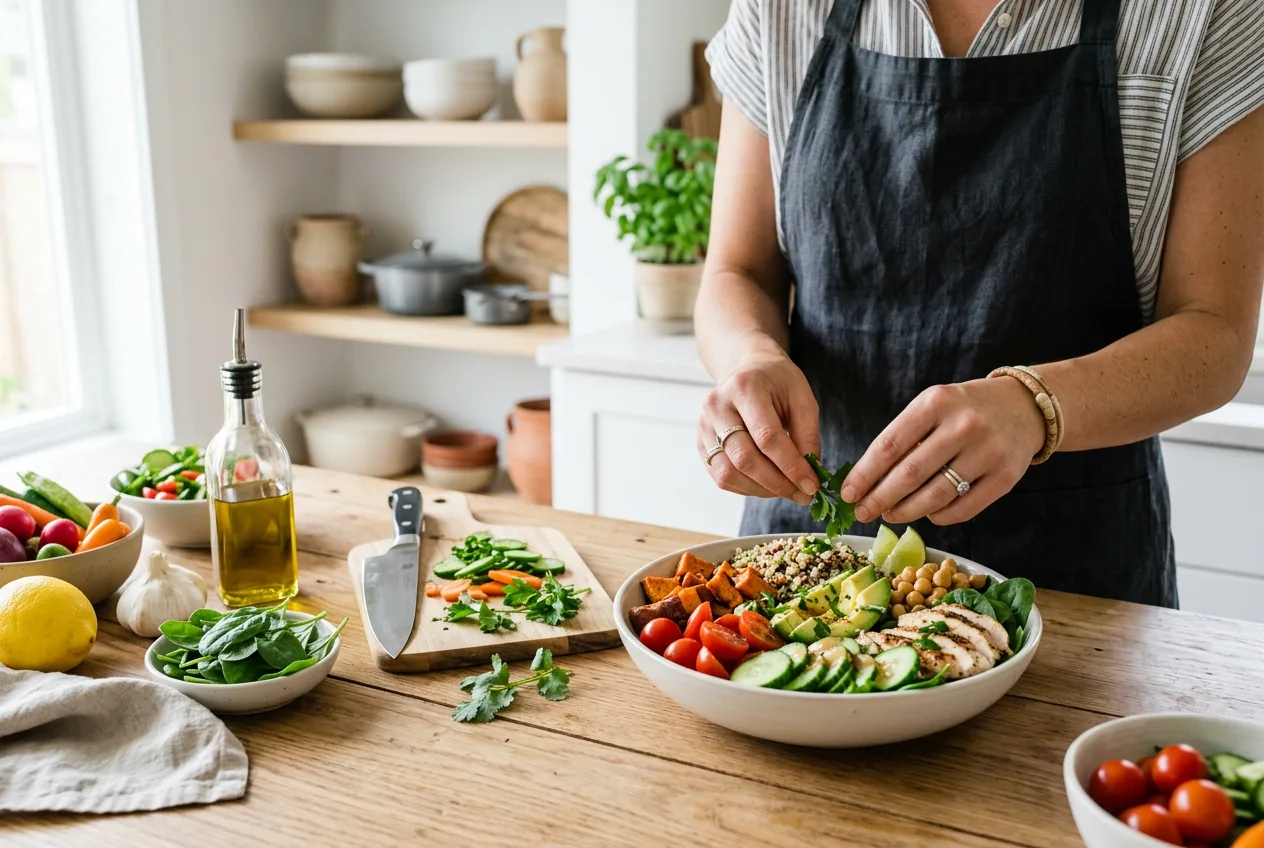
By the end of this hands-on guide you’ll have a one-week plan, three ready-to-cook recipes, and a 90-minute prep workflow so you always know something to eat at home. This takes about 90 minutes to set up and assumes basic kitchen skills (knife handling, stove use, oven use).
If you’re here for quick, practical, and healthy home cooking solutions, this guide walks you step-by-step—no calorie counting required, just common-sense nutrition and time-saving technique.
Introduction – Finding “Something to Eat” Made Easy and Healthy at Home
When you ask “what’s something to eat?” the right answer should be fast, nutritious, and achievable with what you already have. This guide treats meal choices like small projects: define needs (time, taste, nutrition), choose a simple method, and execute with repeatable steps.
You’ll see why simple ingredient swaps, modest batch cooking, and a short weekly plan mean fewer decisions and healthier outcomes. We’ll define core terms (macronutrients, meal prep, batch cooking) and show practical examples, including a full 90-minute prep walk-through and a Texas-flavored case study.
Before you start
- Basic tools: chef’s knife, cutting board, one large skillet (10–12″), sheet pan, medium saucepan, 3 airtight containers.
- Pantry basics: olive oil, canned beans, brown rice or quinoa, low-sodium broth, canned tomatoes, whole-grain pasta.
- Time block: reserve 90 minutes one afternoon or morning for the first full setup; 30–45 minutes weekly thereafter.
- Skill level: beginner to intermediate; follow timing and temperatures exactly the first two times.
Transition: now that we’re ready, next is why opting for easy, healthy home cooking makes measurable differences for health, budget, and family life.
Why Choose Easy and Healthy Home Cooking?
Choosing easy, healthy home cooking is more than a lifestyle preference—it’s a practical investment. Below are the main benefits, written as actions and outcomes so you can see immediate value.
- Better nutrition control: cooking allows you to choose ingredients, reduce added sugar and sodium, and manage portions. According to the 2023 USDA dietary guidelines, emphasizing whole foods and varied proteins improves overall diet quality. USDA
- Cost savings: preparing meals at home typically costs 2–4x less per serving than takeout, especially when you batch cook staples like grains and roasted vegetables.
- Family health and habits: regular family meals support consistent eating patterns and better fruit/vegetable intake—benefits documented by health organizations like the American Heart Association.
- Time efficiency: a single 90-minute prep session can produce 4–6 dinners and lunches for 3–4 days, saving time on busy evenings.
- Skill growth: simple techniques—roasting, stir-frying, one-pan bakes—are quick to learn and scale with taste preferences.
Transition: the next section lists targeted, hands-on tips to make your agenda work faster and healthier, including a small image that captures the fast-chop workflow.
Top Tips for Quick and Easy Healthy Home Cooking
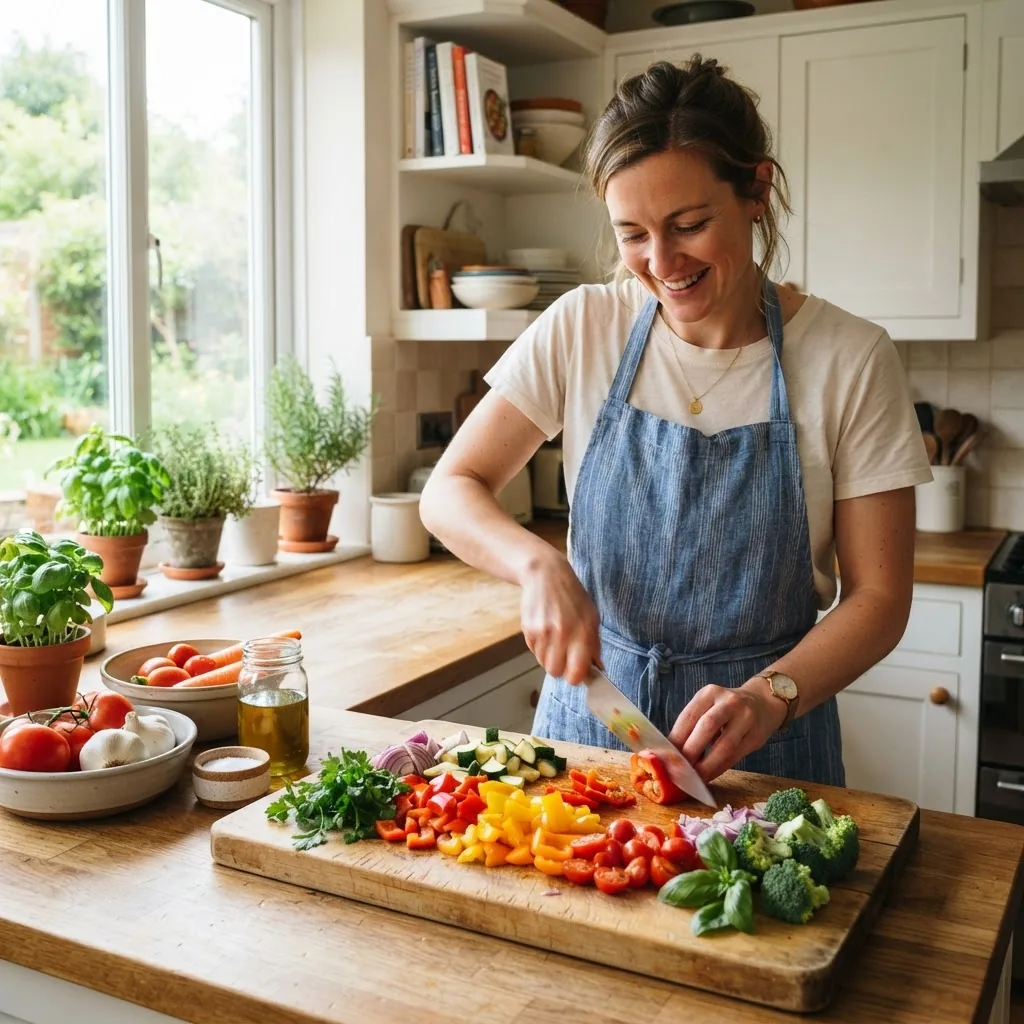
- Batch cook a base: Cook 2 cups dry brown rice (makes ~6 cups cooked) or 2 cups quinoa following package instructions. Store in two airtight containers: one for grain bowls, one for fried rice. Reheat in skillet with 1 tsp oil, 2–3 min.
- Roast versatile vegetables: Toss 1.5 lb mixed vegetables (bell peppers, carrots, Brussels sprouts) with 2 tbsp olive oil, 1 tsp salt, 1/2 tsp black pepper. Roast at 425°F (220°C) for 20–25 minutes, turning once. Use them across bowls, omelets, and wraps.
- Prep two proteins: Choose one animal (e.g., 1.5 lb boneless chicken breast, baked at 400°F for 18–22 min) and one plant (2 cans chickpeas roasted at 400°F for 20 min with 1 tsp smoked paprika). Slice chicken into 1/2″ strips for salads and sandwiches.
- Make a quick sauce: Whisk 1/4 cup olive oil, 2 tbsp lemon juice, 1 tsp Dijon, 1 clove minced garlic, pinch of salt. This dressing brightens grain bowls and grilled veggies and keeps in fridge 5–7 days.
- Use healthy swaps: Replace butter with 1–2 tbsp olive oil for sautéing; swap white rice for brown rice or cauliflower rice; use Greek yogurt instead of sour cream (1:1) to add protein with less saturated fat.
- One-pan dinners: Build dinners where vegetables and protein cook together: place 1 lb salmon or chicken thighs on sheet pan with 1 lb mixed vegetables, drizzle with 2 tbsp olive oil and roast at 425°F for 18–20 min for salmon or 30–35 min for chicken thighs.
- Overnight breakfasts: Combine 1/2 cup rolled oats, 3/4 cup milk or milk alternative, 1/4 cup Greek yogurt, and 1/2 cup berries in jar. Refrigerate overnight; grab-and-go in the morning.
- Keep quick staples accessible: Canned beans, frozen vegetables, whole-grain wraps, and pre-washed salad greens cut decision time by half.
- Use timing to your advantage: While grains cook (20–25 min), roast veggies (20–25 min) and pan-sear protein (8–12 min). Stack steps like a short assembly line.
- Label and date containers: Store portions in 2-cup containers for lunches (about 400–600 kcal depending on protein) and 1.5–2 cup dinner containers. Proper labeling prevents waste.
- Keep health front-of-mind with macronutrients: Aim for plates that include ~30–35g protein, 30–45g carbohydrates (whole grains, starchy veg), and 10–20g healthy fats per main meal as a starting guideline for balanced meals. “Macronutrients” means protein, carbohydrates, and fats—track roughly by eyeballing portions: palm-sized protein, fist of carbs, thumb of oils/nuts.
- Leverage shortcuts: Use rotisserie chicken for quick dinners, pre-washed greens for salads, and frozen fruit for smoothies to cut prep time to 5–10 minutes for specific meals.
Transition: armed with tips, the next section lists dependable ingredients to keep stocked so you can answer “what to eat at home” instantly with nutritious combinations.
Simple and Healthy Ingredients to Keep On Hand for “Something to Eat”
Stocking a smart pantry and fridge is the fastest route to healthy, easy meals. Below are categories and precise items that last and combine well—use this as your shopping backbone.
Pantry staples (shelf-stable)
- Whole-grain pasta, brown rice, quinoa (1–2 lb each)
- Canned beans (chickpeas, black beans) 3–6 cans
- Canned tomatoes (diced and crushed) 2–4 cans
- Nut butters (peanut or almond), olive oil, vinegar (balsamic, apple cider)
Fresh produce (weekly)
- Leafy greens (spinach, mixed salad greens) 1–2 bags
- Cruciferous veg (broccoli, Brussels sprouts) 1–2 lb
- Alliums: onions, garlic (3–6 each)
- Fruits: apples, bananas, berries (as preferred)
Proteins
- Eggs (dozen x1–2)
- Chicken breast or thighs (1.5–2 lb weekly)
- Firm tofu (14 oz) or canned tuna/salmon (2–4 cans)
- Greek yogurt (32 oz) for quick sauces and snacks
Healthy fats and extras
- Olive oil (extra virgin), nuts (almonds/walnuts), seeds (chia/flax)
- Low-sodium broth (1–2 cartons) for soups and grains
For budget ideas and prioritized buys, see the Cheap Foods That Are Good for You Guide.
| Category | Examples | Why keep it |
|---|---|---|
| Whole grains | Brown rice, quinoa, whole-wheat pasta | Sustained energy, fiber |
| Proteins | Canned tuna, eggs, chicken, beans | Muscle repair, satiety |
| Vegetables | Frozen mixed veg, carrots, greens | Micronutrients, low-cost volume |
Transition: with staples set, the next section gives meal ideas for every time of day—breakfasts, lunches, dinners, and snacks—plus direct internal guides for deeper recipe collections.
Easy Healthy Meal Ideas for Every Time of Day
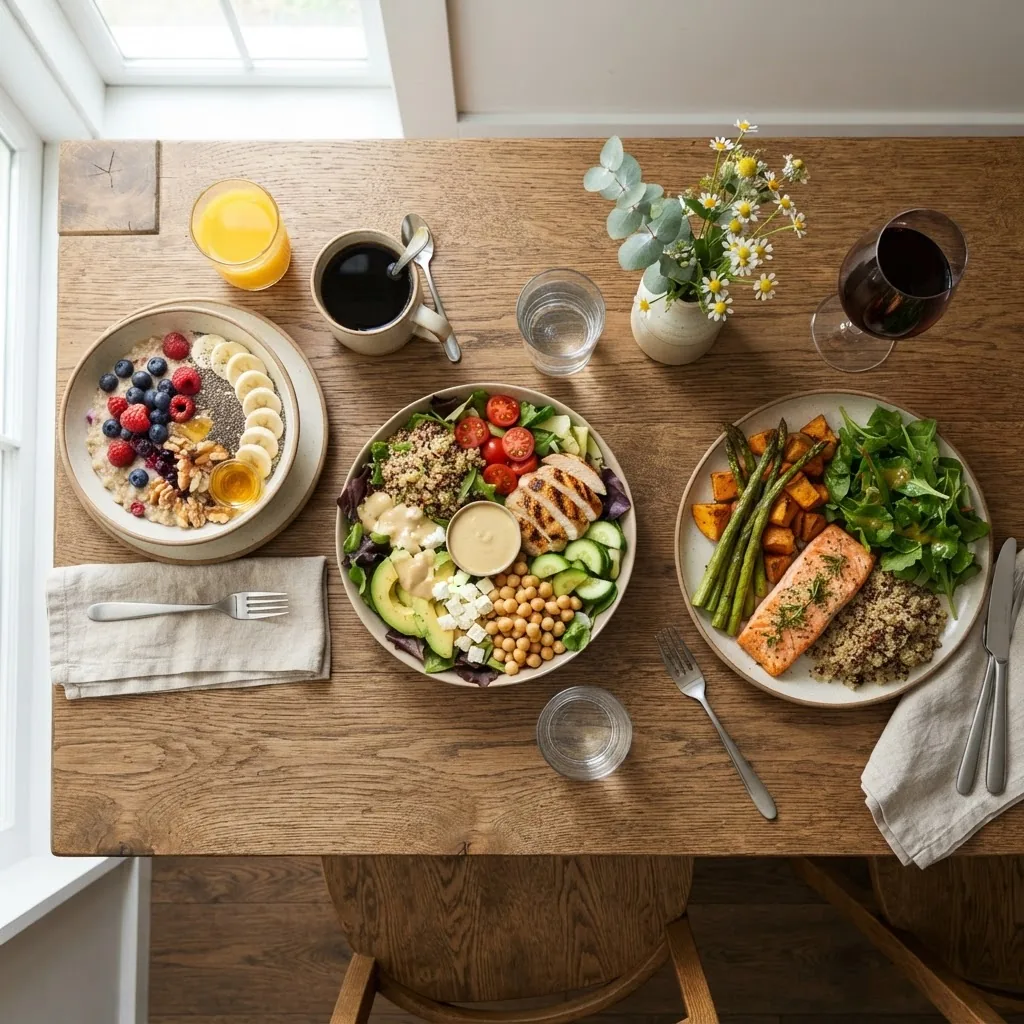
This section offers quick recipes and meal constructs you can build from the pantry and fridge items already discussed. For a larger set of tested recipes, see the Yummiest Healthy Recipes Guide for Nutritious and Tasty Meals.
Healthy Breakfast Ideas
Breakfast is best when it combines protein, fiber, and a little healthy fat to keep you full until lunch. Here are practical ones that take 5–15 minutes or can be made ahead.
- Overnight oats (make night before): 1/2 cup rolled oats, 3/4 cup milk, 1/4 cup Greek yogurt, 1/2 cup berries, 1 tsp chia seeds. Macros: ~15–18g protein, 45g carbs, 8–10g fat.
- Egg and vegetable scramble: 2 large eggs + 1 cup chopped spinach & peppers, sauté for 4–5 minutes. Serve with 1 slice whole-grain toast.
- Greek yogurt bowl: 3/4 cup plain Greek yogurt, 1/2 cup fruit, 2 tbsp granola or 1 tbsp nuts.
For more morning options refer to the Breakfast Ideas Guide for Easy and Healthy Morning Meals.
Simple Lunch Recipes
Lunch should be portable and balanced—think grain, protein, veg, and a bright dressing. Short prep means you’ll actually bring lunch instead of ordering out.
- Grain bowl: 1 cup cooked brown rice, 4 oz chicken or tofu, 1 cup roasted veggies, 2 tbsp dressing. Reheats 1–2 minutes in a skillet.
- Mason jar salad: 1/4 cup dressing at bottom, 1/2 cup cooked grains, 3/4 cup chopped veggies, 3–4 oz protein, top with greens. Keeps 3–4 days.
- Quick wrap: Whole-grain tortilla + 3 oz turkey or canned tuna + 1/2 avocado + greens. Roll and eat cold.
For commuter or workday lunches, see the Easy Healthy Lunch Ideas Guide and the 400 Calorie Meals Guide for lower-calorie structured lunches.
Quick Dinner Options
Dinners should be satisfying without requiring late-night cooking energy. Here are 6 easy builds you can execute in 20–35 minutes or finish from your batch-cooked prep.
- Sheet pan salmon + veg: 4–6 oz salmon, 2 cups mixed veg, 1 tbsp olive oil, roast 18–20 minutes at 425°F. Serve with 1/2 cup brown rice.
- Stir-fry: 4 oz sliced chicken or tofu, 2 cups mixed vegetables, 2 tbsp low-sodium soy sauce, 1 tsp sesame oil, cook 6–8 minutes over high heat. Serve over 1 cup cooked grains.
- One-pot pasta: 2 oz whole-grain pasta per person, 1 cup spinach, 1/2 cup cherry tomatoes, 1/4 cup chickpeas, cook per package in 10–12 minutes; finish with 1 tbsp olive oil and 2 tbsp grated Parmesan.
If you prefer calorie-targeted dinners, see the 500 Calorie Meals Guide for Dinner, the Quick Vegetarian Dinner Recipes Guide, and the 600 Calorie Dinner Recipes Guide.
Nutritious Snack Suggestions
Healthy snacks bridge meals—aim for 150–250 calories with a protein or fiber source to avoid sugar spikes.
- Apple slices + 1–2 tbsp peanut butter
- Greek yogurt (1/2 cup) + 1 tbsp chia seeds
- Carrot sticks + 1/4 cup hummus
- Small handful (1 oz) almonds or walnuts
Transition: now that you have practical meal ideas for every time of day, we’ll show how to plan a weekly menu so “what to eat at home” becomes automatic.
How to Plan Your Weekly Meals for Stress-Free Eating at Home
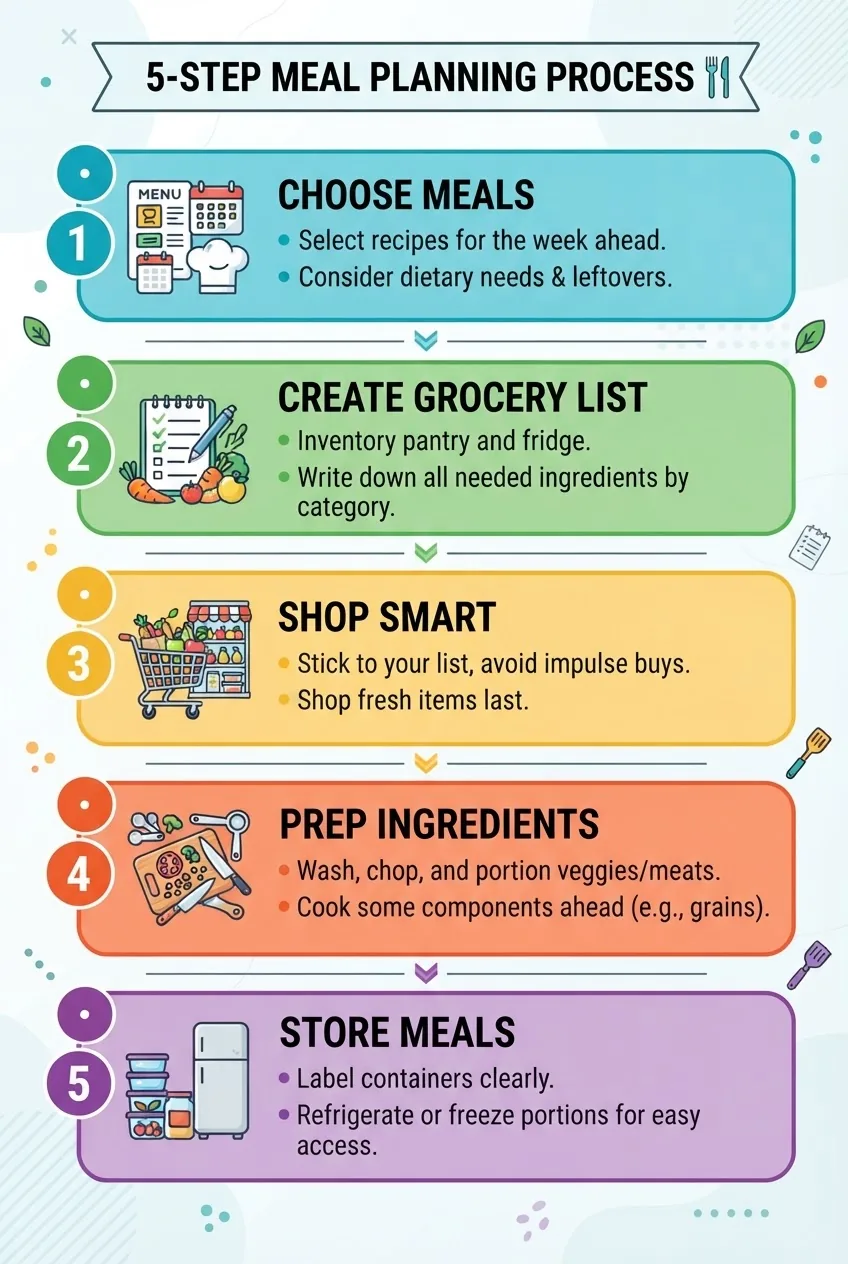
Meal planning is planning your week the same way you budget money: assign meals to slots, allocate ingredients, and protect one prep window. Follow these steps for a repeatable weekly routine.
- Choose 7 meals and 4 snacks: Pick 3 dinners to batch-cook, 2 quick dinners from leftovers, and 2 easy dinners from the pantry. Example week: Roast chicken, sheet pan fish, stir-fry, pasta night, soup, tacos, leftover bowl.
- Create a focused grocery list: Group by aisle and write quantities (e.g., chicken breast 2 lb, brown rice 2 cups dry, spinach 10 oz). Stick to the list to avoid impulse buys.
- Shop smart: Shop once weekly, buy frozen vegetables for low waste, choose seasonal produce for cost savings. According to a 2024 industry report on grocery spending, planning saves an average household 18% on food costs compared with unplanned shopping.
- Prep ingredients in 90 minutes: Step 1: preheat oven to 425°F and roast vegetables (20–25 min). Step 2: cook grains (20–25 min). Step 3: cook proteins (18–22 min for chicken, 10–12 for firm fish). Step 4: make dressing and assemble 3 ready meals in labeled containers.
- Store and reheat safely: Cool foods to room temperature within 1 hour, refrigerate at or below 40°F (4°C), and use within 3–4 days. For freezing: portions keep 2–3 months. When reheating, bring to 165°F (74°C) internal temp for safe consumption.
For deeper meal prep strategies see the How to Meal Prep for the Week Guide and the Freezer Meal Prep Guide for Healthy Make-Ahead Recipes.
Transition: planning works until obstacles appear—next we tackle common real-world challenges and practical solutions.
Overcoming Common Challenges When Deciding “What to Eat at Home”
Common barriers are time, picky eaters, dietary restrictions, and budget. Below are concrete tactics that I’ve used with families and busy professionals to maintain healthy eating without stress.
- Picky eaters: Offer build-your-own plates (protein, veg, grain) so each person chooses. Sneak roasted vegetables into sauces or blended soups. Start with one new food per week.
- Limited time: Commit to two 30-minute, one 30–45 minute, and one 90-minute cooking block per week. Use shortcuts like canned beans and rotisserie chicken on ultra-busy nights.
- Dietary restrictions: Keep swaps ready: tofu/tempeh for meat, gluten-free pasta for wheat, dairy-free yogurt as needed. Make dishes modular so you can assemble special plates without remaking the whole meal.
- Motivation: Track wins: number of home meals per week, money saved, and one health metric you care about (sleep, energy, weight). Small wins sustain habit change.
- Budget constraints: Buy frozen produce, canned legumes, and value cuts of protein; pair smaller portions of meat with beans to stretch servings.
Real-life anecdote: I once worked with a teacher who had 30 minutes on weeknights and three kids with varying tastes. We scheduled Sunday night 90-minute prep: roast 3 veg trays, bake chicken, and assemble grain jars. Weeknights became 10–12 minute finishes—family agreed on two favorites, and overall food waste dropped by half in two weeks.
Transition: for readers in Texas or who want regional flavor, the next section offers Texas-influenced healthy ideas that use local produce and southwestern spices.
Bonus: Texas-Influenced Healthy Home Cooking Ideas
Texas kitchens benefit from abundant seasonal produce (peaches, tomatoes, sweet corn) and bold southwestern flavors. Here are healthy ways to use regional ingredients without adding extra work.
Case study — a common Texas challenge: high summer heat and access to inexpensive BBQ meats can push households toward heavy, high-calorie meals. The solution I used with a neighbor in Dallas was to pivot to grilled fish tacos and corn salads: 4 oz grilled firm white fish, small corn tortillas (2), cabbage slaw with lime yogurt dressing, and charred corn salad on the side. This preserves the grilled flavor while reducing saturated fat and portion sizes.
Texas-friendly healthy swaps and ideas:
- Tex-Mex bowls: Brown rice, black beans, grilled peppers, corn, 3–4 oz lean meat or tofu, pico de gallo, 1 tbsp avocado. Lime and cilantro brighten without extra calories.
- Grilled produce: Summer squash, poblano peppers, and sweet corn sliced from the cob—brush with 1 tsp olive oil and char for 6–8 minutes.
- Light BBQ night: Swap brisket nights for smoked turkey breast or grilled chicken thighs (skin removed) and serve with large side salads and vinegar-based slaws.
Seasonal note: when peaches are ripe in Texas, make a quick peach-chili salsa (2 peaches chopped, 1/4 red onion, 1 tbsp lime juice, 1/4 tsp chili powder) to top grilled fish or chicken—adds freshness and reduces reliance on heavy sauces.
Transition: we close with a concise walk-through recipe and then a hands-on step sequence you can apply right away.
Conclusion – Your Go-To Guide for Something Healthy and Easy to Eat at Home
This hands-on guide equips you to answer “what to eat at home” with confidence: stock the right ingredients, use the 90-minute prep workflow, and rotate simple, balanced recipes. You’ll save money, eat more nutritiously, and reduce daily stress around meals.
Next action: schedule one 90-minute prep session this weekend, pick three dinner recipes from the meal ideas above, and assemble a concise grocery list that follows the pantry categories. If you try the plan and want more recipes, consult the Yummiest Healthy Recipes Guide for Nutritious and Tasty Meals.
Hands-On Steps: 90-Minute Weekly Setup (core workflow)
- Preheat and plan: Preheat oven to 425°F. Lay out 2 sheet pans, a large pot for grains, and your protein on the counter. Have 3 containers labeled: Lunch A, Dinner A, Leftovers.
- Roast vegetables (25 minutes): Chop 1.5 lb mixed veg into 1″ pieces, toss with 2 tbsp olive oil and 1 tsp salt. Roast 20–25 minutes, flip at 12 minutes. Remove and cool for 10 minutes, then portion into containers.
- Cook grains (25 minutes concurrently): Bring 2 cups brown rice and 4 cups water to a boil, cover, reduce to simmer 40–45 minutes or use quick-cook quinoa (2 cups quinoa to 2.5 cups water, simmer 15 minutes). For speed, use quinoa if time is tight.
- Cook proteins (20 minutes): Season 1.5 lb chicken with 1 tsp salt, 1/2 tsp pepper, 1 tsp smoked paprika. Bake at 400°F for 18–22 minutes (internal temp 165°F / 74°C). Alternatively, roast chickpeas: drain 2 cans, toss with 1 tsp oil and 1 tsp chili powder, roast 20 minutes at 400°F.
- Make a sauce and quick sides (10 minutes): Whisk 1/4 cup olive oil, 2 tbsp lemon, 1 tsp Dijon, 1 clove garlic. Mix a simple slaw: 2 cups shredded cabbage, 1 tbsp apple cider vinegar, pinch salt.
- Assemble and portion (10 minutes): Fill each container: 1 cup grains, 4 oz protein, 1 cup roasted veg, 1–2 tbsp sauce. Label with date. Refrigerate promptly—consume within 3–4 days or freeze for longer storage.
Common mistakes and how to avoid them
I once skipped labeling containers and mixed up a freezer meal that sat too long; now I date everything and rotate oldest forward. I also used too much oil when roasting—limit to 1–2 tbsp per pound of vegetables to keep calories and splatter down. Finally, I used to under-season grains; add 1/2 tsp salt to cooking water to make them taste finished.
Quick checklist
- 90-minute prep scheduled and uninterrupted.
- Pantry and fridge stocked with staples listed above.
- Three dinners and lunches portioned into labeled containers.
- Dressing/sauces made and dated; proteins cooked to safe temps (chicken 165°F/74°C).
- Plan for 3–4 days of refrigerated meals; freeze extras in single-serving portions.
When to call in a professional
Consult a registered dietitian if you have specific medical nutrition needs (diabetes, renal disease, severe allergies). For food safety questions linked to home canning or unusual preservation, contact your local extension service or a certified food safety specialist.
Authority notes: According to the 2023 USDA dietary guidelines, balanced meals with whole grains, lean proteins, and vegetables support long-term health. For heart-healthy cooking tips consult the American Heart Association, and for meal planning guidance the Academy of Nutrition and Dietetics.