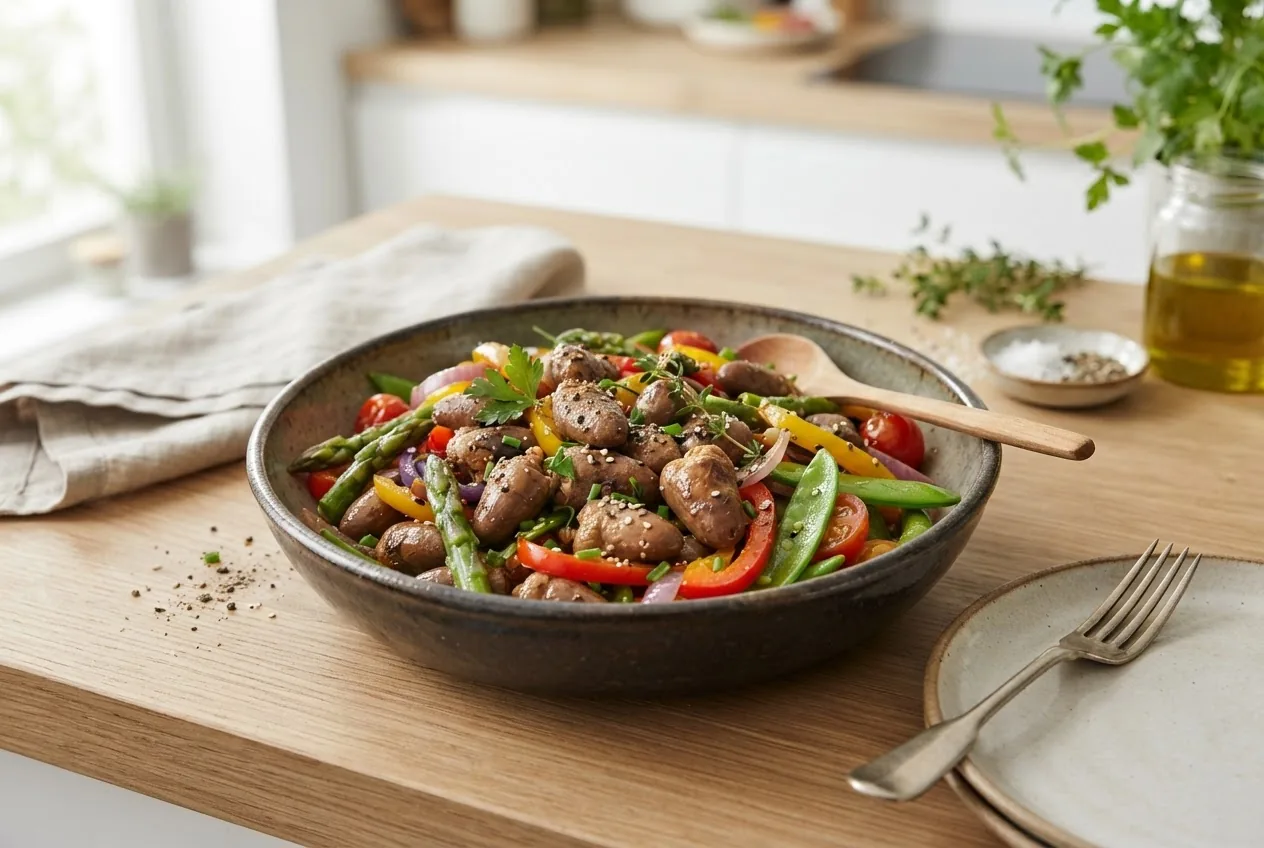
What you’ll achieve: By the end you’ll be confidently cooking tender, healthy chicken hearts using grilling, sautéing, boiling and low-fat frying methods, and you’ll have four balanced recipes plus meal-prep plans. Total active time: 45–75 minutes per recipe; skill level: intermediate home cook (basic knife, grill or stovetop control).
Introduction to Chicken Hearts
chicken heart recipe fans know these small organ meats (also called offal) are nutrient dense and surprisingly easy to love once you learn a few clean-and-cook tricks. This hands-on guide explains cultural uses, Texas local preferences, and step-by-step techniques so you won’t waste time guessing temperatures or textures.
In Texas cuisine, hearts appear grilled over high heat, skewered at backyard barbecues or folded into hearty stews where they soak up bold spices. Expect a rich, slightly beefy umami, similar to other organ meats but milder and quicker to cook. This guide focuses on healthy cooking—not deep frying—and shows how to keep fat low while maximizing protein and flavor.
Quick note: If you’re new to offal, think of chicken hearts as the gateway organ—small, fast-cooking, and versatile like a quick backyard grill item.
For broader healthy cooking inspiration and to expand beyond offal into complete meal plans, see Yummiest Healthy Recipes Guide for Nutritious and Tasty Meals.
We’ll now move from why to what—next is the nutrition you’ll get from this compact protein source.
Nutritional Benefits of Chicken Hearts
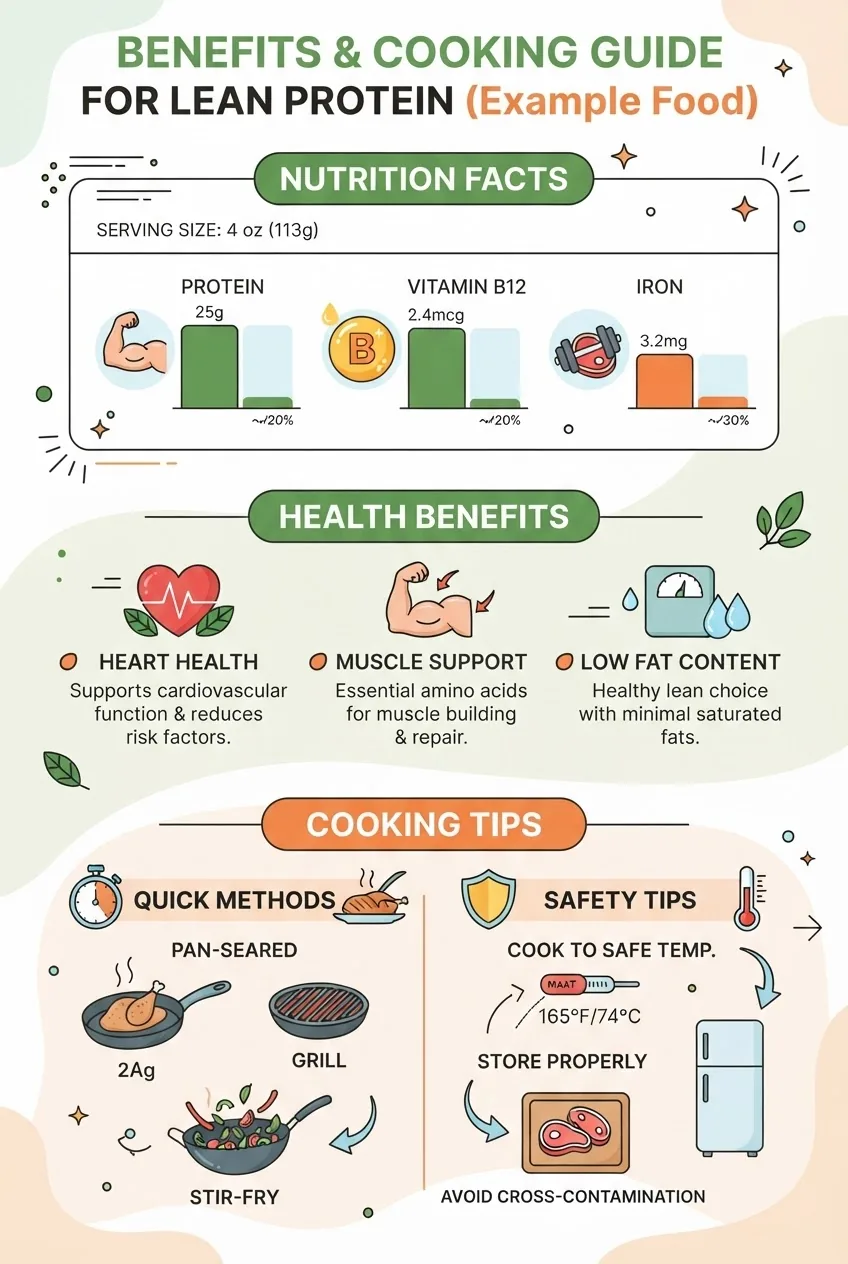
Nutrient snapshot (per 100 g cooked chicken hearts) — numbers are averages and can vary by source:
| Nutrient | Amount | Why it matters |
|---|---|---|
| Protein | ~26 g | Supports muscle repair and satiety |
| Vitamin B12 | ~8–10 µg | Essential for nerve function |
| Iron (heme) | ~5 mg | Easily absorbed iron for energy |
| Fat | ~5–7 g | Lower than many red organ meats |
According to a 2024 government report on poultry nutrition, organ meats like hearts provide concentrated vitamins and minerals per calorie compared with muscle cuts; their high protein content and micronutrient density make them useful in low-fat, nutrient-focused plans. For heart-healthy diet frameworks, consider pairing organ meats with plenty of vegetables and whole grains—an approach consistent with the Dash Diet Meal Plan Guide for Heart Healthy Food Choices.
According to a 2023 peer-reviewed nutrition study, moderate organ meat consumption can improve B12 and iron intake for populations at risk of deficiency; always balance intake with varied protein sources and consult a healthcare provider for personalized advice. PubMed hosts several reviews on organ meat nutrition for reference.
Compared with chicken breast, chicken hearts have more iron and B12 per 100 g but slightly less total calories when prepared with low-fat techniques. According to a 2023 analysis by a culinary nutrition group, choosing grilling or sautéing with minimal oil preserves vitamins better than prolonged boiling.
Next we’ll walk through how to purchase, store and clean hearts so your cooking starts with the best ingredients.
How to Select and Prepare Chicken Hearts for Cooking
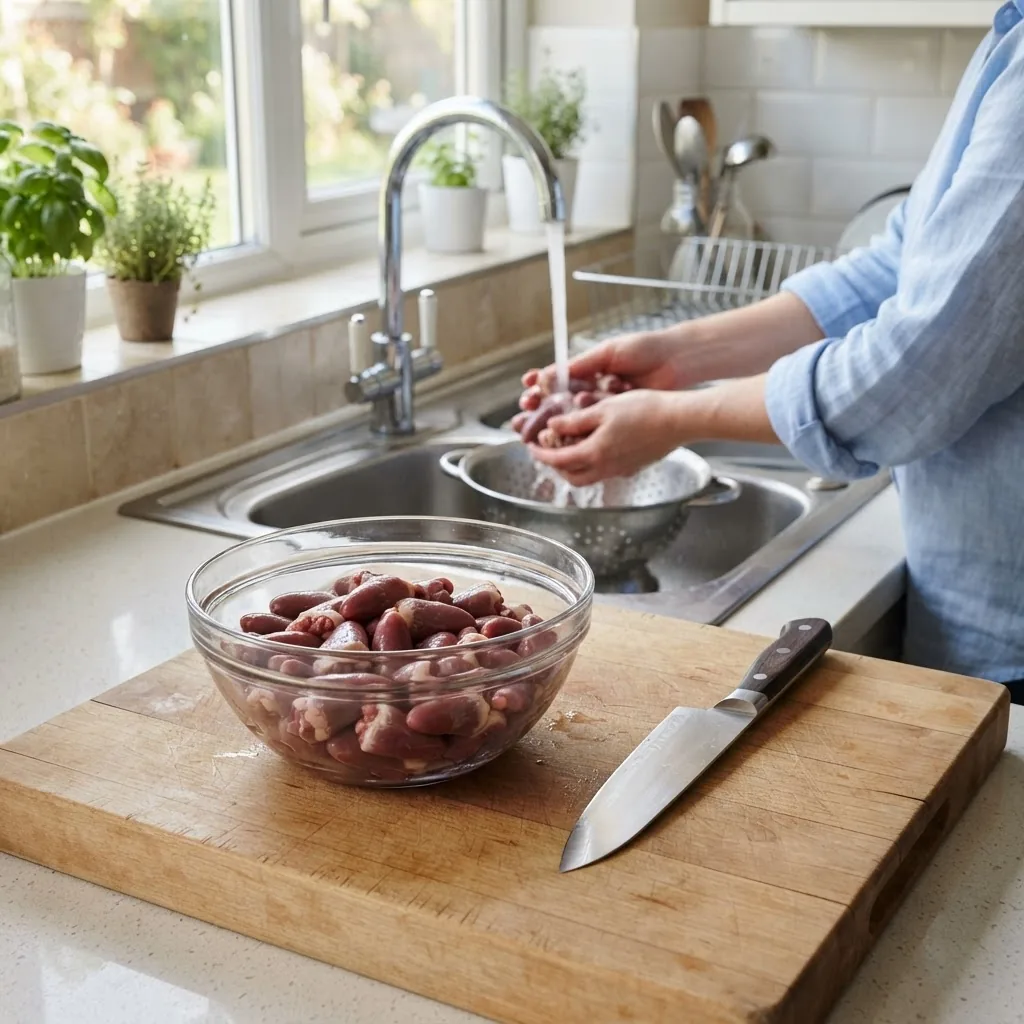
This section gives step-by-step selection, storage, and cleaning instructions, with safety notes that reference USDA poultry handling guidelines.
- Before you start — prerequisites and tools:
- Sharp chef’s knife, boning knife or kitchen shears
- Cutting board dedicated to poultry
- Colander and a bowl for rinsing
- Paper towels and airtight containers or zip-top bags
- Thermometer (instant-read)
- Small bowl to remove blood clots and membranes
- Optional: skewers, grill pan, cast-iron skillet
- Sourcing: Buy from a reputable butcher or grocery chain that labels offal; look for uniform color (dark red), moist surface, and no strong odor. If buying frozen, prefer vacuum-sealed packs to avoid freezer burn.
- Storage: Store raw hearts at 32–40°F (0–4°C) and use within 1–2 days; frozen at -0°F (-18°C) for up to 3 months. According to USDA poultry safety guidance, refrigerate within 2 hours of purchase or preparation. USDA FSIS
- Cleaning and trimming — step-by-step:
- Inspect each heart: Lay raw hearts in a colander and note any attached fat or connective tissue. Trim away yellow fat with a knife.
- Open and rinse: Cut each heart lengthwise (about 1/4 inch) to open the ventricle chamber; rinse under cold running water to remove pooled blood.
- Remove valves/membranes: Using fingers or the tip of the knife, gently pull out any tough membranes or clots from the chamber—this reduces bitterness and tough spots.
- Pat dry: Dry hearts thoroughly on paper towels. Drying ensures even sear and better browning for grilling or sautéing.
- Portioning: Leave small hearts whole for skewers; halve larger ones for even cooking.
- Safety tips: Always wash hands and sanitize surfaces after handling raw offal. Use an instant-read thermometer to verify cook temperature (minimum 165°F/74°C recommended for poultry by USDA when juices run clear), although many chefs aim for 160°F for hearts due to texture; follow USDA guidance for safety and personal preference. USDA Food Safety
- Cheap, nutritious option: For budget-conscious cooks, Cheap Foods That Are Good for You Guide to Affordable Nutrition discusses how offal fits into an affordable nutrient-dense diet.
With clean, prepped hearts in hand, here’s a systematic run-through of cooking methods—choose one that fits your timing and health goals.
Cooking Methods for Chicken Hearts
The following numbered methods each include hands-on tips: temperatures, times, marinades, and health-forward variations (low-fat or low-sodium). Use an instant-read thermometer for best results.
-
Grilling — Quick high-heat sear (best for skewers)
Process: Preheat grill to high (~450–500°F / 230–260°C). Thread whole or halved hearts on soaked wooden or metal skewers, leaving 1/2 inch between pieces.
Timing: Grill 2–3 minutes per side for medium, total 6–8 minutes. Internal temperature target: 160–165°F (71–74°C).
Marinade idea: 2 tbsp olive oil, 1 tbsp apple cider vinegar, 1 tsp smoked paprika, 1 tsp ground cumin, 2 minced garlic cloves, salt and pepper. Marinate 30–90 minutes.
Healthy tip: Use minimal oil and finish with a squeeze of lemon to brighten flavor instead of heavy sauces. For a Texas twist, add 1/2 tsp ancho chile powder and a pinch of oregano to the marinade.
-
Sautéing — Fast stovetop method for golden edges
Process: Heat a heavy skillet (cast iron preferred) over medium-high heat. Add 1 tsp neutral oil per 8 oz hearts or use a spritz of oil for a lower-fat option.
Timing: Sear 90 seconds to 2 minutes per side; total 5–7 minutes. Flip once for even browning. Check for 160°F internal.
Flavor profiles: Finish with chopped parsley, lemon zest, and a dash of cayenne for warmth. Garlic, thyme, and rosemary pair well.
Low-fat option: Use nonstick pan with 1 tsp oil or broth for deglazing; avoid butter if cutting calories.
-
Boiling / Simmering — For stews and gentle textures
Process: Simmer pre-cleaned hearts in broth for 20–30 minutes until tender. Use low simmer (not rolling boil) to avoid rubberiness.
Timing & temperature: Maintain 180–200°F (82–93°C) simmer; check texture after 20 minutes.
Healthy tip: Use low-sodium chicken or vegetable broth, add onion, carrot, celery and fresh herbs; finish with 1 tbsp vinegar to brighten.
-
Pan-frying (shallow) — Crispy edges, good for salads
Process: Heat 2 tbsp oil in skillet over medium-high heat. Add hearts in a single layer; do not crowd.
Timing: Fry 3–4 minutes per side until edges are crisp and centers reach 160°F.
Health optimization: Use olive oil or avocado oil and drain on paper towels. Serve over mixed greens to keep the dish low-calorie.
-
Braising — Tender, low-fat finishing for stews
Process: Brown hearts lightly, then add 1 cup low-sodium broth per 12 oz hearts and simmer covered 25–35 minutes.
Timing: Simmer until fork-tender; adjust liquid to avoid drying.
Serving idea: Serve over whole grain farro or brown rice for balanced meals.
-
Marinating and tenderizing — Key steps before cooking
Action-first marinating: Combine acid (vinegar or citrus), oil, salt, and aromatics. Acid tenderizes surface proteins and improves flavor uptake.
Timing: 30 minutes to 2 hours is sufficient for flavor; avoid over-marinating (over 6 hours) to prevent mushy texture.
Marinade test: For 1 lb (450 g) hearts: 2 tbsp acid, 2 tbsp oil, 1 tsp salt, 1 tbsp fresh herb, 2 garlic cloves. Chill while marinating.
-
Tenderizing techniques — Salt, acid and gentle pounding
Methods: Salt briefly (dry brine) for 15–30 minutes to firm texture; or use acid in the marinade. Never over-tenderize with a mallet—these hearts are small and delicate.
Protein/texture trade-off: According to a 2023 culinary techniques review, high-heat quick cooking preserves texture and flavor better than long mechanical tenderizing for small organ meats.
-
Flavor profiles & seasoning cheat-sheet
Classic Texan: Smoked paprika, cumin, garlic, onion powder, black pepper, a squeeze of lime.
Herb-forward: Thyme, rosemary, parsley, lemon zest—use for sautéed hearts atop grain bowls.
Latin-style: Achiote, oregano, lime; great for grilled skewers.
-
Comparisons: grilling vs sautéing for health and flavor
Trade-offs: Grilling imparts smoky flavor with minimal added fat (best for low-fat goals), but risk of charring if overcooked; sautéing gives reliable browning and control but can add oil. For low-fat, choose high-heat grilling with a light oil spray.
Now apply these methods in recipes—four health-focused dishes with clear measurements, steps and meal-prep notes.
Easy and Healthy Chicken Heart Recipes
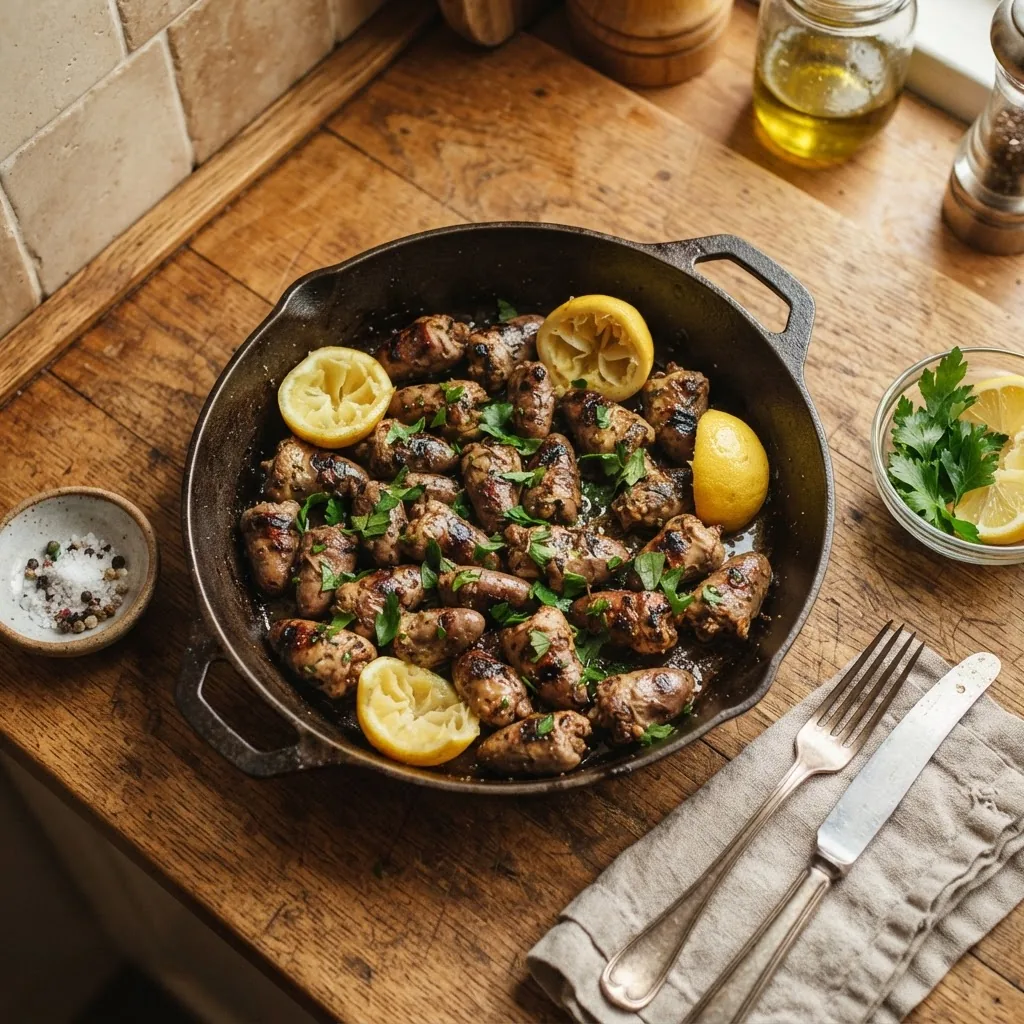
Each recipe serves 2–4 depending on portioning. I include exact times, temperatures and meal-prep tips. These recipes pair well with the “500 Calorie” and “600 Calorie” sibling guides for full-meal planning.
1) Grilled Texan Skewered Chicken Hearts (serves 4)
Ingredients:
- 1 lb (450 g) cleaned chicken hearts
- 2 tbsp olive oil
- 1 tbsp apple cider vinegar
- 1 tsp smoked paprika
- 1 tsp ground cumin
- 1 tsp sea salt
- 1/2 tsp black pepper
- 2 garlic cloves, minced
- Juice of 1 lemon for finishing
- Optional: 1/2 tsp ancho chile powder
Steps:
- Marinate quickly: Combine oil, vinegar, spices and garlic; toss hearts and refrigerate 30–90 minutes.
- Preheat grill: Get to 450–500°F (230–260°C). Soak wooden skewers 20 minutes or use metal.
- Skewer hearts: Thread leaving 1/2 inch between pieces for even heat.
- Grill: 2–3 minutes per side, flip once. Target 160–165°F (71–74°C).
- Rest & finish: Rest 3 minutes; squeeze lemon and garnish with parsley.
Cooking tips: If flare-ups occur, move to indirect heat for the final minute. Keep servings to ~3 oz (85 g) cooked hearts per person as a protein portion.
Pair with the 500 Calorie Meals Guide for Nutritious Dinner Ideas for dinner portioning ideas.