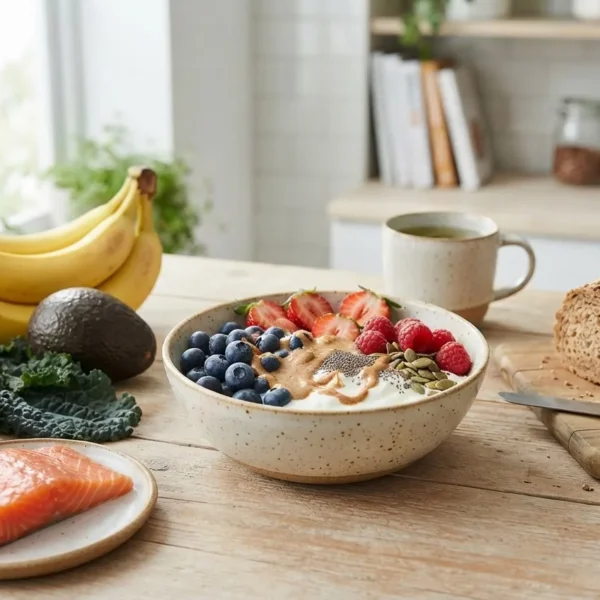
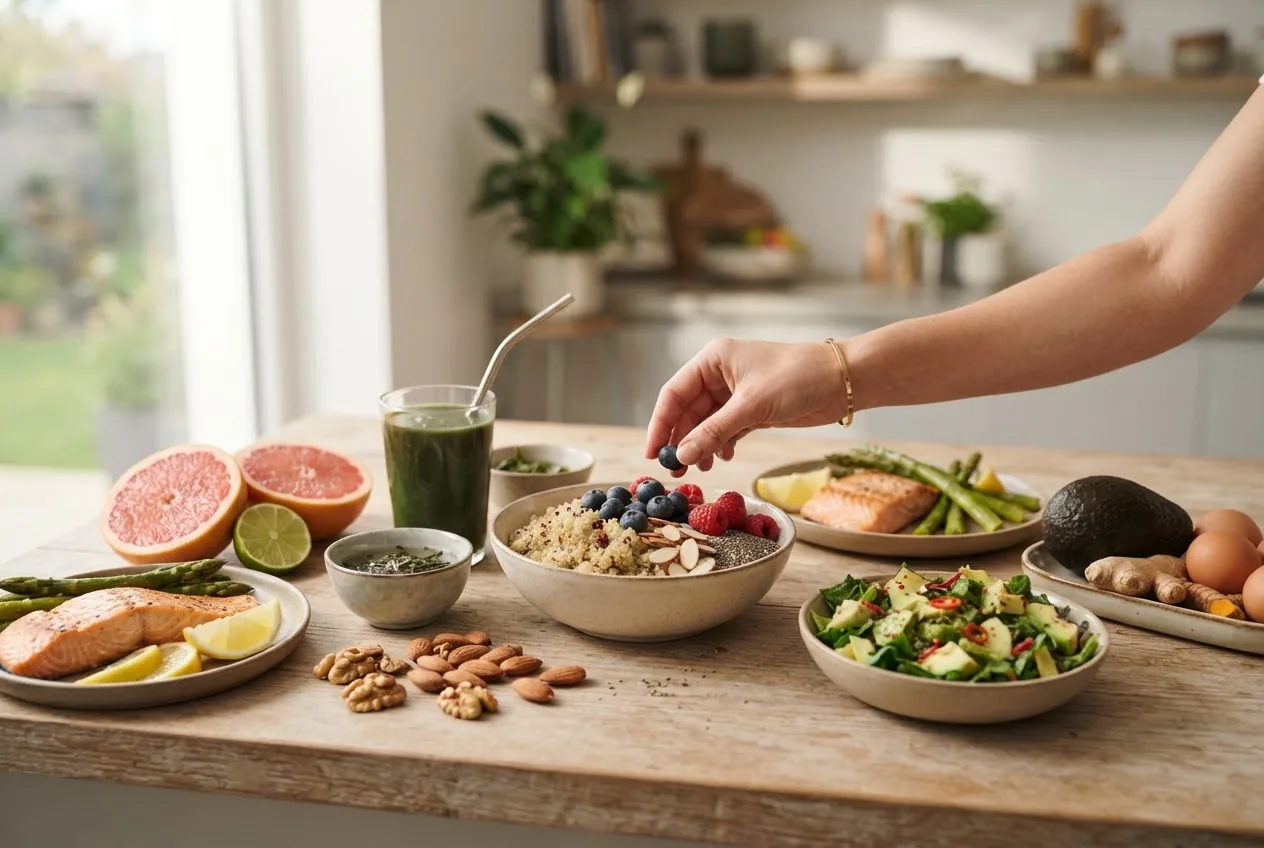
What you will achieve, time required, and assumed skill level
By the end of this guide you’ll have a concrete, step-by-step plan to use foods that increase metabolism and burn fat to raise daily calorie burn, preserve or build lean muscle, and improve metabolic health. You will be able to build three metabolism-boosting meals and two snacks with exact serving sizes, track progress, and adapt the plan for female, male, and older adults.
Realistic time investment: 2–4 hours the first week (reading, shopping, meal-planning, initial tracking), then 30–60 minutes weekly for prep and adjustments. Skill level: beginner-to-intermediate — you need basic kitchen skills (chopping, pan-cooking, baking) and willingness to track food and movement.
Before you start
- Kitchen tools: digital food scale (accurate to ±1 g), measuring spoons and cups, blender, non-stick skillet, oven-safe tray.
- Tracking tools: a food-tracking app (log calories/macros), a simple notebook, and a step counter (phone or pedometer).
- Baseline measurements: bodyweight, waist circumference, resting pulse, and one-week exercise log to estimate activity level.
- Medical checks: if you have thyroid disease, diabetes, pregnancy, or are on medication, get medical clearance before making big diet/exercise changes.
- Pantry staples to buy before step 1: extra-virgin olive oil (500 mL), iodized salt, black pepper, low-sodium soy sauce, dried red pepper flakes, and a 12-oz bag of green tea or 250 g of coffee beans.
Core procedure — step-by-step
-
Measure your baseline metabolism estimate
Why: A starting point lets you measure progress. Use the Mifflin-St Jeor equation to estimate Resting Metabolic Rate (RMR):
Women: RMR = 10 × weight(kg) + 6.25 × height(cm) − 5 × age(years) − 161
Men: RMR = 10 × weight(kg) + 6.25 × height(cm) − 5 × age(years) + 5
Multiply RMR by an activity factor: sedentary 1.2, lightly active 1.375, moderately active 1.55, very active 1.725. This gives Total Daily Energy Expenditure (TDEE). Record RMR and TDEE in your notebook.
Example: 35-year-old woman, 70 kg, 165 cm: RMR = 10×70 + 6.25×165 − 5×35 −161 = 700 + 1031.25 −175 −161 = 1395.25 ≈ 1395 kcal. If moderately active (×1.55) → TDEE ≈ 2162 kcal.
-
Set objective and safe calorie target
Action: Choose whether you want to maintain, mildly lose, or gain weight. For fat loss while preserving metabolism, target a moderate deficit: reduce TDEE by 10–15% (not more than 20%).
Numbers: For the example TDEE 2162 kcal:
- Maintenance: 2162 kcal/day
- Mild fat loss (recommended): 10% deficit → 1945 kcal/day
- Moderate fat loss: 15% deficit → 1838 kcal/day
Never drop below 1,200 kcal/day for women or 1,400 kcal/day for men without medical supervision. If your calculations suggest lower, raise calories and increase activity instead.
-
Design meals around protein first: aim for 0.7–1.0 g per pound
Action: Prioritize protein in every meal because protein has the highest thermic effect (uses more energy to digest) and preserves muscle. Target: 0.7–1.0 grams of protein per pound of bodyweight (1.5–2.2 g/kg) if you resistance-train; otherwise use 0.6–0.8 g/lb (1.3–1.8 g/kg).
Examples of single-serving protein portions (cooked weight):
Food Cooked serving Protein (g) Chicken breast 4 oz / 115 g 26 g Salmon 4 oz / 115 g 22 g Greek yogurt (0% fat) 170 g / 6 oz 15–20 g Meal-building rule: each meal 25–40 g protein, snacks 10–20 g. Example for a 150-lb (68 kg) active person aiming 0.8 g/lb → 120 g protein/day. Distribute: 35 g breakfast, 35 g lunch, 35 g dinner, two snacks 7.5 g each.
-
Include metabolism-stimulating foods and exact servings
Action: Add specific metabolism-boosting foods each day with stated quantities and frequency. The list below focuses on foods with consistent evidence for mild increases in energy expenditure or supporting metabolism:
- Green tea (EGCG + caffeine): 2–3 cups/day (brewed with 2 g tea leaves per cup). Aim for 200–300 mg EGCG total per day if using concentrated extracts — but use brewed tea to avoid supplement issues. In practice: drink one cup at 8:00 AM and one at 3:00 PM.
- Coffee (caffeine): 1–2 cups/day (95–200 mg caffeine total). Drink 1 cup 30–60 minutes before exercise to improve calorie burn. Avoid >400 mg/day total caffeine (all sources).
- Lean protein: Include 25–40 g protein per meal as above; three meals per day.
- Chili peppers (capsaicin): Add 1 tsp (2–3 g) chili flakes or 1 chopped jalapeño to your food once daily to get a small metabolic effect (thermogenesis). Don’t overconsume if you have GI issues.
- Cold water: Drink 500 mL (17 oz) cold water twice per day; a single 500 mL bolus can raise resting energy expenditure ~24 calories for ~60 minutes. Use chilled water after measuring TDEE for small boosts.
- High-thermic foods: Whole grains and fibrous vegetables — include 1 cup cooked oats at breakfast and 2 cups non-starchy vegetables (spinach, broccoli) per meal.
- Omega-3 rich fish: Salmon or mackerel 3.5 oz (100 g) twice weekly to support metabolic signaling.
- Iodine and iron sources: Use iodized salt (¼–½ teaspoon/day) and include one 3.5 oz serving of lean red meat or ¾ cup cooked lentils twice weekly to support thyroid-related metabolism. Have blood iron and thyroid panels checked before supplementing aggressively.
Combine these into daily eating: breakfast (protein + oats + green tea), lunch (protein + veg + chili flakes), snack (Greek yogurt + berries), pre-workout coffee, dinner (fish or chicken + veg + whole grain). Repeat 5–6 days weekly.
-
Plan nutrient-timed meals around exercise to maximize burn
Action: Time carbs and protein to support training and post-exercise recovery to preserve muscle mass and raise total energy expenditure.
Practical timings:
- Pre-resistance workout (30–90 min): 15–25 g protein + 20–30 g slow carbs (e.g., 1 slice whole-grain bread + 2 scrambled eggs).
- Post-workout (within 60 min): 25–40 g protein + 20–40 g carbs (e.g., 4 oz chicken + ½ cup cooked quinoa).
- If doing fasted cardio in the morning: have 200–300 mL water + 100 mg caffeine (1 cup coffee) beforehand; follow with a protein-rich breakfast within 45–60 minutes.
Schedule example: Resistance training at 6:00 PM → 5:00 PM small snack (Greek yogurt 170 g + 1/4 cup oats), workout 6–7 PM, dinner 7:15 PM (4 oz salmon, 1 cup steamed broccoli, ½ cup sweet potato).
-
Build a 7-day sample menu with quantities (worked example)
Action: Use the exact menu below and scale servings to your calorie target. This 1,900 kcal/day template is set for mild fat loss for someone with TDEE ~2,150. Adjust portion sizes by ±10–20% if your TDEE differs.
Day 1 (1,900 kcal) — target macros ~30% protein / 35% carbs / 35% fat:
- Breakfast (8:00 AM): 3 large eggs scrambled (150 g cooked, 18 g protein), ½ cup cooked oats (40 g dry) with ½ cup blueberries, 1 cup green tea. Calories ≈ 420.
- Snack (11:00 AM): 170 g 0% Greek yogurt with 1 tbsp chia seeds. Calories ≈ 180.
- Lunch (1:00 PM): 4 oz grilled chicken breast, 2 cups mixed salad greens, 1 tbsp olive oil + lemon (dressing), ½ cup cooked brown rice. Calories ≈ 520.
- Pre-workout (4:30 PM): 1 small banana + 1 cup coffee. Calories ≈ 120.
- Dinner (7:15 PM): 4 oz baked salmon, 1 cup steamed broccoli, ½ cup roasted sweet potato, 1 tsp chili flakes. Calories ≈ 540.
- Evening (optional) 1 cup herbal tea; total ≈ 1,900 kcal for the day.
Repeat similar swaps across seven days: rotate protein choices (chicken, salmon, turkey, lentils), two days include 3.5 oz lean red meat, two days higher-oil dressings (limit to 1 tbsp olive oil), and include two servings of fatty fish per week. Keep snacks to 100–250 kcal and protein-focused.
-
Cook in batches and use portion control to keep servings accurate
Action: Batch-cook proteins and grains twice weekly. Use your digital scale to portion cooked proteins into 4-oz (115 g) packages and grains into ½-cup cooked servings.
Procedure (kitchen):
- Roast 1.5 kg chicken breasts at 190°C (375°F) for 22–26 minutes until internal temp 74°C (165°F). Cool, slice, weigh into 115 g portions, store in fridge (up to 4 days).
- Cook 4 cups dry brown rice (makes ~12 cups cooked): rinse, add 8 cups water, simmer 35–40 minutes. Portion ½-cup cooked servings into containers.
- Bake tray of mixed chopped vegetables (broccoli, bell pepper, zucchini) tossed with 2 tbsp olive oil at 200°C (400°F) for 20–25 minutes; save 1–1.5 cup portions per meal.
Label containers with date and macros using a sticky note or app. Reweigh if moisture or shrinkage appears.
-
Use strategic snacking: two snacks, protein first, 100–250 kcal each
Action: Pick two snacks daily that prioritize protein with small amounts of fiber or healthy fat to sustain energy and thermic effect.
Examples (exact portions):
- 170 g Greek yogurt (0% fat) + 6 almonds (10–12 g) — ≈ 170 kcal, 16–18 g protein.
- 1 medium apple + 2 tbsp natural peanut butter (32 g) — ≈ 260 kcal (use only 1 tbsp for 150 kcal snack).
- 1 rice cake + 2 oz turkey slices (56 g) — ≈ 120 kcal, 12–15 g protein.
Snack timing: mid-morning and mid-afternoon, or pre-post workout as required.
-
Increase non-exercise activity (NEAT) by 15–30% to boost daily burn
Action: Raise steps and standing time. Target: add 2,000–4,000 extra steps per day over baseline and stand in 10-minute increments if you have a desk job.
How to implement:
- Set a step goal: baseline +2,500 steps (≈1.8 miles / 2.9 km). Break into 15-minute walks after meals.
- Use a simple rule: for every hour seated, stand or walk for 10 minutes. This increases daily energy expenditure by ~100–200 kcal depending on duration.
-
Add strength training 3×/week and a short HIIT session 1–2×/week
Action: Preserve and build lean mass to raise resting metabolic rate. Example schedule:
- Monday: Full-body resistance training, 40 minutes (6 compound exercises × 3 sets × 6–10 reps).
- Wednesday: 20-minute HIIT (8 rounds 30 sec hard / 90 sec easy).
- Friday: Full-body resistance training, 40 minutes (same structure, change accessory movements).
Progression: increase load by 2.5–5 lb when you can complete all sets at target rep range cleanly. For older adults or beginners, start with bodyweight and a kettlebell 8–12 kg, 2×/week, and build to 3×/week within 6–8 weeks.
-
Monitor, adjust, and re-calculate every 2–4 weeks
Action: Track weight, waist, and how clothes fit, and re-calculate TDEE every 4 weeks. Expect 0.5–1.0 lb fat loss per week as a realistic target when preserving muscle and metabolism.
Adjustments:
- If weight loss stalls for two consecutive weeks and you follow plan closely, reduce daily calories by 5% or increase NEAT to add ~100 kcal/day.
- If you lose >2 lb/week consistently, raise calories by 100–200 kcal to avoid muscle loss and metabolic slowdown.
-
Use supportive supplements cautiously and only when indicated
Action: Focus on food first. Consider these supplements only after consulting a clinician and if bloodwork or diet shows a shortfall:
- Vitamin D3 if blood 25(OH)D < 30 ng/mL — common starting dose 1,000–2,000 IU/day, adjust per lab.
- Iron only if ferritin < 30 ng/mL and supervised; typical oral dose 30–65 mg elemental iron daily for deficiency under clinician guidance.
- Caffeine (as coffee) and green tea (brewed) stay preferred for mild metabolic effects; avoid concentrated stimulant supplements that provide >200 mg caffeine per serving.
Do not use thyroid hormone or unregulated “fat burners.”
-
Practice recovery: sleep 7–9 hours and limit chronic calorie deficits
Action: Aim for 7–9 hours nightly. Poor sleep reduces leptin, raises ghrelin, and reduces metabolic rate. Tools: fixed bedtime window, remove screens 30 minutes before bed, keep bedroom cool (16–19°C / 60–67°F).
If you are in a calorie deficit for >12 weeks and find strength or sleep declining, cycle calories (two weeks at maintenance every 6–8 weeks) to reset hormones and appetite.
Practical tracking templates and worked examples
Below is a concise daily tracker you can copy into a notebook or app. Fill daily for 14 days to see trends.
- Date; Weight (lbs or kg); Waist (cm); Water intake (mL); Steps; Sleep (hrs); Training done (Y/N + type); Calories eaten; Protein (g); Notes (energy, hunger, bowel).
Worked example (single-day snapshot):
2026-06-01 — Weight 157.4 lb; Waist 32.0 in; Water 2,000 mL; Steps 9,200; Sleep 7.5 hr; Training: Resistance 40 min; Calories 1,885; Protein 122 g; Notes: energy good, slight post-lunch slump.
Specific advice for women, older adults, and context-sensitive modifications
Women: If asking “what foods speed up female metabolism?”—the mechanical answer is the same: protein, resistance training, adequate iron and iodine, and avoid excessive calorie restriction. For most women, keep single-day calories above 1,300–1,400 kcal and protein at 0.6–0.9 g/lb.
Older adults (60+): prioritize resistance training 2×/week with full recovery, aim for 0.5–0.8 g/lb protein, and avoid high-intensity cardio until strength baseline is set. Use 3.5 oz (100 g) cooked protein portions and add extra 10–20 g protein in snacks.
How food combinations affect thermogenesis — pairing rules
Action: Pair protein with fibrous carbs and a bit of healthy fat to increase satiety and the thermic effect:
- Protein + fiber (e.g., chicken + broccoli): raises meal thermic effect and net calorie loss from digestion.
- Protein + caffeine pre-workout (coffee + eggs): enhances exercise calorie burn.
- Capsaicin + caffeine + protein (spicy chicken + coffee): additive small effects — don’t stack to excess because effects are modest and individual tolerance varies.
Common mistakes and how to avoid them
I speak from real-practitioner experience: I once advised a client to rely on “metabolism-boosting” supplements alone — they lost more money than fat and felt jittery. I learned to prioritize whole foods and measurable actions first.
I’ve also seen people cut calories too aggressively (down to 900–1,000 kcal/day) expecting fast results; within two weeks their energy crashed and their progress stopped because resting metabolic rate dropped. Avoid deficits >20% of TDEE without clinical oversight.
I have watched people ignore strength training and blame food for slow progress. Muscle loss reduces RMR — add resistance training 3×/week with progressive overload.
I once assumed “spicy food equals big burn” and encouraged daily heavy chili; a client developed GI discomfort that derailed their regimen. Use capsaicin in small doses (1 tsp dried flakes or one small jalapeño daily) and stop if it irritates your stomach.
Final common error: measurement by “how I feel” only. I learned to track weight, waist, protein intake, and strength numbers — objective data reveals metabolic trends faster than subjective feeling alone.
Compact checklist — verify your work
- RMR and TDEE calculated and recorded.
- Daily calorie target set (10–15% deficit for fat loss) and not below safety floors (1,200 kcal women / 1,400 kcal men).
- Protein target set and distributed: 25–40 g per meal, 10–20 g per snack.
- Two metabolism-stimulating foods included daily (e.g., coffee + green tea OR chili + cold water).
- Strength training scheduled 3×/week and HIIT 1–2×/week or equivalent adjustments for older adults.
- NEAT increased by 2,000–4,000 steps/day over baseline.
- Sleep consistently 7–9 hours and water intake ≥1.5–2.5 L/day depending on climate/activity.
- Progress tracked weekly and adjustments planned every 2–4 weeks.
When to call a professional
Contact a physician or registered dietitian if any of the following apply:
- You have diagnosed thyroid disease, diabetes, heart disease, or are on medications affecting metabolism.
- Unexplained, rapid weight loss (>5% bodyweight in one month) or persistent weight gain despite following the plan.
- Symptoms like lightheadedness, persistent fatigue, or palpitations when increasing caffeine or changing diet.
- You plan to take iron, thyroid-related drugs, or high-dose stimulant supplements.
Additional resources and internal references
For foundational meal-building and balanced nutrition rules, see the pillar resource on nutritionally complete meals: Nutritionally Complete Meal Guide. If you want 7-day menus that slot into the pattern shown here, use the sample plans at 7 Day Diet Menu to Lose Weight. For basic behavior and habit changes to support this plan, see 10 Ways to Eat Better.
Safety notes and final practical tips
Do not chase extreme short-term weight loss. If you aim for metabolism improvement and sustainable fat loss, consistency over 12–16 weeks wins. Keep iodized salt modest (¼–½ tsp/day), keep caffeine ≤400 mg/day, and avoid very low-calorie diets. If you suspect a micronutrient deficiency, order bloodwork (CBC, ferritin, TSH, free T4) and work with a clinician.
Frequently Asked Questions
What foods increase metabolism and burn fat the most?
Foods that modestly raise metabolism include lean protein (25–40 g per meal), green tea (2–3 cups/day), coffee (1–2 cups/day), chili peppers (≈1 tsp chili flakes/day), cold water (500 mL doses), and omega-3-rich fish twice weekly. Effects are small; combine with resistance training and NEAT increases for best results.
How do I increase my metabolism quickly and safely?
Increase metabolism safely by raising protein to 0.7–1.0 g per pound, adding resistance training 3×/week, doing 20-minute HIIT 1–2×/week, increasing steps by 2,000–4,000/day, and getting 7–9 hours sleep. Aim for gradual calorie deficits (10–15%).
Are metabolism-boosting supplements worth it?
Most supplements offer modest effects and inconsistent safety. Prefer whole foods, caffeine from coffee/tea and check vitamin D, iron, and iodine only when bloodwork supports supplementation. Avoid high-dose stimulant “fat burners” without clinician supervision.
How can I speed up my metabolism if I’m a woman over 50?
Focus on resistance training twice weekly progressing to three times, increase protein to 0.5–0.8 g per pound, maintain adequate calories (usually >1,400 kcal/day), ensure vitamin D and iron sufficiency, and prioritize sleep. Start load and volume conservatively and progress slowly.
How long before I notice metabolic changes from diet and exercise?
Minor changes like improved energy and slightly faster recovery may appear in 1–2 weeks; measurable weight or composition shifts typically appear in 3–6 weeks. Expect stable metabolic adaptations and clearer results in 12–16 weeks when following the plan consistently.