
Whole wheat bread can be good for most people when it’s truly made from whole-grain wheat: it provides fiber, key micronutrients, and slower-digesting carbohydrates that support heart health, blood sugar control and satiety, but benefits depend on ingredient quality, portion size, and individual allergies or intolerances.
What exactly is whole wheat bread and how is it different from white or multigrain bread?
Answer: Whole wheat bread is made from flour that uses the entire wheat kernel (bran, germ and endosperm), which preserves fiber, vitamins and minerals; white bread uses refined flour that removes bran and germ, while multigrain simply lists multiple grains but may still be refined.
Whole wheat (term): whole wheat means the flour is milled from the complete wheat kernel, retaining bran, germ and endosperm.
Whole grain (term): whole grain describes any grain where all three kernel parts remain intact after processing, not limited to wheat.
- Whole wheat bread: flour made from whole wheat kernels only; contains wheat-specific nutrients and fiber.
- Whole grain bread: may include other grains (oats, rye, barley) but keeps each grain whole.
- White bread: made from refined wheat flour where bran and germ are removed; often enriched with some vitamins.
- Multigrain: contains multiple grains but those grains can be whole or refined; label reading matters.
Is whole wheat bread good for you nutritionally compared with white bread?
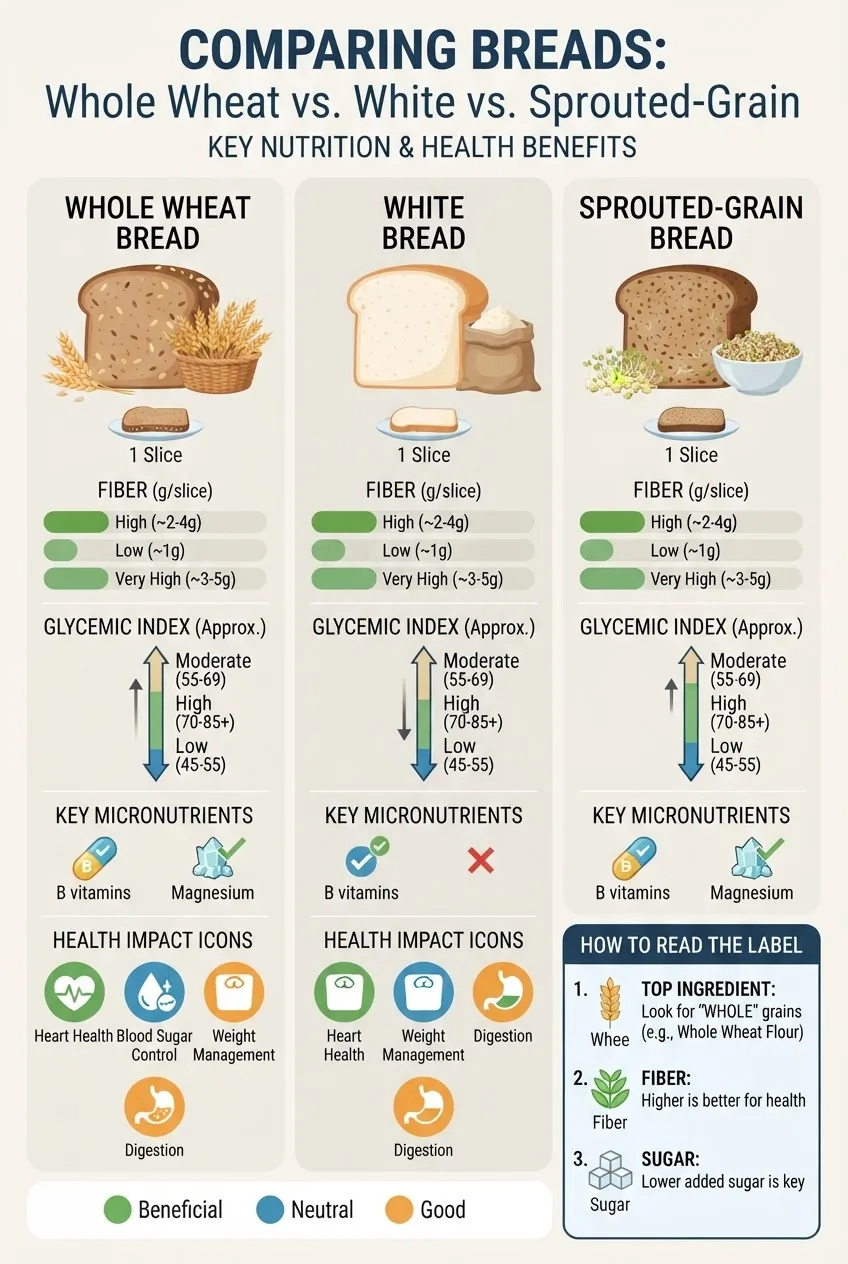
Answer: Yes—per slice, true whole wheat bread usually delivers more fiber, more B vitamins, iron, magnesium and zinc, and a lower post-meal glucose spike than white bread, improving fullness and metabolic markers when used instead of refined white bread.
Below is a representative nutrition comparison for a standard 28 g (1 oz) slice; exact values vary by brand and recipe.
| Nutrient / Bread | Whole Wheat (per slice) | White (per slice) |
|---|---|---|
| Calories | 70–90 kcal | 70–90 kcal |
| Total carbohydrate | 12–15 g | 12–15 g |
| Dietary fiber | 2–4 g | <0.5–1 g |
| Protein | 3–5 g | 2–4 g |
| Iron | ~6–8% DV | ~6–8% DV (often enriched) |
| B vitamins (thiamin/niacin/folate) | Moderate naturally | Often enriched with folic acid and B vitamins |
Whole wheat keeps micronutrients from the bran and germ; white bread sometimes reintroduces select nutrients by enrichment but lacks intact fiber and phytochemicals.
Does whole wheat bread have fiber and how much should I expect?
Answer: Yes—true whole wheat bread contains dietary fiber, typically 2–4 grams per 28 g slice; higher-fiber artisan or sprouted-gram breads can provide 4–6+ grams per slice and are preferable when aiming for daily fiber targets.
Dietary fiber (term): indigestible carbohydrate from plant foods that supports digestion, gut microbes and blood-sugar control.
- Most commercial whole wheat sandwich breads: 2–3 g fiber per slice.
- Heavier whole-grain or seeded loaves: 3–6 g per slice.
- Sprouted-grain or rye blends: often 4–6 g per slice.
Adults in the U.S. are advised to aim for 25–38 g/day depending on sex and age; substituting two slices of higher-fiber whole wheat bread for white bread contributes meaningfully to that goal.
What health benefits does whole wheat bread offer?
Answer: Regular consumption of bona fide whole wheat bread, as part of a balanced diet, is associated with improved bowel regularity, lower LDL cholesterol, reduced cardiovascular risk, better blood-glucose control, and greater satiety that can aid weight control.
- Heart health: fiber and phytochemicals help lower LDL cholesterol and support healthy blood vessels.
- Blood sugar control: slower-digesting carbs and fiber reduce post-meal glucose spikes and insulin demand.
- Weight management: fiber and protein increase fullness per calorie, reducing overeating.
- Digestive health: insoluble fiber adds bulk and soluble fiber feeds beneficial gut bacteria.
- Micronutrients: magnesium, selenium, B vitamins and iron support metabolism and cellular function.
Observational studies link greater whole-grain intake with lower risk of coronary heart disease, type 2 diabetes and some cancers; randomized trials show intermediate markers (cholesterol, insulin sensitivity) improve with whole-grain substitutes.
Are there downsides or risks to eating whole wheat bread?
Answer: Downsides include gluten-related intolerance or celiac disease, possible excess calories or added sugars in some commercial loaves, and, rarely, sensitivity to wheat components; choosing minimally processed whole wheat avoids many risks.
Gluten (term): a set of wheat proteins that give dough elasticity and can trigger immune or non-immune reactions in some people.
- Celiac disease: whole wheat is harmful — avoid entirely.
- Non-celiac wheat sensitivity: some people report GI or systemic symptoms and may benefit from reduction or trial elimination.
- Added ingredients: commercial “whole wheat” breads can include sugar, oil, dough conditioners and additives that raise calories or inflammation potential.
- Portion control: bread remains a concentrated source of digestible carbs, so excessive portions can impair weight or blood-sugar goals.
How can I tell if a bread labeled “whole wheat” is truly whole grain and healthy?
Answer: Read the ingredient list first — the top ingredient should be “whole wheat flour” or another whole-grain flour; avoid products where “wheat flour,” “enriched flour,” or “multigrain” are listed first, and check fiber, sugar and sodium on the Nutrition Facts panel.
- Check first ingredient: must be “whole wheat flour” or “whole [grain name] flour.”
- Fiber: aim for ≥2 g per slice as a minimum; 3–5 g is better.
- Sugar: prefer ≤2–4 g per slice; watch for high-fructose syrups and honey concentrations.
- Sodium: many breads add salt; aim for less than 150–200 mg per slice when possible.
- Short ingredient list: seeds, whole grains, and minimal additives indicate a cleaner loaf.
Words like “wheat” or “multigrain” alone are marketing terms; the USDA Whole Grain Stamp or explicit “100% whole wheat” are better indicators, but always verify ingredient order.
Is whole grain wheat bread healthy for people with diabetes or prediabetes?
Answer: Generally yes—whole grain wheat bread typically leads to smaller post-meal glucose rises compared with white bread, making it a preferable carbohydrate choice for diabetes and prediabetes when portioned correctly and paired with protein or healthy fat.
Glycemic index (term): a scale (0–100) measuring how quickly a carbohydrate raises blood glucose compared with pure glucose.
Patients with diabetes should combine 1 slice with a source of protein/fat (e.g., nut butter, egg) to blunt glycemic response and monitor blood glucose after trying a new bread brand, because glycemic responses vary by loaf density, fiber, and processing.
Which types of whole wheat bread are highest in fiber and nutrients?
Answer: Sprouted-grain breads, 100% whole-grain seeded loaves, and artisanal whole wheat made from intact kernels or coarse whole wheat flour usually provide the most fiber and intact nutrients per slice.
- Sprouted-grain breads: grains sprouted before baking increase bioavailable nutrients and digestibility.
- Seeded whole grain loaves: add flax, chia, sunflower seeds for extra fiber, omega-3s and minerals.
- Coarse whole-wheat or stone-ground loaves: larger particle size slows digestion and preserves nutrients.
When comparing labels, prefer breads that list multiple whole grains and seeds in the ingredient list and those that provide at least 3–5 g fiber per serving.
Is whole wheat toast healthy compared with other breakfast options?
Answer: Whole wheat toast can be a healthy breakfast base when paired with protein (eggs, yogurt, nut butter) and produce (tomato, avocado, fruit); alone it provides carbs and fiber but adds limited protein and fat compared with more balanced choices.
- Balanced toast combos: whole wheat toast + 2 eggs (protein) + spinach (fiber) = sustained energy.
- Toast + nut butter + banana = practical balance of carbs, fat and potassium.
- Toast with only jam or honey provides quick carbs and less satiety; combine with protein.
For people managing weight or blood sugar, include protein and healthy fats on or beside whole wheat toast to reduce rapid glucose rises and improve fullness.
Is whole wheat bread bad for you in any circumstances?
Answer: Yes—if you have celiac disease or confirmed wheat allergy, whole wheat bread is harmful; even without allergy, heavily processed whole wheat products with added sugars, refined flours, or excessive portion sizes can worsen metabolic health.
- Celiac disease: immune reaction to gluten causes intestinal damage—must avoid all wheat-based breads.
- Wheat allergy: risk of immediate allergic reactions—avoid wheat derivatives.
- Highly processed “whole wheat” with added sugar and fat: can be calorie-dense and inflammatory.
- Overconsumption: excessive bread calories displace nutrient-dense foods.
How does whole wheat bread affect weight loss or gain?
Answer: Whole wheat bread may support weight loss when it replaces refined bread because higher fiber and protein increase satiety per calorie, but it still contributes calories and can hinder weight loss if consumed in large portions or with high-calorie toppings.
Mechanisms:
- Satiety: fiber slows gastric emptying and signals fullness hormones.
- Energy density: whole grain varieties often have equal calories to white bread, so totals matter.
- Behavioral: whole wheat sandwiches can be part of moderate-calorie meals if fillings are lean and added fats are controlled.
Practical portion guidance: two slices of whole wheat bread plus a lean protein and vegetables often fits well into 300–500 kcal meals for weight management, depending on total daily targets.
Is whole grain bread better than whole wheat bread?
Answer: “Whole grain” is a broader label than “whole wheat”; whole grain bread that lists specific whole grains (oats, rye, barley) can offer a wider nutrient profile and varied fiber types, making it equally or more healthful than single-grain whole wheat, depending on ingredients.
If a loaf is labeled “100% whole wheat” it is a whole-grain product; if labeled “whole grain” it may contain several whole grains that provide diverse nutrients and fiber fractions.
Is sprouted whole wheat bread healthier than regular whole wheat bread?
Answer: Often yes—sprouting grains before baking reduces certain antinutrients (like phytic acid), can increase micronutrient bioavailability and produce breads that are easier to digest and sometimes lower glycemic compared with non-sprouted whole wheat breads.
Sprouting (term): germination of grains prior to milling, which alters carbohydrate composition and nutrient availability.
Evidence shows sprouted breads (e.g., Ezekiel-style) can deliver more available minerals, slightly higher protein digestibility, and sometimes more favorable blood glucose responses; they also tend to be less processed and free of added sweeteners.
How should I portion whole wheat bread in a balanced diet?
Answer: Use whole wheat bread as one component of a meal: 1–2 slices per meal is typical; pair with protein and vegetables to form a balanced plate, and track total carbohydrate servings if you monitor blood sugar or calories.
- Breakfast: 1 slice + 2 sources of protein/fat (eggs, Greek yogurt, or nut butter).
- Lunch: 2 slices in a sandwich with lean protein and vegetables (vegetable-rich side).
- Snacks: 1 slice with protein (cottage cheese, hummus) or half a sandwich evenly split.
Adjust slices based on activity level, caloric goals and blood-sugar targets; athletes may require more carbohydrate, while sedentary adults might need fewer slices daily.
Is whole wheat bread good for kids and toddlers?
Answer: Yes for most children older than 12 months—whole wheat bread provides fiber and micronutrients helpful for growth and digestion, but slice size and choking risk should be adjusted and dairy or protein paired for balanced intake.
Guidance by age:
- 12–24 months: small, torn pieces to reduce choking; pair with protein/fat (mashed avocado, nut butter if no allergy).
- 2–5 years: ½–1 slice per snack, 1–2 slices at meals depending on appetite and activity.
- Older children/adolescents: follow adult portioning with attention to overall fiber needs (children require 14 g per 1,000 kcal roughly).
How can people with gluten sensitivity still benefit from whole grains?
Answer: If gluten sensitivity is present, choose certified gluten-free whole grains like brown rice, quinoa, millet, buckwheat and certified gluten-free bread options made from these grains to obtain fiber and whole-grain benefits without wheat.
- Quinoa, buckwheat, amaranth and certified gluten-free oats are whole-grain alternatives.
- Check cross-contamination labeling for processed breads labeled gluten-free.
- Look for fortified gluten-free breads or add micronutrient-rich sides (legumes, seeds) to compensate for lost wheat nutrients.
Is homemade whole wheat bread better than store-bought?
Answer: Homemade can be better because you control ingredients, avoid additives and can use sprouted or stone-ground flours, but store-bought whole wheat breads can also be healthy if they list whole wheat flour first and have minimal additives.
Homemade advantages:
- Control of salt, sugar and fats.
- Ability to include seeds, nuts and sprouted flours.
- Fresher product with fewer preservatives.
Store-bought advantages:
- Convenience, consistent texture and often lower waste.
- Some artisan commercial loaves use whole grains and minimal additives and can equal homemade quality.
How should whole wheat bread be stored to preserve nutrients and freshness?
Answer: Store whole wheat bread in a cool, dry place for 2–4 days or refrigerate to extend life slightly; for longer storage, freeze sliced bread tightly wrapped and thaw slices as needed to preserve texture and nutrient integrity.
- Room temperature: 48–72 hours for best texture; keep in a bread box or sealed bag.
- Refrigeration: slows mold but can dry bread faster—use within 5–7 days.
- Freezing: store slices in freezer-safe bags for up to 3 months; toast or warm from frozen.
Are there common additives in whole wheat bread I should avoid?
Answer: Watch for added sugars, high amounts of vegetable oils, dough conditioners (e.g., azodicarbonamide), and emulsifiers if you prefer minimally processed food; shorter, transparent ingredient lists are generally better.
- Avoid: excess cane sugar, high-fructose corn syrup, hydrogenated oils and artificial preservatives.
- Acceptable: small amounts of honey, molasses, or olive oil, seeds and natural leavening agents.
- Prefer: recognizable whole-food ingredients and absence of long chemical names you can’t pronounce.
How does sodium in commercial whole wheat bread affect health?
Answer: Sodium contributes to blood pressure; commercial breads can contain 120–200+ mg per slice—choose lower-sodium brands or reduce added salt elsewhere if you eat multiple slices daily to maintain recommended sodium intake.
Tips to control sodium:
- Compare labels and choose loaves with ≤150 mg sodium per slice when possible.
- Balance by reducing processed foods and salty condiments in the same meal.
- Check bakery loaves; artisan sourdough whole wheat often contains less sodium than mass-produced sandwich bread.
Does whole wheat bread contain anti-nutrients and do they matter?
Answer: Whole wheat contains phytic acid, an anti-nutrient that can bind minerals, but normal diets with varied foods reduce its practical impact; sprouting or sourdough fermentation lowers phytic acid and improves mineral absorption.
Phytic acid (term): a plant compound that can bind minerals like iron and zinc and reduce their absorption in the gut.
For most people eating diverse diets, phytic acid does not cause deficiency. Those relying heavily on unprocessed whole grains and legumes might benefit from soaking, sprouting or fermenting techniques to lower antinutrient levels.
Can whole wheat bread raise blood cholesterol?
Answer: No—evidence shows whole wheat and whole-grain intake tends to lower LDL cholesterol due to soluble fiber and plant sterols; however, breads high in saturated fats or trans fats (rare in bread) could raise cholesterol if present in toppings or formulations.
Mechanism: soluble fiber (from oats, barley and some wheat fractions) can bind bile acids, prompting the liver to use circulating cholesterol to make more bile, thus lowering LDL.
How does whole wheat bread fit into heart-healthy eating patterns?
Answer: It fits well as a staple carbohydrate in heart-healthy diets—choose whole-grain varieties, limit added sugars and pair with lean proteins, vegetables and healthy fats; replacing refined grains with whole-grain bread is associated with lower cardiovascular risk.
- Recommended pattern: whole wheat toast with avocado and eggs, whole-grain sandwich with lean turkey and salad, or open-faced grain bowls pairing bread with legumes and vegetables.
- Population studies: replacing refined grains with whole grains reduces incidence of coronary heart disease and stroke.
Is whole wheat bread good for gut health and the microbiome?
Answer: Yes—whole wheat provides insoluble fiber and some fermentable fibers that support regularity and feed beneficial gut bacteria, contributing to a diverse microbiome when combined with other fiber-rich foods.
Microbiome (term): the community of microorganisms living in the gut that influence digestion, immunity and metabolism.
Whole wheat contains arabinoxylans and other fermentable fibers that produce short-chain fatty acids (SCFAs) when fermented by gut bacteria; SCFAs support colon health and systemic metabolic benefits.
Are organic or non-GMO whole wheat breads better?
Answer: Organic and non-GMO whole wheat breads can reduce exposure to certain pesticides and genetically modified crops, but health advantages for nutrient profile are small; preference is valid for environmental or pesticide concerns rather than clear nutrient superiority.
- Organic: limits synthetic pesticides and fertilizers in the grain’s production.
- Non-GMO: avoids genetically modified crops; most wheat is non-GMO currently but certifications provide reassurance.
- Nutrition: both organic and conventional whole wheat contain similar macronutrients and fiber.
How does whole wheat bread compare cost-wise to other bread options?
Answer: Cost varies—basic commercial whole wheat sandwich breads are often similarly priced to white bread, while sprouted, seeded and artisan whole-grain loaves cost more; price differences reflect ingredients, production method and brand.
| Bread type | Typical cost per loaf (US, 2026 est.) | Value notes |
|---|---|---|
| Standard whole wheat sandwich loaf | $2.50–$4.50 | Widely available, economical |
| Sprouted-grain/organic whole-grain | $4.50–$8.00 | Higher cost for processing and ingredients |
| Artisan/stone-ground seeded loaf | $6.00–$10.00 | Premium ingredients, small-batch production |
Buying in bulk, selecting store brands, or baking at home can reduce cost per slice while keeping whole-grain benefits.
How to swap whole wheat bread into common meals without losing flavor or satisfaction?
Answer: Swap directly for white bread in sandwiches and toast, add moist or flavorful fillings (hummus, pesto, grilled vegetables, pickles, sauces) and toast slices to improve texture and palatability when switching from refined bread.
- Toasting: improves texture and aroma for dense whole-grain slices.
- Moist fillings: avocado, tomato, or spreads counter drier whole wheat texture.
- Flavor boosts: herbs, lemon, low-sugar condiments, and pickles add interest without excess sugar.
How to read “whole wheat” vs “wheat” vs “enriched flour” on labels?
Answer: “Whole wheat” or “whole [grain]” indicates the full kernel was used; “wheat” alone may indicate refined wheat; “enriched flour” means refined flour with some nutrients added back but not fiber—always verify the ingredient list order.
- If the first ingredient says “whole wheat flour” the loaf is primarily whole wheat.
- “Wheat flour” or “unbleached flour” usually means refined.
- “Enriched bleached wheat flour” indicates refinement; enrichment replaces vitamins but not fiber or phytochemicals.
Is whole wheat bread good for seniors and older adults?
Answer: Yes—whole wheat supports bowel regularity, preserves lean-mass energy needs and supplies micronutrients important with aging, but seniors should watch tooth health, chewing ability, and ensure adequate hydration with increased fiber intake.
Practical tips for older adults:
- Choose softer whole wheat or toast slightly to ease chewing.
- Pair with protein-rich spreads (cottage cheese, ricotta) for muscle maintenance.
- Increase water intake when increasing fiber to prevent constipation.
Can athletes rely on whole wheat bread for performance fueling?
Answer: Yes—as a source of complex carbohydrates and some protein, whole wheat bread is suitable for pre-exercise fueling when combined with quick-digesting carbs or post-exercise recovery with added protein to support glycogen replenishment and muscle repair.
Examples:
- Pre-run: whole wheat toast with honey and banana 60–90 minutes before a long session.
- Post-workout: whole wheat sandwich with lean turkey and cheese to provide carbs and 20–30 g protein.
How to make whole wheat bread more nutritious at home or in meal prep?
Answer: Use 100% whole wheat flour or a blend with sprouted flours, add seeds (flax, chia, sunflower), reduce added sugar, include olive oil instead of margarine, and consider sourdough fermentation to improve digestibility and nutrient availability.
- Start with high-quality whole wheat or sprouted flour.
- Add 1–3 tablespoons of mixed seeds per loaf for more fiber and healthy fats.
- Use minimal sweetener—replace part of sugar with mashed banana or applesauce when suitable.
- Try sourdough starter for natural fermentation and flavor.
Is toasting whole wheat bread healthier or does it reduce nutrients?
Answer: Toasting does not significantly reduce macronutrients or most vitamins and can improve texture; however, prolonged high-heat charring forms small amounts of acrylamide—toast to golden rather than burnt to minimize this.
Acrylamide forms when starchy foods are exposed to high heat; choosing lighter toasting levels keeps levels low while preserving flavor and texture.
What are practical meal examples using whole wheat bread for balanced nutrition?
Answer: Balanced meals include a source of whole wheat plus protein, vegetables and a healthy fat; examples: turkey-avocado sandwich on whole wheat, open-faced smoked salmon and cream cheese toast with cucumber, or a breakfast of whole wheat toast, scrambled eggs and fruit.
- Lunch: whole wheat wrap with grilled chicken, mixed greens, hummus, and bell peppers.
- Breakfast: whole wheat toast, almond butter, sliced apple, and Greek yogurt.
- Dinner side: toasted whole wheat baguette slice with olive oil, tomato, and a bean salad.
How does whole wheat bread fit into low-carb or ketogenic diets?
Answer: Whole wheat bread is relatively high in carbohydrates and generally incompatible with strict ketogenic diets; those on low-carb plans should limit servings or choose low-carb bread alternatives made from nut flours or concentrated protein-fiber blends.
Alternatives for low-carb diets:
- Cloud bread or almond-flour flatbreads for very low carb needs.
- High-fiber, low-starch specialty breads that replace some carbs with fiber and protein.
How can I minimize bloating or gas when eating whole wheat bread?
Answer: Gradually increase whole-wheat intake, ensure adequate hydration, try sprouted or sourdough varieties which are easier to digest, and pair bread with digestive-friendly foods; if symptoms persist, evaluate for FODMAP sensitivity or wheat intolerance with a clinician.
FODMAPs (term): fermentable oligo-, di-, mono-saccharides and polyols—short-chain carbs that can cause gas and bloating in sensitive individuals.
- Increase fiber slowly over 2–3 weeks to allow gut adaptation.
- Try a sprouted or sourdough whole wheat loaf for improved tolerance.
- If bloating continues, consult a dietitian for low-FODMAP guidance and testing for intolerances.
Where can I find trustworthy guidance and recipes for whole wheat use?
Answer: Use evidence-based nutrition sites, registered dietitians’ blogs, and reputable recipe sources; for curated whole-grain lists and fiber guidance see the Foods High in Whole Grains and Fiber pillar article for practical lists and meal ideas.
Suggested internal reads:
- Foods High in Whole Grains and Fiber: Healthy Eating Guide — pillar page for whole-grain choices.
- Does Bread Have Fiber? Whole Wheat Bread Fiber Nutrition Guide — detailed fiber breakdown and serving strategies.
- Whole Wheat Guide: Nutrition, Benefits, and Healthy Uses — background on whole wheat uses and recipes.
What are the best practical tips when buying whole wheat bread in Texas or U.S. supermarkets?
Answer: Buy loaves with “100% whole wheat” or “100% whole grain” on the label, inspect ingredients to ensure whole wheat flour is first, prefer refrigerated sprouted breads in health sections, and check local bakeries for fresh, minimally processed whole wheat options.
- Look for local bakeries offering stone-ground whole wheat or sprouted loaves.
- In Texas climates, check packaging integrity; heat can speed spoilage—freeze if you won’t use quickly.
- Compare unit price per ounce for value and nutrition; specialty loaves cost more but deliver extra fiber.
How often should I eat whole wheat bread to gain its health benefits?
Answer: Aim to include whole grains daily—roughly 48–56 grams of whole grains per day (about 3 ounce-equivalents) is consistent with many dietary guidelines; that can be met with 1–3 slices of whole wheat bread depending on slice weight and other whole-grain foods consumed.
Example daily targets:
- One slice of dense whole wheat bread (~28 g) counts as about 1 ounce-equivalent; two slices plus one serving of oatmeal hits the target.
- Mix whole wheat bread with other whole grains like brown rice, quinoa or oats across the day for variety and nutrient breadth.
How to make a gradual switch from white bread to whole wheat without resistance from picky eaters?
Answer: Blend white and whole wheat flours or mix sliced breads in sandwiches, gradually increasing whole wheat proportion over 2–4 weeks; toast, flavorful spreads and pleasing textures reduce perceived change.
- Start: 25% whole wheat bread with 75% white for first week.
- Midstep: 50/50 mix in week two—toast to improve flavor.
- Target: 100% whole wheat by week three to four, swapping when recipes tolerate it.
What scientific evidence supports whole wheat health benefits?
Answer: Systematic reviews and cohort studies link whole-grain consumption (including whole wheat) to reduced risk of coronary heart disease, stroke, type 2 diabetes and all-cause mortality; randomized trials show improved cholesterol, insulin sensitivity and weight outcomes when substituting whole grains for refined grains.
Key findings summarized:
- Prospective cohort studies: consistent inverse relationships between whole-grain intake and cardiovascular disease.
- Randomized controlled trials: replacement of refined grains with whole grains yields modest drops in LDL cholesterol, fasting insulin and body weight in some populations.
- Meta-analyses: higher whole-grain intake correlates with lower incidence of type 2 diabetes.
How to calculate carbohydrate exchanges when using whole wheat bread for meal planning?
Answer: Treat one slice (about 15 g available carbohydrate) as one carbohydrate exchange in many exchange systems; confirm by checking the Nutrition Facts carbohydrate grams per serving and adjust portions to match individual meal-planning targets.
- Check total carbohydrate (subtract fiber if using net-carb models for some plans) on the label.
- Use 15 g carbohydrate = 1 starch exchange as a practical rule for carbohydrate-counting systems.
- Adjust with blood glucose monitoring: measure post-meal to refine personal portion sizes.
What are efficient ways to increase whole grain intake beyond bread?
Answer: Diversify with oats, brown rice, quinoa, barley, bulgur and whole-grain pasta; add seeds and legumes; replace some sides with whole grains and include whole-grain options in salads, soups and breakfast bowls.
- Swap white rice for brown or wild rice blends.
- Use quinoa or barley in salads instead of croutons.
- Add oats to smoothies or yogurt for breakfast fiber boosts.
Is whole wheat flour better than whole wheat bread for baking at home?
Answer: Whole wheat flour gives you full control over ingredients and can be more nutritious than some commercial breads, but baked goods made exclusively with whole wheat flour may be denser; combining with all-purpose or using longer fermentation improves texture while preserving nutrition.
Baking tips:
- Mix 50–75% whole wheat with 25–50% unbleached flour for lighter crumb if desired.
- Autolyse or rest dough and use longer fermentation to develop gluten and flavor.
- Use warm water and kneading to enhance rise with whole wheat flours.
Frequently Asked Questions
Is whole wheat bread good for weight loss?
Whole wheat bread can support weight loss when it replaces refined bread because higher fiber increases satiety, but it still supplies calories; success depends on portion control and overall calorie balance, so monitor total daily intake and pair slices with protein and vegetables.
How much fiber does whole wheat bread have per slice?
Typical whole wheat sandwich bread provides about 2–4 grams of fiber per 28 g slice; denser or seeded loaves can provide 4–6+ grams, so check Nutrition Facts and choose varieties with at least 3 grams for stronger fiber benefits.
Is whole grain bread healthy for diabetics?
Yes—whole grain bread generally produces smaller post-meal glucose rises than white bread, making it a preferable option for people with diabetes when portioned appropriately and combined with protein or fat to limit spikes.
Can I eat whole wheat bread if I have celiac disease?
No—whole wheat contains gluten and is unsafe for people with celiac disease or a wheat allergy; choose certified gluten-free whole grains such as quinoa, buckwheat or brown rice instead.
Does toasting whole wheat bread reduce its nutrients?
Toasting changes texture and aroma but does not significantly reduce macronutrients or most vitamins; avoid burning to limit acrylamide formation and toast to a golden level rather than charred.
How do I pick a truly healthy whole wheat bread at the supermarket?
Choose loaves that list “whole wheat flour” or “100% whole wheat” as the first ingredient, contain at least 2–3 g fiber per slice, have minimal added sugars and a short ingredient list, and prefer sprouted or seeded options when available.
Is sprouted whole wheat bread better than regular whole wheat?
Often it is—sprouted whole wheat commonly has improved nutrient availability, may be easier to digest, and sometimes lowers glycemic response compared with non-sprouted whole wheat, making it a strong choice for those seeking maximal benefit.
How many slices of whole wheat bread should I eat per day?
It depends on calorie and carbohydrate needs; 1–3 slices per day fits many healthy eating patterns and helps reach whole-grain targets, but adjust for activity level, caloric goals and blood-sugar considerations.