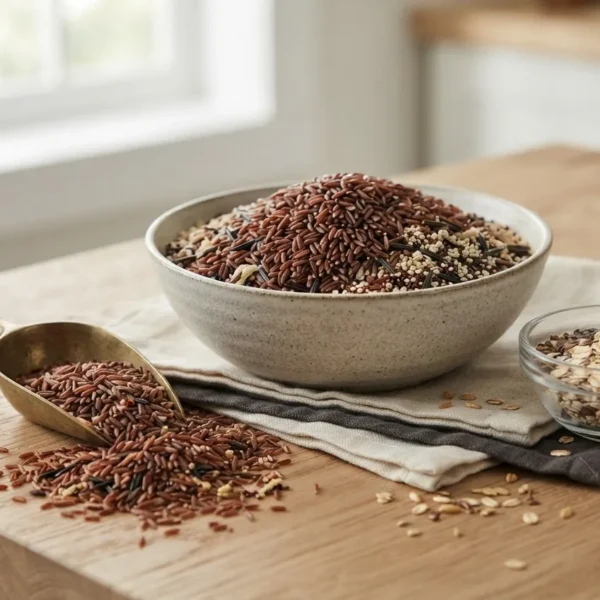
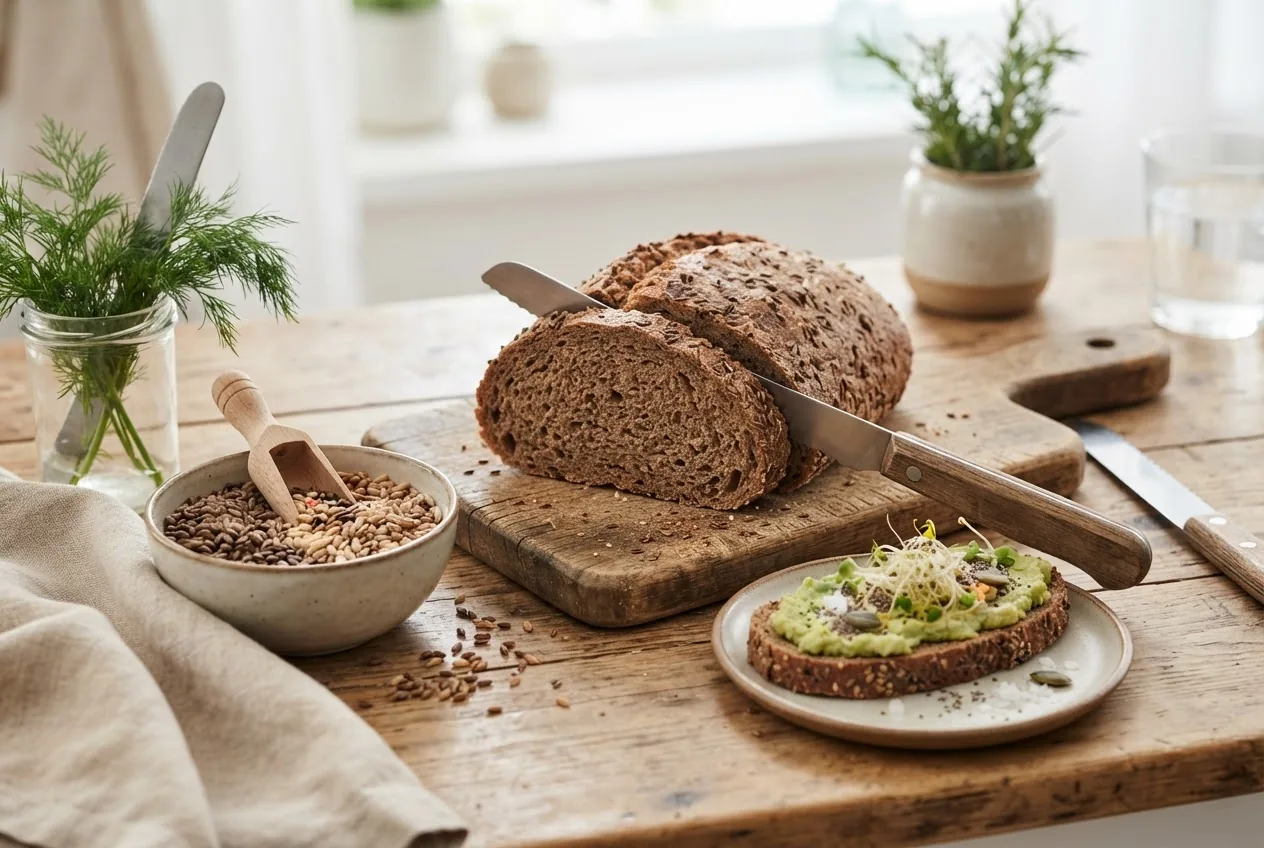
Yes — some rye breads are whole grain foods when they are made from whole-rye grain or 100% whole-rye flour; however, many commercial rye breads use refined rye flour or blends, so not every rye loaf qualifies as whole grain. Read ingredient lists and look for “whole rye” or “whole grain rye” to confirm.
What is rye and how is the rye grain structured?
Rye is a cereal grain closely related to wheat and barley used for flour and bread; its kernel contains the same three parts as other cereal grains.
Rye: a cereal crop (Secale cereale) whose kernels are milled into flours ranging from whole to highly refined and which produces denser, darker breads than wheat.
Whole grain: a grain that retains the bran (outer fiber-rich layer), germ (nutrient-rich embryo), and endosperm (starchy interior) in their original proportions.
Bran: the outer layer of cereal grains containing most of the fiber, B-vitamins and minerals.
Germ: the embryo of the seed that contains oils, vitamin E, and additional nutrients.
Endosperm: the starchy bulk of the kernel that supplies carbohydrates and some protein.
Rye kernels differ from wheat by having a higher proportion of soluble fiber and a distinct gluten structure; when milled as whole-rye flour, the bran, germ and endosperm remain intact, qualifying the flour as whole grain. Refined rye flours remove the bran and germ, reducing fiber and nutrient density.
Is rye bread a whole grain food when the label says “rye” or “rye flour”?
Not automatically; “rye” or “rye flour” on a label can mean refined rye unless the label specifies “whole rye,” “100% whole rye,” or “whole-grain rye flour.”
Whole-grain rye flour: rye flour milled from the entire kernel with bran, germ and endosperm preserved; it yields whole-grain rye bread.
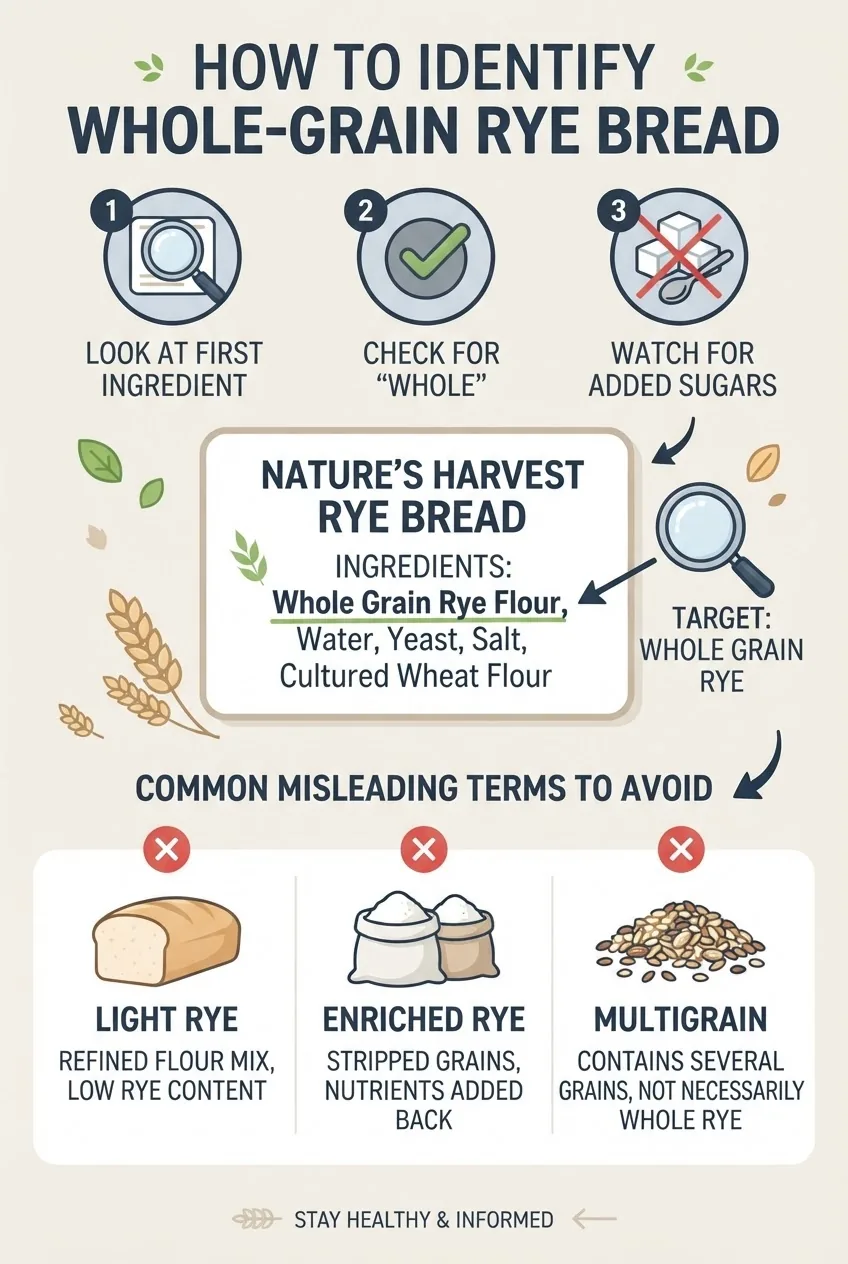
To check quickly: the ingredient list orders ingredients by weight, so if “whole rye flour” is the first ingredient, the loaf is primarily whole-grain rye; if the first or dominant ingredient is “rye flour” without “whole” or “dark rye” with added wheat flour, the loaf may be refined or a blend.
- Look for “whole rye” or “whole-grain rye flour” as the first ingredient for a true whole-grain rye bread.
- Watch for phrases like “rye meal,” “light rye,” “rye flour” (without “whole”) or “enriched rye flour” — these usually indicate refined flour.
- Certified whole-grain stamps or “100% whole grain” claims add confidence but still verify the ingredient list.
What types of rye bread are typically whole grain versus refined?
Pumpernickel and breads labeled “100% whole rye” are usually whole grain; light rye and many commercial “rye” loaves often use refined rye or blends with enriched wheat flour.
Common rye bread types and typical whole-grain status:
- Pumpernickel: traditionally made from coarsely ground whole rye, often whole grain, but commercial versions vary.
- Dark rye / whole rye: frequently whole grain when labeled clearly as “whole rye” or “100% rye.”
- Light rye / Jewish rye: often made from refined rye with added wheat flour; less likely to be whole grain.
- Rye-wheat blends: bread made with both wheat and rye may be partially whole-grain depending on proportion and terminology.
| Rye Bread Type | Typical Grain Form | Whole-Grain Likelihood | Typical Texture/Flavor |
|---|---|---|---|
| Pumpernickel | Coarse whole rye | High | Dense, slightly sweet, dark |
| Dark/Whole Rye | Whole-rye flour | High | Robust, sour or earthy |
| Light Rye / Jewish Rye | Refined rye or rye-wheat blend | Low | Softer, milder |
| Rye-Wheat Blends | Varies; often mixed | Mixed | Balanced texture and flavor |
How does whole-grain rye bread compare nutritionally to whole-wheat and white bread?
Whole-grain rye typically offers equal or higher fiber, more soluble fiber, slightly different mineral profiles, and a lower glycemic response than white bread; compared with whole-wheat bread, rye often has similar fiber but more soluble types that aid blood sugar control.
When comparing breads, use consistent serving sizes (e.g., per 100 g or per slice) and compare: calories, total carbohydrate, fiber, protein, and micronutrients such as magnesium and iron.
| Bread Type (per 100 g) | Calories | Total Carbs | Fiber | Protein | Typical GI |
|---|---|---|---|---|---|
| Whole-grain rye | ~250 kcal | ~45 g | ~6–8 g | ~8–9 g | Low–moderate (45–65) |
| Whole-wheat | ~250 kcal | ~43 g | ~6–7 g | ~9–11 g | Moderate (55–70) |
| White (refined) | ~265 kcal | ~49 g | ~2–3 g | ~8–9 g | High (70+) |
Numbers above represent typical ranges for commercially made loaves; variations occur by recipe, seed additions, and baking methods. Rye’s soluble fiber (e.g., arabinoxylans) is a key factor lowering post-meal glucose compared with refined white bread.
How much fiber, protein and carbohydrates are in a typical slice of whole-grain rye bread?
A standard 1-ounce (28 g) slice of whole-grain rye bread typically has about 70–80 calories, 12–15 g carbohydrates, 2–3 g fiber, and 2–3 g protein; thicker slices or artisan loaves will contain more.
Practical examples (approximate per serving):
- One thin slice (20–25 g): 50–65 kcal, 10–13 g carbs, 1.5–2.5 g fiber, 1.5–2 g protein.
- One medium slice (30–40 g): 80–110 kcal, 15–20 g carbs, 2.5–4 g fiber, 2.5–3.5 g protein.
- Two slices as sandwich (60–80 g): 160–220 kcal, 30–40 g carbs, 5–8 g fiber, 5–7 g protein.
If you aim for daily fiber targets (25 g for women, 38 g for men as general US guidelines), two slices of whole-rye can provide ~15–25% of that target depending on slice weight and recipe.
What specific nutrients or compounds make whole-grain rye beneficial?
Whole-grain rye supplies dietary fiber (including soluble fiber), plant-based protein, B vitamins, magnesium, iron, and unique bioactive compounds that support gut health and glycemic control.
Arabinoxylans: soluble fibers in rye that slow carbohydrate digestion and help moderate blood glucose and insulin response.
Phenolic compounds: antioxidants concentrated in the bran and germ that may reduce oxidative stress and inflammation.
Whole-rye bread also tends to have a favorable effect on satiety due to fiber content, which can support weight management when used in a calorie-balanced diet. The germ supplies healthy oils and vitamin E, while the bran supplies minerals and more fiber than refined versions.
Is rye bread lower on the glycemic index (GI) than other breads?
Yes — whole-grain rye bread generally has a lower GI than white bread and often lower than some whole-wheat breads, due to rye’s higher soluble fiber and dense crumb that slows digestion.
GI values vary by recipe and processing, but whole rye and pumpernickel often fall in the low-to-moderate GI range (roughly 45–65), whereas white bread is commonly above 70. Factors that lower GI include whole-kernel content, sourdough fermentation, and higher fiber.
- Sourdough fermentation reduces available carbohydrates and can lower GI further.
- Whole-kernel rye and coarser milling produce slower digestion than finely milled, refined flours.
- Added fats, seeds, or protein lower the meal’s overall glycemic impact.
Is rye bread a good choice for people with diabetes?
Whole-grain rye can be a better choice than white or refined breads for people with diabetes because it provides more fiber and typically produces a smaller blood-sugar rise, but portion control and individual response remain important.
Clinical and practical points:
- Choose whole-rye or pumpernickel labeled as whole grain; avoid light rye blends made with refined flours.
- Check portion sizes: even low-GI bread contains carbohydrates that must be counted in meal planning.
- Pair rye bread with protein, healthy fats, and fiber-rich toppings to blunt post-meal glucose peaks.
- Monitor personal blood-glucose responses; some individuals metabolize rye differently.
How can I tell quickly if a store rye loaf is truly whole grain?
Scan the ingredient list: if “whole rye flour” or “whole-grain rye” appears first, the loaf is primarily whole grain; if the first ingredient is “rye flour” (no “whole”) or “enriched wheat flour,” it’s likely refined or blended.
Label-reading checklist:
- First ingredient: must be “whole rye flour” or “whole rye” for a majority whole-grain loaf.
- Look for “100% whole grain” claims or Whole Grain Council stamp; still verify ingredients.
- Watch for color tricks—dark color can come from molasses, caramel coloring, or seeds, not necessarily whole grain.
- Be cautious with “multigrain” — it describes multiple grains but not whether they are whole.
Can rye bread be certified whole grain or carry a stamp?
Yes — some rye breads qualify for whole-grain certification or display the Whole Grain Stamp if they meet the certifier’s whole-grain content thresholds and submit their product for verification.
Certification notes:
- Organizations like the Whole Grains Council allow manufacturers to display a stamp when the product provides a minimum amount of whole grains per serving.
- Certification does not replace ingredient checks — verify that “whole rye” appears prominently in the ingredient list for clarity.
What are common milling and processing methods for rye and how do they affect whole-grain status?
Milling methods range from whole-kernel or stone-ground (keeps all parts) to roller milling that may separate and remove bran and germ; only methods that retain bran and germ result in whole-grain flour.
Milling terms explained:
- Stone-ground: typically retains more of the kernel and can be whole-grain if the whole kernel is milled.
- Roller-milled & sifted: often removes bran and germ; resulting flour is refined unless recombined with bran and germ.
- Whole-meal or whole-rye: indicates the whole kernel was milled, preserving nutrients and fiber.
How does fermentation (sourdough) or seed additions change rye bread’s health effects?
Sourdough fermentation can lower glycemic response and degrade some antinutrients, while seeds add fiber, healthy fats, and micronutrients — both typically enhance rye bread’s health profile.
Specific effects:
- Sourdough fermentation partially breaks down carbohydrates and phytates, making minerals more bioavailable and potentially reducing glucose spikes.
- Seeds (flax, sunflower, pumpkin) increase total and soluble fiber, add omega-3 or omega-6 fats, and raise satiety.
- Adding fat or protein-rich toppings (cheese, nut butter) lowers overall glycemic impact of the meal.
Are there special concerns with rye bread for people with celiac disease or gluten sensitivity?
Rye contains gluten proteins (secalin) and is not safe for people with celiac disease; some with non-celiac gluten sensitivity also react to rye and should avoid it or consult a clinician.
Important distinctions:
- Rye is not gluten-free; it contains secalin, a gluten family protein that triggers celiac disease.
- Products labeled “gluten-free” will not contain rye unless certified processed to remove gluten — but most rye breads are not gluten-free.
- People with wheat allergy or FODMAP sensitivity may also react to rye because of fermentable carbohydrates (fructans) and should test tolerance.
How should I include rye bread in a balanced daily whole-grain plan?
Include rye bread as one of several whole-grain servings; aim for the USDA-recommended 3–6 ounce-equivalents of grains per day with at least half as whole grains, adjusting portions by activity level and caloric needs.
Serving conversions: one slice of bread commonly counts as one ounce-equivalent toward daily grain intake; thicker artisan slices may count as 1.5–2 ounce-equivalents.
- Target at least 3 ounce-equivalents of whole grains daily (many guidelines increasingly recommend half or more of total grains be whole).
- Count two slices of whole-rye bread as ~2 ounce-equivalents (check label serving sizes if atypical).
- Vary grains across the day—oats, brown rice, quinoa and rye—to capture different fibers and nutrients; see our pillar guide for whole-grain choices.
Internal resources: compare whole-grain options and servings at the foods high in whole grains and fiber guide: Foods High in Whole Grains and Fiber. For practical bread choices and nutrition, see the Bread Health Guide: Bread Health Guide.
How do cost and availability compare between whole-grain rye and other whole-grain breads?
Whole-grain rye can be slightly more expensive than standard white bread and comparable to specialty whole-wheat or seeded artisan loaves; availability is strong in urban and suburban supermarkets but may be limited in some rural stores.
Cost considerations:
- Packaged whole-rye loaves typically cost more than mass-market white loaves due to whole-grain ingredients and production methods.
- Artisan or bakery pumpernickel and sourdough rye command premium prices but offer higher whole-grain content and different textures.
- Buying from bakery bulk sections or local mills and freezing portions can reduce per-serving costs.
How to bake whole-grain rye at home and substitutions for recipes?
Bake whole-grain rye by using 100% whole-rye flour or mixing with strong bread wheat flour (for structure), add sourdough starter or yeast, and allow longer fermentation for flavor and digestibility.
Baking tips and substitutions:
- Use a mix of whole-rye and bread wheat (e.g., 60% rye, 40% strong wheat) to improve crumb structure if you prefer lighter texture; 100% rye produces denser loaves.
- Add sourdough starter or prefermented sponge to improve flavor and lower glycemic impact; long fermentation enhances mineral availability.
- Adjust hydration: whole-rye flour absorbs more water; expect wetter dough and longer autolyse time.
- Substitute whole-wheat for rye only if rye is unavailable—expect a different flavor and fiber profile.
- Include seeds or cracked rye for texture and increased nutrient density.
Are there culinary and pairing advantages unique to rye bread?
Rye’s robust, slightly sour flavor complements fatty fish, sharp cheeses, cured meats, pickles, and mustard; its dense crumb holds moist toppings well and reduces sogginess in open sandwiches.
Practical pairing ideas:
- Use pumpernickel or dark whole-rye for smoked salmon and cream cheese to balance richness.
- Pair rye with avocado and egg for a fiber- and protein-focused breakfast.
- Use rye for hearty sandwiches with roast beef, sauerkraut and mustard; its flavor stands up to strong condiments.
How long does whole-grain rye bread stay fresh and how should it be stored?
Fresh whole-grain rye keeps 2–4 days at room temperature in a sealed bag; freeze slices for up to 3 months to preserve freshness and prevent rancidity from whole-rye oils.
Storage rules:
- Room temperature: store in a breathable bag or bread box for 2–4 days; avoid refrigeration as it accelerates staling for many breads.
- Freezing: wrap slices or loaves tightly and store up to 3 months; thaw at room temperature or toast directly.
- Long-term storage: for homemade whole-rye with no preservatives, freeze sooner to avoid mold.
Can children, pregnant people, and older adults safely eat whole-grain rye?
Yes — whole-grain rye is appropriate for most life stages and provides fiber, B-vitamins and minerals; monitor portion sizes for children and consult healthcare providers for pregnancy-specific dietary concerns.
Practical guidance:
- Children: serve age-appropriate portions and monitor for chewing difficulty with dense loaves; thin-sliced rye works well.
- Pregnancy: whole-grain rye supplies folate precursors and iron; confirm prenatal supplement guidance with a clinician.
- Older adults: the fiber supports bowel regularity but increase fluid intake alongside higher fiber to prevent constipation.
What are common misconceptions about rye bread being whole grain?
Common misconceptions include assuming dark color equals whole grain and that “multigrain” implies whole-grain content; color and grain number do not guarantee whole-grain ingredients.
Clarifications:
- Dark color may come from molasses, malt, or coloring — not necessarily from whole grain.
- “Multigrain” means multiple grains are present but they may be refined.
- “Made with whole grains” can still contain mostly refined flour and a small amount of whole grain; read ingredient order and serving whole-grain grams if on label.
What should I expect on the nutrition label when comparing rye breads?
Expect whole-grain rye to list higher fiber and slightly more minerals (magnesium, iron) per serving compared with refined rye; compare grams of whole grain per serving if the label provides that information.
Label comparison tips:
- Compare fiber per serving — higher fiber usually means more whole grain content.
- Check the grams of whole grain per serving when shown; many products list “grams whole grain per serving” for transparency.
- Compare sugars and added fats — some dark rye breads have added sweeteners that increase calories despite whole-grain flour.
How does rye flour protein and gluten content affect baking and nutrition?
Rye has less and differently structured gluten (secalin) than wheat, producing denser loaves that may need wheat flour for lightness; nutritionally, rye’s protein content is similar but its baking performance differs.
Baking and nutrition points:
- Rye gluten networks are weaker—100% rye usually produces heavy, compact bread unless specialized techniques (sourdough, long fermentation) are used.
- Mixing rye with strong wheat flour improves rise and crumb while retaining rye flavor and fiber.
- Protein totals remain comparable to other whole-grain breads when measured by weight, but amino acid profiles differ slightly.
Are there environmental or sourcing differences between rye and other grains?
Rye grows well in poor soils and cooler climates, often requiring fewer inputs than some wheat varieties; sourcing can be regional and influence freshness and price.
Sourcing considerations:
- Rye is commonly grown in Northern Europe and parts of North America; buying locally milled rye reduces transport footprint.
- Organic whole-rye options eliminate synthetic pesticide residues but may cost more.
- Look for small-batch mills or bakeries that disclose grain origin for transparency and potential nutrient advantage from fresher flour.
How does whole-grain rye fit into common dietary patterns (Mediterranean, low-carb, plant-forward)?
Whole-grain rye fits well into Mediterranean and plant-forward diets as a fiber-rich grain; it is not suitable for strict low-carb or ketogenic diets but can be portioned in balanced low-carb plans.
Diet-pattern guidance:
- Mediterranean-style meals: use whole-rye for sandwiches, as a base for bruschetta, or with legumes and vegetables for fiber synergy.
- Plant-forward diets: combine rye with beans, nuts and vegetables to increase protein quality and nutrient density.
- Low-carbohydrate plans: limit serving size or swap a single slice for lower-carb alternatives like lettuce wraps when needed.
Are there any interactions between rye consumption and medications or health conditions?
Rye itself rarely interacts directly with medications, but its fiber can affect absorption of some drugs if consumed in large amounts at medication times; consult a clinician for specific drug-diet interactions.
Practical advice:
- Take medications at the recommended times and consult a pharmacist if worried about fiber affecting absorption.
- People with irritable bowel syndrome (IBS) sensitive to fructans (a FODMAP) may experience symptoms from rye and should test tolerance under dietary guidance.
- Those on a gluten-free medical diet must avoid rye entirely due to secalin protein content.
Where can consumers find reliable information on whole-grain content and serving guidance?
Reliable sources include national dietary guidelines and nongovernmental whole-grain organizations that explain serving equivalents and label claims; check ingredient lists and product whole-grain grams for clarity.
For broader guidance on whole grains and fiber, consult the pillar page on whole grains and fiber here: Foods High in Whole Grains and Fiber: Healthy Eating Guide. For detailed bread nutrition comparisons, see our bread nutrition facts page: Bread Nutrition Facts.
How to switch from refined rye or white bread to whole-grain rye without digestive upset?
Increase whole-rye intake gradually over 1–2 weeks while drinking adequate water to allow gut bacteria and digestion to adapt to higher fiber.
Stepwise plan:
- Start by replacing one daily serving (one slice) of refined bread with whole-rye.
- After 3–4 days, increase to two servings if tolerated.
- Ensure daily water intake increases to accompany higher fiber; consider probiotics if you have a history of gut sensitivity and consult a clinician if symptoms persist.
Summary: Is rye bread a whole grain food and how to choose the healthiest option?
Rye bread is a whole-grain food only when made from whole-rye flour or whole kernels; prioritize loaves labeled “whole rye” or “100% whole grain rye,” verify the ingredient list, check fiber content, and prefer sourdough or seed-enhanced loaves for the best health impact.
Checklist for choosing whole-grain rye:
- “Whole rye flour” or “100% whole rye” listed first on the ingredient list.
- Higher fiber per serving (typically 3+ grams per slice depending on thickness).
- Minimal added sugars; seeds and sourdough are bonuses.
- Certified whole-grain stamp or clear whole-grain grams per serving when available.
Frequently Asked Questions
Is pumpernickel considered a whole-grain rye bread?
Often yes — traditional pumpernickel is made from whole-rye kernels or coarsely ground whole rye and is typically whole grain; however, some commercial versions are modernized with refined flours, so confirm the ingredient list for “whole rye” or “whole-rye flour.”
How many grams of whole grain are in one slice of whole-rye bread?
Typical whole-rye slices contain roughly 12–20 grams of whole grain per slice depending on thickness; check the product label for exact “grams whole grain per serving” values used by some manufacturers.
Can I use whole-rye flour in place of whole-wheat flour in recipes?
You can substitute whole-rye for whole-wheat, but expect a denser texture and different flavor; for lighter baked goods, blend rye with bread wheat flour or use additional leavening and longer fermentation.
Does whole-grain rye help with constipation?
Yes — whole-rye’s insoluble and soluble fiber supports bowel regularity; increase intake gradually and drink water to reduce cramping or bloating while fiber intake rises.
Is whole-rye bread better for weight loss than white bread?
Whole-rye may aid weight management by increasing satiety through higher fiber, which can reduce calorie intake over time, but weight loss depends on overall calorie balance and lifestyle rather than a single food.
How can I tell if a “dark rye” is simply colored and not whole grain?
Read the ingredients: if the dominant ingredient lacks the word “whole” or lists molasses, caramel color or malt as major contributors, the loaf may be colored rather than whole grain—prioritize “whole rye” wording.
Are seed-added rye breads nutritionally superior to plain whole-rye loaves?
Seed-added loaves often provide extra fiber, healthy fats, and micronutrients (e.g., omega fats, magnesium), so they are generally more nutrient-dense per serving than plain whole-rye loaves.
Can people with IBS eat rye bread?
Some people with IBS are sensitive to rye due to fructans (a FODMAP); tolerance varies—trial small portions or consult a dietitian experienced in FODMAP strategies.