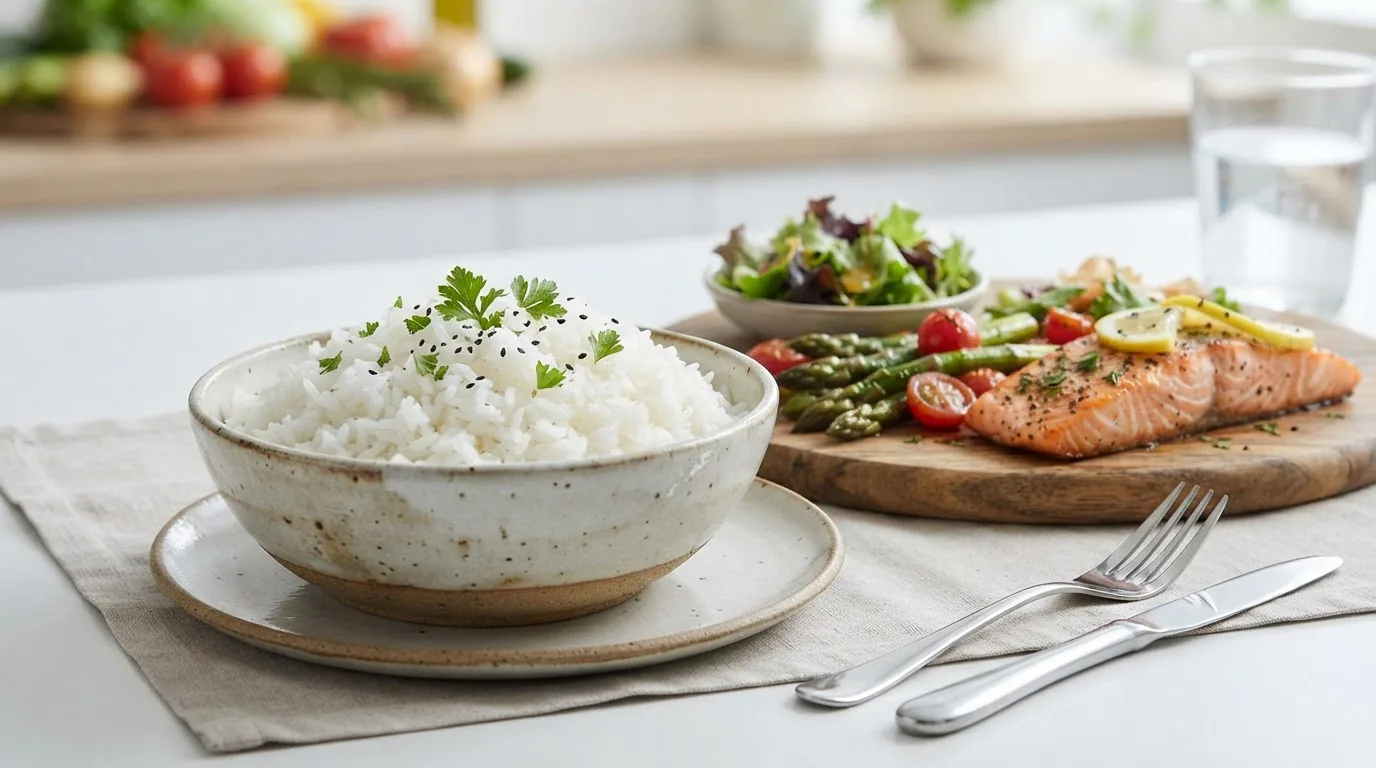
What food group is rice in? Rice is classified in the grains food group under USDA MyPlate, and understanding that classification helps you choose servings and varieties—like brown or white rice—when planning balanced meals.
Introduction to Food Groups and Rice’s Classification
Food groups are categorical tools nutritionists and public-health agencies use to organize foods by their primary nutrients and roles in a diet. The USDA MyPlate model organizes foods into five groups—fruits, vegetables, grains, protein foods, and dairy—so consumers can quickly visualize balanced meals. According to the 2025 USDA MyPlate guidelines (government guidance), rice is placed squarely in the grains category because it primarily supplies carbohydrates, energy, and—depending on processing—fiber and micronutrients.
Understanding where rice fits also requires a basic definition: grains include cereal crops and their products (e.g., rice, wheat, oats). The distinction between whole grains and refined grains is central to dietary guidance and affects serving recommendations and health messaging. For a broader look at how different food groups combine into a healthy pattern, see this varied diet guide and requirements.
Transition: Next, we’ll define precisely what the grains group contains and where rice sits within modern dietary frameworks.
What Food Group Is Rice In?
Under USDA MyPlate and most modern food-pyramid updates, rice is in the grains food group. Grains are split into two subcategories for guidance: whole grains and refined grains. Whole grains contain all three parts of the kernel (bran, germ, endosperm); refined grains have the bran and germ removed during processing, reducing fiber, vitamins, and minerals.
MyPlate explicitly recommends that at least half of daily grain intake come from whole grains; rice varieties contribute to both sides of that recommendation depending on type and processing. For visual learners, consult these balanced diet images and printable charts to see how rice maps to the grains wedge on a plate.
| Rice Type | Classification | Typical Processing | Common Use |
|---|---|---|---|
| Brown rice | Whole grain | Husk removed; bran and germ intact | Main dishes, pilafs, stir-fries |
| White rice | Refined grain | Husk, bran, germ removed; may be enriched | Side dishes, sushi, risotto |
| Wild rice | Whole grain (technically a grass seed) | Minimal processing | Salads, blends, hearty sides |
| Parboiled/converted rice | Partially processed (often retains more nutrients) | Soaked, steamed, dried before milling | Everyday cooking where firmer grains are desired |
According to USDA MyPlate resources (government guidance), rice contributes primarily carbohydrates and can be counted toward daily grain servings; the exact serving value depends on whether it’s a whole grain or a refined grain and on the portion size. Transition: the next subsection examines the whole grain vs refined grain distinction in detail.
Rice as a Whole Grain vs Refined Grain
| Feature | Whole Grain Rice (e.g., brown, wild) | Refined Rice (e.g., white) |
|---|---|---|
| Kernel components | Bran + germ + endosperm | Endosperm only |
| Dietary fiber | Higher (about 1–3 g per ½ cup cooked) | Lower (≈0.3–0.5 g per ½ cup cooked) |
| Vitamins & minerals | More B vitamins, magnesium, phosphorus | Often enriched with select B vitamins and iron |
| Glycemic impact | Generally lower glycemic response | Generally higher glycemic response |
| Shelf life | Shorter (oils in germ can oxidize) | Longer |
Brown rice retains the bran and germ, keeping dietary fiber and many micronutrients intact. White rice has those layers removed, which reduces fiber and some vitamins and minerals, though many white rice products are enriched to restore certain B vitamins and iron. According to USDA FoodData Central (government database), a ½-cup cooked serving of brown rice provides about 1.6–2 g of fiber versus 0.3–0.5 g in white rice — a meaningful difference for daily fiber goals.
Processing also affects glycemic index (GI). Whole-grain rice flavors and fibers slow digestion, producing a lower post-meal glucose rise compared with many refined-rice preparations. According to peer-reviewed nutrition analyses (academic review, 2022), whole grains are associated with improved long-term cardiometabolic outcomes compared with refined grains.
Transition: with classification and processing differences covered, let’s look at rice’s specific nutrient content that informs its role in diets.
Nutritional Profile of Rice Relevant to Food Group Classification
The nutrient composition of rice explains why it’s categorized as a grain: rice is primarily a source of carbohydrates and energy, with variable fiber, protein, vitamins, and minerals depending on processing and variety.
| Nutrient (per 100 g cooked) | White rice | Brown rice | Wild rice |
|---|---|---|---|
| Calories | ≈130 kcal | ≈111 kcal | ≈101 kcal |
| Carbohydrates | ≈28 g | ≈23 g | ≈21 g |
| Dietary fiber | ≈0.4 g | ≈1.8 g | ≈1.9 g |
| Protein | ≈2.7 g | ≈2.6 g | ≈4 g |
| Key micronutrients | Often B-vitamins & iron (enriched) | B-vitamins, magnesium, phosphorus | Minerals and B-vitamins |
According to USDA FoodData Central (government database), values above are typical averages for cooked rice varieties. Rice’s macronutrient profile makes it a quick source of glucose for immediate energy: carbohydrates supply roughly 85–90% of rice’s caloric content. According to the Dietary Guidelines for Americans 2025-2030 (government guidance), grains should be a regular part of energy balance but prioritized as whole grains when possible.
Dietary fiber in whole-grain rice contributes to digestive health, satiety, and better blood-glucose control. According to a 2023 meta-analysis (peer-reviewed study), each additional daily serving of whole grains is associated with lower risk of coronary heart disease and type 2 diabetes — a key reason public-health guidance emphasizes whole-grain choices.
Rice also contains micronutrients, though amounts vary. Brown rice has more magnesium and several B vitamins; white rice may be enriched with folic acid and other B vitamins in some countries (public health fortification policy). Wild rice tends to have higher protein and mineral content than common white rice.
Transition: now that you know what rice contains, we’ll translate that into serving recommendations under U.S. guidelines and practical portions for meals.
Serving Requirements for Rice According to US Guidelines
The USDA and Dietary Guidelines provide grain-serving recommendations expressed as “ounce-equivalents” or cup equivalents. For most adults, total daily grain needs depend on age, sex, and activity level. According to the Dietary Guidelines for Americans 2025-2030 (government guidance), adults typically need 5–8 ounce-equivalents of grains per day, with at least half from whole grains.
- Understand the measure: 1 ounce-equivalent of grains is roughly 1 slice of bread, 1 cup of ready-to-eat cereal, or ½ cup cooked rice. (Source: USDA MyPlate, government guidance.)
- Typical adult baseline: Women (moderately active): ~6 ounce-eq/day; Men (moderately active): ~7–8 ounce-eq/day. (Source: Dietary Guidelines for Americans 2025-2030, government guidance.)
- Counting rice: ½ cup cooked rice = 1 ounce-equivalent of grains. A 1-cup cooked serving = 2 ounce-equivalents. (Source: USDA MyPlate, government guidance.)
- Whole-grain target: At least 3 ounce-equivalents from whole grains daily for many adults (but individual needs vary). (Source: Dietary Guidelines for Americans 2025-2030, government guidance.)
- Meal planning: Divide grain targets across meals—e.g., breakfast 1–2 oz-eq, lunch 2 oz-eq, dinner 2–3 oz-eq—adjusting for snacks. (Source: Academy of Nutrition and Dietetics guidance.)
Example meal plans using rice (practical):
- Light adult (≈1,800 kcal/day): Breakfast – 1 slice toast (1 oz-eq); Lunch – ½ cup cooked brown rice (1 oz-eq) in a grain bowl; Dinner – ¾ cup cooked rice (1.5 oz-eq). Total grains ≈3.5 oz-eq. (Planning example based on Dietary Guidelines patterns, government guidance.)
- Moderately active adult (≈2,400 kcal/day): Breakfast – 1 cup cooked oatmeal (2 oz-eq); Lunch – 1 cup cooked rice (2 oz-eq) in a stir-fry; Dinner – 1 cup cooked rice (2 oz-eq) with vegetables and protein. Total grains ≈6 oz-eq. (Based on USDA MyPlate allotments, government guidance.)
- High-activity day (athlete training): Increase whole-grain rice servings by 1–2 oz-eq and add starchy snacks for energy. (Guidance: Academy of Nutrition and Dietetics recommendations for active individuals.)
Step-by-step example for calculating your rice servings (experience signal):
- Find your daily grain target from Dietary Guidelines tables based on age/sex/activity. (Source: Dietary Guidelines for Americans 2025-2030, government guidance.)
- Decide what fraction should be whole grains (target ≥50%).
- Convert cooked rice portions to ounce-equivalents: ½ cup cooked = 1 oz-eq.
- Allocate rice servings across meals to meet the daily target—e.g., if you need 6 oz-eq/day and want 3 oz-eq whole grains, plan for 1.5 cups cooked brown rice (3 oz-eq) split between lunch and dinner.)
For printable tracking and portion worksheets, consult the healthy diet worksheet and meal requirements and use measuring cups or a food scale at home. If you prefer calorie-targeted plans, see this 1400 calorie meal plan guide for an example of how rice portions map to lower-calorie goals.
Portion analogies: one half-cup of cooked rice is about the size of a small tennis ball or half the volume of a standard cereal bowl—an easy visual cue for portion control. Transition: next we’ll cover adjustments by age and activity level to tailor rice servings.
Adjusting Rice Servings for Different Age Groups and Activity Levels
| Group | Common Daily Grain Target (oz-eq) | Rice Example (½ cup cooked = 1 oz-eq) |
|---|---|---|
| Children 2–3 years | 3–4 oz-eq/day | ½–1 cup cooked rice across meals (1–2 oz-eq) |
| Children 4–8 years | 4–5 oz-eq/day | 1–1.5 cups cooked rice (2–3 oz-eq) |
| Adolescents (girls) | 5–6 oz-eq/day | 1–2 cups cooked rice (2–4 oz-eq) |
| Adolescents (boys) | 6–8 oz-eq/day | 2–3 cups cooked rice (4–6 oz-eq) |
| Adults (sedentary) | 5–6 oz-eq/day | 1.5–2 cups cooked rice (3–4 oz-eq) |
| Adults (active) | 6–8 oz-eq/day | 2–3 cups cooked rice (4–6 oz-eq) |
| Older adults | 5–6 oz-eq/day (may vary) | 1.5–2 cups cooked rice (3–4 oz-eq) |
Adjustments by activity: More active people need proportionally more carbohydrate for fuel. According to the Academy of Nutrition and Dietetics (professional association), athletes may use additional rice servings strategically around workouts for glycogen replenishment (professional guidance). For older adults, focus on nutrient-dense whole grains and adequate protein pairing to maintain muscle mass (peer-reviewed geriatric nutrition guidance).
Transition: now see how rice fits into a balanced meal pattern when combined with other food groups.
Rice in the Context of a Balanced Diet
Rice should be viewed as one component of a plate that follows balanced-diet principles: combine grains with vegetables, lean protein, and healthy fats to meet macronutrient and micronutrient needs. According to the Dietary Guidelines for Americans 2025-2030 (government guidance), a healthy dietary pattern emphasizes whole grains, a variety of vegetables and fruits, lean proteins, and limits added sugars and saturated fats.
Practical pairings:
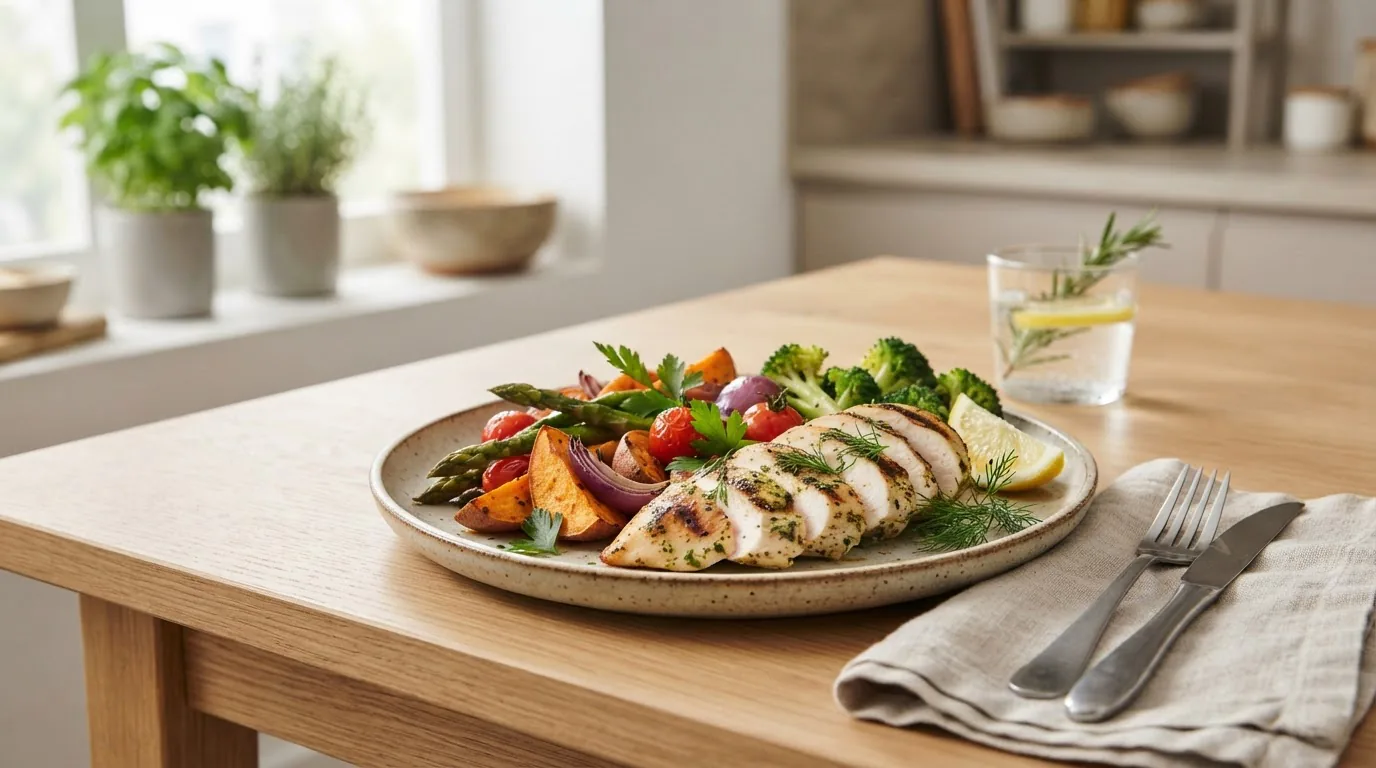
- Stir-fry: ½–1 cup brown rice with 1–2 cups mixed vegetables and a palm-sized portion of lean protein (fish, tofu, or chicken) provides a balanced plate with fiber, protein, and complex carbs.
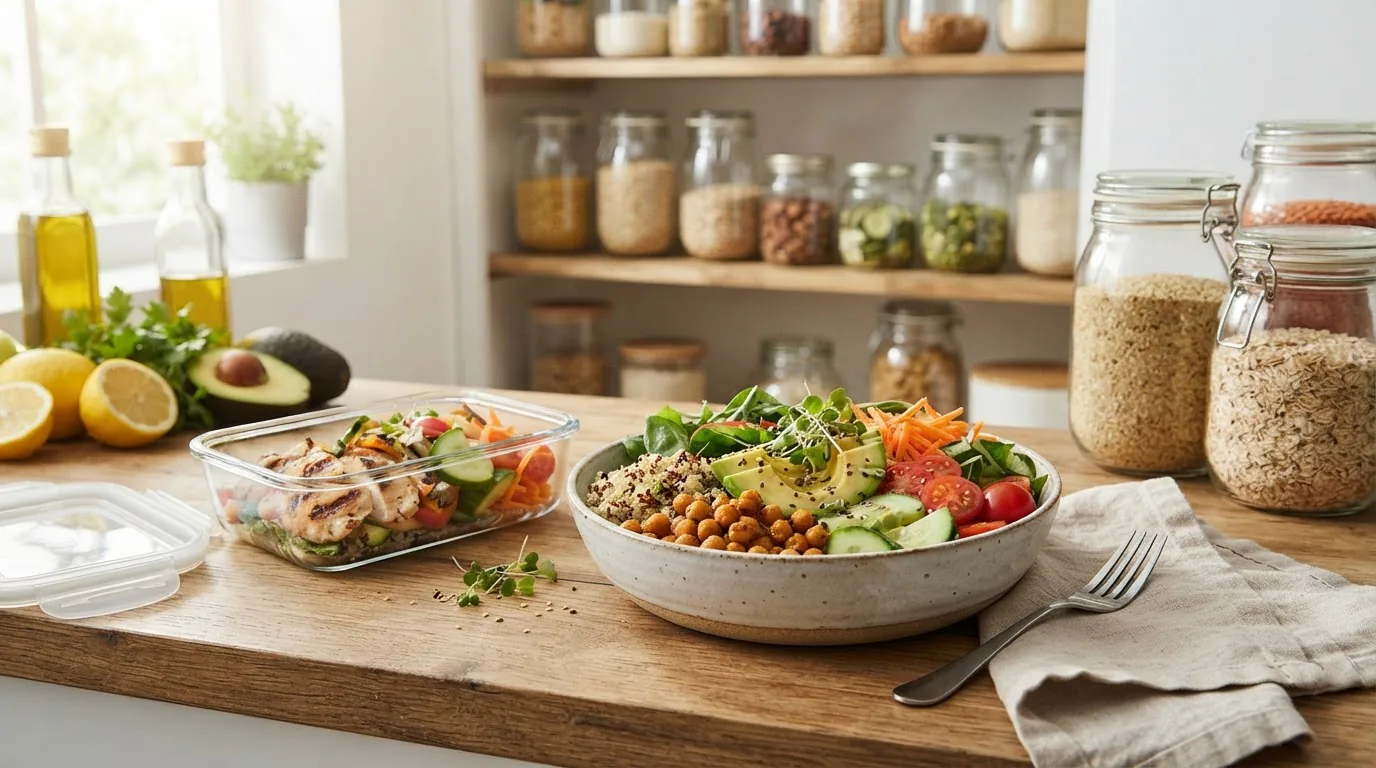
- Buddha bowl: 1 cup cooked wild rice base, roasted legumes, raw greens, avocado, and a vinaigrette for added healthy fats.
- Support nutrient balance by choosing whole-grain rice when possible and pairing rice with vegetables rich in vitamin C to enhance iron absorption (Nutrition science recommendation).
For in-depth frameworks and meal requirement standards that place rice within overall daily goals, review the pillar page on balanced nutrition guide and meal requirements for health. Combining rice with legumes, vegetables, and lean proteins helps mitigate blood-sugar spikes and improves nutrient density versus serving rice alone.
Transition: many myths exist about rice—let’s address common misconceptions and the facts behind them.
Common Myths and Misconceptions About Rice and Its Food Group
- Myth: Rice always causes weight gain. Fact: Weight outcomes depend on total calories and activity; rice can fit into weight-management plans when portioned correctly and paired with protein and fiber (dietary energy balance principle, public health guidance).
- Myth: Rice contains gluten. Fact: Rice is naturally gluten-free and is safe for people with celiac disease unless cross-contaminated during processing (medical guidance from celiac disease research).
- Myth: All rice has the same nutrition. Fact: Whole-grain varieties (brown, wild) contain more fiber, vitamins, and minerals than most refined white rice; parboiled rice may retain more nutrients than standard white rice (USDA nutrient data).
- Myth: You must avoid rice because of arsenic. Fact: Rice can contain inorganic arsenic; the risk is dose-dependent. Public-health advice recommends varying grains (e.g., quinoa, barley) and rinsing rice or using ample cooking water to reduce levels (public health agency guidance).
Transition: finally, practical tips will help you include rice healthfully in everyday cooking.
Conclusion and Practical Tips for Including Rice in a Healthy Diet
Rice is a grains-group food on USDA MyPlate and can be a nutritious energy source when chosen and portioned with balance in mind. Favor whole-grain rice when possible, count cooked rice as ounce-equivalents toward daily grain targets, and combine rice with vegetables and protein to optimize nutrient balance.
- Measure portions: ½ cup cooked rice = 1 ounce-equivalent of grains.
- Choose whole grains ≥50% of grain intake—brown, wild, or parboiled rice are good choices.
- Rinse and cook rice using a 6:1 water-to-rice boil-and-drain method to reduce arsenic (public health recommendation).
- Mix rice with beans, vegetables, or lean proteins to increase fiber and nutrient density.
- Rotate grains across the week (quinoa, barley, oats) to lower exposure risks and improve diet variety.
Strong CTA: Apply these serving rules and simple swaps to improve meal quality, and use the printable meal planner printable guide to map rice portions into your weekly menus.
Frequently Asked Questions
What food group is rice classified in according to USDA MyPlate?
Rice is classified in the grains food group under USDA MyPlate. It counts toward daily grain ounce-equivalents, with whole-grain rice varieties recommended for at least half of total grain intake. (Source: USDA MyPlate, government guidance.)
How does brown rice differ from white rice in food group classification?
Both brown and white rice are in the grains group; brown rice is a whole grain (bran, germ, endosperm intact) while white rice is a refined grain (bran/germ removed). Whole grains provide more fiber and micronutrients. (Source: USDA FoodData Central, government database.)
What are the 5 MyPlate food groups, and where does rice fit?
MyPlate’s five groups are fruits, vegetables, grains, protein foods, and dairy. Rice fits into the grains group and should supply part of your daily ounce-equivalents, ideally as whole grains for better nutrition. (Source: USDA MyPlate, government guidance.)
How many servings of rice should I eat per day for a balanced diet?
Serving needs vary, but ½ cup cooked rice = 1 ounce-equivalent. Adults commonly need 5–8 oz-eq of grains/day; aim for at least half from whole grains. Use this to allocate rice portions (e.g., 1–2 cups cooked across meals). (Source: Dietary Guidelines for Americans 2025-2030, government guidance.)
How do I adjust rice servings if I have a more active lifestyle?
Increase rice servings to match higher carbohydrate needs: add 1–2 oz-eq (½–1 cup cooked) around long workouts and distribute carbs across meals for energy and recovery. Tailor to total calorie and macronutrient targets. (Source: Academy of Nutrition and Dietetics, professional guidance.)
Can eating too much rice cause weight gain or other health issues?
Excess rice can contribute to weight gain if it causes caloric surplus; refined rice may also raise blood sugar faster. Balance portion sizes, prefer whole grains, and rotate grains to reduce risks like arsenic exposure. (Sources: Dietary energy-balance literature; public health advisories.)
What is the best way to prepare rice to retain its nutritional value?
To retain nutrients, choose whole-grain rice and avoid overcooking; parboiled rice keeps more micronutrients than standard white rice. Rinsing and using excess cooking water can reduce arsenic but may remove some water-soluble nutrients. (Source: USDA FoodData Central, government database.)
Is rice gluten-free and safe for people with celiac disease?
Rice is naturally gluten-free and suitable for people with celiac disease, provided it’s not cross-contaminated during processing or cooking. Check labels for “gluten-free” if cross-contact is a concern. (Source: Celiac disease medical guidance.)