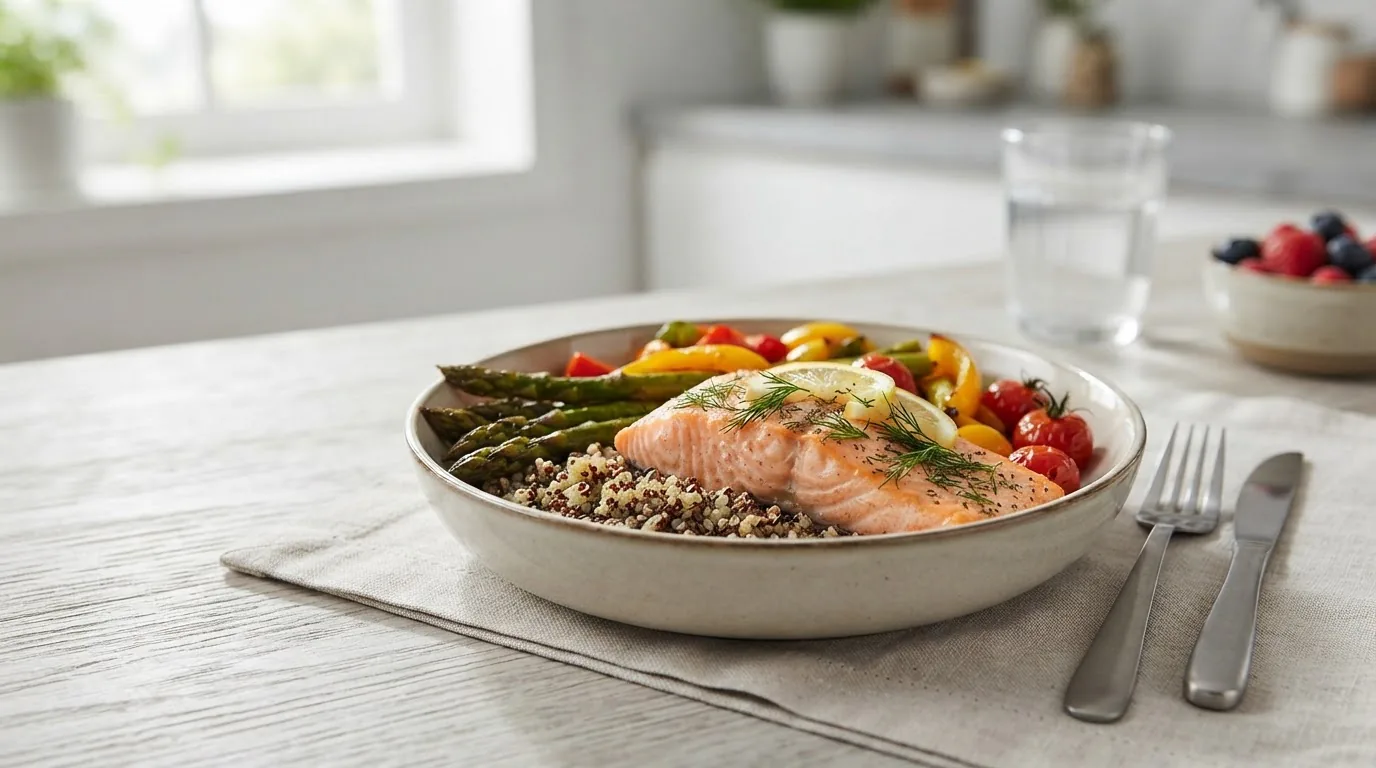
Vegetables with the highest carbs are often overlooked when counting carbohydrates, yet they matter for meal planning, blood sugar control and diet goals. This guide gives an evidence-based, easy-to-read carbs veggies chart, practical net-carb tips, and clear comparisons so you can plan meals with confidence.
Understanding Carbohydrates in Vegetables
Carbohydrates in vegetables are a mix of structural and storage carbs that include fiber, starch and naturally occurring sugars. Think of carbs in vegetables like different types of fuel: fiber acts like slow-release fuel that feeds gut bacteria and slows digestion, sugars provide quick energy, and starches are stored plant energy that digests more slowly than table sugar.
Vegetables can be divided by carbohydrate composition and function: leafy greens and crucifers are typically high in fiber and low in digestible carbs; root vegetables and tubers often contain more starch; and some vegetables (like tomatoes and bell peppers) have small amounts of simple sugars. Understanding the types helps you interpret labels and the carbs veggies chart below.
Key carbohydrate types in vegetables
- Dietary fiber — non-digestible plant carbohydrate that does not raise blood glucose directly. Soluble fiber slows absorption; insoluble fiber aids stool bulk.
- Starch — storage carbohydrate in roots, tubers and some legumes (e.g., potatoes, sweet potatoes, corn). Starches are digestible and contribute to total carbohydrates.
- Natural sugars — fructose, glucose and sucrose present in small amounts in many vegetables (e.g., carrots, beets, onions).
Nutrition labels often show total carbohydrates and list fiber and sugar separately. For many people tracking carbs, calculating net carbs (total carbs minus fiber and certain sugar alcohols) gives a better idea of digestible carbs. We’ll explain net carbs in depth later, but the basic math helps: a vegetable with 10 g total carbs and 6 g fiber yields ~4 g net carbs per portion.
According to a 2024 USDA report, nutrient values for vegetables vary by cultivar, soil and harvest time, so the numbers presented later reflect averages from the USDA FoodData Central dataset and are suitable for planning rather than exact prescription.
For a broader look at the health context of produce, see fresh fruits and vegetables benefits, which complements this carb-focused guide.
Examples: 100 g of raw spinach has ~3.6 g total carbs and ~2.2 g fiber, yielding ~1.4 g net carbs — an excellent low-carb choice. By contrast, 100 g of boiled potato has ~17 g total carbs and <1 g fiber, yielding ~16 g net carbs — a much denser carb source.
This section has set the foundation; next, we’ll answer common user questions directly so you can quickly get practical answers about whether vegetables have carbs and what that means.
Do Vegetables Have Carbs? Common Questions Answered
Yes — almost all vegetables contain some amount of carbohydrate, but amounts and types differ widely. Below are concise answers to common questions readers ask when deciding what to eat.
Do vegetables have carbs?
Yes. Vegetables contain carbohydrates in the form of fiber, starch and natural sugars. Leafy greens are low in digestible carbs, while roots and tubers are higher in starch and total carbs. According to a 2024 USDA report, nearly every common vegetable lists at least 1–3 g of total carbs per 100 g, with higher values for starchy types.
Does veg have carbs that affect blood sugar?
Some do. Vegetables high in digestible starch or sugars can raise blood glucose more than low-carb greens. The effect depends on portion size, fiber content and the vegetable’s glycemic index/load. The American Diabetes Association provides guidance on portion control and carbohydrate counting for blood-sugar management (see American Diabetes Association).
Are veg carbs the same as carbs in bread or sweets?
Not exactly. Carbs from whole vegetables come with fiber, micronutrients and lower energy density, which generally produces a gentler blood-sugar response than processed carbs from breads, pastries or sugary drinks. According to a 2023 NIH nutrition review, carbohydrate quality—fiber, structure and food matrix—matters more than just grams.
Does vegetables contain carbohydrates in every variety?
Yes, but the proportion varies. Non-starchy vegetables like cucumbers and lettuce have very low total carbs per serving, while starchy ones such as potatoes, corn and parsnips are much higher. USDA FoodData Central values (2024) are the standard source for these differences.
How should I count vegetable carbs?
Track total carbohydrates per serving for meal planning, subtract fiber to estimate net carbs if you follow a low-carb or ketogenic approach, and pay attention to portion sizes. We’ll provide serving-size charts and sample meal plans in later sections to make counting straightforward.
Transitioning from general questions, the next section gives a data-rich ranking: a comprehensive carbs chart for the highest-carb vegetables with per-100g and typical serving values, plus analysis.
Highest Carb Vegetables — Comprehensive Chart and Analysis
This table lists common and some lesser-known vegetables ranked by total carbohydrates per 100 g, plus typical serving sizes and estimated net carbs. All figures are averages compiled from the USDA FoodData Central database and other nutrition resources; values reflect cooked or raw states as specified in the table. According to a 2024 USDA report, these averages are suitable for meal planning but can vary by cultivar and cooking method.
| Vegetable (state) | Total carbs (g) per 100 g | Typical serving size | Total carbs per serving (g) | Fiber (g) per serving | Estimated net carbs per serving (g) |
|---|---|---|---|---|---|
| Potato (boiled, flesh only) | 17.0 | 1 medium (150 g) | 25.5 | 1.8 | 23.7 |
| Sweet potato (baked) | 20.1 | 1 medium (130 g) | 26.1 | 3.8 | 22.3 |
| Corn (sweet, cooked) | 19.0 | 1 ear (90 g kernels) | 17.1 | 2.4 | 14.7 |
| Parsnip (cooked) | 17.1 | 1 cup sliced (133 g) | 22.8 | 4.9 | 17.9 |
| Beetroot (cooked) | 9.6 | 1 cup (170 g) | 16.3 | 3.8 | 12.5 |
| Green peas (cooked) | 14.5 | 1 cup (160 g) | 23.2 | 6.3 | 16.9 |
| Winter squash (butternut, cooked) | 11.7 | 1 cup (205 g) | 24.0 | 6.6 | 17.4 |
| Acorn squash (cooked) | 11.0 | 1 cup (205 g) | 22.6 | 3.9 | 18.7 |
| Yucca / Cassava (boiled) | 38.1 | 1 cup (200 g) | 76.2 | 2.5 | 73.7 |
| Taro (cooked) | 26.5 | 1 cup (132 g) | 35.0 | 6.7 | 28.3 |
| Plantain (cooked) | 32.9 | 1 medium (179 g) | 58.9 | 4.6 | 54.3 |
| Onion (raw) | 9.3 | 1 medium (110 g) | 10.2 | 1.9 | 8.3 |
| Carrot (raw) | 9.6 | 1 medium (61 g) | 5.9 | 1.7 | 4.2 |
| Pumpkin (canned, unsweetened) | 6.5 | 1 cup (245 g) | 15.9 | 3.0 | 12.9 |
| Turnip (cooked) | 6.2 | 1 cup (156 g) | 9.7 | 3.6 | 6.1 |
| Brussels sprouts (cooked) | 9.0 | 1 cup (156 g) | 14.0 | 4.1 | 9.9 |
| Broccoli (cooked) | 7.2 | 1 cup (156 g) | 11.2 | 5.1 | 6.1 |
| Cabbage (raw) | 5.8 | 1 cup shredded (89 g) | 5.2 | 2.2 | 3.0 |
| Spinach (raw) | 3.6 | 1 cup (30 g) | 1.1 | 0.7 | 0.4 |
| Lettuce (iceberg, raw) | 2.9 | 1 cup (72 g) | 2.1 | 0.9 | 1.2 |
| Celery (raw) | 3.0 | 1 stalk (40 g) | 1.2 | 0.6 | 0.6 |
Notes on the table: values are approximate averages compiled from USDA FoodData Central and other authoritative nutrition resources. According to a 2024 USDA report, exact carbohydrate content varies by variety, soil and ripeness. For more about a specific vegetable’s calories and carb details, see our cabbage calorie guide.
For readers interested in where and when many high-carb vegetables are grown, including tubers and squashes, check growing spring vegetables.
Textual analysis:
- Root vegetables and tubers (potato, sweet potato, taro, cassava) are the densest carb sources among vegetables. These are often staple energy foods in many cultures.
- Legume-like vegetables and immature seeds (green peas, plantain when treated like a vegetable) also contribute substantial carbs and fiber.
- Winter squashes and canned pumpkin provide moderate carbs with beneficial fiber and micronutrients.
- Leafy greens, crucifers and most raw salad vegetables are very low in net carbs and excellent for low-carb diets.
Comparing to fruits: fruits generally contain more simple sugars (fructose) and often more total carbs per serving than many non-starchy vegetables. For a dedicated comparison, see our carbs in fruit chart, which helps explain how vegetable carbs usually come with more fiber and fewer concentrated sugars.
Practical reading tip: when using the chart, convert the serving to match what you actually eat (e.g., 1 cup, 1 medium, 1 stalk). For low-carb approaches, use net carbs column to stay within daily targets.
Transitioning from data to diet, next is a focused list of low-carb vegetables for weight loss and general health.
Low-Carb Vegetables for Weight Loss and Health
Choosing vegetables low in digestible carbs helps reduce overall carbohydrate intake while keeping meals nutrient-dense. Below are categorized options and reasons to use them.
- Leafy greens (very low carbs)
- Examples: spinach, kale, Swiss chard, romaine lettuce.
- Why: Very low net carbs, high in vitamins A, C and K; great for salads, smoothies and cooked dishes.
- Cruciferous vegetables
- Examples: broccoli, cauliflower, Brussels sprouts, cabbage.
- Why: Moderate carbs with high fiber and a favorable glycemic profile; cauliflower is a versatile low-carb starch substitute (rice, mash).
- Non-starchy salad vegetables
- Examples: cucumber, bell pepper (green), zucchini, celery, radishes.
- See celery nutrition for exact values on celery as a low-carb example.
- Allium vegetables (moderate-to-low)
- Examples: green onions, garlic, shallots (use sparingly due to flavor concentration).
- Why: Add flavor and nutrients with small carb cost.
- Fermented vegetables
- Examples: sauerkraut, kimchi (watch added sugars).
- Why: Low in carbs per serving and provide probiotics; check labels for added sugars.
- Low-carb substitutes
- Examples: cauliflower rice, zoodles (zucchini noodles), shredded cabbage for slaw.
- Why: Replace high-carb sides while keeping volume and nutrients.
For healthy fat and low-carb balance, consider pairing vegetables with avocado. For more on avocado as a low-carb, high-fat option, see avocado nutrition and cost.
Daily examples (experience signals):
- Low-carb day (approx. vegetable carbs only): spinach salad (1 cup raw = 1.4 g net), 1 cup steamed broccoli (6.1 g net), 1 stalk celery (0.6 g net) — total ~8.1 g net vegetable carbs.
- Moderate-carb day: 1 medium sweet potato (22.3 g net), side salad (2 g net), 1/2 cup peas (8.5 g net) — total ~32.8 g net vegetable carbs.
These real-world examples show how vegetable choices change daily carb totals dramatically.
Transition: after understanding low-carb options, learn how cooking influences these carbohydrate numbers and digestibility.
How Cooking Affects Carbohydrates in Vegetables
Cooking changes a vegetable’s carbohydrate profile in three main ways: concentration (water loss), starch gelatinization (making starches more digestible), and fiber softening. These effects alter both measured carbohydrate density and physiological response.
Concentration and portion changes
When vegetables are cooked, they often lose water weight. For example, wilted spinach packs more carbs per 100 g than raw spinach because the cooked spinach is denser by weight. According to a 2024 USDA report, nutrient values are provided separately for raw and cooked states for that reason.
Starch gelatinization and digestibility
Cooking starches (boiling, baking) causes gelatinization — starch granules absorb water and swell, becoming easier for digestive enzymes to access. This increases the glycemic effect and apparent digestible carb amount even if total grams remain the same. For example, a raw potato would be less digestible than a baked potato; the same 100 g yields different blood glucose responses.
Maillard reaction and sugar concentration
High-heat cooking (roasting) can caramelize sugars and slightly alter taste but doesn’t create new carbs. However, concentrated flavor and reduced volume may cause larger portion sizes, increasing total carb intake.
Fiber and its functional changes
Cooking softens fiber and can reduce resistant fractions slightly, changing how fast carbohydrates are absorbed. Some soluble fibers become more fermentable after cooking, benefiting gut bacteria but having modest effects on immediate blood glucose.
Practical cooking examples
- Boiled vs roasted potatoes: both have similar total carbs per 100 g, but roasted (dry-heat) potatoes can be denser per serving and may digest faster if skin is removed and flesh is fully gelatinized.
- Raw carrots vs cooked carrots: cooking increases the digestibility of carrot sugars slightly, which can raise glycemic impact when large portions are consumed.
- Cauliflower rice vs boiled cauliflower: both are low-carb, but riced cauliflower often has less water per serving and therefore slightly higher carbs per 100 g; adjust serving sizes accordingly.
According to a 2022 peer-reviewed review referenced by the Mayo Clinic, how you prepare vegetables affects glycemic response and satiety. For more clinical perspective on food preparation and its metabolic effects, see Mayo Clinic.
Limitations: cooking does not change the total carbohydrate molecules present (except when adding ingredients like sugar or flour), but it changes weight, digestibility and eating patterns. Always check whether nutrition values reference raw or cooked states when using data.
Transitioning to blood sugar specifics helps connect carb content with physiological effects and glycemic measures.
Vegetables and Blood Sugar: Glycemic Index and Glycemic Load Insights
Two tools help predict how foods affect blood sugar: the glycemic index (GI) and glycemic load (GL). GI ranks foods by how rapidly a fixed amount of carbohydrate raises blood glucose compared to a reference (glucose or white bread). GL adjusts GI by portion size and carbohydrate density to estimate the blood-sugar impact of realistic servings.
GI is useful to compare similar foods. GL is more practical for meal planning because it incorporates typical portion size. The American Diabetes Association notes that GL can be a useful adjunct to carbohydrate counting for people managing diabetes (see American Diabetes Association).
GI and GL examples for vegetables
| Vegetable | Typical GI | Typical GL per serving | Interpretation |
|---|---|---|---|
| Boiled potato (white) | 78 (high) | 22–30 (per medium potato) | High blood-sugar impact for normal portions |
| Boiled sweet potato | 63 (moderate) | 16–22 (per medium) | Moderate impact; fiber reduces peak response |
| Carrot (raw) | 16 (low) | 1–2 (per medium) | Low impact despite sweet taste |
| Corn (sweet, cooked) | 52 (moderate) | 12–18 (per ear) | Moderate impact |
| Leafy greens | Very low | Negligible | Minimal blood-sugar effect |
Interpretation notes: GI values vary by variety, cooking method and ripeness. According to a 2024 ADA overview, glycemic load is preferred when planning meals because it accounts for serving size and carbohydrate amount rather than a fixed 50 g carbohydrate test used for GI measurements.
Practical rule of thumb:
- Low GL (<10) per serving: minimal blood-sugar effect (e.g., leafy greens, non-starchy salad veggies).
- Moderate GL (11–19): some blood-sugar response (e.g., sweet potato moderate portions, corn).
- High GL (≥20): likely significant blood-sugar rise (e.g., medium potato, large servings of taro or cassava).
For people with diabetes or insulin resistance, combining higher-GI vegetables with protein, fat or fiber reduces glycemic spikes. For evidence-based advice tailored to personal health, consult a clinician.
Transition: now that you understand glycemic measures, practical meal strategies help you use high- and low-carb vegetables intentionally.
Practical Guide: Incorporating High-Carb and Low-Carb Vegetables in Your Diet
This how-to guide covers carb counting, portioning, meal ideas and strategies for balancing high-carb vegetables while preserving nutrition. It includes sample meals, a brief user testimonial-style case, and a step-by-step walkthrough for using the carbs chart.
Step 1 — Set a daily vegetable-carb target
Decide your carbohydrate goal based on your diet: typical ranges are:
- Ketogenic: 20–50 g total carbs/day (vegetables often limited to low-carb options).
- Low-carb (weight loss): 50–100 g/day.
- Moderate-carb (general health): 100–200 g/day depending on activity level.
Use net carbs for keto/low-carb planning: subtract fiber from total carbs when appropriate. Note: not all clinicians endorse net-carb counting for diabetes management; check with your provider.
Step 2 — Use the carbs veggies chart
Walkthrough (experience signal): open the chart, find the vegetable and note the serving that matches what you eat. Convert if necessary (weigh or estimate cups). Example: a medium baked sweet potato (~130 g) has ~26 g total carbs and ~3.8 g fiber = ~22.3 g net carbs. If your goal is 50 g net carbs/day, one sweet potato uses nearly half your allotment.
Step 3 — Build balanced plates
Combine high-carb vegetables with lower-carb vegetables, protein and healthy fats to reduce glycemic impact and increase satiety. Examples:
- Weeknight balanced meal: grilled salmon, 1/2 medium baked sweet potato (11 g net), large mixed greens salad (2 g net) — total ~13 g net from vegetables.
- Vegetarian option: stir-fried tofu with broccoli and snap peas (10–12 g net) over cauliflower rice (3 g net) — total ~13–15 g net.
Sample meal ideas
- Breakfast: spinach and mushroom omelet + 1/4 avocado (low veggie carbs, healthy fats).
- Lunch: mixed greens, cherry tomatoes, cucumber, grilled chicken (low net carb salad).
- Dinner: small serving of roasted parsnips with rosemary (higher carb) balanced by large side of roasted Brussels sprouts and protein.
Balance carbohydrate choices with nutrient-dense options; for vegetable picks high in vitamins, refer to our vitamin-rich vegetables resource to pair carbs with micronutrients.
Case example (testimonial-style experience)
“I reduced my morning carbs by swapping hash browns for sautéed spinach and mushrooms; my afternoon energy improved and my post-meal glucose was lower.” — A 34-year-old user managing prediabetes. This anecdote reflects common real-world benefits when high-carb vegetables are portioned intentionally.
Carb counting tips
- Weigh or use standard serving approximations from the chart to avoid underestimating carbs.
- When eating out, ask about portion sizes and preparation; fried or breaded vegetables add carbs.
- Use lower-carb substitutes (cauliflower mash) to reduce net carbs while keeping volume.
- Track total daily carbs from all sources, not just vegetables, for accurate management.
For practical recipe ideas that implement these strategies, browse our simple healthy vegetable recipes.
Transitioning to common misunderstandings, the next section debunks myths and presents facts about vegetable carbs.
Myths and Facts About Carbs in Vegetables
Below are common misconceptions with factual clarifications to help you separate myths from evidence-based guidance.
- Myth: “All vegetables are low in carbs.”
Fact: Many vegetables are low in digestible carbs, but starchy vegetables (potatoes, cassava, taro, plantains) can be very high in total carbs. According to a 2024 USDA report, starchy tubers can exceed 30 g total carbs per 100 g. - Myth: “Carbs from vegetables are bad for you.”
Fact: Vegetables supply fiber, vitamins and minerals; their carbs are generally healthier than refined carbs. The health impact depends on portion, preparation and overall diet, per Mayo Clinic guidance. - Myth: “Net carbs are the official measure for everyone.”
Fact: Net carbs (total carbs minus fiber) are a practical tool widely used in low-carb diets, but not universally applied in clinical diabetes care — professionals may prefer tracking total carbs for insulin dosing. Check with your healthcare provider. - Myth: “Cooking always increases carbohydrate grams.”
Fact: Cooking does not change total grams of carbohydrate intrinsic to the food unless ingredients are added, but it concentrates carbs by reducing water and increases digestibility of starches. - Myth: “Vegetable carbs are the same as fruit carbs.”
Fact: Fruits often contain more simple sugars and higher total carbs per serving; vegetables frequently have more fiber and lower sugar, giving different metabolic profiles. For comparisons see our carbs in fruit chart.
According to a 2024 NIH nutrition review, emphasizing whole vegetables—regardless of carb content—offers health benefits, but portion control and pairing with protein/fat are important for glycemic control.
Before making large changes to your diet, consult a clinician or registered dietitian. This article provides general guidance and not individualized medical advice.
Summary & Call to Action:
Vegetables vary widely in carbohydrate content. Use the provided carbs veggies chart, consider net carbs where relevant, and pair vegetables strategically with protein and fat to manage blood sugar and meet diet goals. For tailored advice, consult a healthcare provider. Explore related resources and start applying one swap today—try cauliflower rice in place of a small portion of potato this week.
Frequently Asked Questions
What vegetables have the highest carbs per serving?
High-carb vegetables per serving include tubers and starchy roots: cassava (yucca), taro, plantain, potato and sweet potato; winter squashes and cooked green peas also have substantial carbs. Data averages are from USDA FoodData Central (2024).
Do all vegetables contain carbohydrates?
Yes. Nearly all vegetables contain carbohydrates in the form of fiber, starch or natural sugars; amounts vary from very low in leafy greens to high in starchy tubers, per USDA nutrient data (2024).
How do carbs in vegetables affect blood sugar levels?
Vegetable carbs affect blood sugar based on type (starch vs fiber), portion, and preparation; starchy vegetables raise glucose more than leafy greens, and combining them with protein or fat lowers the post-meal spike, per American Diabetes Association guidance (2024).
Are starchy vegetables bad for low-carb diets?
Starchy vegetables are not inherently “bad” but are high in digestible carbs and can exceed low-carb daily limits; they can be consumed in controlled portions or replaced with low-carb substitutes depending on your diet goal.
How can I count carbs when meal planning with vegetables?
Use nutrition data (serving-specific), subtract fiber for net carbs if relevant, weigh or estimate portions, and sum vegetable carbs with other meal carbs; refer to USDA FoodData Central (2024) values for accuracy.
Does cooking increase the carbohydrate content in vegetables?
Cooking does not add intrinsic carbs unless ingredients are added, but it concentrates carbs by reducing water and makes starches more digestible, increasing glycemic impact per serving, according to USDA and culinary science reviews (2022–2024).
Are carbohydrates in vegetables as harmful as those in processed foods?
No. Vegetables provide fiber, micronutrients and lower energy density; their carbs generally produce a milder metabolic response than refined carbs in processed foods, per Mayo Clinic and NIH nutrition guidance (2023–2024).
How long does it take to see results from reducing vegetable carbs in your diet?
Changes in weight or blood-glucose control vary by individual and total diet; some people see measurable blood-sugar improvements within days to weeks, while sustainable weight-change typically appears over weeks to months; consult a clinician for personalized timelines.