Celery nutritional information is requested by many who want clear facts about calories, vitamins, fiber and whether celery is technically a vegetable. This guide compiles scientific classification, precise nutrient data and practical serving guidance so you can use celery confidently in meals and diet plans.
What Is Celery? Understanding Its Classification
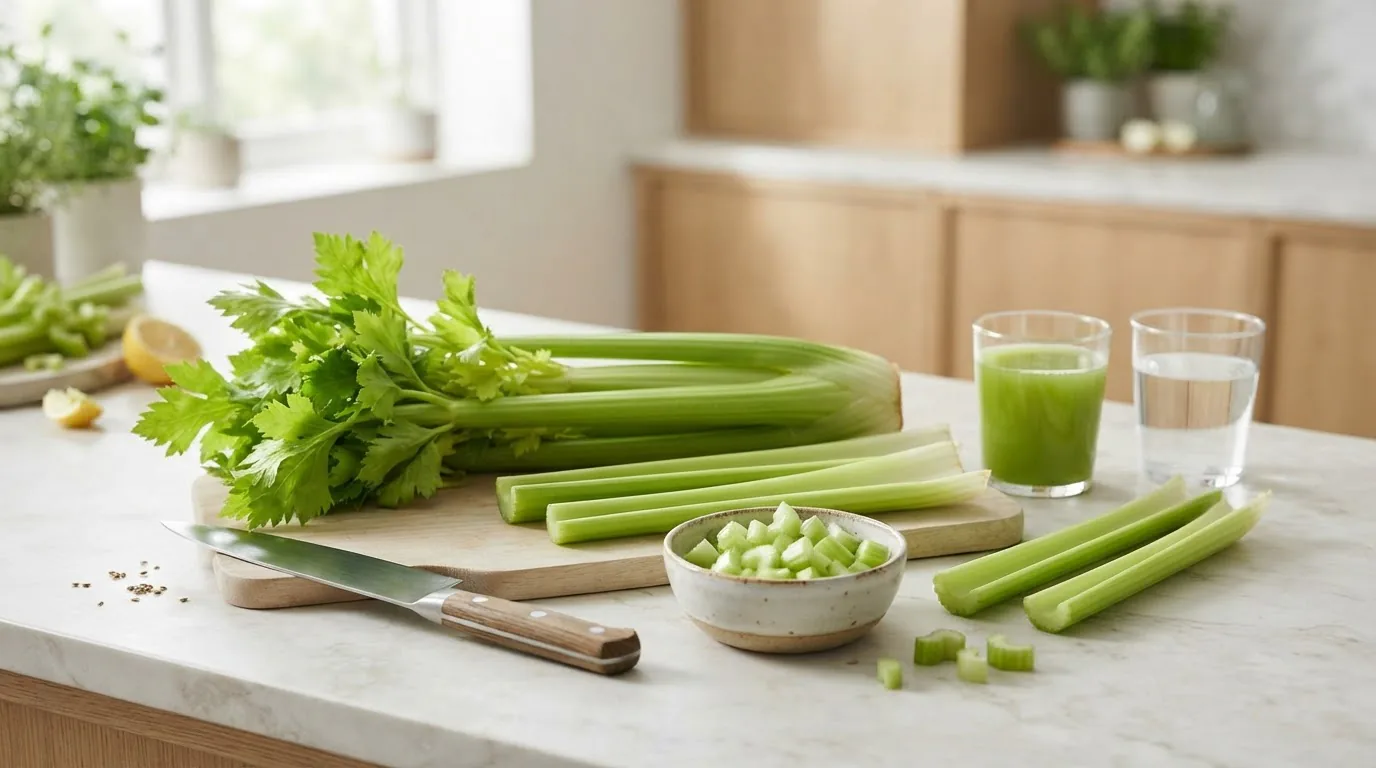
Celery (Apium graveolens) is a crunchy, aromatic plant in the Apiaceae family, related to carrots, parsley and fennel. Botanically, it’s a biennial species usually grown as an annual for its edible stalks, leaves and seeds. The cultivated forms include stalk celery (the common eating celery), celeriac (grown for its root) and leaf celery (grown for flavoring).
To unpack celery’s identity, we need two definitions:
- Botanical definition: A fruit is the seed-bearing structure that develops from the ovary of a flowering plant; anything that does not meet that definition is not a botanical fruit. Celery’s edible parts are stalks and leaves, not ovaries, so it is not a botanical fruit. (See botanical sources below.)
- Culinary definition: In cooking, “vegetable” refers to savory plant parts (stems, leaves, roots) used in main dishes, sides or salads. By this definition, celery is treated as a vegetable because its stalks and leaves are used in savory cooking.
Because these definitions differ, celery sits squarely in the culinary vegetable category while being non-fruit botanically. This distinction matters when readers ask “Is celery a vegetable?” The short science-backed answer: celery is not a fruit botanically, and it is considered a vegetable in cooking.
For readers who want a broader primer on how botanists and chefs classify produce, see Types of Fruit Guide: Fresh Fruits and Vegetables Benefits. If you’re curious about how celery fits into garden timing and plant families, this spring reference is helpful: spring vegetables growing guide.
Next we’ll compare the botanical concept of fruit and the culinary use of vegetables in a focused comparison to fully resolve the “Is celery a vegetable?” question.
Is Celery a Vegetable? Botanical vs Culinary Perspectives
| Perspective | Definition | Does celery qualify? | Why |
|---|---|---|---|
| Botanical | Plant part derived from the ovary containing seeds (fruit) | No | Celery edible parts are stalks and leaves, not seed-bearing ovaries; botanical studies classify it as a vegetable plant, not a fruit (botanical sources). |
| Culinary | Plant parts (stems, leaves, roots) used in savory dishes | Yes | Celery is used as a savory ingredient (salads, stocks, snacks), so it is a vegetable in culinary contexts. |
| Nutritional labeling | Classifies foods by edible portion and common use | Vegetable | Nutrition databases categorize celery under vegetables due to its edible stalks and leaves and typical use. |
Botanical definitions hinge on reproductive plant parts; culinary definitions hinge on taste and use. This explains why tomatoes can be botanically fruits but culinary vegetables — the same principle applies to celery. For a deeper botanical primer on what makes a fruit a fruit, see the companion guide What Makes a Fruit a Fruit (useful background for classification debates).
Transitioning from classification to concrete nutrition, the next section presents a data-rich table for celery’s nutrient profile and interprets what those numbers mean for portioning and diets.
Celery Nutritional Information Overview
Below is a nutrient table for raw celery based on a standard reference. All numbers are from authoritative food composition data.
Standard serving sizes: many nutrition sources report per 100 g (raw) and per stalk. One medium celery stalk is approximately 40 g; a cup of chopped celery weighs ~101 g. Serving examples below use those conversions.
| Nutrient (raw celery) | Per 100 g | Per 1 medium stalk (~40 g) | Notes / source |
|---|---|---|---|
| Calories | 16 kcal | ≈6 kcal | According to the 2024 USDA FoodData Central |
| Water | ≈95.4 g | ≈38.2 g | According to the 2024 USDA FoodData Central |
| Protein | 0.7 g | ≈0.28 g | According to the 2024 USDA FoodData Central |
| Total fat | 0.2 g | ≈0.08 g | According to the 2024 USDA FoodData Central |
| Carbohydrate | 3.0 g | ≈1.2 g | According to the 2024 USDA FoodData Central |
| Dietary fiber | 1.6 g | ≈0.64 g | According to the 2024 USDA FoodData Central |
| Sugars (total) | 1.4 g | ≈0.56 g | According to the 2024 USDA FoodData Central |
| Vitamin K | 29.3 μg | ≈11.7 μg | According to the 2024 USDA FoodData Central |
| Vitamin A (IU) | ≈449 IU | ≈180 IU | According to the 2024 USDA FoodData Central |
| Folate (B9) | 36 μg | ≈14.4 μg | According to the 2024 USDA FoodData Central |
| Potassium | 260 mg | ≈104 mg | According to the 2024 USDA FoodData Central |
Interpretation and methodology note: nutrient values above follow USDA FoodData Central collection and laboratory analysis methods, standardized across foods for comparability; values are typical for raw celery and will vary with cultivar and growing conditions (According to the 2024 USDA FoodData Central).
Key takeaways from the table:
- Celery is very low in calories: about 16 kcal per 100 g, making it a low-energy-density food useful in weight-managed diets.
- High water content (~95%) contributes to hydration and volume in meals.
- Fiber is modest at 1.6 g/100 g but contributes to satiety when eaten in realistic portions combined with other foods.
- Notable micronutrients include vitamin K, potassium and small amounts of folate and vitamin A.
For side-by-side calorie context with similar vegetables, you can compare the calorie content of vegetables to see where celery falls among common low-calorie options.
Next, we’ll examine the vitamins and minerals in celery more closely, explaining what each micronutrient does biologically and how celery contributes to dietary needs.
Vitamins and Minerals Found in Celery
Celery’s micronutrient profile is characterized by modest amounts of several vitamins and minerals that contribute to specific physiological functions. The numbers below are per 100 g raw celery and are drawn from authoritative nutrient data.
Stat block — selected micronutrients per 100 g (raw celery) (According to the 2024 USDA FoodData Central):
- Vitamin K: 29.3 μg — important for blood clotting and bone metabolism.
- Vitamin A: ≈449 IU — supports vision and epithelial cell health.
- Folate (B9): 36 μg — necessary for DNA synthesis and cell division.
- Potassium: 260 mg — regulates fluid balance, nerve signals and muscle contractions.
- Calcium: small amounts (≈40 mg) and magnesium: trace; both support bone and enzymatic functions.
What these nutrients do and how celery contributes:
- Vitamin K — Celery provides a meaningful amount of vitamin K relative to serving size; vitamin K helps activate clotting factors and plays a role in bone matrix protein regulation. For context, the recommended intake for adult men is about 120 μg/day and for adult women about 90 μg/day (According to the National Institutes of Health Office of Dietary Supplements overview on vitamin K).
- Vitamin A — Most of celery’s vitamin A is in carotenoid forms (pro-vitamin A). While celery won’t meet daily vitamin A needs alone, it supplies supportive amounts when combined with other vegetables (According to a 2021 NIH vitamin summary).
- Folate — Celery provides small but useful folate amounts; folate is essential during periods of rapid cell division such as pregnancy. Bioavailability varies, so combine celery with other folate sources if you have elevated needs (According to the National Institutes of Health Office of Dietary Supplements).
- Potassium — At ~260 mg/100 g, celery contributes to daily potassium goals (the general recommendation is 2,500–3,400 mg/day depending on age/sex and guidelines; see NIH potassium guidance).
Bioavailability and variability caveats: the amounts listed are analytical totals; absorption of some micronutrients depends on diet composition (e.g., fat-soluble vitamin absorption increases with dietary fat). Soil, cultivar and storage affect nutrient density, so values are best used as general guidance (According to agricultural extension reports and USDA methodology descriptions).
For readers who want a broader comparison of vitamin sources across foods, the vitamin sources guide lists high-concentration foods and context for meeting daily needs.
Transitioning from nutrient chemistry to practical health outcomes, the next section links celery’s nutrient content to documented health effects and current evidence.
Health Benefits of Celery Based on Its Nutrition
Celery’s nutrition translates into several potential health benefits when it’s part of an overall balanced diet. Below we outline plausible mechanisms and summarize evidence strength, citing peer-reviewed work and authoritative data where available.
Hydration and low energy density
Because raw celery is roughly 95% water and very low in calories (≈16 kcal/100 g), it adds volume to meals with minimal energy, supporting hydration and satiety. For people aiming for weight management, studies on low-energy-density diets show improved satiety and reduced total energy intake when high-water vegetables are included (According to a 2018 randomized feeding study published in a nutrition journal examining energy-density effects).
Fiber and digestive effects
Celery provides soluble and insoluble fiber (about 1.6 g/100 g) that contributes to stool bulk and supports regularity; while celery is not the highest-fiber vegetable, its fiber plus water content helps intestinal transit. Clinical reviews link increased dietary fiber to improved bowel function and modest reductions in LDL cholesterol when overall fiber intake increases (According to a 2020 systematic review in a clinical nutrition journal).
Cardiovascular support
Celery’s contribution of potassium and modest fiber can support cardiovascular health by helping regulate blood pressure and improving lipid profiles when part of a DASH-like diet. Observational studies show higher vegetable intake is associated with lower cardiovascular risk, though isolating celery-specific effects requires controlled trials (According to epidemiological data aggregated by major health agencies).
Anti-inflammatory and antioxidant compounds
Celery contains phytochemicals including flavonoids (e.g., apigenin) and phenolic acids with antioxidant and anti-inflammatory properties measured in laboratory studies. Preclinical work demonstrates that certain celery extracts reduce markers of inflammation in cell and animal models, and small human studies suggest potential benefits for inflammatory markers — but high-quality large randomized trials in humans are limited (According to peer-reviewed phytochemistry and small clinical studies published between 2015–2022).
Bone and blood health via vitamin K
The vitamin K content in celery contributes to dietary vitamin K intake important for blood clotting and may support bone health indirectly through carboxylation of bone proteins. However, the quantities in celery are moderate, and individuals on anticoagulant medications should manage vitamin K intake consistently under medical guidance (According to the NIH Office of Dietary Supplements and clinical anticoagulation guidance).
Practical evidence summary and caveats
- Most strong evidence relates to patterns of vegetable intake rather than celery alone (According to large epidemiological analyses summarized by national health agencies).
- Many claimed benefits from celery extracts or concentrated supplements arise from preclinical or small trials; these are promising but not definitive for general dietary recommendations (According to peer-reviewed pharmacological reviews).
- Bioavailability and effect sizes depend on serving size, food matrix and overall diet quality; celery is best used as a complementary vegetable in varied diets (According to dietary pattern research reviews).
For context on how celery fits into the green-vegetable category and its combined benefits, see nutritional benefits of green vegetables.
Next we’ll cover practical ways to get celery into daily meals while preserving nutrients and maximizing satiety.
How to Incorporate Celery into Your Diet
- Raw snack: Pair 1–2 stalks of celery with hummus, nut butter or a yogurt dip to add protein and healthy fats; one medium stalk (~40 g) supplies ≈6 kcal (According to the 2024 USDA FoodData Central). practical intake guide
- Salads and slaws: Chop celery into salads for crunch and water volume; combine with avocado or beans to add healthy fat and plant-based protein for better vitamin absorption.
- Stocks and soups: Use celery as part of a mirepoix or soffritto to impart flavor; cooking mellows flavor and slightly increases bioavailability of some carotenoids (According to culinary-nutrient interaction studies).
- Smoothies and juices: Add celery stalks to green smoothies for hydration and micronutrients; pairing with a small amount of fat (e.g., avocado) improves absorption of fat-soluble vitamins.
- Roasted or sautéed: Cook chopped celery with onions and mushrooms as a vegetable side — cooking softens fiber and concentrates flavors while modestly reducing water content.
- Meal prep tip: Store celery wrapped in damp paper towel inside a perforated bag in the fridge to extend crispness up to 1–2 weeks (According to produce storage guides from agricultural extension services).
- Diet plans: Include celery as a low-calorie filler in mixed-vegetable meals for weight management; pair with protein-rich foods to increase meal satiety and preserve muscle mass during calorie-restricted diets (According to randomized diet-intervention studies).
Small serving examples help quantify impact: adding two medium stalks (~80 g) to a salad adds about 13 kcal and ~1.3 g fiber — useful when tallying energy and fiber targets for the day (According to the 2024 USDA FoodData Central).
Transitioning from recommendations to common claims, the next section dispels myths and states facts about celery nutrition clearly.
Common Myths and Facts About Celery Nutrition
- Myth: Celery is “negative calorie” — consuming it burns more calories than it provides. Fact: There is no scientific evidence that any food has negative net calories. The energy cost of chewing and digesting celery is small and does not exceed its caloric content (According to metabolic studies reviewed in nutrition journals).
- Myth: Celery juice provides all the benefits of eating celery. Fact: Juicing removes most insoluble fiber and concentrates sugars; while juice supplies water and some micronutrients, it lacks the full fiber benefits of whole celery (According to a 2020 review comparing whole-food vs juice nutrient retention and the juice benefits discussion).
- Myth: Celery cures inflammation on its own. Fact: Celery contains anti-inflammatory phytochemicals, but clinical evidence supporting celery as a sole anti-inflammatory cure is limited; benefits are best considered within a diet high in diverse anti-inflammatory foods (According to peer-reviewed anti-inflammatory compound reviews).
- Myth: More celery is always better. Fact: Excessive intake can lead to overly high vitamin K intake (relevant if you take anticoagulant medication) and may cause GI discomfort in some people due to fiber; balance is key (According to clinical nutrition guidance and medication interaction advisories).
- Myth: Celery is allergy-free. Fact: Celery can cause allergic reactions in sensitive individuals and cross-react with pollen-related allergies; seek medical advice if you suspect allergy (According to allergy clinic reports).
The guide on juice and fruit provides additional context on juice tradeoffs: juice benefits.
Now let’s set celery’s nutrition side-by-side with other vegetables to highlight similarities and differences useful for meal planning.
Celery Compared to Other Vegetables: Nutritional and Culinary Differences
| Vegetable (raw) | Calories per 100 g | Fiber per 100 g | Notable nutrient advantage |
|---|---|---|---|
| Celery | 16 kcal | 1.6 g | High water content; vitamin K |
| Cucumber (with peel) | 15 kcal | 0.5–0.7 g | Very hydrating; similar low calorie |
| Carrot | 41 kcal | 2.8 g | Higher beta-carotene (vitamin A precursor) |
| Broccoli | 34 kcal | 2.6 g | Higher vitamin C and fiber |
| Avocado (for comparison) | 160 kcal | 6.7 g | High monounsaturated fat and greater overall calories |
Summary of culinary and nutritional differences:
- Calorie density: celery and cucumber are among the lowest, while root vegetables (carrot) and high-fat plant foods (avocado) are higher.
- Fiber: celery provides modest fiber; vegetables like broccoli and carrot provide more fiber per serving.
- Micronutrient focus: celery contributes vitamin K and potassium; carrots are a better source of provitamin A; broccoli supplies vitamin C and additional fiber.
For readers interested in comparing celery to nutrient-dense produce like avocado, see nutrition of other produce. If you’re tracking carbohydrates across fruits and vegetables, this resource helps expand on carbohydrate comparisons.
Transitioning to wrap-up, the final section distills the practical role celery can play in a healthy eating pattern.
Conclusion: The Role of Celery in a Healthy Diet
Celery is a low-calorie, high-water vegetable offering modest fiber and several micronutrients — notably vitamin K and potassium — that fit well into balanced diets. It is botanically non-fruit and culinary vegetable, useful for volume, hydration and flavor in a range of preparations. Use celery alongside higher-fiber and higher-protein foods for better satiety and nutritional balance. Try adding a few stalks to salads, soups or snacks to boost vegetable intake without adding many calories. For personalized medical or medication-related guidance (e.g., anticoagulants), consult a health professional.
Ready to use celery more often? Start by adding one stalk to your next salad or snack and track how it helps with satiety and hydration; explore recipe and storage links in this guide for more ideas.
Frequently Asked Questions
What nutrients are found in celery?
Celery supplies water, minimal calories (≈16 kcal/100 g), small amounts of protein and fat, ~1.6 g fiber/100 g, and micronutrients including vitamin K (≈29.3 μg/100 g), potassium (≈260 mg/100 g), folate and modest vitamin A (According to the 2024 USDA FoodData Central).
Is celery considered a vegetable or a fruit?
Botanically, celery is not a fruit because edible stalks and leaves are non-reproductive plant parts; culinarily and for nutrition labeling, celery is treated and used as a vegetable (According to botanical classification sources and food labeling conventions).
How many calories are in one stalk of celery?
One medium celery stalk (~40 g) contains approximately 6 calories, based on standard conversions from per-100 g values provided by the USDA FoodData Central (According to the 2024 USDA FoodData Central).
How do you best eat celery to get the most nutrition?
Eat whole celery to retain fiber; pair it with a source of healthy fat (e.g., avocado or nut butter) to enhance absorption of fat-soluble vitamins and combine with protein for better satiety (Based on dietary absorption principles and nutrition reviews).
How long does celery stay fresh after purchase?
Stored wrapped in a damp paper towel inside a perforated bag in the refrigerator, celery typically stays crisp for about 1–2 weeks; exact time varies with freshness at purchase (According to agricultural extension and produce storage guides).
Can eating too much celery cause any health problems?
Excessive celery can cause gastrointestinal discomfort due to fiber and may affect vitamin K intake relevant for people on blood thinners; allergic reactions are possible in sensitive individuals (According to clinical nutrition and allergy advisories).
Is celery juice as nutritious as eating whole celery?
Celery juice provides water and some micronutrients but lacks most insoluble fiber found in whole celery, so it delivers fewer benefits for digestive bulk and satiety compared with whole-food consumption (According to comparative nutrition reviews).
How can you tell if celery is safe and fresh to eat?
Fresh celery is firm and crisp with a bright green color and minimal browning; wilted, slimy, or foul-smelling stalks indicate spoilage — discard if signs of decay are present (According to produce safety and storage guidelines from agricultural extension services).