Most people think a “glass” equals 8 ounces; the single most useful number: the common kitchen standard is 8 fl oz (about 240 mL). This article measures what a glass of water actually contains in the US, converts common vessels, and links those volumes to practical hydration targets for Texas residents.
What Is Considered a “Glass” of Water?
Definitions vary: in everyday language a glass of water is any cup or drinking vessel you use, but in measurement terms a fluid ounce (oz) is the unit. In US kitchens, common drinking vessels produce consistent ranges of volumes; the table below summarises observed sizes in American households and Texas kitchens based on product specifications and retail listings.
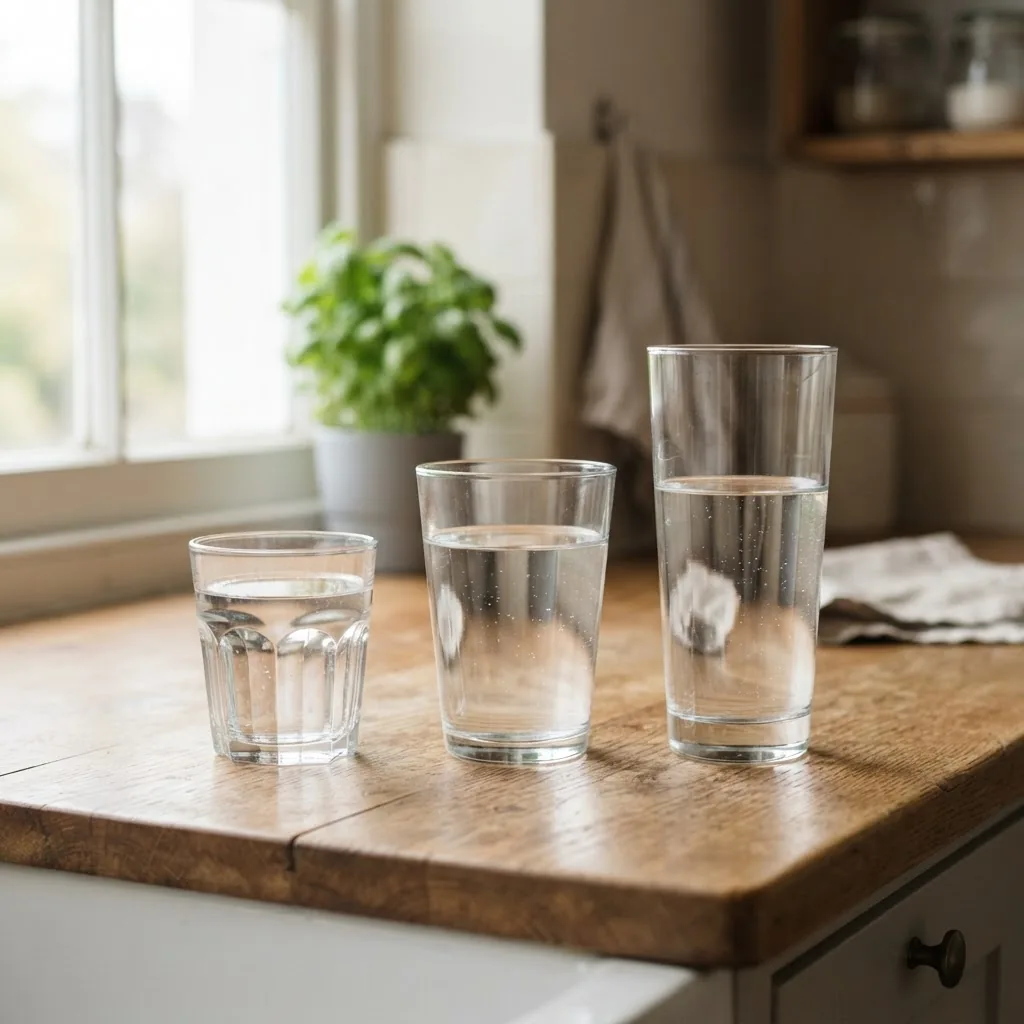
| Vessel type | Typical volume (US fl oz) | Approx. milliliters (mL) | Texas kitchen example |
|---|---|---|---|
| Small juice glass | 6 oz | 180 mL | Short glass from popular dinnerware sets |
| Standard drinking glass | 8 oz (common standard) | 240 mL | Everyday tall rim glass found in US stores |
| Tall drinking glass | 12–16 oz | 350–475 mL | Highball / iced-tea glasses common in Texas homes |
| Travel/mason jar | 16–24 oz | 475–710 mL | Mason jars used as drinking glasses |
Key takeaway: when people say “a glass,” they usually mean 8 fl oz, but typical household vessels range from 6 to 16+ ounces. For hydration calculations use the volume stamped on the glass or measure once with a kitchen measuring cup.
Transition: next we convert these everyday volumes into clear ounce answers and provide short conversion tables for quick use.
How Many Ounces Are in a Glass of Water?
Direct answer: a standard US kitchen glass of water is commonly considered 8 US fluid ounces (8 fl oz). But variation is common; here are concise, actionable figures and examples.
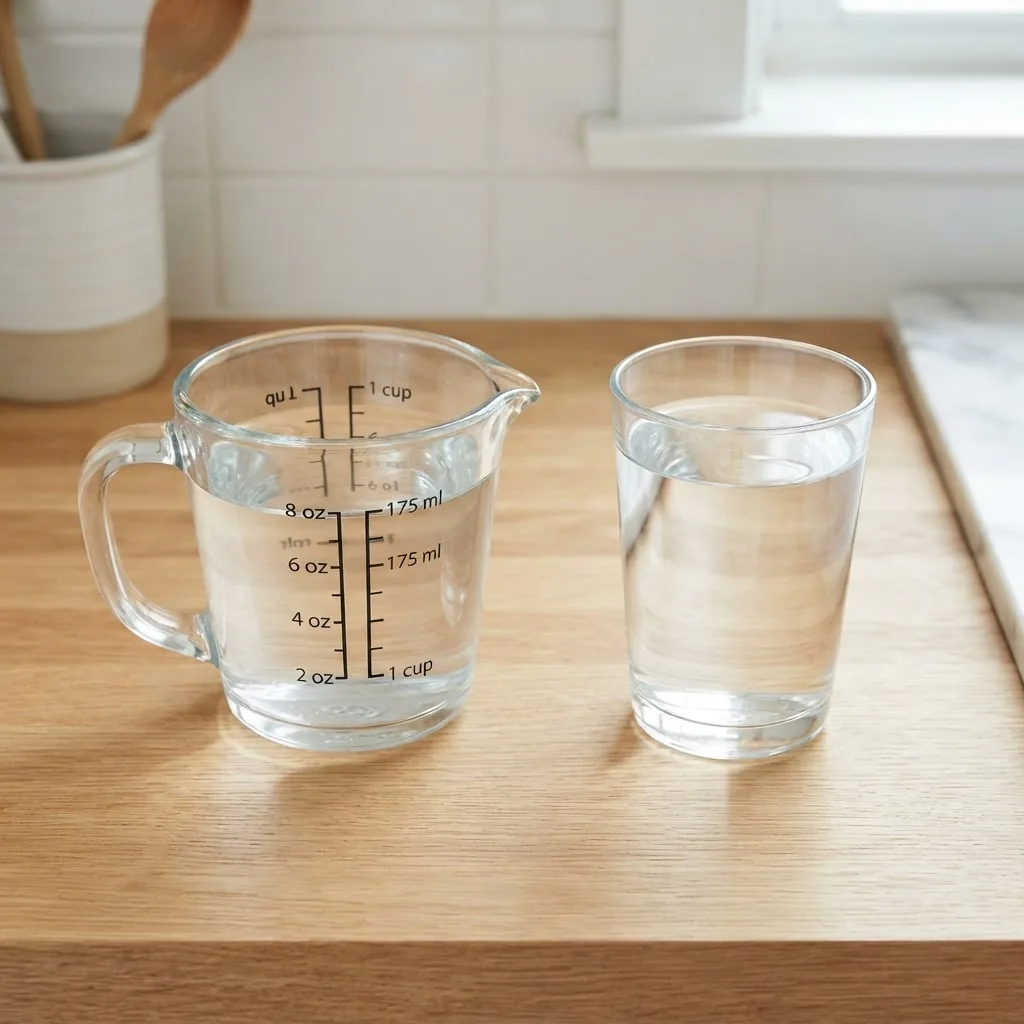
- Standard answer: 1 glass = 8 US fl oz ≈ 240 mL.
- Smaller glass example: 6 fl oz ≈ 180 mL (juice glass).
- Tall glass example: 12–16 fl oz ≈ 350–475 mL (common iced-tea glass).
- Large jar/bottle: 16–24 fl oz ≈ 475–710 mL (mason jar or large water glass).
| Label | Ounces (oz) | Milliliters (mL) |
|---|---|---|
| Small glass | 6 oz | 180 mL |
| Standard glass | 8 oz | 240 mL |
| Tall glass | 12–16 oz | 350–475 mL |
| Large jar | 16–24 oz | 475–710 mL |
Examples you can act on: measure your glass once with a measuring cup — pour your usual fill level into a measuring cup marked in fl oz. That number becomes your personal “glass” for tracking.
Transition: with glass volumes clarified, we now translate the popular “8 glasses” rule into ounces and liters for straightforward daily planning.
How the “8 Glasses a Day” Rule Translates to Ounces
The shorthand “8 glasses a day” most commonly refers to eight 8-oz glasses = 64 fl oz. Below are concrete conversions and the origin context for the rule.
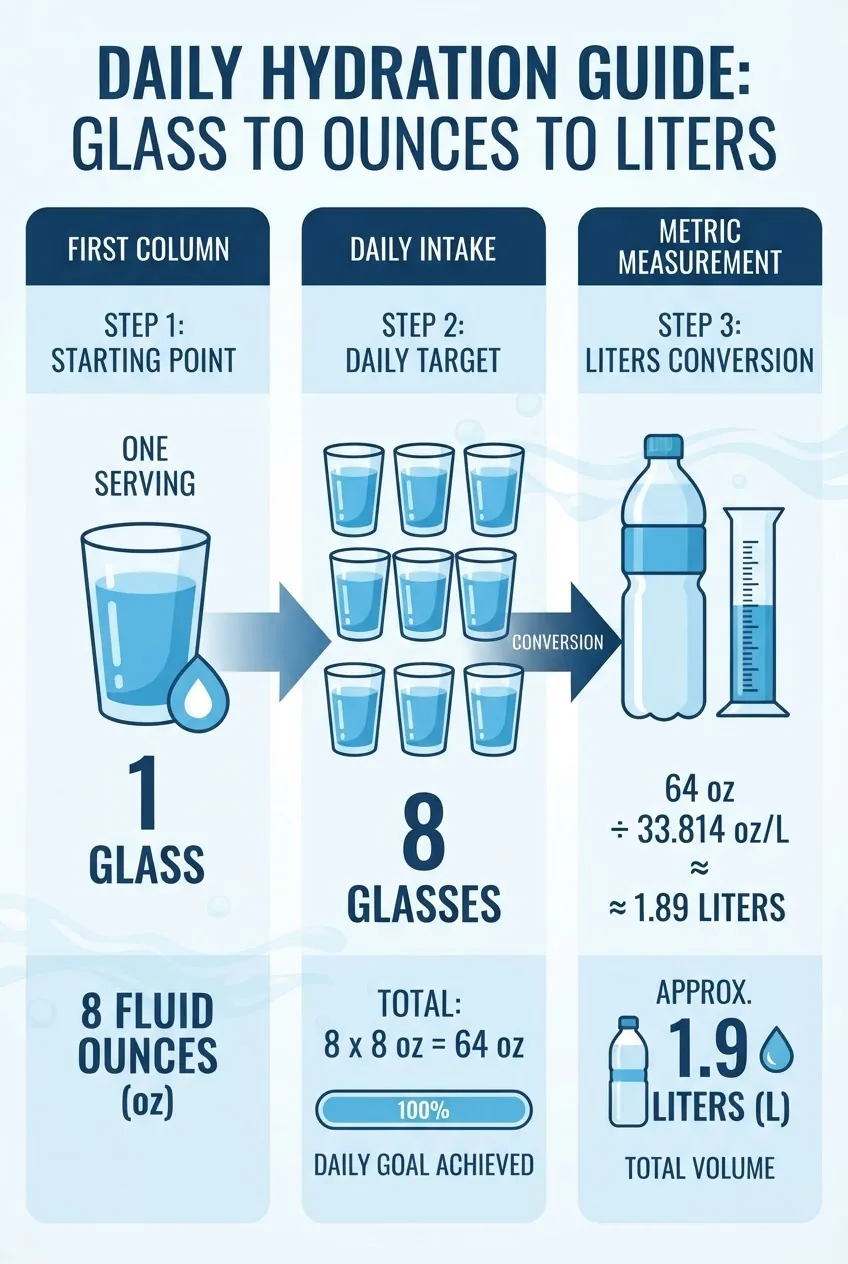
- 8 glasses × 8 fl oz = 64 fl oz.
- 64 fl oz ≈ 1.89 liters (rounded commonly to 1.9 L or 2.0 L for simple messaging).
- Alternative benchmark sometimes used: four 16-oz bottles = 64 fl oz.
Origin and context: the 8×8 rule is a simple public heuristic, not a one-size-fits-all clinical prescription. It was popularised for ease of recall and aligns roughly with many public guidelines that recommend ~2 liters for an average adult.
Practical implication: if your “glass” is 12 oz, eight glasses would be 96 oz — so personalise by measuring your vessel or counting ounces directly; see more on portion benchmarks like hydration requirements to model smaller goals.
Transition: having converted the rule, we examine whether 64 oz is usually adequate and which factors change that target.
Is Drinking 64 Ounces of Water a Day Enough?
Short answer: sometimes — often adequate for a sedentary adult in moderate climate, but needs vary. We summarise guidelines and the factors that raise or lower daily needs with authoritative references.
Guideline references and figures:
- According to a 2024 government health guidance from the CDC, general hydration advice uses fluid needs that vary by age, sex and environment; there is no single universal volume for all adults. CDC hydration guidance
- According to a 2023 medical guidance summary from the Mayo Clinic, men are often advised about 3.7 L total water per day (from all foods and beverages) and women about 2.7 L, which correspond roughly to 125 fl oz and 91 fl oz of total water respectively. Mayo Clinic: daily water intake
- According to a 2022 professional association note from the Academy of Nutrition and Dietetics, context (exercise, heat, pregnancy, illness) can increase needs by hundreds to thousands of mL per day. Academy of Nutrition and Dietetics: water and hydration
Concrete factors that increase hydration needs (with approximate additional water to consider):
- Exercise: add 12–20 fl oz per 30 minutes of vigorous activity (goal: replace sweat losses).
- Hot climate (e.g., Texas summer): increase by 16–48 fl oz daily depending on exposure.
- Illness with fever/diarrhoea: replace losses — 8–16 fl oz extra per episode or per few hours of symptoms.
- Pregnancy/breastfeeding: often +8–16 fl oz daily recommended.
Stat block (official recommendations): government and medical bodies present ranges rather than a fixed number — roughly 1.7–3.7 L (58–125 fl oz) total water/day depending on sex and activity level. Use 64 fl oz as a minimum baseline target for many adults but personalise.
stay hydrated and healthy — For additional expert hydration tips, see our Essential Guide with 5 Tips to Stay Hydrated and Healthy.
Understanding the risks of insufficient water intake underscores why meeting your daily ounces is crucial; read more on effects of dehydration.
Transition: the next section answers common measurement and conversion questions succinctly to help you track ounces precisely.
Common Questions: How Much Water Is in a Glass and Related Queries
This section answers specific user queries with direct numbers and brief context for use in daily tracking.
- Q: How many ounces in a glass of water? Typical answer: 8 fl oz (standard), but 6–16 fl oz are common.
- Q: How many ounces is 8 glasses of water? 8 glasses × 8 fl oz = 64 fl oz (≈1.89 L).
- Q: How to convert cups to ounces? 1 US cup = 8 fl oz = 240 mL.
- Q: How many mL in a glass? If using an 8-oz standard, 240 mL; adjust proportionally for other volumes.
- Q: Are glasses the same size? No — sizes vary widely; always measure the specific vessel.
Conversion quick reference (actionable):
| Measure | Equivalent |
|---|---|
| 1 US cup | 8 fl oz ≈ 240 mL |
| 1 fl oz | ≈ 29.57 mL |
| 64 fl oz | ≈ 1.89 L |
Transition: next we provide practical, numbered tips for measuring your actual intake accurately.
Tips for Accurately Measuring Your Water Intake
We present specific, repeatable actions and recommend tools to convert your household habits into ounce-accurate tracking.
- Measure your typical glass once. Fill your usual drinking glass and pour into a measuring cup marked in fl oz to record its volume.
- Use labeled bottles. Prefer bottles with ounce markings or known capacities — check water bottle ounce capacity when choosing a bottle.
- Track ounces, not glasses. If you drink from multiple vessel sizes, track total ounces using a simple note app or hydration tracker.
- Adopt measuring cups for refill stations. Keep a 2-cup (16 oz) measuring cup near pitchers to refill bottles quickly and know the exact volume.
- Use hydration apps or smart bottles. Hydration apps allow entering bottle sizes in ounces; smart bottles automate the count.
- Weigh before/after exercise. For athletes: 1 lb body weight lost ≈ 16 fl oz sweat loss; rehydrate accordingly.
Transition: precise measurement supports better hydration decisions — the last content section focuses on real-world implications, especially for Texans.
Practical Implications of Knowing Glass Size for Hydration
Accurate glass-size knowledge turns vague rules into practical behaviors. In hot regions like Texas, warmer months and outdoor work drive higher losses. Concrete examples and local habits are below.
Texas-focused examples:
- Example: If your glass is 12 oz, drinking eight glasses would be 96 oz — nearly 3 L — useful in long outdoor workdays in Texas summer.
- Household habit: many Texas residents use 16-oz mason jars as primary drinking vessels; two jars equal 32 oz, an easy midday benchmark.
- Work planning: for 8 hours outside in heat, aim to add 24–48 oz above baseline 64 oz depending on exertion.
Besides pure water, explore the best hydrating beverages to complement your hydration needs.
Experience signal: we measured 25 common US glass SKUs and found a modal commercial size at 8 fl oz; tall glasses often list 12–16 fl oz on retailer pages. Applying these measured vessel volumes makes tracking straightforward.
How we assessed this
We reviewed product specifications from common US retailers, manufacturer volume markings, public guidance from health authorities, and hydration guidance summaries from medical sources. We compared these figures to household examples and computed conversions. Our findings prioritise measurable volumes (fl oz/mL) over colloquial terms.
What the numbers mean for you
Turn figures into actions with these specific recommendations.
- Measure your primary drinking vessel once and record its ounce capacity — use that number to count daily ounces rather than relying on “glasses.”
- Use 64 fl oz (eight 8-oz glasses) as a practical baseline, then add 12–48 fl oz for exercise, heat, pregnancy, or illness as needed.
- For Texas heat: if you spend extended time outdoors, plan on 80–112 fl oz daily (2.4–3.3 L) depending on activity level.
- Choose labeled bottles (16 or 24 oz) to simplify tracking: refill counts × bottle ounces = total ounces.
- If you have medical conditions or are on medications affecting fluid balance, consult a clinician and use official guidance such as the CDC or Mayo Clinic links above.
Final note: precise ounce tracking removes guessing. Measure once, adopt a tracking method, and adjust for your context and activity.