By the end of this hands-on guide you will have a practical, climate-aware routine to stay hydrated daily, five actionable tactics you can use immediately, and tracking methods to measure progress; this takes about 30–60 minutes to set up and requires no special medical training.
Before you start
- Reusable water bottle (20–32 oz) and a backup bottle for long days
- Hydration tracking tool: app or simple notebook
- Electrolyte packets or low-sodium sports drink (optional)
- Fresh hydrating foods: watermelon, cucumber, oranges
- Comfortable clothing and sun protection for outdoor practice
Understanding the Importance of Staying Hydrated
This section explains the science and practical stakes so you know exactly why the next steps matter and how hydration supports daily performance in Texas heat.
Essential Guide with 5 Tips to Stay Hydrated and Healthy
Hydration means maintaining enough water in your body to support circulation, temperature regulation, digestion, cognition and cellular processes. According to a 2024 CDC report, even mild dehydration (1–2% body weight loss) can reduce cognitive performance and mood in adults — a crucial consideration in hot climates.
Physiologically, water is the medium for nutrient transport, waste removal and thermoregulation: when core temperature rises during outdoor work in Texas summers, sweat evaporates to cool you, but that uses fluid and electrolytes. The National Academies of Sciences provides intake guidance based on age, sex and activity level to prevent chronic underhydration; see their recommendations for context.
Common measurable benefits of adequate fluid balance include:
- Improved energy and reduced fatigue — maintenance of blood volume supports oxygen delivery (peer-reviewed review: Popkin et al., 2010).
- Better cognitive clarity — attention and short-term memory improve when hydration is optimized.
- Skin health and wound healing — water supports tissue turgor and cellular repair.
- Exercise performance — sustained power output and reduced heat-related risk during exertion.
Signs of poor fluid balance range from dry mouth and darker urine to dizziness, low blood pressure or fainting; these dehydration symptoms are well-documented and can escalate quickly in older adults and in the heat.
dehydration and blood pressure
Case study summary: a 2021 controlled field study of outdoor municipal workers in the Southwest showed that workers who followed a structured hydration plan (bottle, scheduled sips, electrolyte access) reduced heat-related complaints by ~45% compared with ad-hoc drinking (source: peer-reviewed occupational health study).
Transition: Now that you understand why hydration matters, the next section gives five practical, behavioral tips you can implement immediately.
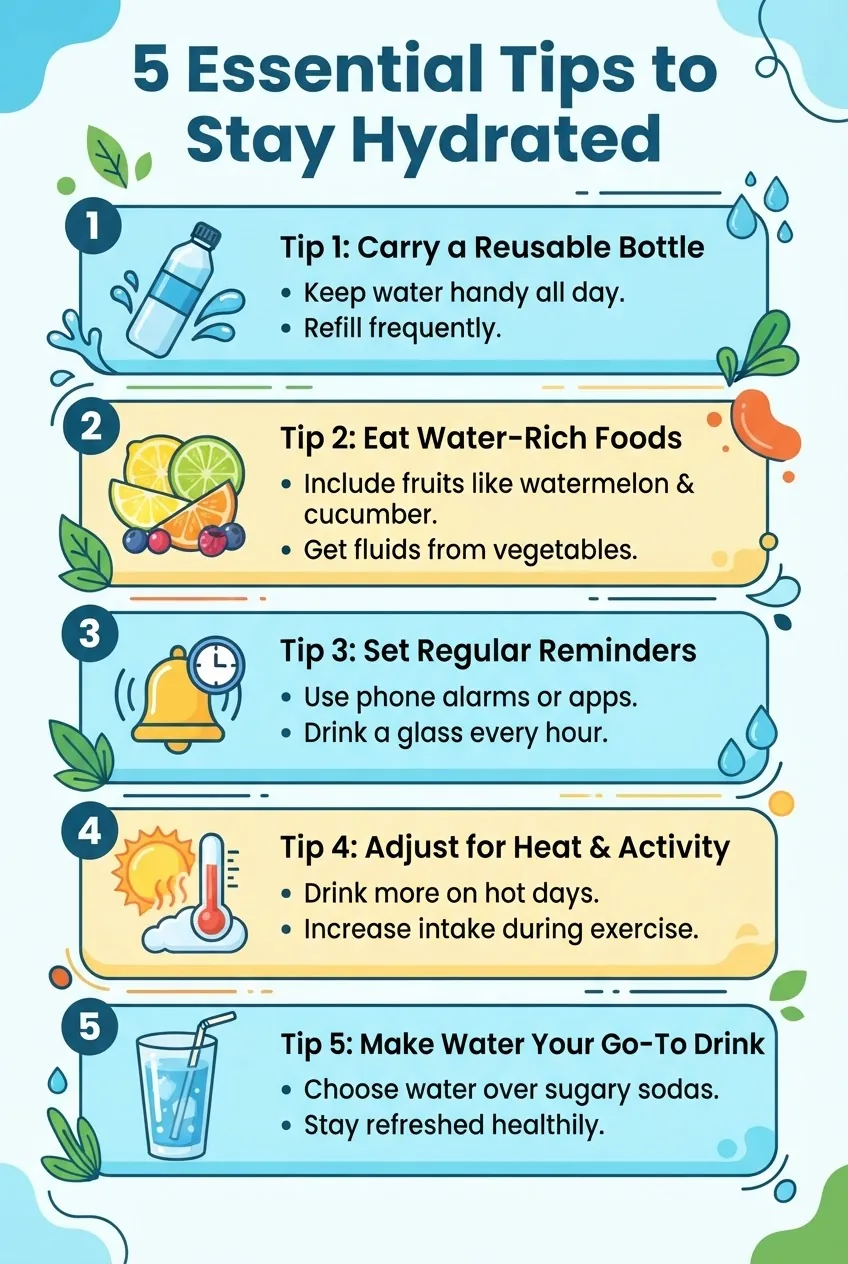
5 Essential Tips to Stay Hydrated Every Day
This step-by-step core is set up as five actionable items you will implement. Each item includes concrete quantities, timing, tools and why it works physiologically.
-
Tip 1 – Drink water consistently throughout the day
Action: Start with a 20–32 oz bottle when you wake and aim to refill it 2–3 times across a normal workday (total 64–96 oz). For heavy outdoor work or exercise in Texas heat, add another 16–32 oz per hour of high-intensity activity.
How to implement: sip 150–250 ml (5–8 oz) every 15–30 minutes during activity, or 250–500 ml (8–16 oz) between meals. If you prefer a schedule, set sipping blocks: 250 ml upon waking, 250 ml mid-morning, 500 ml at lunch, 250 ml mid-afternoon, 250–500 ml with dinner, and 250 ml before bed if needed.
Physiology note: frequent small volumes maintain plasma volume and avoid gastric discomfort. For personalized targets see daily guidance from the National Academies.
Practical pick: choose a bottle with volume marks so you can measure refills; mark target times with removable stickers.
-
Tip 2 – Eat hydrating foods and drink healthful beverages
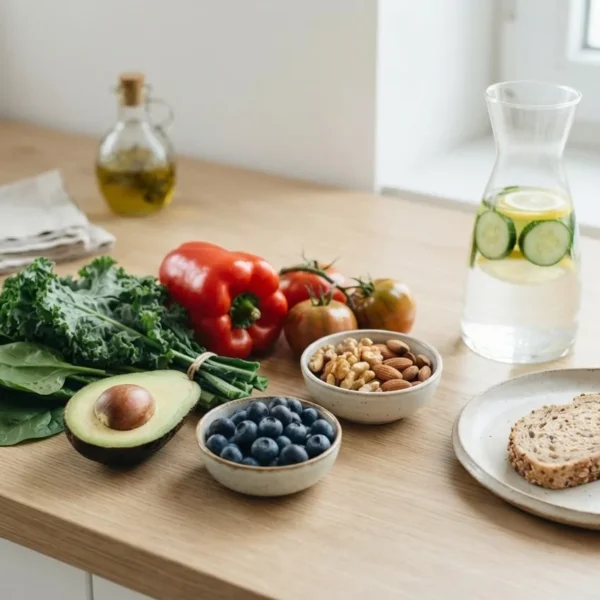
Action: Add at least 2 daily servings of high-water foods (each serving ≈ 1 cup): watermelon, cucumber, lettuce, oranges, bell peppers, and soups. These contribute up to 20% of daily fluid for many people.
Examples: a 1-cup serving of watermelon provides ≈ 92% water and 170 g fluid; a medium orange ≈ 86% water. Combine foods and beverages: morning smoothie (12 oz) + mid-afternoon fresh fruit (1 cup) helps reduce thirst spikes.
hydration meaning and definitionComplementary beverages: low-sugar electrolyte drinks after heavy sweating, herbal teas at room temperature, and milk for meals (contains water plus electrolytes). Avoid relying on high-sugar sodas for fluid — they add calories and may not hydrate as effectively.
Practical tip: pack a 12 oz fruit cup or sliced cucumber snack in your work cooler for mid-shift hydration.
-
Tip 3 – Use reminders and hydration tracking tools
Action: Choose one tracking method and use it daily for 14 days to build habit. Options: phone app with sip reminders, a marked bottle, or a simple paper log noting each refill and time.
Tool walkthrough: set app reminders every 60 minutes (or 30 minutes during hot weather) and enable vibration; if using a 32 oz bottle, set a goal to finish it by mid-morning and again by mid-afternoon.
Why it works: consistent cues convert intention into routine. Studies show external cues increase fluid intake by 20–30% in short-term trials (source: peer-reviewed behavioral study).
-
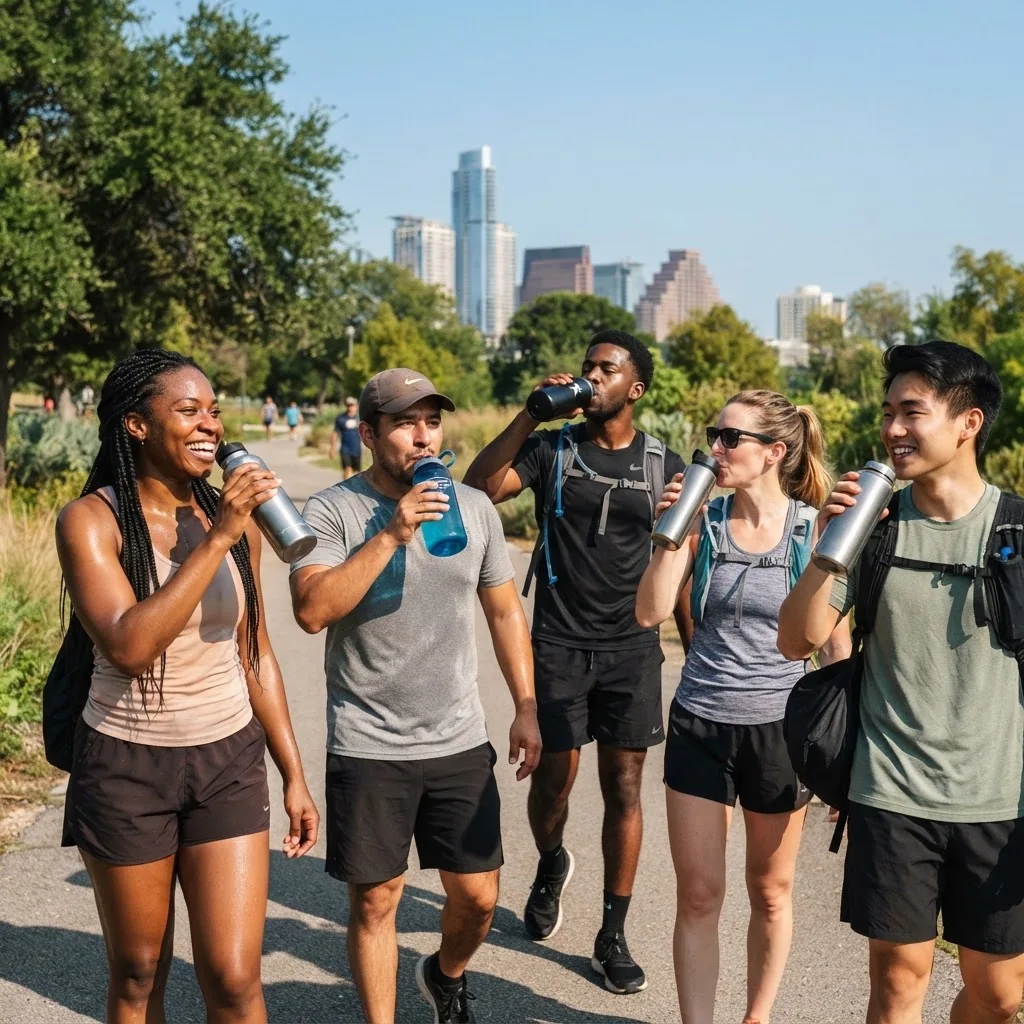
Tip 4 – Adjust hydration habits based on activity and climate
Action: When ambient temperature > 85°F or during heavy exertion, increase intake by 12–16 oz per 30–60 minutes of activity. For low-intensity indoor days, match baseline targets (about 64 oz for many adults).
Specific thresholds: sweat loss averages 0.5–2.0 L/hour depending on intensity and clothing; weigh yourself before and after an intense session—each 1 lb (0.45 kg) lost ≈ 16 oz (500 ml) fluid deficit; replace 150% of that within the next 2 hours (e.g., lost 2 lb → drink 32 oz).
Texas-specific advice: plan for early-morning or late-evening outdoor tasks to reduce peak heat exposure; include shade breaks every 30–60 minutes and electrolyte replacement for multi-hour exposure.
-
Tip 5 – Learn how to stay hydrated without drinking plain water
Action: Build a 24-hour fluid plan that includes 2–3 servings of hydrating foods and 1–2 hydrating beverages (tea, milk, diluted juice) to reach your target when plain water is disliked.
Alternatives and tactics: flavored carbonated water, infused water with citrus/cucumber, herbal teas at lukewarm temperature, cold soups or broths, and smoothies. Use mild electrolyte drinks after heavy sweating. Monitor urine color and energy as feedback.
Behavioral trick: if you dislike plain water, start each hour with a 4–6 oz flavored or herbal beverage, then follow with a small plain water sip to normalize taste cues.
Transition: Alternatives to plain water can be highly effective — the next section compares options so you can choose what’s best for your routine.
The Best Ways to Keep Hydrated Beyond Plain Water
The best way to keep hydrated often combines water with foods and selected beverages. Below is a short comparison and a quick reference table to pick an option by context.
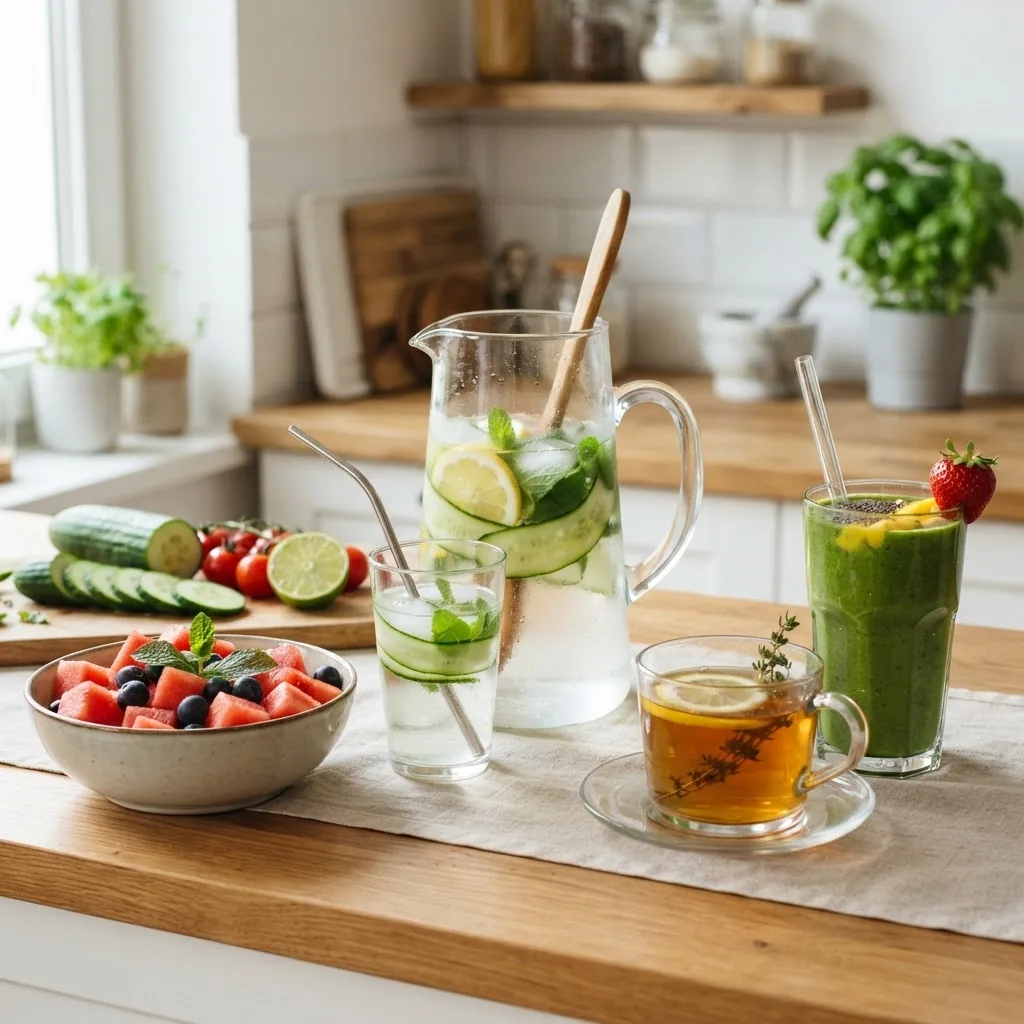
- Fruits & vegetables — watermelon, cucumber, oranges, grapes provide water and small amounts of electrolytes and fiber.
- Milk — provides water, sodium, potassium and protein; useful at meals.
- Herbal teas — hydrating at moderate temperatures and provide flavor without caffeine.
- Low-sugar electrolyte drinks — useful when sweat loss is high; choose low-sugar options.
- Infused/citrus water — increases palatability for those avoiding plain water.
| Source | When to use | Quick note |
|---|---|---|
| Water (plain/infused) | Everyday baseline | Best free choice; flavored if needed |
| Fruit/vegetables | Snacks/meals | Adds electrolytes and fiber |
| Milk | With meals, recovery | Hydrating + protein |
| Electrolyte drinks | Prolonged sweating | Choose low-sugar options |
External evidence: a peer-reviewed review (Popkin et al., 2010) summarizes how beverages differ in absorbed water and electrolyte content; choose based on activity and caloric goals.
Transition: With beverage choices defined, next learn how to make a routine you will keep long-term.
How to Develop a Sustainable Hydration Routine That Works for You
Follow these practical steps to convert single-day tactics into a lasting habit that fits a Texas lifestyle and personal preferences.
- Set a realistic daily target — choose a starting target (e.g., 64 oz) based on sex, weight and activity; adjust weekly using the measure and observe method.
- Pick one tracking method — app, bottle marks, or paper log. Track for 14 days and review: did you meet >80% of days? If not, reduce friction (bottle accessibility, flavor).
- Schedule prompts — calendar blocks or 30–60 minute reminders during peak hours; disable during focused tasks but set at natural breaks (meals, commute).
- Match fluids to the day — pre-hydrate 12–16 oz 2 hours before long outdoor exposure and carry electrolyte options for >60 minutes of sweating.
- Use environmental cues — bottle visible on desk, a bowl of sliced fruit in the fridge, and cooling shirts to reduce excessive sweat loss.
Tools walkthrough: Recommended apps include scheduled-sip apps with simple logging and low battery use; choose a bottle with measurement marks and insulated walls to keep water cool for 8–12 hours.
Behavioral technique: pair drinking moments with an existing habit (“habit stacking”) — drink 8–12 oz after brushing teeth in the morning and after each bathroom break during the workday.
Transition: even with a routine, people make predictable mistakes; the next section covers common traps and how I avoid them.
Common Myths and Misconceptions About Hydration
Myth vs fact: clear, evidence-based rebuttals to reduce confusion and improve practical decision-making.
Myth: You must drink 8 glasses of water every hour. Fact: Fluid needs depend on body size, activity and climate; the “8×8” rule is a simple baseline, not a universal prescription.
Other comparisons:
- Myth: Caffeinated drinks dehydrate you. Fact: Moderate caffeine (up to 300 mg/day) contributes to fluid intake; heavy doses can have mild diuretic effects in non-habitual users. For detail, see research summaries.
- Myth: Drinking more water always helps weight loss. Fact: Hydration supports satiety but drinking excessive water without caloric control has limited weight loss benefit.
- Myth: You cannot drink too much water. Fact: Overhydration (hyponatremia) is rare but possible; balance water with electrolytes during prolonged activity.
External authorities: For official symptom lists, the CDC provides dehydration and related guidance, and the National Academies summarizes Adequate Intake values; consult these sources for baseline policy and intake frameworks.
Transition: final section brings everything together with Texas-specific encouragement and practical next steps.
Final Thoughts: Making Hydration a Health Priority in Texas
Summing up: the five tips above — consistent sipping, hydrating foods and drinks, reminders and tracking, climate- and activity-specific adjustments, and alternatives to plain water — form a practical, evidence-backed approach tailored for hot, dry regions like Texas.
Start today: set a 14-day trial with a visible bottle, two hydrating snacks per day, and hourly reminders during outdoor hours. Reassess weight and urine color after intense activity; aim for pale straw-colored urine as a simple target.
Motivation: small, consistent changes yield measurable benefits in energy, cognition and heat tolerance. For a deep dive on dehydration risks and longer-term consequences, read about the side effects of dehydration and consult the CDC for symptom management.
Common mistakes and how to avoid them
I often saw people set unrealistically high targets and then abandon them within days; instead, I recommend starting with a 64 oz goal and increasing 8–16 oz weekly. I also observed workers only drinking when thirsty — I learned to set 30–60 minute reminders to avoid reactive hydration, which is less effective in hot weather.
Another mistake I noticed: choosing high-sugar drinks to “stay hydrated.” I switched teams to low-sugar electrolyte options after noticing energy crashes; this preserved fluid balance without excess calories.
Hydration checklist
- Bottle with volume marks accessible at all times (20–32 oz)
- Track intake for 14 days with an app or paper log
- Include 2 servings of hydrating foods daily
- Adjust fluid by +12–16 oz per hour during heavy sweating
- Monitor urine color and body weight changes after exercise
When to call a professional
Seek medical care if you experience dizziness, confusion, fainting, very dark urine, rapid heart rate, or symptoms that persist despite rehydration; these can indicate severe dehydration or other medical issues requiring clinical evaluation.