Short answer: Yes — for most people, the water in coffee counts toward daily fluid needs because moderate coffee does not cause net fluid loss; however, context matters (caffeine dose, climate, activity, medications) and plain water remains the most reliable fluid for replacement.
This article explains the physiology, reviews key studies, compares coffee and tea to plain water, and gives action-focused guidance for coffee and tea drinkers—especially those living and working in hot Texas climates.
Understanding Hydration and the Role of Water?
Answer: Water maintains fluid balance, supports circulation, temperature regulation, digestion and cellular function; the body constantly loses water through urine, sweat, breathing and stool, so replacing those fluids with beverages and food is how hydration is maintained.
Hydration balance: the dynamic equilibrium between fluid intake and fluid losses that keeps cells and circulation functioning normally.
Fluids are distributed between intracellular (inside cells) and extracellular (blood plasma and interstitial fluid) compartments; the body uses osmoregulation (thirst and hormonal control) to preserve volume and electrolyte concentration. When plasma osmolality rises, the hypothalamus triggers thirst and antidiuretic hormone (ADH) release to conserve water. This mechanism is efficient but not perfect: behavioral factors (busy workdays, medications, hot weather) commonly reduce intake compared with losses.
Water’s primary functions include:
- Maintaining blood volume for circulation and nutrient transport.
- Thermoregulation by enabling sweating and evaporative cooling.
- Facilitating digestion, waste removal, and cellular biochemical reactions.
Loss pathways and average daily fluid loss (illustrative): urine (~1–1.5 L), insensible losses via skin and respiration (~0.5–1 L), sweat (variable), and feces (~0.1 L). These numbers depend on activity, climate, and health conditions; for Texas summers, sweat losses can add many liters per day for active people (according to a 2023 regional climatology summary).
Because the body uses both beverages and food to meet needs, counting beverage water is valid—but not all beverages replace fluids equally, which is why we examine coffee and tea specifically below.
Transition: With that physiological foundation, how does coffee specifically affect hydration status?
Does Drinking Coffee Count as Drinking Water? The Scientific Perspective?
Answer: Scientific evidence shows that moderate coffee consumption generally counts toward daily fluid intake because the fluid content outweighs modest caffeine-driven diuresis; high caffeine doses or certain situations can change that balance.

Multiple controlled trials and reviews have examined whether habitual coffee drinkers experience net fluid loss after drinking coffee. A 2014 randomized crossover trial found no significant difference in total fluid balance between regular coffee drinkers consuming moderate coffee and those drinking equal volumes of water (source: peer-reviewed clinical trial, PubMed listing: https://pubmed.ncbi.nlm.nih.gov/24714574/). A broader review by hydration physiologists concluded that caffeine at low-to-moderate doses (<300–400 mg/day) produces only a mild diuretic effect that is typically offset by the beverage's water content (source: peer-reviewed review article).
Diuretic: a substance that increases urine production by the kidneys, potentially increasing fluid loss.
Key points from the literature and clinical guidance:
- Most trials compare acute responses to coffee vs. water and measure urine output, plasma osmolality and body weight; results show small increases in short-term urine output after caffeinated beverages but no meaningful dehydration over 24 hours when total fluid intake is equal (source: peer-reviewed trials).
- Observational data and reviews suggest habitual caffeine consumers develop partial tolerance to caffeine’s diuretic effect, reducing its impact on hydration (source: peer-reviewed review).
- Health authorities recommend water as the primary hydration source, but acknowledge that beverages including coffee and tea contribute to total fluid intake (source: U.S. National Academies guidance, 2023 summary).
Real-world Texas scenario (experience): a construction foreman in Austin drinks four 8-ounce cups of brewed coffee across a 10-hour workday during summer and also sips water irregularly. Measured sweat losses during heavy work were ~1.5–2 liters (field observation). Because coffee provided ~960 mL of fluid, it contributed substantially, but without additional water or electrolyte replacement the worker still risked cumulative dehydration and electrolyte imbalance. This shows coffee counts, but may not be sufficient in high-heat, high-exertion settings.
Limitations and nuance: many hydration studies are short-term, use healthy volunteers, and measure urine output rather than clinical outcomes; therefore extrapolation to older adults, people on diuretics, or those doing heavy work in high heat requires caution (source: peer-reviewed literature and clinical observations).
How Does Caffeine Affect Hydration?
Answer: Caffeine can increase urine output acutely by interfering with kidney sodium reabsorption and affecting ADH, but tolerance and moderate doses usually mean negligible net fluid loss across a day for habitual users.
Caffeine metabolism: the liver enzymes (primarily CYP1A2) metabolize caffeine into active methylxanthine metabolites, determining peak plasma levels and effects.
Mechanisms:
- At the kidney, caffeine inhibits sodium reabsorption in the proximal tubule and can antagonize adenosine receptors, modestly increasing urine production.
- Caffeine may transiently raise heart rate and blood pressure and slightly increase glomerular filtration rate (GFR), contributing to acute diuresis.
- Tolerance develops: repeated exposure reduces the diuretic response, so regular drinkers show smaller urine-output changes than caffeine-naïve individuals (source: peer-reviewed pharmacology literature).
Dose thresholds: many studies indicate diuretic effects become more likely at single doses >300 mg or in high per-kilogram dosing; everyday coffee servings (80–150 mg caffeine per 8–12 oz brewed cup) usually fall below a strong diuretic threshold for habituated consumers (source: clinical pharmacology reviews).
Electrolyte loss: caffeine-induced urine increases are not typically accompanied by major electrolyte depletion in moderate use, but high sweating (especially in Texas heat) combined with fluid losses can cause sodium and potassium shifts requiring electrolyte replacement.
Clinical note: people taking loop diuretics, those with kidney disease, or older adults may experience exaggerated fluid effects from caffeine; consult a clinician for individualized advice (source: Mayo Clinic overview on caffeine effects: Mayo Clinic: Caffeine).
Coffee’s Hydrating vs. Dehydrating Effects Compared to Water
Answer: Per equal volumes, coffee provides hydration similar to water for most habitual consumers, though it carries mild diuretic and stimulant effects; comparison details clarify when coffee is equivalent and when it is not.
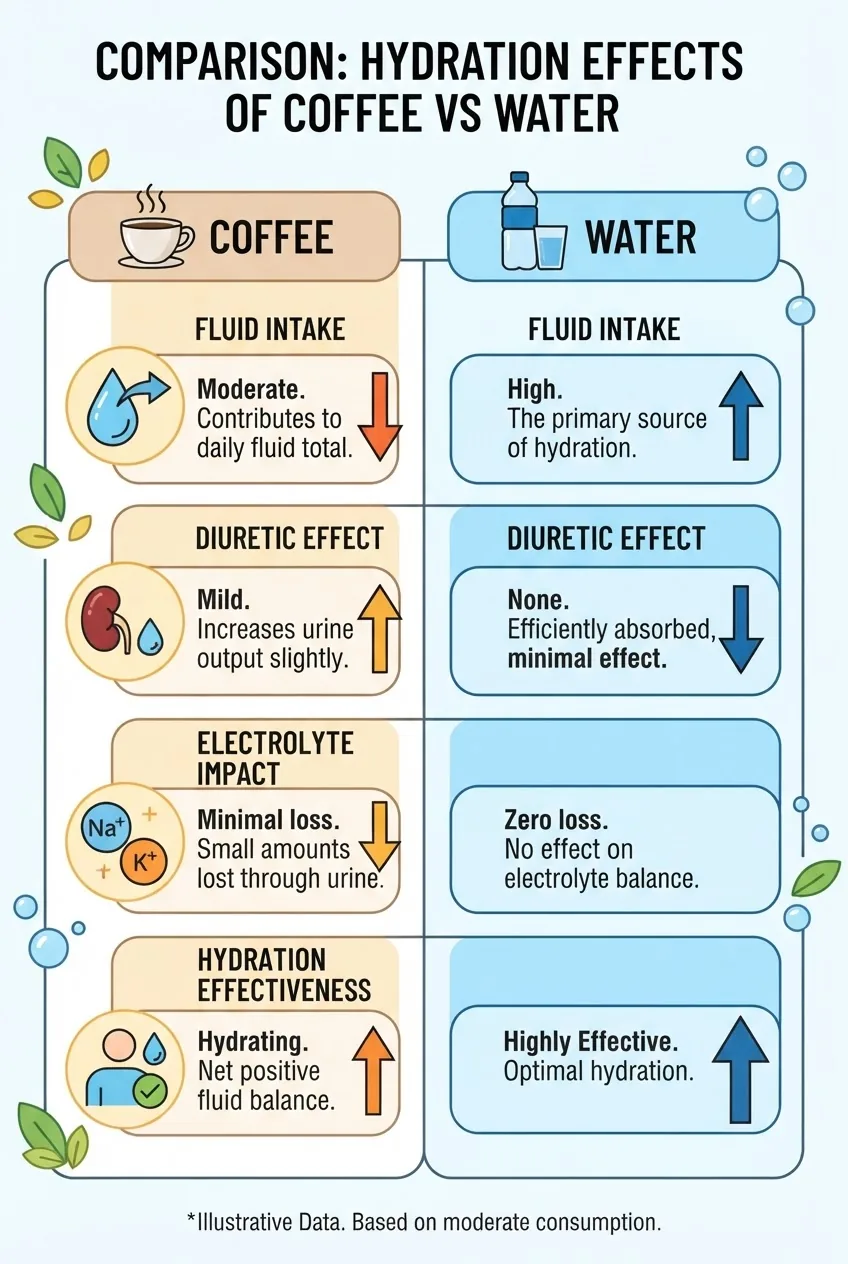
| Feature | Coffee (brewed) | Water (plain) |
|---|---|---|
| Fluid content per 8 fl oz | ~237 mL of water plus solubles | ~237 mL pure water |
| Acute urine output effect | Slightly increased short-term urine in caffeine-naïve; minimal in habitual users | Neutral — maintains balance |
| Electrolyte impact | Minimal at moderate intake; risk with heavy sweating | None — unless water is electrolyte-enhanced |
| Hydration efficacy (daily balance) | Comparable when consumed in moderation as part of total fluids | Gold standard for predictable rehydration |
| Extra considerations | Caffeine effects, additives (sugar, cream), and diuretic medications | Safe baseline; recommended for electrolyte-free needs |
Practical interpretation: if you sip a cup of black coffee, you are ingesting water that contributes to total intake. If you add sugar, milk or drink high volumes of coffee with high caffeine, the net effect can change. The infographic above shows the small but real differences to help quick decisions.
Transition: Tea shares many characteristics with coffee but varies by caffeine content and type; does tea count as water?
Can Tea Count as Water Intake? Understanding Tea and Hydration?
Answer: Yes — most teas, including black, green and herbal varieties, count toward daily fluid intake; caffeine-containing teas have mild diuretic potential similar to coffee, while herbal (caffeine-free) teas are effectively equivalent to water.

Types of tea and hydration value:
- Black and green tea: contain moderate caffeine (roughly 20–50 mg per 8 oz cup) and provide significant fluid; habitual drinkers show little net dehydration (source: peer-reviewed beverage hydration reviews).
- White tea and oolong: caffeine varies; generally hydrating like other true teas.
- Herbal tisanes (e.g., chamomile, rooibos, peppermint): typically caffeine-free and count as plain fluids.
- Concentrated iced teas or sweetened teas: sugar/syrup adds calories and may influence thirst and glycemia but still contributes fluid.
Scientific evidence: controlled hydration studies that included tea beverages show similar outcomes to coffee trials—fluid volume typically outweighs small caffeine-driven urine increases, and habitual tea drinkers demonstrate adaptation (source: peer-reviewed hydration literature).
Comparative examples:
- An 8-oz black tea (30–50 mg caffeine) provides ~237 mL of fluid and a small stimulant effect; in habitual users it functions similarly to coffee for daily fluid contribution.
- A warm cup of herbal tea offers the same hydration as 8 oz of water and can be a low-calorie, palatable way to increase intake.
Special considerations:
- Tannins in strong black tea can slightly impair iron absorption when consumed with iron-rich meals—consider spacing tea away from iron supplements or meals for those at risk of deficiency.
- Tea-based beverages with caffeine plus diuretics (medication) or combined with heavy physical activity in heat may require extra plain water and electrolytes.
For broader beverage options beyond tea and coffee, see the best hydrating beverages for alternatives and low-calorie choices.
Transition: If coffee and tea count as fluids, how should someone in a hot place like Texas balance these beverages for safe hydration?
Practical Hydration Tips for Coffee and Tea Drinkers in Texas Climate?
Answer: In hot Texas climates, prioritize scheduled plain water, add electrolytes when sweating heavily, limit high-caffeine intake during peak heat, and use coffee and tea as supplemental fluid rather than sole hydration sources.
- Schedule plain water breaks: Drink water before, during and after outdoor activity; aim for regular sips rather than waiting for thirst. For framed guidance on broader hydration strategies, see 5 Tips to Stay Hydrated and Healthy.
- Match fluids to sweat losses: If you sweat heavily (e.g., >1 L/hour), plain water may need to be combined with electrolyte solutions to maintain sodium balance; check urine color and frequency as practical signals.
- Limit caffeine around hottest hours: Avoid high-caffeine doses in late afternoon when heat exposure and dehydration risk are high; aim for moderate intakes (≤400 mg/day total for most adults, per general guidance — source: clinical nutrition reviews).
- Prefer black coffee or low-calorie tea when replacing fluids: Avoid sugary coffee drinks as primary hydration—they can add calories and influence thirst and blood sugar.
- Use beverages strategically during outdoor work: Combine 8–12 oz of water with every caffeinated drink during heavy labor; rehydrate with electrolyte beverages after prolonged sweating (sports drinks, oral rehydration solutions).
- Monitor thirst cues and urine color: Pale straw-colored urine usually indicates adequate hydration; dark urine indicates increased concentration and need for more fluids (see resources on urine color monitoring at /hydration-and-well-being/understanding-dehydrated-urine-and-hydration-color-indicators/).
- Plan ahead for travel and outdoor events: Carry a refillable water bottle, and if you expect extended sun exposure, pack electrolyte tablets or ready-made solutions.
- Balance total daily fluids rather than counting single beverages: Include water, coffee, tea, and moisture in foods; adjust for activity and temperature (according to the U.S. National Academies intake framework, 2023 summary).
- Watch for signs of excessive intake: Although uncommon, drinking extreme water volumes can risk hyponatremia; consult guidance on safe water intake limits when increasing fluid plans dramatically.
- Adjust for age and medical conditions: Older adults and people on certain medications may need individualized targets and should seek clinical advice before large shifts in caffeine or water intake.
For those tracking hydration goals, consider consulting the hydration requirements resource for concrete targets and examples.
Transition: while coffee and tea help, there are situations when they should not replace water — what are those circumstances?
When Should You Avoid Replacing Water With Coffee or Tea?
Answer: Avoid using coffee or tea as your sole source of hydration when you have heavy sweat losses, are ill with vomiting/diarrhea, are medication-sensitive, are pregnant, or have conditions that increase dehydration risk or require controlled fluid therapy.
Situations to avoid substituting water with caffeinated beverages:
- Acute gastrointestinal losses (vomiting or diarrhea): you need electrolyte-containing solutions and rapid volume replacement—see the guidance on preventing dehydration.
- High fever or heat stroke: immediate plain fluid and medical care are required; stimulants are contraindicated.
- On prescription diuretics or with kidney disease: caffeine interactions can complicate fluid and electrolyte balance—discuss with your clinician.
- Pregnancy and breastfeeding: follow pregnancy-specific fluid recommendations and avoid excess caffeine (source: obstetric nutrition guidance).
- When you are caffeine-sensitive (palpitations, anxiety, sleep disturbance): caffeine may worsen symptoms and impede proper rest and appetite, both important for recovery from dehydration.
Refer to the side effects of insufficient water intake to understand how dehydration manifests and why coffee or tea might be inadequate in these states.
side effects of insufficient water intake
Also consult resources on stomach pain and dehydration if gastrointestinal symptoms are present: see dehydration symptoms and seek urgent care when severe.
Transition: summarizing practical balancing of coffee, tea and water for daily life.
Summary: How to Balance Coffee, Tea, and Water for Optimal Hydration?
Answer: Use plain water as your daily hydration baseline, count moderate coffee and tea toward fluid goals, and adapt intake for heat, activity, and medical context—monitor urine color and symptoms to guide adjustments.
- Prefer water as the primary source of daily fluids; coffee and tea supplement but do not fully replace water in high-need situations.
- Moderate coffee (up to ~3–4 cups/day for many adults) typically contributes to hydration—watch total caffeine and personal tolerance.
- Herbal teas are effectively equivalent to water and are useful for added variety without caffeine.
- Use electrolyte solutions when sweat losses are large or with diarrhea/vomiting.
For practical guidance on choosing the right drinking water and learned preferences, see guidance on choosing the best water. Also check urine color trends at urine color as hydration indicator to self-monitor.
choosing the best water
urine color as hydration indicator
Final practical checklist:
- Count coffee and tea toward fluid totals but add plain water in hot or strenuous conditions.
- Limit high-caffeine drinks around heavy activity and heat.
- Replace electrolytes after large sweat losses or GI fluid loss.
- Seek medical advice if you have chronic conditions affecting fluid balance.
Conclusion: Coffee and tea do count toward your daily water intake for most people, but the degree they substitute for plain water depends on caffeine dose, individual tolerance, activity level and the Texas heat. Track fluid balance, include plain water as your baseline, and adjust with electrolytes when needed. For step-by-step behavior tips, explore the 5 Tips to Stay Hydrated and Healthy resource.
5 Tips to Stay Hydrated and Healthy
Call to action: If you live in Texas or work outdoors, start tracking daily fluid sources this week—note coffee and tea volumes, add scheduled water breaks, and consult a clinician for personalized plans if you have medical conditions or take diuretics.