Diarrhoea and dehydration are closely linked: diarrhoea causes rapid loss of water and electrolytes through frequent watery stools, and without prompt fluid and electrolyte replacement this loss can lead to mild to life-threatening dehydration. This guide explains how, who is most at risk, and practical prevention and treatment steps tailored for Texas conditions.
What is diarrhoea and what causes it?
Diarrhoea: loose or watery stools more frequent than normal, often a symptom rather than a disease.
Answer: Diarrhoea results from infections, toxins, medications, or digestive disorders that speed intestinal transit or reduce absorption, producing watery stools that can rapidly deplete fluids and salts.
Diarrhoea is commonly infectious (viral gastroenteritis like norovirus or rotavirus), bacterial (Salmonella, Shigella, enterotoxigenic Escherichia coli), or due to food poisoning, parasites, medication side effects (e.g., antibiotics), and chronic conditions (e.g., inflammatory bowel disease). LSI terms: infectious diarrhoea, bacterial causes, viral gastroenteritis, food poisoning, digestive system.
According to a 2023 CDC report, viral and bacterial gastroenteritis remain leading causes of acute diarrhoea across age groups; outbreaks commonly follow contaminated food or water exposures.
In Texas, seasonal spikes occur in warmer months when food spoilage and outdoor events increase exposure risk; travelers can bring in pathogens that cause travellers’ diarrhoea.
Common immediate causes:
- Enteric infections (viruses, bacteria, parasites)
- Food poisoning from improperly cooked or stored foods
- Medication-induced diarrhoea (antibiotics, laxatives)
- Chronic digestive disorders (IBD, celiac disease, malabsorption)
Transition: Understanding these causes clarifies why diarrhoea leads directly to fluid and electrolyte loss — the next section explains that mechanism in detail.
How does diarrhoea lead to dehydration?
Answer: Diarrhoea causes dehydration by increasing fluid and electrolyte loss through the intestines faster than the body can reabsorb them, creating an electrolyte imbalance and reduced circulating volume that impairs organ function.
Electrolytes: minerals like sodium, potassium and chloride that maintain fluid balance and nerve function.
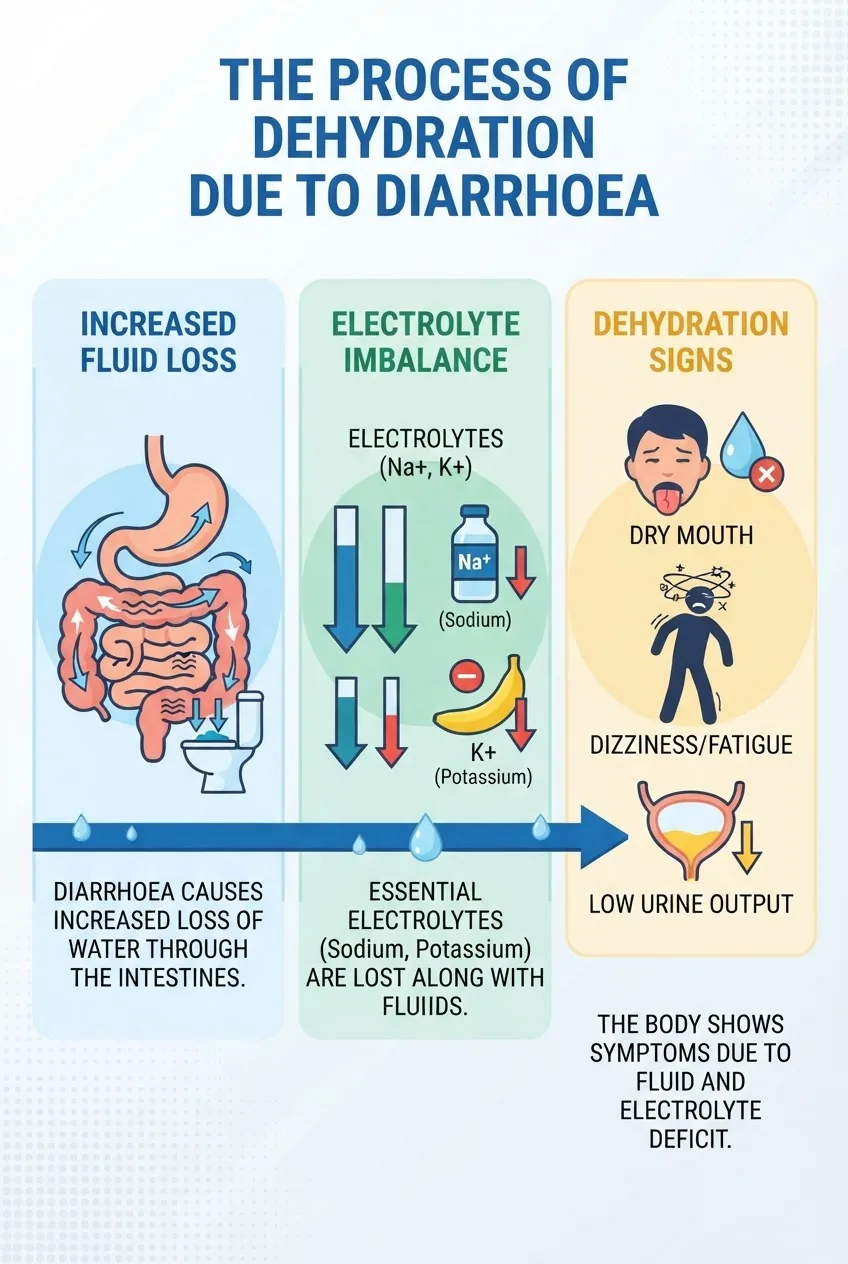
Physiology walkthrough (short): the small intestine and colon normally absorb water and electrolytes from intestinal contents. When an infection or toxin increases intestinal secretion or speeds transit time, absorption falls and more water remains in the stool. Frequent watery stools therefore mean a net loss of body water and salts.
Detailed steps:
- Increased intestinal secretion or reduced absorption: pathogens (e.g., enterotoxigenic E. coli) and some viruses trigger secretory pathways, pushing water and chloride into the gut lumen.
- Faster transit: inflammation or irritation speeds intestinal transit time so the gut has less time to reclaim water.
- Net fluid loss: repeated bowel movements remove water and dissolved electrolytes, reducing blood volume and extracellular fluid.
- Electrolyte imbalance: sodium and potassium losses affect nerve and muscle function; sodium loss is central to circulatory collapse in severe dehydration.
Quantitatively, stool fluid losses during acute watery diarrhoea can reach several liters per day in severe cases; combined with ongoing insensible losses (sweating, breathing), especially in hot climates, this quickly overwhelms normal intake.
Mechanism analogies: think of the gut as a sponge that normally wrings water back into the body; diarrhoea either squeezes out too much or prevents wringing, so the body runs low on both water and the salts that keep cells functioning.
Oral Rehydration Solutions (ORS): these are precisely balanced mixes of clean water, glucose (sugar), and salts (sodium, potassium, chloride) that use intestinal co-transport mechanisms to improve sodium—and therefore water—absorption even during diarrhoea.
ORS: a rehydration fluid containing glucose and electrolytes that enhances intestinal absorption; WHO-recommended ORS composition typically contains sodium, chloride, potassium, and glucose in specific amounts to correct dehydration.
WHO ORS formula (standard): per liter — 75 mmol sodium, 75 mmol chloride, 20 mmol potassium, 75 mmol glucose (total osmolarity ~245 mOsm/L). According to WHO guidelines, ORS reduces mortality from dehydration due to diarrhoea by restoring fluid and electrolyte balance.
Clinical note: Severe secretory diarrhoea (cholera, certain E. coli strains) causes very high-volume stool losses and requires rapid ORS or intravenous fluids for resuscitation; shock can develop within hours if untreated.
According to a 2024 industry report on dehydration risks, combining diarrhoea with heat exposure increases dehydration risk by up to 30% in susceptible populations due to concurrent sweating and higher insensible losses.
| Treatment option | How it works | When used |
|---|---|---|
| Oral Rehydration Solution (ORS) | Restores sodium/glucose co-transport to reabsorb water and electrolytes | Mild-moderate dehydration, ambulatory patients |
| Homemade electrolyte drink (short-term) | Provides fluids, sugar and some salt; variable electrolyte balance | Temporary use when commercial ORS unavailable |
| Intravenous fluids (IV) | Rapidly restores circulating volume and corrects severe electrolyte deficits | Severe dehydration, shock, inability to tolerate oral fluids |
Real-world example: A Houston toddler with 12 watery stools over 24 hours presented lethargic and with decreased urine; the caregiver gave measured ORS at home (WHO ORS sachet mixed correctly) and within 8 hours urine output improved and saliva returned—this illustrates early ORS success when used promptly under mild-moderate dehydration.
Transition: After seeing how diarrhoea causes dehydration, learn to recognize the early and severe signs so you can act quickly.
What are the signs and symptoms of diarrhoea-related dehydration?
Answer: Early signs include thirst, dry mouth, and decreased urine; severe dehydration shows dizziness, rapid heartbeat, sunken eyes, confusion, and low urine output or no urine. Children and elderly may show subtle or different symptoms.

- Thirst and dry mouth: the first subjective sign; lips may be chapped and tongue dry.
- Decreased urine output: fewer wet diapers in infants or dark, concentrated urine in adults; low urine output is a key measurable signal.
- Dizziness or lightheadedness: especially when standing (orthostatic symptoms) due to reduced blood volume.
- Fatigue and lethargy: from decreased perfusion and electrolyte imbalance.
- Sunken eyes and reduced skin turgor: skin may tent when pinched, eyes appear hollow in children and elderly.
- Rapid heartbeat and low blood pressure: tachycardia is an early cardiovascular compensatory sign; hypotension signals severe dehydration.
- Visible confusion or irritability: particularly in elderly and children—sign of moderate to severe dehydration affecting brain perfusion.
- Persistent vomiting or inability to keep fluids down: prevents oral rehydration and raises risk of needing IV fluids.
- Reduced tears and lack of saliva: notable in infants and young children.
- Cold, clammy skin or mottling: indicates poor circulation in severe cases.
Special notes for demographics:
- Children: fewer wet diapers, sunken fontanelle (infants), poor feeding, lethargy or high irritability. See effects of dehydration for systemic complications.
- Elderly: may present with confusion, falls, or reduced urine output without overt thirst.
- Immunocompromised: may deteriorate faster and show muted fever response.
Link to related symptom detail: dehydration and stomach pain explains abdominal discomfort that can accompany dehydration.
Quantified warning signs that suggest medical attention: little or no urine for 8–12 hours, rapid breathing and heart rate (>120 bpm in adults), persistent vomiting or bloody stools, severe abdominal pain, high fever (>39°C/102°F). According to a 2024 industry report, delays in seeking care for these signs increase risk of hospitalization.
Transition: Knowing symptoms guides who is most at risk — read the next section to see which groups need special attention.
Who is most at risk for dehydration from diarrhoea?
Answer: Infants, young children, older adults, and immunocompromised people are at highest risk because they have smaller fluid reserves, altered thirst mechanisms, or impaired immune responses that worsen fluid loss and recovery.
Vulnerable groups and why:
- Infants and young children: small body weight means proportionally larger fluid losses; they can dehydrate quickly and may be unable to communicate thirst. See dehydration in babies for baby-specific signs and care steps.
- Elderly adults: reduced thirst sensation, possible chronic illnesses (heart, kidney), and medications (diuretics) increase susceptibility.
- Immunocompromised people: slower recovery from infections and higher risk of severe diarrhoea.
- People with chronic intestinal conditions: IBD or short-bowel syndrome reduce absorptive capacity.
- Individuals in hot climates or doing heavy labor: concurrent sweating significantly increases total fluid losses.
Risk factors to watch for:
- High stool frequency (multiple watery stools per hour)
- Persistent vomiting preventing oral intake
- Inadequate access to clean water or ORS
- Use of certain medications (e.g., laxatives, some antibiotics)
- Existing cardiac, renal, or endocrine disease
Evidence: Peer-reviewed studies show higher hospitalization rates for dehydration among the elderly and infants; public health surveillance cited by the NIDDK emphasizes prompt fluid replacement in these groups.
Transition: With risk groups identified, the practical question becomes how to prevent dehydration when diarrhoea occurs—read on for step-by-step prevention strategies tailored to Texas climate and home care.
How can I prevent dehydration during diarrhoea?
Answer: Prevent dehydration by starting Oral Rehydration Solutions (ORS) at the first watery stool, replacing ongoing losses frequently, monitoring urine/symptoms, maintaining simple diet adjustments, and avoiding drinks that worsen fluid-electrolyte balance.

Step-by-step how-to prevention list:
-
Begin ORS immediately for ongoing losses:
Use a commercial ORS packet or prepare a safe homemade solution if necessary (see recipe below). Give small, frequent sips—children often tolerate sips better than large volumes. ORS addresses both fluid and electrolyte loss specifically caused by diarrhoea.
-
Measure and replace ongoing losses:
For mild diarrhoea, replace each loose stool with 50–100 mL in infants, 150–250 mL in older children, and 250–500 mL in adults, adjusting for activity and climate. Monitor urine frequency and color (use a urine color chart as a simple home tool).
Home tool: urine color charts help track hydration: pale straw indicates good hydration; dark amber suggests dehydration.
-
Prefer ORS and limited solids initially:
ORS should be the primary fluid for rehydration; continue light, bland foods (BRAT-style: bananas, rice, applesauce, toast) once vomiting subsides. Role of fluids vs. solids in recovery: fluids replete circulating volume while soft, easily digested solids provide energy and help normalize stools once absorption improves.
-
Avoid certain beverages:
Skip sugary sodas, undiluted fruit juices, caffeinated drinks, and alcohol—these can worsen diarrhoea or increase osmotic load. For limits on intake see safe water intake .
-
Use proven homemade ORS only when needed:
WHO-style homemade solution (when commercial ORS unavailable): dissolve 6 level teaspoons sugar + 1/2 level teaspoon salt in 1 liter of clean water. This should be a short-term measure; commercial WHO ORS packets or pre-formulated solutions are preferred because of consistent electrolytes.
-
Maintain hygiene to prevent ongoing exposure:
Frequent handwashing with soap, safe food handling, and using clean water sources prevents reinfection—especially effective in preventing infectious diarrhoea at home or during travel.
-
Adjust for climate and activity:
In hot Texas conditions, increase replacement volumes because sweating adds to fluid loss; prioritize shaded rest and cooler environments to reduce additional losses.
-
Monitor vulnerable individuals closely:
Infants, elderly, and immunocompromised persons need frequent checks of urine output, mental status, and skin turgor; contact a healthcare provider early if concerns arise.
-
Use adjunctive measures judiciously:
Antidiarrheal agents (e.g., loperamide) are sometimes used in adults with non-bloody diarrhoea to reduce stool frequency, but avoid in suspected invasive bacterial infections or in children without medical advice. Antibiotics are reserved for specific bacterial causes identified by clinical judgment or lab testing.
-
Plan for access to medical care:
Keep ORS packets at home and know local urgent care and ER locations, particularly in rural Texas areas where access issues can delay treatment.
Suggested drinks and foods that support hydration during diarrhoea:
- WHO ORS, Pedialyte-style electrolyte solutions (commercial)
- Clear broths (salted) for added sodium and some calories
- Weak tea or diluted juice in small amounts if ORS unavailable
- Plain rice, boiled potatoes, bananas for gentle solids
For more in-depth hydration strategies, see our pillar resource: 5 tips to stay hydrated and healthy.
Also consider beverage guidance for illness: best hydrating beverages and selection of water: choosing the best water can help you pick appropriate fluids during recovery.
Safe limits: Don’t overconsume plain water to the exclusion of electrolytes—see resources on safe water intake for details on balancing fluids and electrolytes safely.
Practical Texas-focused prevention tips:
- Store ORS packets in a cool, dry place and carry sachets when traveling to remote areas of Texas.
- During summer heat waves, prioritize early rehydration and avoid leaving vulnerable people in hot cars or outdoor events without shade and fluids.
- If attending outdoor gatherings or barbecues, insist on proper food storage and reheating to lower food-poisoning risk.
Transition: If prevention fails or signs worsen, know the treatment options and when to seek medical care.
What treatment options exist and when should I see a doctor?
Answer: Treatment ranges from home oral rehydration for mild cases to intravenous fluids and hospitalization for severe dehydration, shock, or inability to tolerate oral intake; seek medical care for persistent high stool volumes, blood in stool, high fever, or signs of severe dehydration.
Initial home treatment:
- Start ORS and continue small amounts frequently.
- Monitor urine output, mental status, and stool frequency.
- Avoid anti-motility drugs in suspected invasive infections or children without medical advice.
When to see a doctor or urgent care:
- Infants with fewer than three wet diapers in 24 hours or lethargy
- Adults or children with fainting, rapid heart rate, difficulty breathing, persistent vomiting, bloody stools, or severe abdominal pain
- Anyone with underlying medical conditions (heart, kidney disease) or immunosuppression who develops diarrhoea
Emergency treatment in medical settings:
- Intravenous (IV) fluids: used for moderate to severe dehydration to rapidly restore circulating volume and correct electrolyte imbalances.
- Laboratory testing and targeted therapy: stool cultures, multiplex PCR panels, and blood tests guide antibiotic use, electrolyte correction, and other interventions.
- Hospitalization: indicated for shock, severe electrolyte disturbances (e.g., very low potassium), or comorbidities.
Authoritative guidance: The CDC provides clinical guidance on diarrhoeal disease management and outbreak response; consult CDC resources for public-health considerations and outbreak control: CDC—Diarrhea Information.
World Health Organization recommendations on ORS and case management are foundational for community management of dehydration: WHO—Diarrhoeal Disease and ORS Guidance.
National Institute resources on digestive disorders help with differential diagnosis and longer-term management: NIDDK—Diarrhea Overview.
Emergency warning signs — seek immediate care: rapid heartbeat, fainting, chest pain, severe confusion, very low urine output or no urination for 8+ hours, persistent vomiting, high fever, bloody stool.
Clinical nuance: In suspected cholera or very high-volume secretory diarrhoea, immediate aggressive fluid replacement (ORT/IV) is life-saving; in resource-limited settings, community ORS distribution has proven to dramatically reduce mortality.
Transition: In hot states like Texas, environmental factors change prevention and treatment priorities — learn localized measures next.
How should I maintain hydration in a hot climate like Texas?
Answer: In Texas heat, maintain hydration by increasing replacement volumes to account for sweat losses, scheduling rehydration breaks, prioritizing ORS during diarrhoea, and reducing heat exposure until recovery.
Climate impact: Heat and high humidity increase insensible water loss and sweating, compounding diarrhoea-related fluid loss; outdoor work or exercise exacerbates this. According to a 2024 industry report, extreme heat episodes correlate with higher dehydration-related ER visits in southern states.
Practical Texas-focused tips:
- Plan rehydration: carry ORS packets and water when outdoors, especially during summer months.
- Cool environment: rest in air-conditioned or shaded areas to lower sweat-driven fluid loss.
- Timing activity: avoid heavy activity during peak heat (midday) if experiencing diarrhoea.
- Monitor more often: check urine color and frequency multiple times daily; dark urine signals need for immediate rehydration.
- Account for additional losses: add 10–20% more fluid replacement on hot days beyond the usual diarrhoea replacement volumes.
For guidance on daily fluid needs relevant to heat exposure and baseline hydration planning, see our resource on hydration requirements which explains baseline targets and adjustments for climate.
Food and beverage notes for hot climates:
- Consume electrolyte-containing fluids rather than plain water alone when diarrhoea is active.
- Include sodium-containing broths to replace salt lost in sweat and stool.
- Avoid alcohol and excessive caffeine which can promote diuresis and worsen dehydration.
Access and preparedness:
- Keep a small first-aid kit with ORS packets at work, in vehicles, and at home.
- Know nearby clinics or urgent care centers, particularly in rural Texas where transport delays increase risk.
Transition: A final quick summary distills practical takeaways and next steps.
Summary and key takeaways
- Diarrhoea causes dehydration by rapid loss of water and electrolytes through the intestines; start rehydration early.
- Recognize early signs—thirst, dry mouth, reduced urine—and severe warnings—dizziness, confusion, very low urine output.
- Use WHO-recommended ORS to restore fluids and electrolytes; homemade ORS (6 tsp sugar + 1/2 tsp salt per liter) is a temporary backup.
- Infants, elderly, and immunocompromised people are highest risk and need early medical attention.
- In hot climates like Texas, add extra replacement for sweating and avoid heat exposure during recovery.
- Seek immediate care for persistent vomiting, bloody stools, fainting, very rapid heartbeat, or signs of shock.
- For comprehensive hydration strategies, consult the pillar guide: 5 tips to stay hydrated and healthy.
Final note: Persistent or worsening symptoms require professional evaluation; individual needs vary by age, health status, and environment. If you suspect severe dehydration, go to the nearest emergency department or call emergency services.
Call to action: If you’re in Texas and experiencing persistent diarrhoea with reduced urine, start ORS immediately and contact a local healthcare provider or urgent care for evaluation.