

Yes — dehydration can cause stomach pain directly and indirectly by reducing blood volume and electrolytes, impairing gut motility, and triggering cramps, nausea or diarrhea; identify timing, urine color, and accompanying dizziness or fatigue to distinguish dehydration-related abdominal pain from other causes.
Term: Dehydration — a state where fluid loss exceeds intake, impairing normal bodily functions.
This explainer cites authoritative sources for verification, including the CDC on dehydration prevention and the Mayo Clinic on symptoms and causes; detailed clinical links and recent reviews are referenced inside relevant sections.
Can Dehydration Cause Stomach Pain?
Yes. Dehydration can directly produce abdominal pain and cramping through reduced blood volume (hypovolemia) and electrolyte imbalance that impair gastrointestinal function, and indirectly by provoking nausea, vomiting and altered bowel movements.
Term: Hypovolemia — reduced circulating blood volume causing decreased tissue perfusion.
Term: Electrolyte imbalance — abnormal levels of salts (sodium, potassium, chloride) needed for muscle and nerve function.
Mechanism (concise medical explanation): hypovolemia from fluid loss lowers splanchnic (intestinal) perfusion and can lead to ischemic-type abdominal pain in severe cases; milder dehydration alters enteric nervous system signaling and smooth-muscle contractility via electrolyte shifts (notably low sodium and potassium), producing cramps and dysmotility.
Clinical evidence: systematic reviews and clinical case series in recent years have linked acute volume depletion to gastrointestinal symptoms such as abdominal pain, nausea, and constipation; for generalized guidance see the Mayo Clinic and public health guidance from the CDC.

Note: stomach pain has many causes—gastroenteritis, ulcers, gallbladder disease, pancreatitis and medication effects are common—so use dehydration clues (thirst, low urine output, lightheadedness) to evaluate whether low fluid status is the likely contributor, and consult a clinician for persistent or severe pain.
For a technical primer on hydration concepts referenced here see the hydration definition and meaning.
Transition: understanding the mechanisms leads into specific symptoms you can expect when dehydration affects the gut and abdomen.
Common Symptoms of Dehydration and Their Connection to Stomach Issues
Dehydration produces a predictable cluster of signs—thirst, reduced urination, dry mouth—that often co-occur with stomach symptoms such as cramps, nausea or constipation because fluids and electrolytes are essential for normal gut motility and blood flow.

- Thirst and dry mouth — Thirst is the earliest symptom; dry mucous membranes can accompany difficulty swallowing and a sensation of bloating that feels like abdominal fullness.
- Decreased urine output and dark urine — Low urine volume and concentrated (dark) urine indicate reduced circulating volume; hypovolemia can reduce intestinal perfusion and cause cramp-like pain.
- Abdominal cramps and pain — Electrolyte shifts (low potassium or sodium) alter smooth-muscle contraction in the intestines, producing cramps and intermittent pain.
- Nausea and vomiting — Fluid and electrolyte losses disrupt gastric motility and chemoreceptor triggers, which often present as nausea and sometimes vomiting.
- Constipation — Reduced intraluminal fluid leads to harder stools and straining, aggravating lower abdominal discomfort.
- Diarrhea — In some infections or inflammatory states, diarrhea causes dehydration, and fluid loss then perpetuates further abdominal pain and cramping.
- Dizziness and lightheadedness — Orthostatic symptoms reflect hypovolemia and commonly coexist with abdominal pain when perfusion is low.
- Fatigue and weakness — Reduced plasma volume and electrolyte imbalance produce muscle weakness, including abdominal wall muscles that can increase perception of pain.
- Low-grade fever or feeling hot — Fever may accompany the underlying illness that caused dehydration (e.g., infection) and can intensify fluid loss and abdominal symptoms.
- Poor skin turgor and sunken eyes — Visible signs of dehydration that, when present with abdominal pain, raise suspicion that volume depletion is contributing to gut dysfunction.
Signs specific to demographics:
- Women: hormonal factors and oral contraceptives can subtly alter fluid balance; pregnant women have higher fluid needs and may experience worse nausea when dehydrated. For a demographic-focused prevention guide see Essential Guide with 5 Tips to Stay Hydrated and Healthy.
- Elderly: blunted thirst sensation and polypharmacy increase chronic dehydration risk; abdominal pain in the elderly with low urine output warrants urgent evaluation.
- Chronic dehydration: chronic low-grade fluid deficit may manifest as recurrent abdominal discomfort, constipation, and nonspecific gastrointestinal upset.
For an expanded symptom list beyond stomach-specific issues see the deep dive on 16 alarming side effects of not drinking enough water.
Transition: now we’ll look at three symptoms most often linked with dehydration and how the mechanisms produce them.
How Dehydration Leads to Related Symptoms: Nausea, Diarrhea, and Fever
Dehydration can both cause and be caused by nausea, diarrhea and fever; each symptom interacts with fluid balance through distinct physiological pathways, making clinical assessment key to identifying the primary driver.
Can dehydration cause nausea?
Yes — dehydration commonly triggers nausea by slowing gastric emptying and altering gut sensory signaling due to electrolyte imbalance, especially low potassium and sodium.
Physiology: electrolyte imbalance affects enteric neurons and smooth-muscle cells, impairing coordinated gastric and intestinal contractions; the chemoreceptor trigger zone in the brainstem also responds to metabolic disturbances from dehydration, producing the sensation of nausea.
Evidence: clinical case reports and physiologic studies show nausea improves after correction of fluid and electrolyte deficits; see review-level discussions in gastroenterology literature (recent systematic reviews within the last five years describe these links).
Can dehydration cause diarrhea?
Indirectly — dehydration itself does not directly produce secretory diarrhea, but it can worsen diarrheal illnesses and impair intestinal absorption, prolonging diarrhea and abdominal cramping.
Mechanism: during infectious or inflammatory diarrhea, fluid losses exceed intake and cause hypovolemia; reduced perfusion and electrolyte loss then worsen enterocyte function and motility, creating a feedback loop of continued diarrhea and pain.
Practical note: if diarrhea is the cause of dehydration, oral rehydration with balanced electrolytes is preferred over plain water to interrupt the cycle; see our diarrhoea and dehydration causes and prevention for prevention and treatment tips.
Does dehydration cause fever?
Dehydration alone does not cause an infectious fever, but it can produce a low-grade rise in body temperature via impaired heat dissipation, and fever often coexists with dehydration when infection is the underlying cause.
Clinical interpretation: a documented fever suggests an infectious or inflammatory driver that may have caused vomiting or diarrhea leading to dehydration; conversely, heat-related dehydrative states can produce heat illness with elevated temperature and abdominal symptoms.
Reference point: public health guidance on heat-illness and dehydration from the CDC outlines how heat stress, dehydration, and fever-like symptoms interact.
Transition: beyond gut symptoms, dehydration causes systemic effects that often overlap with abdominal complaints—read on for the most common extra-gastrointestinal signs.
Additional Physical Effects of Dehydration: Dizziness, Fatigue, and Shortness of Breath
Dehydration often causes dizziness, fatigue and sometimes shortness of breath because reduced blood volume and electrolyte disturbances impair oxygen delivery and autonomic stability.
Dizziness and lightheadedness: hypovolemia lowers cerebral perfusion, producing postural lightheadedness and “dizzy dehydrated” episodes; orthostatic hypotension is common. See our linked guide on blood pressure effects for more detail: does dehydration cause low blood pressure.
Fatigue: decreased circulating volume and disrupted electrolyte gradients impair skeletal and cardiac muscle performance, creating generalized tiredness; clinicians distinguish acute dehydration fatigue (rapid onset) versus chronic dehydration symptoms (persistent low energy and malaise).
Shortness of breath: usually secondary to cardiovascular strain from hypovolemia or metabolic acidosis in severe dehydration; significant dyspnea warrants urgent assessment because it may reflect cardiac or pulmonary pathology rather than simple fluid deficit.
Diagnostic tip: measure orthostatic vitals, check urine color, and assess for concurrent abdominal pain—if dizziness and abdominal pain present together after heat exposure or vomiting/diarrhea, dehydration is a likely unifying diagnosis.
Transition: signs vary by age and sex—next we compare how to tell if different people are dehydrated.
How to Tell If You Are Dehydrated: Signs in Different Demographics
You can tell if you are dehydrated by checking specific signs that differ between general adults, women and the elderly: thirst, urine output, skin turgor, cognitive changes and demographic-specific cues like blunted thirst in older adults or pregnancy-related nausea in women.
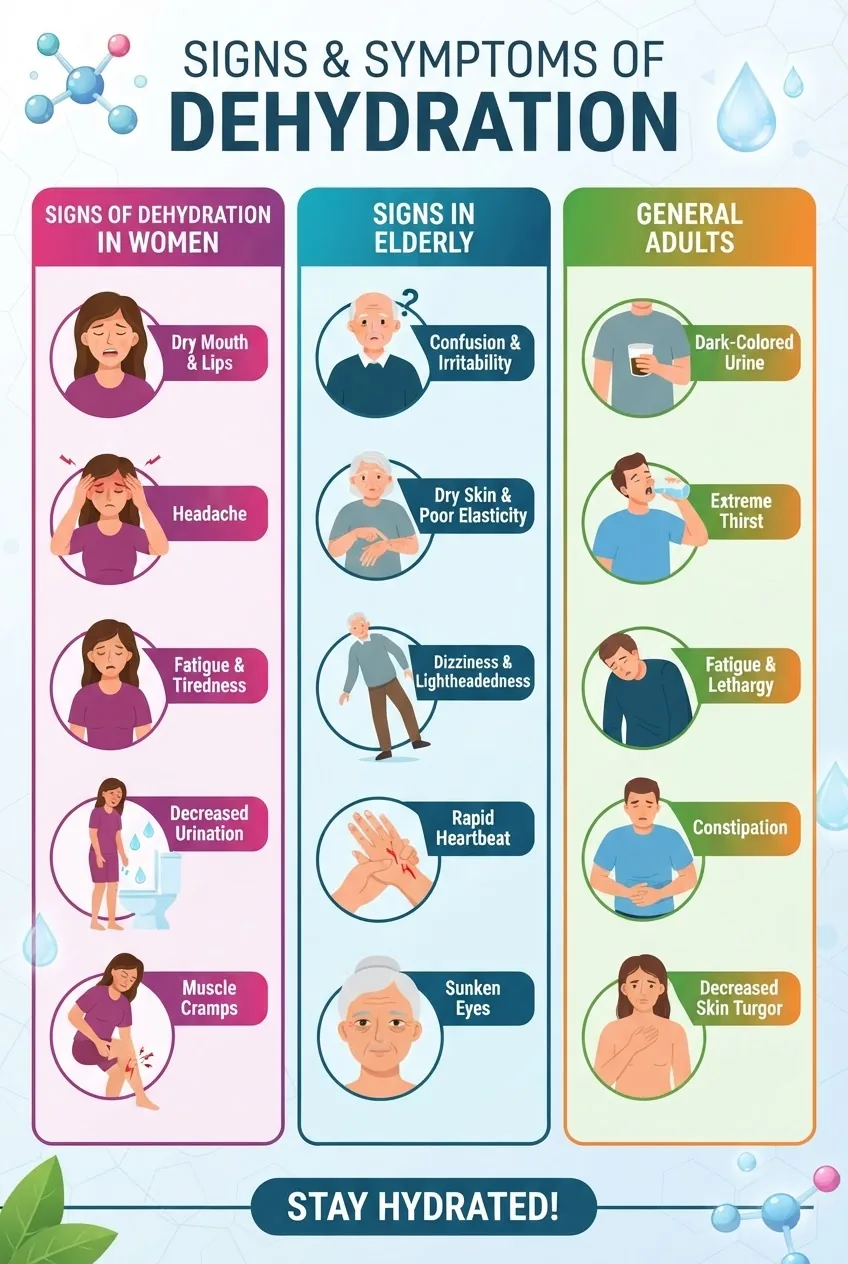
| Demographic | Top Signs |
|---|---|
| General Adults | Thirst, dark urine, dizziness, abdominal cramps, constipation |
| Women | Nausea with dehydration, menstrual/hormone-related fluid swings, increased fatigue, possible urinary frequency changes |
| Elderly | Blunted thirst, confusion, reduced skin turgor, orthostatic dizziness, constipation-related abdominal pain |
Checklist to self-assess dehydration severity:
- No dehydration: normal urine color, no dizziness, normal oral intake.
- Mild–moderate: thirst, decreased urine, dry mouth, mild abdominal cramps; usually reversible with oral fluids.
- Severe: very low urine or anuria, persistent lightheadedness, severe abdominal pain, confusion or fainting—seek urgent care.
For practical prevention tips tailored to daily life and occupation see the pillar Essential Guide with 5 Tips to Stay Hydrated and Healthy.
Transition: dehydration is often secondary to disease—below are the most important illnesses that produce dehydration and worsen stomach pain.
Diseases That Cause Dehydration and Worsen Stomach Pain
Many diseases cause dehydration and thereby worsen abdominal pain—including infectious gastroenteritis, uncontrolled diabetes (leading to osmotic diuresis), and systemic infections that provoke fever, vomiting or diarrhea.
Common disease examples:
- Gastroenteritis (viral/bacterial): rapid fluid losses from diarrhea and vomiting directly cause dehydration and abdominal cramping; treatment centers on fluid and electrolyte replacement.
- Diabetes (hyperglycemia/diabetic ketoacidosis): high blood glucose increases urine output (osmotic diuresis), causing severe dehydration and abdominal pain; emergency care may be required.
- Urinary tract infections/pyelonephritis: fever and decreased intake can lead to volume depletion and secondary abdominal/flank pain.
- Heat-related illness: excessive sweating without replacement causes hypovolemia, cramps and diffuse abdominal discomfort; common in hot Texas conditions.
- Chronic conditions (e.g., inflammatory bowel disease): chronic diarrhea or malabsorption predisposes to chronic dehydration symptoms and recurrent abdominal pain.
Case reference: published case studies have documented dehydration-related ileus (intestinal paralysis) and abdominal pain in patients with severe volume depletion; for technical readers, clinical reports in gastroenterology and internal medicine journals (recent years) provide mechanism-level discussion.
Warning: if a disease is suspected to be causing dehydration—especially diabetes, infection, or heat stroke—seek medical evaluation quickly because these conditions may require intravenous fluids and targeted therapy.
Transition: when dehydration is identified, prompt, appropriate rehydration is the key—here’s what to drink and how long recovery takes.
Recovery from Dehydration: What to Drink and How Long It Takes
Recovery depends on severity: mild dehydration often improves within hours with oral rehydration using fluids containing electrolytes, while moderate-to-severe dehydration may require IV fluids and 24–72+ hours to fully normalize depending on the cause.
What to drink (practical recommendations):
- Oral rehydration solutions (ORS) with balanced sodium and glucose — optimal first-line for diarrhea-related dehydration.
- Electrolyte drinks or sports beverages — acceptable for exercise-related losses; choose low-sugar options.
- Plain water — useful for mild dehydration but not ideal alone when electrolytes are depleted.
- Clear broths and herbal teas — provide sodium and volume with gentle gastric tolerance.
- Avoid alcohol and high-caffeine beverages which can worsen fluid loss.
Comparison table: common rehydration options
| Drink | When to Use | Pros/Cons |
|---|---|---|
| Oral Rehydration Solution (ORS) | Diarrhea, vomiting, moderate dehydration | Best electrolyte balance; clinically recommended |
| Electrolyte sports drink | Exercise-related losses | Convenient; check sugar content |
| Plain water | Mild dehydration, maintenance | Hydrates volume; does not replace electrolytes |
How long recovery takes:
- Mild dehydration: hours with adequate oral fluids and rest.
- Moderate dehydration: 24–48 hours may be required to restore full electrolyte and volume balance with ORS and monitoring.
- Severe dehydration: may need intravenous fluids and hospitalization; recovery timeline depends on underlying disease and response to treatment (often 48–72+ hours).
For deeper guidance on specific fluid choices and daily intake targets, consult the hydration requirements guide and the best hydrating beverages for wellness.
Practical home-management walkthrough (Texas summer example):
- Situation: a 35-year-old in Austin works outdoors, experiences lightheadedness, dark urine and cramping abdominal pain after 6 hours in heat.
- Immediate steps: move to shade, sip ORS or an electrolyte beverage, loosen clothing, rest supine with legs elevated while monitoring vitals.
- Monitor: improvement in urine color and heart rate within 1–2 hours indicates likely mild dehydration recovery; persistent severe pain, persistent vomiting, or confusion requires emergency care.
For more beverage-specific recommendations see the best hydrating beverages for wellness and the hydration requirements guide.
Final summary: dehydration is a common and reversible contributor to stomach pain when identified early; treat with appropriate fluids and seek care if severe or persistent.
Disclaimer: abdominal pain has many causes; dehydration is one potential factor. Seek immediate medical attention for severe pain, high fever, fainting, confusion, uncontrolled vomiting, or if you suspect diabetic complications.
Call to action: If you live or work in hot conditions (e.g., Texas summers), adopt preventive measures from our pillar guide and contact a healthcare provider for persistent stomach pain or signs of severe dehydration.