
Hydration definition: Hydration is the physiological process of maintaining adequate water and electrolyte content inside the body’s compartments so cells can perform normal metabolic, transport and structural functions; it also describes the lifestyle behaviors and environmental practices that support that internal balance.
What Is Hydration? Definition and Basic Meaning
Answer: Hydration is the state in which the body has sufficient water and dissolved electrolytes to support normal cellular function, blood volume, temperature regulation and waste removal.
Hydration: the process by which water and dissolved substances are maintained in the body’s tissues and compartments to support physiology.
At its simplest, the hydration definition includes two linked ideas: (1) the physical movement of water from the mouth and gut into the bloodstream and cells (water absorption), and (2) the resulting condition of fluid balance—how much water the body holds relative to needs (body water content). Hydration is both a momentary state (are you hydrated right now?) and a habit (daily behaviors that promote balance).
Water absorption occurs primarily in the small intestine, where ingested fluids and water-rich foods pass through the intestinal lining into capillaries. From there, water contributes to plasma volume (the fluid portion of blood), interstitial fluid (between cells), and intracellular fluid (inside cells). Optimal hydration means these compartments are adequately supplied for transport of nutrients, removal of waste and enabling chemical reactions.
Hydration is not only about plain water: electrolytes—minerals such as sodium, potassium and chloride—help retain water where it is needed and permit nerve and muscle function. When people ask “what is hydration” in everyday terms, they often mean whether they feel alert, whether their skin looks refreshed, or if their urine is a pale color—simple signals of a balanced state.
For a deeper biological background on why water matters at the organism level, see why water is essential.
How Does Hydration Work in the Body? The Science Behind Hydration
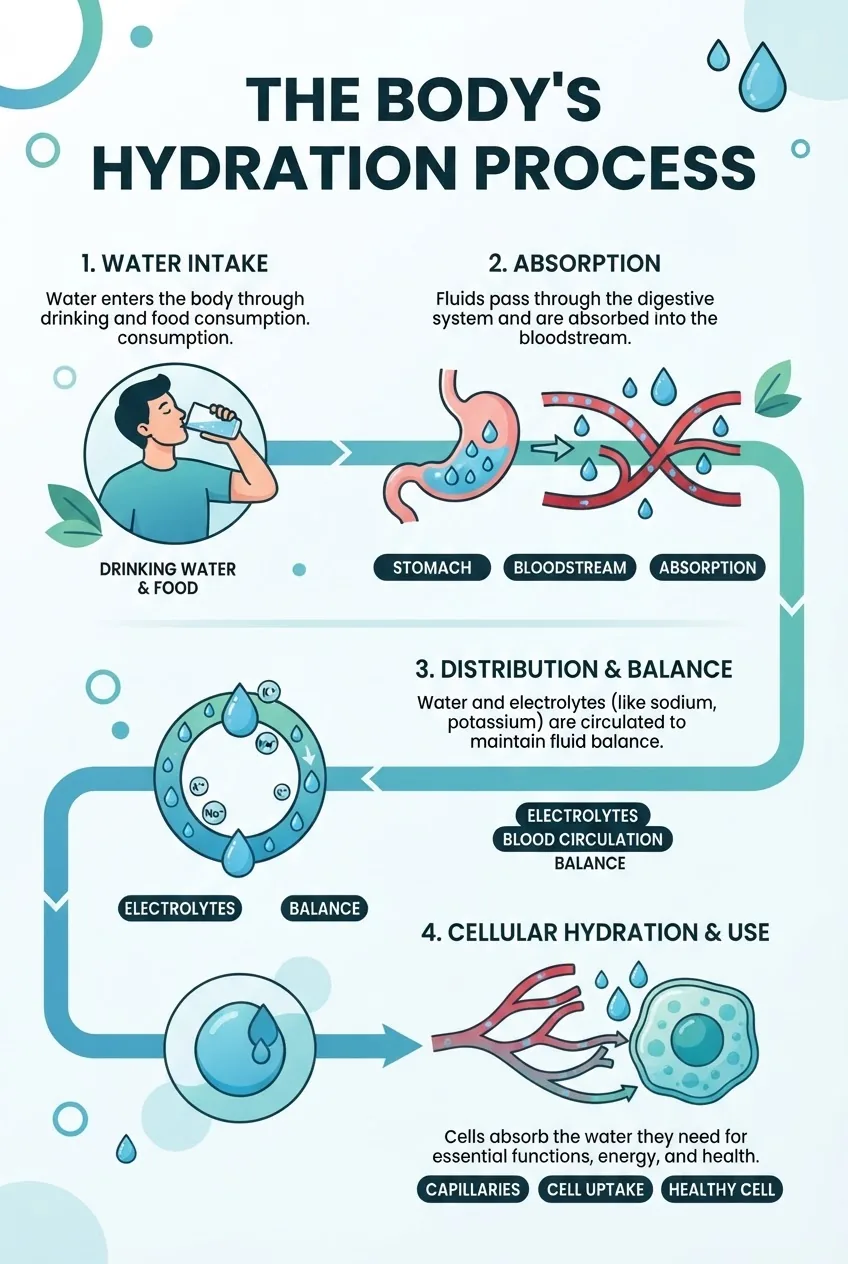
Answer: Hydration works through coordinated processes: intake, absorption, distribution in the bloodstream, electrolyte-driven regulation of fluid balance, and kidney-mediated excretion—maintaining water homeostasis for cells and organs.
Electrolytes: charged minerals (e.g., sodium, potassium, chloride) that move water across membranes and support electrical signaling in nerves and muscles.
Water enters the body through liquids and water-containing foods. In the gut, water absorption is driven by osmotic gradients and active transport of solutes such as sodium; water follows solutes into the bloodstream. Plasma volume increases, which supports circulation and stable blood pressure. Cells take up water when their interior solute concentration is higher than the outside fluid (osmotic influx), producing cellular hydration vital for enzyme activity and protein structure.
The kidneys are central regulators: they filter blood plasma, reabsorb needed water and electrolytes, and excrete excess as urine. Renal mechanisms rely on hormones—antidiuretic hormone (ADH, also called vasopressin) increases water reabsorption when blood osmolality rises; aldosterone promotes sodium (and thus water) retention. These homeostatic loops maintain plasma volume and blood osmolarity within narrow limits despite varying intake or losses.
Plasma volume and osmolarity shifts provide immediate signals to the brain: osmoreceptors detect increased solute concentration and trigger thirst, while baroreceptors sense blood volume changes. Thirst motivates fluid intake; hormonal changes adjust renal handling. This physiological triad—thirst, hormonal control, and renal filtration—keeps hydration in balance.
Illustrative example: after a sweaty outdoor workout, sodium loss through sweat raises blood osmolarity; increased ADH reduces urine output and prompts thirst, guiding the person to drink fluids and restore plasma volume. Within 30–90 minutes, absorbed fluid expands plasma and often restores cellular hydration, though full cellular rehydration for muscle recovery can take several hours depending on electrolyte replacement.
Renal filtration rates and sweat rates vary by age, fitness, and environment. According to a 2023 government guideline from the CDC (public health guidance), monitoring urine color and frequency are practical ways to gauge hydration between formal clinical measures.
| Process | What Happens | Timeframe |
|---|---|---|
| Intake & Absorption | Fluids move from gut to bloodstream via osmotic and active transport | Minutes to 1 hour |
| Distribution | Plasma volume supports circulation; water shifts between compartments | Minutes to hours |
| Regulation | Kidneys adjust reabsorption; ADH/aldosterone modulate balance | Continuous |
Hydration at the cellular level supports biochemical reactions and maintains cell turgor (volume). Dehydrated cells can shrink, impairing transporters and signaling molecules. For cognitive and physical performance, even 1–2% body mass loss from water can reduce attention and endurance; according to a 2019 peer-reviewed physiological review (academic source), mild dehydration impairs mental and physical tasks.
Kidney regulation nuances: when sodium is low relative to water (hyponatremia), cells may swell; when sodium is high, cells may shrink. Both extremes disrupt function. That’s why electrolytes are part of the hydration equation for clinical and athletic contexts.
How Is Hydration Different from Dehydration?
Answer: Hydration is a state of adequate water and electrolyte balance; dehydration is the process and state resulting from net fluid loss that disrupts that balance and impairs cellular and organ function.
Dehydration: a condition where water (and often electrolytes) are lost faster than replaced, causing reduced plasma volume, increased blood osmolarity and impaired physiologic function.
Direct comparison: dehydration typically follows fluid losses from sweat, urine, diarrhea, vomiting or insufficient intake. The body moves from a hydrated state to a dehydrated one when losses exceed replacement. Severity ranges from mild (thirst, dry mouth) to severe (confusion, low blood pressure, organ dysfunction).
- Signs of good hydration: regular, pale straw-colored urine; consistent energy; normal skin turgor; stable blood pressure during position changes.
- Signs of poor hydration (dehydration): dark urine, decreased urine frequency, dry mucous membranes, headache, dizziness, concentrated thirst, reduced performance.
For readers wanting clinical consequences, see related side effects of dehydration.
Some dehydration symptoms overlap with other conditions—if you experience acute abdominal pain alongside dehydration signs, consult the specific symptom guide: symptoms like stomach pain.
| Feature | Hydration | Dehydration |
|---|---|---|
| Plasma Volume | Normal or optimal | Reduced |
| Cell Size | Normal | Shrunken (often) |
| Symptoms | Alertness, steady performance | Fatigue, headache, confusion in severe cases |
What Does Hydration Mean for Health and Well-Being?
Answer: Hydration meaning for health is that adequate water and electrolyte balance support physical performance, cognitive function, organ health (kidneys, skin), digestion and overall wellness; it’s a foundational daily determinant of health status.
Body water balance: the relative distribution of water among intracellular, interstitial and plasma compartments that supports healthy organ and cellular function.
Practical meaning: when you maintain hydration habits—consistent fluid intake, attention to electrolyte losses, and environmental adjustments—you preserve energy, mental clarity and recovery capacity. For example, people who wake feeling alert after adequate overnight hydration experience fewer mid-morning concentration lapses; conversely, mild dehydration often presents as sluggishness or decreased focus within hours.
Hydration supports organ systems as follows:
- Kidneys: filtration and waste removal rely on plasma volume; low volume concentrates urine and increases risk of kidney stones over time.
- Skin: surface hydration affects elasticity and barrier function; adequate water helps skin appear less creased and supports wound healing.
- Brain and cognition: hydration affects neurotransmitter function and blood flow—mild dehydration reduces attention and working memory in controlled studies (peer-reviewed research).
Quick walkthrough of a hydration signal: urine color is a simple visual cue. Pale straw color usually indicates adequate hydration; dark yellow may indicate concentration and relative dehydration. For a full visual guide, consult hydration color indicators.
Health organizations frame hydration as both a prevention and performance concern. For clinical standards and definitions, see the CDC and WHO resources; for intake frameworks consult the National Academies of Sciences, Engineering, and Medicine.
Example: A construction worker in central Texas who replaces fluids during shifts with balanced electrolyte drinks maintains steady productivity and avoids midday dizziness; this real-world case underscores hydration’s role in workplace safety and well-being (case context based on occupational heat-stress guidance).
Performance impact: sports physiology studies show that dehydration equivalent to 2% body weight can reduce endurance and cognitive processing speed; for mental tasks, simple attention measures decline with modest fluid deficits (peer-reviewed evidence).
Caveat: hydration needs vary by individual factors (age, body size, health, medications) and activity; one-size-fits-all prescriptive amounts are less useful than responsive behaviors (thirst responsiveness, urine checks) anchored by clinical guidance when needed.
For actionable daily strategies, read our Essential Guide with 5 Tips to Stay Hydrated and Healthy.
What Are Common Misconceptions About Hydration?
Answer: Common myths include that plain water is always best regardless of electrolytes, caffeine always dehydrates, and that more water is always better; each needs clarification to match physiology and context.
- Myth: “Caffeinated drinks cause net dehydration.”
Fact: Moderate amounts of caffeinated coffee or tea count toward total fluid intake and do not reliably cause dehydration in regular consumers; see studies summarized in public health guidance and our drinks guide: best hydrating beverages. - Myth: “All water is the same for hydration.”
Fact: Water mineral content varies; for most people tap water is a suitable hydrating fluid, but some contexts (athletics, electrolyte loss) may benefit from specific mineral balances; see our analysis of best water for hydration. - Myth: “You can’t drink too much water.”
Fact: Excess water without appropriate electrolytes can cause hyponatremia (low blood sodium) in rare cases; read the careful discussion of overhydration risks. - Myth: “Water is the only hydration source.”
Fact: Foods (fruits, vegetables) and other beverages contribute to daily water intake; quality matters when electrolyte replacement is required.
If you want beverage-specific guidance beyond myths, consult our best hydrating beverages and water-quality article best water for hydration.
How Do Environment and Lifestyle in Texas Affect Hydration Needs?
Answer: Texas’ hot and often arid climate increases sweat losses and fluid needs—making heat exposure, physical activity, and dry indoor air key drivers of higher hydration demands compared with temperate conditions.
Heat exposure: environmental factor where increased ambient temperature raises sweat rate and fluid loss; in arid zones sweat evaporates faster and can carry more electrolyte loss.

Case study (approximate, real-world context): a delivery driver in central Texas during a July shift may lose 1–2 liters of fluid over 4–6 hours of moderate work; without replacement this creates progressive drops in plasma volume and cognitive endurance. Occupational health guidance and heat-stress programs recommend scheduled fluid breaks and electrolyte-aware options.
Lifestyle factors that interact with Texas climate:
- Outdoor workers and athletes: higher sweat and electrolyte loss.
- Air-conditioned indoor environments: dry air increases insensible water loss through skin and respiration.
- Social and cultural factors: access to shade, work schedules, and hydration norms affect intake timing.
For readers wanting specific daily volume contexts and tailored numbers in hotter settings, see the full intake discussion on hydration requirements, which compares typical scenarios and adjustments.
Practical Texas tips: carry a refillable bottle, schedule fluid breaks before fatigue sets in, include modest electrolyte replacement during long work or exercise, and monitor urine color. Employers and event planners should anticipate higher fluid needs during heat waves; according to a 2022 occupational health review (industry source), proactive hydration and shade reduce heat-related illness risk among outdoor workers.
Summary: Why Understanding Hydration Definition Matters
Answer: Understanding hydration definition and mechanisms matters because it reframes hydration as a physiological state and daily habit that preserves organ function, performance and safety—empowering better choices and prevention of imbalance.
Key takeaways: hydration is a dynamic physiological balance involving water and electrolytes; kidney and hormonal regulation maintain homeostasis; environmental and lifestyle factors, especially heat as in Texas, change needs; practical checks like urine color and scheduled intake support well-being. Adopt responsive habits and consult medical guidance when illnesses or medications alter fluid needs.
If you found this explainer useful, act now: review the Essential Guide with 5 Tips to Stay Hydrated and Healthy to convert understanding into daily practice.