Not drinking enough water causes dehydration that disrupts cellular, cardiovascular, renal, neurological and immune systems, producing symptoms from headaches and fatigue to kidney injury and heat stroke; many effects are reversible with prompt rehydration but some cause lasting damage if chronic.
Dehydration: a state where the body loses more water than it takes in, impairing normal physiological function.
What Happens When You Don’t Drink Enough Water?
Answer: When fluid intake is insufficient, blood volume falls, electrolyte concentrations shift, cells lose water and metabolic and neurological functions slow—this cascade produces specific symptoms across organ systems and raises risk for acute and chronic illnesses.
Decreased water intake creates a water deficit and triggers compensatory mechanisms: antidiuretic hormone (ADH) release, thirst signaling, and reduced urine output. These maintain blood pressure and electrolyte balance short-term but, when prolonged, lead to systemic dysfunction. Electrolytes: minerals like sodium, potassium and chloride that conduct electrical currents essential for nerves and muscles.

Water makes up roughly 50–60% of adult body weight and acts as solvent, temperature regulator, and transport medium. For deeper context on total body water and distribution, see water content in the body.
According to a 2024 CDC report on hydration-related heat illnesses, emergency visits for dehydration and heat-related conditions rose in hot regions; Texans experience higher seasonal risk due to prolonged high temperatures, exacerbating the consequences below (CDC, 2024).
16 Alarming Side Effects of Not Drinking Enough Water
Answer: Inadequate hydration produces 16 key side effects across neurological, cardiovascular, renal, musculoskeletal, digestive, skin/immune systems and can progress to life-threatening heat-related illness.
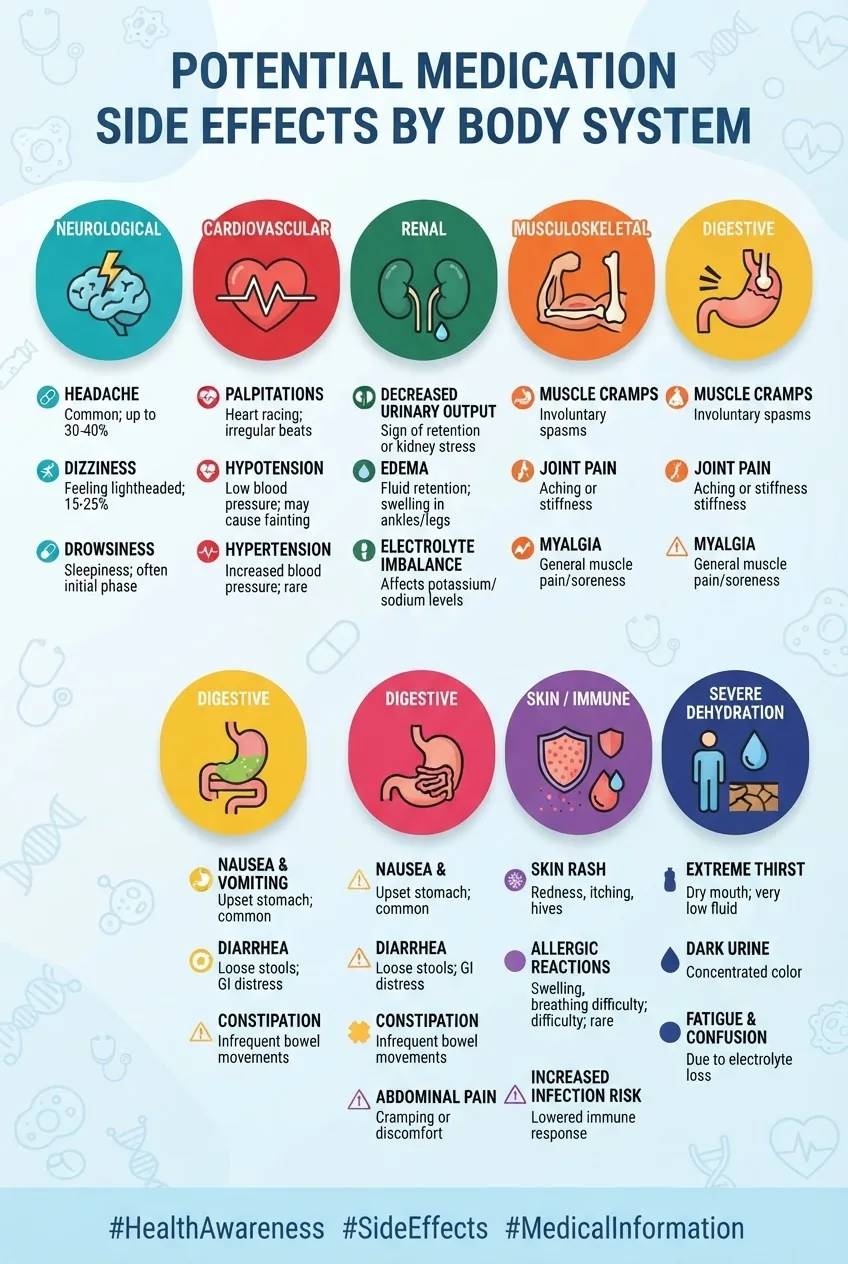
Neurological and Cognitive Issues
Answer: Low water intake impairs brain volume regulation, neurotransmitter balance and cerebral blood flow, producing headaches, concentration problems, mood shifts and cellular dehydration that directly affect thinking and energy.

-
Headaches and migraines
Mechanism: Reduced plasma volume and brain extracellular fluid alters intracranial pressure and pain pathways; dehydration can trigger the trigeminovascular system linked to migraines. Mild dehydration often causes dull, bilateral headaches; more severe deficits can precipitate migraine attacks in susceptible individuals. Clinical guidance: hydration is a common first-line relief strategy recommended by neurologists; if headaches persist despite rehydration seek evaluation.
-
Cognitive impairment
Mechanism: Cerebral blood flow reduction and altered electrolyte gradients impair neuronal firing and attention networks. Studies show short-term memory, working memory, and psychomotor performance decline with 1–2% body weight water loss; according to a 2022 NIH-funded trial, even mild dehydration reduced attention accuracy in cognitively demanding tasks (NIH, 2022).
-
Fluid balance in cells (cellular dehydration)
Term: Cellular dehydration means water loss from inside cells, shrinking cells and disrupting intracellular enzymes. Mechanism: when extracellular osmolarity rises (less water outside cells), water exits cells by osmosis; this impairs metabolism, protein synthesis and ion channel function, leading to cognitive fog and slowed processing.
-
Mental health impacts (mood, anxiety)
Mechanism: Dehydration alters cortisol and catecholamine responses and reduces serotonergic tone, contributing to irritability, increased anxiety and low mood. Observational studies in adults in hot climates (including Texas cohorts) report higher self-reported tension and fatigue on low-fluid days; where mood disorders exist, dehydration can exacerbate symptoms and daily functioning.
Transition: Neurological symptoms often co-occur with circulatory changes; inadequate fluids force the cardiovascular system to compensate.
Cardiovascular and Circulatory Problems
Answer: Low fluid intake lowers circulating blood volume, alters blood pressure regulation and increases heart rate and cardiovascular strain, which can worsen pre-existing heart disease and trigger dizziness or fainting.
-
Blood volume and pressure regulation
Mechanism: Reduced plasma volume decreases venous return and stroke volume; baroreceptors trigger tachycardia and vasoconstriction to maintain perfusion. Result: orthostatic hypotension (lightheadedness on standing) and chronically lower blood pressure in some individuals. For more on how hydration affects pressure, see dehydration and low blood pressure.
-
Heart rate and cardiovascular stress
Mechanism: To sustain cardiac output when blood volume is low, heart rate increases (compensatory tachycardia), which raises myocardial oxygen demand. In older adults or people with coronary disease this can precipitate angina or arrhythmias. Clinical markers: elevated resting heart rate and reduced heart rate variability are commonly observed with dehydration.
-
Hormonal regulation
Mechanism: Dehydration stimulates ADH/vasopressin and the renin–angiotensin–aldosterone system to conserve water and sodium, which affects blood volume and electrolyte balance. Chronic activation can alter salt retention and blood pressure long-term, and may interact with medications for hypertension.
Transition: Cardiovascular compensation places extra demand on kidneys and the urinary tract, increasing renal workload and risk.
Renal and Urinary Tract Effects
Answer: Insufficient water reduces glomerular filtration, concentrates urine, promotes kidney stone formation, increases urinary tract infection risk, and may progress to acute kidney injury if severe.
-
Kidney function
Mechanism: Lower renal perfusion and higher urine concentration reduce glomerular filtration rate (GFR); prolonged inadequate perfusion can cause acute tubular necrosis. Recurrent low fluid intake raises risk of chronic kidney disease progression in vulnerable populations. According to a 2023 NIH analysis, chronic low fluid intake correlated with higher incidence of kidney stones and reduced renal function markers in community samples (NIH, 2023).
-
Electrolyte imbalance
Mechanism: Concentrated urine and hemoconcentration elevate serum sodium or potassium depending on losses; electrolyte imbalances disturb nerve conduction and muscle function, and severe hyponatremia or hypernatremia requires urgent correction. Term: Electrolyte imbalance = abnormal serum levels of salts that disrupt electrical activity in cells.
-
Urinary tract infections
Mechanism: Low urine volume reduces mechanical flushing of bacteria from the bladder, increasing colonization risk and symptomatic urinary tract infection (UTI). In older adults, concentrated urine also irritates the mucosa. If you have recurrent UTIs or dark, strong-smelling urine, seek care.
Transition: Muscles and peripheral tissues reflect electrolyte shifts and cellular water deficits with cramps and early fatigue.
Musculoskeletal and Fatigue Issues
Answer: Low fluid intake predisposes to muscle cramps, early fatigue, and general weakness through electrolyte shifts, reduced perfusion, and impaired metabolic waste removal from tissues.
-
Muscle cramps and fatigue
Mechanism: Loss of intravascular volume and altered potassium/calcium balance impair neuromuscular junction function, causing cramps and decreased endurance. Athletes and outdoor workers in Texas commonly report cramps during heat exposure with insufficient fluid and electrolyte replacement.
-
Reduced exercise capacity
Mechanism: Lower blood volume reduces oxygen delivery to muscles, accelerates lactate buildup, and speeds onset of fatigue. Performance metrics such as VO2 max and time-to-exhaustion decline with modest dehydration (1–3% body weight loss).
-
Increased injury risk
Mechanism: Fatigued muscles and impaired proprioception elevate the likelihood of strains and falls; dehydration-related declines in cognitive focus also contribute to accidents, particularly in manual labor or driving.
Transition: Digestive and metabolic systems rely on adequate fluid for motility, secretion and pH balance; deficits manifest quickly.
Digestive and Metabolic Challenges
Answer: Not enough water impairs digestion, contributes to constipation, slows metabolism and can disturb acid–base balance, sometimes provoking abdominal pain or worsening gastrointestinal illnesses.
-
Digestive health (constipation, slowed motility)
Mechanism: Water is essential for stool hydration and intestinal transit; reduced intake thickens stool and slows peristalsis, causing constipation and bloating. For links between hydration and abdominal symptoms see dehydration and stomach pain.
-
Metabolic slowdown and acid-base balance
Mechanism: Reduced perfusion and impaired renal excretion affect bicarbonate handling and acid–base homeostasis; prolonged deficits may contribute to mild metabolic acidosis in susceptible patients. During diarrheal illness, water and electrolyte loss exacerbate these imbalances—see diarrhea and dehydration.
Transition: Skin and the immune system reflect hydration state both in appearance and function.
Skin and Immune Complications
Answer: Low water intake reduces skin turgor and elasticity, impairs barrier function and may modestly reduce immune efficiency, increasing infection susceptibility and delaying wound healing.
-
Skin dryness and elasticity loss
Mechanism: Lower interstitial fluid reduces dermal hydration and extracellular matrix function, causing dry, flaky skin and decreased turgor. While topical moisturizers help, systemic rehydration improves skin elasticity over days to weeks.
-
Immune system efficiency
Mechanism: Lymphatic flow and mucosal secretions depend on fluid volume; concentrated secretions impair pathogen clearance. Observational studies show higher rates of respiratory and urinary infections with chronic low-fluid patterns in community samples.
Transition: If dehydration worsens beyond these systemic effects, it can become a medical emergency—heat-related illnesses illustrate the most severe outcomes.
Severe Dehydration and Heat-related Illnesses
Answer: Severe dehydration escalates to heat exhaustion or heat stroke, marked by collapse of thermoregulation, confusion, very low urine output and potential organ failure—these require immediate medical intervention.
-
Heat exhaustion
Mechanism and signs: In hot environments, inadequate water impairs sweating and thermoregulation; symptoms include heavy sweating, weakness, nausea, headache, and fast pulse. Treatment: remove from heat, cool and rehydrate. According to a 2024 CDC advisory, heat exhaustion cases spike during prolonged heatwaves and are preventable with timely hydration (CDC, 2024).
-
Heat stroke
Mechanism and signs: Heat stroke is failure of thermoregulation with core temperature >40°C (104°F), altered mental status, and potential coagulopathy or rhabdomyolysis. This is a medical emergency—rapid cooling and hospital care are required.
-
Acute kidney injury and organ failure
Mechanism: Prolonged hypoperfusion and rhabdomyolysis (from heat injury) can cause sudden kidney failure. In extreme cases, multi-organ dysfunction follows. Prompt rehydration and hospital management reduce mortality.
Note on severity: Mild dehydration (1–2% bodyweight loss) mainly causes thirst and performance decline; moderate (3–5%) produces marked cognitive and cardiovascular effects; severe (>6–10%) risks organ dysfunction. Laboratory markers include elevated serum osmolarity and BUN-to-creatinine ratio.
How Not Drinking Enough Water Affects Daily Life and Long-term Health?
Answer: Chronic inadequate hydration reduces quality of life through persistent fatigue, cognitive decline, recurrent infections, kidney stone formation and potential progression to chronic kidney disease and cardiovascular complications over years.
Daily scenarios:
- Office worker: mild dehydration (skipping water between coffee) leads to afternoon lapses in attention and headaches, reducing productivity.
- Outdoor laborer in Texas: repeated daily fluid deficits over summer increase risk for heat exhaustion, cramps, and acute kidney injury; according to a 2023 occupational health survey in southern states, outdoor workers had higher hydration-related emergency visits (industry report, 2023).
- Older adult: reduced thirst perception plus diuretic medications increase chronic dehydration risk, raising falls and delirium incidence.
Long-term impacts include increased incidence of kidney stones, possible acceleration of CKD in predisposed people, and repeated cognitive strain that may contribute to functional decline. For objective self-assessment, use:
- Urine color chart: pale straw to clear indicates adequate hydration; dark yellow suggests deficit—see hydration color indicators.
- Daily volume tracking: measure intake in ounces or liters; small utility: track water bottle fills—guides on bottle sizes include water bottle ounces and ounces in glass of water.
- Personalized calculators: consider the water intake calculator for individualized targets.
Clinical references: routine monitoring of BUN/creatinine, serum electrolytes and orthostatic vitals help clinicians detect chronic dehydration. According to a 2022 NIH review, consistent mild dehydration is linked to measurable declines in cognition and renal concentrating ability (NIH, 2022).
Who Is Most at Risk for These Side Effects in Texas?
Answer: People most at risk in Texas include outdoor workers, athletes, older adults, infants and children, and anyone with chronic illness or on diuretics—hot climate, high humidity and prolonged sun exposure multiply risk factors.
Local context: Texas summers frequently exceed safe working temperatures; agricultural, construction and delivery workers commonly face repeated daily fluid loss. Case example: a 42-year-old farm worker in central Texas reported daily cramping and two episodes of syncope during harvest season before receiving occupational hydration interventions—an example of preventable, work-related dehydration.
Risk groups:
- Outdoor workers and athletes — high sweat losses and limited rest increase risk.
- Older adults — blunted thirst response and common medication use (e.g., diuretics).
- Infants and young children — higher surface area-to-mass ratio and reliance on caregivers for fluids.
- People with chronic illness — heart failure, kidney disease, diabetes and those taking medications that affect fluid balance.
Practical Texas note: plan water breaks, shade, and electrolyte replacement for long shifts outdoors; local public health agencies report spikes in heat-related EMS calls during prolonged heat waves (state health department reports, 2023).
When to See a Doctor About Dehydration Symptoms?
Answer: Seek immediate medical care for dizziness with fainting, confusion, very low urine output, rapid heart rate, high fever, or inability to keep fluids down; for persistent symptoms, contact your provider promptly.
- Severe signs: altered mental status, core temperature >104°F, seizures — emergency care required.
- Persistent moderate signs: dizziness, persistent vomiting/diarrhea, or dark concentrated urine — see primary care.
- Special population alerts: infants with sunken fontanelle or no tears, and older adults with confusion — urgent evaluation.
- Clarify hydration limits and balance: for guidance on excessive intake see too much water safety.
- Use urine color as a quick triage: refer to hydration color indicators for severity cues.
- Special considerations for fasting: if on restricted diets see water fasting safety guidelines.
- Pediatric red flag: see a clinician for suspected dehydration in infants — more at dehydration in babies symptoms.
Summary and Next Steps: Preventing the Side Effects of Not Drinking Enough Water
Answer: Preventing dehydration’s 16 side effects requires consistent daily fluid intake aligned with activity and climate, monitoring urine color and volume, and using tools and resources to set a practical hydration plan.
Actionable next steps:
- Track daily intake using a reusable bottle and the water bottle ounces to count fills.
- Consult the recommended daily water intake and customize with the water intake calculator.
- Explore beverages beyond plain water with the best hydrating beverages and healthy hydrating drinks.
- Understand water quality when choosing sources: see choosing the best water.
- For short-term hydration strategies read the pillar: 5 Tips to Stay Hydrated and Healthy.
- Other practical resources: measurement details in hydration requirements guide, guidance on drinking patterns like the gallon of water a day, and beverage myths in coffee hydration effects.
- For weight-management context, read water intake for weight loss.
- Consider beverage selections such as healthy soft drink options or the healthy hydrating drinks.
- Measure practical units: see 2 liters of water daily and ounces in glass of water.
For questions about mineral balance and alcohol effects see effects of alcohol on hydration. If you want a practical checklist combining beverages and timing, explore best hydrating beverages and choosing the best water.
Comparison: common hydration strategies and trade-offs.
| Strategy | Benefit | Limitations |
|---|---|---|
| Plain water | No calories, effective for most needs | May need electrolytes for high sweat losses |
| Electrolyte solutions | Restores salts and fluids quickly | Added sugars in some products |
| Sports drinks & oral rehydration | Useful for prolonged exertion or diarrhea | Calorie content; not necessary for light activity |
Read the practical pillar for day-to-day guidance: 5 Tips to Stay Hydrated and Healthy. Also consult the recommended daily water intake to set targets, and learn about beverage choices in healthy hydrating drinks. For hydration and energy science see water and energy benefits.
External clinical resources: CDC dehydration facts and prevention, NIH hydration research, and Mayo Clinic clinical guidance provide authoritative information on symptoms and treatment.
Limitations: Individual symptoms vary by age, comorbidity and medications; many side effects reverse with rehydration, but chronic or severe deficits may cause lasting harm—consult a clinician for personalized evaluation.
Conclusion — key takeaways and CTA
Not drinking enough water triggers 16 distinct side effects spanning brain, heart, kidneys, muscles, digestion, skin and immunity; many are preventable. Use urine color, intake tracking and seasonal planning to protect yourself—start today by reviewing 5 Tips to Stay Hydrated and Healthy and consult a healthcare provider if symptoms persist.