
Yes—dehydration can cause low blood pressure by reducing circulating blood volume and impairing cardiac output, producing symptomatic hypotension; rehydration and electrolyte replacement usually reverse this if treated early. This guide explains the physiology, symptoms, Texas-specific risks, prevention, and when to seek medical care.
What Is Dehydration and How Does It Affect the Body?
Answer: Dehydration is loss of body water that lowers hydration status and can change electrolyte balance; when severe enough it reduces blood volume and affects blood pressure regulation.
Dehydration: missing adequate body water to maintain normal function; fluid loss can be from sweat, urine, vomiting, diarrhea, or insufficient intake.
Dehydration begins as a measurable drop in total body water (the proportion of water in tissues and plasma). Mild deficits (about 1–2% body weight loss) cause thirst and minor performance effects. Moderate to severe losses (3% and above) reduce plasma volume, concentrate electrolytes, and change the way the cardiovascular system circulates blood.
Fluid balance operates across compartments: intravascular (plasma within blood vessels), interstitial (between cells), and intracellular (within cells). The body moves water and electrolytes between these compartments to preserve blood volume; sustained fluid loss forces priority to preserve cellular function at the expense of circulating volume.
Electrolyte imbalance: loss or shift of sodium, potassium, chloride and others that help hold water in the proper compartments and support nerve and muscle (including heart) function.
Physiological consequences of reduced hydration levels include higher blood osmolality, stimulation of antidiuretic hormone (ADH), and activation of the renin-angiotensin-aldosterone system (RAAS). These are compensatory responses intended to conserve water and maintain vascular tone; when fluid loss outpaces compensation—particularly in heat or with ongoing losses—blood volume drops and blood pressure can fall.

Texas context: in hot, humid or dry Texas summers, sweat losses can be large and continuous; outdoor workers and people exercising without scheduled fluid replacement are at higher risk of shifting from mild dehydration into hypovolemia (low blood volume).
For more on dehydration-related abdominal complaints, see Can Dehydration Cause Stomach Pain?
Transition: Understanding dehydration’s basic effects sets up how blood pressure specifically responds when circulating volume falls; next we look at low blood pressure and its many causes.
Understanding Low Blood Pressure (Hypotension) and Its Causes
Answer: Low blood pressure (hypotension) is when arterial pressure falls below levels that adequately perfuse organs; causes include many factors beyond dehydration such as heart problems, medications, endocrine issues, and autonomic dysfunction.
Low blood pressure (hypotension): a sustained systolic blood pressure typically below 90 mmHg or diastolic below 60 mmHg, though symptoms vary by individual baseline.
Hypotension is a clinical sign rather than a single disease; it results from one or more of the following pathophysiologic mechanisms: low circulating blood volume (hypovolemia), reduced cardiac output, decreased vascular resistance, or autonomic failure. Below is a bulleted list of common causes that are not dehydration-related:
- Cardiac causes: heart attack, heart failure, severe arrhythmias that reduce cardiac output
- Medication-induced: antihypertensives (ACE inhibitors, beta-blockers), diuretics, nitrates, some antidepressants
- Endocrine problems: adrenal insufficiency (Addison’s disease), severe hypothyroidism
- Severe infection: septic shock causes vasodilation and capillary leak
- Neurological/autonomic disorders: Parkinson’s disease, diabetic autonomic neuropathy
- Postural (orthostatic) hypotension: sudden drop on standing due to impaired autonomic reflexes or medications
- Postprandial hypotension: after eating, particularly in older adults
Definitions where helpful:
Hypovolemia: decreased volume of circulating blood plasma, often from fluid loss; distinct from dehydration that may include intracellular losses.
Cardiac output: the volume of blood the heart pumps per minute (heart rate × stroke volume); if this falls, blood pressure usually drops.
Signs of low blood pressure can be subtle; some people normally have lower pressures without symptoms. When symptomatic, hypotension causes dizziness, blurred vision, weakness, and syncope (fainting). Because many causes exist, clinicians evaluate medication lists, recent illness, cardiac function, and volume status to identify the driver.
Transition: With that overview of non-dehydration causes, we now address the central question—how dehydration specifically leads to clinically meaningful low blood pressure through stepwise physiology.
Does Dehydration Cause Low Blood Pressure? The Science Explained
Answer: Yes—dehydration causes low blood pressure by reducing blood volume (hypovolemia), which lowers venous return, decreases stroke volume and cardiac output, and can overwhelm compensatory vasoconstriction, producing hypotension and symptoms.
Blood volume: total volume of blood in the circulatory system; plasma (liquid portion) is the most rapidly affected by fluid loss.
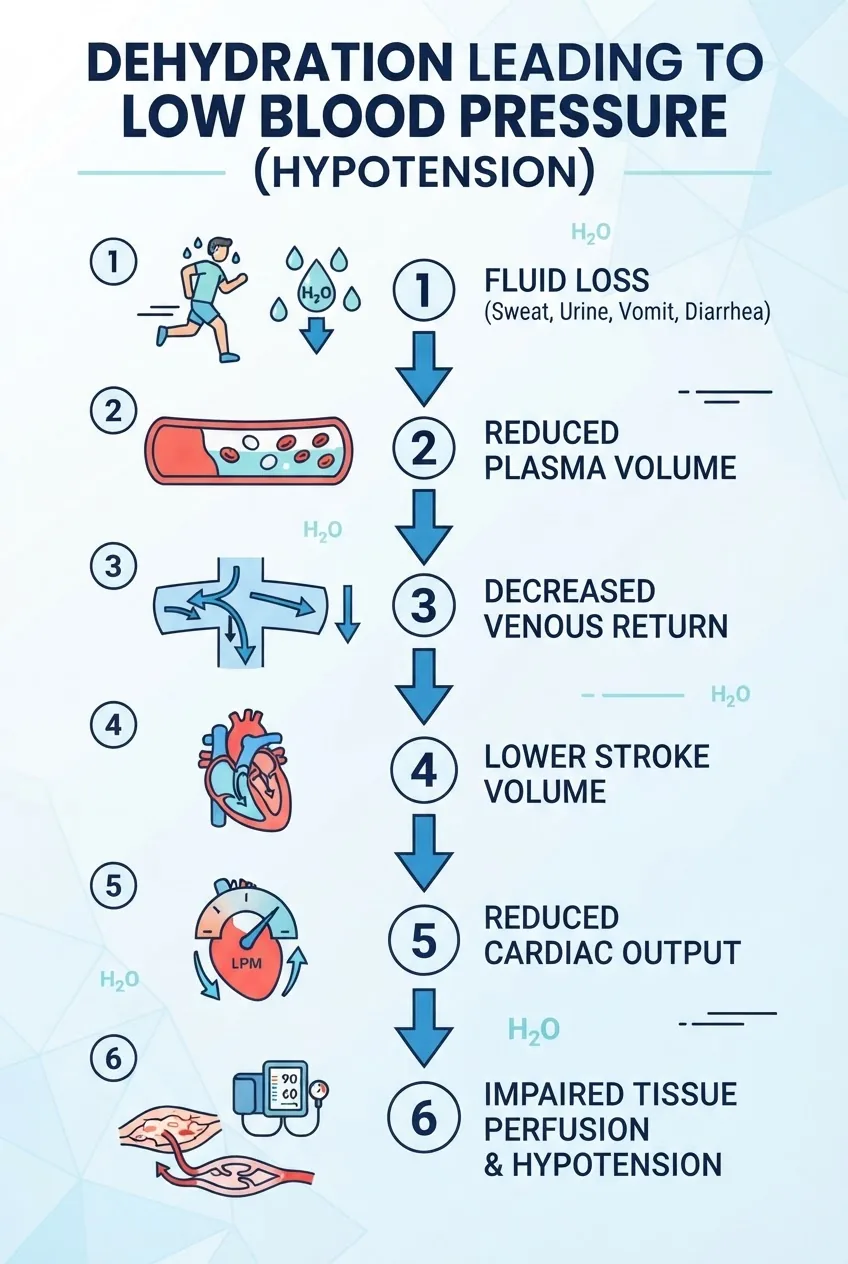
Step-by-step physiology (with analogies):
- Initial fluid loss — the reservoir lowers: Imagine the circulatory system as a reservoir of fluid that fuels the pump (heart). Sweat, urine, vomiting, diarrhea, or inadequate intake reduce that reservoir quickly in heat or illness.
- Plasma volume falls: The plasma compartment loses water first; hemoconcentration follows (blood becomes more viscous), and intravascular volume declines.
- Venous return diminishes: Less circulating volume means less blood returning to the heart during diastole; preload (filling pressure) drops and stroke volume falls.
- Cardiac output decreases: With lower stroke volume, even if heart rate rises, total cardiac output (liters per minute) can fall—cardiac output = heart rate × stroke volume.
- Compensatory vasoconstriction may not suffice: Baroreceptors sense pressure drop and trigger sympathetic activation to raise heart rate and constrict arteries; if volume loss is large, these mechanisms are insufficient and blood pressure falls.
- Electrolyte disturbances impair cardiac performance: Loss of sodium and potassium can affect myocardial contractility and conduction, which further reduces effective cardiac output and worsens hypotension.
Illustrative example: a 30-year-old landscaper in central Texas loses 3–4% body weight in sweat over a long morning shift without fluids. Their plasma volume drops, heart rate increases 20–30 bpm, but stroke volume declines; the result is dizziness on standing and a systolic pressure falling below their usual baseline—classic dehydration-induced hypotension.
Clinical observations and limits: medical literature describes this chain. According to a 2024 NIH clinical review on fluid and electrolyte disorders, hypovolemia from fluid losses is a well-documented cause of hypotension in both community and hospital settings (source: 2024 NIH clinical review).
Key modifiers that determine whether dehydration produces hypotension:
- Rate and amount of fluid loss — rapid large losses (e.g., vomiting, diarrhea, heat stroke) more likely to overwhelm compensation.
- Baseline cardiovascular reserve — older adults or those with heart disease have less ability to compensate.
- Concurrent medications — diuretics, antihypertensives, or vasodilators intensify hypotensive risk.
- Electrolyte losses — excessive sodium loss changes osmotic gradients and limits vascular refilling.
- Environmental stressors — high Texas heat increases ongoing sweat losses and raises risk.
Case study-style walkthrough (clinical vignette):
- Day 0: Healthy 65-year-old on thiazide diuretic hikes in 95°F Texas heat with inadequate fluids.
- Early signs: fatigue and headache as plasma becomes concentrated; heart rate increases.
- Progression: orthostatic dizziness when standing; blood pressure drops by 20–30 mmHg systolic.
- Intervention: oral rehydration with fluids and sodium; diuretic held temporarily; if unresolved, IV isotonic fluids required.
Why some dehydrated people do not become hypotensive: compensatory mechanisms (increased heart rate, vasoconstriction, ADH-mediated water retention) can maintain adequate perfusion for a time. The transition to symptomatic hypotension depends on how fast/large the loss is and individual reserve.
Transition: Knowing how dehydration lowers blood pressure helps identify symptoms and health risks that demand action; the next section lists those signs and consequences in ordered detail.
Symptoms and Health Risks of Dehydration-Related Low Blood Pressure
Answer: Dehydration-related low blood pressure commonly causes dizziness, weakness, and fainting; severe or prolonged hypotension can lead to organ hypoperfusion, acute kidney injury, shock, and increased fall risk.
Below are numbered symptoms and associated risks specifically when low blood pressure is caused by dehydration:
- Dizziness or lightheadedness: Reduced cerebral perfusion causes transient disorientation or instability; common early sign and predictor of orthostatic intolerance.
- Weakness and fatigue: Lowered cardiac output and electrolyte shifts reduce muscle performance and stamina.
- Blurred vision or tunnel vision: Temporary reduction in retinal perfusion during sudden drops in blood pressure.
- Syncope (fainting): Sudden, brief loss of consciousness from inadequate cerebral blood flow—raises risk of injury from falls.
- Rapid heart rate (tachycardia): Compensatory response that can be uncomfortable and, in cardiac disease, precipitate arrhythmia.
- Low urine output and concentrated urine: Sign of reduced renal perfusion and volume depletion; risk factor for acute kidney injury if persistent.
- Confusion, especially in older adults: Brain sensitivity to perfusion deficits can lead to acute cognitive changes and delirium.
- Heat-related illness (heat exhaustion, heat stroke): In Texas heat, dehydration increases susceptibility to heat illnesses that further disrupt blood pressure and thermoregulation.
- Organ hypoperfusion and shock: Severe, untreated hypotension can progress to hypovolemic shock with multi-organ failure.
- Increased fall and injury risk: Particularly in older adults with orthostatic hypotension and impaired balance.
Additional risks: dehydration-induced hypotension complicates management of chronic conditions (e.g., diabetes, heart disease) and can interact with medications to produce exaggerated drops in pressure. For broader dehydration consequences beyond BP, see 16 Alarming Side Effects of Not Drinking Enough Water.
Transition: Symptoms should trigger immediate practical steps to prevent worsening; next is a detailed, actionable prevention and management plan tailored for high-heat settings like Texas.
How to Prevent and Manage Low Blood Pressure Caused by Dehydration?
Answer: Prevent and manage dehydration-related hypotension through scheduled fluid replacement, appropriate electrolyte intake, behavioral adjustments for heat, medication review, and prompt rehydration with oral or IV fluids when needed.
Practical, stepwise prevention and management plan:
- Schedule fluid intake: Drink at regular intervals during hot days or exercise; do not wait for strong thirst. Knowing daily volume needs helps—see our Hydration Requirements Guide.
- Use electrolyte-containing solutions when losses are high: For prolonged sweating or GI losses, use oral rehydration solutions or sports drinks with sodium/potassium to restore osmolar balance.
- Modify activity and environment: In Texas heat, work in shaded areas, schedule exertion for cooler parts of day, wear breathable clothing, and use cooling devices.
- Adjust medications temporarily if advised: Review diuretics and antihypertensives with your clinician before prolonged heat exposure; do not stop prescribed meds without professional guidance.
- Recognize early symptoms: Lightheadedness, reduced urine output, and rapid heart rate call for immediate oral fluids; if severe, seek medical attention.
- Gradual rehydration: For mild-moderate dehydration, orally replace fluids with water plus electrolytes; avoid excessive plain water if sodium is low.
- When to use IV fluids: If oral intake is impossible (vomiting), or hypotension persists despite oral fluids, intravenous isotonic saline is indicated under medical supervision.
- Long-term lifestyle measures: Maintain daily consistent hydration, balanced dietary sodium as appropriate, and carry water during outdoor work or travel.
Table: Comparison of common rehydration options
| Option | Best for | Pros | Cons |
|---|---|---|---|
| Plain water | Daily maintenance, light activity | Readily available, calorie-free | Doesn’t replace sodium lost in heavy sweating |
| Oral rehydration solution (ORS) | Diarrhea, vomiting, heavy sweat | Restores sodium and glucose to maximize absorption | Taste may be salty; needs preparation or purchase |
| Sports drinks | Prolonged exercise, moderate sweating | Electrolytes plus carbohydrates for energy | Contain sugar; not ideal for some metabolic conditions |
| Intravenous isotonic saline | Severe dehydration, persistent hypotension | Rapid restoration of intravascular volume | Requires medical setting; risks of fluids overload if misused |
Practical Texas-focused tips:
- Carry a 32-oz bottle and sip hourly during outdoor exposure; see our Hydration Requirements Guide for daily intake planning.
- Use electrolyte tablets or ready ORS packets during long shifts or sporting events.
- Plan cooling breaks and shaded rest every 30–60 minutes during heavy labor in summer.
- Choose the right beverage: for sustained sweat, review our Best Hydrating Beverages.
- Balance intake with safety: learn about limits in our Can You Drink Too Much Water Safely?
Rehydration procedure for a person becoming hypotensive but conscious:
- Move to shade and lie down with legs elevated to improve venous return.
- Give small, frequent sips of ORS or a balanced sports drink; avoid forcing large boluses if nauseated.
- Monitor urine output and mental status; if symptoms worsen or do not improve in 30–60 minutes, seek medical care.
Transition: If basic measures fail or severe symptoms appear, immediate medical evaluation is necessary; the next section explains red flags and hospital treatments.

When to See a Doctor: Warning Signs and Medical Treatment?
Answer: See a doctor urgently if hypotension with dehydration causes fainting, persistent dizziness, chest pain, confusion, low urine output, or if oral rehydration fails; emergency care may include IV isotonic fluids and diagnostic workup.
Warning signs requiring immediate medical attention:
- Loss of consciousness or recurrent fainting
- Chest pain, difficulty breathing, or severe palpitations
- Confusion or inability to stay awake
- Very low urine output or dark urine despite attempts to rehydrate
- Systolic blood pressure persistently below 90 mmHg or a symptomatic drop from usual baseline
Medical evaluation often includes vital signs, orthostatic blood pressure measurements, serum electrolytes, kidney function tests, and cardiac monitoring as indicated. According to a 2024 American Heart Association guidance on acute circulatory support, intravenous isotonic crystalloid (normal saline) is the first-line fluid for hypovolemia with hypotension (source: 2024 AHA guidance).
Treatment options clinicians may use:
- IV isotonic fluids (normal saline or lactated Ringer’s) to restore intravascular volume
- Electrolyte correction for sodium or potassium disturbances
- Blood transfusion if bleeding is the cause of hypovolemia
- Vasopressors in refractory hypotension under ICU-level care
- Adjustment or temporary withholding of blood-pressure-lowering medications
For symptom recognition and outpatient advice, reputable resources such as the American Heart Association, the National Institutes of Health, and the Mayo Clinic have overviews on hypotension and dehydration management; consult them for current clinical recommendations.
According to a 2024 NIH clinical report, older adults and people on diuretics are disproportionately represented among emergency visits for dehydration-related hypotension (source: 2024 NIH clinical report).
Limitations and caution: dehydration is a reversible cause of low blood pressure, but clinicians must rule out cardiac, endocrine, or infectious causes; do not assume all hypotension is dehydration without evaluation.
Transition: Below are concise, ready-reference answers to common questions about dehydration and blood pressure.