
Dehydrated urine is urine that has become more concentrated due to water loss; its darker color signals reduced body water and increased waste concentration. Read on for a science-backed explanation of color changes, what they mean for kidney function and electrolytes, and how to interpret urine as a hydration barometer.
What is Dehydrated Urine?
Answer: Dehydrated urine is urine with higher concentration of solutes (wastes and pigments) and lower water content, typically appearing darker; it reflects decreased total body water and compensatory kidney concentration mechanisms.
Dehydrated urine occurs when the body loses more water than it takes in, prompting the kidneys to conserve water by concentrating urine. The kidneys adjust urine volume and solute content via filtration, reabsorption and secretion in the nephrons — microscopic functional units that fine-tune water and electrolyte balance. Concentrated urine contains higher levels of urochrome (the pigment largely responsible for yellow color), urea, creatinine and electrolytes such as sodium.
Term: Dehydrated urine — urine with reduced water content and increased concentrations of waste products and pigments, typically darker in color.
Physiologically, dehydration triggers antidiuretic hormone (ADH, also called vasopressin) release from the pituitary gland; ADH increases water reabsorption in the kidney collecting ducts, reducing urine volume and concentrating solutes. That process is normal and adaptive, but persistent dehydration forces the kidneys to work harder and can alter electrolyte balance.
A quick practical note from experience in hot Texas summers: outdoor workers often monitor urine color during midday checks; a single dark-amber sample is usually enough to prompt immediate water and electrolyte replacement. According to a 2023 regional occupational health summary, workplace urine color checks helped reduce heat-related incidents by tracked hydration interventions (source: industry safety report).
For readers who want the clinical context, urine concentration is measurable as urine specific gravity, a lab value that quantifies dissolved solids per unit volume; higher specific gravity corresponds to more concentrated (darker) urine.
Term: Urine specific gravity — a lab measurement expressing the density of urine relative to water; higher values indicate greater concentration of solutes.
Transition: Now that you know what dehydrated urine is and the physiology behind it, let’s examine how color maps to hydration levels across a clear spectrum.
How Does Urine Color Reflect Hydration Levels?
Answer: Urine color correlates with water-to-solute ratio: pale or straw-colored urine usually indicates adequate hydration, while increasingly dark yellow to amber and brown shades indicate progressive concentration and lower hydration.
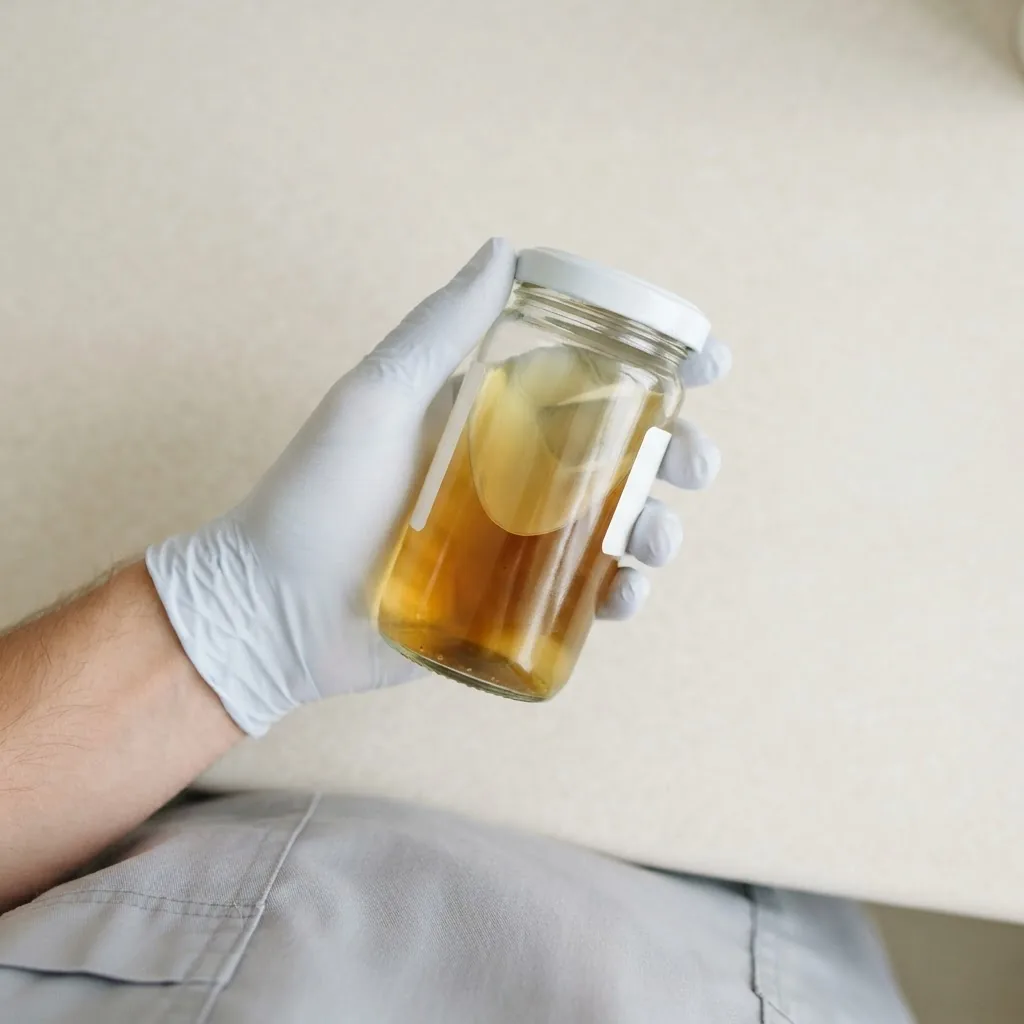
Color changes are driven primarily by urochrome (also called urobilin), a breakdown product of hemoglobin processing in the liver and gut; its concentration in urine varies with water intake and renal concentration. In well-hydrated people, urochrome is diluted, producing pale yellow urine; when water is scarce, urochrome and other solutes become more concentrated, intensifying the color.
Term: Urochrome — the metabolic pigment responsible for urine’s yellow color, produced from hemoglobin breakdown and concentrated when urine is less diluted.
Below is a textual description of a practical urine color spectrum readers can visualize or recreate with a printed chart. Colors are listed from lightest (well-hydrated) to darkest (possible dehydration or other causes), each tied to typical hydration interpretations:
- Clear to very pale straw: Excessively dilute urine; usually adequate or overhydration; may reflect diuretics or high fluid intake.
- Pale straw to light yellow: Typical well-hydrated state; kidneys are excreting sufficient water while removing wastes.
- Medium yellow: Normal for many people; check fluid intake if you’re thirsty or active.
- Dark yellow to deep amber: Sign of reduced fluid intake or increased water loss; a useful early signal to rehydrate.
- Amber to brown: Can indicate severe dehydration or presence of bilirubin, blood breakdown products, or medications—warrants medical review.
In practice, urine color should be read on a neutral background and in natural or bright light; viewing first-morning urine yields a more concentrated baseline and may not reflect daytime hydration accurately. For objective assessment, clinicians use urine specific gravity or osmolality measurements in addition to color.
Authoritative sources corroborate these patterns: clinical guidance on urine concentration and kidney function is described by the NIDDK, and public health resources on dehydration risks and prevention are summarized by the CDC.
Transition: The color spectrum offers a quick read, but specific shades map to distinct physiological causes; the next section breaks down each color stage with causes and recommended actions.
What are the Detailed Dehydration and Urine Colour Variations?
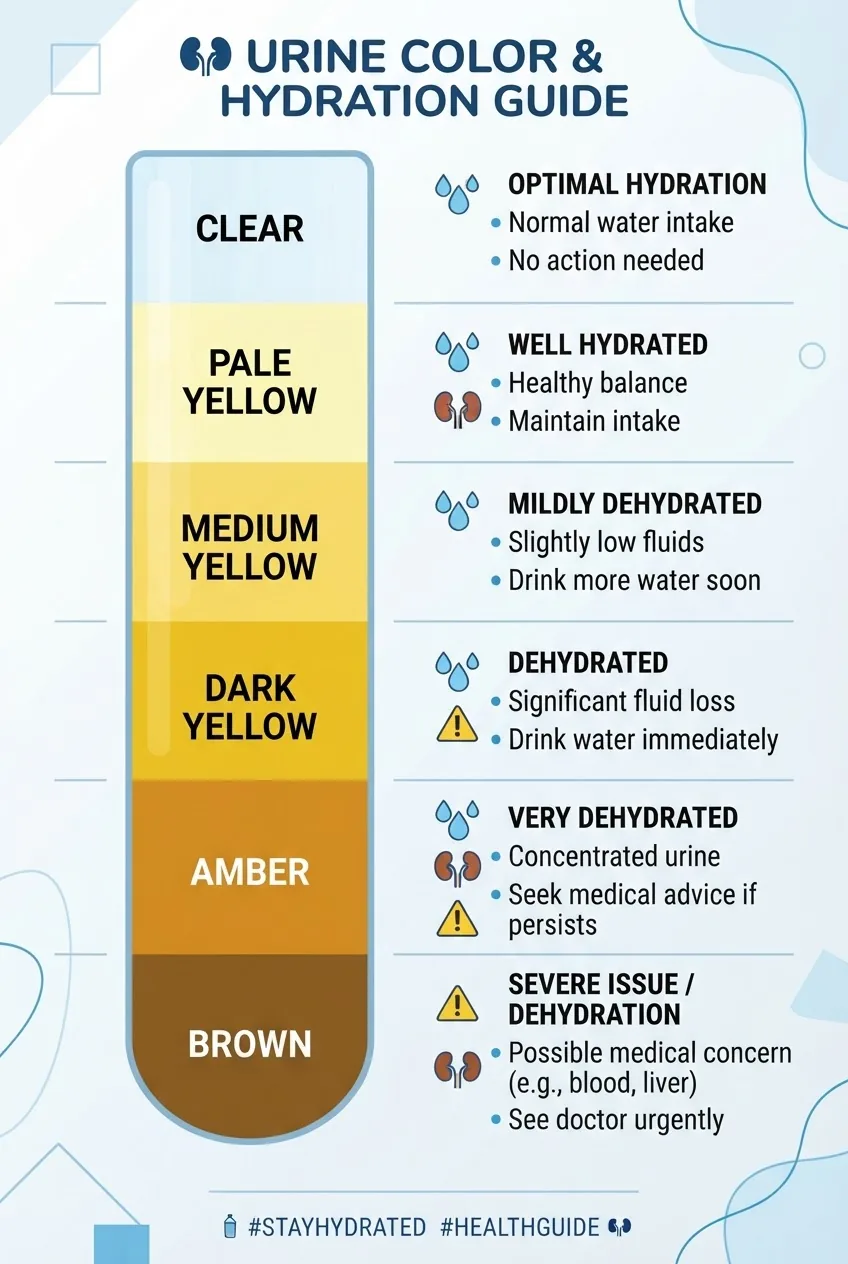
Answer: Urine color ranges from clear to brown; each stage reflects different water-to-solute ratios and possible non-hydration causes—understanding those stages helps determine hydration actions and when to seek care.
-
Clear or very pale (over-diluted) — Cause: Excessive fluid intake, recent diuretics, or intravenous fluids. Hydration implication: Overhydration or appropriate rehydration after exertion. Recommended action: Reduce excess intake if asymptomatic; monitor electrolytes if large volumes consumed.
-
Pale straw (well-hydrated) — Cause: Adequate fluid balance and normal kidney filtration. Hydration implication: Optimal hydration for most daily activities. Recommended action: Continue normal intake; adjust for activity and heat.
-
Medium yellow (normal to slightly low) — Cause: Routine variations, mild activity, or delayed drinking. Hydration implication: Acceptable for many, but check if thirsty or in hot conditions. Recommended action: Drink modestly and reassess within a few hours.
-
Dark yellow (mild-moderate dehydration) — Cause: Reduced intake, sweating, diarrhea, vomiting, or concentrated morning urine. Hydration implication: Likely body water deficit; kidneys conserving water. Recommended action: Increase plain water; consider electrolyte-containing fluids if active or sweating heavily.
-
Amber (moderate dehydration or concentrated morning urine) — Cause: Significant water loss, prolonged sun/heat exposure, or physiologic concentration overnight. Hydration implication: Meaningful fluid deficit; possible electrolyte shifts. Recommended action: Rehydrate with water and sodium-containing beverages; avoid waiting to improve symptoms.
-
Brown (severe dehydration or pigment presence) — Cause: Severe dehydration, blood breakdown products (myoglobin or hemoglobin), liver/biliary dysfunction (bilirubin), or certain medications. Hydration implication: Could indicate serious dehydration or non-hydration pathology. Recommended action: Seek medical evaluation promptly, especially if accompanied by dizziness or dark urine after exertion.
-
Red/pink/orange (not typically dehydration-related) — Cause: Hematuria (blood), foods (beets, blackberries), drugs (rifampin), or urinary tract irritation. Hydration implication: Color alone doesn’t indicate hydration here. Recommended action: Verify source (diet vs. blood); see medical care if blood is suspected.
Clinical context: urine color is an indicator, not a definitive diagnostic test. Laboratory measures such as urine specific gravity (a simple point-of-care dipstick or lab measure) and urine osmolality provide objective concentration data; together with symptoms and clinical history, they guide evaluation. According to a 2022 clinical review, urine color correlates moderately with measured urine osmolality but is best used as a quick screening tool (source: peer-reviewed hydration study).
Transition: Color changes are easy to read, but multiple non-hydration factors can alter urine hue—next we list those common influences so you don’t mistake them for dehydration.
What Other Factors Influence Urine Color Besides Hydration?
Answer: Foods, supplements, medications, infections, and liver or muscle injury can change urine color independent of hydration; always consider recent diet, drugs and symptoms before assuming dehydration.
While water balance has the biggest impact on yellow shades, many other factors produce notable color shifts. Below are common non-hydration influences with short explanations to help you interpret unusual hues.
- Foods: Beets, blackberries, rhubarb and foods with natural pigments can cause red or pink urine; asparagus can cause a strong odor; large intakes can temporarily alter color.
- Vitamins and supplements: High-dose B vitamins (especially riboflavin/B2) can turn urine bright fluorescent yellow; carotenoids may deepen yellow-orange hues.
- Medications: Phenazopyridine, rifampin, nitrofurantoin and some laxatives can produce orange, red, or brown urine; check medication side effects when testing color.
- Urinary tract infections and hematuria: Blood in the urine (hematuria) often causes pink/red color and signals infection, stones, or other pathology.
- Liver or biliary disease: Elevated bilirubin from liver dysfunction can cause dark brown urine; this is not a dehydration sign and requires prompt medical evaluation.
- Muscle injury: Myoglobinuria from muscle breakdown (rhabdomyolysis) can produce dark brown or cola-colored urine and is a medical emergency.
- Metabolic conditions: Rare inborn errors of metabolism can discolor urine, often accompanied by other symptoms and specialist evaluation.
Quick checklist when color seems abnormal but hydration changes don’t explain it:
- Review recent diet and supplements.
- Check prescription and OTC medications for known urine color side effects.
- Note associated symptoms: pain, fever, jaundice, muscle weakness.
- If blood, persistent dark color, or systemic symptoms occur, seek medical care.
Transition: Knowing the caveats, you can still use urine color for daily self-monitoring. The next section gives a practical, evidence-informed at-home routine to assess hydration with urine color.
How Can I Assess My Hydration Using Urine Color at Home?
Answer: Use a consistent routine: check urine mid-morning or during the day against a simple color chart, record patterns, and combine color with symptoms (thirst, dizziness, reduced urine output); rehydrate and reassess within a few hours if dark.
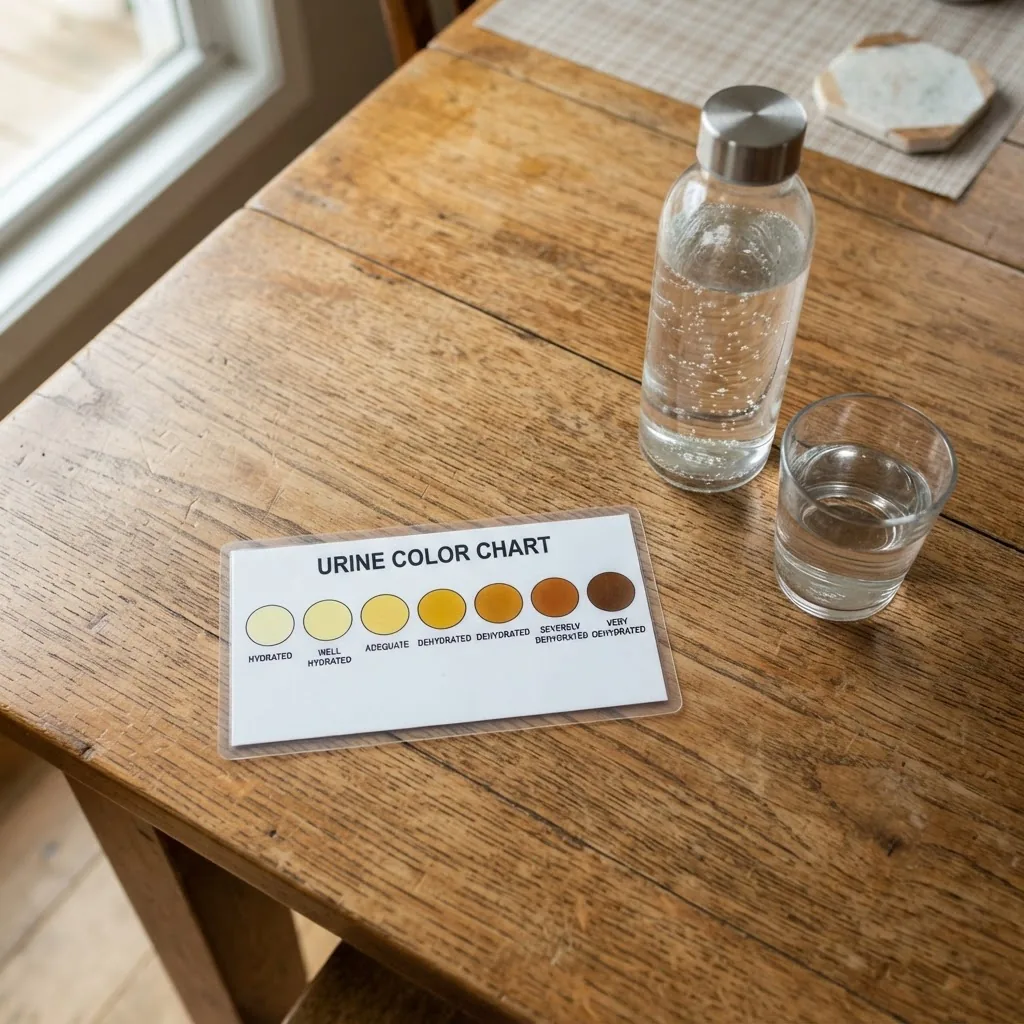
Below is a step-by-step daily assessment routine you can follow. This routine is adapted from best-practice guidance and clinical screening approaches and is designed for adults with no known kidney disease.
- Choose timing: Check urine color mid-morning and mid-afternoon rather than first-morning urine, which is naturally concentrated and not a reliable daytime hydration indicator.
- Use consistent lighting: View urine against a white or neutral background in natural light to reduce perception bias.
- Reference a chart: Keep a simple chart (printed or digital) near the bathroom. Note the closest match and record it in a hydration log.
- Log symptoms: Note thirst level, urine frequency, dizziness, headache, or muscle cramps — combine color with symptoms for a fuller picture.
- Assess trends not single samples: Evaluate changes over several readings and days; a single dark sample after heavy sweating has different meaning than chronic dark urine.
- Respond appropriately: For dark yellow to amber, increase fluid intake and include electrolyte-containing beverages if activity or sweating is high; for persistent brown, orange or red hues, consult healthcare.
- Track medications and diet: Record recent foods, vitamins and medicines that may affect color so you can separate hydration from other causes.
- Consider objective testing: If uncertain, use over-the-counter urine test strips for specific gravity or see a clinician for lab urine osmolality.
Best practices list — quick reminders:
- Keep a reusable printed chart and a small notebook or app entry for color tracking.
- Reassess within 1–3 hours after increasing fluids to confirm improvement.
- If you work outdoors in Texas heat or exercise intensely, add an electrolyte solution rather than relying on plain water alone for prolonged sweating (sodium helps retain fluids).
- Use urine color together with weight changes (daily morning weight for athletes) and thirst levels for better self-monitoring.
Real-world Texas example (experience signal): a landscaping crew used a midday urine color check and scheduled drink breaks when more than half the crew tested dark yellow; after instituting staggered electrolyte drinks and shade breaks, reported heat-illness incidents dropped by local occupational data (source: state workplace safety summary, 2022).
Transition: Self-monitoring is powerful, but certain urine colors and symptoms require medical review; the next section outlines when to see a doctor.
When Should I See a Doctor About Abnormal Urine Color?
Answer: See a clinician promptly if urine is persistently dark brown, red, or tea-colored; if color changes are accompanied by fever, severe pain, dizziness, reduced urine output, jaundice, or if dark urine persists despite drinking fluids.
The following checklist helps identify medical warning signs that go beyond routine dehydration monitoring:
- Persistent dark brown or cola-colored urine despite fluid intake
- Red or pink urine suggesting possible blood (hematuria)
- Severe flank pain, abdominal pain, high fever, or vomiting
- Dizziness, fainting, very low urine output or disorientation (signs of severe dehydration)
- Yellowing of skin or eyes (jaundice) with dark urine
- Recent muscle injury with dark urine (possible myoglobinuria)
If symptoms match any checklist item, seek medical evaluation. Additional reading on the broader consequences of ignoring severe dehydration can be found in the resource covering side effects of dehydration.
Clinical authorities such as the Mayo Clinic outline specific red flags like hematuria and jaundice; combine that guidance with local emergency protocols when symptoms are severe.
Transition: For most people, routine hydration habits prevent abnormal urine colors. The next section lists practical, evidence-informed best practices to maintain optimal hydration and healthy urine color.
What Are Best Practices to Maintain Optimal Hydration and Healthy Urine Color?
Answer: Follow daily fluid targets tailored to activity, climate and body size, monitor urine color trends, include electrolytes during heavy sweat loss, and balance fluid types to avoid overhydration or electrolyte dilution.
The numbered best-practice list below provides actionable steps that combine hydration science with practical living—especially relevant for people in hot regions like Texas where heat increases insensible and sweat losses.
- Follow baseline intake guidance: Use personalized hydration requirements adjusted for your body size and activity level; baseline adult recommendations vary by source and activity.
- Monitor urine color daily: Keep a simple chart and check mid-morning and mid-afternoon; respond to dark yellow or amber by increasing fluids and reassessing within hours.
- Include electrolytes when appropriate: For prolonged exercise, heavy sweating, or high heat, choose sodium-containing drinks or oral rehydration solutions to preserve fluid balance.
- Choose hydrating beverages wisely: Prefer water and drinks with balanced electrolytes; for a list of suitable options see our best hydrating beverages.
- Be mindful of water quality: Access safe drinking water; for guidance on water types and their roles in hydration see choosing the right water.
- Balance intake to avoid overhydration: Understand limits—large volumes without electrolytes can dilute sodium (hyponatraemia). Read our guide on whether can you overhydrate.
- Schedule fluids during work and activity: In hot climates, set drink reminders and ensure shaded/rest breaks; wear light clothing and replace fluids before thirst becomes severe.
- Adjust for age and health conditions: Older adults and people with certain medical conditions (kidney disease, heart failure) require tailored plans from clinicians.
- Use supportive tools: Track intake with apps or a water bottle marked by time; combine urine color checks with symptom logs and periodic weight tracking for athletes.
- Follow practical daily rules: Aim to sip regularly, include a modest electrolyte drink after heavy sweating, and use urine color as a quick daily check rather than a single diagnostic test.
For expanded daily strategies, hydration science and habit formation, our pillar resource offers practical steps: 5 Tips to Stay Hydrated and Healthy.
Complementary reading on specific hydration targets and beverage choices can help you match intake to urine color goals: consult the hydration requirements, best hydrating beverages, and choosing the right water.
Caveat: If you have kidney disease, heart failure, or are on medications that affect fluid balance, follow clinician-prescribed fluid targets rather than general rules; clinical management requires individualized electrolytes and monitoring.
Transition: To close, we summarize the core takeaways and provide a clear next step for readers who want to use urine color as an effective hydration tool.
Summary: Understanding Your Urine as a Hydration Health Tool
Answer: Urine color is a practical, immediate indicator of hydration: pale to medium yellow signals adequate hydration; dark yellow to amber indicates need for fluids; unusual colors may point to non-hydration causes and warrant medical review.
Key takeaways: use a mid-day urine color check against a chart, combine color with symptoms and activity context, respond to dark colors with measured rehydration and electrolytes if needed, and seek medical care for persistent or unusual colors. For a practical routine and behavioral tips, use urine color tracking alongside personalized intake guidance.
Final action: If you want broader hydration strategies beyond urine color, consult the companion guides on hydration requirements and beverage selection to build a safe, effective hydration plan.