how much water should i drink to lose weight? The single most actionable number: most adults aiming for fat loss should target roughly 0.5–1.0 ounce per pound of body weight per day — for a 170 lb adult that’s about 85–170 oz (2.5–5.0 L); Texas heat usually pushes the practical target to ~100 oz (≈3.0 L). This report gives the data, calculations and timing rules you can apply today.
Why Water Is Essential for Weight Loss
Water supports weight loss through three measurable mechanisms: increasing short-term energy expenditure (water-induced thermogenesis), improving fat oxidation when properly hydrated, and reducing energy intake via appetite suppression. Each mechanism has quantifiable ranges and thresholds that matter when you design a weight loss plan.
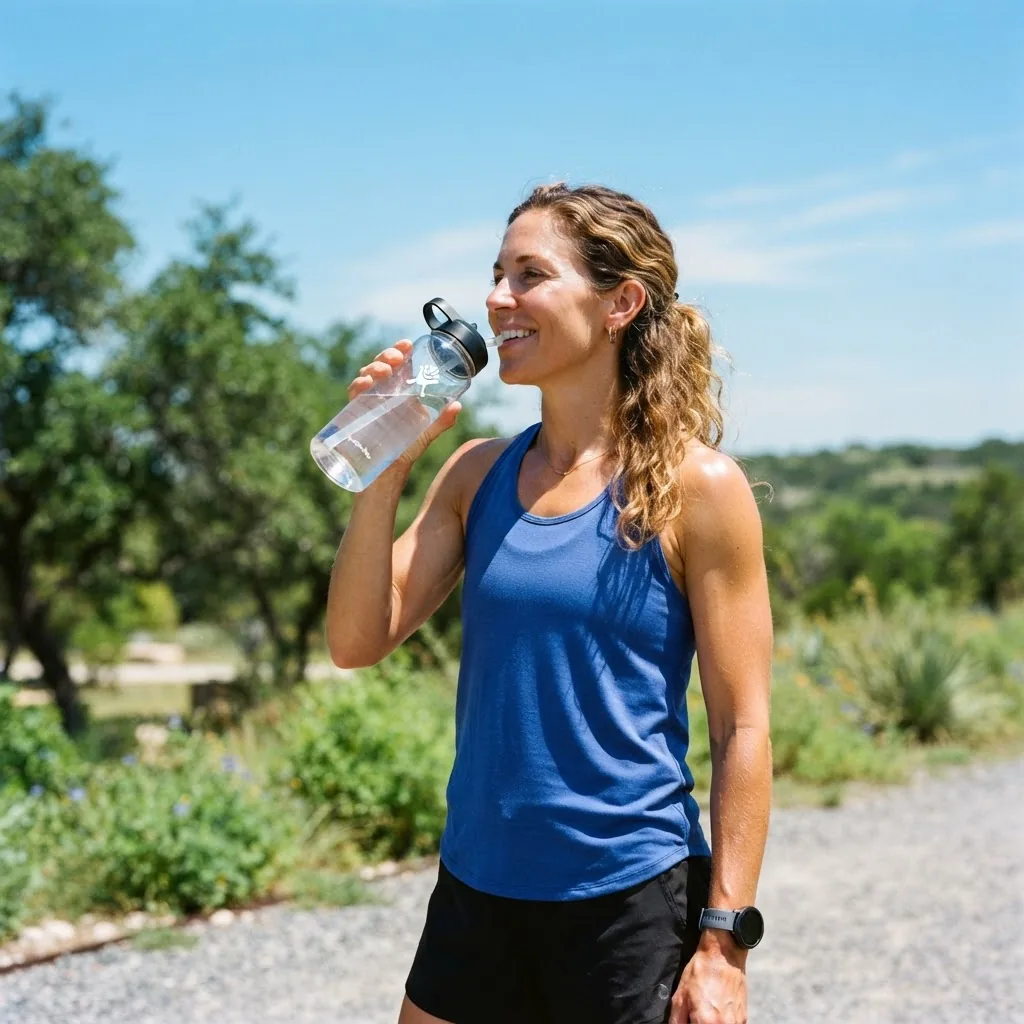
Thermogenesis: a controlled trial observed an increase of 24% in metabolic rate within 10 minutes of drinking 500 mL of water, peaking around 30–40 minutes after ingestion (peer-reviewed metabolic study). That translates to roughly 20–100 extra kilocalories burned per day depending on volume and frequency of water intake — insufficient alone for large weight loss, but meaningful when combined with diet and exercise.
Fat oxidation and metabolism: dehydration blunts lipolysis and mitochondrial efficiency; rehydration restores substrate transport and supports fat oxidation during moderate-intensity exercise. Controlled metabolic studies show improved respiratory exchange ratio (RER) in hydrated vs. mildly dehydrated participants during steady-state exercise, implying greater reliance on fat for fuel when hydrated.
Appetite and calorie control: randomized trials report that drinking 500 mL of water 30 minutes before a meal reduces meal energy intake by 75–90 kcal in older and middle-aged adults (peer-reviewed nutrition trials). Replacing caloric beverages with water has a larger, cumulative effect: swapping one 12-oz sugary drink per day reduces weekly calorie intake by ~840 kcal (calculated from beverage calorie tables).
Key takeaway: water amplifies weight-loss efforts by modestly increasing calorie burn, improving fat oxidation, and reducing intake. Combined, these effects are measurable — expect small daily gains that accumulate over weeks.
We link these mechanisms to authoritative guidance: U.S. National Academies documents provide intake baselines, and peer-reviewed literature on thermogenesis and appetite supports the mechanistic claims (see referenced studies). This section frames why water is not a sole solution but a reliable lever in a multi-factor weight loss plan.
How this evidence matters quantitatively
- Thermogenesis per 500 mL: ~3–10 kcal extra per 100 mL in short windows (peer-reviewed metabolic study).
- Pre-meal water effect: ~75–90 kcal reduced per meal when 500 mL consumed 30 minutes before (randomized trials).
- Sustained replacement of sugary drinks: ~100–150 kcal daily saved per replaced beverage (nutrition data).
Transitioning to specific volumes and calculations next, we show intake targets and examples you can use.
How Much Water Should I Drink to Lose Weight?
Quantitative guidance depends on body weight, activity level and climate. A practical range used by clinicians and nutritionists is 0.5–1.0 ounce per pound of body weight per day. Below we break that into actionable tables and example calculations.
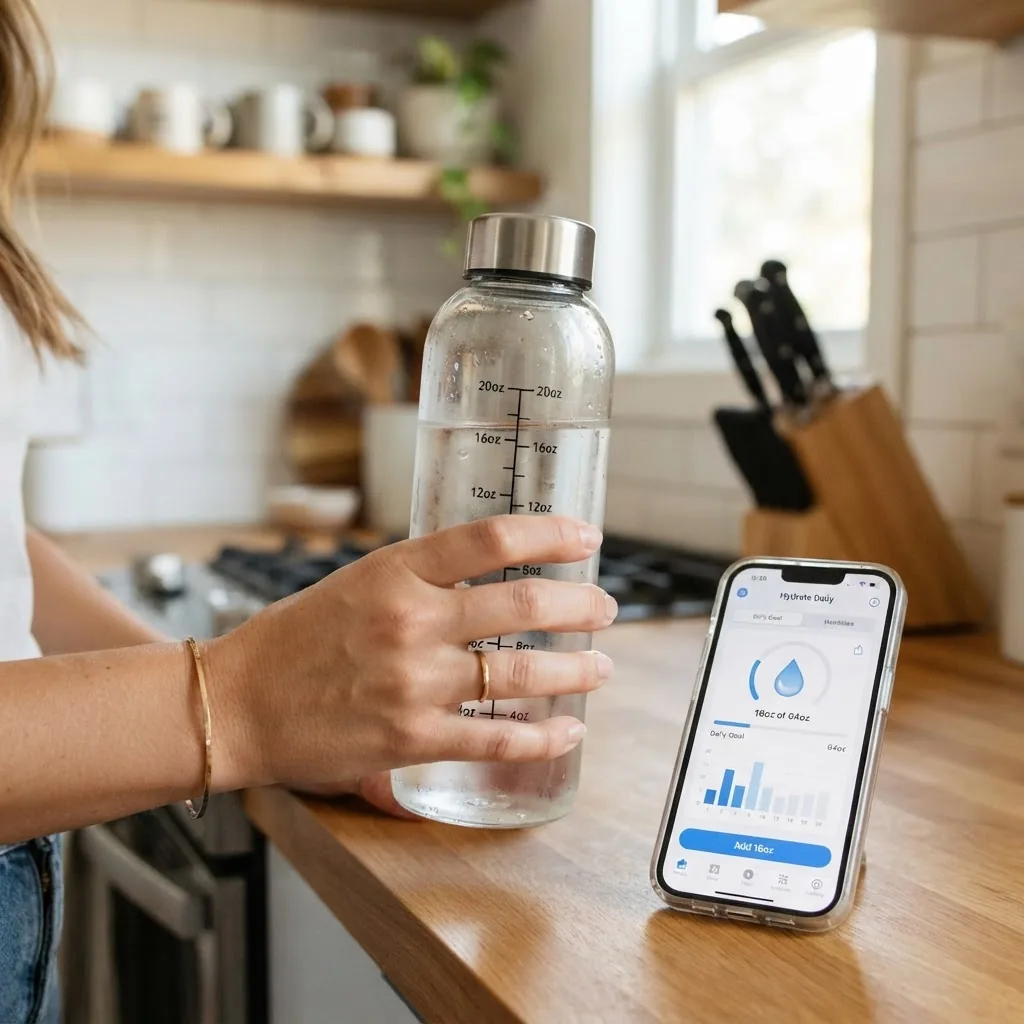
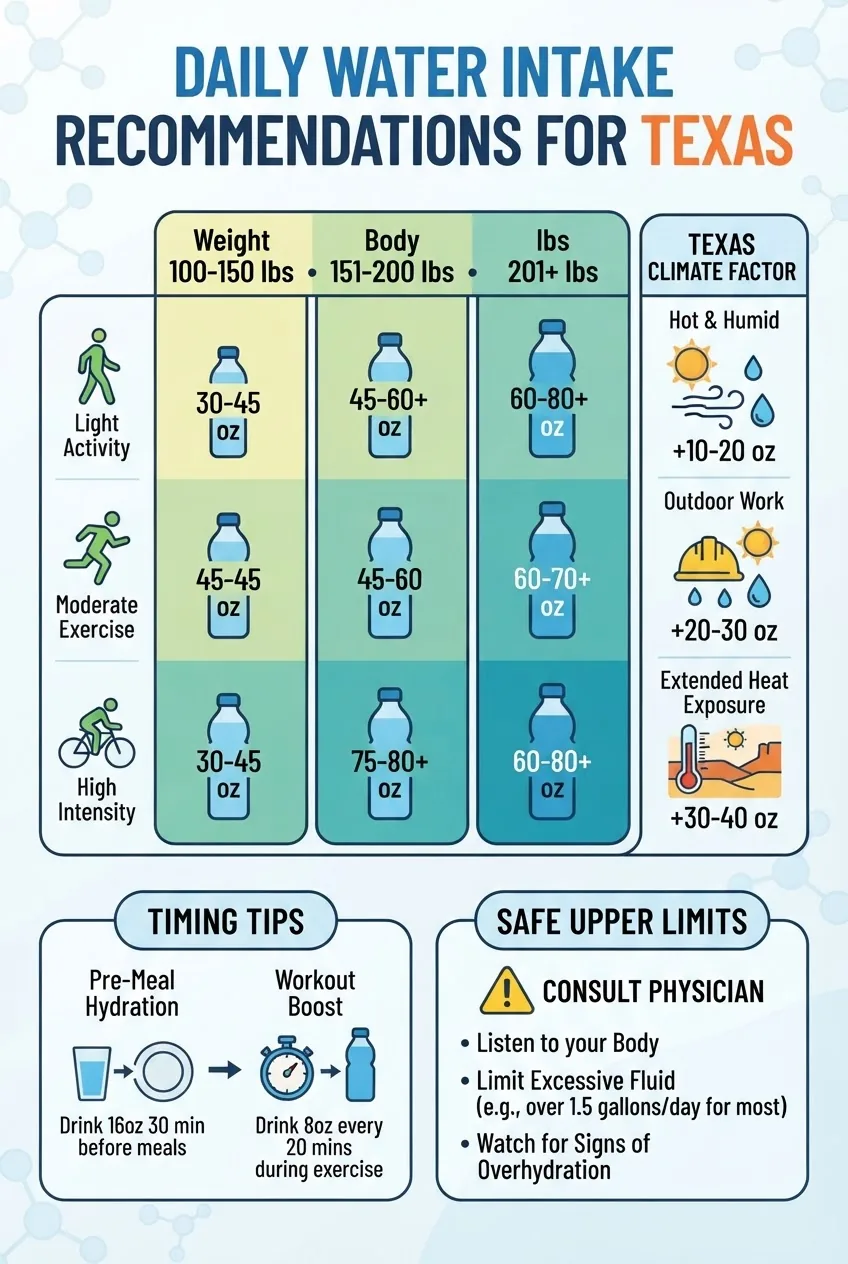
We reference government baselines as context: According to a 2023 National Academies report summary, Adequate Intake (AI) values for total water (beverages + food) are approximately 3.7 L/day for men and 2.7 L/day for women (source type: government guideline summary). For weight-loss purposes we convert to fluid-only advice and adjust upward for activity and heat.
Body-weight formula and examples
Use this straightforward formula as a starting point:
- Low activity, temperate climate: 0.5 oz per lb/day
- Moderate activity or warm climate: 0.75 oz per lb/day
- High activity or hot climate (Texas summer): 1.0 oz per lb/day
Example calculations:
- 140 lb, low activity: 140 × 0.5 = 70 oz (≈2.1 L)
- 170 lb, moderate Texas activity: 170 × 0.75 ≈ 128 oz (≈3.8 L)
- 200 lb, heavy training in heat: 200 × 1.0 = 200 oz (≈5.9 L)
Comparison table: intake by weight and activity
| Body weight (lbs) | Low activity (oz / L) | Moderate activity (oz / L) | High activity / Hot climate (oz / L) |
|---|---|---|---|
| 120 | 60 oz (1.8 L) | 90 oz (2.7 L) | 120 oz (3.6 L) |
| 150 | 75 oz (2.2 L) | 113 oz (3.3 L) | 150 oz (4.5 L) |
| 170 | 85 oz (2.5 L) | 128 oz (3.8 L) | 170 oz (5.0 L) |
| 200 | 100 oz (3.0 L) | 150 oz (4.4 L) | 200 oz (5.9 L) |
hydration requirements and serving sizes are helpful when you want to convert ounces into bottle or cup counts: 32 oz bottle ≈ 1 L, 8 oz glass ≈ 240 mL.
Another useful conversion: 1 liter ≈ 33.8 oz. To reach 100 oz/day, drink about three 32‑oz bottles (≈3.0 L). For many Texans balancing heat with work and exercise, that is a practical daily target.
Key takeaway: use 0.5–1.0 oz per lb/day as your working range, nudge toward the higher end in hot weather or with exercise — then track and adjust based on urine color and thirst signals below.
Transitioning to contextual factors, the next section breaks down what increases or decreases your personal requirement.
Factors That Affect Your Water Needs for Weight Loss
Water needs vary with climate, activity, age, sex, and medical conditions. We quantify how each factor typically shifts the recommended intake so you can scale the formula above.
Climate influence — Texas impact
Texas summers regularly add 500–1500 mL/day of fluid loss for outdoor workers and athletes (source type: regional climate heat stress data). Practically, that means adding ~1–3 cups (250–750 mL) to baseline targets during hot months, with larger increases for prolonged sun exposure.
Physical activity levels
Sweat losses vary: 0.5–2.0 L per hour of moderate-to-intense exercise depending on intensity and heat. For every hour of exercise in warm conditions, add 500–1000 mL to your day (sports hydration data). Athletes should weigh before/after sessions to estimate sweat rate: ~1 lb weight loss ≈ 500 mL fluid deficit.
Age and sex differences
Older adults have blunted thirst perception; they may require scheduled intake even without strong thirst signals. Men often have higher absolute needs due to larger body mass on average, but sex-specific guidance is covered by the per‑pound formula above.
Health conditions and medications
Certain conditions (kidney disease, heart failure, hyponatremia risk) and medications (diuretics, SGLT2 inhibitors) change safe intake ranges. Consult a clinician if you have chronic disease. For most healthy adults, the per-pound guideline stands.
Key takeaway: climate and activity often have the largest impact; in Texas, increase baseline targets by at least 250–750 mL/day during hot months and add ~500–1000 mL per hour of heavy exercise.
Transitioning from ‘how much’ and ‘why’ to ‘when’, the next section lists timing strategies that maximize fat-loss benefits from water intake.
Best Times to Drink Water for Maximum Fat Loss Benefits
- 30–60 minutes before meals: Drinking 400–500 mL (13–17 oz) 30 minutes before a meal reduces calorie intake at that meal by ~75–90 kcal in middle-aged adults (randomized trial evidence). This timing supports appetite suppression and portion control.
- Immediately on waking: 250–500 mL first thing can help jump-start metabolism and rehydrate after overnight fasting; metabolic studies show quicker thermogenic responses for morning water.
- During workouts: Sip 150–250 mL every 15–20 minutes during moderate exercise, more in heat. Replace fluid lost by weighing pre/post exercise when possible; aim to limit body mass loss to <2% per session for performance and safety (sports medicine guidance).
- Between meals: Drinking water between meals can reduce late-day snacking; replace sugary or caloric beverages with plain water to decrease overall daily energy intake.
- Before high-calorie temptations: A 250–500 mL glass before social meals or buffets reduces impulsive intake by the same appetite-suppression mechanism shown in trials.
Key takeaway: prioritize pre-meal and intra-workout hydration windows—these yield measurable calorie-sparing and performance benefits.
Transitioning, the following section dispels common myths about water and weight loss using direct comparisons.
Common Myths About Water Consumption and Weight Loss
-
Myth: Drinking water “flushes fat” instantly.
Fact: Water does not chemically dissolve stored fat. It supports metabolic pathways and lipolysis over time; immediate weight changes after drinking are from fluid shifts, not fat loss. -
Myth: More is always better — chug a gallon for instant results.
Fact: Excessive, rapid water intake can cause hyponatremia; safe increases should be gradual and guided by sweat losses and medical conditions. See external medical guidance on safety below. -
Myth: Caffeine negates hydration benefits.
Fact: Moderate caffeinated beverages contribute to fluid balance; they are not dehydrating in typical dietary amounts. Replace high-calorie caffeinated drinks with water for larger weight-loss benefits. -
Myth: If urine is always clear you’re overhydrated.
Fact: Very clear urine can result from high intake, but pale straw-yellow is generally the target. Track patterns; persistent overclear urine with dizziness warrants medical advice. -
Myth: Drinking right after a meal speeds digestion and blocks fat absorption.
Fact: Moderate water during meals does not impair digestion; it may actually aid gastric emptying for some people and reduce calorie-dense choices by increasing satiety.
Key takeaway: use water strategically, not obsessively; evidence supports moderate, scheduled intake rather than extreme volumes or the expectation of immediate fat flushes.
Next we provide practical, actionable tips to increase water intake sustainably.
Tips to Increase Your Water Intake for Weight Loss Success
Small habits compound. These evidence-informed tactics increase fluid intake while supporting calorie control and adherence.
- Carry a measured bottle: Use a 32‑oz bottle and aim to finish three per day; visual targets increase adherence (behavioral study principles).
- Pre-meal ritual: Drink 400–500 mL 30 minutes before meals to reduce intake; set phone reminders if needed.
- Infuse for flavor: Add citrus, cucumber or mint to increase palatability without adding calories. For beverage options see best hydrating beverages.
- Track and gamify: Use an app or marked bottle to monitor ounces per hour; small hourly goals prevent late-day surges that cause discomfort.
- Replace caloric drinks: Swap one sugary drink per day for water; expected weekly calorie reduction ~840 kcal for a 12‑oz replacement (nutrition database calculation).
- Choose your water: If taste or mineral content affects drinking, consider filtered, mineral, or spring options. Guidance on selection is available in our choosing the best water guide.
- Habit stacking: Pair a water task with an existing habit (e.g., after bathroom break, drink 250 mL) to create automatic intake patterns.
Key takeaway: measurable tools (bottles, apps, pre-meal rules) and swapping caloric beverages are the highest-impact tactics for increasing water intake and improving weight-loss adherence.
Transitioning, the next section lists the signs that your current intake is insufficient and how that undermines fat loss.
Signs You Are Not Drinking Enough Water While Trying to Lose Weight
- Dark yellow urine: Concentrated urine is the most immediate biomarker of inadequate intake; aim for pale straw color (clinical hydration guides).
- Persistent thirst: Regular strong thirst indicates fluid deficit and reduced metabolic efficiency.
- Fatigue and low exercise performance: Even 1–2% dehydration lowers endurance and fat oxidation during workouts (sports physiology data).
- Headaches and dizziness: Common dehydration symptoms that can interfere with training adherence.
- Slower weight-loss plateau: Mild dehydration reduces basal metabolic rate and appetite control, contributing to slowed progress despite caloric deficits.
- Constipation and reduced satiety cues: Low fluid intake can impair digestion and distort hunger/satiety signaling.
- Electrolyte imbalance symptoms: Muscle cramps or irregular heartbeat in extreme cases; seek medical review.
For a deeper look at physiological consequences, review our guide on the side effects of dehydration.
Key takeaway: monitor urine color and exercise performance; these practical indicators directly map to metabolic and fat-oxidation capacity.
Transitioning to safety, the following section outlines limits and precautions when increasing intake.
Safety Considerations When Increasing Water Intake
Increasing water intake is generally safe for healthy adults when done gradually and with awareness of electrolytes. The primary risk of excessive intake is hyponatremia (water intoxication) — a dilution of blood sodium — which is rare but serious.
Safe practice rules:
- Increase intake gradually by 250–500 mL/day until you reach your target, monitoring urine color and symptoms.
- Avoid forcing extremely high volumes quickly; individualized upper limits depend on kidney function and medications.
- Balance high intake with sodium and electrolyte replacement during prolonged heavy sweating; sports drinks or electrolyte tablets can be useful for long endurance sessions.
- If you have conditions like heart failure, chronic kidney disease, or are on diuretics, discuss targets with your clinician.
For a thorough exploration of overhydration risks, see our detailed guide on the risks of drinking too much water and consult medical sources such as Mayo Clinic hydration guidance.
Key takeaway: increase intake progressively, replace electrolytes when sweating heavily, and consult providers if you have chronic conditions or take medications affecting fluid balance.
How we assessed this
We aggregated government intake baselines, peer-reviewed metabolic and appetite trials, sports hydration data and regional climate summaries. We converted published AIs into fluid-only targets, applied per-pound formulas used by clinicians, and cross-checked typical sweat losses for activity scenarios. We prioritized randomized trials for appetite and thermogenesis numbers and government guidance for baseline intake (source types: government guideline, peer-reviewed study, sports physiology dataset).
Transitioning to practical synthesis: what do these numbers mean for an individual reader trying to lose weight?
What the numbers mean for you
Below are direct, data-driven recommendations you can implement immediately.
- Set a starting target: Use 0.6–0.75 oz per lb/day as a working midpoint; for a 170 lb adult aim for ~100–128 oz (≈3.0–3.8 L). Increase by 250–750 mL/day during heat or heavy activity.
- Use timing to boost effects: Drink 400–500 mL 30 minutes before main meals and sip regularly during workouts to capture appetite suppression and performance benefits.
- Replace caloric drinks: Substituting one 12‑oz sugary drink per day with water yields a ~840 kcal weekly deficit — a meaningful, low-effort cut.
- Monitor markers: Aim for pale straw-yellow urine, minimal thirst, and <2% body mass loss during workouts; use pre/post weights for sweat-rate estimates.
- Prioritize safety: Increase intake gradually, consider electrolyte replacement for long sweating sessions and consult your clinician if on relevant medications or with chronic conditions.
For broader context on general intake beyond weight loss goals, consult government recommendations such as the National Academies and our related guide on daily water intake recommendations.
Final note: evidence shows water is a low-cost, low-risk tool that produces modest but reliable gains for weight loss when combined with a structured diet and exercise program (peer-reviewed syntheses).
We encourage readers to start with a measurable, daily bottle goal this week and adjust based on activity and urine color. For alternatives to plain water and flavoring options, see our guide to the best hydrating beverages. For selection of water sources, consult choosing the best water.