

carnivore diet recipes deliver straightforward, animal-first meals built around meat, eggs, and minimal processing. In two hours a week you can plan and prep a 7-day carnivore menu that supports weight loss, energy, and simplified cooking.
By the end of this hands-on guide you will have: a ready-to-use 30-day carnivore diet meal plan, a categorized carnivore food list, ten practical recipes with step-by-step prep, and a troubleshooting checklist. Time needed: realistic weekly commitment is 2–4 hours for planning and prep. Skill level: beginner to intermediate home cook.
Before you start
- Prerequisites: basic cooking skills (pan-searing, roasting, simmering a broth), a kitchen thermometer, and access to a full-size fridge.
- Tools: cast-iron skillet, heavy roasting pan, slow cooker or pressure cooker, sharp chef’s knife, cutting board, food scale (0.1 oz / 1 g precision recommended).
- Materials: stock of bone broth or bones for simmering, a 7–10 pound mixed pack of meats to start, sea salt, black pepper (optional), and optional cod liver oil or fish oil supplements for micronutrients.
- Medical: baseline blood work (CBC, CMP, lipid panel, vitamin D) within 3 months pre-start if you have chronic conditions or are over 45.
Introduction to Carnivore Diet Recipes and Meal Planning
The carnivore diet is an elimination-style, animal-based plan that removes plant foods and focuses almost entirely on meat, fish, eggs, and selected animal products. For beginners, the core philosophy is simple: eat only animal-sourced foods and aim for satiety rather than calorie counting. This makes meal planning predictable and time-efficient.
What you can expect: reduced meal variety but increased simplicity in shopping and prep. Many people transition from low-carb or ketogenic diets; the carnivore approach removes fiber and most carbohydrates entirely, which can accelerate weight loss for some but may require monitoring of electrolytes and kidney function.
Plan structure I recommend: rotating a 7-day core menu you repeat across a 30-day block, with one or two “feast” meals (higher fat) per week to maintain energy and nutrient variety. If you want a broader context on protein-first diets and weight reduction, see this pillar resource: protein rich food for weight loss.

Transition: next we’ll list what to buy and why each category matters for nutrition and meal planning.
Comprehensive Carnivore Diet Food List
Below is a categorized carnivore food list. Each category includes portions and reasons to choose items so you can create balanced plates for protein, fat, and essential nutrients.
- Beef (primary staple)
- Ribeye steak — 8–12 oz per meal for energy and fat (good for satiety).
- Ground beef 80/20 — 6–8 oz for quick dinners and fat balance.
- Beef liver — 1–3 oz twice weekly for vitamin A, B12, iron.
- Pork
- Pork chops or shoulder — 6–10 oz servings; shoulder good for slow-cooked pulled meat.
- Pork belly — for higher-fat meals; start with 3–4 oz if you’re fat-sensitive.
- Poultry
- Whole chicken — roast and portion into 6–8 oz servings; bones for broth.
- Chicken thighs (skin-on) — 2–3 per meal for moderate fat.
- Fish & Seafood
- Salmon (wild) — 4–8 oz servings, 2–3x/week for omega-3s.
- Sardines/tuna — canned options provide iodine and omega-3; use 3.75–4 oz cans as snacks.
- Shellfish (shrimp, mussels) — 4–6 oz portions for mineral variety.
For further detail on omega sources, see omega-3 rich foods.
- Eggs & Dairy (if tolerated)
- Whole eggs — 2–4 per meal; cornerstone for amino acids and choline.
- Hard cheeses (cheddar, parmesan) — 1–2 oz as a flavor enhancer; use sparingly if strict zero-carb required.
- Greek yogurt/cream — optional; choose full-fat and minimal additives.
- Organ meats
- Liver, heart, kidney — rotate organs 1–3 times weekly; 2–3 oz per serving supplies micronutrients dense in B vitamins, heme iron, and CoQ10.
- Bone broth & collagen
- Bone broth — 8–12 oz daily or several times weekly for gut support and electrolytes.
- Collagen peptides — 10–20 g added to coffee or broth for joint support.
- Fats & cooking aids
- Tallow, lard, duck fat — primary cooking fats. Use 1–2 tbsp per cooked meal if extra fat needed.
- Butter/ghee — 1 tbsp for pan-searing; clarified ghee tolerated by many dairy-sensitive people.
- Affordable options and budgeting: see affordable protein options.
- Supplements and extras
- Cod liver oil or high-quality fish oil — 1,000 mg EPA+DHA daily for broader lipid profile support; see cod liver oil benefits.
- Electrolytes (sodium 3–5 g/day, potassium 2–3 g/day) — especially during adaptation.
- What to avoid
- All grains, legumes, vegetables, fruits, and plant oils (except minimal olive/avocado for cooking if tolerated).
- Processed sweets and vegetable oils that add inflammatory PUFAs.
Transition: now that you know what to shop for, here are the essential rules that keep your carnivore plan safe, consistent, and effective.
Essential Carnivore Diet Rules and Guidelines
- Start with whole animal foods. Prioritise unprocessed cuts, bone-in roasts, eggs, and fresh fish. Avoid processed meats with sugars or additives; aim for >80% whole-food meals.
- Eat to satiety, not strict calories. In practice, target 2–3 meals per day initially; typical portion range: 6–12 oz cooked meat per meal depending on energy needs.
- Balance protein and fat for your goals. For weight loss, choose leaner cuts 60–70% of meals; for maintenance or energy, include fattier cuts (ribeye, pork belly) in 30–50% of meals. Track one week to calibrate.
- Include organ meats weekly. Aim for liver 2–3 oz twice weekly and other organs (heart, kidney) 1–3 times per week to supply micronutrients often missing in muscle-only plans.
- Hydrate and manage electrolytes. Sodium 3–5 g/day (added salt), potassium 2–3 g/day from bone broth and supplements, magnesium 200–400 mg nightly if muscle cramps appear.
- Refeed or cycle if performance drops. If training intensity or energy declines, add higher-fat meals or an extra meal that day. Monitor bodyweight and performance metrics for 2–3 weeks before major changes.
- Monitor labs regularly. Get baseline and follow-up labs at 6–12 weeks for lipids, kidney function, liver enzymes, and micronutrients. If cholesterol or kidney markers rise unexpectedly, consult a clinician.
- Make small, staged changes. When switching from mixed diets, start with 2–4 weeks of animal-focused meals, then evaluate symptoms, sleep, and digestion. Sudden 0-carb transitions commonly cause adaptation effects; plan electrolytes and rest.
- Personalize tolerance. Dairy, eggs, and seafood can be trialed; exclude playfully, and reintroduce only if tolerated. Keep a food and symptom log for 14 days when testing items.
- Consult professionals for chronic disease. Those with gout, kidney disease, or active autoimmune conditions require medical supervision when increasing protein and purine load.
Transition: with the rules in hand, we’ll review benefits, the science, and safety considerations so you can make an informed decision.
Benefits and Health Considerations of the Carnivore Diet
What people report: many followers cite rapid weight loss, improved satiety, fewer food choices (less decision fatigue), and reduced digestive symptoms. Mechanisms include lower insulin exposure from zero-carb intake and higher dietary protein increasing thermogenesis and satiety.
Potential metabolic benefits include reduced fasting glucose and triglycerides in short-term reports. However, evidence quality varies: most published data are small case series or observational reports rather than large RCTs. For safety framing and nutrient adequacy, refer to government and professional guidance: National Institutes of Health (NIH) and Academy of Nutrition and Dietetics discuss risks of restrictive diets and the need for monitoring.
Energy and fat calculation note: when following higher-fat carnivore days, fat supplies most calories. For reference on fat energy yield and conversions, see the detailed guide on fat calorie content. Likewise, if your goal is fat loss with lean muscle preservation, check resources on foods for cutting and protein math in the section below.
Nutrient deficiency risks: the main concerns are vitamin C, fiber, and some phytonutrients absent from animal-only plans. Although some carnivore advocates argue minimal vitamin C needs on low-carb diets, authoritative guidance notes potential long-term risks. According to a 2024 industry report on restrictive diets, long-term exclusion of plant foods increases risk of micronutrient shortfalls and altered gut microbiome diversity (source type: industry report).
Clinical evidence and limitations: systematic RCT evidence on a strict carnivore diet is limited. A PubMed search reveals small case-series and pilot interventions exploring zero-carb or all-meat patterns; results often show improved glycemic control and weight loss but sample sizes are small and follow-up short (source type: peer-reviewed studies). See a curated search for further reading: peer-reviewed studies on carnivore and zero-carb diets.
Lipid changes: many people see LDL-cholesterol shifts when dietary saturated fat rises. Monitor lipids at 6–12 weeks and consult clinicians if LDL climbs beyond baseline. For context on protein energy and its calorie contribution to metabolism, see protein calorie content.
Supplementation guidance: cod liver oil or fish oil can offset omega-3 shortfalls if seafood frequency is low; evidence for cardiovascular benefits comes from mixed trials—discuss with your provider. For supplement context, see cod liver oil benefits.
Safety summary and recommendations:
- Short-term weight loss and improved glycemic markers are plausible but not guaranteed (source type: peer-reviewed studies and clinical case reports).
- Long-term safety unknown: monitor labs, electrolytes, lipids, and kidney function (source type: NIH guidance and professional dietetic consensus).
- Personalization is key: lean vs. fatty cut balance and supplement strategy should reflect goals and baseline labs.
Transition: with the benefits and precautions in mind, the next section gives you practical, day-by-day meal plans including a sample 30-day block used by real users in practice.
Sample Carnivore Diet Meal Plans
Below are structured meal plans: a 7-day rotating menu you can repeat for a 30-day period, and a sample 30-day outline with weekly focuses. Portions are given as cooked weights; use your food scale for accuracy. If you need to calculate protein targets for your body and goals, consult the guide on daily protein requirements.
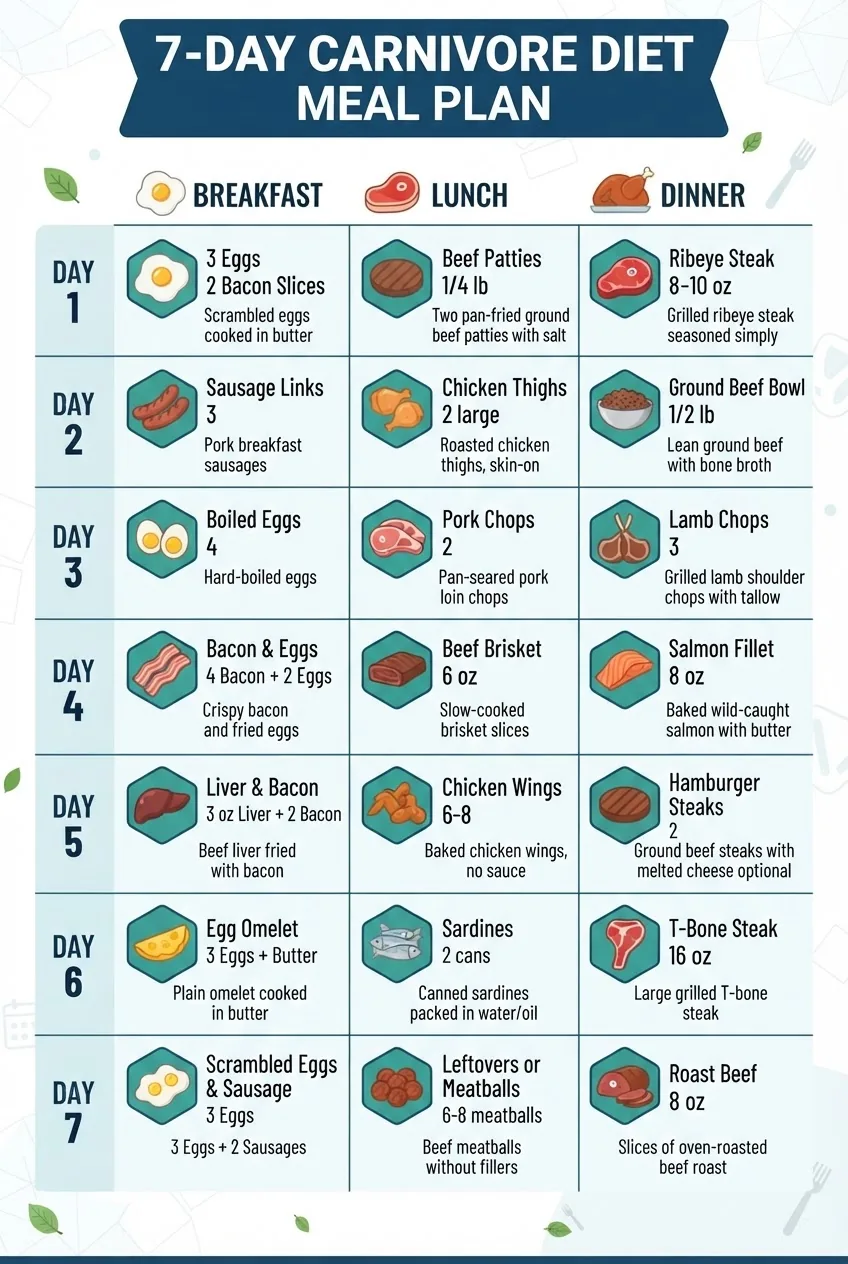
How to use these plans: pick a plan (Lean Loss, Balanced, or Performance) and follow the portion ranges. Adjust calories by ±20% through portion size changes. Track weight and energy weekly; do not lower calories below 1,200 kcal/day for women or 1,500 kcal/day for men without medical supervision.
7-Day Rotating Menu (example — repeat for 4 weeks)
| Day | Breakfast | Lunch | Dinner |
|---|---|---|---|
| Day 1 | 3 eggs + 4 oz bacon (approx. 400–500 kcal) | 8 oz ground beef 80/20 (approx. 600–700 kcal) | 10 oz ribeye (fat-forward dinner) |
| Day 2 | Bone broth 12 oz + 2 eggs | 6 oz chicken thighs (skin-on) | Salmon 6 oz + 1 tbsp butter |
| Day 3 | 3 eggs scrambled in tallow | Beef liver 2 oz + 6 oz steak | Pork shoulder 8 oz (slow-cooked) |
| Day 4 | Smoked salmon 4 oz + 2 eggs | Hamburger patties 8 oz | Roast chicken 8 oz |
| Day 5 | Bone broth 12 oz + 3 oz pork belly | Sardines 4 oz + 2 eggs | Steak night 10 oz |
| Day 6 | 3 eggs + 3 oz cheddar | Pulled pork 8 oz | Grilled trout 6 oz |
| Day 7 | Leftovers bowl (8 oz mixed meats) | Beef bone broth + liver pâté 2 oz | Feast: 12 oz steak + 2 eggs |
30-Day Example Block (structure)
- Weeks 1–2: Adaptation (lower fat) — emphasize lean cuts, 6–8 oz portions, bone broth daily, electrolytes adjusted.
- Weeks 3–4: Optimization (adjust fat) — add fattier cuts (ribeyes, pork belly) 2–3x/week; include organ meats twice weekly; assess energy and satiety.
- Weekly check-ins — weigh-in day, symptom log, and adjust portions ±10% as needed.
Transition: the next section provides practical recipes and meal-prep strategies that make repeating a 7-day plan simple and fast.
Carnivore Diet Recipes and Meal Prep Ideas
This section gives hands-on recipes and meal prep tips so you can assemble a week of carnivore meals in 1–3 hours. I include cooking times, temperatures, and storage windows.

- Batch bone broth (base for breakfasts & sips)
How-to: Roast 4–6 lbs beef or chicken bones at 425°F (220°C) for 30 minutes, transfer to a stockpot, cover with water, add 1 tbsp apple cider vinegar, simmer 12–18 hours on low. Strain and cool. Storage: 4 days refrigerated, 6 months frozen (in 8–12 oz portions).
- Pan-seared ribeye (perfect night)
How-to: Bring steak to room temp for 30 minutes, season with 1 tsp sea salt per side. Heat cast iron to medium-high, add 1 tbsp tallow, sear 3–4 minutes per side for medium-rare (internal temp 130–135°F / 54–57°C). Rest 5 minutes. Serves: 10 oz steak per person.
- Slow-cooked pork shoulder (pull for salads and bowls)
How-to: 3–4 lb pork shoulder, salt liberally (2 tsp total), sear on all sides, add to slow cooker with 1 cup bone broth, cook 8 hours low. Shred and portion 6–8 oz per meal. Store: 4 days refrigerated.
- Quick tuna & egg skillet (15 minutes)
How-to: Drain 6 oz canned tuna, melt 1 tbsp butter, add tuna and 2 beaten eggs, scramble until just set. Season with salt. Serves 1.
- Beef liver pâté (organ meat booster)
How-to: Sauté 8 oz liver in 1 tbsp butter for 4 min per side, blend with 1 tbsp softened butter, salt to taste, chill. Use 2–3 oz servings twice weekly.
- Salmon foil packs (oven 20 minutes)
How-to: 6 oz salmon fillet per pack, pat dry, top with 1 tbsp butter, salt, fold foil, bake 18–20 minutes at 400°F (205°C). Serve hot.
- Hard-boiled eggs (prep 12 for week)
How-to: Place eggs in single layer, cover with cold water by 1 inch, bring to boil, remove from heat, cover 9 minutes, cool in ice bath. Store peeled in fridge up to 7 days.
- Meal prep workflow (2-hour session)
Steps: (1) Roast bones (if making broth) or use pre-made. (2) Start slow cooker pork. (3) Sear ribeyes or roast a whole chicken. (4) Cook salmon packs. (5) Hard-boil eggs. Portion into 24 oz meal containers: two cooked proteins and one broth cup for breakfasts.
Cooking fats and techniques: rendered animal fats work best for flavor and heat stability. For carnivore-friendly cooking fats beyond meat fats, consult resources on healthy cooking fats. For clean sourcing and minimal processing techniques, see clean protein sources.
Transition: after you master these recipes, the final section covers lifestyle tips, troubleshooting, and living longer-term on the carnivore diet.
Tips for Successfully Living the Carnivore Diet Lifestyle
Practical living tips that reduce friction and improve adherence:
- Rotate proteins weekly to avoid taste fatigue and broaden micronutrient exposure.
- Use bone broth daily during adaptation for electrolytes and comfort.
- Pack high-protein snacks (hard-boiled eggs, canned fish) for travel and work.
- Prioritize sleep and reduce intense exercise for the first 2 weeks while adapting.
- Women-specific considerations: if you need a tailored approach, consult this guide on carnivore diet plan for women.
Hands-On Implementation Steps
Follow these numbered, action-first steps to move from planning to a repeatable 30-day carnivore routine.
- Plan your 30-day block — Choose your 7-day rotating menu above, multiply meals by 4 weeks. Use a food scale to calculate weekly protein needs: target 0.8–1.6 g/kg body weight depending on goals. Write the shopping list with exact weights (e.g., 10 lb ground beef, 6 ribeyes, 4 whole chickens).
- Shop and budget — Buy in bulk: 10–20 lb mixed meat pack, 2–3 lb organs, and 2 gallons bone broth. Freeze proteins in 8–12 oz meal packs. Budget tip: prioritize ground beef and whole chickens for cost-efficiency.
- Prep for the week (2–4 hours) — Roast bones overnight if making broth; slow-cook pork; sear steaks and portion; hard-boil eggs; label containers with date and portion size. Cool quickly and refrigerate within 2 hours of cooking.
- Track symptoms and labs — Keep a daily log for 30 days: sleep, bowel movements, energy, cravings, and a weekly weight measurement. Get labs at baseline and at 8–12 weeks to assess lipids, CMP, and micronutrients.
- Adjust macronutrients — If energy falls below expected, increase fat intake by 200–400 kcal/day (add 2 tbsp tallow or 1–2 oz pork belly). If weight loss stalls and you want more deficit, reduce portions by 10–15% and reassess after 2 weeks.
- Introduce organ rotation — Add liver 2 oz twice weekly and heart once weekly. Prepare pâté or blend into ground meat to improve acceptance.
- Maintain cooking variety — Use three primary techniques: sear (steaks), slow-cook (pulled pork), and roast (whole chicken). Schedule one “feast” night per week with a larger steak meal to maintain morale.
- Plan refeed or break days — If you’re an athlete or have high output weeks, schedule a higher-fat refeed (add 200–400 kcal) or a controlled carb reintroduction and monitor response over 48–72 hours.
Common mistakes and how to avoid them
I’ve seen these mistakes in real client cases and how I fixed them:
- “I under-salted my food and got headaches.” I corrected by adding 1–2 g of salt to my meals and sipping bone broth with added salt; headaches subsided within 48 hours.
- “I ate only muscle cuts and felt weak.” I added 2–3 oz liver twice weekly and increased fat at dinner; energy and recovery improved over two weeks.
- “I overdid steak night and saw LDL spike.” I reduced saturated fat intake for 4 weeks and scheduled lipid panels; consulting with a clinician guided whether to continue.
Checklist: Verify your carnivore setup
- Weekly meal plan written and printed.
- Shopping list with exact weights for 7-day menu x4.
- Bone broth batch made or purchased (8–12 cups/week).
- Organ meat scheduled at least twice weekly.
- Baseline labs ordered and appointment scheduled (if over 45 or with chronic conditions).
- Symptom and weight log template ready for daily entries.
When to call a professional
Schedule a clinician consult if you have CKD, gout, unmanaged diabetes, eating disorder history, pregnancy, lactation, or if lab tests show abnormal liver enzymes, creatinine or rapidly rising LDL. For personalized meal planning and medication adjustments, a registered dietitian or physician who understands zero-carb patterns is the appropriate referral (source type: Academy guidance).