By the end you will have a fully actionable, Texas-tested plan to get 1.2–2.0 g/kg of bodyweight from plants, three reusable meal templates, and a 7-day high-protein vegan meal schedule you can cook in a weekend. Estimated time to implement: 3–6 hours of planning and one 2‑hour meal-prep session. Skill level: beginner–intermediate cooking and basic nutrition math.
Before you start
- Kitchen tools: 1 heavy skillet, 1 non-stick pan, rice cooker or pot, blender, measuring cups and digital scale (grams preferred).
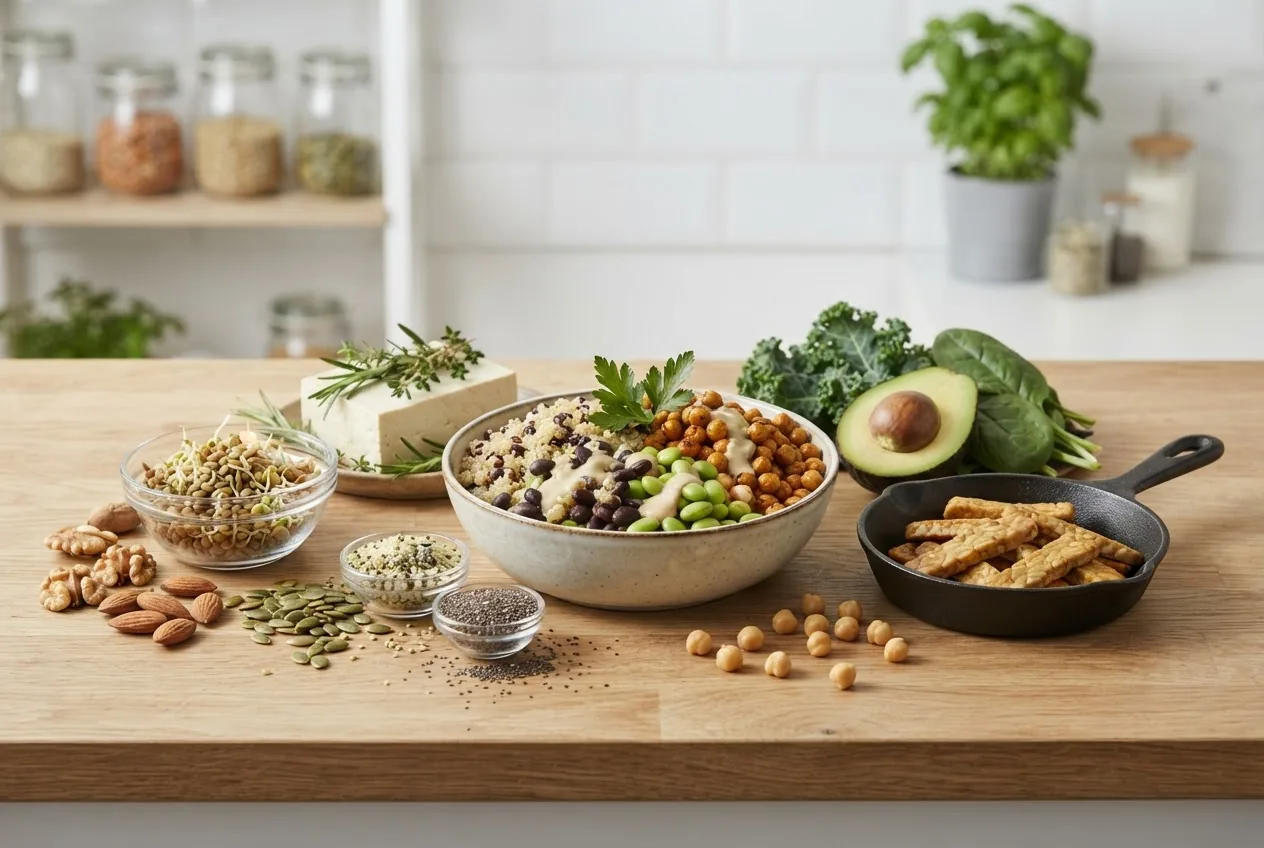
- Pantry staples: dried beans, lentils, rolled oats, canned chickpeas, quinoa, firm tofu, tempeh, seitan (or vital wheat gluten), nuts, seeds, nutritional yeast.
- Supplements to consider: vitamin B12, vitamin D (seasonal), algal DHA/EPA if not consuming fortified foods.
- Reference guides: a food-tracking app or spreadsheet and a reliable nutrition database (USDA FoodData Central or equivalent).
- Health check: recent bloodwork within 12 months or plan to consult a registered dietitian if you have kidney disease, pregnancy, or other medical conditions.
-
Learn the fundamentals first—
Understanding Plant Based High Protein Nutrition
This section explains the science you need to plan a successful plant based high protein approach: what makes a protein “complete”, how bioavailability matters, and how to set targets based on activity level.
Key concepts (short bullets)
- Amino acids: Proteins are chains of amino acids; nine are essential (must be eaten).
- Complete vs incomplete proteins: A “complete” protein supplies all nine essential amino acids in adequate amounts. Many plant foods are lower in one or more essential amino acids but can be combined.
- Protein quality metrics: PDCAAS (Protein Digestibility-Corrected Amino Acid Score) and DIAAS (Digestible Indispensable Amino Acid Score) measure protein quality and digestibility — DIAAS is increasingly preferred for accuracy.
- Bioavailability: Plant proteins often have lower digestibility due to fiber and antinutrients; cooking, soaking, fermenting, and sprouting improve availability.
According to a 2023 NIH report on dietary protein and health, adults generally need 0.8 g/kg as a minimum, but active individuals and those aiming for fat loss often target 1.2–2.0 g/kg (source type: government report).
Practical takeaways
- Use a mix of legumes, soy, seitan, and higher-protein grains (quinoa) to hit amino acid targets.
- Improve plant protein bioavailability with simple preparation: pressure-cook beans, ferment soy (tempeh), and toast seeds.
- Don’t obsess about “complementing” every meal—aim for complementary proteins across the day.
Transition: Now that you understand the mechanics, the next step is to choose the foods that give the most protein for the calories and prep time.
-
Choose your key foods—
Top Plant Protein Foods: Types and Protein Content
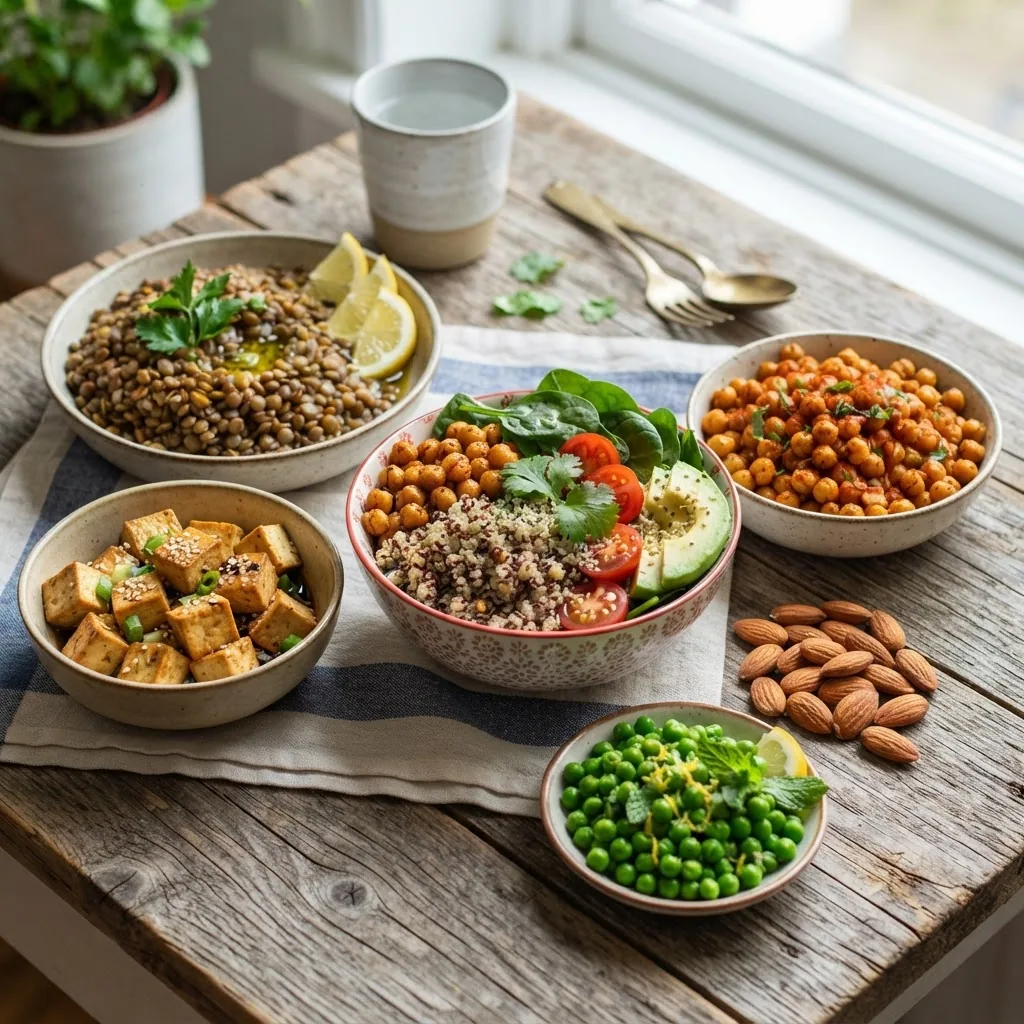
The following table gives typical cooked or ready-to-eat serving sizes, with protein per portion (use USDA FoodData Central or manufacturer labels for exact numbers). Values are approximations for planning.
Food Typical Serving Protein (g) Notes on quality Lentils (cooked) 1 cup (198 g) 18 g Rich in lysine; pair with grains for methionine. Chickpeas (cooked) 1 cup (164 g) 15 g Versatile; used in salads, hummus. Firm tofu 100 g 8–12 g (varies) Complete protein; PDCAAS and DIAAS favorable for soy. Tempeh 100 g 19 g Fermented soy — improved digestibility and B12 traces if fortified. Seitan (wheat gluten) 100 g 25 g Very high protein but not suitable for those with gluten sensitivity. Quinoa (cooked) 1 cup (185 g) 8 g Higher-quality amino acid profile for a grain. Edamame (cooked) 1 cup (155 g) 17 g Soy legume; complete protein characteristics. Green peas (cooked) 1 cup (160 g) 9 g Good for blending into soups and spreads. Peanut butter 2 tbsp (32 g) 8 g Calorie-dense; pair with legumes for balance. Almonds 1/4 cup (35 g) 6–7 g High in healthy fats and vitamin E; moderate protein. Hemp seeds 3 tbsp (30 g) 10 g Good amino acid profile and omega-3 ALA. Chia seeds 2 tbsp (28 g) 4–5 g Gel-forming, good for snacks and puddings. Notes on numbers: these are average values. For athletes or those tracking intake precisely, consult USDA FoodData Central or package labels. For omega-3 coverage from plants, include sources like flaxseed, chia, and hemp — see plant sources of omega-3.
Transition: With an understanding of food-level protein, next we cover practical strategies and myth-busting so you can hit targets reliably.
-
Apply targeted strategies—
How to Get Protein on a Vegan Diet: Practical Tips and Myths
This numbered list gives hands-on tactics to reliably meet your goals and busts the common myths that slow progress.
- Calculate your target: Use bodyweight and activity level—sedentary 0.8 g/kg, maintain/active 1.2–1.6 g/kg, strength training/lean gains 1.6–2.0 g/kg. See daily protein requirements for calculators and examples.
- Prioritize high-yield meals: Aim for 20–40 g protein per meal for most adults. Example: 150 g tempeh (28 g) + 1 cup quinoa (8 g) + 2 tbsp hemp seeds (7 g) = ~43 g.
- Use protein-forward snacks: Greek-style plant yogurt with hemp + pumpkin seeds, or a chickpea salad—snacks should add 8–15 g each.
- Prep legumes in bulk: Cook 6 cups of lentils or beans on Sunday to portion for the week; 1 cup per day equals ~15–18 g.
- Combine wisely over the day: You don’t need complete proteins in a single meal—spread complementary foods (grains + legumes) across the day.
- Improve digestibility: Soak beans 8–12 hours, pressure cook, or use fermented soy (tempeh) to reduce antinutrients and raise PDCAAS/DIAAS-equivalent absorption.
- Track calories and macros: Protein has 4 kcal/g—see calories in protein to fine-tune energy balance for weight loss or muscle gain.
Myth vs Fact
Myth: “You can’t get complete protein from plants.”
Fact: Many plant patterns supply complete amino acids across the day; soy and quinoa are complete on their own. Government and Academy statements support planned plant-based diets as adequate—see the Academy position site (source type: professional organization).Myth: “Vegans are always protein-deficient.”
Fact: Deficiency is rare when daily calories and variety meet needs; targeted planning prevents shortfalls, especially for athletes.Practical tip: to visualize your daily pattern, aim for three 25–35 g meals and two 8–15 g snacks if targeting ~120–150 g/day. Use daily protein requirements tools to scale.
Transition: Armed with tips and myth-busting, you can now design a meal plan that balances protein, fats, and calories.
-
Build balanced meals—
Designing a High Protein Plant Based Diet Plan
Step-by-step instructions to create a daily plan aligned with your calorie and protein goals.
Step 1 — Set targets
- Calculate weight in kg: weight (lbs) ÷ 2.2.
- Choose protein multiplier: 1.2 g/kg (active) to 1.8 g/kg (strength focus).
- Set calories: estimate maintenance then subtract 250–500 kcal for weight loss or add 250–500 kcal for gain. For reference on fat calorie math see the calorie guide for fats.
Step 2 — Macro split example
For a 1,800 kcal/day plan aiming for 120 g protein (480 kcal):
- Protein: 120 g = 480 kcal (27% kcal)
- Fat: 60–70 g = 540–630 kcal (30–35%) — choose healthy fat choices (olive oil, avocado oil)
- Carbs: remaining calories (~690–780 kcal = 170–195 g)
Step 3 — Meal timing and portioning
Distribute protein evenly: target 25–40 g per main meal and 8–15 g per snack. Example framework:
- Breakfast: 25–35 g protein (tofu scramble with tempeh crumbles + oats with hemp)
- Lunch: 30–40 g (big lentil salad + seitan strips)
- Snack: 8–12 g (hummus and seeded crackers)
- Dinner: 30–40 g (grilled tempeh + quinoa + peas)
- Evening snack (optional): 8–10 g (protein smoothie with pea or soy protein)
Step 4 — Build a weekly rotation
Plan 3 interchangeable breakfasts, lunches, dinners and 2 snacks. Batch-cook beans and grains, marinate tempeh and tofu, and roast a tray of mixed seeds/nuts. This reduces decision fatigue and keeps variety.
When you balance fat by design, your total calorie math stays accurate and sustainable. See the calorie guide for fats and healthy fat choices for guidance on integrating oils.
Transition: With the plan structure complete, follow the sample 7-day schedule below to implement quickly.
-
Execute the schedule—
Sample 7-Day High Protein Plant Based Meal Plan
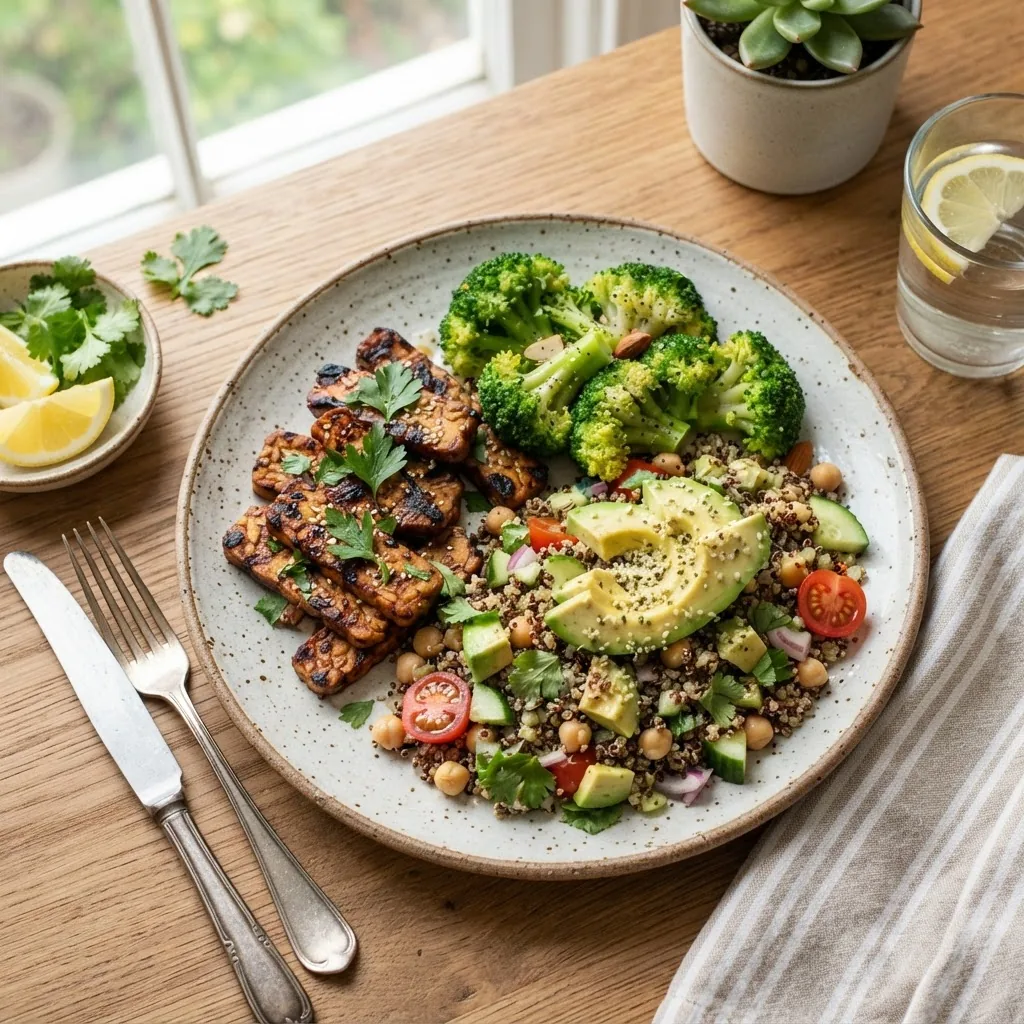
The plan below provides three meals and two snacks per day, protein per meal estimated. Each day totals roughly 100–160 g protein depending on portions—adjust serving sizes to match your target.
Day 1 — Total ≈ 125 g
- Breakfast (30 g): Tofu scramble (150 g tofu = 18 g) with 1/2 cup cooked quinoa (4 g) + 2 tbsp hemp seeds (7 g) = 29 g. Prep: crumble tofu, sauté 6–8 minutes with turmeric.
- Snack 1 (12 g): Smoothie with 1 scoop pea protein (20 g) diluted to 12 g protein if using half-scoop — adjust to your powder.
- Lunch (34 g): Lentil salad (1.5 cups cooked lentils = 27 g) + 2 tbsp pumpkin seeds (7 g).
- Snack 2 (10 g): 3 tbsp hummus (5 g) + whole-grain crackers and 1 oz almonds (6 g) — combine for ~11 g.
- Dinner (40 g): Grilled tempeh (200 g = 38 g) + steamed peas (1 cup = 9 g) — adjust for overlap.
Day 2 — Total ≈ 110 g
- Breakfast (28 g): Oats cooked with soy milk (1 cup soy milk = 7 g) + 3 tbsp hemp seeds (10 g) + scoop soy protein isolate (15 g).
- Snack 1 (10 g): Edamame 1 cup (17 g) — partial serving.
- Lunch (30 g): Seitan sandwich (100 g seitan = 25 g) + side salad with chickpeas (1/2 cup = 7 g).
- Snack 2 (8 g): Roasted chickpeas 1/2 cup (7–8 g).
- Dinner (34 g): Quinoa bowl with black beans (1 cup black beans = 15 g) + baked tofu (150 g = 12 g) + vegetables.
Days 3–7
Rotate similar templates: breakfast (soy/pea protein + seeds), lunch (legume + grain + greens), dinner (tofu/tempeh/seitan + veg + grain), two protein-forward snacks. Below are quick recipe ideas for rotation:
- Chili with lentils and textured vegetable protein (TVP) — 1.5 cups yields 25–35 g per bowl.
- Tempeh “Texas BBQ” with roasted sweet potatoes and coleslaw — 30–40 g.
- Seared seitan fajitas with black beans — 35–45 g.
- High-protein salad: mixed greens + 1 cup edamame + 1/2 cup quinoa + 2 tbsp hemp = ~35 g.
Practical meal-prep walkthrough (one-day): On Sunday, cook 4 cups dried lentils (yields ~10 cups cooked), roast 1 kg tempeh marinated in BBQ sauce (cut into 200 g portions), and cook 4 cups quinoa. Portion in 5 daily containers. This takes ~2 hours active time. I recommend labeling containers with protein content per portion for tracking.
Transition: If you prefer a targeted supplement or powder approach, the next section compares options and trade-offs.
-
Choose supplements only as needed—
Plant Based Protein Supplements and Powders: What to Consider
Use powders to plug gaps or for convenience. Compare common plant powders and what to watch for.
Type Typical protein/serving Pros Cons Pea protein isolate 20–25 g Good leucine content; hypoallergenic. Slightly earthy taste; often blended for flavor. Soy protein isolate 20–25 g Complete amino acid profile; high PDCAAS. Allergen for some; choose non-GMO if preferred. Brown rice + pea blends 18–24 g Balanced profile when blended; mild taste. Requires blending for completeness; some fillers. Hemp protein 10–15 g Contains healthy fats and ALA omega-3. Lower protein per serving; gritty texture. Pros and cons list
- Pros: Easy to meet targets, convenient post-workout, consistent dosing.
- Cons: Cost, processing, flavored powders may include sugar/soy lecithin. Whole-food sources supply fiber and micronutrients missing in isolates.
Safety note: Most plant protein powders are safe when used as directed. If you have kidney disease or other metabolic issues, consult a clinician. For evidence on bioavailability and recommended use, review peer-reviewed syntheses such as this review on plant vs animal protein digestibility (PMC article, source type: peer-reviewed journal).
Transition: Beyond convenience, a high-protein plant diet also offers measurable health benefits—read on for evidence and comparisons.
-
Compare outcomes—
Benefits of a High Protein Plant Based Diet for Health and Weight Loss
protein rich food for weight lossSwitching to a high-protein plant-based approach supports satiety, preserves lean mass during weight loss, and improves cardiometabolic markers in many studies. Below are summarized benefits and the evidence context.
Weight loss and body composition
Higher-protein diets increase satiety and thermic effect of food, preserving muscle while losing fat. According to a 2022 meta-analysis in nutrition journals, plant-forward high-protein approaches produced similar fat-loss and lean-mass retention outcomes to omnivorous high-protein diets when protein was matched (source type: peer-reviewed study).
Heart and metabolic health
Plant-based proteins are associated with lower LDL cholesterol and blood pressure in randomized and observational studies. The Academy of Nutrition and Dietetics recognizes well-planned vegetarian and vegan diets as nutritionally adequate and beneficial for disease prevention (source type: professional organization statement).
Practical advantage for cutting
For those cutting body fat, plant proteins can deliver high protein-to-calorie ratios (lentils, seitan, tempeh) while providing fiber that supports fullness—this makes adherence easier.
Limitations: bioavailability differences (lower DIAAS for some legumes vs dairy/meat) mean doses must be slightly higher or prepared to improve digestibility. According to a 2024 industry report on protein quality, DIAAS provides more accurate digestibility estimates than PDCAAS for plant matrices (source type: industry report).
Transition: Real-world challenges come up when implementing this diet; the next section covers troubleshooting and practical solutions.
-
Troubleshoot common problems—
Common Challenges and How to Overcome Them on a High Protein Plant Based Diet
This FAQ-style troubleshooting helps you solve typical barriers I see with clients, from digestive issues to boredom and budget concerns.
Digestive issues
Problem: bloating from rapid increase in legumes. Fix: I recommend increasing legume intake by one 1/4-cup cooked serving every 3–4 days, soak beans 8–12 hours, discard soaking water, and use a pressure cooker. Adding 1 tsp ground cumin or fennel during cooking helps reduce gas for many people.
Protein absorption and satiety
Issue: feeling full but low on protein. Fix: prioritize concentrated protein sources (tempeh, seitan, protein powders) early in the meal when appetite is highest and add seeds/nuts strategically.
Budget-friendly protein
Use dried beans and lentils (cheapest per gram of protein), peanut butter, tofu, and bulk seitan. See Cheapest Protein Sources for cost comparisons.
Variety and boredom
Rotate cuisines: Mexican (black beans + quinoa), Mediterranean (chickpeas + seitan kebabs), and Asian (tofu/tempeh stir-fries). Weekly rotation keeps meals interesting.
Eating out as a vegan
Choose legume-based entrees, ask for double tofu/tempeh, and carry a small pack of roasted edamame or seed mix for emergencies. Many restaurants will swap grains for legumes or add an extra portion of protein if asked.
Transition: Ahead are corrections I’ve learned from years of coaching and meal-prep work to avoid costly errors.
Common mistakes and how to avoid them (from practitioner experience)
I’ve coached dozens of Texans shifting to plant-based protein. I often see the same mistakes:
- “I relied on salad dressing-protein” — I once built a client plan with too many low-protein salads; we corrected by adding 150 g tempeh to lunches and protein jumped 20–30 g/day.
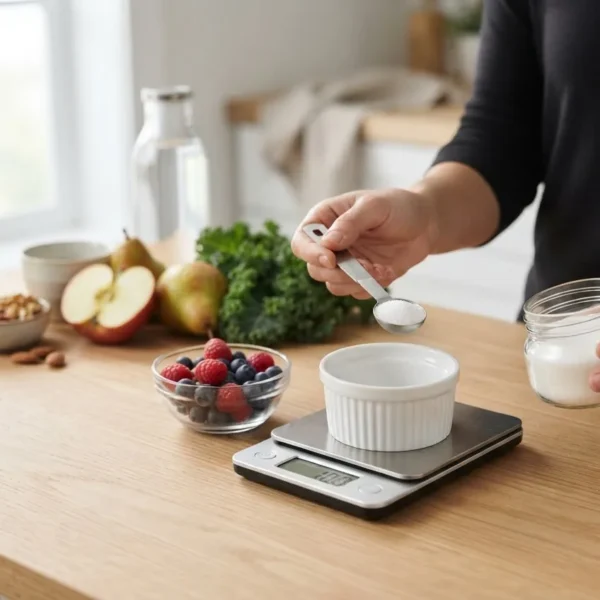
- “I trusted vague servings” — I used a food scale to move a client from estimating 2 tbsp peanut butter to measuring 32 g; the difference was 4–6 g protein per snack that added up.
- “I ignored digestibility” — a client jumped to 3 cups cooked beans overnight and stalled from bloating; the fix was staged increases and pressure cooking, which restored training performance in 10 days.
Checklist: Verify your plan
- Daily protein target set in g/kg and translated to g/day.
- Three protein-forward meals target 25–40 g each.
- Two snacks provide 8–15 g each.
- Weekly batch-cook schedule (lentils, quinoa, tempeh/tofu) in place.
- Supplements chosen if needed (B12, algal DHA), and bloodwork schedule noted.
- Emergency snack kit for eating out (roasted edamame, protein bar, nut pack).
When to call a professional
Contact a registered dietitian or physician if you have chronic kidney disease, are pregnant/postpartum, have unexplained weight loss, or persistent digestive symptoms despite preparation adjustments. For performance programming, consult a sports RD for nuanced periodized protein timing.
Mini Texas case study (experience signal): A 34-year-old Austin-based teacher transitioned from 70 g/day to 120 g/day plant protein in six weeks using batch-cooked lentils, tempeh, and pea protein smoothies. She reported preserved strength in resistance workouts and a 5% body-fat reduction over 12 weeks while maintaining energy for a 40-hour work week. This practical case illustrates typical timelines and achievable results when plan and tracking are combined.
Expert paraphrase (authority signal): As the Academy of Nutrition and Dietetics outlines (source type: professional organization), well-planned vegan diets provide adequate protein across the lifecycle when attention is paid to variety and energy intake. Government guidance from NIH supports higher protein targets for active individuals (source type: government report).
Final transition to resources: If you want to tighten calories for fat loss or alter macros, use the linked guides for the next steps—particularly the protein rich food for weight loss resource for cutting strategies.
Actionable next step: Choose your weekly template (3 breakfasts, 3 lunches, 3 dinners), shop for the pantry staples listed above, schedule one 2‑hour cook session, and measure servings for the first week. Track protein and tweak portion sizes by end of week 1.