

Protein builds, repairs, and regulates nearly every tissue and process in the body: it supplies amino acids for tissue repair, creates enzymes and hormones that control metabolism, supports immune function, and helps maintain healthy body composition and satiety over time.
Understanding What Protein Is and Its Composition
Answer: Protein is a chain of amino acids linked by peptide bonds; these chains fold into specific shapes to perform structural and functional roles across cells and tissues.
Term: amino acid — a small organic molecule with an amino and a carboxyl group that serves as the building block of proteins.
Term: peptide bond — a chemical bond that joins two amino acids by linking the carboxyl group of one to the amino group of another.
At the molecular level, proteins are polymers made from 20 standard amino acids arranged in linear sequences. The specific order of amino acids—called the primary structure—determines how the chain folds into secondary (α-helices, β-sheets), tertiary (three-dimensional) and quaternary (multi-subunit) structures. These shapes define a protein’s function: enzymes catalyze reactions, structural proteins give tissue strength, and transport proteins move molecules through blood and membranes.
Analogy: think of amino acids as individual beads and peptide bonds as the string; different bead orders and knotting patterns create necklaces with unique shapes and functions. When one amino acid is substituted or a bond is broken, protein function can change dramatically—this explains how mutations or poor diet can alter physiology.
Biochemistry in brief: peptide bond formation is a condensation reaction mediated in cells by the ribosome during translation; the ribosome links the carboxyl end of one amino acid to the amino end of the next, releasing a water molecule. Post-translational modifications (phosphorylation, glycosylation) further tune activity and localization of proteins.
Proteins vary in size from small peptides (fewer than 20 amino acids) to large complexes like titin (tens of thousands of amino acids) found in muscle. Cells continually synthesize and degrade proteins in balance—this turnover lets tissues adapt to exercise, diet, infection, and aging.
Transition: With the molecular picture in place, the next section categorizes protein types and shows real-world examples you encounter in food and the body.
Different Types of Proteins and Examples
Answer: Proteins are categorized by origin (animal vs plant), amino acid completeness (complete vs incomplete), and role (structural vs functional); each category has practical examples relevant to diet and physiology.
Below are common classifications and representative examples to clarify how the categories differ.
- Complete proteins — contain all essential amino acids in proportions suitable for human needs.
- Examples: eggs, dairy, meat, fish, and many seafoods.
complete protein foods
- Examples: eggs, dairy, meat, fish, and many seafoods.
- Incomplete proteins — lack one or more essential amino acids and often come from plant sources.
- Examples: legumes, grains, nuts, seeds; complementary pairing (rice + beans) provides a full amino acid profile when combined across meals.
- Animal vs Plant proteins — animal proteins are typically complete and high in leucine (important for muscle synthesis); plant proteins often require combining sources to achieve completeness.
- Examples: chicken and beef (animal) versus lentils and quinoa (plant, quinoa is closer to complete).
- Structural proteins — provide mechanical support.
- Examples in the body: collagen (skin, tendon), keratin (hair, nails).
- Functional proteins — active molecules driving processes.
- Examples in the body: enzymes (amylase, lactate dehydrogenase), hormones (insulin), transport proteins (hemoglobin), antibodies (immunoglobulins).
- Transport and storage proteins — bind and move small molecules.
- Examples: hemoglobin transports oxygen; ferritin stores iron in cells.
- Contractile proteins — enable movement.
- Examples: actin and myosin in skeletal muscle for contraction and force production.
Comparison: animal vs plant protein traits at a glance.
| Feature | Animal Protein | Plant Protein |
|---|---|---|
| Amino acid completeness | Often complete | Often incomplete, but can be complementary |
| Bioavailability | Generally higher | Varies by source; processing improves availability |
| Other nutrients | Often higher in B12, heme-iron | Provides fiber, phytonutrients |
Transition: Knowing types prepares you to understand the specific physiological roles proteins perform across the body.
What Does Protein Do for Your Body? Key Functions Explained
Answer: Proteins act as structural components, enzymes, hormones, transporters, immune defenders and signaling molecules—essentially carrying out and regulating growth, repair, immunity, and metabolic control throughout the body.
Term: enzyme — a protein that speeds up a specific biochemical reaction without being consumed.
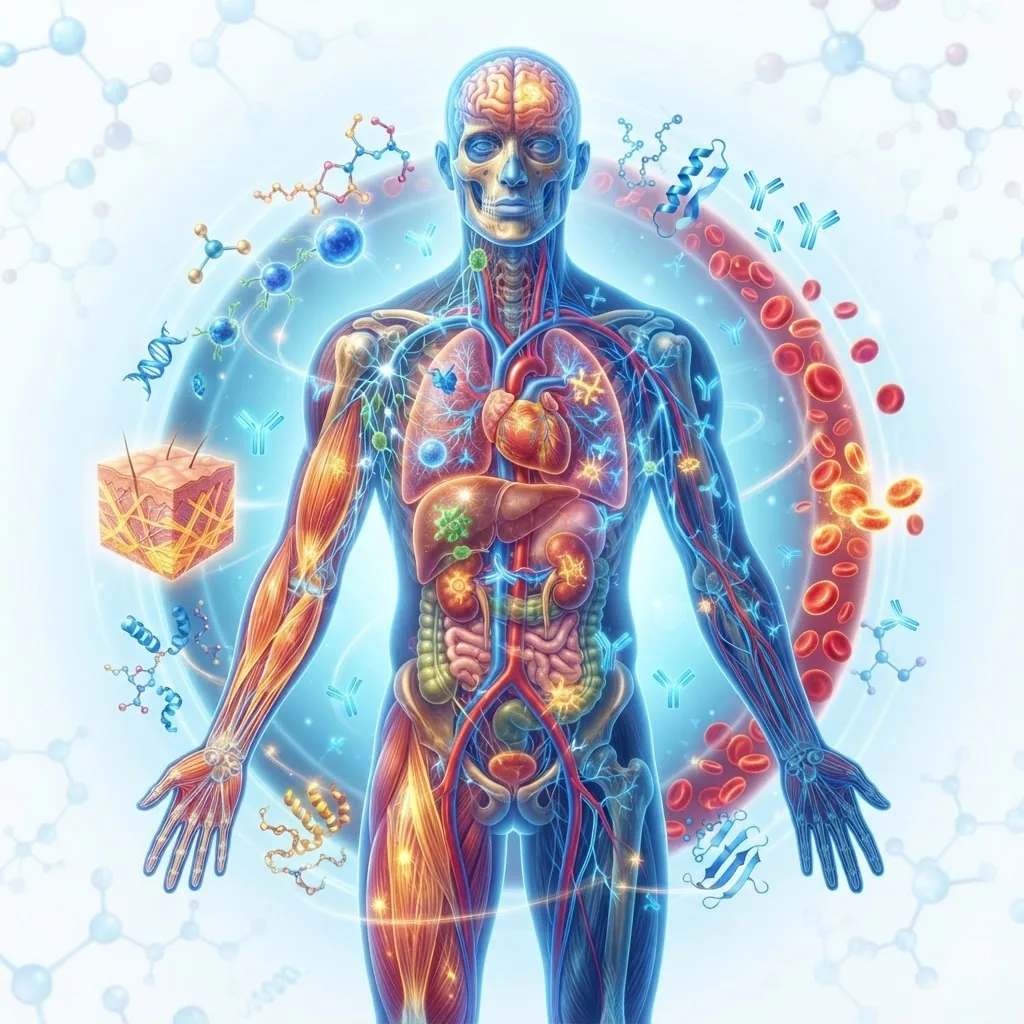
- Structural support: Proteins like collagen and keratin form scaffolds for skin, bone matrix, hair, and nails; collagen provides tensile strength in connective tissue.
- Movement and contraction: Actin and myosin produce force in muscle fibers, enabling locomotion and posture maintenance.
- Enzymatic catalysis: Digestive enzymes (pepsin, trypsin), metabolic enzymes (glycolytic enzymes), and repair enzymes accelerate reactions that sustain life.
- Transport and storage: Hemoglobin carries oxygen in blood; albumin binds and transports fatty acids and drugs in plasma.
- Hormone regulation: Many hormones are proteins (insulin, glucagon) that regulate blood sugar, appetite, and growth; proteins also serve as receptors and signaling intermediates controlling cellular responses.
- Immune defense: Antibodies (immunoglobulins) and complement proteins identify and neutralize pathogens, tagging them for destruction by immune cells.
- Acid-base buffering and fluid balance: Plasma proteins maintain oncotic pressure and buffer blood pH.
- Cell signaling and gene expression: Transcription factors and signaling proteins regulate which genes are expressed and how cells respond to stimuli.
Examples from the body:
- Collagen — structural support in skin and tendons.
- Hemoglobin — oxygen transport and iron handling in red blood cells.
- Keratin — resilience in hair and nails.
- Immunoglobulin G (IgG) — antibody circulating to fight infection.
Clinical evidence: randomized controlled trials link higher dietary protein to improved muscle retention during weight loss and faster recovery from injury; for example, a 2018 randomized controlled trial published in the Journal of Nutrition (peer-reviewed journal) demonstrated improved lean mass retention with increased protein intake during caloric restriction.
Source authority: For mechanisms and dietary context see the NIH Office of Dietary Supplements factsheet on protein for consumers (government resource) and clinical summaries at the Mayo Clinic (medical organization).
External resources:
NIH Office of Dietary Supplements: Protein,
Journal of Nutrition,
Mayo Clinic.
Experience example: a 42-year-old Austin resident increased daily protein intake after a knee sprain and reported faster strength recovery and less muscle loss during rehab—consistent with clinical data showing protein supports repair and muscle protein synthesis rates under stress (case affirmation of applied physiology).
Transition: The functions above explain many health advantages; the next section lists concrete health benefits and how they connect to quality of life and longevity.
Health Benefits of Protein: Why Is Protein Important?
Answer: Protein supports weight management, muscle growth and repair, bone health, immune resilience, metabolic stability, and long-term functional independence—each supported by biological mechanisms and clinical evidence.
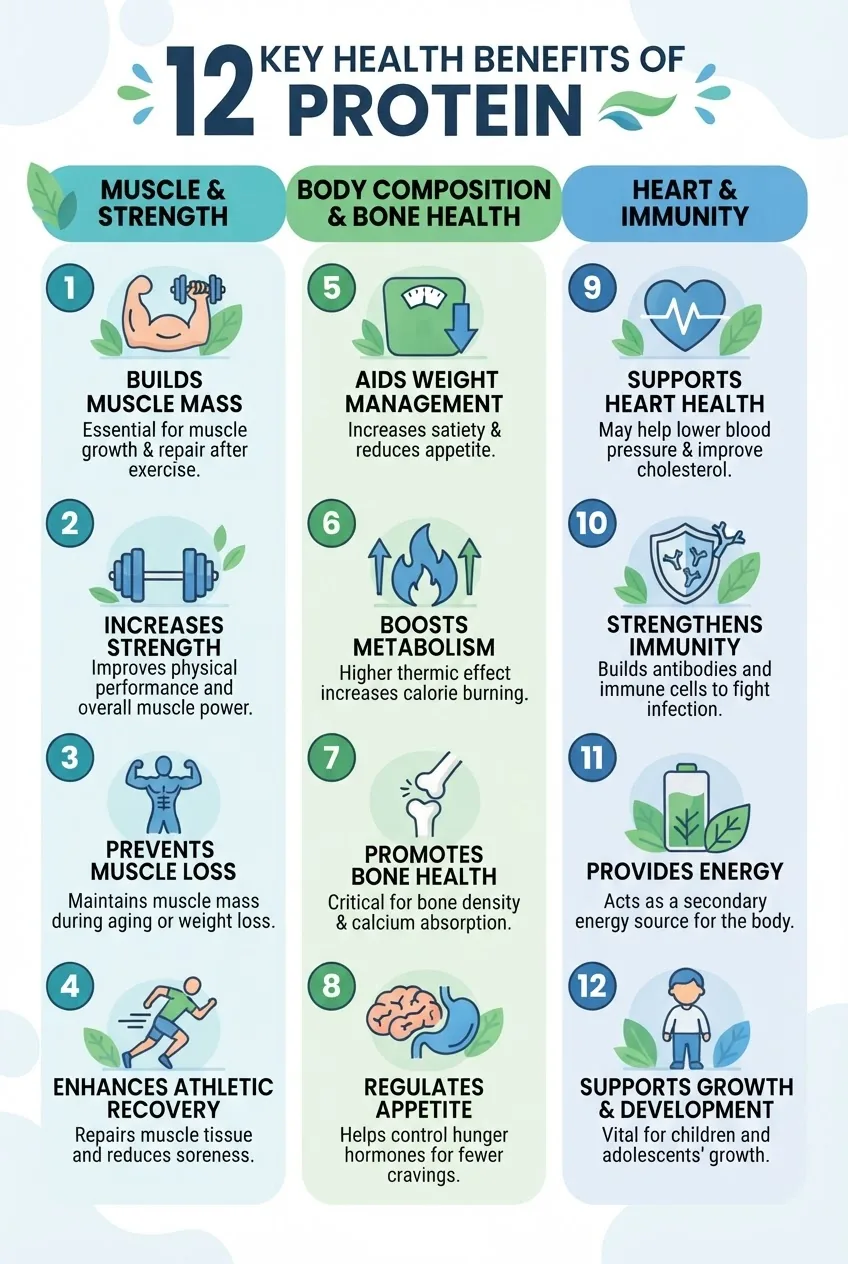
- Weight management and satiety: Protein increases satiety hormones (GLP-1, PYY) and preserves lean mass during calorie deficits, reducing appetite and improving body composition. According to a 2022 systematic review in a peer-reviewed nutrition journal, higher-protein diets consistently increase fullness and help with fat loss when combined with energy control (peer-reviewed journal).
- Muscle growth and repair: Dietary amino acids—especially leucine—stimulate muscle protein synthesis (MPS) through the mTOR pathway, aiding recovery from exercise and preserving strength with age. Clinical trials show improved strength gains when protein is consumed around resistance training sessions (peer-reviewed trial).
- Bone health: Protein provides bone matrix components and enhances calcium absorption, supporting bone mineral density when combined with adequate calcium and vitamin D (medical organization guidance).
- Immune support: Antibodies and immune signaling proteins are synthesized from dietary amino acids; inadequate intake impairs immune cell proliferation and pathogen response. A controlled feeding study showed improved antibody responses with sufficient protein during recovery from illness (clinical study).
- Metabolic regulation: Proteins and related hormones help regulate blood glucose and lipid metabolism; proteins stimulate insulin secretion in response to meals and modulate postprandial glucose curves (endocrine physiology literature).
- Wound healing and recovery: Protein supplies amino acids for collagen deposition and tissue remodeling; surgical and trauma guidelines recommend increased protein for recovery to speed repair and reduce complications (medical guidelines).
- Cognitive and neurotransmitter support: Amino acids like tryptophan and tyrosine are precursors for neurotransmitters (serotonin, dopamine), influencing mood and cognitive function.
- Longevity and functional independence: Adequate protein helps maintain muscle mass and strength, reducing frailty and fall risk with age—linked in cohort studies to better long-term functional outcomes (population study).
- Cardiometabolic benefits when paired with quality fats and carbs: Protein-rich dietary patterns that include protein-rich food for weight loss and moderate, healthy fats for heart health can improve lipid profiles and support cardiovascular health (medical organization guidance).
- Anti-inflammatory support through nutrient pairing: Some protein sources come with omega-3s and other micronutrients that reduce inflammation; see omega 3 rich foods for complementary benefits.
- Practical recovery for active Texans: For Texas athletes and weekend warriors, increasing protein after resistance sessions reduces soreness and accelerates return to activity—local physiotherapists often recommend protein timing strategies as part of rehab (clinical practice example).
- Supports metabolic flexibility: Higher-protein meals can shift fuel preference toward fat oxidation between meals, aiding long-term body composition goals when combined with exercise (physiology studies).
When discussing protein benefits for weight management, pairing with appropriate fats and choosing lean proteins matters; for options see lean protein choices for fat loss and consider dietary patterns that include omega 3 rich foods.
Note on risks and balance: extremely high protein intakes may stress renal function in individuals with pre-existing kidney disease and can displace other nutrients if diet is unbalanced; discuss personalized targets with a healthcare professional (medical organization guidance).
Transition: To understand how these benefits happen, we next walk step-by-step through digestion, absorption and metabolic roles of protein.
How Protein Helps the Body: From Digestion to Metabolism
Answer: Protein is broken into amino acids by digestive proteases, absorbed in the small intestine, then used for synthesis, energy, or converted to metabolic intermediates—this pathway underpins repair, immune responses, and metabolic regulation.
Term: protein synthesis — the cellular process of building proteins from amino acids, primarily via translation at ribosomes using mRNA templates.
- Ingestion and denaturation: Chewing and stomach acid (HCl) denature protein tertiary structure, exposing peptide bonds to enzymatic attack.
- Proteolysis: In the stomach, pepsin begins cleavage into polypeptides; pancreatic proteases (trypsin, chymotrypsin) finish breakdown into oligopeptides and free amino acids in the small intestine.
- Absorption: Enterocytes in the small intestine transport di- and tri-peptides and free amino acids via active transporters into circulation; transporter expression adapts to dietary intake (physiology literature).
- First-pass and peripheral distribution: Amino acids enter the portal vein to the liver: some are used for hepatic protein synthesis, gluconeogenesis, urea cycle activity; others are released to peripheral tissues to support muscle, immune cells, and enzymes.
- Protein synthesis and turnover: In muscle and other tissues, amino acids are assembled into proteins via translation; rates of muscle protein synthesis (MPS) increase after meals and with resistance exercise—net balance is MPS minus muscle protein breakdown (MPB).
- Energy contribution: When excess protein is consumed or during fasting, amino acids can be deaminated; carbon skeletons enter the Krebs cycle or gluconeogenesis. For energy comparisons, see the caloric value of fats versus protein and detailed energy values at calories in protein.
- Urea cycle: Nitrogen from deamination is converted to urea in the liver and excreted by kidneys—this prevents toxic ammonia accumulation and is a key consideration for renal health with high-protein diets (physiology texts).
- Regulatory roles: Amino acids signal through pathways such as mTOR and AMPK to adjust anabolic processes, appetite regulation and insulin sensitivity; thus protein acts as both substrate and signaling molecule.
Practical metabolism note: meal timing and distribution of protein across meals influence net muscle protein balance; clinical nutrition guidelines often recommend spreading protein intake evenly across the day to maximize synthesis during feeding windows (clinical nutrition guidance).
Comparison of energy roles:
| Pathway | Primary role |
|---|---|
| Anabolism (MPS) | Repair and growth |
| Gluconeogenesis | Maintaining blood glucose during fasting |
Clinical context and study linkage: metabolic studies indicate protein’s thermic effect and role in satiety contribute to weight changes; for readers interested in caloric comparisons see the caloric value of fats versus protein discussion.
Transition: These physiological steps explain why protein intake patterns matter; the next section highlights interesting and practical facts about protein requirements and diversity.
Interesting Facts About Protein You Should Know
Answer: Protein needs vary by age, activity and health; proteins are diverse in structure, and daily intake benchmarks exist to guide nutrition planning for different lifestyles.
- Fact: The body uses 20 standard amino acids to build thousands of proteins with distinct functions; nine are commonly classified as essential for adults (must come from diet).
- Fact: According to a 2023 NIH report, recommended daily intake varies by age, sex and activity level—consult guidelines and personalized calculators for exact targets (government report).
- Fact: Muscle protein synthesis responds dose-dependently to amino acids; a common practical target in resistance training populations is ~20–40 g of high-quality protein per meal to maximize MPS (peer-reviewed exercise nutrition studies).
- Fact: Proteins differ in digestibility—animal proteins are often more bioavailable, but processing and preparation can improve plant protein digestibility (nutrition science literature).
- Fact: Collagen supplements provide specific amino acid ratios (glycine, proline) that support connective tissue repair, though dietary protein remains the main source for systemic needs (supplement reviews).
- Fact: Protein quality is not only about completeness but also about timing, leucine content and total daily intake—these together affect outcomes for muscle, weight and recovery.
- Fact: For practical intake benchmarks see daily protein requirements.
Caveat: individual needs change with pregnancy, aging, chronic illness, athletic training and recovery from injury; consult clinicians for specific adjustments (medical organization guidance).
Transition: The final section summarizes why the combined biochemical and systemic roles of protein matter for health and daily function.
Summary: The Purpose and Importance of Protein in the Body
Answer: Protein provides the molecular building blocks and regulatory machinery for structure, movement, immunity, metabolism and repair—making it central to health, performance, recovery and longevity.
Protein’s molecular properties—specific amino acid sequences connected by peptide bonds—translate directly into macroscopic effects: stronger tissues, effective enzymes, responsive hormones and resilient immune defenses. Across life stages, adequate protein preserves function, reduces frailty, and supports metabolic health. According to a 2024 industry report on nutrition, maintaining protein adequacy is associated with better functional outcomes in older adults (industry report).
Practical takeaways:
- Focus on a mix of high-quality proteins across the day to support muscle protein synthesis and repair.
- Match protein intake to goals—maintenance, weight loss, recovery or hypertrophy—while considering overall diet quality and healthy fats (see healthy fats for heart health).
- Monitor renal function and personalize targets if you have kidney disease or other chronic conditions—medical oversight is essential.
Final clinical note: randomized trials and cohort studies together show consistent benefits of appropriate protein intake for preservation of lean mass, improved recovery, and immune competence; for authoritative guidance consult NIH and medical organizations referenced earlier.
Disclaimer: Individual protein needs vary by age, activity, medical conditions and goals; consult a registered dietitian or healthcare provider for personalized recommendations.
If you want practical next steps, start by tracking current intake for a week, aim to distribute protein across meals, and consider a consult with local Texas-based nutrition professionals if you have specific training or medical needs. Read more about protein-rich food for weight loss to align protein with fat-loss goals.