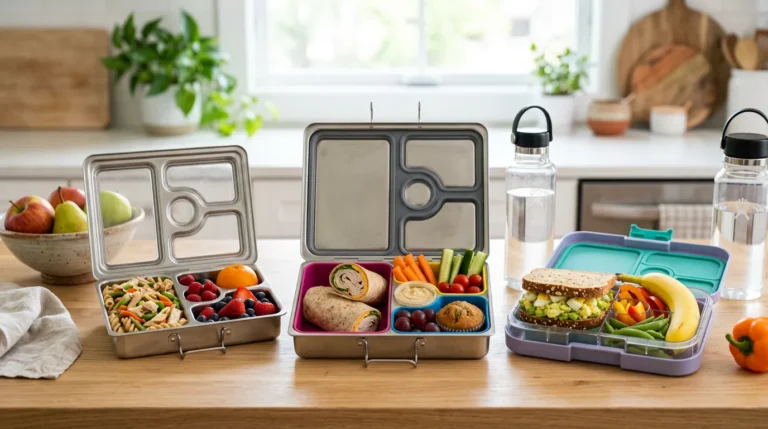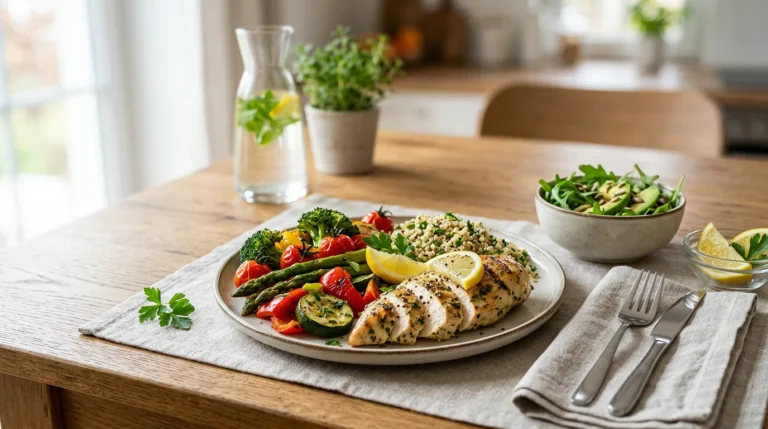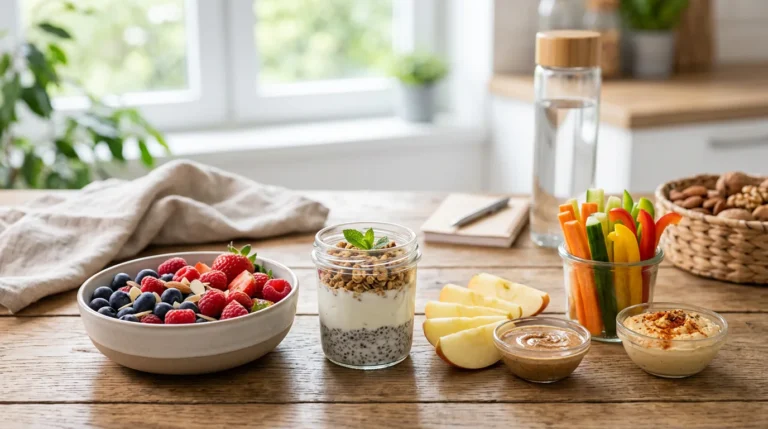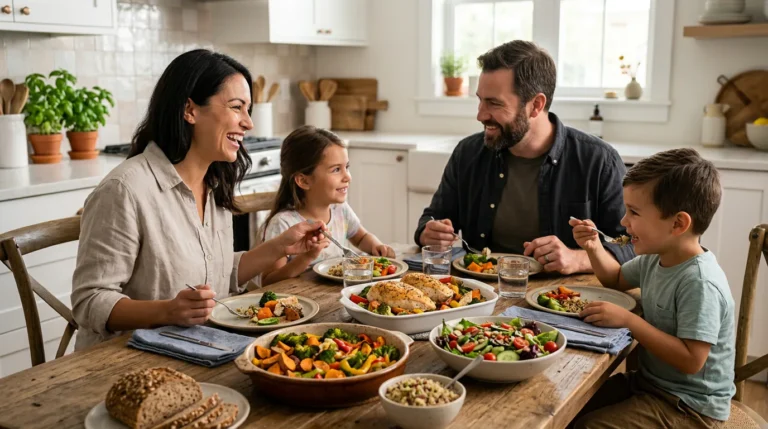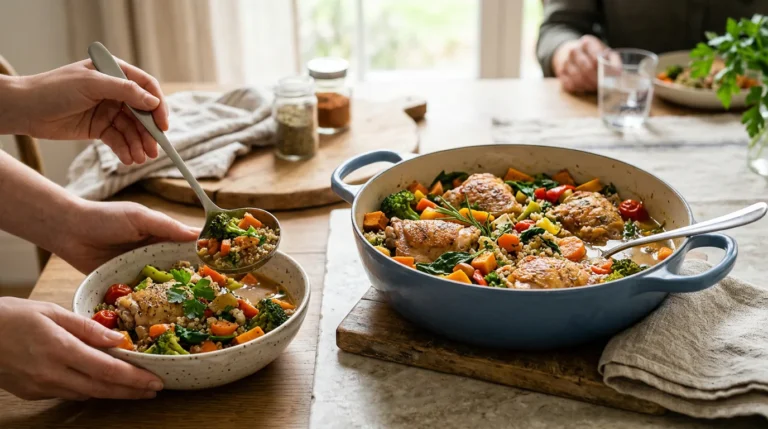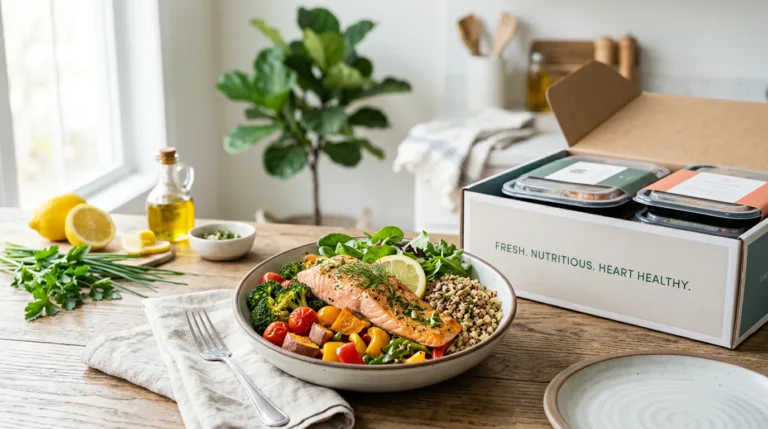
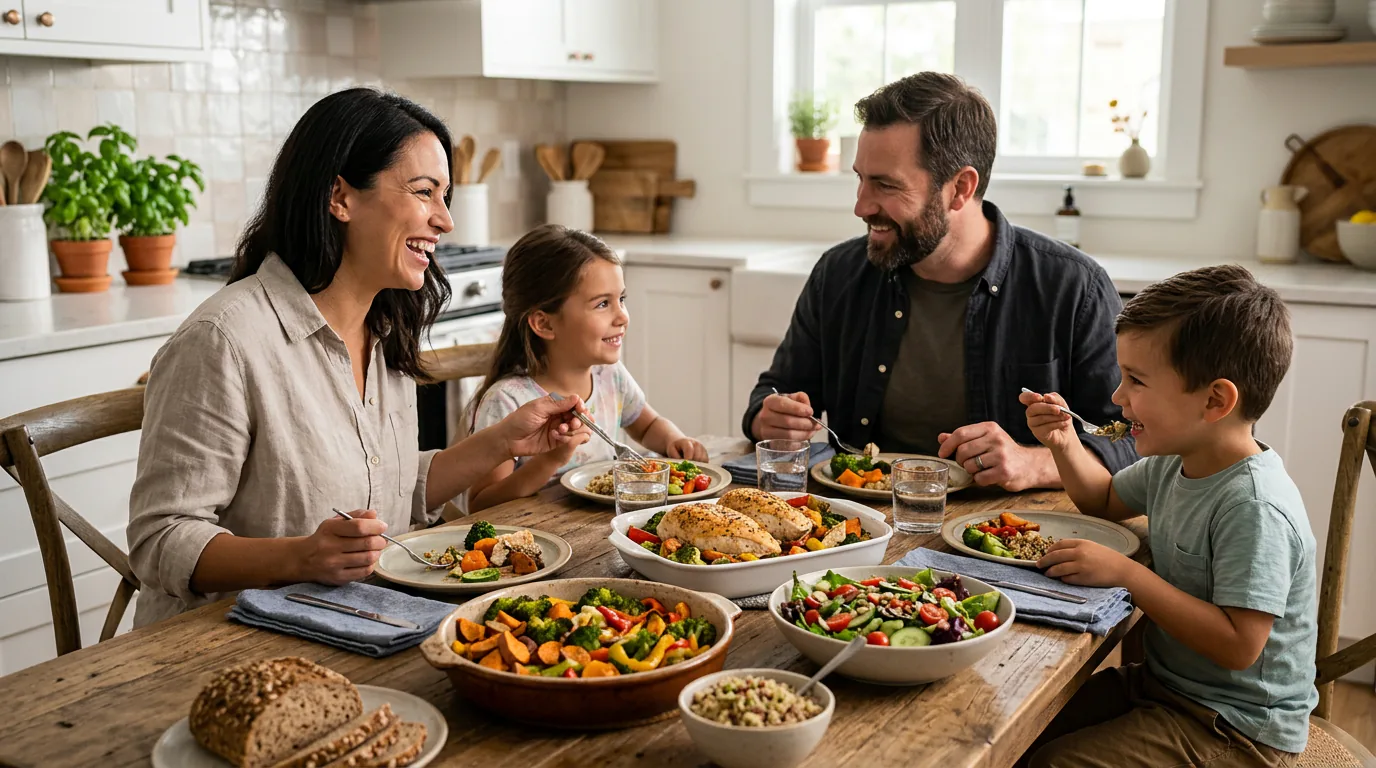
Healthy family dinners are the backbone of a nourishing home life—simple, balanced meals that satisfy adults and kids on busy weeknights. This guide gives practical, family-focused strategies, recipe ideas sized for a family of 4, and time-saving systems to keep dinnertime healthy and stress-free.
Introduction to Healthy Family Dinners
Family mealtime benefits go beyond nutrition: shared dinners support family wellness, better eating habits for children, and routines that make weeknight life calmer. When you focus on balanced nutrition and simple execution, healthy family dinners become realistic, not aspirational. This guide centers on practicality—meals you can cook in 20–45 minutes, scalable portions for families of 4, and a repeatable rhythm that builds lifelong habits.
We’ll cover what a balanced plate looks like for adults and children, meal planning strategies, easy recipe ideas, and hacks to make cooking less stressful. Along the way you’ll find budget-friendly swaps, portion control guidance, and kid-friendly options that keep nutrition first without sacrificing flavor. Read on to transform your weeknight routine with meals your family will actually eat.
Transition: Next, learn exactly what makes a dinner balanced for families so you can build every weeknight around reliable nutrition building blocks.
What Makes a Balanced Dinner for Families
A balanced dinner provides a mix of macronutrients, vegetables, and whole grains that meets energy needs and supports growth in children and health in adults. Use the MyPlate approach as a starting point: half your plate vegetables and fruit, one quarter lean protein, and one quarter whole grains, with healthy fats and water or low-fat milk as beverages.
Key elements of a family-balanced plate:
- Vegetables & fruit: Aim for at least 1–2 cups of vegetables per person at dinner (more for older kids/adults); colorful veggies increase vitamin and mineral variety.
- Lean protein: Include a palm-sized portion for adults (about 3–4 oz cooked) and smaller, age-appropriate portions for children—see portion control below.
- Whole grains: Choose brown rice, whole-wheat pasta, quinoa, or whole-grain breads to provide fiber and sustained energy.
- Healthy fats: Use moderate amounts of olive oil, avocado, nuts, or seeds to boost satiety and nutrient absorption.
- Hydration: Prefer water as the main drink; offer low-fat milk for children when appropriate.
Practical portion sizes for families (general starting points):
- Adults: 3–4 oz cooked protein, 1–2 cups vegetables, 1/2–1 cup cooked whole grain.
- Children (2–8 yrs): 1–2 oz protein, 1/2–1 cup vegetables, 1/4–1/2 cup grains, adjusted by appetite.
- Children (9–13 yrs): 2–3 oz protein, 3/4–1 cup vegetables, 1/2 cup grains.
Nutrition frameworks and authoritative guidance matter: follow established recommendations for family meals to align with heart health and growth needs. For trusted guidelines on balanced meals and family nutrition, consult the USDA MyPlate guidance, the American Heart Association’s family nutrition resources, and the Academy of Nutrition and Dietetics for meal planning tips.
USDA MyPlate guidance — practical plate proportions and food-group examples.
American Heart Association family nutrition resources — recommendations for heart-healthy meals.
Academy of Nutrition and Dietetics — expert meal-planning advice for families.
Yummiest Healthy Recipes Guide with Nutrition Facts and Tips
Transition: With plate building blocks clear, let’s make planning easy so weeknights run smoothly and your family eats balanced meals all week long.
Planning Easy and Healthy Family Meals for Weeknights
Meal planning for families reduces stress, saves money, and improves nutrition. A simple weekly planning system—shopping, prepping, cooking, and storing—keeps healthy family cooking achievable. Below are step-by-step strategies and a checklist to streamline weeknight dinners.
Step-by-step meal-planning workflow
- Pick 3–4 dinner themes for the week (e.g., one-pot, taco night, pasta with vegetables, plant-forward meal) to simplify grocery lists and prep.
- Assess your calendar: schedule quick-cook nights on busy evenings and reserve longer recipes for free nights.
- Write a targeted grocery list by category (produce, proteins, grains, pantry staples) so you avoid trips back to the store.
- Batch cook base ingredients on a weekend or Sunday: roast vegetables, cook whole grains, and portion proteins.
- Use a “double duty” approach: make enough for dinner plus leftovers that can be repurposed for lunches or another quick dinner.
- Prep quick salad or vegetable kits that store in the fridge for 3–4 days to make plating fast.
Family meal-prep checklist
- Plan 3–4 main dinners and 1–2 backup meals (frozen healthy options or pantry-based pasta).
- Cook one large batch of a grain (quinoa/rice) and one roasted vegetable tray.
- Chop salad veggies and store in airtight containers.
- Marinate or portion proteins in labeled containers for quick cooking.
- Schedule 30–60 minutes weekly to pack lunches and prep dinner components.
Quick tips to save time during the week: use sheet-pan dinners, slow cooker recipes, or a pressure cooker for hands-off cooking. For balanced, protein-forward prep ideas focused on family use and rotation, check out our chicken meal prep ideas and pair them with vegetable sides and whole grains.
Transition: Ready for concrete meal inspiration? Below are practical, family-sized dinner ideas you can rotate through your weekly plan.
Healthy Dinner Ideas for a Family of 4
These balanced dinner ideas are family-friendly, scalable for a family of 4, and designed to be quick or easily prepped ahead. Each idea lists main components, why it’s balanced, and simple swaps to suit picky eaters or dietary needs.
- Sheet-Pan Salmon with Roasted Vegetables and Quinoa — Protein, healthy fats, and whole grain in one. Roast tray of seasonal vegetables (broccoli, sweet potatoes), bake 4 salmon fillets, and serve over quinoa. Swap salmon for tofu for a vegetarian option.
- Turkey and Veggie Taco Bowl — Lean ground turkey or plant-based crumbles, brown rice, black beans, diced tomatoes, shredded lettuce, and avocado. Kids can build bowls or soft tacos. For protein-focused family nights see high-protein chicken breast recipes.
- One-Pot Lentil and Vegetable Stew with Whole-Wheat Bread — High-fiber, budget-friendly, and great for cold evenings. Lentils provide plant protein; add carrots, spinach, and tomatoes. For more plant-forward inspiration, check our quick vegetarian dinner recipes for two.
- Stir-Fry Night: Chicken, Tofu, or Shrimp with Veggies and Brown Rice — Fast, customizable, and balanced. Use a variety of colorful vegetables and a low-sodium sauce. Serve family-style so everyone picks preferred proteins and vegetables.
- Baked Pasta with Spinach, Mushrooms, and Ground Turkey — Whole-grain pasta, lean protein, and vegetables baked with a light tomato sauce and a sprinkle of cheese. Sneak extra veggies into the sauce if kids are picky. For more simple meals see practical healthy dinner ideas.
- Mediterranean Grain Bowls — Farro or bulgur, chickpeas, cucumber, tomatoes, olives, feta, and a lemon-olive oil dressing. Balanced with fiber, plant protein, and healthy fats; easy to scale for a family of 4.
- Slow Cooker Beef Chili with Corn and Side Salad — Lean beef or turkey, beans, tomatoes, and chilis simmered for depth of flavor. Serve with mixed greens and whole-grain cornbread. A great make-ahead cold-weather option—see more comforting choices in our comforting cold weather meals.
- Vegetable and Cheese Frittata with Mixed Greens — Eggs, seasonal vegetables, and a side of whole-grain toast make a fast, nutrient-dense meal. Kid-friendly and low-cost; use leftovers for breakfast or lunch.
- Homemade Pizza Night on Whole-Wheat Crust — Let kids customize with tomato sauce, lean proteins (turkey pepperoni, chicken), and lots of veggies. Offer a green salad and fruit to complete the balanced plate.
- Fish Tacos with Cabbage Slaw and Black Bean Salad — Quick pan-seared white fish or grilled shrimp, pair with whole-grain or corn tortillas and a crunchy slaw. Add lime and yogurt-based sauce for healthy flavor.
Transition: Good ideas are only as helpful as how easy they are to execute—next are tips that make healthy family cooking simple and low-stress.
practical healthy dinner ideas
Tips for Making Healthy Family Cooking Simple and Stress-Free
Kitchen organization and small habit changes create big wins. The following practical tips reduce friction and boost the chance your family eats nutritious dinners regularly.
- Organize a family-ready pantry: Keep whole-grain pasta, canned beans, low-sodium broths, canned tomatoes, and simple spices on hand to assemble quick meals.
- Adopt simple cooking techniques: Roasting, sheet-pan baking, stir-frying, and one-pot simmering are fast, require minimal clean-up, and preserve nutrients.
- Use smart substitutions: Swap half the pasta for spiralized vegetables, use Greek yogurt instead of sour cream, or brown rice for white rice to increase fiber.
- Involve kids: Children who help prepare meals are more likely to try foods; assign age-appropriate tasks like rinsing vegetables or mixing salad dressings.
- Manage picky eaters: Offer a “two-bite” rule, pair new foods with favored ones, and present veggies in multiple formats (raw, roasted, sauced).
- Batch and freeze: Make double portions of soups, chilis, and casseroles for quick dinners later in the month.
- Time-saving gadgets: Use a pressure cooker for beans and grains, an oven on a single-sheet-pan roast, and drawer organizers for utensils to speed tasks.
- Gradual change: Introduce one swap per week—small sustainable shifts lead to long-term habit formation rather than overnight overhaul.
Transition: To help you visualize how these ideas fit into a week, here’s a sample weekly dinner plan tailored for a balanced family menu.
Sample Weekly Dinner Plan for Healthy Families
This rotating dinner plan balances variety, nutrition, and weeknight time constraints. Portions are designed for a family of 4; adjust quantities up or down as needed.
| Day | Meal | Why it Works |
|---|---|---|
| Monday | Stir-fry with chicken/tofu, mixed veggies, brown rice | Fast cook, high veg volume, balanced carbs and protein |
| Tuesday | Sheet-pan salmon, roasted sweet potatoes, steamed green beans | Minimal hands-on time, omega-3s, fiber-rich sides |
| Wednesday | Taco bowls with black beans, quinoa, veggies, avocado | Customizable for picky eaters, plant-based options |
| Thursday | One-pot lentil stew, whole-grain bread, side salad | Budget-friendly, batch-cooks well, reheats for lunches |
| Friday | Homemade whole-wheat pizza night with veggie toppings | Family activity, controlled ingredients, balanced sides |
| Saturday | Grilled chicken or skewers, quinoa salad, grilled vegetables | Longer prep time OK, opportunity for fresh seasonal produce |
| Sunday | Slow-cooker chili, mixed greens, cornbread | Comforting, makes leftovers for midweek, family-friendly |