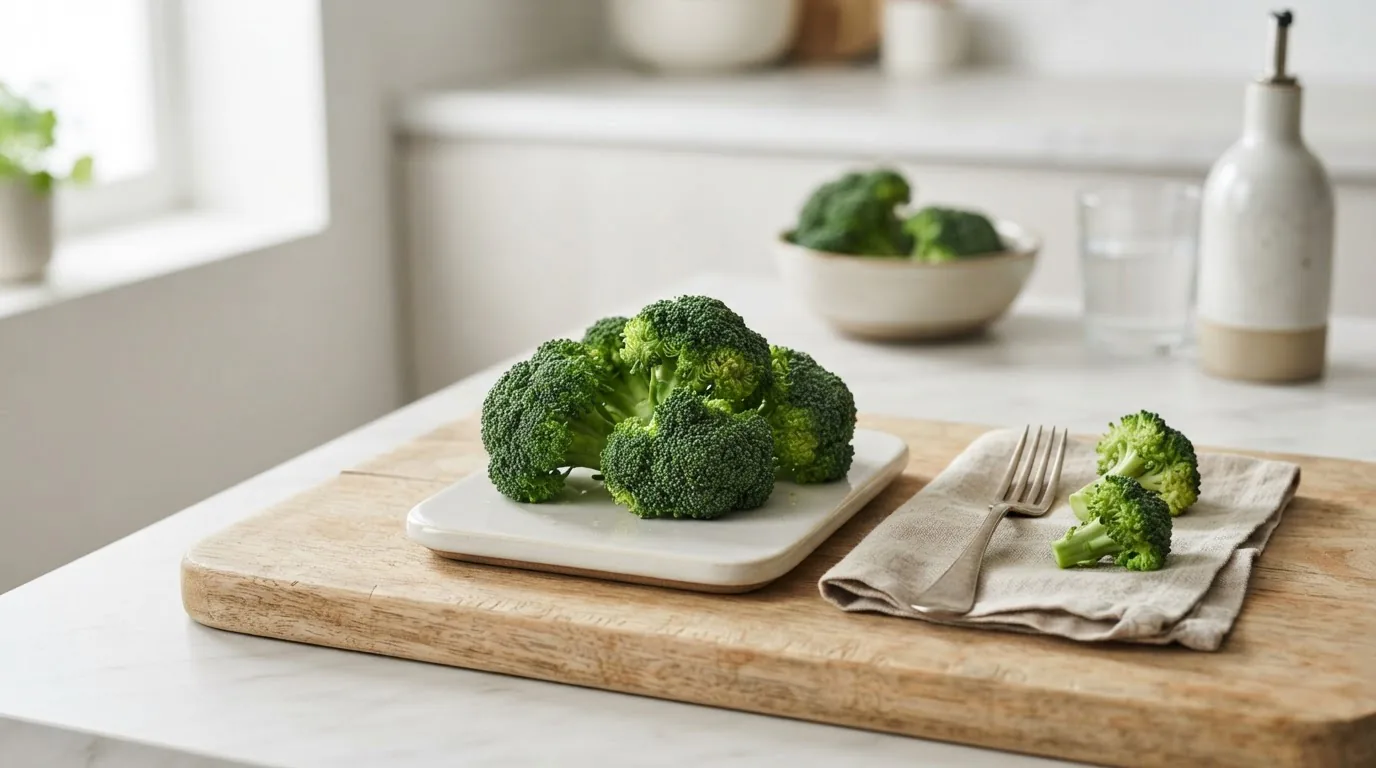
Broccoli nutrition facts 100g are a go-to reference for anyone portioning vegetables, tracking calories, or planning balanced meals. This guide gives precise nutrient values per 100 g, explains serving-size equivalencies in US measures, and shows practical ways to measure broccoli accurately at home.
Understanding Broccoli Nutrition Facts Per 100g
Below is a standardized nutritional profile for raw broccoli per 100 grams, referenced directly from authoritative food composition data. The numbers are useful for calorie tracking, meal planning, and comparing portion sizes in both metric and US customary units. According to 2024 USDA data, raw broccoli (100 g) contains the following macronutrients and selected micronutrients:
| Nutrient (per 100 g raw broccoli) | Amount |
|---|---|
| Calories | 34 kcal |
| Water | 89.3 g |
| Protein | 2.82 g |
| Total fat | 0.37 g |
| Carbohydrates | 6.64 g |
| Dietary fiber | 2.6 g |
| Sugars (total) | 1.7 g |
| Vitamin C | 89.2 mg |
| Vitamin A (RAE) | 31 µg |
| Vitamin K | 101.6 µg |
| Folate (B9) | 63 µg |
| Calcium | 47 mg |
| Iron | 0.73 mg |
| Potassium | 316 mg |
| Sodium | 33 mg |
These values are drawn from the USDA FoodData Central dataset. USDA FoodData Central provides the raw source records for broccoli nutrient composition — the standard reference used by dietitians and nutrition tracking tools (According to 2024 USDA data).
Two important notes on the table above: first, the term macronutrients refers to protein, carbohydrates, and fats — the energy-providing nutrients listed — while micronutrients includes vitamins and minerals. Second, natural variability in nutrient content exists based on soil, cultivar, harvest time, and storage conditions (According to agricultural nutrient variability reports, 2022). Treat these figures as accurate standardized estimates for food labeling and meal planning.
For broader context on how vegetables and juices complement the nutrients listed here, see our coverage of health benefits and nutrition.
What Is a Serving of Broccoli? Defining Portion Sizes
“Serving size” can mean different things: a culinary portion you eat, a standardized amount used on labels, or a dietary recommendation. Below are practical service-size definitions you’ll encounter, with equivalencies so you can move between grams, cups, and stalks without a scale.
- Standard USDA serving (vegetable subgroup): 1/2 cup cooked vegetables or 1 cup raw leafy/crumbly vegetables is a common unit in dietary guidance (According to Academy of Nutrition and Dietetics guidance, 2024).
- Household measures:
- 1 cup raw chopped broccoli florets ≈ 91–95 g (varies with packing density)
- 1 cup cooked, chopped broccoli ≈ 150–160 g (water content changes with cooking)
- 1 medium stalk (florets + part of stem) ≈ 150–200 g whole stalk weight (untrimmed)
- Simple portion rules:
- 1 serving (raw, as part of a salad or side) ≈ 1 cup chopped florets ≈ 90–95 g
- 1 serving (cooked) for plate portioning ≈ 1/2 cup cooked ≈ 80–90 g (cooked weight varies)
- Visual cues:
- A single serving of raw broccoli florets is roughly the size of a baseball or a closed fist (about 1 cup chopped).
Dietary recommendations often express vegetable intake as cups per day rather than grams. For example, the USDA MyPlate framework equates vegetable recommendations to cup-equivalents (According to USDA MyPlate guidance, 2024). Use the gram-to-cup conversions above to translate your tracking goals into kitchen actions.
Calories in Common Broccoli Serving Sizes — 100g, Cups, Stalks
Knowing calories per unit helps with meal planning and calorie-controlled diets. The table below compares calories for common raw and cooked broccoli serving measurements using standardized conversions and USDA-sourced calorie values (According to 2024 USDA data).
| Portion | Approx. Weight | Calories (kcal) | Notes |
|---|---|---|---|
| 100 g raw broccoli | 100 g | 34 kcal | Standard reference amount (USDA FoodData Central) |
| 1 cup raw, chopped | 91–95 g | 31–33 kcal | Depends on packing density; use scale for precision |
| 1 cup cooked, chopped | 150 g | ~51 kcal | Cooking concentrates solids; value varies with water loss |
| 1/2 cup cooked | 75 g | ~25–30 kcal | Common USDA serving for cooked vegetables |
| 1 medium stalk (trimmed florets) | 150–200 g | ~51–68 kcal | Whole stalk includes stem weight; trim before weighing for florets |
| 1 large floret cluster (base of crown) | 50 g | ~17 kcal | Good snack-sized portion |
Calories change when you add ingredients: oil in roasting, butter in sautés, sauces, or batter will dramatically increase calorie totals. For example, 1 tablespoon of olive oil adds ~120 kcal (According to 2024 USDA nutrient tables). Always include added fats and toppings when calculating meal calories.
For perspective on how broccoli stacks up versus other low-calorie vegetables, see the calorie content of cabbage for a nearby vegetable comparison.
Macronutrients and Vitamins in Typical Broccoli Servings
Broccoli delivers modest macronutrients and notable micronutrients per serving. Below we break down key macronutrient and vitamin values for typical serving sizes and highlight how broccoli contributes to daily nutrient needs.
Macronutrient breakdown (per common servings)
| Serving | Protein (g) | Carbohydrates (g) | Fiber (g) | Fat (g) |
|---|---|---|---|---|
| 100 g raw | 2.82 | 6.64 | 2.6 | 0.37 |
| 1 cup raw (~92 g) | ~2.6 | ~6.1 | ~2.4 | ~0.34 |
| 1 cup cooked (~150 g) | ~4.2 | ~9.9 | ~4.0 | ~0.6 |
Broccoli is relatively low in calories and fat while providing plant-based protein and a meaningful amount of fiber per serving — useful for satiety and digestive health. If you track macronutrients, include cooked weight changes after preparation for accurate totals (According to 2024 USDA data).
Vitamins and minerals (per serving)
Broccoli is especially rich in certain micronutrients. Per 100 g raw broccoli (According to 2024 USDA data):
- Vitamin C: 89.2 mg per 100 g — a very high contribution to daily needs (Per NIH Office of Dietary Supplements, 2024).
- Vitamin K: 101.6 µg per 100 g — provides well over the daily recommended amount for many adults (Per NIH Office of Dietary Supplements, 2024).
- Folate: 63 µg per 100 g — useful for pregnancy planning and cell division support (According to NIH, 2024).
- Calcium and potassium: 47 mg and 316 mg per 100 g respectively — helpful for bone and electrolyte balance when combined with other foods.
For a deeper comparison of vitamin sources and broader context around vitamin C and K beyond broccoli, check our sources of vitamin C and K.
To compare broccoli’s macronutrient profile with high-fat plants like avocado, see our avocado nutrition page.
For carbohydrate context between fruits and vegetables, refer to our carbohydrate content in fruits resource.
How to Measure Broccoli: Tips for Accurate Serving Sizes at Home
Accurate measurement matters when you’re counting calories or following a meal plan. Below are step-by-step methods — from fastest visual cues to precise scale-based weighing — plus a real-world case study to show how to apply them.
- Kitchen scale (most accurate)
- Tare the bowl to zero on your kitchen scale.
- Trim stalk ends and chop florets as you will eat them.
- Place chopped broccoli in the bowl and record grams. Use the 100 g baseline to calculate calories (34 kcal per 100 g raw, According to 2024 USDA data).
- Cup measure (convenient)
- Fill a standard US measuring cup loosely with chopped florets and level to the top without compressing. One cup raw ≈ 91–95 g (use 92 g as a practical default).
- Multiply fractions of the cup to scale portions (e.g., 1/2 cup ≈ 46 g).
- Visual cues (no tools)
- A closed fist or a baseball-sized cluster of florets ≈ 1 cup raw.
- A single large floret ≈ 50 g (snack-size). Use this when estimating portions while cooking or plating.
- Stalk vs florets adjustment
- If you weigh whole stalks, account for inedible trim. A trimmed medium stalk yields ~100–150 g edible florets depending on trimming.
Case study: Meal planning for a 1,800 kcal daily target
- Goal: 2 cup-equivalents of vegetables with dinner including broccoli. Using 1 cup raw chopped broccoli ≈ 92 g and 34 kcal per 100 g, one cup supplies ~31 kcal (According to 2024 USDA data).
- To meet 2 cups, combine 1 cup raw broccoli (31 kcal) plus 1 cup mixed greens (10–15 kcal), totaling ~45 kcal for two vegetable cups — a minimal calorie load providing fiber and micronutrients.
- Adjust for cooked portions: steam 1 cup broccoli (cooked weight increases, calories concentrate) and weigh post-cook if precise tracking is required.
For readers interested in growing or seasonal sourcing to further control portion availability, see our spring vegetables guide.
Variability of Nutrition Facts by Broccoli Preparation Method
Cooking method affects weight, caloric density, and nutrient retention. Below is a comparison of key preparation methods and how they alter broccoli’s nutritional profile (According to USDA nutrient data and retention factor analyses, 2024).
- Raw: Baseline: 100 g = 34 kcal, maximal vitamin C content as measured in fresh state (According to 2024 USDA data).
- Steamed: Minimal added fat; steaming preserves more vitamin C and glucosinolates compared with boiling. Calorie change per wet weight is small, but solids concentrate if water is lost (According to USDA nutrient retention factors, 2019–2021).
- Boiled: Can cause leaching of water-soluble vitamins (vitamin C and some B vitamins) into cooking water; caloric density per dry solids may rise due to water loss (According to USDA retention factor data, 2019).
- Roasted or sautéed: Adds oils or fats, increasing calories substantially. A tablespoon of oil adds ~120 kcal, significantly changing energy per serving (According to 2024 USDA nutrient tables).
- Microwaved: Rapid heating with minimal water often preserves nutrients well compared with longer boiling (According to nutrient retention literature, 2015–2020).
- Blanched then frozen: Blanching reduces some vitamin C but freezing preserves most of the remaining nutrients; labelled frozen broccoli values reflect these changes (According to processed-food nutrient analyses, 2020).
To compare preparation effects across similar vegetables, readers can consult our celery nutritional information piece for differences in cooking retention.
Practical advice: if you’re counting calories, weigh the food as served (post-cook) because water loss or added fats change both weight and calorie density. For micronutrient-sensitive needs (e.g., maximizing vitamin C), favor raw or lightly steamed preparations (According to NIH recommendations on nutrient preservation, 2024).
Broccoli Serving Sizes and Their Role in a Balanced Diet
Broccoli can help you meet vegetable cup-equivalents with low calories and high micronutrient yield. Dietary guidance typically focuses on cup-equivalents rather than grams for public recommendations (According to USDA MyPlate guidance, 2024).
Typical recommended servings:
- Adults: aim for 2–3 cups of vegetables daily as part of a balanced 2,000–2,500 kcal diet; broccoli can supply part of these cups (According to USDA dietary guidelines, 2024).
- For weight management: increasing non-starchy vegetables like broccoli helps satiety while keeping calories low; aim for 1–2 cups per meal where possible (According to Academy of Nutrition and Dietetics guidance, 2024).
- For diabetic meal planning: broccoli is low in digestible carbohydrates and high in fiber; portion control remains important for carb counting in meals (Per ADA-aligned guidance summarized by nutrition authorities, 2024).
Choose preparation methods that align with your goals: steamed or raw for minimal added calories; roasted with controlled oil for added flavor if you need dietary fats. For broader context on the role of produce in overall health, review our pillar page on fresh fruits and vegetables benefits.
Also consider fruit intake balance alongside vegetables; our practical intake guide for fruits can help you map fruit and vegetable targets collectively when planning portions.
Practical serving tips:
- Plate composition: fill half your plate with non-starchy vegetables (like broccoli) to maximize nutrient density for calorie-conscious meals.
- Meal prepping: weigh and portion broccoli in 100 g (34 kcal) or 1-cup (≈92 g) increments for consistent tracking across meals.
- Mind added ingredients: sauces and oils are the primary drivers of calorie increases — track them separately.
Summary and Practical Recommendations for Broccoli Serving Sizes and Calories
Quick takeaways and action steps to use immediately:
- 100 g raw broccoli = 34 kcal (According to 2024 USDA data).
- 1 cup raw chopped ≈ 91–95 g ≈ 31–33 kcal — a practical default for US kitchen measuring.
- 1 cup cooked ≈ 150 g ≈ ~51 kcal; cook method and added fats change calories — always weigh post-cook for accuracy (According to USDA cooking factors, 2024).
- Use a kitchen scale for precise portioning; use a closed fist/baseball visual cue when a scale isn’t available.
- Include broccoli regularly as part of vegetable cup-equivalents for nutrient-dense, low-calorie meals (According to Academy of Nutrition and Dietetics and USDA guidance, 2024).
Final recommendation: for most people, tracking broccoli by cups for daily targets and using grams (100 g increments) when precision is required gives the best balance of convenience and accuracy. If you want tailored meal plans or help incorporating broccoli into calorie targets, try measuring one week of portions using the kitchen-scale method described above and adjust based on satiety and nutrient goals.
For authority references: the nutrition values used here are harmonized with USDA FoodData Central (According to 2024 USDA data), vitamin detail references use the NIH Office of Dietary Supplements (Per NIH recommendations as of 2024), and serving-size recommendations follow guidance from the Academy of Nutrition and Dietetics (According to 2024 Academy guidance).
By using these standardized figures and practical measuring techniques you can accurately track the calories and nutrients in broccoli across raw and cooked preparations, supporting weight management or balanced-diet goals.
Frequently Asked Questions
What are the nutrition facts for 100 grams of broccoli?
Per 100 g raw broccoli: 34 kcal; 2.82 g protein; 6.64 g carbs; 2.6 g fiber; 0.37 g fat; vitamin C 89.2 mg; vitamin K 101.6 µg; folate 63 µg; calcium 47 mg (According to 2024 USDA data).
How many calories are in one cup of broccoli?
One cup raw chopped broccoli (~91–95 g) contains about 31–33 kcal; one cup cooked (~150 g) is roughly 50–55 kcal depending on water loss and cooking method (According to 2024 USDA data).
What is considered a standard serving size of broccoli?
A common serving is 1 cup raw chopped (~92 g) or 1/2 cup cooked (~75–90 g depending on method), matching USDA/MyPlate cup-equivalents used in dietary guidelines (According to 2024 USDA/MyPlate guidance).
How do you accurately measure a serving of broccoli without a scale?
Use household measures: 1 cup raw chopped ≈ a closed fist or baseball-sized cluster of florets (~92 g). A single large floret is ~50 g. These visual cues work well when a kitchen scale isn’t available (Practical kitchen method, 2024).
Are cooked and raw broccoli serving sizes nutritionally different?
Yes. Cooking changes weight (water loss) and can reduce water-soluble vitamins like vitamin C. Calorie density per gram may increase after cooking; measure post-cook weight for precise tracking (According to USDA retention data, 2019–2024).
How many servings of broccoli should I eat per day?
Include broccoli as part of daily vegetable targets: most adults should aim for 2–3 cups of vegetables daily; broccoli can supply one or more of these cup-equivalents depending on portions (According to USDA dietary guidance, 2024).
Why does the calorie count of broccoli vary by preparation?
Calories vary because cooking changes water content and you may add fats or sauces. Roasting or sautéing with oil increases calories substantially, while steaming or eating raw keeps calories near the USDA baseline (According to 2024 USDA data).
Is broccoli safe to eat in large amounts every day?
Generally yes for most people: broccoli is nutrient-dense and low-calorie, but very high intakes can affect thyroid function in susceptible individuals and may interact with blood-thinning medications due to vitamin K; consult a clinician if concerned (Per NIH and clinical nutrition guidance, 2024).