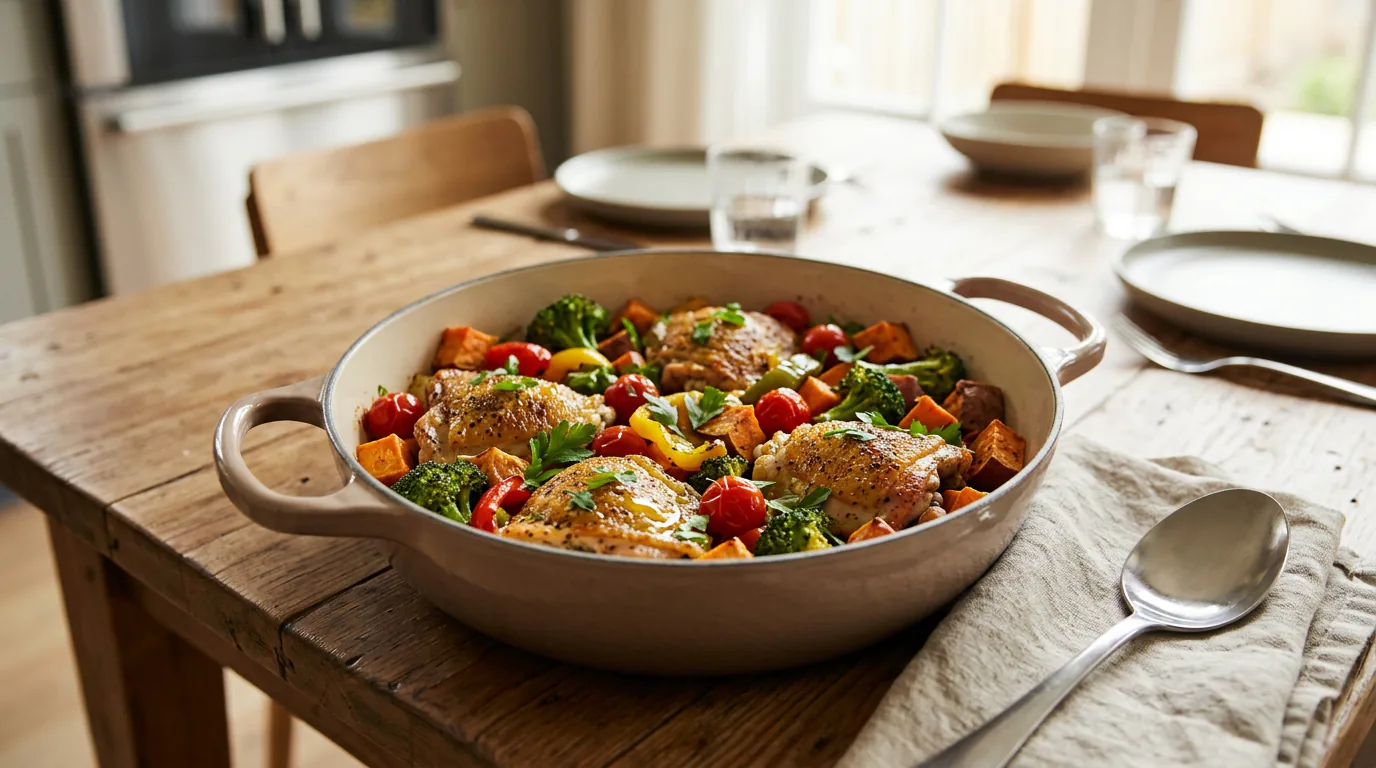
One pan meals are a lifesaver for busy families who want healthy dinners without endless prep or cleanup. This guide shows practical, nutrition-focused strategies and tested recipes for easy family dinner planning using a single skillet or frying pan.
What Are One Pan Meals? Benefits for Family Dinners
One pan meals — also called single pan meals or one skillet meals — are complete dinners cooked largely in one vessel: a skillet, frying pan, or sheet pan. Ingredients are added in stages or together so proteins, vegetables, and grains finish in the same pan, delivering a balanced meal with minimal cleanup.
Why families love them:
- Easy cleanup and fewer dishes mean more family time after dinner.
- Faster weeknight prep: fewer steps and simplified timing reduce stress.
- Built-in portion control: cooking full meals at once helps serve consistent family-size portions.
- Nutrition-friendly: you can design balanced meals (lean protein, fiber-rich vegetables, whole grains) in one pan.
- Flexible to tastes: recipe flexibility and ingredient swaps accommodate picky kids and adult palates.
- Cost-effective: one pan meals often reuse pantry basics and seasonal produce, stretching your grocery budget.
Health benefits and evidence:
- Family meals that include a variety of whole foods support better dietary patterns; According to the 2024 USDA Dietary Guidelines, balanced meals with vegetables, lean proteins, and whole grains reduce chronic disease risk — and one pan meals make serving that balance easier. Dietary Guidelines (USDA/HHS)
- Shared family dinners are linked to improved nutrition and social benefits; According to a 2023 review from the American Heart Association, regular family meals with balanced components correlate with better heart-healthy eating patterns. American Heart Association
For more on nutrition basics and recipe selection that complements one pan techniques, see the Yummiest Healthy Recipes Guide with Nutrition Facts and Tips.
Transition: Now that you know the benefits, let’s look at the tools that make one pan cooking reliable and healthy for families.
Key Kitchen Tools and Equipment for One Pan Cooking
Choosing the right pan and tools changes results and health trade-offs. Below are the must-haves and how to use them.
- Cast iron skillet — Durable and excellent for even searing and oven finishes. Best for skillet meals that start on the stove and finish in the oven (e.g., frittatas, sheet-style skillets). Usage tip: preheat before adding oil for an even sear; maintain seasoning to avoid sticking. Trade-offs: heavier and needs maintenance. For a walkthrough on how to select and care for cast iron, culinary schools recommend regular seasoning and moderate heat. Culinary Institute of America
- Nonstick frying pan — Great for low-fat cooking and delicate foods (eggs, fish). Usage tip: use a silicone or wooden spatula and avoid high heat to preserve the coating and keep food healthy.
- Oven-safe skillet (stainless steel or enameled) — Versatile for stovetop sears and oven roasting; ideal for one pan dinners that require both techniques. Usage tip: use a small amount of healthy fat (olive oil) and deglaze with broth or lemon to capture flavor without excess salt.
- Large sauté pan with lid — For braises and quick stews that incorporate whole grains or beans. The lid captures steam for mild steaming, preserving nutrients.
- Sheet pan or rimmed baking tray — When a one-pan meal is best as a sheet-and-roast, use a rimmed pan for even airflow. Lightweight and easy to clean; pair with parchment to reduce oil use.
- Silicone spatula and tongs — Gentle on nonstick surfaces and help turn proteins and vegetables cleanly for even cooking.
- Instant-read thermometer — Ensures proteins reach safe internal temperature without overcooking, preserving moisture and nutrients.
- Small colander and mixing bowls — Useful for quick rinses and staging ingredients to keep cooking顺序 efficient (mise en place).
Quick trade-offs and when to use each:
| Pan Type | Best For | Health / Care Notes |
|---|---|---|
| Cast iron | Searing, oven finishes, high-heat flavor | Can add trace iron (benefit); hand-wash, re-season |
| Nonstick | Low-fat cooking, eggs, fish | Use lower heat; replace when coating degrades |
| Stainless steel | High-heat sear, deglazing | Requires more fat to prevent sticking; great for flavorful pan sauces |
| Sheet pan | Roasting vegetables and proteins together | Use parchment to reduce oil; choose vegetables for fiber-rich meals |
Transition: With tools ready, the next section walks through planning a week of healthy one pan meals that fit family needs and nutrition targets.
How to Plan Healthy One Pan Meals for Your Family
Planning one pan dinners for a family means balancing nutrition, time, and taste. Below are step-by-step strategies, portion guidance, and meal prep tips to make it repeatable and kid-friendly.
Step 1: Set weekly goals and constraints
- Decide how many nights you’ll cook one pan meals (e.g., 4 weeknights) and which nights need ready-in times under 30 minutes.
- List dietary needs (allergies, low-sodium, vegetarian nights) and flavor preferences (mild for kids, spicy for adults) to guide recipes.
- Allocate protein targets: aim for 1 serving (3–4 oz cooked) per child, 4–6 oz per adult depending on age and activity — aligned with the 2024 USDA recommendations for portioning proteins.
Step 2: Build balanced one pan templates
Create templates you can repeat with slight swaps so shopping and prep are efficient:
- Skillet stir-fry template: lean protein + 2 cups mixed vegetables + 1 cup cooked whole grain or noodles; sauce = low-sodium soy + citrus + 1 tsp oil.
- Sheet-pan roast template: 4–6 oz protein pieces + 3 cups mixed root/seasonal vegetables + olive oil + herbs; roast 20–30 minutes.
- One-pan braise template: protein browned, then simmer with tomatoes/broth + vegetables + 1/2 cup whole grain or legumes until tender.
- Skillet frittata/template for meatless nights: eggs or chickpea flour base + vegetables + cheese (optional) + side of whole-grain toast.
Step 3: Smart shopping and ingredient swaps
- Shop a core list each week: leafy greens, 2–3 vegetables, one fruit, whole grains (quinoa, brown rice), one lean protein, pantry staples (olive oil, low-sodium broth, canned tomatoes, beans).
- Swaps: use canned beans for vegetarian protein, swap brown rice for quinoa for faster cook time, choose fish for lighter meals twice weekly, and use firm tofu for vegetarian nights.
- Buy family-sized produce and pre-chop (or buy pre-chopped) on busy weeks to shave prep time.
Step 4: Meal prep that supports one pan dinners
Efficient meal prep reduces weeknight stress:
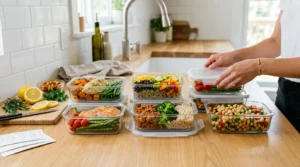
- Do a 30–45 minute prep session once or twice a week: wash and chop vegetables, marinate proteins, cook a grain batch, and portion sauces.
- Store prepped ingredients in clear, labeled containers in the fridge to speed assembly.
For broader make-ahead strategies beyond dinners, check the easy lunch meal prep guide to align grocery lists and prep windows.
If you lean on chicken as a staple protein, the chicken meal prep ideas resource helps you pre-cook chicken safely and flavorfully for easy one pan dinners.
Step 5: Portion control and serving sizes for families
Use simple visual cues for portioning when plating from one pan:
- Protein: palm-sized for adults (4–6 oz), 1/2 palm for kids (3–4 oz).
- Vegetables: half the plate should be non-starchy vegetables — aim for 1–2 cups per child, 2–3 cups per adult.
- Grains/starches: 1/2 to 1 cup cooked per person depending on activity level.
Step 6: Family preferences and recipe flexibility
Design meals with build-your-own options: place the pan on the table with sides like yogurt sauce, lemon wedges, or grated cheese so family members customize. Teach kids basic seasoning choices (a squeeze of lemon, a sprinkle of herbs) to increase acceptance of vegetables.
Case study: Planning a week of one pan dinners for a family of four
Scenario: two adults, two children (ages 7 and 10), three weeknights available for 30-minute dinners and two nights for 45-minute dinners. Plan:
- Monday — 20-minute shrimp stir-fry with brown rice (prep: pre-cooked rice, chopped veggies)
- Tuesday — sheet-pan Mediterranean chicken with mixed peppers and potatoes (prep: marinated chicken on Sunday)
- Wednesday — skillet lentil and vegetable ragout with whole-grain toast (meatless night)
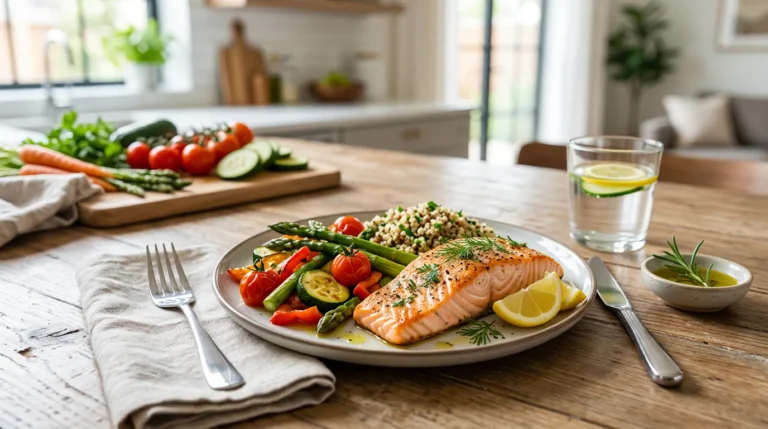
- Thursday — baked salmon with asparagus and quinoa (45-minute night, reuse quinoa batch)
- Friday — family frittata night using leftover vegetables and a side salad
Result: efficient shopping (reused pantry items), two make-ahead proteins, and balanced nutrition across the week. This case study replicates how many families can reduce decision fatigue and waste while meeting nutritional goals.
Transition: Next, you’ll find concrete, healthy one pan dinner ideas and mini recipes you can use immediately.
Top Healthy One Pan Dinner Ideas and Recipes
This section gives 6 detailed one pan dinner concepts with mini recipe overviews, flexibility tips, and nutritional highlights so you can pick meals that fit your family’s tastes and nutrition goals.
1. Skillet Mediterranean Chicken with Chickpeas and Spinach
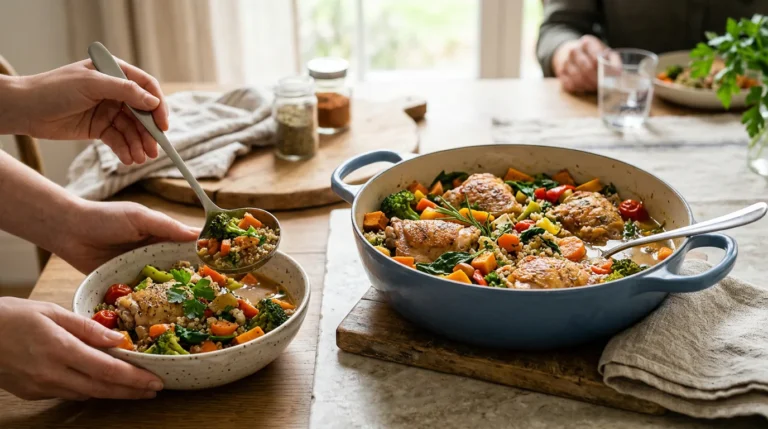
Overview: Sear boneless skin-on chicken thighs in an oven-safe skillet, remove, sauté onion and garlic, add canned chickpeas, diced tomatoes, spinach, and olives, nestle chicken back and finish in oven until cooked. Serve with whole-grain couscous or quinoa.
Nutritional highlights: Leanish protein from thighs plus fiber-rich chickpeas and iron from spinach. Use low-sodium canned beans to control salt. Swap: use boneless chicken breast for lower fat—see our healthy chicken breast recipes for ideas on cooking breasts tenderly.
Family tips: Remove olives for kids or chop finely. Ready-in: 35–40 minutes. Difficulty: Medium.
2. One Pan Lemon-Garlic Salmon with Broccoli and New Potatoes
Overview: Par-cook new potatoes in boiling water, drain, then arrange in a rimmed baking pan with broccoli florets and salmon fillets. Drizzle olive oil, lemon, minced garlic, salt, and pepper; roast until salmon flakes. Quick, bright, and nutrient-dense.
Nutritional highlights: Omega-3 rich salmon supports heart health. According to a 2022 meta-analysis review, regular fish consumption is associated with improved cardiovascular markers — include fish 2x/week when possible. Swap: use firm white fish if family prefers milder flavor. Ready-in: 25–30 minutes. Difficulty: Easy.
3. Skillet Turkey and Vegetable Stir-Fry with Brown Rice
Overview: Sauté ground turkey with garlic and ginger, add bell peppers, snap peas, carrots, and a splash of low-sodium soy and rice vinegar. Stir in pre-cooked brown rice and finish with sesame oil and scallions. One-skillet, high-protein weeknight classic.
Nutritional highlights: Ground turkey is lean and cooks quickly; vegetables provide vitamins and fiber. Swap: use tofu for a vegetarian version. Ready-in: 20 minutes. Difficulty: Easy.
4. Sheet-Pan Roasted Tofu, Sweet Potato, and Brussels Sprouts (Vegan)
Overview: Press and cube extra-firm tofu, toss with a light maple-soy glaze, add cubed sweet potatoes and halved Brussels sprouts on a rimmed baking sheet, roast until crisp. Finish with toasted pumpkin seeds for crunch.
Nutritional highlights: High-fiber and plant-protein; sweet potatoes and sprouts provide vitamin A, C, and fiber. Variation: swap pumpkin seeds with chopped walnuts for added omega-3s. For more vegetarian one-pan ideas, see quick vegetarian dinner recipes. Ready-in: 35–40 minutes. Difficulty: Easy.
5. One-Skillet Shrimp and Veggie Paella-style Rice
Overview: Sauté onion and peppers, add short-grain brown rice, low-sodium broth, saffron (or turmeric), and tomatoes, simmer until rice is nearly tender, stir in shrimp and peas at the end to finish. Serve with lemon wedges.
Nutritional highlights: Balanced protein and fiber; saffron or turmeric adds antioxidant benefits. Swap: use chicken or firm fish for variety. Ready-in: 30–35 minutes. Difficulty: Medium.
6. Skillet Lentil Bolognese with Whole Wheat Pasta
Overview: Sauté onions and carrots, add cooked lentils, canned tomatoes, herbs, and a splash of broth, simmer to thicken, toss with whole wheat pasta directly in the pan. A hearty meatless option that feels classic.
Nutritional highlights: High fiber and plant protein, lower saturated fat than traditional beef bolognese. Family-friendly: blend some sauce for picky eaters. Ready-in: 30–40 minutes. Difficulty: Easy.
Recipe flexibility and ingredient swaps:
- Protein swaps: turkey ↔ chicken ↔ tofu ↔ tempeh ↔ fish. Use pre-cooked beans for faster plant-based protein.
- Vegetable swaps: Use whatever is in season—roasting intensifies root vegetables, while quick sautéing suits tender greens and peppers.
- Whole grain swaps: quinoa, farro, brown rice, or whole-wheat pasta depending on cook time and family preference.
Portioning and nutrition notes: Aim for a plate composition of roughly 1/4 protein, 1/4 whole grain or starchy veg, and 1/2 non-starchy vegetables to match Dietary Guidelines recommendations for balanced family meals. According to the 2024 USDA Dietary Guidelines, this balance supports nutrient adequacy and portion control. Dietary Guidelines (USDA/HHS)
Transition: For nights when time is extremely tight, consider these quick one pan favorites tailored for speed and family appeal.
Quick One Pan Meals for Busy Weeknights
When time is limited, choose simple one pan dinners that finish in 20 minutes or less. Below are quick recipes and ready-in times for fast weeknight decision-making.
- Garlic Butter Shrimp & Spinach Skillet — Ready in 12 minutes. Difficulty: Easy. Shrimp cooks rapidly; toss with spinach and serve over quick-cook couscous or whole-grain toast.
- 15-Minute Veggie & Egg Skillet — Ready in 15 minutes. Difficulty: Easy. Sauté vegetables, crack eggs on top, cover and cook until set; serve with whole-grain tortillas.
- Pan-Seared Salmon with Lemon-Dill Greens — Ready in 20 minutes. Difficulty: Easy. Sear salmon in nonstick pan; quickly wilt greens in the same pan with lemon and capers.
- Ground Beef or Turkey Taco Skillet — Ready in 20 minutes. Difficulty: Easy. Add black beans and corn; top with avocado and serve with brown rice or soft corn tortillas. Scale down for fewer people — see healthy dinner recipes for 2 for portion tips when cooking for two.
- One-Pan Pesto Chicken and Tomatoes — Ready in 22 minutes. Difficulty: Easy. Sear chicken cutlets, add cherry tomatoes, finish with a dollop of pesto and serve with quick-cook farro.
- Sheet-Pan Sausage & Peppers — Ready in 25 minutes. Difficulty: Easy. Pre-slice sausages, toss with peppers and onions, roast. Cozy option for transitional weather; pair with the cold weather meals guide for seasonal sides.
Tips for speeding any one pan recipe:
- Use pre-cut vegetables or a food processor for quick dice.
- Choose quick-cooking proteins (shrimp, thin-cut fish, ground meat) on busier nights.
- Keep a stash of canned beans and low-sodium broths to create fast sauces and add fiber.
- Cook grains in advance and reheat in the pan with a splash of broth to keep dishes moist.
Transition: Now refine flavor and health by applying these simple techniques that boost taste without compromising nutrition.
Tips for Making One Pan Meals Healthier and More Flavorful
Small technique changes yield healthier, tastier results in one pan cooking. Use the following flavor and nutrition strategies.
- Use healthy cooking techniques: Searing builds flavor via the Maillard reaction; finish with gentle braising or steaming to preserve nutrients in vegetables. Steam-in-pan by adding a small amount of liquid and covering to cook tender greens quickly.
- Control oil smartly: Use 1–2 teaspoons of olive oil for searing; finish with a drizzle of extra-virgin olive oil for heart-healthy fats. Replace heavy cream sauces with Greek yogurt or blended white beans for creaminess and added protein.
- Season with herbs and acids: Fresh herbs and acids (lemon, vinegar) brighten dishes so you can reduce salt. Roasted garlic and citrus zest add depth for picky palates.
- Use low-sodium pantry staples: Choose low-sodium broths and canned goods; boost flavor with umami-rich ingredients like mushrooms, tomato paste, or a splash of soy or fish sauce sparingly.
- Maximize vegetable volume: Add leafy greens at the end of cooking or roast hearty veg first; increasing vegetables improves fiber and satiety without many calories.
- Smart swaps to cut saturated fat: Substitute some ground beef with lentils in bolognese-style dishes; choose skinless poultry or fish more often.
- Make sauces light but flavorful: Deglaze pans with wine, citrus, or broth and whisk in a small amount of yogurt or nut butter for creaminess rather than heavy creams.
- Use finishing touches for kid appeal: Serve with grated cheese on the side, a homemade yogurt dip, or crunchy toasted breadcrumbs so kids can customize and engage.
Examples:
- Instead of a creamy alfredo, blend cooked cauliflower and a little parmesan with broth to create a silky sauce for pasta.
- For a sheet-pan roast, toss vegetables with a spritz of oil and spice blend (smoked paprika, garlic powder) to get an “roasted” flavor while limiting oil.
Transition: Good tools and techniques are only as effective as the cookware care behind them. Keep your pans performing well with these maintenance tips.
Cleaning and Maintenance Tips for One Pan Cookware
Proper care extends the life of your cast iron, nonstick, stainless steel, and sheet pans while keeping food safe and tasty.
- Cast iron maintenance: After cooking, rinse with hot water and a brush; avoid soap when possible. Dry thoroughly and apply a thin coat of oil to preserve seasoning. For stuck-on food, simmer water in the pan to lift residue, then dry and re-season.
- Nonstick care: Use only wooden or silicone utensils, avoid high heat, hand-wash gently with a soft sponge, and replace when the coating chips or degrades to avoid health risks.
- Stainless steel cleaning: To remove stuck-on bits, soak with warm soapy water or deglaze with water and bring to a boil; use a non-abrasive cleaner for stubborn spots.
- Sheet pan upkeep: Line with parchment or a silicone mat to reduce scrubbing. For baked-on grease, soak in hot soapy water and use a nylon scrubber.
- Storage: Stack pans with paper towels between them to protect surfaces. Keep lids stored nearby so one pan setups stay efficient.
Transition: Below are answers to common questions families ask about one pan meals, from stickiness to diet safety.
Frequently Asked Questions
What exactly are one pan meals and how do they work?
One pan meals are dinners cooked largely in one vessel—like a skillet or sheet pan—where protein, vegetables, and starches are staged and cooked together or in sequence to finish at the same time, minimizing dishes and simplifying timing for family dinners.
How do one pan meals compare to one pot meals in terms of convenience and nutrition?
One pan meals use shallow pans (skillets, sheet pans) and emphasize searing/roasting for texture, while one pot meals often use deeper pots for soups/stews; both are convenient, but pan cooking typically yields better caramelization and similar nutrition when built around whole foods.
Can one pan meals be healthy for the whole family, including kids?
Yes—design one pan meals around lean proteins, whole grains, and plenty of vegetables to meet family nutrition needs; adjust flavors and portion sizes for kids and offer build-your-own toppings to increase acceptance and variety.
How do I plan weekly family dinners using only one pan recipes?
Set goals for how many nights to use one pan meals, create 2–3 templates (stir-fry, sheet-pan, skillet braise), shop core ingredients, and do a 30–45 minute prep session midweek to chop vegetables and pre-cook grains for fast assembly each night.
How long does it usually take to prepare and cook a one pan dinner?
Quick one pan dinners can take 12–20 minutes (shrimp, eggs, thin-cut proteins); most family-oriented one pan meals take 25–40 minutes depending on roast times and whether grains are pre-cooked or quick-cook varieties are used.
What if my one pan meal sticks to the pan or is hard to clean?
For sticking, preheat the pan properly and add a small amount of fat before food; for cleanup, soak the pan while warm, use boiling water to loosen stuck bits, and follow care guidelines for cast iron or nonstick to prevent damage.
Are certain pans better or safer for making one pan meals?
Choose pans by cooking style: nonstick for low-fat delicate foods, cast iron for high-heat sears and oven work, stainless for deglazing and pan sauces. Replace nonstick when coating deteriorates and maintain cast iron seasoning for safe use.
How can I add variety and balanced nutrition to my regular one pan meals?
Rotate proteins, change spice blends, swap grains, add different vegetables weekly, and use finishing touches like citrus, herbs, or seeds to vary flavors while keeping the plate balanced: half veggies, quarter protein, quarter grain.