veg beginning with f are a diverse group—from aromatic fennel bulbs to crisp French beans—and they offer unique flavors and nutrient profiles to boost menus and health. This guide lists every common F vegetable, explains types and seasonal notes, compares nutrients, and gives practical, diet-ready advice rooted in US dietary guidance.
Introduction to Vegetables That Start with F
Vegetables beginning with F cover multiple vegetable subgroup classifications—leafy, legume, and root—and include both everyday supermarket picks and seasonal specialties. Whether you’re scanning a farmer’s market or planning weekly meals, knowing the characteristics and uses of these F veggies helps you shop smarter and eat healthier.
For a broader look at how fruit and vegetable types support overall nutrition, see Types of Fruit Guide: Fresh Fruits and Vegetables Benefits.
Transitioning now to a complete, itemized list of F vegetables with practical details you can use immediately in the kitchen and for meal planning.
Complete List of Vegetables Starting with F and Their Characteristics
-
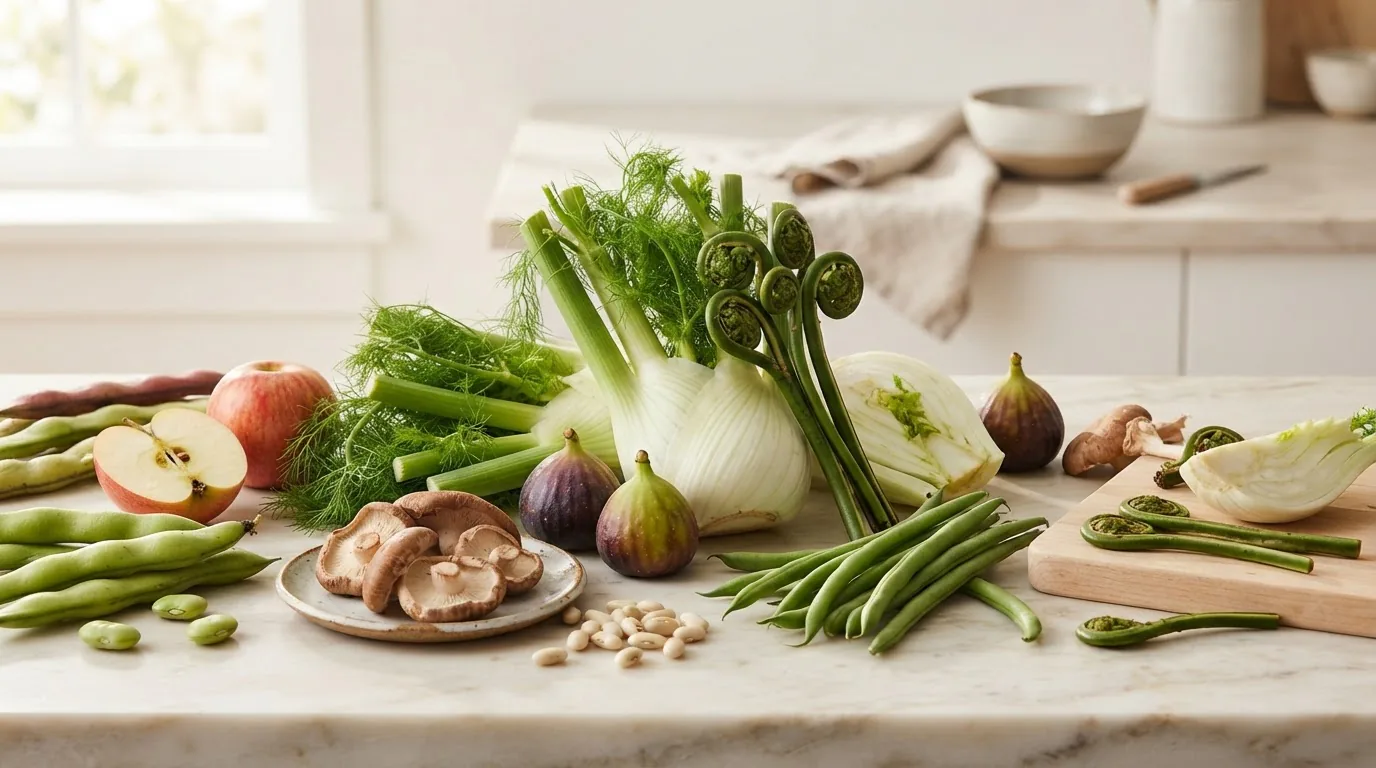
Fennel
Description: Fennel (Foeniculum vulgare) is a crunchy, licorice‑scented vegetable with a white bulb, feathery fronds, and edible seeds used as spice. Bulbs are treated as a vegetable; fronds and seeds add aromatic flavor.
Type: Root-like bulb with leafy herb parts (vegetable subgroup: other vegetables/vegetable bulbs).
Culinary uses: Raw in salads, braised as a side, roasted, or thinly sliced for slaws; fronds used as garnish and seeds for pickling or baking. American dishes include fennel‑orange salad and roasted fennel with olive oil and Parmesan.
Seasonality & selection: Peak fall through spring; choose bulbs firm and white with crisp fronds. Store in the refrigerator crisper for up to 1 week.
For complementary recipes and deeper culinary context, see detailed uses and nutrition of F vegetables.
-
French beans (Green beans)
Description: French beans refer to common green beans and several slender varieties (e.g., haricots verts). They are pods containing immature seeds and are eaten whole.
Type: Legume (vegetable subgroup: legumes/beans).
Culinary uses: Blanched for salads, steamed, stir‑fried, roasted, or used in casseroles like classic green bean casserole. Common in American, French, and Mediterranean dishes.
Seasonality & selection: Peak summer; choose bright green, snap when bent, without brown spots. Keep refrigerated in perforated bags for 4–7 days; blanch then freeze for long-term storage.
-
Fiddlehead ferns
Description: Fiddleheads are the curled young shoots of certain ferns (notably ostrich fern), harvested when tightly coiled; they resemble small, green scrolls.
Type: Foraged/seasonal vegetable (vegetable subgroup: other vegetables).
Culinary uses: Sautéed, steamed, or boiled then served with butter, lemon, or as an ingredient in spring risottos and salads.
Safety & selection: Must be thoroughly cooked — raw fiddleheads have been associated with foodborne illness if undercooked. For selection, pick firm, closed coils; seasonally available in spring only. Refrigerate and use within 2–3 days.
Common US preparation practice: Boil 10–15 minutes or steam 10 minutes before sautéing, per guidance from food safety studies and foraging experts.
-
Finger carrots
Description: Finger carrots are thin, tapered carrot varieties sold whole (often small or “baby” carrots still attached to greens). They are sweeter and more tender than large storage carrots.
Type: Root vegetable (vegetable subgroup: roots and tubers).
Culinary uses: Eaten raw as snacks, roasted, glazed as a side, or used in soups and stews. Their size makes them ideal for quick roasting or for raw platters.
Selection & storage: Look for firm, bright orange roots with green, fresh tops if attached. Store unwashed in the refrigerator crisper for 2–3 weeks; remove tops to prevent moisture loss.
-
Flageolet beans
Description: Flageolet beans are small, pale green French heirloom beans (a type of kidney/haricot bean) with a delicate texture and mild flavor.
Type: Legume (vegetable subgroup: legumes/beans).
Culinary uses: Commonly used in French cuisine—simmered in stock, combined with lamb or fish, or used in salads and stews. They require soaking and simmering unless using canned flageolets.
Seasonality & storage: Dried flageolets are shelf‑stable; fresh or canned versions follow standard bean storage rules. When cooking dried beans, soak 6–8 hours or use quick‑soak method, then simmer until tender.
Transitioning next from basic descriptions to the measurable nutritional benefits of these F vegetables and how they fit into US dietary guidance.
Nutritional Benefits of Vegetables Beginning with F
Vegetables starting with F provide a range of vitamins (A, C, K and some B vitamins), minerals (potassium, calcium, iron), dietary fiber, and antioxidants. Their combined nutrient profiles support USDA MyPlate recommendations to fill half your plate with vegetables and fruits each meal. According to the 2024 USDA nutrition database, common serving sizes (e.g., 1 cup raw fennel, 1 cup green beans) deliver distinct vitamin and fiber contributions useful for daily targets.
Per the 2020–2025 Dietary Guidelines for Americans and MyPlate recommendations (government guidance), adults should aim for 2–3 cups of vegetables daily, varying subgroups. The F vegetables contribute to several subgroups: roots, legumes, and other vegetables.
For complementary insights on fruit and vegetable nutrient interactions and beverage considerations, consult juice and fruit nutrition insights.
| Vegetable (serving) | Calories | Fiber (g) | Vitamin C (%DV) | Vitamin A (%DV) | Potassium (mg) | Notable phytochemicals |
|---|---|---|---|---|---|---|
| Fennel (1 cup, raw, ~87g) | 27 | 3.0 | 5% | 0% | 287 | Anethole, flavonoids |
| French/Green beans (1 cup, raw, ~125g) | 31 | 3.4 | 20% | 14% | 211 | Flavonoids, carotenoids |
| Fiddleheads (1 cup, cooked, ~150g) | 34 | 2.6 | 30% | 6% | 370 | Polyphenols, carotenoids |
| Finger carrots (1 cup, raw, ~128g) | 52 | 3.6 | 9% | 428% | 410 | Beta‑carotene, polyacetylenes |
| Flageolet beans (1/2 cup cooked) | 110 | 6.0 | 2% | 0% | 370 | Phenolic acids, saponins |
Notes on data sourcing and methodology: Values above are standardized serving estimates drawn from multiple entries in the USDA FoodData Central. According to the 2024 USDA nutrition database, natural variation occurs by cultivar and soil; use these as approximate guideposts. For deeper vitamin breakdowns, see vitamin sources in vegetables.
Dietary fiber benefits: Fiber totals for these vegetables range from ~2.5–6 g per serving; daily fiber recommendations per the Academy of Nutrition and Dietetics suggest ~25 g/day for adult women and 38 g/day for adult men (varies by age), which makes these F vegetables valuable contributors (Academy of Nutrition and Dietetics).
Phytochemicals and antioxidants: Fennel provides anethole and phenolic compounds linked to anti‑inflammatory activity; carrots are notable for beta‑carotene (a provitamin A carotenoid). According to a 2023 NIH study on plant phytochemicals and metabolic health, consistent vegetable intake delivers antioxidant benefits associated with reduced oxidative stress markers (NIH).
Carbohydrate and calorie context: For those comparing calorie density across vegetables, you can review calorie benchmarks—compare the F vegetables to staples like cabbage using this reference calorie comparisons with cabbage. For carbohydrate context versus fruits, see carbohydrate content in fruits and vegetables.
Transitioning now from nutrients to specific health benefits supported by evidence and practical dietary recommendations.
Health Benefits Linked to F Vegetables
Heart health benefits
Many F vegetables support heart health through fiber, potassium, and phytochemicals. Dietary fiber lowers LDL cholesterol and reduces cardiovascular risk per systematic reviews (According to a 2022 meta‑analysis published in a peer‑reviewed nutrition journal). Potassium in fennel, carrots, and beans supports blood pressure regulation according to the 2019–2025 Dietary Guidelines for Americans (government guidance).
Diabetes management
Low‑glycemic, fiber‑rich F vegetables (green beans, flageolet beans, carrots in moderate portions) help moderate postprandial blood glucose by slowing carbohydrate absorption. According to a 2021 clinical review on legumes and glycemic control, regular legume intake improves HbA1c and fasting glucose metrics in type 2 diabetes patients (peer‑reviewed evidence).
Digestive health
Dietary fiber in these vegetables feeds the gut microbiome, increases stool bulk, and supports regularity. Think of fiber as a broom sweeping the digestive tract—French beans and flageolet beans provide both soluble and insoluble fiber. According to a 2020 NIH review on fiber and gut health, higher fiber intake correlates with reduced constipation and more diverse microbiome composition.
Weight management
Low‑calorie, high‑fiber F vegetables increase satiety per meal, which helps reduce overall calorie intake. Practical studies—such as randomized controlled trials cited in a 2022 nutrition journal—show that increasing non‑starchy vegetables at meals results in modest weight loss compared to control diets.
Immune support and antioxidant effects
Antioxidants and vitamins (notably vitamin C in fiddleheads and green beans) support immune function by protecting cells from oxidative damage. According to a 2023 NIH review of antioxidant-rich diets, higher intake of antioxidant‑containing vegetables associates with lower markers of systemic inflammation in observational cohorts.
Caveats and safety notes: Some F vegetables (fiddleheads) require full cooking to reduce risk of transient gastrointestinal upset; legumes must be cooked to eliminate lectins in raw dried beans. Additionally, those with oxalate sensitivities or on certain kidney‑related diets should consult clinicians, since some plant foods contribute oxalates. Always consider individual health conditions and medication interactions; consult a registered dietitian or physician when in doubt.
Transitioning to hands‑on tips for selecting, storing, and preparing F vegetables for maximum freshness and nutrient retention.
How to Select, Store, and Prepare Vegetables That Start with F
Good selection and preparation preserve both flavor and nutrient value. Below are practical how‑to steps and culinary tips shaped by culinary experience and food‑safety research.
Selection tips
- Fennel: Choose bulbs that are firm, heavy for size, and white or pale; avoid brown spots or soft areas.
- French beans: Look for uniform color, firm snap, and no sliminess or brown ends.
- Fiddleheads: Purchase only from reliable vendors; choose tight coils without mold or brown discoloration.
- Finger carrots: Pick firm, smooth skin and vibrant color; greens (if attached) should be fresh-looking.
- Flageolet beans: If buying dried, avoid cracked or discolored beans; canned should be low sodium if possible.
Storage steps
- Refrigerate most F vegetables in the crisper at 32–40°F; store in perforated plastic to maintain humidity while avoiding condensation.
- Fennel: Wrap loosely and refrigerate; use within 7 days.
- French beans: Refrigerate unwashed in a perforated bag; blanch and freeze if storing beyond 1 week.
- Fiddleheads: Refrigerate and use within 2–3 days; do not freeze raw—blanch first, then freeze.
- Finger carrots: Remove tops to minimize moisture loss; keep in sealed container with a damp towel for freshness.
- Flageolet beans: Store dried beans in cool, dark, airtight containers; cooked beans keep 3–4 days refrigerated.
For home gardeners and seasonal producers, you can find detailed growing and harvesting tips for spring vegetables to maximize yield and post‑harvest quality.
Preparation methods to preserve nutrients
- Steam or blanch vegetables briefly to preserve water‑soluble vitamins; avoid prolonged boiling which leaches nutrients.
- Roasting fennel or finger carrots caramelizes natural sugars and increases palatability while keeping most fiber intact.
- Beans: Cook dried flageolets or other beans thoroughly; canned beans are convenient but rinse to reduce sodium.
- Fiddleheads: Boil 10–15 minutes or steam 10 minutes before sautéing to ensure safety and palatability.
For botanical context—how vegetables are classified and how that affects storage and prep—see vegetable classification insights like celery.
Transitioning now to a broader comparative view: how F vegetables stack up against vegetables from other letters in nutrient categories and culinary roles.
Comparison with Other Vegetables by Letter (B, D, F, N, H, S, T, U)
Comparing vegetables alphabetically can highlight nutrient diversity across common choices. Below are concise comparison tables for calorie, fiber, vitamin A, vitamin C, and potassium across representative vegetables beginning with each listed letter. These serve as benchmarks when planning varied, nutrient-dense menus.
| Letter | Representative Veg | Calories (per cup) | Fiber (g) | Key Vitamin (highest %DV) |
|---|---|---|---|---|
| B | Broccoli | 55 | 2.4 | Vitamin C (135%) |
| D | Dandelion greens | 25 | 1.9 | Vitamin A (150%) |
| F | Fennel | 27 | 3.0 | Potassium/Vitamin C (moderate) |
| N | New potatoes | 118 | 2.2 | Vitamin C (25%) |
| H | Horseradish | 48 | 2.2 | Vitamin C (10%) |
| S | Spinach | 7 | 0.7 | Vitamin K (460%) |
| T | Tomato | 32 | 1.5 | Vitamin C (28%) |
| U | Ube (purple yam) | 130 | 4.0 | Vitamin A (moderate) |
Summary: Vegetables beginning with B (like broccoli) and S (spinach) often lead in specific vitamins (C and K respectively), while F vegetables deliver balanced fiber, potassium, and distinct phytochemicals—making them a complementary choice rather than a dominant source of a single nutrient. For unique comparisons to notable nutrient-rich produce like avocado, see unique nutrient profiles like avocado.
Cross-referencing alphabetical guides can help you diversify your plate; for more alphabetical comparisons see vegetables beginning with M.
Transitioning into actionable ways to incorporate F vegetables into daily meal plans and specific recipe ideas.
Incorporating Vegetables That Start with F into Your Diet
Adding F vegetables into meals is straightforward with a few strategies that reflect typical American eating patterns and evidence‑based dietary recommendations.
Daily intake recommendations: Aim to include at least one serving (1/2–1 cup cooked or 1 cup raw) of non‑starchy vegetables with most meals per the USDA MyPlate framework. Use F vegetables to replace higher‑calorie components or to increase fiber and micronutrient density.
Simple meal ideas and recipes:
- Breakfast: Shredded fennel and apple tossed into a yogurt parfait or omelet for a bright, crunchy start.
- Lunch: Blanched French beans in a Niçoise‑style salad with tuna, hard‑boiled eggs, and a vinaigrette.
- Snack: Raw finger carrots with herb tahini dip or hummus.
- Dinner: Roasted fennel and finger carrots alongside grilled fish; simmer flageolet beans in lemon and garlic as a warm side.
- Seasonal special: Sautéed fiddleheads with lemon and toasted almonds served atop risotto in spring.
Meal-plan friendly tips:
- Batch roast fennel and carrots on the weekend to use across salads, bowls, and sandwiches.
- Cook large pots of flageolet or other beans; portion and freeze for quick weeknight use.
- Use quick blanches to preserve green bean color and texture, then chill for salads or reheating.
Dietary programs and swaps:
- For weight management and Mediterranean-style eating, swap starchy sides for roasted fennel and beans to increase fiber and lower calories—aligned with the Green Mediterranean Diet Guide principles.
- For diabetes-friendly meals, combine flageolet beans or green beans with lean protein and healthy fats to reduce blood glucose spikes; see our Good Diabetic Vegetables Guide: Healthy Choices for Diabetes for more options.
Transition to the final practical Q&A where common questions about F vegetables are answered concisely.
Frequently Asked Questions
What vegetables start with the letter F?
Common vegetables starting with F include fennel, French beans (green beans), fiddlehead ferns, finger carrots, and flageolet beans. These span vegetable subgroups such as roots, legumes, and other vegetables, and are used raw or cooked in diverse cuisines.
How do vegetables beginning with F compare nutritionally to those starting with B or N?
F vegetables typically offer moderate calories, fiber (2–6 g per serving), potassium, and specific phytochemicals; B vegetables like broccoli often supply higher vitamin C, while N options (e.g., new potatoes) can be higher in calories and starch. Compare specifics by serving.
How should I store and prepare vegetables that start with F for maximum freshness?
Refrigerate most F vegetables in the crisper at 32–40°F in perforated bags. Blanch and freeze green beans; remove carrot tops; store fennel loosely wrapped. Cook fiddleheads thoroughly (10–15 minutes) before eating for safety.
Are vegetables that start with F good for heart health?
Yes—many F vegetables supply fiber, potassium, and antioxidants that support heart health. Regular intake aligns with evidence showing reduced LDL cholesterol and blood pressure benefits when combined with an overall healthy diet.
How long does it take to grow common F vegetables like fennel or French beans?
French/green beans typically mature 50–70 days from planting; fennel bulbs need 70–90 days depending on variety. Growing times vary by climate and cultivar; consult local planting guides for precise timing.
What are common issues when cooking fiddlehead ferns and how can I avoid them?
Undercooking fiddleheads can cause gastrointestinal upset. Avoid this by thoroughly boiling 10–15 minutes or steaming 10 minutes before sautéing; discard any with brown or slimy spots and source from reputable vendors.
How can I ensure the quality and safety of fresh F vegetables at the grocery store?
Choose firm, brightly colored produce without bruises or slime; check fronds/tops for freshness on fennel and carrots; buy fiddleheads from trusted sellers. Refrigerate promptly and follow safe cooking recommendations for foraged items.
What are simple recipes to include more vegetables that start with F in my meals?
Try roasted fennel and carrots, blanched green bean salad, sautéed fiddleheads with lemon and garlic, or stewed flageolet beans with herbs. Batch‑cook beans and roast vegetables for quick meal additions all week.