What you’ll achieve, time required, and skill level
By the end of this guide you will be able to reliably store healthy food—fresh fruit and vegetables, pantry whole foods, and organic grocery items—so they last as long as possible without flavor or nutrient loss. You will know exact refrigerator temperatures, humidity settings, packaging methods, freezing and thawing procedures, how to shop organic markets and farmers markets in Texas, and how to evaluate healthy grocery delivery options.
Realistic time to complete: 2–6 hours hands-on (one thorough weekly shop and initial setup), then 15–30 minutes per day for rotation and light prep. Skill level: beginner-to-intermediate home cook; no professional training required but you should be comfortable using a kitchen thermometer, basic knives, and a home freezer.
Before you start
- Tools: refrigerator thermometer (digital), freezer thermometer, food-grade airtight containers (0.5–4 L range), zip-top freezer bags, reusable produce bags, glass jars (250 mL–1 L), labels and a permanent marker.
- Materials: pantry oxygen absorbers (optional), baking soda (for fridge odor control), citrus-scented cleaning wipes for produce work area, cutting boards (separate for produce vs proteins).
- Apps & accounts: list of local organic grocery and healthy grocery delivery near me providers, a farm-share or CSA contact if available, and access to online stores to compare “buy whole food online” options.
- Knowledge: desired weekly meal plan, number of people you cook for, food allergies, and storage space dimensions (fridge shelves, crisper drawer sizes).
- Local notes: know your county’s peak farmers market days—many Texas markets run Wed–Sat; check seasonality for fruits and vegetables in Texas.
Overview: core principles in one paragraph
Store healthy food by controlling temperature (fridge ≤40°F / ≤4°C, freezer at 0°F / −18°C), humidity (high for leafy greens, low for onions/potatoes), airflow, and separation (ethylenes and aromatics). Buy organic where pesticide residues and environmental impact matter most, prefer whole foods over processed, and match purchase quantities to your planned consumption within known shelf-lives.
Step-by-step process: weekly workflow and day-of-shop actions
- Plan your week then write precise quantities. Decide meals for 7 days. For a household of 2 adults and 1 child, plan roughly: 1.5–2 lb of leafy greens, 12–16 mixed fruit servings (one serving ≈ 1 medium piece or 1 cup chopped), 6–8 root-vegetable servings (carrots, beets), 2–3 lb of tomatoes/peppers, and 2–3 heads of cruciferous vegetables (broccoli, cauliflower) per week. If you freeze meals, add 2–4 additional portions to your shopping list.
- Check current inventory and set targets. Open pantry, fridge, and freezer. Remove anything expired. For produce, do a quick scan and toss: soft spots >2 cm, mold, bad smell. Replace with items to meet weekly targets. Write quantities on your shopping list: e.g., “3 lb apples (fuji), 1 pint blueberries, 1 head romaine, 2 bunches kale (8 oz each), 2 lb carrots.”
-
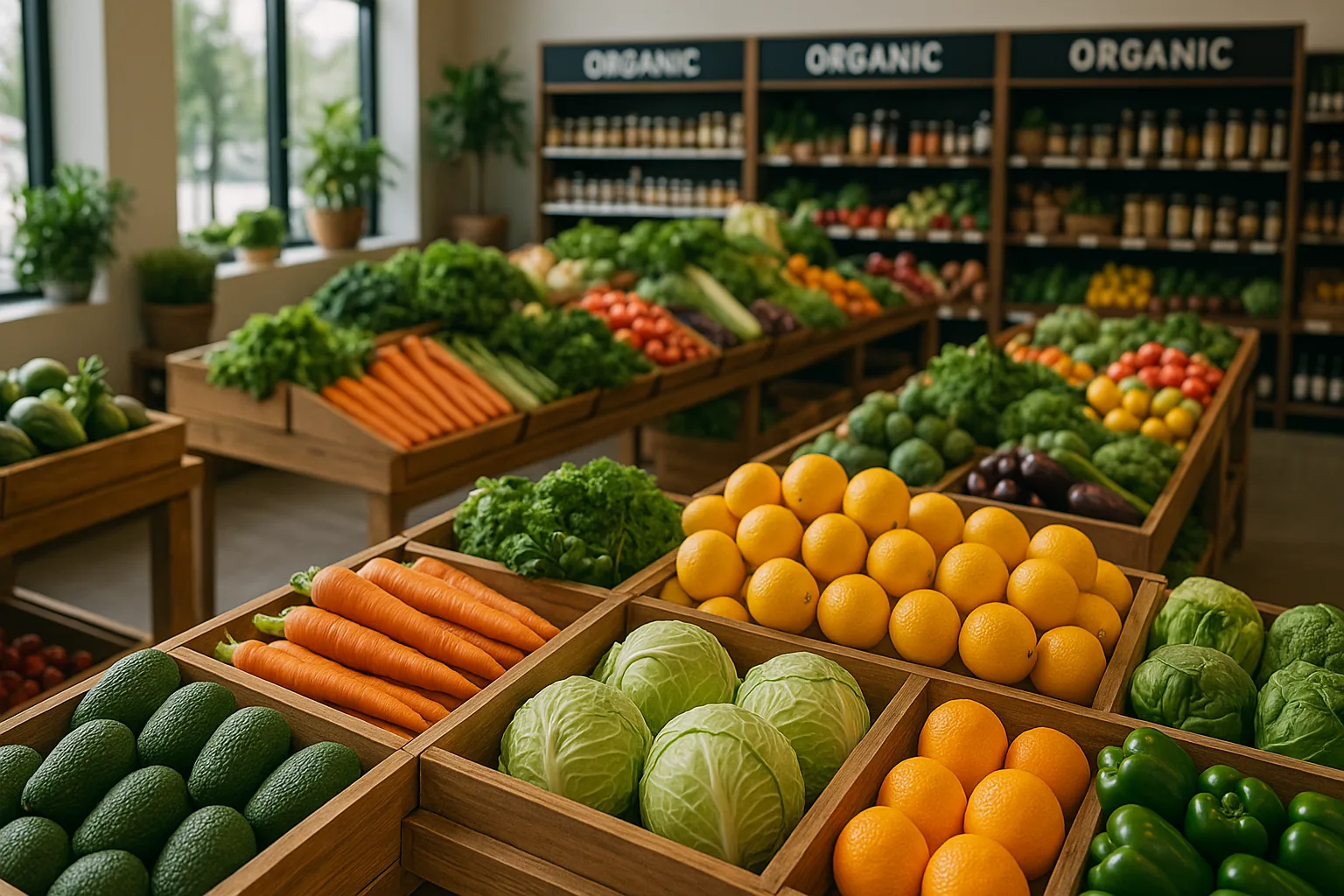
Choose where to buy: organic grocery versus farmers market versus natural foods store. For items on the Environmental Working Group’s “Dirty Dozen” (e.g., strawberries, spinach, apples), prioritize organic grocery or certified organic farmers. For root crops and seasonal stone fruit, farmers market often offers fresher, less expensive options. For pantry staples (dry beans, whole grains), compare prices at organic grocery stores and online bulk suppliers, then buy the best per-pound price.
Helpful internal reading: learn fruit types and benefits at Fruit Types Guide with Benefits and Nutritional Information and pick produce with these selection tips from Fresh Fruits and Veggies Guide.
- Assess organic labeling and certification. Look for “USDA Organic” certification on packaged items. For fresh produce at markets, ask the grower: “Is this certified organic or farmed using organic practices?” If it’s not certified but grown with no synthetic pesticides for 3+ years, note that as “grower-stated organic.” For processed items, read ingredient lists: organic should list “organic” before the ingredient (e.g., “organic cane sugar”). If you need an authoritative resource, consult the USDA site for certification basics: USDA.
- Buy exact amounts to reduce waste. For perishable berries buy 6–12 oz pints per 3–4 people for 3 days. For lettuce and greens buy enough for 1–2 salads per day: 5–6 oz per person per day. For herbs, buy 1–2 oz bunches or grow a small pot. For bulk staples (rice, beans), buy 4–8 lb depending on storage space.
- Transport and timing: keep cold foods cold. If your trip will be longer than 30 minutes, bring a soft cooler with an ice pack and place refrigerated items in it immediately. Maintain chilled items below 40°F; use a digital thermometer if uncertain. In summer temperatures in Texas, keep groceries in the car trunk only if in a cooler—cars can exceed safe temps within 10 minutes.
- Unpack and stage immediately on arrival. Unpack groceries within 30 minutes. Put delicate berries and herbs in the fridge right away. Leave onions, garlic, and potatoes at room temperature (50–68°F) in a dark, ventilated space. Place milk, tofu and other high-risk items on the coldest fridge shelf (usually bottom shelf at back).
- Set refrigerator and freezer temperatures precisely. Use the digital fridge and freezer thermometers you placed earlier. Set refrigerator to 37–39°F (3–4°C) to balance freshness and slow bacterial growth. Set freezer to 0°F (−18°C). Check the thermometer twice daily for the first 48 hours after new stocks to ensure consistency.
-
Organize the fridge by zone. Use these zones:
- Top shelves: ready-to-eat items, cooked leftovers (store in clear airtight containers; cool to 40°F within 2 hours before refrigeration).
- Middle shelves: dairy and deli (yogurt, cheese) at 36–38°F.
- Bottom shelf: raw proteins (meat, fish) on a tray to catch drips; maintain 33–36°F here.
- Crisper drawers: one set to high humidity (for leafy greens), one to low humidity (for apples, pears, and peppers).
- Prepare produce for storage by type. This is long and deserves a focused sub-section below as its own procedure.
Step detail: prepare produce for storage by type
This section covers handling, packaging, ideal temp/humidity, and expected fridge life. Use the following exact measures and actions.
-
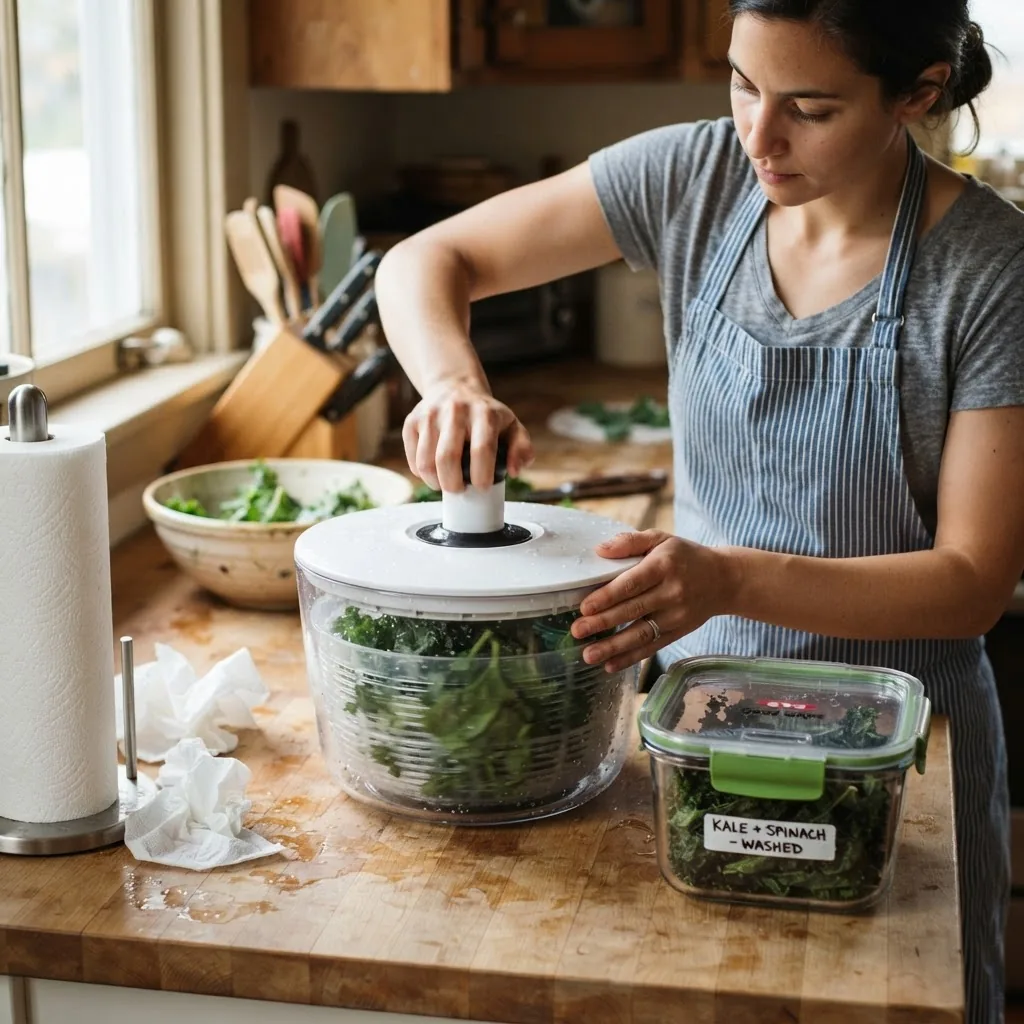
Leafy greens (lettuce, spinach, kale): Remove outer wilted leaves, rinse in cool water for 30–45 seconds, spin-dry in a salad spinner until mostly dry (10–15 seconds at medium speed), then pack into 1–2 L airtight containers lined with a single layer of paper towel. Store at 37–39°F in the high-humidity crisper drawer set to 85–95% RH. Shelf life: 5–10 days depending on type (kale lasts longer, up to 10–14 days if wrapped in a damp paper towel and stored in a sealed bag).
- Berries (strawberries, blueberries, raspberries): Do not wash until ready to eat. Inspect and remove any crushed fruit. Place 6–12 oz pints in a single layer on a fridge shelf at 37–39°F. For long storage, de-stem strawberries, flash-freeze in single layer on a tray for 60–90 minutes, then transfer to freezer bags. Fresh shelf life: strawberries 3–5 days, blueberries 7–10 days in ideal cold.
- Apples, pears: Store in low-humidity drawer or a perforated plastic bag at 34–38°F; keep away from ethylene-sensitive items. Whole apples keep 4–8 weeks refrigerated depending on variety; pears 1–3 weeks refrigeration after ripening.
- Tomatoes: Store at room temperature (60–72°F) on counter away from direct sun until ripe, then move to fridge for up to 3 days to extend life (refrigeration will reduce flavor; allow 24 hours at room temp before eating if chilled).
- Root vegetables (carrots, beets, turnips): Remove green tops (leave 0.5 inch attached) to prevent moisture loss. Store unwashed in perforated plastic or wrapped in a damp cloth in the high-humidity drawer at 34–40°F. Carrots keep 4–6 weeks; beets 4–8 weeks.
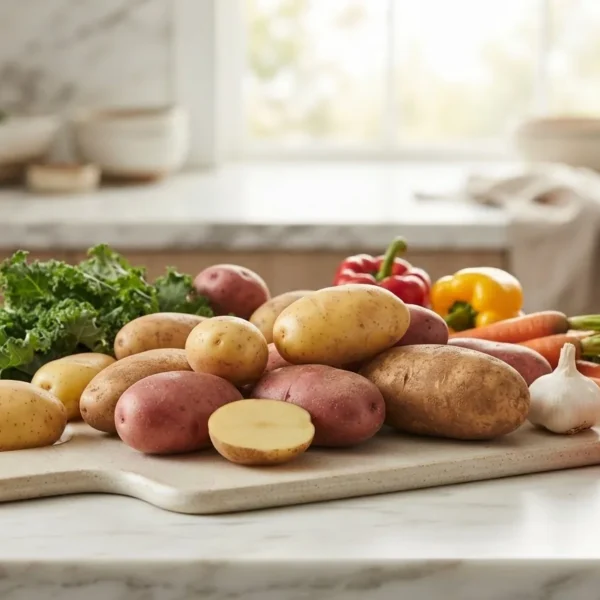
- Potatoes, onions, garlic: Keep in a dark, ventilated container at 45–55°F, not in the refrigerator. Potatoes: 4–10 weeks; onions: 1–3 months; garlic: 3–5 months.
- Avocados: Store unripe at 60–65°F on counter; when ripe (yield to gentle pressure) move to fridge to extend 3–5 days. For mashed avocados, add juice from 1/2 lemon per cup, press a sheet of plastic directly on surface, and refrigerate in 500 mL airtight container for 1–2 days.
- Herbs: Treat soft herbs (cilantro, parsley) like flowers—trim stems, place in 250–500 mL jar with 1–2 cm water, cover loosely with a perforated plastic bag and refrigerate. Hard herbs (rosemary, thyme) wrap in damp paper towel and store in a sealed bag in fridge. Fresh herb life: 5–14 days.
- Bananas: Store at room temperature 60–72°F. To slow ripening, separate stems and wrap them with plastic wrap. Do not refrigerate unripe bananas; ripe bananas can be refrigerated for 2–3 days (peel will darken but fruit stays firm).
- Bulk grain, flour and pulses: For whole grains and flours, store in airtight glass jars in a cool dry pantry (≤70°F) or refrigerated at 40–55°F for whole-wheat flour to prevent rancidity. Typical storage times: white flour 6–12 months pantry; whole-wheat flour 3–6 months pantry or up to 12 months refrigerated.
Step-by-step: long-term preservation and batch prep
- Blanch and freeze vegetables for 6–12 month storage. Trim and cut vegetables. Blanch in boiling water: broccoli florets 3 minutes, green beans 2–3 minutes, carrots 2 minutes. Immediately plunge into an ice-water bath for equal time. Drain, pat dry, arrange in single layer on a tray for flash freeze 60–90 minutes, then transfer to labeled freezer bags in portions of 1–2 cups. Label with date and contents. Freezer temp must be 0°F (−18°C) or lower. Use within 8–12 months for best quality.
-
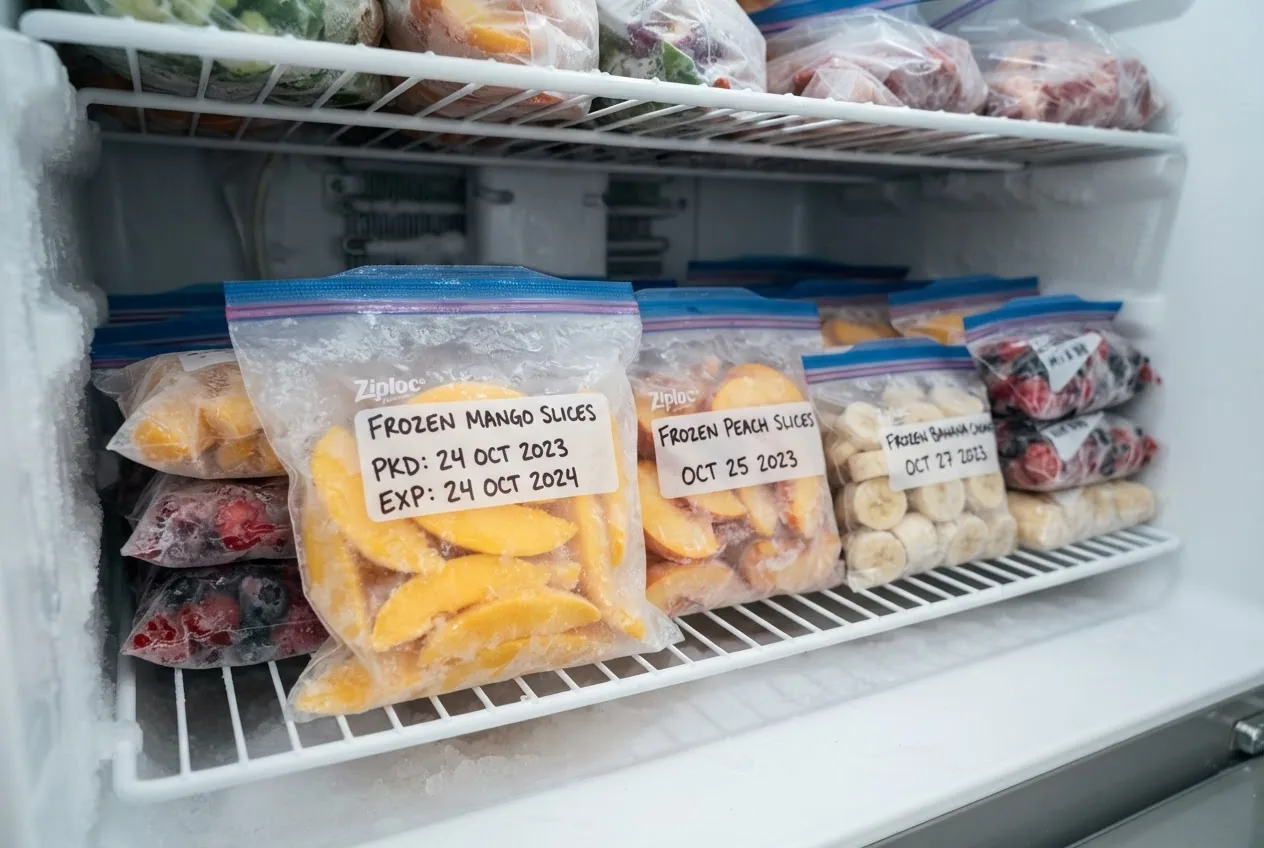
Freeze fruits for smoothies and baking. Slice fruit (bananas, peaches, mango), lay on a tray, flash freeze 60–120 minutes, then pack into portioned 16–24 oz bags. For berries, freeze single layer and then bag. For citrus zest, grate and freeze in 1–2 tablespoon portions in small jars.
- Batch-cook and freeze meals in portion sizes. Cook chili, stews, and grain bowls in 2–3 cup portions. Cool to 70°F within 2 hours, then to 40°F within additional 4 hours before freezing. Use containers with 250–500 mL headspace to allow expansion. Label with contents and date; rotate oldest to front. Use cooked meals within 3 months for best quality; safe longer at 0°F but quality declines.
- Make simple ferments to extend shelf-life (sauerkraut, quick pickles). For sauerkraut: shred 1 kg cabbage, mix with 15–20 g fine sea salt (1.5–2% by weight), pack into a jar removing air pockets, keep submerged under brine, and ferment at 65–72°F for 5–14 days tasting for desired tang. After fermentation, refrigerate at 38–40°F; lasts 4–6 months refrigerated. Use proper fermentation crocks or food-grade jars and weights.
- Dehydrate herbs and some fruits to save space. Use a dehydrator at 95–115°F: basil and herbs 2–4 hours; thin apple slices 6–10 hours. Store in airtight jars in pantry; rehydrate as needed. Label with date and rotate within 12 months.
Step-by-step: buying and using healthy grocery delivery and online whole-food suppliers
- Vet delivery services for cold-chain integrity. When searching “healthy grocery delivery near me,” ask providers about insulated bags, refrigerated vehicles, and time-from-pick to door. Require a max of 2–3 hours for perishable items. If the service cannot guarantee that, plan to pick up refrigerated products yourself.
- Order perishables last and schedule earliest delivery slot. Place frozen and refrigerated items at the end of your online cart and choose earliest morning delivery (7–9 AM) if available. For Texas summers, avoid afternoon deliveries.
- Use online “buy whole food online” suppliers for bulk and specialty items. For bulk grains and dried beans, buy 10–25 lb sacks and split into 1–2 lb jars for home use. For seeds and nuts, vacuum-sealed packs of 1–5 lb keep longer; refrigerate almonds and walnuts to prevent rancidity.
- Inspect delivered produce immediately and document issues. Photograph damaged or warm items, note timestamps, and contact vendor within 24 hours for replacement or refund. Keep receipts and screenshots of delivery windows.
Step-by-step: labeling, rotation, and tracking waste
- Label everything. Use a permanent marker to write contents and packing date on every freezer bag and jar: format YYYY-MM-DD. For example: “Spinach blanched – 2026-09-01.”
- Adopt FIFO rotation. Place newer items behind older ones. For pantry jars, maintain a visible shelf plan with sticky-note dates until labeled.
- Track food waste for 4 weeks. Keep a small notebook or phone note where you record items you discarded each week and why (mold, soft spot, forgot to use). After 4 weeks, adjust shopping quantities down by the average wasted weight to reduce overbuying—e.g., if you throw away 1 lb of berries weekly, reduce future purchases by 25–33% or freeze half immediately.
Practical worked examples (Texas household scenarios)
Scenario A — Young couple, weekly shopper, no freezer batch-cooking
Goal: fresh salads and nightly vegetable sides for 2 adults. Shopping list and quantities:
- Greens: 1.5 lb mixed lettuce and 1 bunch kale (about 12 oz)
- Berries: 12 oz strawberries
- Apples: 2 lb (4 medium)
- Root veg: 2 lb carrots
- Tomatoes: 1.5 lb (about 4 medium)
- Herbs: 1 bunch cilantro, 1 bunch basil
- Pantry: 2 lb brown rice, 1 lb dried lentils
Storage actions on arrival: spin-dry greens and store in 1 L container with paper towel; put kale in a sealed bag with a dry paper towel; store berries in single layer; refrigerate apples in low-humidity drawer; carrots in high-humidity drawer. Rotate meal plan so greens eaten first 4 days, berries within 3 days.
Scenario B — Family of 4 with freezer and meal-prep
Goal: 7 dinners plus 6 frozen lunches. Shopping list:
- Leafy greens: 3 lb (for salads & cooking)
- Mixed fruit: 24 servings (8 apples, 16 bananas, 2 pints berries)
- Vegetables for roasting: 6 lb mixed (sweet potato 3 lb, carrots 2 lb, onions 1 lb)
- Proteins: 3 lb chicken breast, 2 lb tofu
- Pantry: 10 lb rice, 5 lb beans
Batch-cook 6 dinners and freeze in 2–3 cup portions using labeled freezer bags. Flash-freeze vegetables for smoothies and pre-roast sweet potatoes for 2–3 lunches weekly. Expect freezer inventory to last 6–12 weeks depending on rotation.
Shopping and market tactics: how to evaluate vendors and seasons in Texas
- Arrive early to farmers markets (within first hour of opening). You’ll find the freshest produce, and sellers can tell you harvest times and post-harvest handling. Ask direct questions: “When was this picked?” Expect answers in hours to 48 hours for best items.
- Smell and touch fruit—don’t rely solely on color. For melons, smell the blossom end; for peaches, look for slight give and aroma. For peaches and nectarines plan to use within 2–3 days of purchase or refrigerate once ripe.
- Compare price-per-pound at organic grocery stores vs market stalls. Do quick math: if organic strawberries are $4.99/pint at the grocery and $6.50/pint at market, consider freshness and local preference. For seasonal bulk buys (tomatoes in July–August), farmers market prices often beat grocery store prices by 20–40%.
- Negotiate for blemished or bulk buys. If you see a bin with slightly bruised stone fruit, ask for a discount for immediate use or for freezing—vendors often accept 10–25% off on such lots.
Label reading: how to identify the best organic grocery and packaged products
Check labels for:
- “USDA Organic” seal — indicates certified organic production for multi-ingredient foods when >95% ingredients are organic.
- Ingredient order — the first listed item is the majority by weight.
- “Made with organic” — between 70–95% organic ingredients; less assurance than full USDA Organic.
- Non-GMO Project Verified if avoiding genetically modified ingredients, though this is different from organic.
- Added sugars and oils — for healthy grocery focus choose items where added sugars are <5 g per serving and oils are identifiable (e.g., extra virgin olive oil).
Storage thresholds and safety numbers to memorize
- Refrigerator ideal temperature: 37–39°F (3–4°C).
- Freezer ideal temperature: 0°F (−18°C).
- Danger zone for bacterial growth: 40–140°F (4–60°C). Do not leave perishables in this range more than 2 hours total; reduce to 1 hour if ambient temp >90°F (Texas summer).
- Blanching times: broccoli 3 min, green beans 2–3 min, carrots 2 min, spinach 1.5 min.
- Fermentation salt proportion: 1.5–2% by weight (15–20 g salt per 1,000 g cabbage).
Tools and small investments that pay off
- Digital refrigerator/freezer thermometers: $12–25 each.
- Vacuum sealer and rolls: $100–200; reduces freezer burn and extends storage 2–3× vs bags.
- Glass airtight containers set (12–24 pieces): $40–120 — opt for varied sizes (250 mL to 2 L).
- Salad spinner: $15–40 — essential for leafy green longevity.
Budgeting: cost-saving techniques without losing quality
- Buy seasonally. In Texas, buy stone fruit in summer, citrus in winter, tomatoes in mid-summer. Seasonal produce is 15–50% cheaper and fresher.
- Split bulk with a friend. Purchase a 25 lb bag of dry beans or whole grain and divide into 5 lb portions to reduce cost per pound and avoid waste.
- Use the freezer for sales. When berries or meat is on sale at 30–50% off, buy double and freeze in portion sizes within the four-hour safety window.
Common mistakes and how to avoid them (practitioner experience)
I once refrigerated whole potatoes and onions together because I wanted to save counter space; within two weeks the potatoes sprouted and the onions softened from excess moisture—I learned to keep them separated in a cool, dry, ventilated bin (45–55°F) to avoid this. Another time I bulk-bought 8 pints of strawberries without a plan and left half uncovered in the fridge; two days later half were moldy. Now I freeze half right away and keep the rest in single layers.
From practical experience these are the recurring errors I see:
- I buy too much of perishable berries or salad greens without a freezing or cooking plan—result: 25–30% waste. Fix: pre-commit to freezing half or using within 3 days.
- I store ethylene-producing fruit (apples, bananas, tomatoes) next to ethylene-sensitive items (leafy greens). Result: premature yellowing. Fix: separate drawers; apples in low-humidity drawer at 34–38°F, greens in high-humidity drawer.
- I rely on vendor claims without checking handling—once I received warm milk from a delivery service. Fix: request delivery windows and check temps immediately; document and request refund if >40°F.
- I treat all “organic” at the same price point. Some items have negligible residue risk; I now prioritize organic for the top 12 produce items and buy conventional for lower-risk items to balance budget.
Compact verification checklist (tick off before you finish the day)
- Fridge thermometer reads 37–39°F; freezer reads 0°F.
- All leafy greens cleaned, dried, and stored in high-humidity drawer or airtight containers with paper towel.
- Berries inspected; damaged fruit removed; unwashed and stored single-layer.
- Root veg trimmed and in high-humidity drawer; potatoes & onions stored in cool pantry.
- Leftovers cooled to 70°F within 2 hours and placed on top shelf in clear containers, labeled with date.
- Frozen items labeled with contents and date in YYYY-MM-DD format.
- Delivery perishables inspected and temperature-documented within 30 minutes.
- Meal plan aligned to use most perishable items within 4 days.
When to call in a professional
Contact a food safety consultant, professional refrigerator technician, or registered dietitian in these situations:
- Your refrigerator or freezer cannot maintain safe temperatures (fridge >40°F or freezer >5°F) after cleaning and thermostat checks—call an appliance technician immediately.
- You manage food for many people (>25 daily servings) such as a daycare or pop-up market and need a HACCP plan or commercial cold-chain protocol—engage a food safety professional.
- You require personalized dietary guidance due to medical conditions (diabetes, renal disease, severe allergies)—consult a registered dietitian or physician for meal planning and portion sizes.
Local Texas resources and seasonal timing notes
Texas growing seasons vary by region. In Central Texas expect spring greens through May, stone fruit July–August, melons June–August, and citrus varieties from November through March. Search local farmers markets for harvest-day specifics and align purchases with in-season windows to get the best prices and quality.
Quick-reference storage table (select entries)
| Item | Temp & Humidity | Fridge life (fresh) |
|---|---|---|
| Leafy greens | 37–39°F, high humidity 85–95% | 5–10 days |
| Berries | 37–39°F, single layer | 3–10 days (varies) |
| Apples | 34–38°F, low humidity | 4–8 weeks |
| Root veg | 34–40°F, high humidity | 4–8 weeks |
| Tomatoes | 60–72°F until ripe; then 37–39°F short-term | 3–7 days after ripening |
Extra tips for organic stores and natural foods store shoppers
- Bring reusable produce bags and announce it—some organic stores offer a small discount for bringing your own packaging.
- Ask for bulk-scoop samples if you have allergies—nuts and gluten-free grains are often co-located; verify cleaning protocols.
- For organic milk and eggs, check “pack date” or “sell-by” and choose the latest date-to-sell for longest life at home.
Safety and allergies: cross-contact prevention
If you or household members have allergies, keep segregated zones and equipment: designate a specific shelf in the fridge and a set of labeled containers for allergen-free foods. Wash cutting boards and utensils in hot, soapy water or dishwasher between uses. For severe allergies, consider color-coded cutting boards and sealed storage bins.
Environmental considerations and waste reduction
Compost food scraps (peels, cores, coffee grounds) when possible to lower waste. Use freezer and pantry rotation to reduce landfill contributions: commit to cooking one “use-it” meal each week that uses odds-and-ends vegetables approaching end-of-life.
Disclaimer
This guide offers practical storage and shopping information for healthy food and organic grocery purchases. It does not replace medical or dietary advice. Consult a registered dietitian or physician for personal nutrition recommendations, particularly if you have medical conditions.
Frequently Asked Questions
How long can I store organic spinach in the fridge?
Store organic spinach washed, spun dry, and in a sealed container with a paper towel at 37–39°F and high humidity; expect 5–10 days of good quality. If you need longer, blanch for 1.5 minutes, shock in ice water, dry, and freeze in 1–2 cup portions for up to 12 months.
What’s the single best tip to keep berries from molding quickly?
Inspect and remove any damaged fruit on purchase, do not wash until eating, and store single-layer in the fridge at 37–39°F. For longer storage, flash-freeze on a tray for 60–90 minutes then transfer to labeled freezer bags; use within 10–12 months for best quality.
Are organic grocery stores always better for produce?
Not always. For the highest pesticide-reduction priority items (e.g., berries, leafy greens), organic is preferred. For some produce with naturally lower residue risk, local, recently-harvested conventional items from a farmers market can be fresher and cost-effective.
How do I evaluate a healthy grocery delivery service’s cold chain?
Ask the provider if they use refrigerated vehicles or insulated totes with ice packs, what the maximum time-from-pick to door is (under 2–3 hours for perishables), and whether drivers document temperatures at drop-off. Inspect delivered perishables immediately and document any issues within 24 hours.
What are simple storage rules for a small kitchen with limited fridge space?
Prioritize refrigeration for dairy, meats, and most fruits/veggies; keep potatoes and onions at room temperature; freeze half of perishable purchases within 24 hours; use stackable clear containers and label with dates; plan meals to use the most-perishable items first.