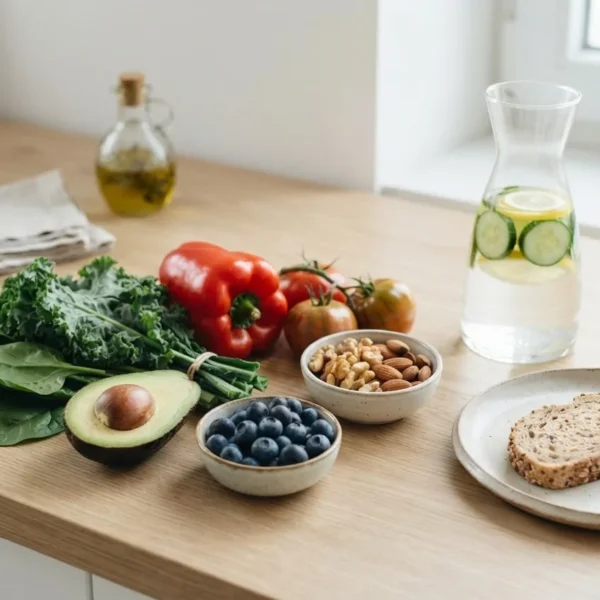
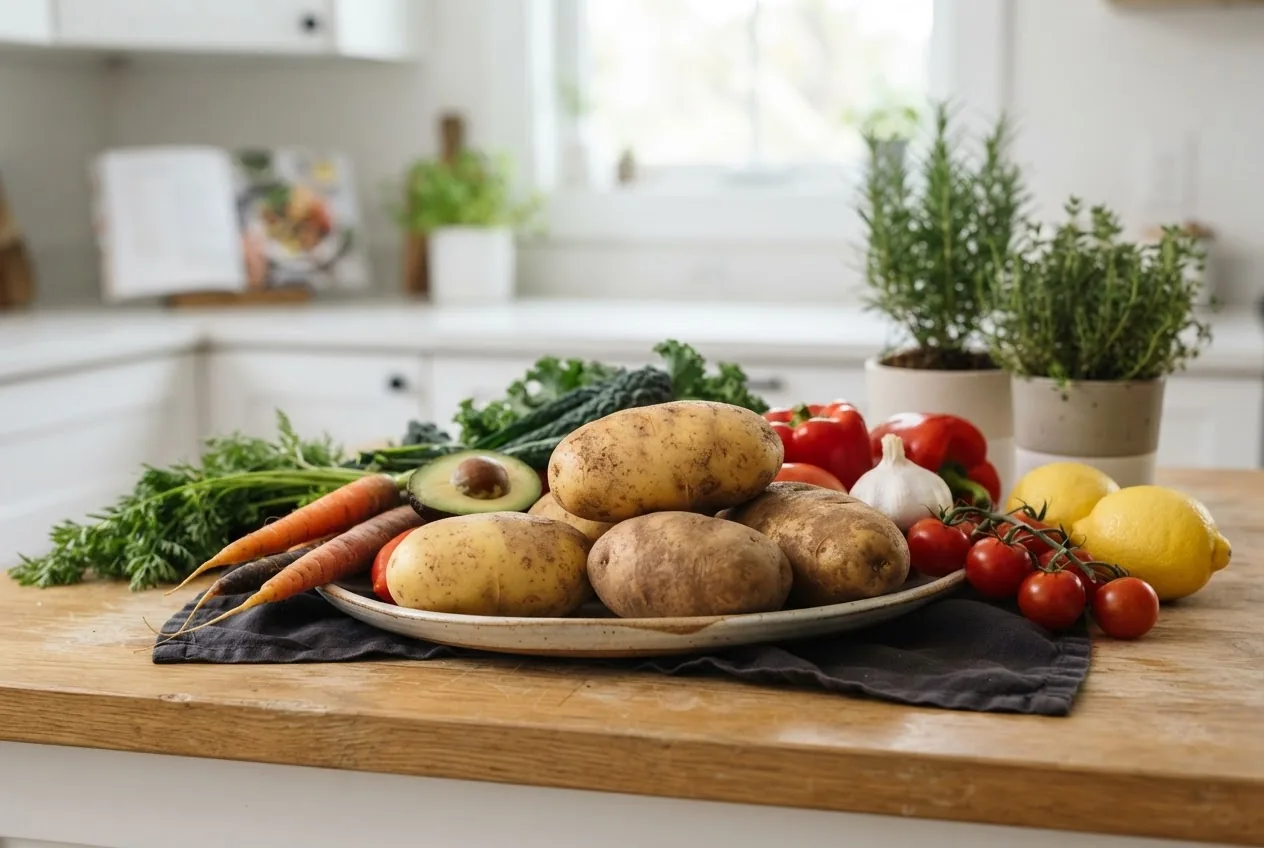
Answer: Yes — from a culinary and dietary standpoint potatoes are classified as vegetables, but botanically they are tubers (modified underground stems) of the Solanum tuberosum plant; regulatory systems like the USDA treat them within vegetable groups for nutrition guidance. This dual-status explains much of the confusion.
What Is a Vegetable? Defining Vegetable Classification
Answer: A “vegetable” is a catch-all culinary and regulatory category for edible plant parts (leaves, stems, roots, tubers, flowers) consumed as savory or side-dish foods; botanically, vegetables are not a single plant group but a convenience grouping based on usage and plant part.
Term: Botanical definition — the scientific classification of plants by reproductive and structural features; it does not include culinary usage.
Two common classification approaches govern whether something is called a vegetable:
- Culinary definition: Based on taste, preparation and role at the table — savory plants and plant parts used in main dishes or sides are “vegetables.”
- Botanical definition: Based on plant anatomy and reproduction — fruits form from flowers and contain seeds; roots, tubers, leaves and stems are classified by their plant part names.
Examples by plant part illustrate the difference:
- Leaves: lettuce, spinach (culinary and botanical align as leaf vegetables)
- Roots: carrot, beet (root vegetables)
- Tubers: potato, yam (tubers are swollen underground stems or storage organs, often treated as vegetables in kitchens)
- Fruits eaten as vegetables: tomato, bell pepper (botanically fruits; culinarily vegetables)
Regulatory and dietary systems (e.g., national dietary guidelines) favor the culinary/regulatory classification because it aligns with nutrient guidance and meal planning: vegetables are grouped for serving counts and nutrient targets rather than botanical purity.
fruit types guide with benefits and nutritional information
fruit or vegetable classification explained
nutritional guide to avocado fruit
Because “vegetable” is primarily a culinary and regulatory category, you often see overlap and exceptions: a potato is botanically a tuber but culinarily a starchy vegetable; an avocado is botanically a fruit but culinarily used like a vegetable. This pragmatic approach helps governments and dietitians issue serving advice and nutrient targets.
Is Potato a Vegetable? Botanical and Culinary Perspectives
Answer: Botanically, potato is the tuber (an underground storage stem) of Solanum tuberosum; culinarily and in common nutrition practice, potatoes are vegetables—specifically starchy vegetables—used as sides or bases in savory dishes.
Term: Tuber — a swollen underground stem that stores nutrients for a plant, distinct from a root.
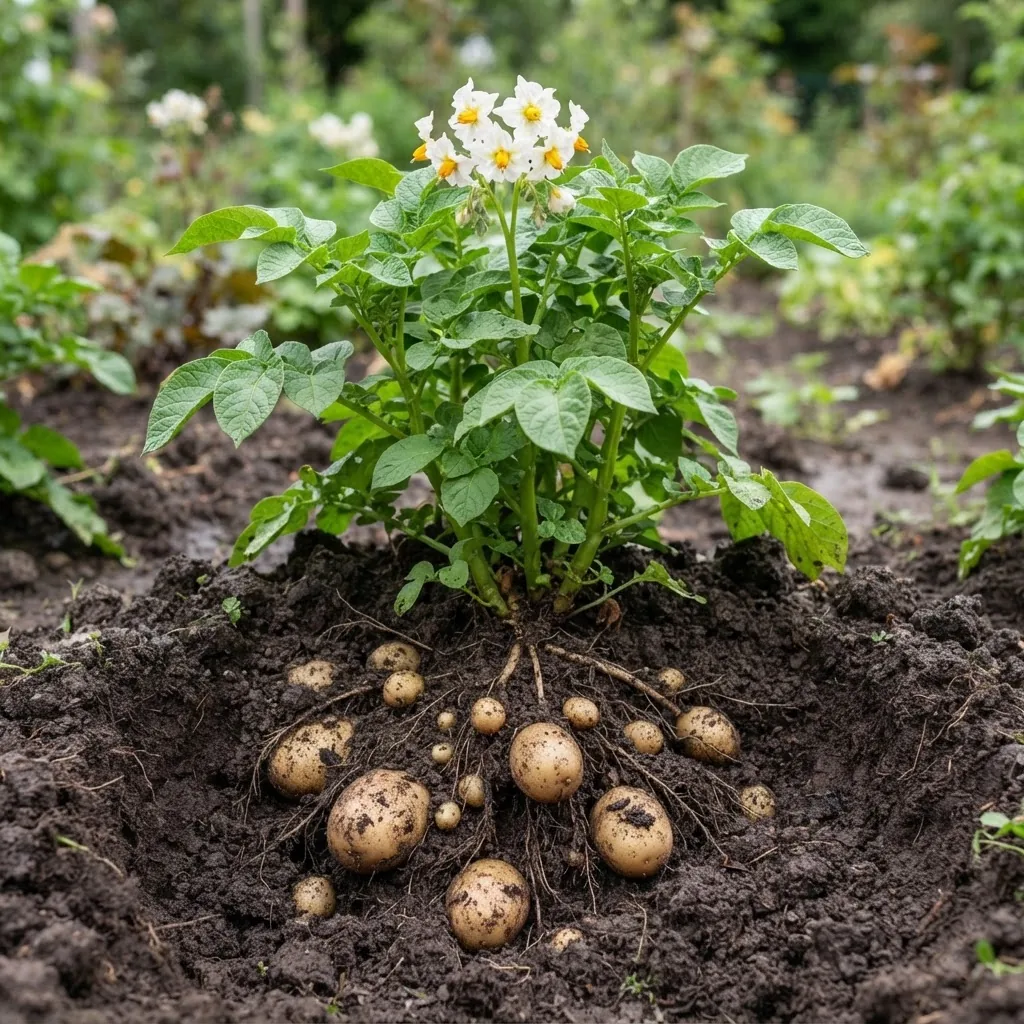
Botanical perspective: the edible portion of the potato plant is a tuber — a modified stem that produces buds (“eyes”) and stores starch. Tubers originate from stolons and are not reproductive fruits (they do not arise from the flower). That means, in strict botanical terms, potatoes are neither fruits nor leaves but storage organs.
Culinary perspective: chefs and home cooks treat potatoes as vegetables because they are prepared and served like other vegetables: boiled, baked, roasted or mashed as a savory side, ingredient or base. In meal planning, potatoes count toward vegetable servings in many dietary frameworks, though often in a separate “starchy vegetables” subgroup.
| Classification | Potato (Solanum tuberosum) |
|---|---|
| Botanical | Tuber (modified underground stem), stores starch |
| Culinary | Vegetable (starchy vegetable) used in savory dishes |
| Regulatory/Dietary | Grouped with vegetables for serving guidance, often separate as “starchy” |
Practical examples show the dual nature: a cookbook will list potatoes under “vegetables” or “sides,” and a garden reference labels the plant as Solanum tuberosum with emphasis on tuber production. This is why the answer differs by viewpoint but converges in nutrition practice: potatoes count as vegetables in diets despite their botanical identity as tubers.
Are Potatoes Considered Vegetables by Authorities and Nutritionists?
Answer: Yes — major authorities and nutritionists count potatoes within vegetable categories for dietary guidance, typically as “starchy vegetables”; USDA databases and national guidelines include potatoes in vegetable serving systems while noting separate nutrient profiles.
Term: USDA classification — the United States Department of Agriculture’s categorization of foods for dietary guidance and nutrient databases.
According to the USDA FoodData Central and the Dietary Guidelines framework, potatoes are listed in vegetable categories and tracked in vegetable intake metrics. For nutrient composition and serving guidance the USDA separates non-starchy (leafy greens) from starchy vegetables (potatoes, corn, peas) because starch content and caloric density differ.
Authoritative sources and dietitians also treat potatoes as vegetables but stress preparation matters. For example, the Academy of Nutrition and Dietetics recognizes potatoes can contribute valuable nutrients (potassium, vitamin C) but recommends mindful preparation to avoid excess fat or sodium.
External resources for reference include these authoritative sites and publications:
- USDA FoodData Central — for nutrient composition and food codes (government database).
- Academy of Nutrition and Dietetics — professional guidance and position statements on vegetable consumption.
- Peer-reviewed review on resistant starch and health — scientific discussion of potato starch physiology.
Nutritionists typically make two practical distinctions:
- Potatoes as a vegetable serving: counted, but sometimes separated into “starchy” subgroup for dietary metrics.
- Potato preparations: boiled or baked retain nutrients and remain reasonable vegetable components; frying or heavy cream additions change their nutritional role and portions needed for a balanced plate.
Nutritional Profile of Potatoes Compared to Other Vegetables
Answer: Potatoes are energy-dense compared with many non-starchy vegetables: a 100 g cooked potato provides more calories and carbohydrates but also substantial potassium, vitamin C and some fiber; compared to leafy greens, potatoes have higher carbs and calories but lower vitamin A and folate per calorie.
Term: Glycemic index (GI) — a scale that ranks carbohydrate-containing foods by how much they raise blood glucose compared to pure glucose.
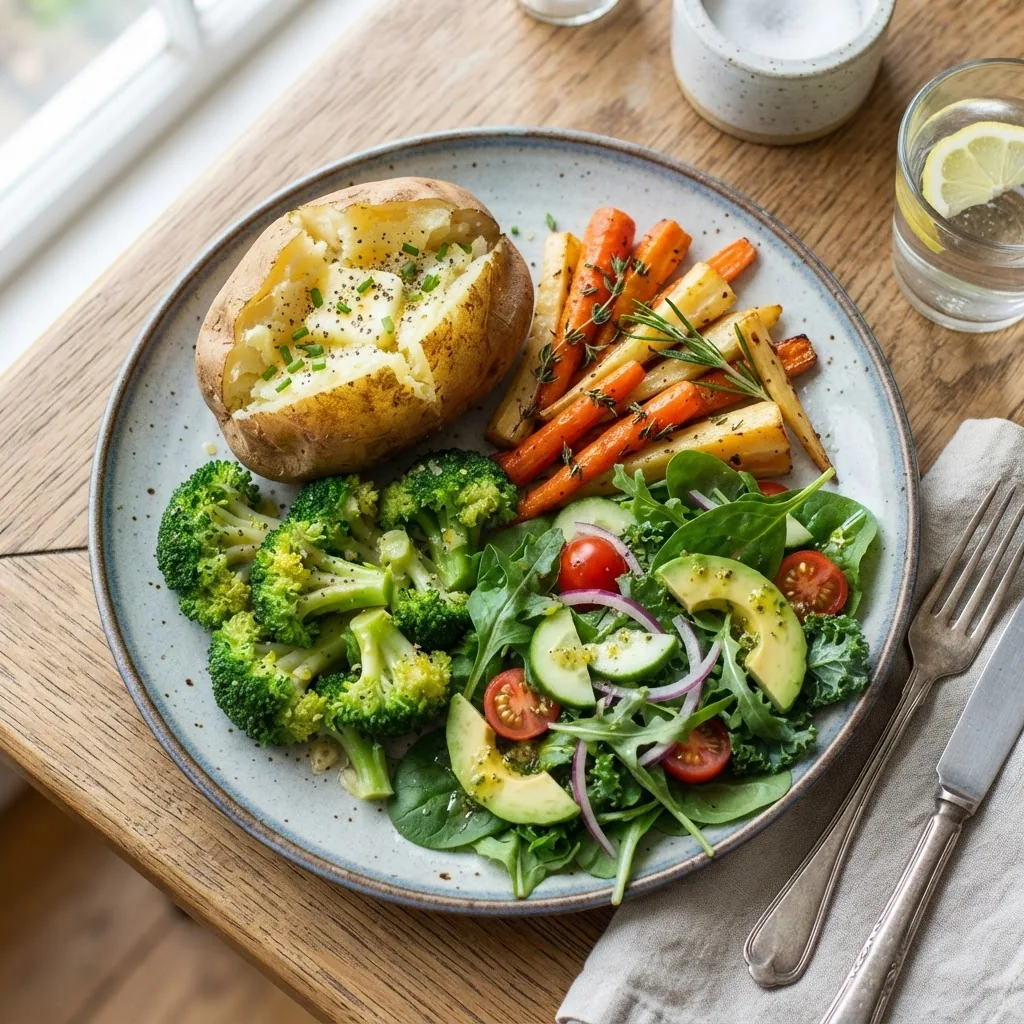
| Nutrient / Food (per 100 g cooked) | Potato (boiled) | Broccoli (steamed) | Cabbage (raw) | Spinach (raw) |
|---|---|---|---|---|
| Calories (kcal) | 87 | 35 | 25 | 23 |
| Carbohydrates (g) | 20.1 | 7.2 | 5.8 | 3.6 |
| Fiber (g) | 1.8 | 3.3 | 2.5 | 2.2 |
| Potassium (mg) | 379 | 316 | 170 | 558 |
| Vitamin C (mg) | 19.7 | 89.2 | 36.6 | 28.1 |
| GI (approx.) | 78 (varies) | Low (15) | Low (10) | Low (15) |
| Resistant starch | Variable; higher when cooled after cooking | Low | Low | Low |
Data above are typical values drawn from national food composition tables and clinical analyses. According to a 2023 USDA Food Database summary, cooked potatoes provide more potassium per 100 g than many common vegetables and supply vitamin C and B6; however, caloric and carbohydrate content is higher than most leafy vegetables.
Key analytical points:
- Macronutrients: Potatoes are carbohydrate-rich with modest protein and very low fat unless fat is added in cooking.
- Micronutrients: Potatoes contribute potassium, vitamin C and B6; they are not major sources of vitamin A or K compared to leafy greens.
- Fiber and resistant starch: Total fiber is moderate; resistant starch (a fermentable starch that behaves like fiber) can increase when potatoes are cooked and cooled, offering metabolic benefits.
- Glycemic behavior: GI and glycemic load vary with variety, cooking method and serving size; baked or mashed hot potatoes often have higher GI values than cooled or waxy varieties.
Term: Resistant starch — starch not digested in the small intestine, fermented in the colon, and linked with improved insulin sensitivity in some studies.
Relevant external evidence: a peer-reviewed review (2014) details mechanisms by which resistant starch affects glucose and gut health; clinical results are mixed but promising for metabolic regulation when resistant starch is included regularly in modest amounts (<-- see external citation above).
broccoli nutrition facts and serving sizes
For portion-focused readers: a medium baked potato (~173 g) provides roughly 160–170 kcal, 37 g carbohydrates and ~620 mg potassium — comparable to or greater than single servings of many non-starchy vegetables in potassium but higher in calories and carbs. According to a 2024 industry nutrient analysis, variety and cooking method are major drivers of nutrient outcome.
Is Mashed Potatoes a Vegetable? Understanding the Impact of Preparation
Answer: Plain mashed potatoes (potatoes boiled and mashed without high-fat additions) can be counted as a vegetable serving; mashed potatoes with butter, cream or gravy become more of a mixed dish and contribute significant fat and calories, changing their role in a balanced plate.
Term: Mashed potatoes nutrition — the nutrient composition of potatoes after cooking and mashing; additives substantially alter calories, fats and sodium.
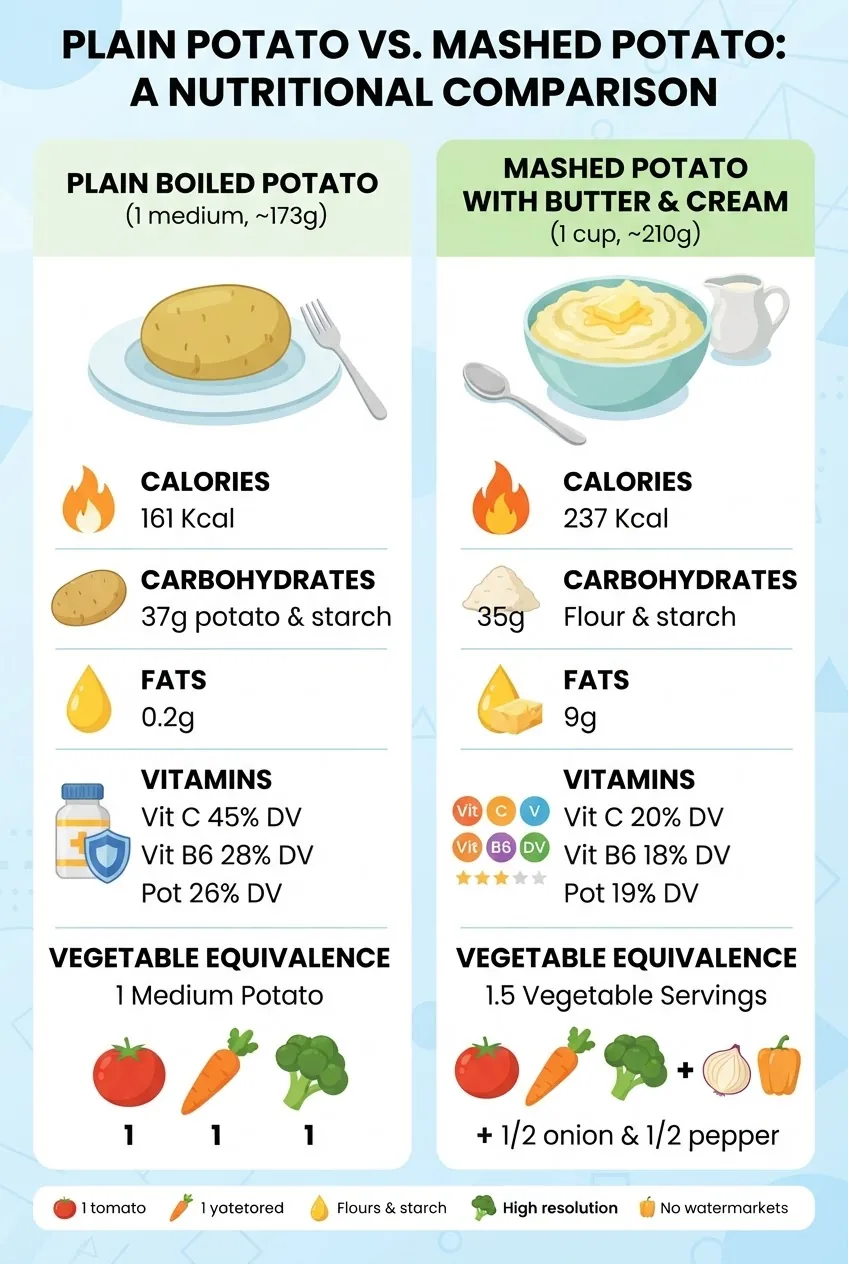
| Preparation | Calories (per 100 g) | Carbs (g) | Fat (g) | Counts as vegetable serving? |
|---|---|---|---|---|
| Plain mashed (potato + a little milk) | 90–100 | 20 | 1–2 | Yes (starchy vegetable serving) |
| Mashed with butter & cream | 150–220 | 18–22 | 8–15 | Partly — counts as vegetable but also a high-fat side |
| Mashed with gravy/fried toppings | 200+ | 20+ | 10–25 | Less likely to be considered a healthy vegetable serving |
Regulatory counting: many dietary guidelines count one-half cup (about 125 g) of mashed potatoes as one vegetable serving when prepared simply; when heavy fats are added the portion may still be a vegetable but no longer aligns with “low-fat vegetable” guidance. According to a 2023 USDA serving guide, context (added ingredients) determines whether the dish fits recommended vegetable patterns.
Practical kitchen guidance:
- Choose boiling and light mashing to preserve nutrients and minimize added fat.
- Swap heavy cream for warm milk and olive oil for butter to maintain texture while reducing saturated fat.
- Consider mixing mashed potato with cauliflower or spinach to boost fiber, lower carbs per serving, and improve the vegetable-to-starch ratio on the plate.
Mashed potatoes frequently appear on menus as a starchy side. Nutritionists recommend treating mashed potatoes as a vegetable only when they contribute meaningful servings of actual potato and are not primarily a fat vehicle; portion control and ingredient swaps make a difference for health outcomes.
Health Benefits and Considerations of Including Potatoes in Your Diet
Answer: Potatoes provide accessible energy, potassium, vitamin C and some fiber; benefits include blood pressure support, satiety from carbohydrates and a source of resistant starch when cooked/cooled, but portion size and preparation affect weight and blood sugar outcomes.
Term: Glycemic load (GL) — a measure combining a food’s glycemic index and typical serving carbohydrate content to assess blood glucose impact.
- High potassium for blood pressure support: Potatoes are a reliable potassium source; according to a 2023 USDA nutrient summary, a medium potato can supply over 600 mg potassium, which supports sodium balance and blood pressure control when combined with overall diet.
- Vitamin C and B vitamins: Potatoes contribute vitamin C and B6 needed for immune function and energy metabolism; intake varies by cooking (boiling can leach water-soluble vitamins).
- Resistant starch benefits: Cooked and cooled potatoes contain more resistant starch, which may improve insulin sensitivity and feed beneficial gut bacteria per peer-reviewed studies.
- Satiety and weight management: Potatoes have high satiety per calorie when prepared simply, helping appetite control in some trials; however, high-fat preparations negate that advantage.
- Energy source for active people: The carbohydrate density makes potatoes useful for fueling exercise and recovery.
- Caveats for blood sugar: Potatoes have variable GI; people managing blood glucose should monitor portions and pair potatoes with fiber, protein and fats to blunt post-meal glucose spikes.
informational health guide on vegetables
Practical recommendations from dietitians:
- Count potatoes in weekly vegetable targets but prioritize a mix of starchy and non-starchy vegetable servings.
- Prefer boiled, baked or roasted potatoes without heavy fats; limit fried forms and creamy preparations.
- Use portion control: a medium potato or 1/2–3/4 cup cooked portion typically counts as one vegetable serving depending on guideline.
Common Misconceptions About Potatoes and Vegetables
Answer: Misconceptions include thinking potatoes are not vegetables because they are starchy, that all potato preparations cause weight gain, or that potatoes lack nutrients — clarified below with evidence-based corrections.
- Misconception: “Potatoes aren’t vegetables.” — Clarification: botanically tubers, culinarily and for dietary counting they are vegetables (starchy subgroup).
- Misconception: “Potatoes automatically cause weight gain.” — Clarification: weight impact depends on total calories and preparation; plain potatoes can fit weight-loss diets when portioned and cooked simply.
- Misconception: “Mashed potatoes never count as a vegetable.” — Clarification: plain mashed potatoes count; additions change nutritional quality and should be considered separately.
- Misconception: “Potatoes have no vitamins or minerals.” — Clarification: potatoes provide potassium, vitamin C and B6 and modest fiber, with amounts varying by variety and cooking method.
- Misconception: “All potatoes have the same glycemic response.” — Clarification: GI and GL vary by variety, cooking method, size and whether they are cooled (resistant starch increases when cooled).
Conclusion: Final Classification and Nutritional Takeaway
Answer: Potatoes are botanically tubers but are classified and treated as vegetables in culinary, regulatory and nutrition contexts; they offer valuable nutrients yet require mindful preparation and portioning to align with healthy-diet recommendations.
Summary takeaways:
- Classify potatoes as vegetables for meal planning, but recognize the botanical identity as tubers.
- Prefer simple cooking methods (baked, boiled, roasted) and limit added saturated fats and sodium.
- Balance potatoes with non-starchy vegetables to ensure fiber, vitamin A and other micronutrients are covered.
- People managing blood sugar should monitor serving size and pair potatoes with protein, fiber and healthy fats to moderate glycemic impact.
For practical recipes, serving swaps and portion guides that help you include potatoes in a balanced plate, see the fruit and vegetable diet meal plan and nutrition guide and our recipe pages in the Veg and Hot Vegetable sections.