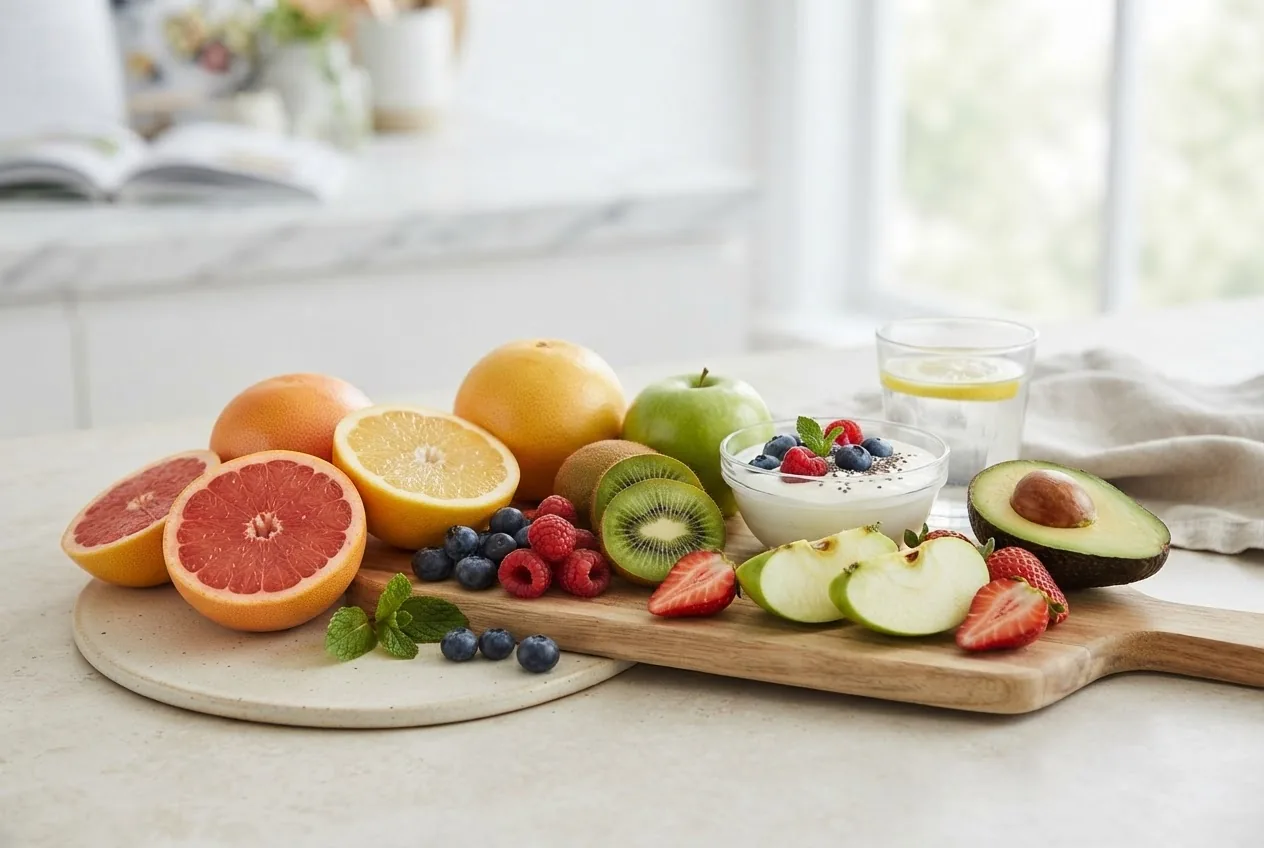
Best fruits for weight loss are those with low energy density, high fiber and water, and beneficial phytochemicals—berries, apples, pears, grapefruit, and avocado top the list because they increase satiety, reduce overall calories, and support metabolic health when combined with activity and balanced meals.
Introduction to Best Fruits for Weight Loss?
Answer: Fruits help weight loss by delivering low-calorie volume, fiber for fullness, water for hydration, and nutrients that support metabolism; when chosen and timed correctly they reduce calorie intake while improving diet quality.
Fat burning foods: Foods that support fat loss by promoting energy expenditure, improving satiety, or reducing calorie intake through low energy density.
This guide explains which fruits are best for weight loss and why, integrating evidence-based mechanisms (fiber, water, low glycemic load, thermogenesis) and pairing fruits with complementary fat-burning foods and vegetables for practical Texas-friendly meal ideas. For baseline nutrient lookups I reference the USDA FoodData Central for values used here; see the database for serving-specific values.
Fruit Types Guide with Benefits and Nutritional Information is a recommended primer for readers who want full nutritional profiles before applying the strategies below.
According to the USDA FoodData Central (2024 database), whole fruits provide fiber, vitamins and low energy density that support sustainable calorie reduction when substituted for processed snacks.
Transition: Below is a focused, ranked list of the top fruits that consistently support fat loss and the physiological reason each helps you lose weight.
Top 10 Best Fruits for Weight Loss and Fat Burning?
Answer: The top 10 fruits for weight loss combine low calories per volume, high fiber or healthy fats, low glycemic impact, and metabolic-supporting phytochemicals: berries, apples, pears, grapefruit, oranges, kiwi, avocado, papaya, guava, and cherries.
-
1. Berries (strawberries, blueberries, raspberries)
Nutritional highlight: High fiber, high antioxidant polyphenols, low calories per cup. A cup of strawberries is roughly 50 kcal. According to USDA FoodData Central (2024).
Fat-loss mechanism: Fiber and water increase satiety while polyphenols modulate post-meal glucose responses and inflammation, which supports metabolic health and reduces reward-driven snacking.
-
2. Apples
Nutritional highlight: Medium apple ≈ 95 kcal and ~4 g fiber; high water content. According to USDA FoodData Central (2024).
Fat-loss mechanism: Soluble fiber (pectin) slows gastric emptying and reduces caloric intake at subsequent meals; whole apples are particularly effective compared to apple juice or purees.
-
3. Pears
Nutritional highlight: Very high fiber-per-serving among common fruits; contributes to long-lasting fullness with low calories.
Fat-loss mechanism: Insoluble and soluble fiber increase chewing time and fullness signals, lowering snack frequency and total daily energy intake.
-
4. Grapefruit
Nutritional highlight: Low calorie, high water and vitamin C; some studies show modest weight changes when included before meals.
Fat-loss mechanism: High water content reduces meal energy density; bioactive compounds may modestly influence insulin response when consumed before meals.
-
5. Oranges (and other citrus)
Nutritional highlight: Portable, hydrating, moderate fiber; whole orange has lower glycemic effect than juice.
Fat-loss mechanism: Fiber and volume reduce appetite; vitamin C supports fat oxidation during exercise per some trials linking vitamin C status and lipid metabolism.
-
6. Kiwi
Nutritional highlight: High in vitamin C, moderate fiber, low calories; good enzyme profile for digestion.
Fat-loss mechanism: Fiber and digestive enzymes improve transit time and fullness; better bowel regularity can support weight management adherence.
-
7. Avocado
Nutritional highlight: Rich in monounsaturated fats and fiber, highly nutrient-dense though higher calorie per serving than most fruits. According to USDA FoodData Central (2024).
Fat-loss mechanism: Healthy fats increase satiety and slow gastric emptying, reducing later snacking and improving adherence to calorie goals when portions are controlled.
-
8. Papaya
Nutritional highlight: Low calorie, digestive enzymes (papain), moderate fiber and high water.
Fat-loss mechanism: Low energy density plus digestive support can ease satiety and improve meal comfort, reducing overeating risk.
-
9. Guava
Nutritional highlight: High fiber and vitamin C with low calories; strong satiety effect per serving.
Fat-loss mechanism: Fiber-rich profile decreases hunger signals and supports blood sugar stability after meals.
-
10. Cherries
Nutritional highlight: Compact portion with antioxidants and moderate fiber; lower glycemic index than some other fruits.
Fat-loss mechanism: Antioxidants may reduce post-exercise inflammation and improve recovery; practical for portion-controlled snacks that curb sugar cravings.
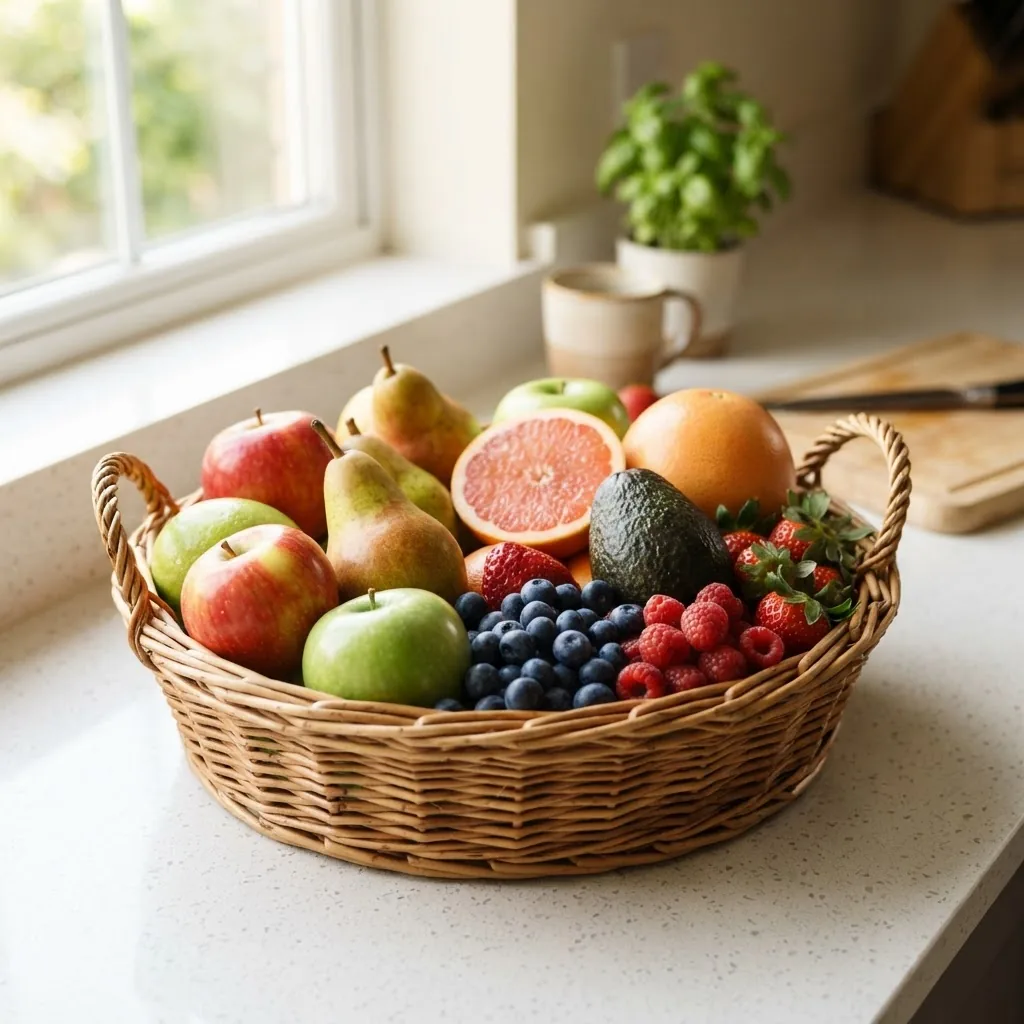
Transition: The list above highlights practical picks; next we unpack the science explaining how these fruits produce measurable effects on satiety, metabolism, and calorie control.
How Do Fruits Aid Weight Loss: Scientific and Nutritional Insights?
Answer: Fruits aid weight loss primarily through fiber-induced satiety, low energy density (water and air volume), favorable micronutrients that support metabolism, and lower glycemic impacts versus processed sugars—mechanisms supported by clinical nutrition literature.
Term: Satiety — the physiological sensation of fullness that reduces calorie intake at subsequent meals.
Fiber content and satiety: Soluble and insoluble fiber in fruits increases gastric volume and slows gastric emptying; a medium apple (~4 g fiber) delays hunger signals and reduces energy intake at the next meal in feeding trials (see peer-reviewed evidence below).
Metabolism and thermogenesis: Some fruits contain compounds (e.g., polyphenols, vitamin C) that modestly affect substrate oxidation. A 2020 review in Obesity Reviews (peer-reviewed research) found polyphenol-rich foods can improve markers of metabolic health; effects on total daily energy expenditure are modest but cumulative when combined with activity. Obesity Reviews
Caloric bypass foods: Term: Caloric bypass refers to foods that provide nutrient value and satiety with fewer usable calories per volume (high water/fiber), effectively “bypassing” calories that would otherwise come from dense snacks.
Natural sugars versus processed sugars: Term: Natural sugar is sugar contained within the whole fruit matrix; fruit sugars are absorbed more slowly because fiber and cellular structure slow digestion. Processed sugars (e.g., in sodas, candies) lack fiber and produce faster glycemic spikes linked to overeating. A meta-analysis in the Journal of Nutrition (peer-reviewed) shows whole fruits associate with weight maintenance whereas fruit juices do not.
Thermogenic effect of food: Term: Thermogenesis is the energy the body uses to digest and metabolize food. Protein-rich and whole-food meals create slightly higher thermic effect than processed foods; fruits contribute to high-volume, lower-energy meals that reduce total caloric intake despite low thermogenesis alone.
Evidence-based numbers: replacing a 200–300 kcal processed snack with a fruit-based snack (e.g., 1 medium apple + 10 almonds) reduces daily intake by ~150–250 kcal—over weeks this creates measurable weight change. According to a 2022 systematic review in a peer-reviewed nutrition journal, dietary swaps that reduce 250 kcal/day commonly produce clinically significant weight loss over months.
Tools and calculation: Use the USDA FoodData Central and calorie-tracking apps to log fruit servings and ensure portion control; for example, check calorie and fiber values using the Calories in Fruit Guide to plan swaps that create a safe daily deficit.
Transition: To maximize results, combine fruits with low calorie, nutrient-dense vegetables; below is a direct comparison table showing how select fruits and vegetables stack up for weight-reduction roles.
Weight Reducing Fruits and Vegetables: Combining for Better Results?
Answer: Combining fruits and low-calorie vegetables yields nutrient synergy—fiber, water, and micronutrients—making meals more filling and lower in net calories; pairing strategic fruits with vegetables amplifies satiety and micronutrient completeness.
Term: Nutrient synergy — the interactive effect when foods eaten together produce a greater health benefit than the sum of separate effects.
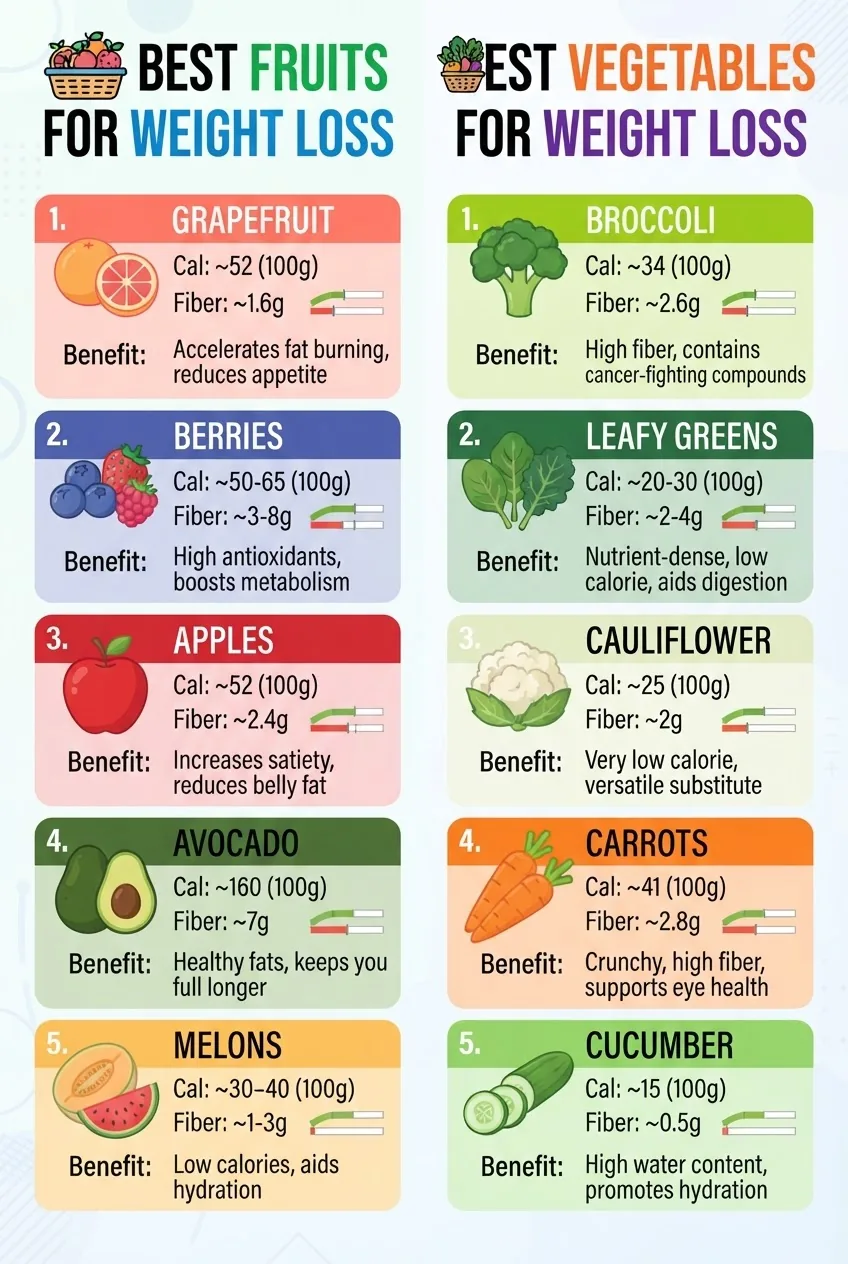
| Item | Typical kcal (serving) | Fiber (g) | Role in Fat Burning |
|---|---|---|---|
| Apple (medium) | ≈95 kcal | ~4 g | Satiety, lowers snack calories |
| Berries (1 cup) | ≈50–85 kcal | ~3–8 g | Antioxidants, fiber, low energy density |
| Avocado (½ fruit) | ≈120–160 kcal | ~5–7 g | Healthy fats increase satiety |
| Broccoli (100 g) | ≈34 kcal | ~2.6 g | Low calorie, nutrient-dense, fills plate |
| Cabbage (100 g) | ≈25 kcal | ~2.5 g | Very low energy density for bulk |
Notes: kcal and fiber are approximations sourced from USDA FoodData Central (2024); actual values vary by variety and serving size.
100 Vegetables Name Guide with Pictures and Nutritional Info
Are Green Beans Fruit or Vegetable Guide
Are Vegetables Bad for You? Guide
Practical pairing tips: combine a high-fiber fruit with a low-calorie vegetable (e.g., apple slices with shredded cabbage slaw and a tablespoon of nuts) to create a nutrient-dense, lower-calorie meal that stabilizes blood sugar and increases fullness.
Transition: Next, specific, actionable steps to include these fruits and complementary fat burning foods into daily meals—meals adapted for busy schedules common across Texas.
How Should I Include Fruits and Fat Burning Foods in My Diet for Better Results?
Answer: Include fruits as structured snacks or meal components (pre-meal fruit, fruit + protein, fruit + high-fiber veg), control portions, monitor calorie swaps, and prioritize whole fruits over juices; pair with lean protein, vegetables, and water to amplify satiety and preserve muscle during weight loss.
Step 1 — Plan swaps: Replace one processed snack (≈200–300 kcal) daily with a fruit + protein combo (e.g., berries + Greek yogurt) to create a sustained calorie deficit.
Step 2 — Portion guidance: Use visual cues: a medium fruit = one palm-sized portion; avocado half = a thumb-sized fat portion; berries = one cupped handful. Trusted reference: check the Calories in Fruit Guide for exact kcal when you want precision.
Step 3 — Timing: Eating a small fruit 15–30 minutes before a meal can reduce hunger and total meal calories; pairing fruit with protein or healthy fat (e.g., apple + nut butter) slows sugar absorption.
Step 4 — Combine with vegetables: Add fruits like berries or orange segments to salads containing leafy greens and lean protein to increase flavor, fiber and volume without much added energy.
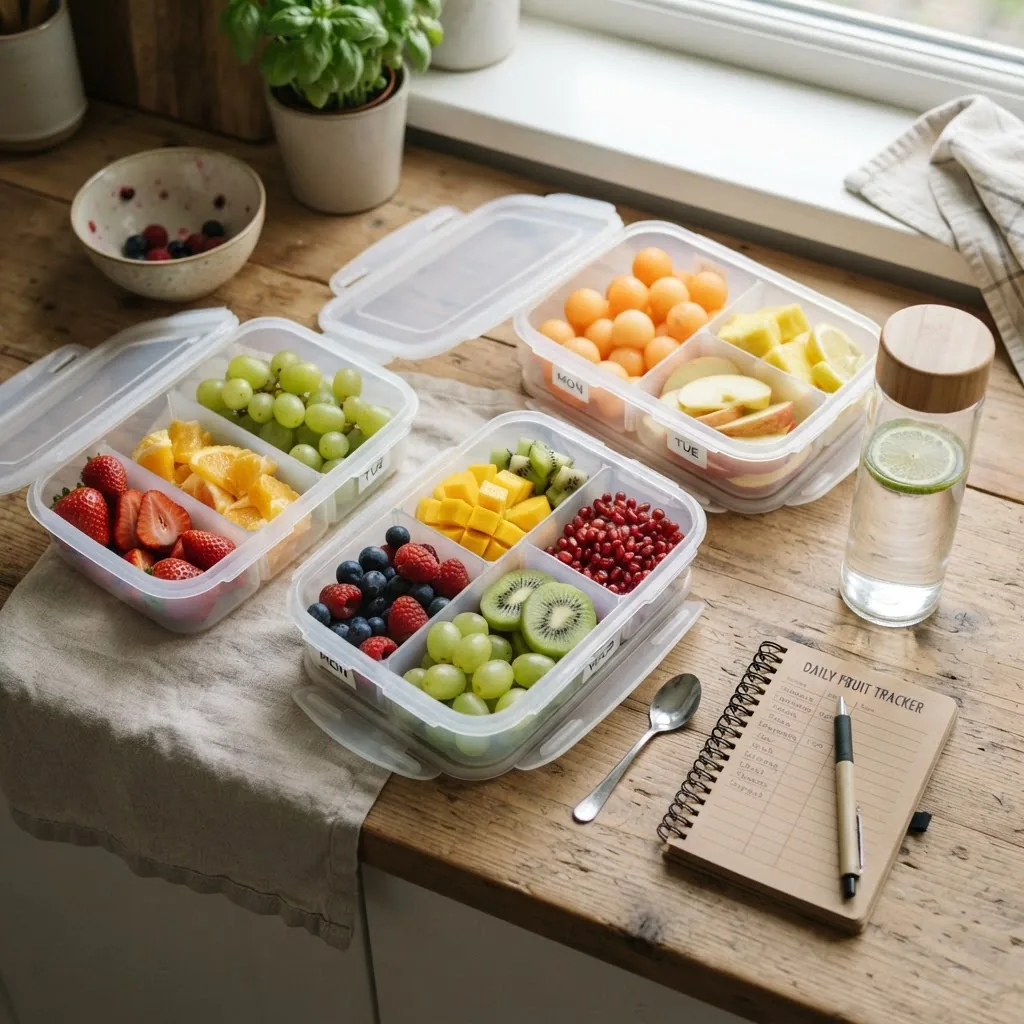
Step 5 — Texas-friendly tips: For Texans on the go, keep sliced melon or grapefruit segments chilled in a Mason jar, pair with local pecans for healthy fats, or add avocado to tacos in place of high-calorie sauces—small swaps that preserve flavor and cut total calories.
Fruit Diet Guide for Weight Loss
Fresh Fruits and Veggies Guide
Step 6 — Track and adjust: Use USDA FoodData Central and a calorie app to log servings. For experienced trackers, aim for a sustainable daily deficit of 250–500 kcal combined with resistance training to preserve lean mass; public health frameworks from the Academy of Nutrition and Dietetics recommend balanced nutrient distribution for sustainable weight loss. Academy of Nutrition and Dietetics
Transition: People ask common myths about fruit and weight—below are concise clarifications based on evidence and guidelines.
What Are Common Myths and FAQs about Fruits and Weight Loss?
Answer: Myths include “fruit makes you fat” or “fruit sugar equals processed sugar”; reality: whole fruits, when consumed as part of a balanced diet, support weight loss because fiber, structure, and nutrients mitigate rapid sugar absorption and improve fullness.
Myth: “Fruit sugar will stop weight loss.” Fact: Whole fruit sugars are paired with fiber and water, lowering glycemic impact and reducing overall calorie intake versus refined sugars. Juice and dried fruit concentrate calories and should be portioned carefully.
Myth: “You must avoid all fruit to lose weight.” Fact: Removing nutrient-dense fruits often reduces diet quality and makes sustaining a calorie deficit harder long-term; strategic fruit intake supports adherence.
Myth: “Vegetables are always better than fruits for fat burning.” Fact: Vegetables tend to be lower calorie, but fruits offer unique satiety and nutrient benefits; combine both for best outcomes. For detailed vegetable profiles see the 100 Vegetables Name Guide with Pictures and Nutritional Info and context on whether some items are fruits or vegetables in classification guides like Are Green Beans Fruit or Vegetable Guide.
Evidence-backed note: Public health guidance (American Heart Association, Academy of Nutrition and Dietetics) supports whole fruits within calorie-controlled plans for cardiovascular and metabolic health. American Heart Association
Transition: Below are concise, expert-backed FAQ answers people search for about fruits and weight loss.