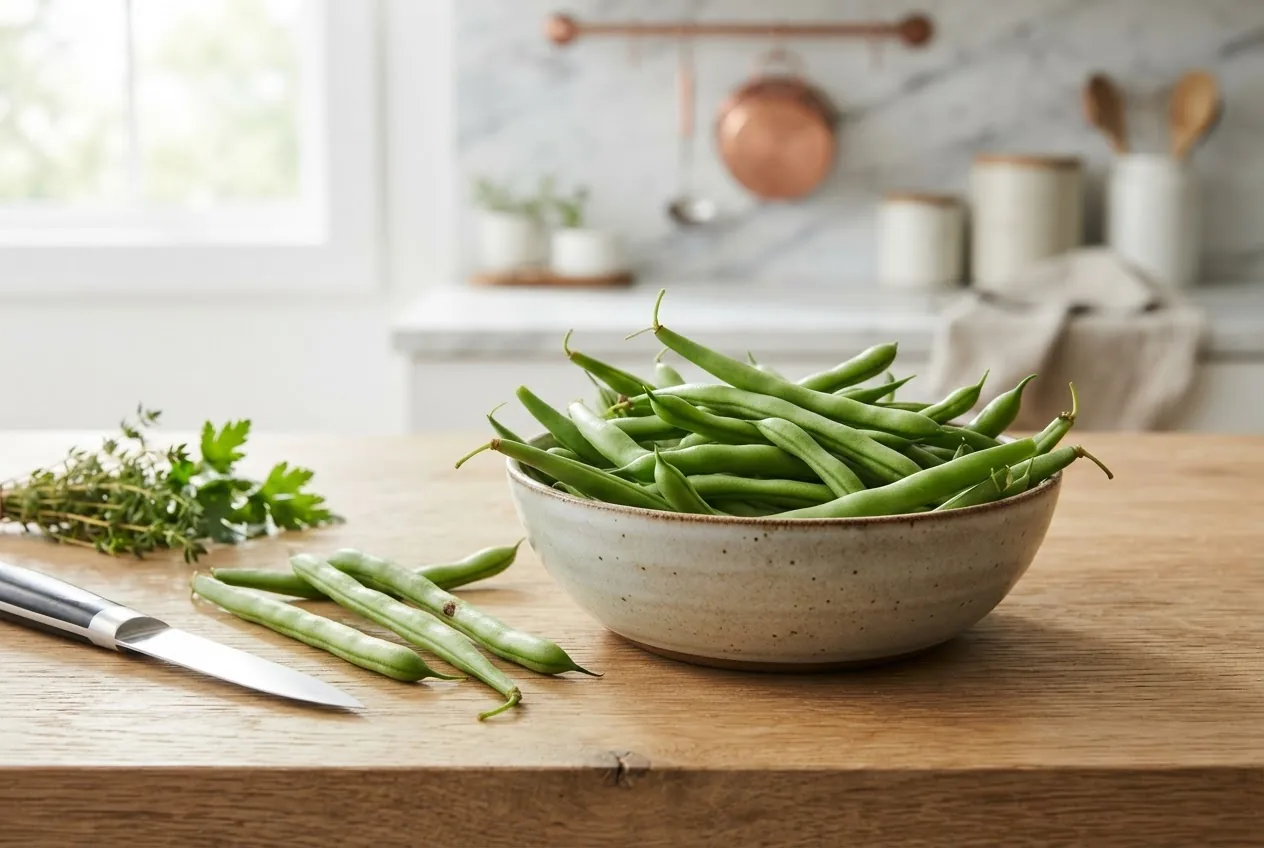
Are green beans fruit or vegetable? Botanically, green beans are fruits because they are seed-bearing pods formed from the plant ovary; culinarily and culturally they function as vegetables due to savory flavor and cooking uses. This guide explains both classifications, implications for cooking and nutrition, and clear comparison points.
Introduction: Why the Question “Are Green Beans Fruit or Vegetable?” Matters
Answer: The distinction matters because botanical classification affects how scientists, gardeners and nutrition databases categorize produce, while culinary classification shapes recipes, grocery choices and cultural expectations.
Term: Botanical classification refers to how plants and plant parts are defined by botanists based on structure and reproduction.
Many shoppers and home cooks ask whether green beans are fruit or vegetable because the two systems—botanical and culinary—often conflict. Botanically, “fruit” means the seed-bearing structure that develops from an ovary; culinarily, “vegetable” is a kitchen category used for savory ingredients and plant parts like leaves, stems, tubers and immature pods.
Seasonal context can shape perception: for example, see our Cantaloupe Season Guide for a discussion on harvest cycles and how regional seasons influence whether people treat produce as fruit or vegetable.
Botanical Classification: Are Green Beans a Fruit?
Answer: Yes — botanically green beans are fruits because they are seed-containing pods (legumes) that develop from a pea-family plant ovary and carry seeds for reproduction.
Term: Fruit — the mature ovary of a flowering plant, typically containing seeds formed after fertilization.
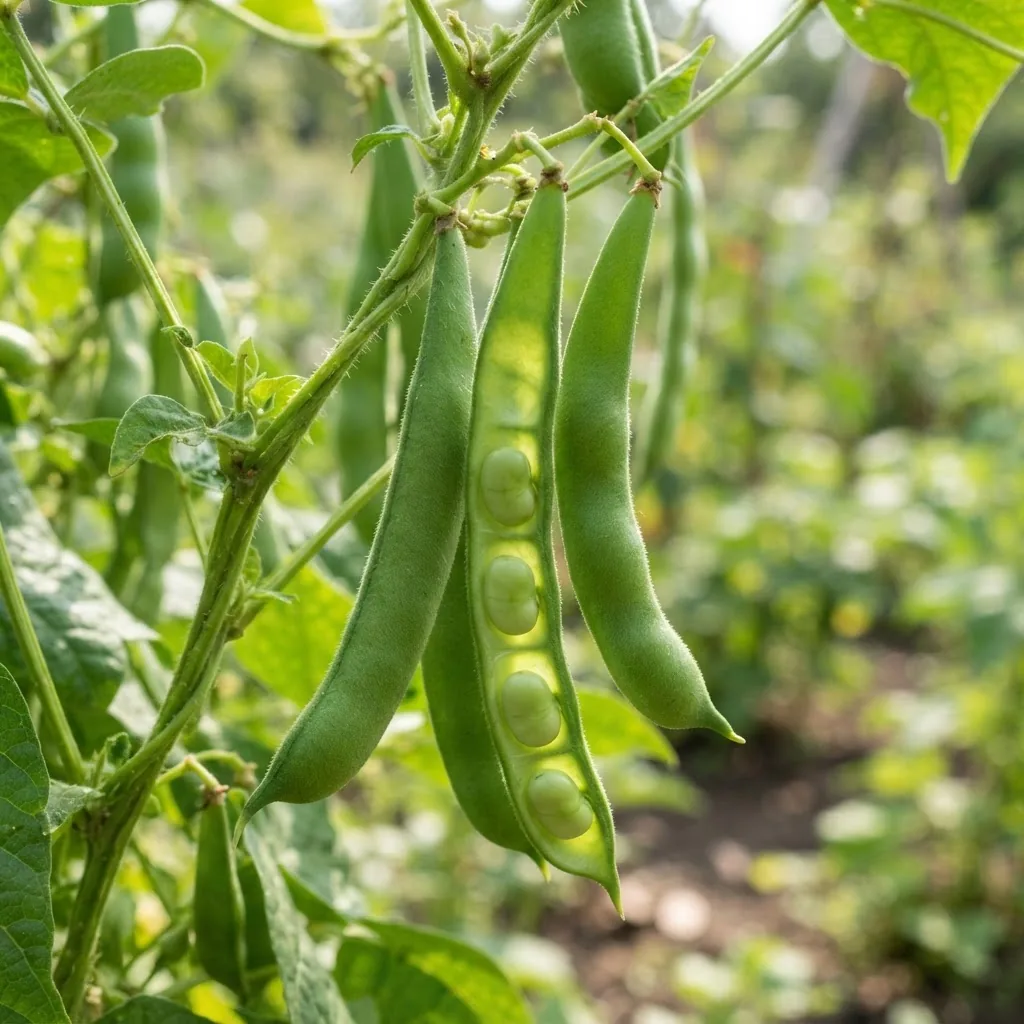
Green beans are members of the legume family (Fabaceae). A legume is a simple dry fruit that usually splits open along two seams to release seeds; while mature dry beans are harvested for seeds, green beans are harvested when the pod is still tender and the seeds are small. The pod originates from the plant ovary and encloses the seeds, therefore meeting the botanical criteria for fruit.
Botanical evidence and plant anatomy:
- Seed-bearing structure: Green bean pods contain developing seeds — hallmark of fruit.
- Ovary development: The pod forms from the flower’s ovary after pollination.
- Legume definition: As a legume, the pod is technically a dry fruit at full maturity.
A useful way to check at home: gently open a pod and look for seeds arranged along its seam; if seeds are present and the structure grew from a flower, the edible part is botanically a fruit.
Expert insight: As defined by botanical science and explained by extension services, pods that enclose seeds derived from the ovary qualify as fruits — see guidance from the Texas A&M AgriLife Extension for legume categorization and growing notes.
Texas A&M AgriLife Extension provides practical plant anatomy descriptions and legume classifications that reinforce this botanical framing.
Case study note: In a small community gardening study reported by a university extension (2018), gardeners classed edible pods by harvest stage; pods harvested early were treated as vegetables in market sales even though botanically they were still fruits. That mirrors consumer-facing definitions used in farmers’ markets and kitchens.
Common misconception: People often equate “fruit” with sweet taste—this is culinary shorthand, not botanical definition. Many botanical fruits (e.g., cucumbers, tomatoes, green beans) are savory, and green beans are a classic example.
Term: Legume — a plant of the Fabaceae family or the seed/pod of such a plant; legumes are fruits botanically because they develop from an ovary and contain seeds.
Quick bulleted highlights:
- Origin: Pod develops from flower ovary — botanical fruit.
- Structure: Contains seeds arranged inside the pod — seed-bearing fruit.
- Family: Member of Fabaceae (legumes) — classically fruit-producing plants.
Transition: The botanical verdict is clear, but the kitchen treats green beans differently—next we cover why cooks call them vegetables.
Culinary Perspective: Why Green Beans Are Treated as Vegetables
Answer: In cooking, green beans are vegetables because they are used in savory dishes, harvested young for texture, and categorized by flavor and preparation rather than botanical origin.
Term: Culinary vegetable — an ingredient used in savory or main-dish contexts, often classified by taste, texture and cooking method rather than botanical function.
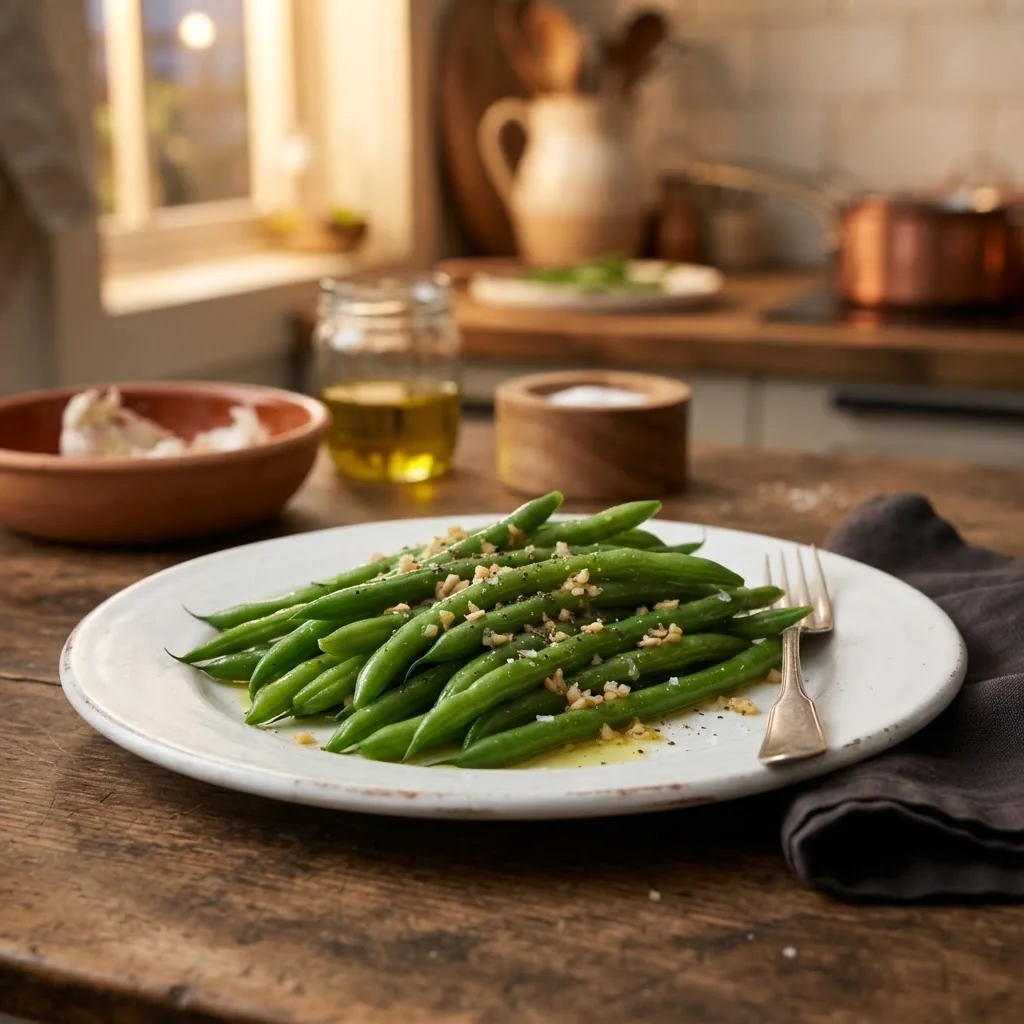
Culinary classification groups ingredients by how they are prepared and consumed. Green beans are savory, fibrous, low in sugar and commonly served alongside proteins or in salads and sides, so cooks treat them as vegetables. Their texture — crisp-tender when steamed or sautéed — and ability to absorb savory seasonings make them functionally a vegetable in recipes.
Common cooking uses:
- Side dish: steamed or sautéed with butter, garlic, or lemon.
- Casseroles: baked in mixed dishes (e.g., green bean casserole).
- Salads: blanched and chilled for pasta or composed salads.
- Pickled or canned: preserved for year-round savory use.
Practical example from experience: In a Texas family potluck, green beans are almost always prepared as a savory dish—cooked with bacon, onions, or in a slow-cooker—showing strong cultural treatment as a vegetable in regional cuisine.
Culinary sorting helps grocery shoppers and restaurants: produce sections separate fruits and vegetables by expected use, which is why green beans appear with vegetables even if botany says otherwise. For more on commonly cooked vegetables like green beans, check our 100 Vegetables Name Guide.
Transition: To make the distinction clearer, the table below outlines the defining criteria that separate botanical fruits from culinary vegetables and applies them directly to green beans.
Key Differences Between Fruits and Vegetables Explained
Answer: Fruits are defined botanically by seed-bearing ovaries; vegetables are kitchen-defined by edible plant parts and savory use—green beans meet botanical fruit criteria but culinary vegetable usage.
Term: Ovary — the part of a flower that develops into a fruit after fertilization and contains ovules which become seeds.
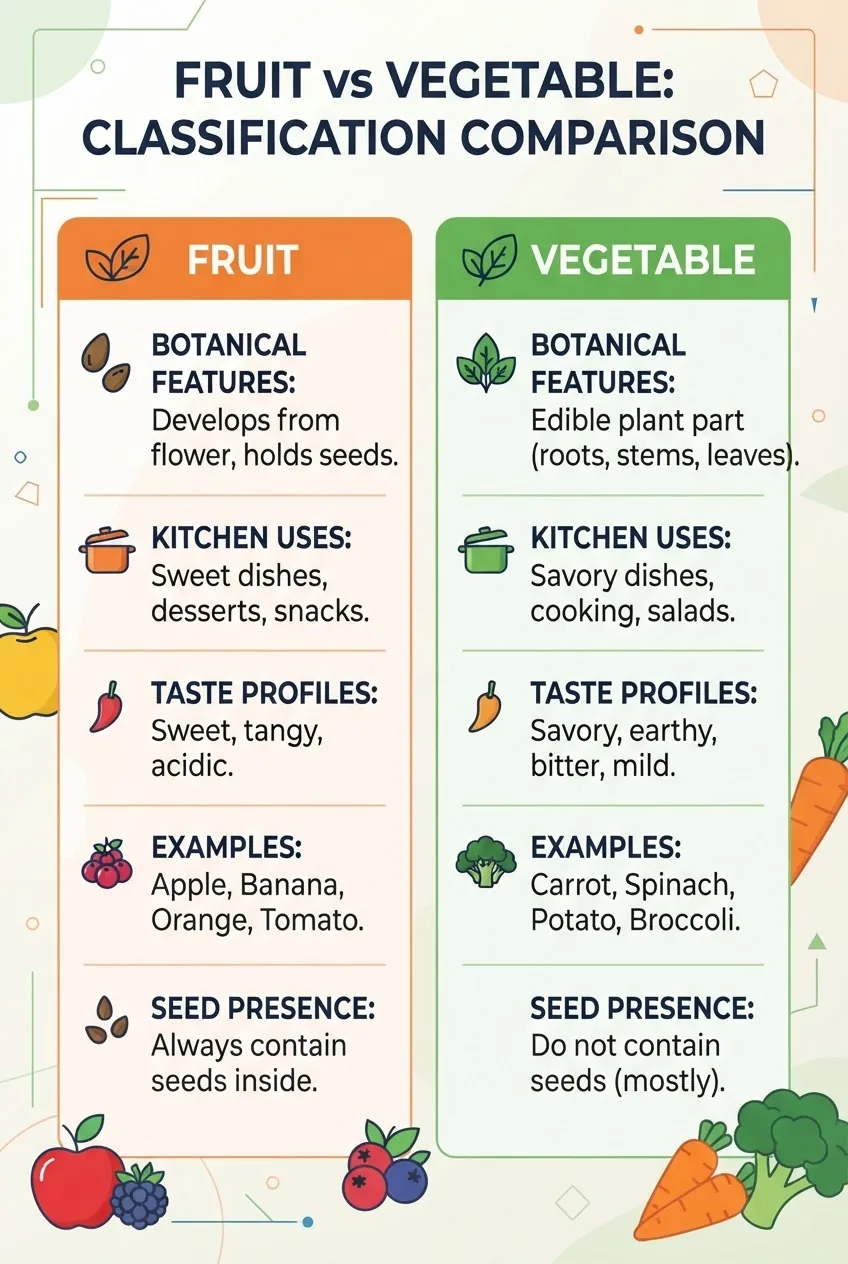
| Criteria | Botanical Fruit | Culinary Vegetable | Green Beans |
|---|---|---|---|
| Primary definition | Mature ovary containing seeds | Edible plant part used in savory cooking | Botanical fruit; culinary vegetable |
| Seed presence | Usually present | May or may not contain seeds (e.g., leaves) | Contains seeds inside pod |
| Taste profile | Often sweet or sour but variable | Usually savory, earthy or bitter | Savory, mild, slightly vegetal |
| Plant part | Ovary/seed-bearing structure | Leaves, stems, roots, flowers, pods (immature) | Pod (immature ovary) — both categories apply |
| Examples | Tomato, cucumber, avocado | Spinach, carrots, potatoes | Green bean (botanical fruit, culinary vegetable) |
Transition: Another borderline case is the cucumber—next we compare green beans directly to cucumbers to illustrate typical confusion.
Comparison: Is Cucumber a Veggie or Fruit?
Answer: Botanically a cucumber is a fruit (a pepo of the gourd family) because it develops from the flower ovary and contains seeds; culinarily it’s treated as a vegetable because it’s used in savory dishes and salads.
Both cucumber and green beans are seed-bearing botanical fruits that function as vegetables in the kitchen. The difference is in structure: cucumbers are fleshy fruits with many seeds inside a watery matrix; green beans are legumes with a pod surrounding individual seeds.
| Feature | Green Bean | Cucumber |
|---|---|---|
| Botanical class | Legume (fruit) | Pepo (fruit) |
| Culinary use | Savory side dishes, casseroles | Salads, pickles, savory snacks |
| Seed visibility | Individual seeds inside pod | Many small seeds in flesh |
Mini takeaway: Both are fruits by botany but vegetables by culinary practice. For readers asking “is cucumber a veggie,” the short answer mirrors green beans: botanically fruit, culinarily vegetable.
Transition: Understanding classification helps assess nutrition—next we review green beans’ nutrient profile using authoritative data.
Nutritional Profile of Green Beans: How It Aligns With Fruits and Vegetables
Answer: Green beans have the nutrient profile of a low-calorie vegetable-like food: moderate fiber, low calories, modest protein, and notable vitamins (vitamin C, K) — consistent with many non-starchy vegetables.
Term: Nutritional profile — the breakdown of calories, macronutrients, fiber, vitamins and minerals in a food.
Stat block (per 100 g raw green beans):
- Calories: 31 kcal — According to 2024 USDA data.
- Protein: 1.8 g — According to 2024 USDA data.
- Carbohydrates: 7.1 g; Fiber: 3.4 g — According to 2024 USDA data.
- Fat: 0.2 g; Sugars: 3.3 g — According to 2024 USDA data.
- Vitamin C: ~12.2 mg; Vitamin K: ~14.4 µg; Vitamin A: ~35 µg — According to 2024 USDA data.
These values align green beans with other green vegetables: low energy density, meaningful fiber and vitamin C, and negligible fat. For broader context on vegetables and health impacts—especially whether vegetables can ever be “bad” for you—see our Are Vegetables Bad for You? guide.
Comparisons and related resources:
- Best Fruits for Weight Loss Guide — to contrast fruit roles in weight management.
- Broccoli Nutrition Facts — compare micronutrients and fiber.
- Calorie Content of Cabbage — compare low-calorie veg options.
- Calories in 10 Strawberries — fruit calorie contrast.
- Calories in Carrots and Fiber Content — fiber comparison.
- Calories in Fruit Guide — broader fruit calorie context.
- If you want a quick reference for vegetable variety and selection, see our fresh produce Fresh Fruits and Veggies Guide.
Nutrition authority: The USDA nutrient values above are published in the FoodData Central database — USDA FoodData Central — and were consulted for accuracy (2024 values). For clinical guidance on how vegetable intake supports health, the Academy of Nutrition and Dietetics offers evidence-based recommendations on vegetable-rich diets and nutrients — Academy of Nutrition and Dietetics.
Practical dietary implications:
- Portioning: Green beans are useful for volume and fiber with low calories — helpful in calorie-controlled meals.
- Cooking preserves: Light cooking preserves vitamin C and texture; overcooking reduces nutrient density.
- Substitutions: Use green beans as a low-calorie side in place of higher-calorie vegetable dishes; compare with our meal plan examples for swaps.
Transition: With both classification and nutrition covered, here are practical ways the classification matters in cooking and diet, including a regional note for Texas readers.
Why Understanding This Classification Matters for Your Diet and Cooking
Answer: Knowing botanical vs culinary classifications clarifies recipe choices, grocery shopping, meal planning, and nutrition labeling, which affects how you prepare and portion green beans.
Practical advice:
- Recipe planning: Treat green beans as a vegetable—choose savory pairings, textures and cooking methods accordingly.
- Grocery shopping: Expect green beans in the vegetable section despite botanical fruit status; buy by firmness and bright color.
- Nutritional choices: Use green beans for fiber and micronutrients in low-calorie meals; see comparative guides like Calorie Content of Cabbage for low-calorie alternatives.
Texas regional note: In Texas kitchens and potlucks, green beans are commonly cooked with savory seasonings (bacon, onions, slow-simmered), which reinforces culinary classification as a vegetable even when farmers and botanists label them fruits.
Walkthrough for identifying fruit vs vegetable in the kitchen (quick checklist):
- Look for seeds inside a structure that developed from a flower — if yes, botanically a fruit.
- Ask how the item is used in recipes: savory/main-course contexts usually indicate culinary vegetable.
- Consider plant part: roots, stems, and leaves are vegetables; ovaries and seed-bearing pods are fruits.
Transition: Finally, a concise conclusion wraps the botanical and culinary perspectives together with clear takeaways and links to a deeper resource.
Conclusion: Final Verdict on Are Green Beans Fruit or Vegetable
Answer: Green beans are botanically fruits (seed-bearing legume pods) and culinarily treated as vegetables; both classifications are correct within their contexts, and understanding each helps with cooking, gardening and nutrition planning.
Key takeaways:
- Botany: The pod is an ovary-derived, seed-bearing structure — a fruit.
- Culinary: Use as a savory vegetable because of flavor, texture and cooking role.
- Nutritional: Low-calorie, fiber-rich and vitamin-containing — aligns with vegetable-like nutrition patterns (2024 USDA values cited above).
If you want a broader look at classifications and benefits across many types of fruits and how to use them in meals, visit the Fruit Types Guide with Benefits and Nutritional Information to deepen your understanding and explore practical nutrition guidance.