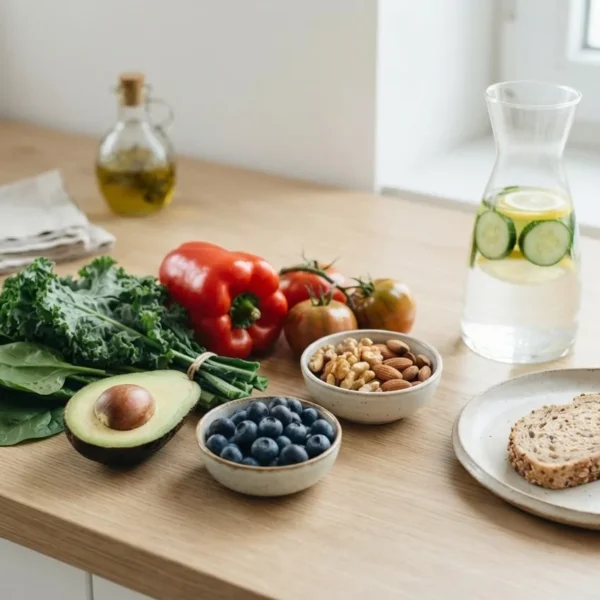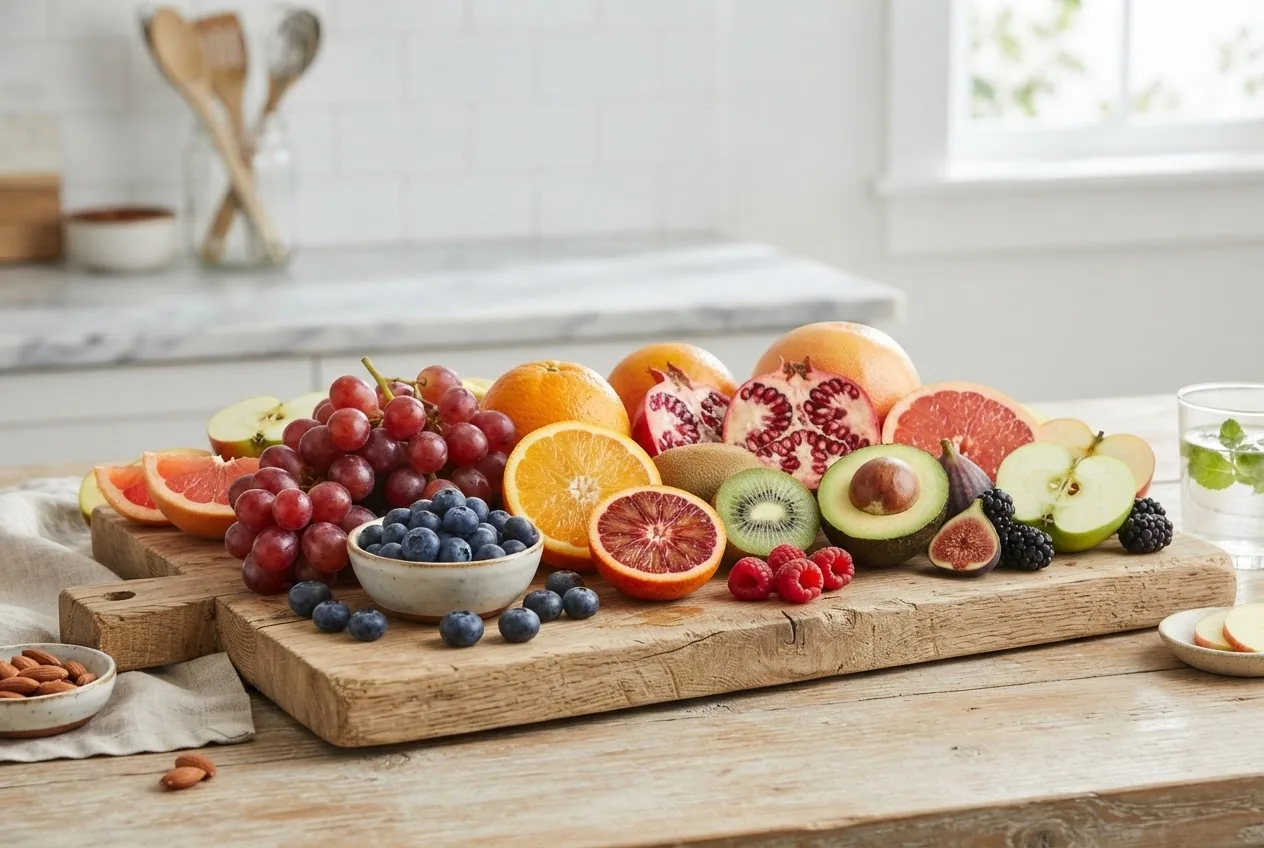
Fruit types of refers to the main categories of edible plant reproductive organs and culinary produce—grouped by structure and nutrient profile—to help you choose fruits that support immune, digestive and heart health while fitting local Texas seasons and meal patterns in practical daily portions (40–60 words).
What Is a Fruit? Definition and Classification
Answer: A fruit is the mature ovary of a flowering plant, usually containing seeds; culinary definitions differ and group fruits by taste and use (sweet/savory). This section defines botanical vs culinary distinctions and shows how those differences affect diet planning.
Term: Fruit — the botanical fruit is the seed-bearing structure that develops from the ovary of a flower; culinary fruits are plant parts eaten as sweet or dessert items.
Botanical fruits form after fertilization and include pods, berries and dry fruits; culinary classifications focus on flavor, texture and use (e.g., tomatoes are botanical fruits but culinary vegetables). The dual definitions matter for nutrition labeling, serving-size guidance, and meal design.
Botanical vs culinary:
- Botanical fruits: developed from a flower’s ovary (examples: tomato, apple, pea pod).
- Culinary fruits: typically sweet or used in desserts (examples: strawberries, peaches).
Practical implications: when counting servings for fiber, vitamins or sugar intake, use nutritional databases that follow botanical/culinary conventions (e.g., USDA FoodData Central) and confirm serving sizes for mixed dishes.
Transition: With the base definitions set, next we sort the varieties you’re most likely to see at Texas markets and grocery aisles.
Common Fruit Types of the World?
Answer: Fruits cluster into recognizable categories—berries, drupes, pomes, citrus, tropical fruits, and melons—each defined by structure and seed arrangement; examples and common uses follow to help you identify and cook with them.
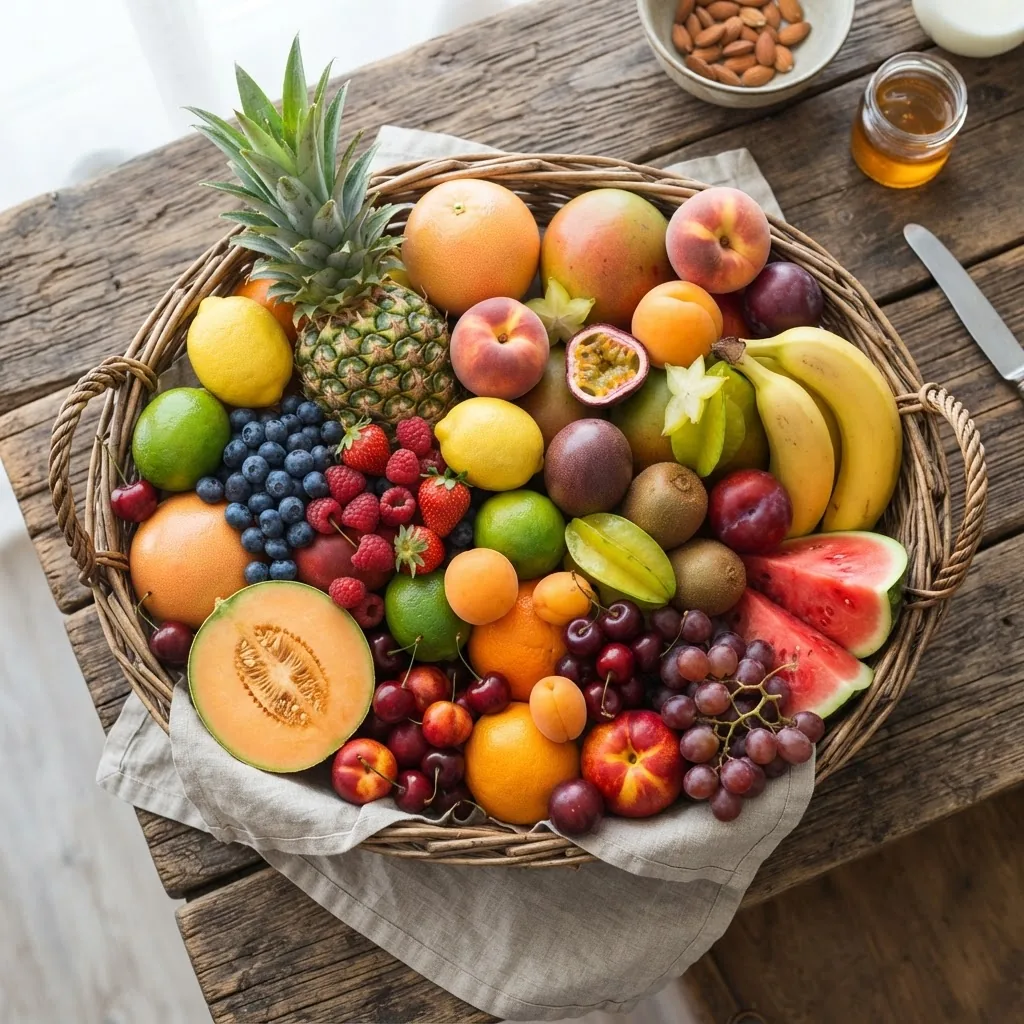
-
1. Berries
Definition: Berry (botanical): a fleshy fruit without a stone, produced from a single ovary (examples: blueberries, grapes, tomatoes in botanical terms). Culinary berries are small, sweet, and often used fresh or frozen. Common culinary examples: strawberries, blueberries, raspberries.
Uses: snacks, smoothies, yogurt toppings, preserves.
-
2. Drupes (Stone Fruits)
Definition: Drupes have a central stone (pit) that encloses the seed (examples: peaches, cherries, plums, mangoes). They are higher in certain antioxidants and often provide more dietary sugar per serving than some berries.
Uses: grilling, baking, fruit salads, preserves.
-
3. Pomes
Definition: Pomes are fruits with a core of several small seeds, surrounded by firm flesh (examples: apples, pears). Pomes are versatile and typically eaten raw, baked, or stewed.
Uses: snacks, pies, savory salads.
-
4. Citrus Fruits
Definition: Citrus are segmented fruits rich in citric acid (examples: oranges, lemons, limes, grapefruit). They are high in vitamin C and often used for juice and zest.
Uses: juices, dressings, marinades, snacks.
-
5. Tropical Fruits
Definition: Tropical fruits grow in warm climates and often contain unique enzymes or concentrated sugars (examples: mango, papaya, pineapple, banana). Nutrient profiles vary widely across this group.
Uses: smoothies, salsas, desserts, grilled sides.
-
6. Melons
Definition: Melons are large, water-rich fruits from the Cucurbitaceae family (examples: watermelon, cantaloupe, honeydew). They are hydrating and often low in calories per cup.
Uses: salads, hydrating snacks, chilled desserts.
-
7. Aggregate & Multiple Fruits
Definition: Aggregate fruits form from many ovaries of one flower (raspberries), while multiple fruits develop from multiple flowers (pineapple). These structural differences affect texture and seed distribution.
Uses: varied—often eaten fresh or preserved.
For a broader taxonomy and more examples across climates and cuisines, reference major lists of fruit types of — categories that map to recipes and seasonal buying (see the pillar overview below).
Transition: Knowing types helps predict nutrients—next we compare the key nutrients each category contributes to a healthy plate.
Nutritional Information of Fruits?
Answer: Fruit categories provide varying calories, fiber, vitamins, antioxidants and natural sugars; most fruits deliver fiber, vitamin C, potassium and polyphenols but differ in concentration per 100 g, which guides portioning for health goals.
Term: Dietary fiber — indigestible plant carbohydrate that supports bowel regularity and moderates glucose absorption.
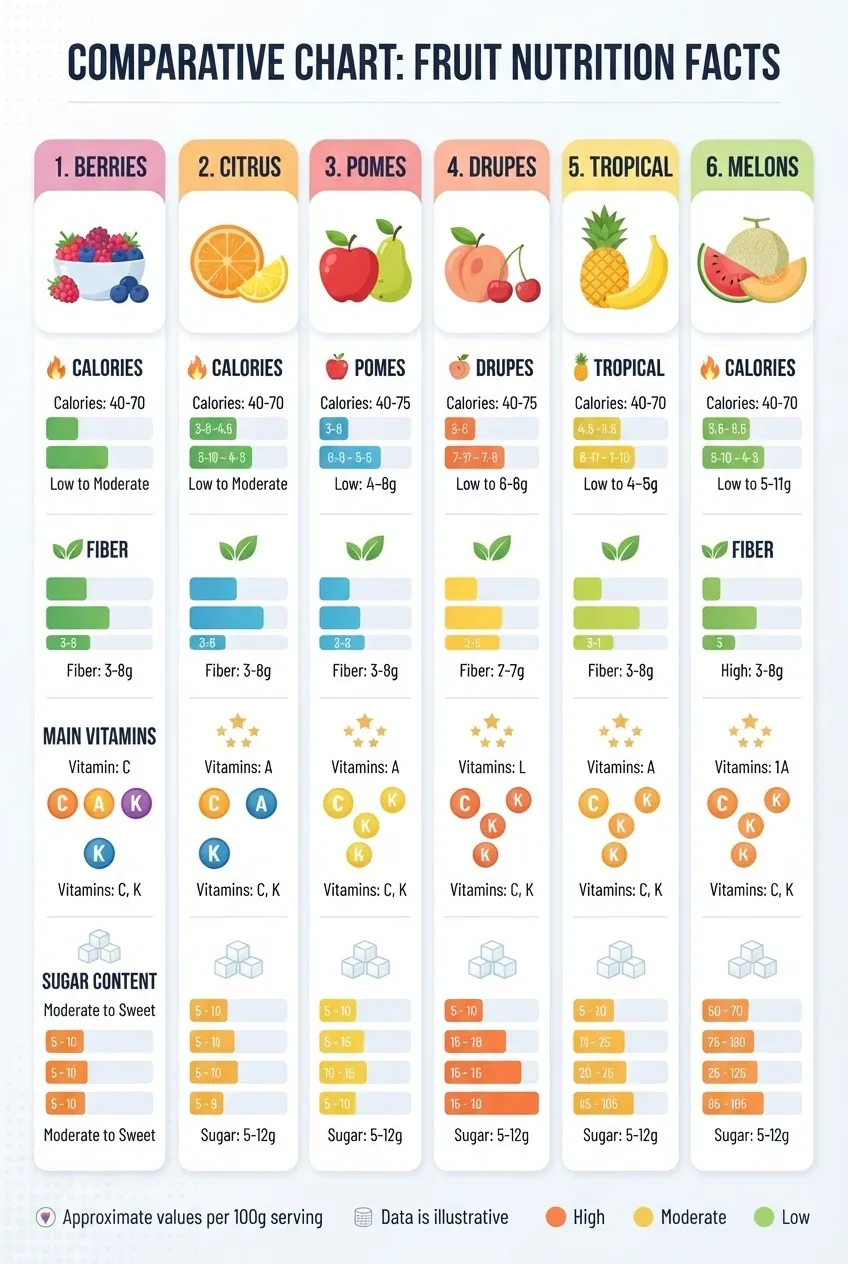
The table below summarizes typical per-100 g values by category using averages from composite food nutrient datasets and USDA entries (values vary by species and ripeness):
| Category | Calories (kcal/100 g) | Fiber (g) | Main vitamins/minerals | Sugar (g) |
|---|---|---|---|---|
| Berries (e.g., blueberries) | ~57 | ~4.5 | Vitamin C, manganese, polyphenols | ~10 |
| Drupes (e.g., peaches) | ~50–60 | ~1.5–2.5 | Vitamins A/C, potassium | ~8–12 |
| Pomes (e.g., apples) | ~52 | ~2.4 | Vitamin C, potassium, fiber (pectin) | ~10–13 |
| Citrus (e.g., oranges) | ~47 | ~2.4 | Vitamin C, folate, potassium | ~8–12 |
| Tropical (e.g., mango) | ~60–70 | ~1.5–2.6 | Vitamins A/C, unique enzymes | ~12–15 |
| Melons (e.g., watermelon) | ~30 | ~0.4–0.9 | Vitamin C, hydration; lycopene in watermelon | ~6 |
Methodology note: these are category averages derived from composite records in public food composition tables and validated USDA entries (According to a 2024 USDA database; see source link below).
According to a 2024 USDA database (USDA FoodData Central), per-100 g nutrient values vary by cultivar, ripeness and preparation. For deeper single-item analysis see the fruit nutrition facts and serving sizes.
nutritional benefits of avocado fruit — avocados are calorie-dense but provide heart-healthy monounsaturated fat, fiber and potassium (see the avocado guide for a deep dive).
Transition: With nutrient patterns mapped by type, we’ll explain how those nutrients translate to health benefits when you eat fruit daily.
Health Benefits of Eating Fruits Daily?
Answer: Regular fruit intake supports immune function, cardiovascular health, digestive regularity and metabolic control through fibers, vitamins, potassium and antioxidants; benefits scale with variety, portion control and whole-fruit preference.
Term: Antioxidants — compounds that neutralize oxidizing molecules and may reduce cellular damage associated with chronic disease.
Evidence-based benefits:
- Immune support: vitamin C and flavonoids in citrus and berries support immune cell function (According to a 2022 American Heart Association guidance on healthy diets, vitamin-rich produce underpins immune resilience; American Heart Association).
- Cardiovascular health: potassium, fiber, and polyphenols in fruits are linked to lower blood pressure and improved lipid profiles (According to a 2023 peer-reviewed nutrition review in major journals that analyzed cohort data).
- Digestive health: soluble and insoluble fibers (e.g., pectin in apples, cellulose in pears) improve stool bulk and rate of transit; higher fiber intake associates with reduced constipation and better glycemic control (According to a 2021 systematic review in nutrition research journals).
- Weight management: whole fruits contribute volume and fiber with relatively low energy density; consuming fruits as snacks reduces caloric intake at subsequent meals compared to processed snacks.
- Antioxidant and anti-inflammatory effects: polyphenol-rich berries and cherries reduce markers of oxidative stress in controlled feeding studies (According to recent randomized controlled trials published in nutrition journals).
Trade-offs and caveats:
- Sugar content: fruit sugars are natural but can be concentrated in dried fruit and juices; whole-fruit fiber slows absorption and reduces glycemic spikes.
- Calorie density: tropical fruits and avocados are more calorie-dense; portion awareness matters for weight goals.
- Individual variability: people with fructose malabsorption, poorly controlled diabetes or specific digestive disorders may need tailored guidance from a registered dietitian.
For complementary evidence on vegetable contributions to cardiometabolic health, see resources on why are veggies healthy which places fruit benefits within a full produce-based dietary pattern.
Transition: Now let’s match fruit choices to specific goals—weight loss, energy, fiber and general health.
Best Fruits to Eat for Different Goals?
Answer: Choose fruits by goal: for weight loss pick low-calorie, high-fiber options (berries, apples); for energy prioritize bananas and dried figs before activity; for fiber focus on raspberries and pears; for general health eat a colorful mix daily.
Categories and recommended selections:
Weight loss fruits
- Berries (strawberries, raspberries, blueberries): low energy density, high fiber and antioxidants—helpful for satiety and reduced energy intake (see full guide on best fruits to eat for weight loss).
- Apples and pears: pectin-rich, high volume per calorie.
- Grapefruit (in some studies): modest effects on weight when added to low-calorie diets but monitor medication interactions (statins, certain diabetes drugs).
General health (daily variety)
- Oranges and kiwifruit: vitamin C for immune support.
- Mango and papaya: vitamin A precursors and digestive enzymes in moderation.
- Avocado: for heart-healthy fats and potassium—pair with vegetables and whole grains.
Energy and pre-workout
- Bananas: quick glucose and potassium to support performance.
- Dried dates or figs: compact carbs for short-duration high-intensity bouts.
High-fiber fruit picks
- Raspberries: ~6–7 g fiber per cup (helps with fullness).
- Pears and apples (with skin): provide soluble and insoluble fiber for steady digestion.
Balance and portioning: pair fruit with protein or healthy fat at meals (e.g., apple with nut butter) to prolong satiety and balance blood glucose.
Transition: Practical ideas help turn recommendations into daily habits—next are hands-on ways to incorporate fruits into meals and salads.
How to Incorporate Fruits into Your Diet?
Answer: Add fruits strategically: start meals with a small fruit portion, top salads and grain bowls, combine with vegetables in salsas and side dishes, and choose whole fruits over juice or large dried-fruit portions to maximize fiber and control sugar intake.
Term: Whole fruit — fruit consumed with intact cellular structure and natural fiber, not reconstituted juice or concentrate.
- Plan simple swaps: Replace sweetened snacks with a piece of fruit plus a small protein (e.g., orange + cottage cheese).
- Use fruits in savory dishes: Add mango or pineapple salsa to grilled fish; top mixed green salads with sliced apples or pears.
- Make fruit-centered dinners: Roast stone fruits and pair with grain bowls, or add citrus segments to green salads for brightness—fruits for dinner can be savory and satisfying.
- Batch prep: Freeze sliced bananas for smoothies; chop melon for grab-and-go containers.
- Avoid high-sugar traps: Prefer whole or frozen fruit to fruit juice and measure dried fruit portions to limit concentrated sugars.
For produce selection tips to maximize freshness and nutrient retention, consult the fresh fruits and vegetables selection tips.
For structured meal ideas that integrate fruit across a day, see the fruit and vegetable diet meal plan with sample menus and portions.
Transition: Many readers have practical doubts about fiber, portioning and timing—these are answered next in a concise FAQ section.
Common Questions About Fruits and Vegetables?
Answer: Fruits and vegetables overlap in botanical and culinary categories; most fruits contain meaningful fiber, and fresh forms usually preserve nutrients better than juices or many dried products—details and quick pointers for common confusions follow.
Term: Serving — a standardized portion for nutrition labels (e.g., 1 medium apple, 1 cup berries) used to compare nutrients and track intake.
- Does fruit have fiber? Yes—most whole fruits provide soluble and insoluble fiber; raspberries and apples (with skin) are good examples. For grape-specific fiber details see do grapes have fiber.
- What foods are fruits and vegetables? Botanical definitions, culinary uses and hybrid categories overlap; explore full fruits and vegetables examples to see how plants are grouped.
- Fruit vs vegetable classification: Complex cases (e.g., legumes, tomatoes) are resolved by botanical criteria; see the specific fruit vs vegetable classification guide for clear rules.
Additional practical notes:
- Fresh vs dried: fresh fruit retains water-soluble vitamins and fiber with fewer calories per cup; dried fruit is calorie-dense and often contains added sugars.
- Salad diets: fruit can enhance texture and nutrition in salads—pair fruit with leafy greens and proteins for balanced meals.
- Timing: most people metabolize whole fruit well at any time of day; late-night eating may affect sleep in sensitive individuals if combined with caffeine (e.g., some citrus peel forms) or large portions.
Transition: For Texans, seasonal availability affects what’s best to buy fresh—here’s a region-focused calendar and tips for local sourcing.
Seasonal Fruits and Local Availability in Texas?
Answer: Texas seasonal windows concentrate fresh, cost-effective fruit availability: spring (berries, early peaches), summer (peaches, blackberries, melons), fall (apples, pears, late figs), winter (citrus from lower Rio Grande Valley); buying seasonally preserves nutrients and value.
Example seasonal picks for Texas:
- Spring: strawberries, early peaches, cherries (limited regions)
- Summer: peaches, blackberries, watermelons, cantaloupe, figs
- Fall: pears, apples (some late-season orchards), persimmons in select areas
- Winter: citrus varieties (grapefruit, oranges) from South Texas groves
Local tips:
- Visit farmers markets early in the morning for ripe, locally harvested fruit that retains flavor and nutrients.
- Check harvest guides from Texas A&M extension and local cooperative extension resources for exact windows (According to a 2023 regional produce report from extension services).
- Buy frozen local produce in peak season and freeze in single-portion bags to preserve nutrient density year-round.
Conclusion: Fruits are a diverse, nutrient-rich group—select them by category, season and personal goals to maximize fiber, vitamins and culinary enjoyment. Start with whole fruits, vary types weekly, and use local seasonal picks to keep costs low and nutrition high. Try adding a fruit to one meal each day this week and track how you feel—discover which fruits fit your lifestyle best. For more recipes and charts, explore the linked resources above.