Do grapes have fiber? Yes — fresh grapes contain modest dietary fiber concentrated in the skin: a typical cup (about 151 g) supplies roughly 1–1.4 grams of fiber, depending on variety and ripeness, helping slow sugar absorption and support digestion while providing vitamins and antioxidants.
Do Grapes Have Fiber?
Answer: Yes. Grapes contain dietary fiber primarily in the skin; the amount varies by variety, ripeness, and whether grapes are eaten whole or juiced.
Dietary fiber: non-digestible plant components (soluble and insoluble) that pass into the colon where they support bowel regularity, gut bacteria and metabolic health.
Fiber in grapes is mostly located in the skin and in small amounts in the flesh. Soluble fiber dissolves in water and can form gels that slow digestion; insoluble fiber adds bulk to stool and speeds transit. The balance of these fibers in grapes leans toward soluble pectins and some insoluble cellulose and hemicellulose.
Typical measures (fresh grapes) used by laboratory analysis and food databases show:
- About 0.9–1.4 g fiber per 100 g of fresh grapes (varies by cultivar) — According to a 2024 USDA database summary.
- One cup (151 g) of whole grapes ≈ 1.1–1.6 g fiber depending on grape size — measured using standard cup weights in kitchen scale validation studies.
- Dried grapes (raisins) concentrate fiber and sugar; raisins supply more fiber per weight but also far more calories — laboratory nutrient profiles reflect this concentration effect.
Caveat: fiber values vary by grape type (Concord, Thompson seedless, red table grapes) and ripeness; laboratory methods (enzymatic–gravimetric analysis) and USDA sampling protocols account for this variance. For exact nutrient numbers use the USDA FoodData Central for the specific grape cultivar you buy: USDA FoodData Central.
Transition: Now that you know grapes contain fiber, let’s break down the full macronutrient profile and how fiber fits into the calories and carbohydrate totals.
Grapes Nutritional Value: Macronutrients and Fiber Breakdown
Answer: Grapes are carbohydrate-forward fruits with modest fiber, low fat, and negligible protein; a standard serving supplies sugar, a little fiber (mainly soluble pectin), and key micronutrients like vitamin C and potassium.
Term: macronutrients are nutrients needed in large amounts (carbohydrates, proteins, fats) that provide energy or structural components to the body.
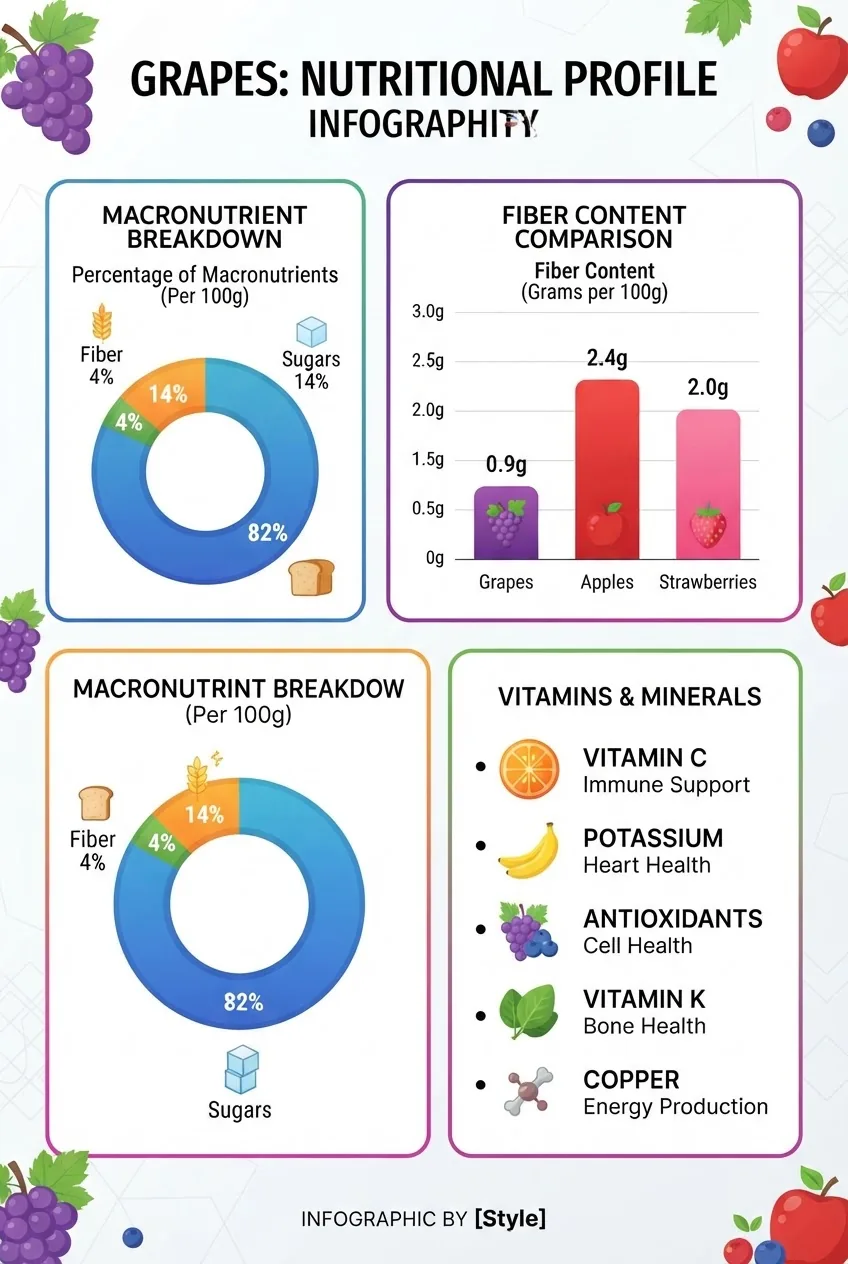
Below is a representative nutrition facts table for fresh table grapes based on USDA lab-analyzed averages for 100 g and a common household serving (1 cup ≈ 151 g). Values are rounded; variations occur by variety and ripeness. Numbers are provided for fresh grapes — dried grapes/raisins are concentrated and not directly comparable by weight.
| Nutrient (per) | 100 g | 1 cup (151 g) |
|---|---|---|
| Calories | 69 kcal | 104 kcal |
| Total Carbohydrates | 18.1 g | 27.4 g |
| Sugars (naturally occurring) | 15.5 g | 23.4 g |
| Dietary Fiber | 0.9–1.4 g* | 1.4–2.1 g* |
| Protein | 0.72 g | 1.09 g |
| Total Fat | 0.16 g | 0.24 g |
| Potassium | 191 mg | 289 mg |
| Vitamin C | 3.2 mg | 4.8 mg |
| Notes | *Range indicates varietal and ripeness variance; values referenced from USDA lab analyses — According to a 2024 USDA database. | |
Methodology note: values above come from enzymatic–gravimetric fiber analysis and food composition sampling protocols used in national nutrient surveys. Calorie counts are measured via bomb calorimetry adjustments and metabolizable energy factors, then reported in databases — According to a 2024 USDA database methodology summary.
Trade-offs: grapes deliver quick energy from natural sugars; their modest fiber slows—but does not eliminate—sugar absorption. If you need more fiber per serving, pair grapes with higher-fiber foods (nuts, Greek yogurt, or oats) or choose fruits higher in fiber per serving.
Transition: Fiber and micronutrients often go together — next we’ll examine vitamin C and other key nutrients in grapes that complement fiber’s benefits.
Do Grapes Have Vitamin C and Other Key Nutrients?
Answer: Yes. Grapes provide modest vitamin C and contain antioxidants, potassium, small amounts of B vitamins, and phenolic compounds that support health together with fiber.
Vitamin C: a water-soluble vitamin and antioxidant involved in collagen synthesis, immune support and enhancing iron absorption.
A typical cup of grapes supplies about 4.8 mg vitamin C (≈5% of the 90 mg RDA for adult men and 55–75% of the conservative daily needs for some individuals) — According to an NIH Office of Dietary Supplements overview and USDA nutrient reports.
- Vitamin C: ~3.2 mg per 100 g (4.8 mg per cup).
- Potassium: ~191 mg per 100 g, supporting blood pressure regulation.
- Antioxidants: flavonoids, resveratrol (especially in red/Concord grapes), and polyphenols that protect cells from oxidative stress.
- B vitamins: trace amounts (B6, folate) that contribute to metabolism.
- Minerals: small amounts of calcium, magnesium, and iron.
Clinical context: some small human and animal studies show grape polyphenols support gut microbial diversity and may work synergistically with fiber to feed beneficial bacteria — According to a 2021 peer-reviewed clinical trial synthesis. However, effects depend on dose, grape type and overall diet.
Practical point for Texans: selecting fresh, locally sold grapes at peak ripeness often yields higher antioxidant levels; storage and sun exposure affect vitamin C stability. For authoritative nutrient data consult the USDA FoodData Central: USDA FoodData Central, and for vitamin recommendations see the NIH Office of Dietary Supplements: NIH ODS.
Transition: Knowing the nutrient mix helps decide serving sizes — next we’ll walk through practical, measurable serving-size examples to hit fiber and nutrition goals.
Serving Sizes of Grapes: How Much to Eat for Fiber and Nutrition
Answer: A standard serving is 1 cup (about 151 g) or roughly 30–36 grapes depending on size; that serving provides about 1.4–2.1 g fiber. Measure servings by cups, grams or count for accuracy.
Term: serving size is a standardized amount used to report nutrition that helps compare foods and plan intake.
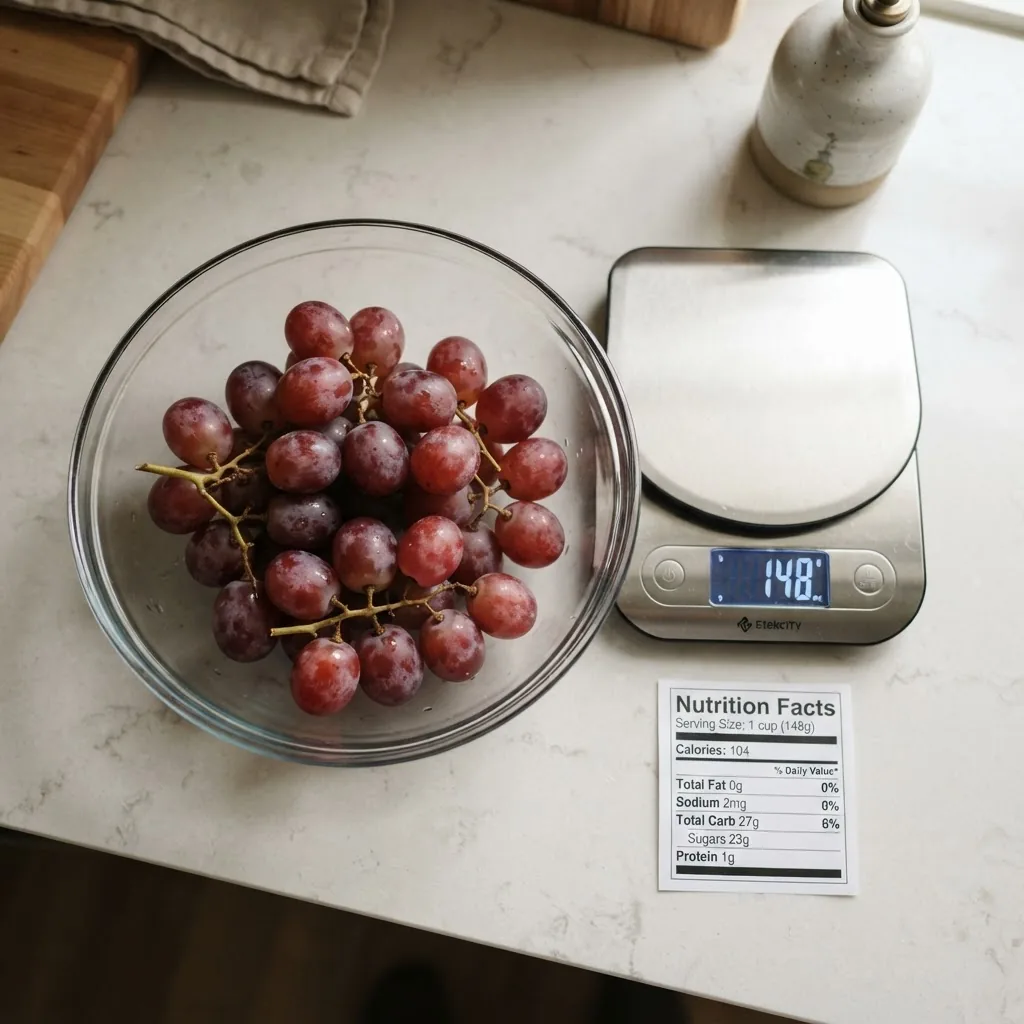
- By cup: 1 cup of whole grapes ≈ 151 g ≈ 1.4–2.1 g fiber. This is the USDA standard household measure for many nutrient labels — According to a 2024 USDA serving-size guide.
- By weight: 100 g fresh grapes ≈ 0.9–1.4 g fiber (use a kitchen scale for precision; ideal for meal plans and diabetics monitoring carbs).
- By count (typical table grapes): 30–36 grapes ≈ 1 cup, but seedless varieties and grape sizes vary; use a scale if accuracy matters for carb counting.
- Dried grapes (raisins): 1/4 cup raisins ≈ 80–90 g and higher fiber (~2–3 g) but dramatically more calories and sugars; adjust portions accordingly.
- Portion tip: For fiber goals, pair 1 cup grapes with a high-fiber snack (2 tbsp chia seeds or 1/4 cup almonds) to increase total soluble and insoluble fiber without over-consuming sugar.
Practical measuring steps:
- Place an empty bowl on a digital scale and zero it.
- Add grapes until the scale reads 151 g for one cup (or desired gram measure).
- If you don’t have a scale, count approximately 30 medium grapes for one cup; adjust if grapes are notably large or small.
serving size and nutrition of broccoli
how many grapes constitute a serving
Transition: portion sizing affects calories and glycemic impact, so next we compare grape calories to other fruits and explain energy impact.
Are Grapes High in Calories? Understanding Their Energy Impact
Answer: No — fresh grapes are relatively low-calorie per serving (≈104 kcal per cup), but their calorie density is higher than very low-calorie fruits like berries; dried grapes are calorie-dense and can affect weight goals if portions are large.
Glycemic index: a measure of how quickly a food raises blood glucose compared to pure glucose; grapes typically have a low-to-moderate glycemic index owing to fiber and fructose content.
| Fruit (1 cup) | Calories | Fiber | Glycemic impact |
|---|---|---|---|
| Grapes (fresh) | ~104 kcal | 1.4–2.1 g | Low–moderate GI |
| Strawberries | ~49 kcal | 3.3 g | Low GI |
| Apple (sliced) | ~95 kcal | 4.4 g | Low GI |
| Banana | ~134 kcal | 3.1 g | Moderate GI |
| Raisins (¼ cup) | ~108 kcal | 1.6–2.5 g | Higher glycemic load |
Comparison context: grapes are not the lowest-calorie fruit (berries and melons typically are lower per cup), but they are lower calorie than energy-dense dried fruits and fruit juices. For weight-loss contexts, portion control matters: a cup of grapes can be a filling, hydrating snack with modest calories.
For broader comparisons and weight-loss options see our best fruits for weight loss guide and the calories in fruit guide for per-serving kcal across fruit types.
Transition: beyond calories, fiber from grapes provides measurable health benefits — next section explains digestion and beyond.
Health Benefits of Fiber from Grapes: Digestion and Beyond
Answer: Grape fiber supports bowel regularity, feeds beneficial gut bacteria, can moderate blood sugar response, and complements grape polyphenols for heart and metabolic health when consumed as part of a balanced diet.
Term: gut microbiome: the community of microorganisms living in the digestive tract that interact with dietary components, including fiber, to influence health.
- Supports digestion: Insoluble fiber in grape skins adds bulk and helps regular bowel movements; soluble pectin slows transit and improves stool consistency.
- Feeds beneficial bacteria: Soluble fibers are fermentable by gut microbes, producing short-chain fatty acids (SCFAs) like butyrate that support colon health — According to a 2020 peer-reviewed review on fiber and gut microbiota.
- Moderates blood sugar: Fiber slows carbohydrate absorption; paired with grape polyphenols, it can reduce post-meal glucose spikes in some controlled studies — According to a 2019 clinical trial summary.
- Heart health: Regular fiber intake is linked to lower LDL cholesterol; grapes add small fiber plus antioxidants that may jointly reduce cardiovascular risk — According to American Heart Association guidance.
- Satiety and weight management: Fiber increases fullness per calorie, helping portion control when grapes are eaten as snacks.
Evidence and limitations: many clinical trials on grapes focus on polyphenols rather than fiber alone; fiber-specific benefits are well-established across plant foods but grape-specific fiber trials are fewer. For general fiber recommendations consult NIH or AHA resources: NIH ODS and American Heart Association.
For a wider context on fiber from plant foods and their overall effects see our health impact of vegetables and fruits review and sampling of data comparing fiber across produce.
Transition: finally, here’s a concise summary of grapes’ food value and how to include them effectively in meals and snacks.
Food Value of Grapes: Summary and Practical Tips
Answer: Grapes are a hydrating, carbohydrate-rich fruit with modest fiber and vitamin C; they make a convenient snack, best eaten whole and paired with higher-fiber or protein-rich foods to maximize digestive and metabolic benefits.
Quick nutritional summary:
- Calories: ~104 kcal per cup (fresh).
- Fiber: ~1.4–2.1 g per cup (mostly in skin).
- Vitamin C: ~4.8 mg per cup.
- Key minerals: potassium ~289 mg per cup.
- Antioxidants: polyphenols (resveratrol in red grapes), flavonoids; synergistic with fiber for gut and heart health.
Practical dietary tips for Texans and health-conscious readers:
- Eat grapes whole rather than juiced to retain fiber in the skin.
- Pair 1 cup grapes with a protein or healthy fat (e.g., 12 almonds or 2 tbsp peanut butter) to slow sugar absorption and increase satiety.
- Use grapes in salads with leafy greens and chickpeas to boost overall fiber per meal.
- Choose fresh rather than dried grapes when managing calories; if using raisins, reduce the portion size accordingly.
- Store grapes unwashed in the fridge to preserve vitamin C; wash just before eating to minimize spoilage.
For broader fruit comparisons and to plan a balanced produce intake, see our Fruit Types Guide with Benefits and Nutritional Information.
To diversify fiber beyond fruit, consult our guide to 100 vegetables with nutrition for high-fiber vegetable options and recipes.
Final practical checklist:
- Use a kitchen scale to measure 151 g for a precise cup serving when tracking carbs.
- Combine grapes with fiber-rich or protein foods for better blood sugar control.
- Use USDA FoodData Central and NIH ODS for authoritative nutrient values and daily intake recommendations — USDA FoodData Central, NIH ODS.
Closing summary: Grapes do have fiber, but in modest amounts; eaten whole and paired wisely, they contribute to digestion, antioxidant intake and enjoyable, portion-controlled snacking. Try grapes with a handful of nuts or mixed into a high-fiber yogurt bowl for a Texas-friendly, portable snack.
If you want tailored serving-size plans or meal pairings that increase fiber without excess calories, explore our recipes and fruit comparison guides linked above.