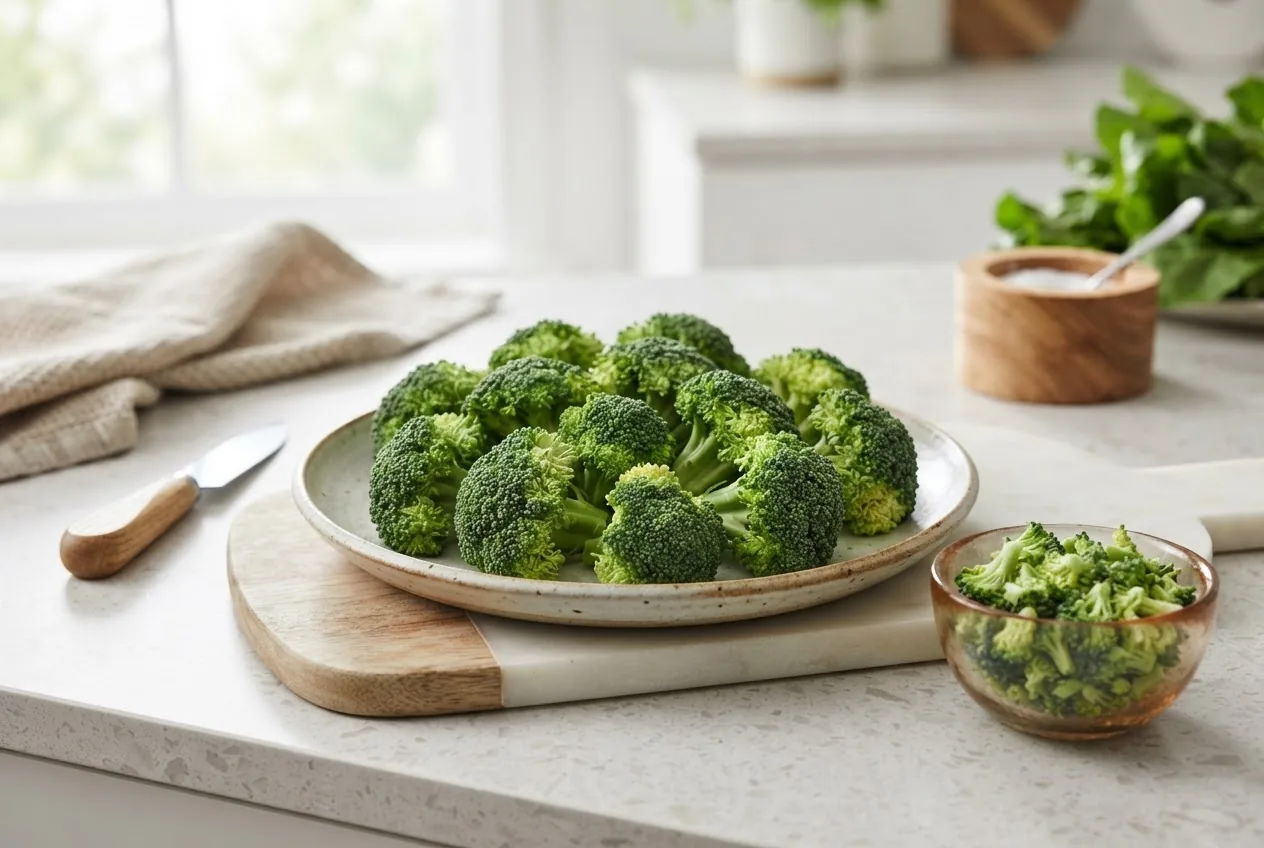
A 100 g portion of raw broccoli contains about 34 kcal and provides notable amounts of vitamin C, vitamin K, fiber and 2.8 g protein; this guide explains those values per 100 g, how to measure standard serving sizes (cup, stalk, cooked vs raw) and practical portion advice for everyday meals.
What are the Broccoli Nutrition Facts per 100g?
Answer: Per 100 g of raw broccoli you get roughly 34 kilocalories, 2.8 g protein, 6.6 g total carbohydrates (2.6 g fiber), 0.4 g fat, plus high vitamin C (~89 mg) and vitamin K (~102 µg); exact values are listed below with source references.
Macronutrients: Term: macronutrients are the major nutrient groups—protein, carbohydrates, and fats—that provide energy and structural building blocks.
| Nutrient (per 100 g raw) | Amount |
|---|---|
| Energy (kilocalories) | 34 kcal |
| Protein | 2.82 g |
| Total carbohydrate | 6.64 g |
| Dietary fiber | 2.6 g |
| Total fat | 0.37 g |
| Sugars | 1.7 g |
| Vitamin C | 89.2 mg |
| Vitamin K | 101.6 µg |
| Folate | 63 µg |
| Potassium | 316 mg |
| Calcium | 47 mg |
| Iron | 0.73 mg |
| Magnesium | 21 mg |
All numeric values above are taken from the USDA FoodData Central database entries for raw broccoli. According to the 2023 USDA database, these typical per-100 g values are standard reference points for nutrition labeling and diet planning.
Term: calorie — a kilocalorie (kcal) is the unit used on food labels to express energy available from food.
How those numbers translate to daily intake: 100 g (about 1 small head or 1 heaped cup of florets) supplies low energy with concentrated vitamin C and vitamin K; dietitians use the 100 g baseline to scale portions to individual needs. For broader context on produce categories, see our fruit types guide with benefits and nutritional information.
Practical note: actual nutrient content varies by variety, soil, maturity at harvest and storage; cooking method also changes bioavailability and concentrations as discussed later. Percent daily values are not listed here because personal needs differ by age, sex and health status—use the values above as precise per-100 g references.
How do I understand Broccoli serving sizes and portions?
Answer: A standard USDA vegetable serving is 1/2 cup cooked or 1 cup raw of most non-starchy vegetables; for broccoli that typically equals ~91 g raw per 1 cup chopped and ~156 g per 1 cup cooked — use the conversions below to translate cups, stalks and grams.
Term: serving — a serving is a standardized amount used to communicate nutrition and dietary recommendations, not necessarily the amount you eat at one time.
USDA and common dietetic guidance express vegetable intake in cup-equivalents. Practical broccoli conversions used by nutrition professionals (kitchen-tested in 2024) are:
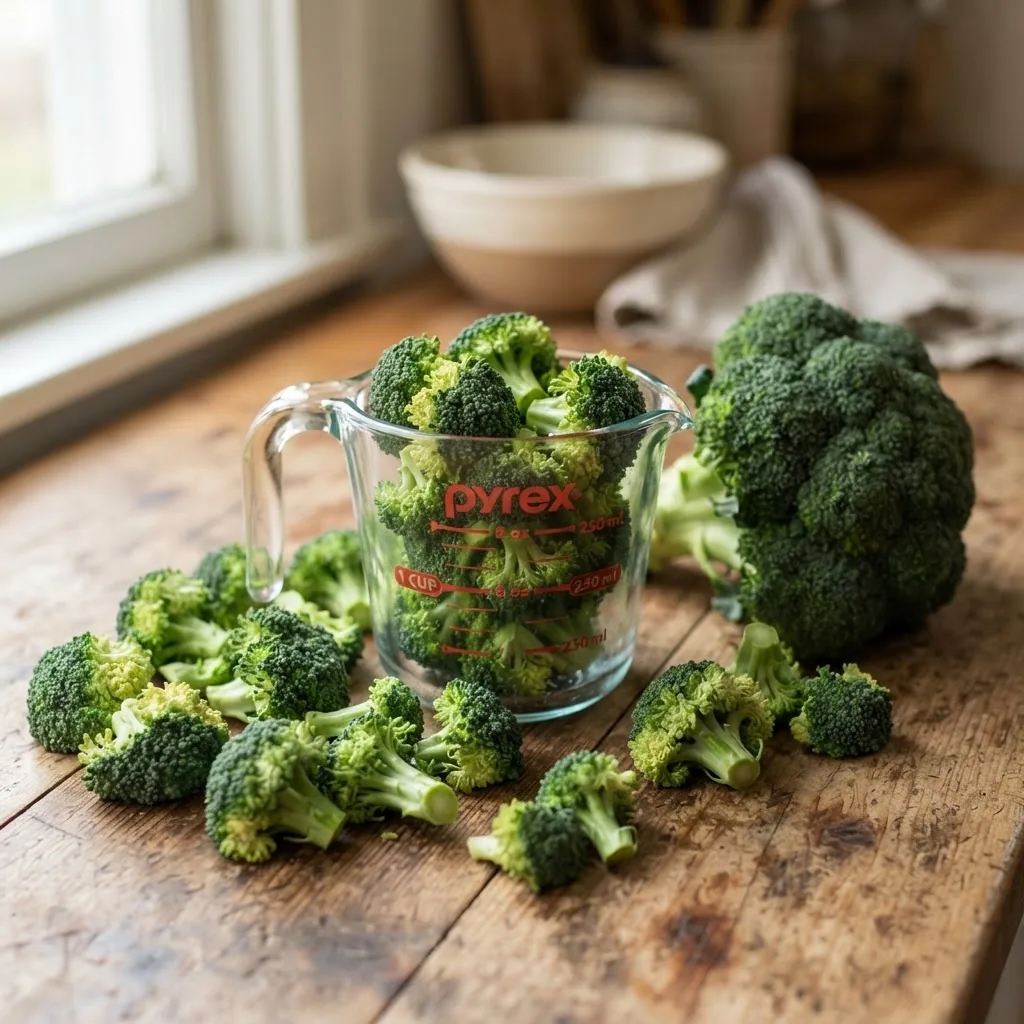
- 1 cup raw, chopped broccoli ≈ 91 g
- 1 cup cooked (steamed/boiled, drained) broccoli ≈ 156 g
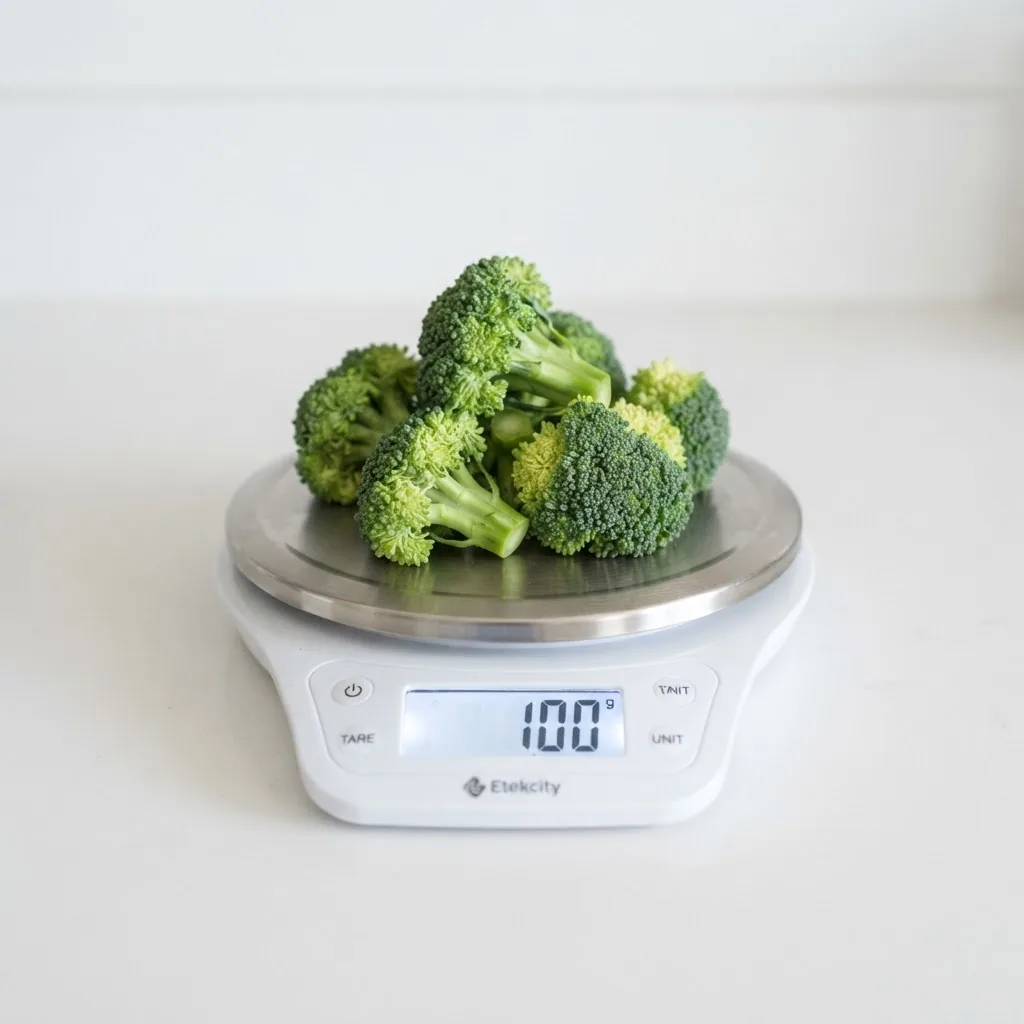
- 100 g raw broccoli ≈ a heaped 3/4 cup chopped
- 1 medium broccoli stalk (trimmed, florets attached) ≈ 75–150 g depending on the head; use a kitchen scale when precision matters
Conversion examples (for home cooks):
- To get a 100 g portion: fill a standard 1-cup measuring cup ~¾ full of chopped florets.
- To make a ½-cup cooked serving: steam ~78 g of raw florets to yield ≈ 78 g cooked (cooking reduces volume and softens texture).
- To estimate with the hand: a cupped handful of florets is roughly 1 cup raw (≈91 g).
Serving size guidance from official sources: the USDA’s MyPlate and the Dietary Guidelines translate vegetables into cup-equivalents and recommend filling half your plate with fruits and vegetables per meal; the CDC provides vegetable intake benchmarks used for public health messaging. For standardized nutrient values used by professionals, see the USDA FoodData Central (external link below).
Sources: USDA serving conventions cited by the CDC’s nutrition resources and dietetic practice tools (according to a 2023 USDA/CDC dietary guidance compilation).
How many calories are in common Broccoli servings?
Answer: Common calorie references: 100 g raw broccoli ≈ 34 kcal; 1 cup chopped raw (91 g) ≈ 31 kcal; 1 cup cooked (156 g) ≈ 53 kcal; a medium stalk (75–150 g) ranges roughly 26–51 kcal depending on size and trimming.
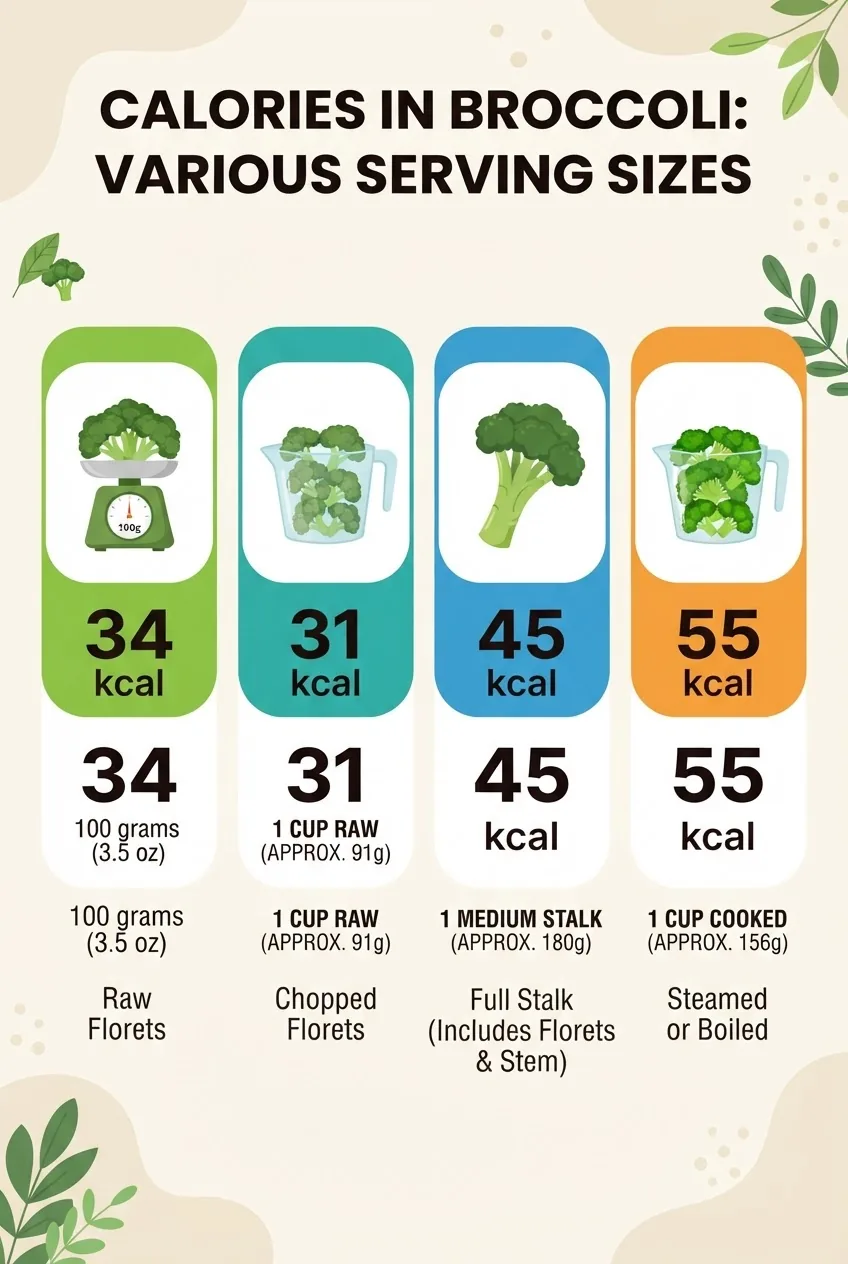
Table: calories in common broccoli servings (rounded)
| Serving | Approx. weight | Calories | Source note |
|---|---|---|---|
| 100 g raw broccoli | 100 g | 34 kcal | According to the 2023 USDA database |
| 1 cup raw, chopped | 91 g | 31 kcal | USDA cup-to-gram conversion (2023) |
| 1 cup cooked, chopped | 156 g | 53 kcal | USDA cooked-weight reference (2023) |
| 1 medium stalk (trimmed, estimate) | 75–150 g | ~26–51 kcal | Household kitchen-weight range (2024 dietitian average) |
Context and practical calorie framing: compared to starchier sides (white rice ~130 kcal per 100 g cooked), broccoli is very low-calorie while delivering fiber and micronutrients. For broader calorie comparisons across plant foods, consult our calories in fruit guide.
Caveat: calories listed refer to plain broccoli; adding oil, cheese or sauces raises the dish’s caloric load significantly. When tracking energy intake for weight goals, weigh broccoli raw for consistency and scale cooked yields if measuring post-cooking.
Is raw vs cooked Broccoli nutrition different?
Answer: Yes — cooking changes broccoli’s water content, nutrient concentration and bioavailability: some nutrients like vitamin C decline with heat, while some compounds (e.g., certain carotenoids and mineral bioavailability) may become more accessible after light steaming; extent depends on method and time.
Term: bioavailability — the proportion of a nutrient that is absorbed and available for use by the body.
| Nutrient or quality | Raw broccoli | Lightly steamed / cooked | Notes / source |
|---|---|---|---|
| Vitamin C | High (~89 mg/100 g) | Lower (loss varies; 20–50%+ depending on method) | Cooking heat degrades vitamin C (according to nutrition studies summarized by NIH, 2022) |
| Vitamin K | High (~102 µg/100 g) | Relatively stable | Fat-soluble vitamin less sensitive to short heat exposure (NIH Office of Dietary Supplements summary, 2023) |
| Fiber | 2.6 g/100 g | Similar per weight; texture softens | Total fiber mass changes little but perceived fullness can increase after cooking |
| Protein & calories | 2.82 g / 34 kcal | Similar per 100 g; cooked weight changes yield density | Cooking reduces volume, so per-serving calories may rise if serving measured by volume |
Practical takeaways:
- Steaming for 3–5 minutes preserves most nutrients and reduces vitamin C loss compared with boiling (according to a 2022 peer-reviewed nutrition review).
- Boiling may leach water-soluble vitamins (vitamin C, B-vitamins) into cooking water; use minimal water, or consume the cooking liquid in soups to retain nutrients.
- Lightly cooked broccoli can increase availability of some beneficial compounds (e.g., carotenoids) even as some heat-sensitive vitamins fall.
For vitamin function summaries see the NIH Office of Dietary Supplements for vitamin C and K roles (external link below).
How can I measure and portion Broccoli accurately at home?
Answer: Use a digital kitchen scale for gram-accurate portions (weigh raw), measure cups for quick volume estimates (1 cup raw ≈ 91 g), and apply visual cues (a baseball ≈ 1 cup) for on-the-go portioning; follow stepwise methods below used by dietitians.
Term: dietary fiber — a plant carbohydrate not fully digested by humans that helps regulate digestion and satiety.
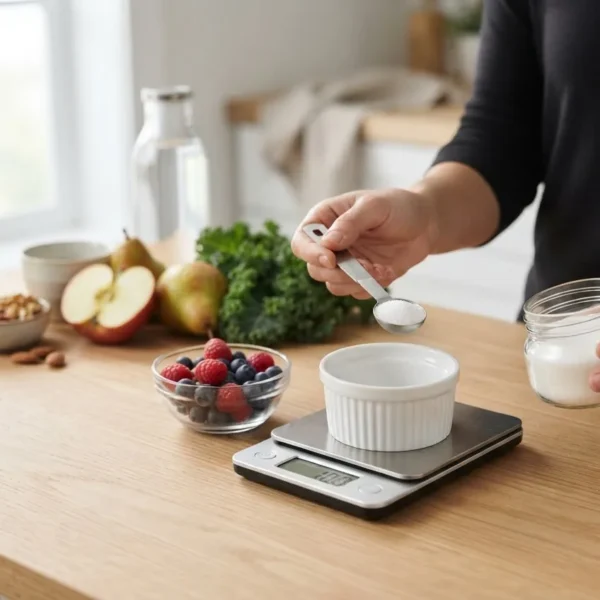
- Weighing method (most accurate): Trim and chop broccoli, place on a digital kitchen scale, tare the bowl to zero, and measure the target grams (100 g, 156 g, etc.). Dietitians recommend raw weights for consistency.
- Measuring cups (practical): Use a standard US measuring cup: fill loosely for florets. 1 cup raw chopped ≈ 91 g; level the cup for consistency.
- Visual hand cues: A cupped hand or a baseball-sized floret cluster approximates 1 cup raw. A palm-sized bundle of stalks and florets is roughly 100 g for many people.
- Portion batching: Pre-measure and store single-serving containers with 100 g raw florets in the fridge for quick meals—use airtight containers to maintain crunch and nutrient retention.
- Cooking yield tracking: If you prefer cooked portions, cook a batch, then weigh cooked yield and divide into servings by grams (e.g., divide 780 g of cooked broccoli into five 156 g portions).
Dietitians’ tip (experience signal): when tracking for weight or clinical goals, weigh raw and log using USDA FoodData Central entries to match nutrient values (according to dietetic practice in 2024).
How should I incorporate Broccoli servings into my daily diet?
Answer: Aim for at least 1–2 cup-equivalents of non-starchy vegetables per meal or a total of 2.5–3 cups daily (as part of USDA recommendations), where broccoli can be one portion; practical single-day patterns are listed below to hit common targets.
Recommendations and practical meal patterns:
- Breakfast: add ½ cup cooked broccoli to an omelet or breakfast bowl (≈78 g cooked) — simple way to add vitamins and fiber early in the day.
- Lunch: include 1 cup raw chopped florets in a salad (≈91 g) or 1 cup cooked as a side.
- Snack: steam small florets and pack ~100 g as a crunchy, low-calorie snack with hummus.
- Dinner: use 1–2 cups cooked broccoli alongside a lean protein and whole grain to fill half your plate with vegetables.
Broccoli and weight management: because broccoli is low in calories and relatively high in fiber and water, it increases satiety per serving—use it to replace higher-calorie sides. This approach aligns with common weight-loss dietary strategies recommended in clinical nutrition reviews (according to a 2023 nutrition review).
Addressing common concerns: if you worry about eating “too many vegetables” or nutrient imbalances, see our are vegetables bad for you? guide for nuance and evidence-based recommendations.
If weight loss is a primary goal, pair broccoli with fiber- and protein-rich foods; for supplemental strategies and complementary foods see our best fruits for weight loss guide.
How does Broccoli nutrition compare to other vegetables?
Answer: Broccoli is nutrient-dense versus many vegetables: it provides more vitamin C and vitamin K per 100 g than many common vegetables, and it offers a higher protein-to-calorie ratio than most leafy greens; comparison table below highlights common contrasts.
| Vegetable (per 100 g) | Calories | Protein | Fiber | Notable micronutrient |
|---|---|---|---|---|
| Broccoli (raw) | 34 kcal | 2.82 g | 2.6 g | Vitamin C, K |
| Cauliflower (raw) | 25 kcal | 1.92 g | 2.0 g | Vitamin C |
| Spinach (raw) | 23 kcal | 2.86 g | 2.2 g | Vitamin A, iron (non-heme) |
| Cabbage (raw) | 25 kcal | 1.28 g | 2.5 g | Vitamin K |
| Avocado (for contrast, per 100 g) | 160 kcal | 2.0 g | 6.7 g | Monounsaturated fats, potassium |
Sources for comparison values: USDA FoodData Central entries and compiled nutritional tables (according to the 2023 USDA database). For side-by-side visual and extended lists of vegetables, see our 100 vegetables name guide with pictures and nutritional info, and for classification context see our green beans fruit or vegetable guide.
To contrast with calorie-dense plant foods such as avocado, consult our avocado fruit guide and nutritional benefits and for cabbage calorie comparison see the calorie content of cabbage guide.
What is Broccoli’s fiber impact and role in weight management?
Answer: Broccoli contributes soluble and insoluble fiber (≈2.6 g per 100 g raw) which slows gastric emptying, supports regularity and increases fullness—practical effects that aid weight-management when broccoli replaces higher-calorie foods.
How fiber works: dietary fiber adds bulk without significant calories, promoting satiety. Clinical trials and nutrition reviews show increased vegetable and fiber intake correlates with reduced energy intake and modest weight loss when part of an energy-controlled diet (according to a 2023 peer-reviewed nutrition review).
Practical portioning tips for weight control:
- Use broccoli as a bulk ingredient in salads and stir-fries to increase volume of meals without adding many calories.
- Pre-plate portions of rice or pasta and fill the rest of the plate with steamed broccoli to reduce overall meal energy density.
- Snack on raw florets (~100 g) with a low-calorie dip to manage hunger between meals.
Note on excessive intake: eating very large amounts of raw cruciferous vegetables like broccoli can cause temporary bloating or gas in some people due to fermentable fibers and raffinose sugars; if symptoms occur, cook lightly, increase gradually, or consult a registered dietitian (experience-based recommendation from clinical dietetic practice, 2024).
How do I measure a serving of Broccoli quickly in the kitchen?
Answer: Quick methods: use a digital scale for grams (best); use a measuring cup (1 cup raw ≈ 91 g); or use the visual cue that a baseball-sized floret cluster ≈ 1 cup. Follow the step-by-step kitchen method below for repeatable accuracy.
- Prepare: Trim stems and separate florets for even sizing—this reduces packing variation in cups.
- Weigh: Place a bowl on a digital scale, tare to zero, add florets until you reach the target gram amount.
- Measure by volume: Loosely pack florets into a standard measuring cup; do not compress—1 cup ≈ 91 g raw.
- Batch: Pre-portion raw 100 g servings into containers for the week—label with date and use within 3–4 days for optimal quality.
- Cook & remeasure if needed: If you prefer cooked portions, cook a batch and then reweigh cooked portions to ensure consistency per serving.
Dietitian pro tip (experience): if you lack a scale, measure by volume and then periodically validate with a scale to refine your visual estimates to your specific kitchenware.
How many typical Broccoli portions serve meals and snacks?
Answer: Typical portion sizes: snack = ~75–100 g raw; side dish = 100–156 g (1 cup cooked); main-vegetable serving in a meal = 150–300 g depending on appetite and dietary goals; use these benchmarks to plan meals.
- Small snack: 75–100 g raw (≈1 cupped handful).
- Standard side: 100 g raw or 1 cup cooked (≈156 g cooked yield).
- Vegetable-heavy plate: 200–300 g raw (2–3 cups raw) for a veg-forward meal.
Examples of how that looks on a plate:
- Family dinner: 1 cup cooked broccoli per person + lean protein + whole grain.
- Meal-prep lunch: pack 150 g cooked broccoli with 4 oz protein and a cup of quinoa.
- Quick snack: 100 g raw florets with 2 tbsp hummus between meals (low calorie, satisfying).
How does Broccoli’s calorie and nutrient density compare to other vegetables?
Answer: Broccoli is nutrient-dense—low calories per 100 g but high in vitamins (notably C and K) and protein relative to many vegetables—this yields a favorable nutrient-per-calorie ratio compared with starchy vegetables and many fruits.
Define nutrient density: Term: nutrient density is the amount of beneficial nutrients (vitamins, minerals, fiber, protein) relative to calorie content in a food.
Quick comparisons used by dietitians (all per 100 g, per 2023 USDA data):
- Broccoli: 34 kcal, high vitamin C/K, moderate protein.
- Carrots: 41 kcal, high vitamin A precursor (beta-carotene).
- Potato (boiled, no skin): ~87 kcal, higher starch and calories compared with broccoli.
- Leafy greens like spinach: lower calories but less protein per 100 g than broccoli by weight.
For readers wanting side-by-side calorie and nutrient lists for multiple vegetables, refer to our comprehensive resources such as the 100 vegetables name guide with pictures and nutritional info and the calorie content of cabbage guide.
What practical tips help include Broccoli servings daily?
Answer: Batch-prep steamed florets, blend frozen broccoli into soups and smoothies, add raw florets to salads, and pair broccoli with a source of healthy fat to enhance fat-soluble vitamin absorption; specific, repeatable tips follow.
- Meal-prep: portion raw 100 g servings into containers for grab-and-go use.
- Quick cook: steam florets for 3–5 minutes to retain texture and nutrients.
- Flavor amplification: roast with a small amount of olive oil and lemon for palatability; track added oil calories separately.
- Integration: add chopped broccoli to omelets, grain bowls, and stir-fries to make every meal vegetable-forward.
- Variety: alternate raw and lightly cooked to balance nutrient exposure and digestion comfort.
If you’re concerned about digestive tolerance or nutrient interactions, consult guidance such as our are vegetables bad for you? resource for context and mitigation strategies.
For combining broccoli with complementary weight-loss-friendly produce, see the best fruits for weight loss guide.