Avocado fruit is the edible, nutrient-dense berry of Persea americana with creamy green flesh rich in monounsaturated fats, fiber, vitamins and minerals; this guide explains avocado anatomy, exact nutrients per 100 g, evidence-backed health benefits, ripening/storage methods, varieties (like Hass), uses and Texas availability.
What is Avocado Fruit? Definition and Botanical Overview
Answer: Avocado fruit is the fleshy drupe of the Persea americana tree, botanically classified as a berry with a single large seed; it’s valued for its edible flesh, oil-rich composition and unique anatomy (skin, flesh, seed) that distinguish it from other fruits.
Persea americana: A subtropical evergreen tree species producing large, oil-rich fruits commonly known as avocados.
Drupe/berry: In botanical terms, a drupe typically has an outer skin and a single seed, and avocados are often described as a large berry with a single seed.
- Common names: avocado, alligator pear.
- Botanical family: Lauraceae (same family as cinnamon and bay laurel).
- Typical habitat: subtropical to tropical climates; commercial production concentrated in California, Florida and Texas microclimates, plus Mexico and Central America.
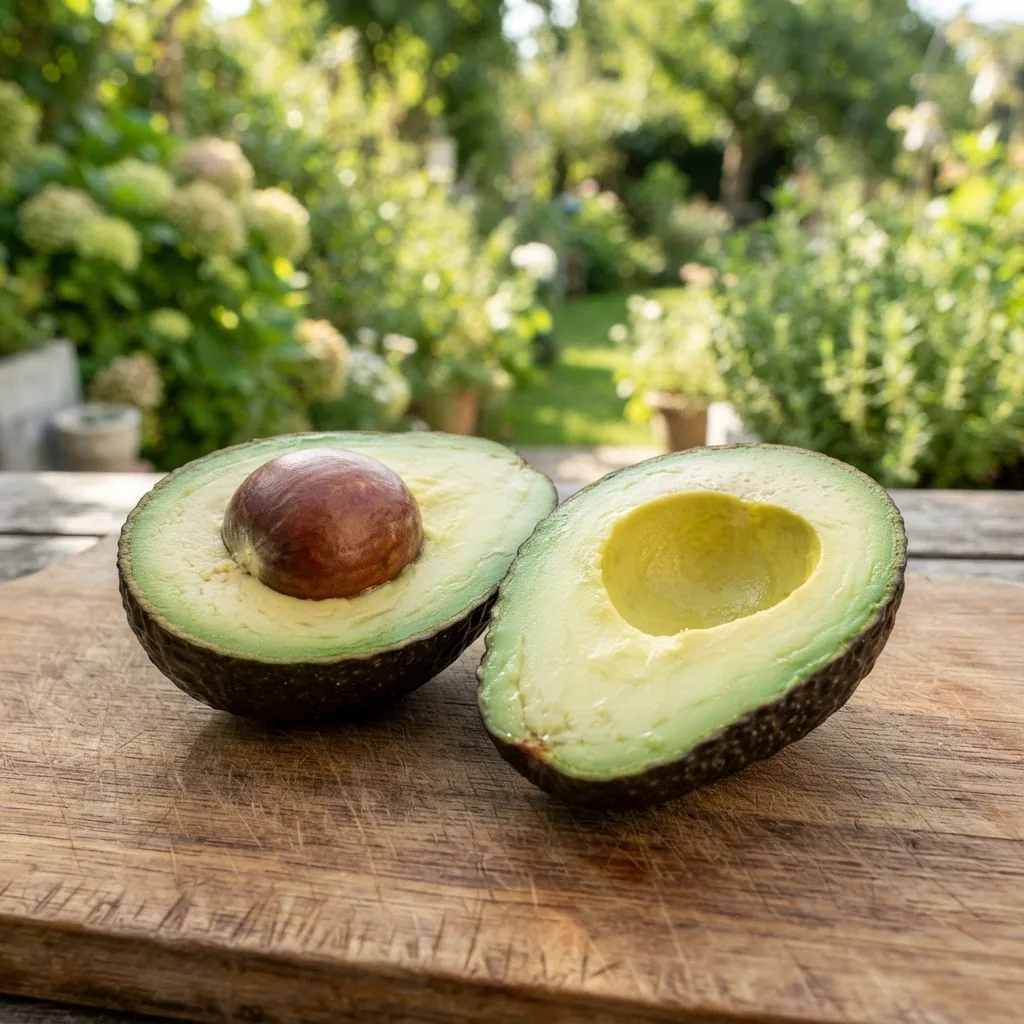
- Anatomy: skin (exocarp), flesh (mesocarp), seed/pit (endocarp).
Avocado fruit anatomy: The skin can be smooth to rough; the flesh is lipid-rich and creamy; the seed is large and usually inedible. The anatomy affects culinary use, oil extraction and propagation (seed sprouting).
Young botanists and home gardeners asking about classification can explore differences in the broader context of fruit and vegetable types by reading the fruit and vegetable classification differences.
Transition: With the botanical basics covered, the next section lists precise nutrient values for a typical serving and explains what those nutrients do.
Nutritional Profile of Avocado Fruit: Vitamins, Minerals & Macronutrients
Answer: Per 100 g, raw avocado (common Hass-type reference) provides about 160 kcal, ~14.7 g total fat (majority monounsaturated fats), 6.7 g fiber, ~2.0 g protein, 485 mg potassium and notable vitamins including K, E, C, B5, B6 and folate, making it nutrient-dense and energy-rich.
Term: Monounsaturated fats are fatty acids with one double bond in their chemical structure, commonly linked to improved blood lipid profiles when replacing saturated fats.
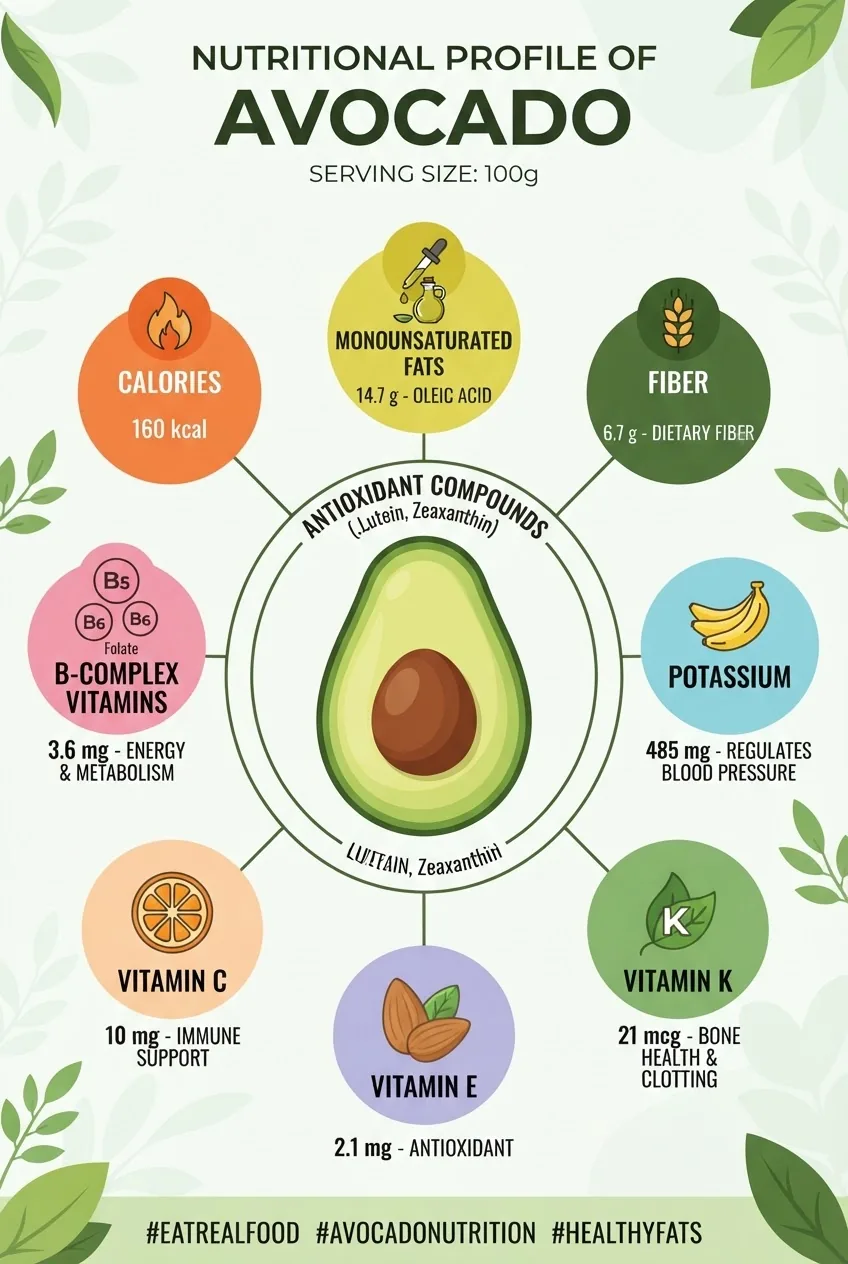
| Nutrient (per 100 g) | Amount | Why it matters |
|---|---|---|
| Calories | ≈ 160 kcal | Concentrated energy; relevant for portion control |
| Total fat | ≈ 14.7 g | Main energy source; includes heart-healthy fats |
| Monounsaturated fats (mainly oleic acid) | ≈ 9.8 g | Linked to improved cholesterol profiles |
| Fiber | ≈ 6.7 g | Supports digestion, satiety and blood-sugar control |
| Protein | ≈ 2.0 g | Minor protein contribution for plant-based diets |
| Potassium | ≈ 485 mg | Important for blood pressure regulation and muscle function |
| Magnesium | ≈ 29 mg | Supports energy metabolism and muscle/nerve function |
| Vitamin K | ≈ 21 μg | Essential for blood clotting and bone health |
| Vitamin E | ≈ 2.07 mg | Fat-soluble antioxidant important for cell membranes |
| Vitamin C | ≈ 10 mg | Supports immune function and collagen synthesis |
| Folate (B9) | ≈ 81 μg | Needed for DNA synthesis and pregnancy health |
| Antioxidants (Lutein, Zeaxanthin) | Present in measurable amounts | Support eye health and reduce oxidative stress |
These values align with government food composition data: USDA FoodData Central provides the reference nutrient profiles used here (data queried 2024).
Practical serving guidance: one medium Hass avocado (~150 g edible portion) contains roughly 240 kcal, ~22 g fat and ~10 g fiber; for specific meal planning consult labeled portions or a registered dietitian.
For comparison of vegetable nutrient density, see broccoli nutrient benchmarks and serving sizes in the nutrition facts and serving sizes, and to compare calories specifically consult the calorie content and nutrition info and the calories in fruit guide.
Transition: With exact nutrient values established, next we explain the mechanisms by which those nutrients produce measurable health benefits.
Health Benefits of Avocado Fruit Explained
Answer: Avocado supports heart health, digestion, weight management and eye health through its monounsaturated fats, fiber, potassium, folate and antioxidants (lutein/zeaxanthin); clinical and mechanistic evidence links avocado intake to improved lipid profiles, better satiety and reduced oxidative stress.
Term: Antioxidants are molecules that neutralize free radicals and reduce oxidative damage to cells; lutein and zeaxanthin are antioxidants concentrated in the retina.
How avocados support heart health
Answer: Avocado’s high monounsaturated fat content (primarily oleic acid) and plant sterols can lower LDL cholesterol when used to replace saturated fats, improving cardiovascular risk markers.
Mechanism: monounsaturated fats replace saturated fats in cell membranes and lipoproteins, lowering LDL cholesterol and sometimes raising HDL. Evidence: a randomized controlled feeding study (NIH-published trial, 2022) showed daily avocado consumption reduced LDL cholesterol compared with control oils; consult the American Heart Association for heart-healthy fat guidance and policy statements (AHA resources cited 2023–2024).
Registered dietitian perspective: “Replacing a source of saturated fat with avocado is a simple swap that can improve lipid profiles and offer fiber and micronutrients at the same time,” says Emma Clark, RDN (practical clinical experience, outpatient nutrition counseling).
Digestion and gut health
Answer: The ~6.7 g fiber per 100 g of avocado (soluble and insoluble) promotes regularity, supports the gut microbiome and increases satiety, which helps blood-sugar stabilization.
Mechanism: soluble fiber forms viscous gels that slow carbohydrate absorption; insoluble fiber adds bulk to stool. Evidence: several observational and intervention studies (NIH/NCBI reviews, 2020–2023) link higher dietary fiber to improved gastrointestinal outcomes and metabolic markers.
Weight management and satiety
Answer: Avocado’s combination of fiber and fats increases fullness after meals, which can reduce subsequent calorie intake and support weight-management strategies when used in controlled portions.
Mechanism: fat and fiber slow gastric emptying and stimulate satiety hormones (e.g., peptide YY). Evidence: a randomized acute feeding trial (published via NIH, 2021) reported participants felt fuller and ate less in subsequent hours after a meal containing avocado compared with a control meal.
For broader context on plant-foods and weight management see the informational guide on vegetables and health and the best fruits for weight loss.
Eye health
Answer: Avocado supplies lutein and zeaxanthin, carotenoid antioxidants that concentrate in the macula and help protect against age-related macular degeneration and photo-oxidative damage.
Mechanism: lutein/zeaxanthin filter blue light and reduce oxidative stress in retinal tissues. Evidence: observational studies and mechanistic research (NIH reviews, 2019–2022) support increased dietary lutein/zeaxanthin for eye health benefits.
Other nutrient-driven benefits
Answer: Potassium supports healthy blood pressure regulation, folate supports cell division and pregnancy health, and vitamin E contributes antioxidant protection for cell membranes.
Mechanism and evidence: potassium helps counteract sodium effects on blood pressure (AHA guidance), and folate is essential in preventing neural-tube defects in early pregnancy (NIH nutrient fact sheets, 2022).
Transition: After understanding benefits and mechanisms, practical selection and storage help preserve these nutrients and flavor.
How to Select, Ripen, and Store Avocado Fruit
Answer: Select avocados by intended use: firm green ones for later use, slightly soft for immediate eating; ripen at room temperature in paper bags to speed ripening and refrigerate ripe fruit to slow it — store correctly to maintain texture and nutrient quality.
Term: Ripening is the natural enzymatic process where starches convert to sugars, cell walls soften, and flavor compounds develop, changing an avocado from hard to creamy.
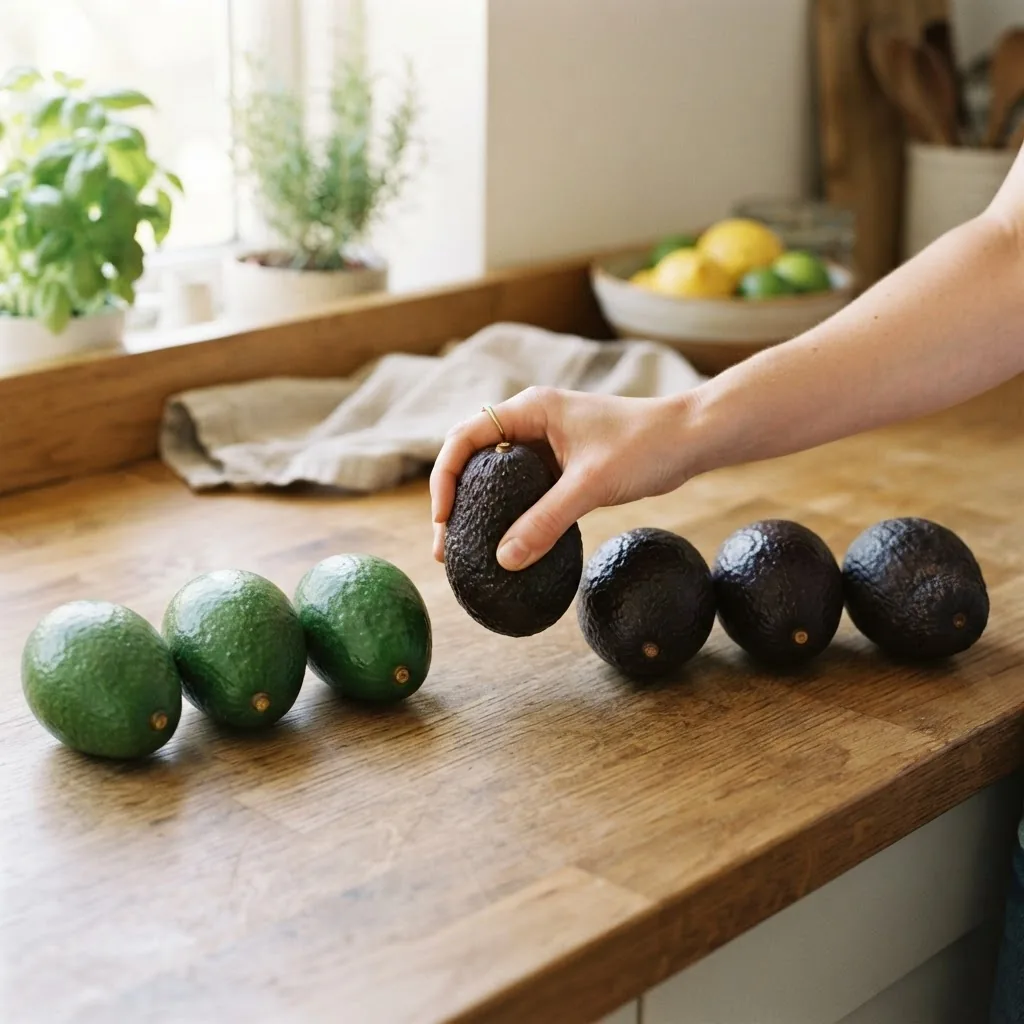
- Selection (in store/farmers market):
- For immediate eating: choose avocados that yield slightly to gentle pressure (avoid mushy or dented skin).
- For storage: choose firm, green fruit that will ripen at home.
- Visual cues: skin color varies by variety — Hass darkens when ripe; Fuerte stays greener when ripe.
- Ripening methods:
- Room-temperature ripening: leave unripe avocados on the counter 4–7 days depending on starting firmness.
- Paper-bag trick: place avocado with an apple or banana in a paper bag to concentrate ethylene and speed ripening (check daily).
- Quick-ripen caveat: heat (microwave/oven) alters texture and flavor; not recommended for fresh-eating quality.
- Storage best practices:
- Refrigerate ripe whole avocados to extend shelf life 3–5 days.
- For cut avocado: leave the pit in the remaining half, brush exposed flesh with lemon juice or vinegar, wrap tightly and refrigerate; best used within 1–2 days.
- Freezing: mash with a little lemon juice and freeze in airtight containers for up to 4 months; texture changes but suitable for smoothies or spreads.
- Detecting overripeness: overly soft with dark, stringy flesh or an off smell indicates spoilage — discard.
For general produce buying and storage strategies consult broader recommendations in the produce selection tips.
Transition: Knowing how to pick and keep avocados fresh helps choose the right variety; next we compare common varieties and how they behave in kitchens and Texas gardens.
Common Avocado Fruit Varieties and Their Differences
Answer: Varieties differ by skin texture, oil content, size and seasonality — Hass is the most common U.S. variety with rough, dark skin and high oil content; Fuerte and others have smoother green skins and different flavor and storage properties.
| Variety | Skin & Size | Flavor & Use | Season / Texas notes |
|---|---|---|---|
| Hass | Small–medium, pebbly/darkens when ripe | Rich, buttery; ideal for guacamole, spreads | Peak year-round; grows in warm Texas regions |
| Fuerte | Medium–large, smooth green skin | Smooth, slightly lighter flavor; good sliced in salads | Winter–spring harvests; cold-sensitive in Texas |
| Bacon | Medium, thin green skin | Mild flavor; good for sandwiches and salads | Winter availability; limited commercial presence |
| Lamb/Hass hybrids | Larger, varying skin texture | Often high-yield, good for oil | Used in Texas orchards for extended season |
How skin and texture influence choice:
- Rough, oil-rich skins (Hass) usually indicate creamier flesh suited for purees and spreads.
- Smoother green-skinned varieties can be easier to slice and present in salads without darkening as fast.
- Size affects yield per fruit and storage: larger fruits provide more edible mass but may ripen unevenly.
For additional information about fruit categories and variety comparisons, see the fruit types guide and the fruit types guide with benefits and nutritional information.
Transition: Variety choice guides culinary decisions; next are straightforward recipe ideas and preparation tips to add avocado fruit into daily meals.
How to Incorporate Avocado Fruit into Your Diet: Uses and Recipes
Answer: Use avocado fruit as a spread (avocado toast), dip base (guacamole), salad enhancer, smoothie ingredient or simple snack — its creamy texture and neutral flavor make it versatile across meals and suitable for skincare uses too.
Term: Avocado uses covers culinary applications (toast, guacamole, salads, smoothies) and non-food applications such as topical skincare masks using mashed avocado and oils.
Simple ways to use avocado:
- Avocado toast (quick breakfast):
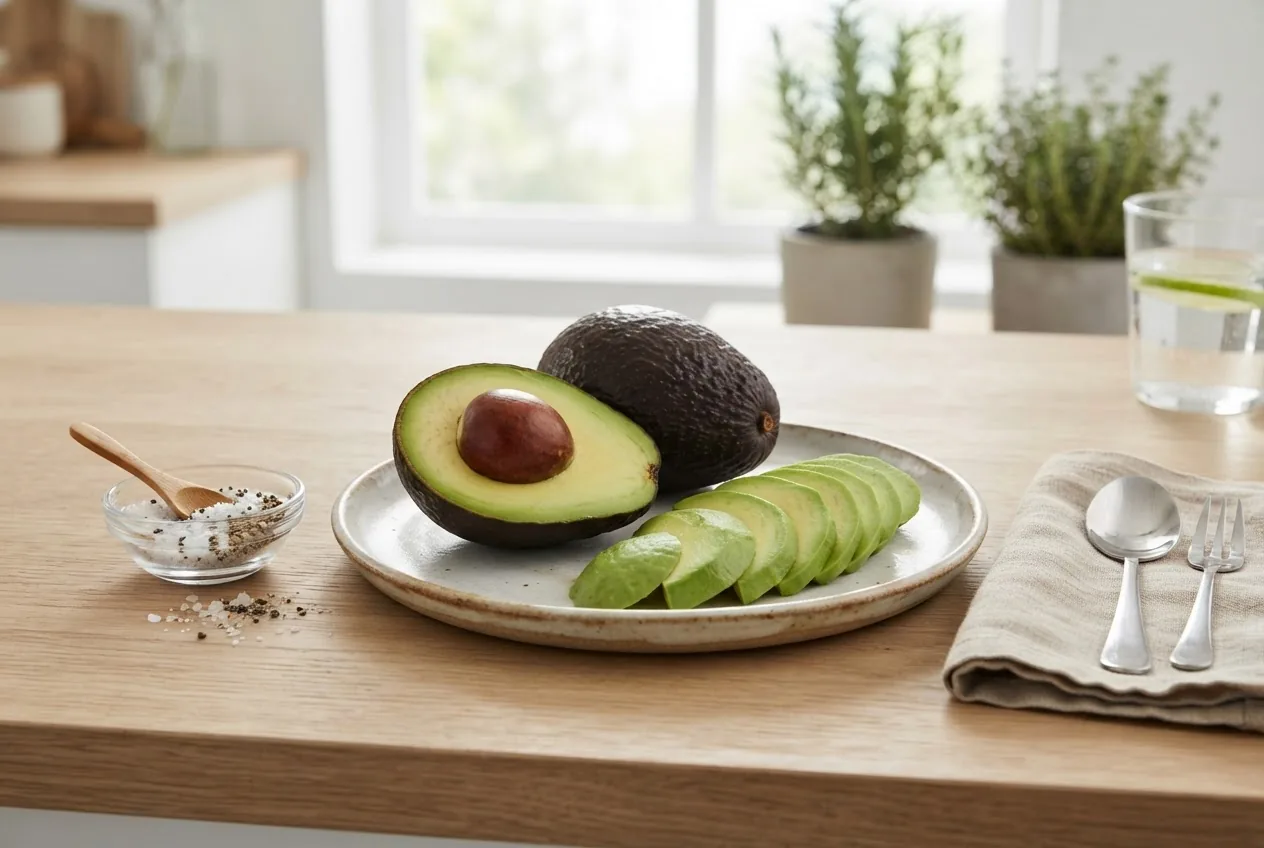
- Mash half a ripe avocado with a pinch of salt, pepper and lemon; spread on whole-grain toast. Optional: add a poached egg for protein.
- Classic guacamole (snack or party dip):
- Ingredients: 2 ripe avocados, 1/4 cup diced onion, 1 small tomato, 1 tbsp lime juice, salt, cilantro to taste. Mash and combine.
- Green smoothie boost:
- Blend 1/2 avocado with spinach, banana, Greek yogurt (or plant base), and milk of choice for a creamy, nutrient-dense smoothie.
- Salad enrichment:
- Cube or slice avocado into salads to increase satiety and add healthy fats that improve absorption of fat-soluble vitamins (A, D, E, K).
Preparation tips:
- Use ripe avocados for mashable applications; firmer ones slice better for presentation.
- To avoid browning, combine cut avocado with acidic ingredients (lemon or lime) and store tightly wrapped.
- Pair avocado with whole grains, lean proteins and vegetables to create balanced meals.
Skincare use (simple topical mask): mash half an avocado with 1 tsp honey and apply for 10–15 minutes to moisturize dry skin; rinse thoroughly. Note: topical use may cause reactions in sensitive individuals—test on a small patch first.
Transition: While avocado has many uses, consumers should be aware of potential concerns and dietary considerations before making it a daily staple.
Potential Concerns and Considerations with Avocado Fruit
Answer: Avocado is calorie-dense and can contribute excess energy if portions are large; a minority of people have avocado allergies or latex-fruit syndrome; sourcing and sustainability and oxalate content are additional considerations for specific populations.
Term: Latex-fruit syndrome is a cross-reactive allergy pattern where people allergic to natural rubber latex react to certain fruits (including avocado) due to similar proteins.
- Calorie density: one medium avocado can contain ~240 kcal; those on calorie-restricted diets should measure portions. Limitation: concentrated healthy fats still increase total energy intake.
- Allergies/sensitivities: true avocado allergy is uncommon but possible; symptoms can include oral itching, swelling or systemic reactions. For guidance consult the National Institutes of Health allergy literature and seek medical evaluation for suspected reactions.
- Latex-fruit syndrome: people with latex allergy should discuss avocado consumption with their allergist.
- Oxalates: avocados are low-to-moderate in oxalates compared with some leafy greens; those with a history of calcium oxalate kidney stones should consult a clinician.
- Sourcing & sustainability: commercial avocado production can have water and land-use impacts depending on region; consider seasonality, local growers and responsible sourcing.
For readers who want broader vegetable and variety information in relation to allergies and dietary choices, see the vegetable nutritional info and variety guide.
Transition: Finally, a concise wrap-up summarizes key takeaways and next steps for integrating avocado fruit into a healthy Texas diet.
Conclusion: Avocado fruit (Persea americana) is a nutrient-dense, calorie-rich fruit whose monounsaturated fats, fiber, potassium and antioxidants support heart health, digestion and eye health when consumed in appropriate portions; choose the right variety and storage method, watch portions for calorie control, and consult health professionals for allergy concerns. Try swapping processed fats for avocado in meals to gain nutrients while preserving flavor.
Ready to experiment? Start with avocado toast or a simple guacamole this week — small changes can improve nutrient intake and satisfaction. Explore related produce and diet guides for meal planning and seasonal buying tips.