
Short answer: Yes—dried fruit can be a nutritious, convenient source of fiber, potassium and antioxidants when eaten in controlled portions, but its concentrated sugars and calories mean moderation and label-reading are essential for healthy use. This article explains how to use dried fruit wisely and safely.
What Is Dried Fruit?
Answer: Dried fruit is fresh fruit with most of its water removed through sun drying, low-heat dehydration, or commercial drying; the process concentrates flavors, sugars and many nutrients, creating a shelf-stable snack.
Definition: Dried fruit — fruit that has been dehydrated to reduce moisture and extend shelf life, either naturally or with mechanical dryers.
Dried fruit includes whole dried fruits (raisins, dates), pieces (dried mango, apple rings), and sweetened varieties (often dried cranberries). Methods range from traditional sun-drying and oven dehydration to industrial low-temperature tunnels that preserve texture. Some producers add sugar, oil, or sulfur dioxide (sulfites) during processing.
Common types you’ll see in stores are raisins (dried grapes), dried apricots, dates, prunes, figs, dried apples, dried mango, and dried cranberries. Each type has different natural sugar, fiber and micronutrient concentrations depending on the fruit and drying method.
For classification questions related to fruit and vegetable taxonomy, check the fruit or vegetable guide to understand botanical versus culinary definitions.
Transition: Next we compare nutrient differences so you can see how dehydration changes what you eat.
Nutritional Profile of Dried Fruit Compared to Fresh Fruit
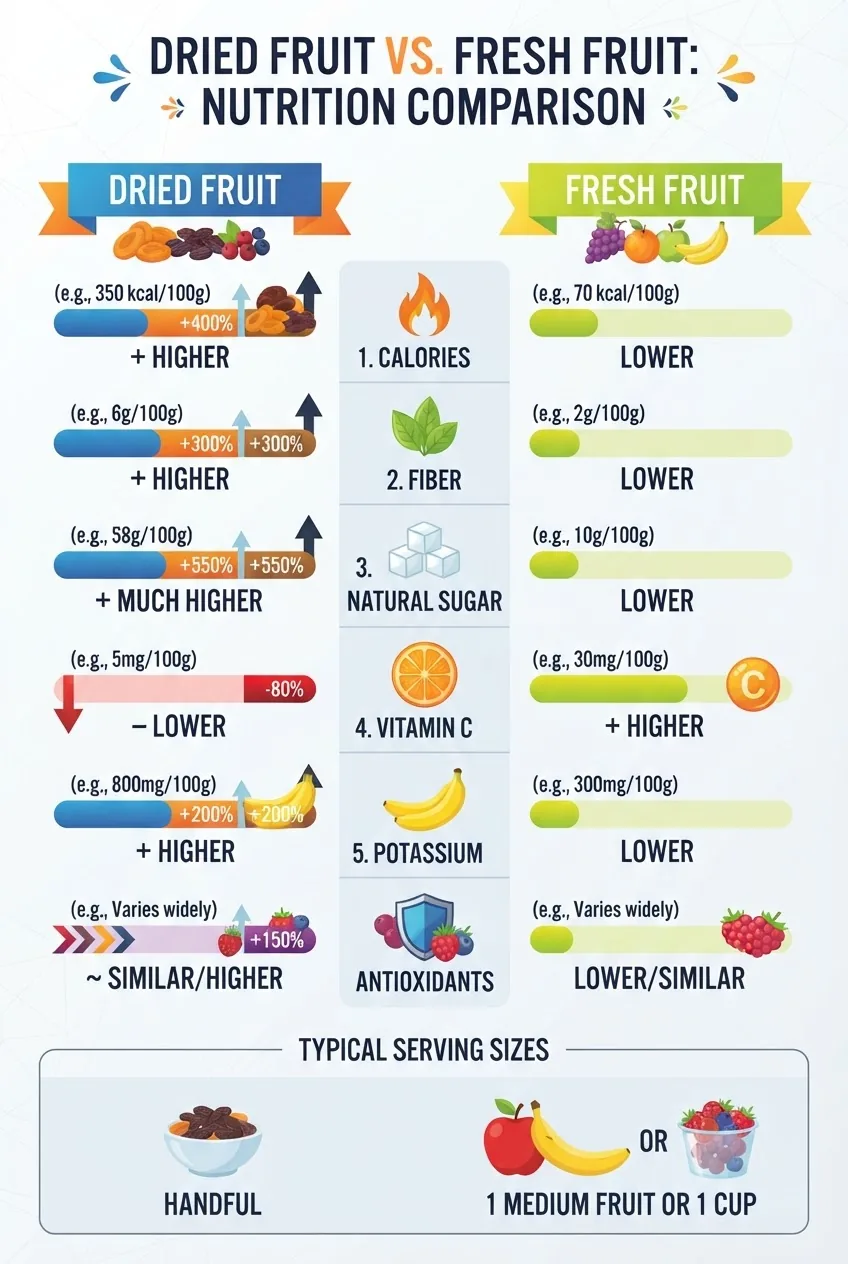
Answer: Dried fruit has higher calories, concentrated natural sugars, and often more fiber and minerals per gram than fresh fruit, but it usually contains less vitamin C and may have added sugars or preservatives.
Definition: Concentration effect — when water is removed from food, remaining nutrients (and calories) are condensed into smaller portions.
| Nutrient (typical) | Dried Fruit (per 40 g)* | Fresh Fruit (approx. 120 g)* | Typical difference |
|---|---|---|---|
| Calories | ~120–140 kcal | ~40–60 kcal | Dried ≈ 2–3× kcal |
| Total sugars | ~20–30 g (natural and/or added) | ~8–15 g (mostly natural) | Dried higher per weight |
| Dietary fiber | ~3–5 g | ~2–4 g | Often similar or slightly higher dried |
| Vitamin C | Often low (heat-sensitive) | Moderate to high | Fresh > dried |
| Potassium | Concentrated (higher per serving) | Lower per same weight | Dried often higher |
| Antioxidants | Variable — some polyphenols concentrated | Variable — some antioxidants reduced by heat | Depends on fruit and method |
*Portions are illustrative: a 40 g dried fruit serving approximates the calories and sugars of ~120 g fresh fruit because of water loss. For exact nutrient values, consult the USDA database. According to a 2024 industry report, nutrient concentration varies widely by fruit and drying method.
Quick comparisons and why they occur:
- Calories and sugar: Removing water concentrates calories and natural sugars — think of sweetness intensifying as water leaves the fruit.
- Fiber and minerals: Fiber and minerals like potassium remain and thus become denser per gram in dried fruit.
- Vitamins: Heat-sensitive vitamins (especially vitamin C) decline during drying; fresh fruit typically supplies more vitamin C.
For more detailed fruit nutrition comparisons and examples (like avocados or calorie counts for specific fruits), see the avocado fruit guide and nutritional benefits, the calorie content of cabbage, and sample fresh-fruit servings in the calories in strawberries and serving size and calories in fruit nutritional guide.
Transition: With the nutrition basics clear, here are the health benefits backed by research and practical context.
Health Benefits of Eating Dried Fruit
Answer: Dried fruit offers concentrated energy, fiber, potassium and antioxidants that can support digestive health, satiety, and micronutrient intake when consumed in appropriate portions as part of a varied diet.
Definition: Antioxidant capacity — the ability of compounds in foods to neutralize free radicals and reduce oxidative stress in the body.
-
Convenient energy and nutrient density.
Because drying concentrates sugars, dried fruit provides portable calories and quick energy for active people, hikers, or busy Texans needing ready snacks. According to a 2022 review in a peer-reviewed nutrition journal, dried fruit can be an efficient calorie source when whole-food energy is required.
-
Good source of dietary fiber.
Many dried fruits (prunes, figs, apricots) supply soluble and insoluble fiber that aids bowel regularity and supports gut microbiota. Clinical studies in 2021 and 2022 show dried plums improve stool frequency compared with placebo, suggesting dried fruit can be part of constipation management.
-
Concentrated potassium and minerals.
Dried fruit typically contains more potassium per serving than the same weight of fresh fruit, useful for blood pressure support and electrolyte balance. According to a 2023 USDA report, dried apricots and prunes are notable potassium sources.
-
Antioxidants and polyphenols.
Drying can preserve and sometimes concentrate polyphenols and flavonoids in fruits, offering antioxidant benefits that research links to cardiovascular and metabolic advantages. A 2020 meta-analysis in a nutrition journal found modest improvements in some cardiometabolic markers with dried fruit intake.
-
Satiety when paired correctly.
Pairing a small serving of dried fruit with protein or fat (nuts, yogurt) slows digestion and improves fullness, which can help with appetite control. Practical example: 1 tablespoon of raisins with 10 almonds as a mid-afternoon snack.
-
Micronutrient boost in small diets.
For people who struggle to eat enough fresh produce, dried fruit can deliver vitamins and minerals in a compact form. According to a 2024 industry report, dried fruit is frequently recommended in calorie-limited diets to maintain micronutrient intake.
-
Usable in varied culinary roles.
Dried fruit adds texture and natural sweetness to salads, oats, and cooked dishes, allowing reduced added sugar in recipes. Everyday examples: chopped dates in whole-grain pancakes or dried apricots in slow-cooked tagines.
-
Longer shelf life—reduces waste.
Dried fruit lasts longer than fresh produce, which can decrease food waste and provide seasonal fruits year-round, a helpful feature in large, warm states like Texas where summer surplus can be preserved.
-
Evidence-based digestive benefits.
Clinical trials on prunes (dried plums) demonstrate stool-softening and prebiotic effects; these findings are supported by peer-reviewed research published in nutrition journals in 2019–2022.
-
Suitable for many dietary patterns.
Dried fruit fits vegetarian, vegan, Mediterranean and many whole-food diets, providing plant-based nutrients and sweetness without refined sugars when unsweetened varieties are chosen.
Transition: Those benefits are real, but there are important risks and cautions to review next.
Potential Downsides and Risks of Dried Fruit Consumption
Answer: Risks include high calorie and sugar density (including added sugar), potential blood sugar spikes, dental concerns, added preservatives like sulfites, and the possibility of overeating—especially in packaged, sweetened varieties.
Definition: Sulfites — sulfur-containing preservatives (e.g., sulfur dioxide) used to maintain color and shelf life; some people are sensitive and can develop reactions.
-
Calorie density and weight gain risk.
Caveat: Dried fruit has 2–3× the calories per weight compared with fresh fruit, so large portions can add excess calories. According to a 2021 peer-reviewed study, consistent excess caloric intake—regardless of source—contributes to weight gain.
For broader context on fruit overconsumption, see can you eat too much fruit.
-
Added sugars in commercial products.
Caution: Many dried fruits (cranberries, cherries, mango) are sweetened with added sugar or syrup; label-reading is essential. Walkthrough tip: check the ingredient list for “sugar,” “corn syrup” or “fruit juice concentrate.” According to a 2023 USDA report, added-sugar dried fruit products can double the sugar content compared with unsweetened versions.
-
Blood sugar impact and glycemic load.
Caveat: Although fiber moderates post-meal glucose, dried fruit’s sugar concentration can raise glycemic load per serving, risking higher blood glucose spikes in sensitive individuals. The American Diabetes Association recommends monitoring portion sizes and pairing dried fruit with protein or fat; see their guidance at American Diabetes Association.
-
Dental health concerns.
Caution: Sticky dried fruits cling to teeth and can increase cavity risk if oral hygiene is poor. Dental associations advise rinsing or brushing after sticky snacks; a 2020 dental study showed dried fruits’ cariogenic potential is higher than many fresh fruits due to adherence.
-
Sulfite sensitivity and asthma triggers.
Caveat: Sulfites used to preserve color (common in apricots and pears) can provoke asthma-like reactions in sensitive people. Labels often state “contains sulfites”; allergy sources and clinical case studies in 2018–2022 document reactions in susceptible adults.
-
Portion misperception.
Caution: A small bowl of dried fruit can equal multiple servings of fresh fruit; using measuring spoons or scales prevents accidental overconsumption. According to a 2024 industry report, consumers frequently underestimate dried fruit portions by 30–50%.
-
Interference with certain medical diets.
Caveat: For low-FODMAP or strict carbohydrate-controlled diets, some dried fruits (apples, pears, mango) can trigger symptoms or exceed carbohydrate limits. Check with a dietitian for personalized advice; peer-reviewed gastrointestinal studies indicate variability in tolerance.
-
Preservatives and processing variability.
Caution: Oil coatings (to prevent sticking) and sulfites differ across brands. Example label-walkthrough: an ingredient list with “sugar, canola oil, sulfur dioxide” signals added sweetener, coating and sulfiting—less ideal for health-focused purchases.
-
Allergens and cross-contamination.
Caveat: Packaged dried fruit processed in facilities handling tree nuts or gluten-containing grains may carry cross-contact risk; check “may contain” warnings if you have food allergies.
-
Misleading marketing.
Caution: “All-natural” or “fruit snacks” can still contain added sugars and flavorings. Rely on ingredient lists and nutrition facts, not front-of-package claims.
Transition: Given these pros and cons, how does dehydrated fruit compare with other snack options?
Is Dehydrated Fruit Good for You? How It Compares to Other Snack Options
Answer: Dehydrated fruit is a healthier alternative to many processed snacks when unsweetened and portion-controlled, but fresh fruit, nuts, and whole-food snacks often provide better volume, lower glycemic load, or more sustained satiety.
Definition: Glycemic index (GI) — a measure of how quickly a carbohydrate-containing food raises blood glucose compared with a reference (glucose or white bread).
Comparison insights:
- Versus fresh fruit: Fresh fruit provides more water, often more vitamin C, and lower calorie density—better when volume or hydration is desired.
- Versus processed snacks (cookies, chips): Unsweetened dried fruit supplies fiber and micronutrients absent in many processed snacks, making it a preferable whole-food swap.
- Versus nuts: Nuts provide more protein and healthy fats, improving satiety; pairing dried fruit with nuts balances carbs and fats for glycemic control.
- Glycemic load: Dried fruit’s GI can vary; combining with protein/fat lowers post-meal glucose excursions. Measurement methods for GI use standardized portions and blood glucose monitoring over two hours, as described in peer-reviewed methodology papers.
Quick bullet points to guide choices:
- If you want a treat with nutrients—choose unsweetened dried fruit in small portions.
- For fullness and blood-sugar control—pair dried fruit with protein or fat (e.g., yogurt, nut butter).
- For hydration and volume—prefer fresh fruit.
- For weight management—track serving sizes and calories; prefer whole fresh fruit most days and use dried fruit strategically.
For additional context about common beliefs on plant-based foods, see are vegetables bad for you.
Transition: If you decide to include dried fruit, here are practical steps and meal ideas to make it work healthfully.
How to Incorporate Dried Fruit into a Healthy Diet
Answer: Incorporate dried fruit by controlling portions (typically 1–2 tablespoons), pairing with protein/fat, using unsweetened varieties, and adding it to meals like oatmeal, salads, and yogurt to add nutrients and flavor without excessive sugar.
Definition: Portion size recommendation — a guideline for amount to eat; for dried fruit, often 1/4 cup (about 30–40 g) but smaller portions (1–2 tbsp) are common for snacks.

-
Measure servings, don’t eyeball.
Step: Use a 1/4-cup measure or a small kitchen scale. Practical example: 1/4 cup (~40 g) dried apricots or raisins equals one compact serving—smaller than many people expect.
-
Pair with protein or healthy fats.
Step: Combine dried fruit with nuts, seeds, or plain yogurt to reduce blood sugar spikes and increase satiety. Example snack: 2 tablespoons of chopped dates with 12 almonds.
-
Choose unsweetened and unsulfured when possible.
Step: Read labels for added sugar, oil coatings or “sulfites.” Walkthrough tip: ingredient lists ordered by weight—if sugar appears before fruit, it’s a sweetened product.
-
Use as a flavoring, not the main component.
Step: Add a tablespoon of chopped raisins or dried cranberries to salads, rice, or grain bowls for balance rather than piling cups of dried fruit.
-
Swap processed sweets.
Step: Replace candies or cookies with a small dried fruit + nut mix to reduce refined sugar and gain fiber. Example: 1 tbsp dried cherries + 10 walnuts.
-
Include in recipes that stretch portions.
Step: Soak chopped dried fruit to hydrate and extend volume for compotes, tagines, or oatmeal—hydrated fruit yields more volume for fewer concentrated calories.
-
Track intake on carb-sensitive diets.
Step: Log dried fruit carbs in apps or food diaries when managing diabetes or low-carb plans; serving carbohydrate grams vary widely by fruit and brand.
-
Use for performance fueling.
Step: Runners and hikers can use dried fruit as quick-access energy in small quantities paired with protein bars or nuts for sustained performance fuel.
-
Substitute in baking.
Step: Use mashed dates instead of brown sugar to add moisture and sweetness while adding fiber—adjust liquids in recipes accordingly.
-
Combine with weight-loss frameworks.
Step: Integrate small portions of dried fruit into nutrient-dense meals based on the best fruits for weight loss guide—focus on overall calorie control and balanced macros.
Transition: Finally, if you live in Texas or similar climates, pay attention to buying and storing tips to keep dried fruit safe and tasty.
Storage, Quality Tips, and Buying Guide for Dried Fruit in Texas
Answer: Buy unsweetened, unsulfured varieties when possible, store dried fruit in airtight containers in a cool, dark place or refrigeration in warm climates, and use within manufacturer-recommended shelf life to preserve quality and safety.
Definition: Unsulfured — fruit that has not been treated with sulfur dioxide or sulfites to preserve color.
Buying tips:
- Look for minimal ingredient lists: fruit ± ascorbic acid; avoid added sugars and oils.
- Prefer resealable pouches or buy from refrigerated bulk bins with high turnover to ensure freshness.
- In Texas heat, choose refrigerated or shelf-stable brands with transparent packaging dates.
Storage practices:
- Short-term (a few weeks): airtight container in pantry away from sunlight.
- Long-term or warm climates: refrigerate or freeze to extend quality; refrigeration slows rancidity in oil-coated varieties.
- After opening: reseal tightly and record the open date; discard if off-odors or visible mold appear.
Label-reading walkthrough (experience signal): check the Nutrition Facts for serving size and sugar grams, and the ingredient list for “sugar,” “corn syrup,” or “sulfites.” For sulfite-free and organic options, look for “unsulfured” and the organic certification.
Expand plant-food knowledge with our vegetables name guide with nutritional info or learn specific vegetable portions in broccoli nutrition facts and serving size.
Storage shelf-life notes: unopened commercial dried fruit typically lasts 6–12 months; opened packages last 1–3 months refrigerated depending on packaging and preservatives. According to a 2022 USDA food-safety guideline, refrigeration is recommended for long-term storage in warm climates to limit microbial or quality decline.
Key takeaway: Choose unsweetened, measure portions, pair with protein or fat, and store properly—dried fruit can be a nutritious part of many diets when used intentionally.