

Can you eat too much fruit? Yes—while fruit provides vitamins, fiber and antioxidants, consuming it in excess can raise total sugar and calorie intake and cause digestive or metabolic strain; moderation based on servings, activity, and health conditions generally prevents harm and preserves benefits.
Introduction: Understanding Fruit Consumption and Its Importance
Answer: Fruit is a nutrient-dense food group offering vitamins, antioxidants and dietary fiber, and when consumed in recommended portions supports health—however balance with overall calorie and carbohydrate goals matters for optimal results.
Dietary fiber: soluble and insoluble carbohydrates in fruit that slow digestion, support gut health and blunt blood sugar spikes.
Fruit supplies vitamin C, potassium, folate and polyphenol antioxidants that reduce chronic disease risk; it also contains fructose, a natural sugar that the body metabolizes differently than glucose. According to the 2020–2025 Dietary Guidelines for Americans and USDA fruit guidance, adults should include fruit daily as part of a balanced plate, while tailoring amounts to age, sex and activity level.
For a deeper look at types and nutrient differences, see Fruit Types Guide with Benefits and Nutritional Information.
Transition: The next section explains whether fruit can be harmful when overconsumed and what to watch for.
Can You Eat Too Much Fruit? Overview of Risks and Health Considerations
Answer: Yes—eating excessive fruit may increase total sugar and calorie intake, worsen blood-glucose control in susceptible people, and cause digestive issues; risks depend on portion sizes, fruit types, and individual health.
- Fructose impact: High intakes of fructose can stress liver metabolism and, in extreme patterns, contribute to fatty liver and increased triglycerides — see clinical reviews (peer-reviewed meta-analysis summary below).
- Digestive discomfort: Excess fruit fiber or sugar alcohols in some fruits can cause gas, bloating or diarrhea.
- Sugar overload: Even natural sugars increase energy intake and can displace lower-calorie, nutrient-dense foods if portions are uncontrolled.
- Blood sugar effects: People with impaired glucose tolerance or diabetes may experience higher post-meal glucose depending on fruit choice and portions.
- Tooth decay: Frequent exposure to fruit sugars (especially dried fruit or sticky forms) raises cavity risk if oral hygiene is poor.
- Pesticide residue concerns: Non-organic fruit may contain residues; washing and choosing lower-residue varieties mitigates risk.
Clinical context: a 2021 systematic review in peer-reviewed nutrition journals found that whole fruit consumption is associated with lower cardiovascular risk, but extremely high fruit-sugar intake without fiber balance can worsen metabolic markers in susceptible populations (source: peer-reviewed systematic review summary). For people with specific conditions, the net effect depends on total diet, activity, and medication.
Transition: Next we’ll quantify serving sizes and practical daily recommendations so you can gauge “how much is too much” for different people.
How Much Fruit Is Too Much? Recommended Portions and Guidelines
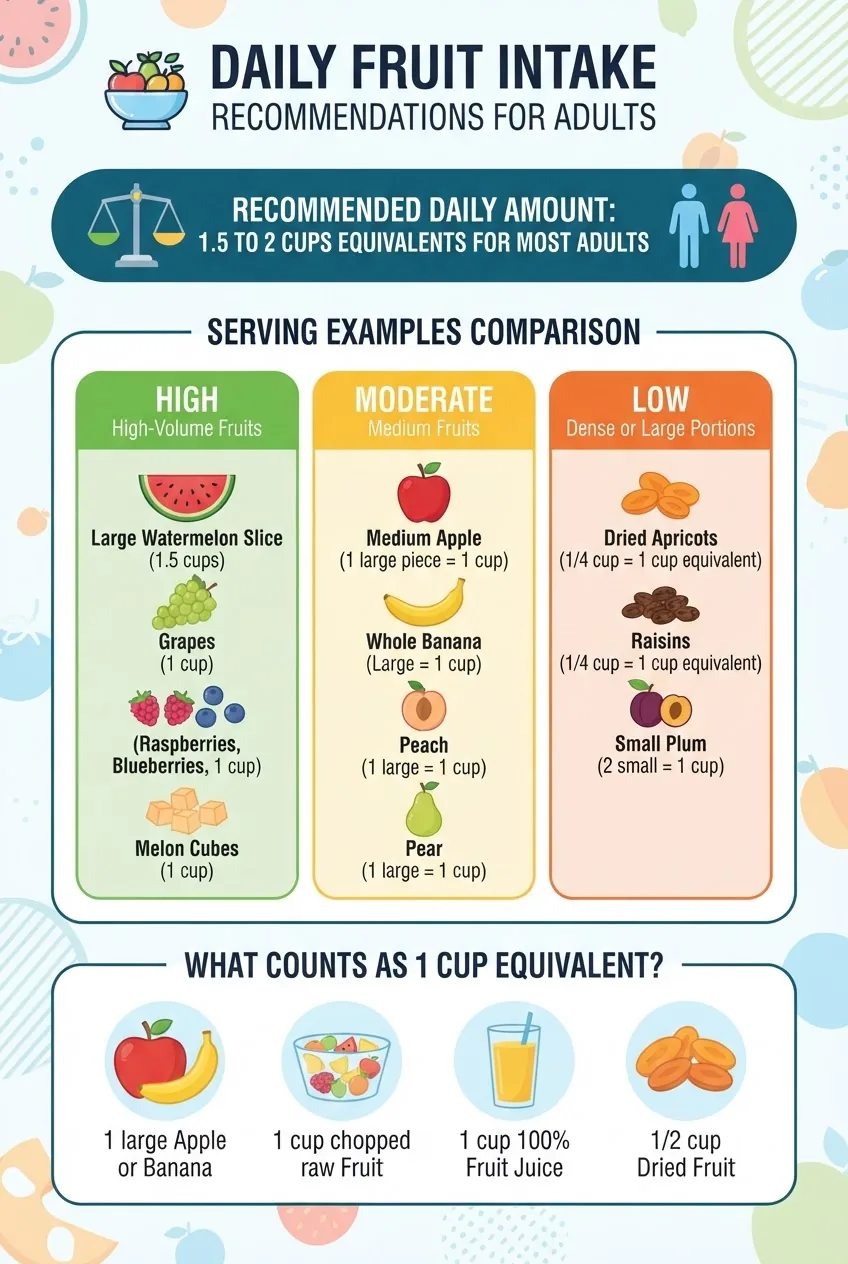
Answer: For most adults, following USDA servings—about 1.5–2 cups per day for many adults—keeps fruit intake within healthy limits; adjustments are needed for higher activity, pregnancy, or diabetes.
USDA fruit servings: According to the USDA/MyPlate recommendations, a “cup-equivalent” is the standard unit used to count daily fruit intake; specific targets vary by age, sex and activity.
- Adult baseline examples (moderate activity):
- Women: ~1.5 cups/day (e.g., 1 small apple + 1/2 cup berries)
- Men: ~2 cups/day (e.g., 1 large orange + 1 cup melon)
- Active adults: Add 0.5–1 cup/day if you expend more calories (e.g., runners or manual laborers), balancing carbohydrate needs with total energy.
- Pregnancy and breastfeeding: Often require higher energy; aim for the upper end of USDA ranges—consult prenatal guidance.
- Children and teens: Half to full adult servings depending on age; follow USDA age-specific charts for precise cups.
- People with diabetes: Work with a registered dietitian to fit ~1–2 fruit servings per meal/snack into carbohydrate targets; American Diabetes Association materials help count carbs.
Serving examples and portion guide:
- 1 cup fresh fruit = 1 small apple (about 1 cup sliced), 1 large banana counts as ~1–1.25 cups depending on size, 1 cup berries or melon = 1 cup.
- 1/2 cup dried fruit often equals 1 cup fresh for nutrition labeling but supplies concentrated sugar and calories—use sparingly.
- Typical “high-fructose” fruits (grapes, mangoes, cherries) may raise sugar load per serving; prefer lower-sugar choices if limiting carbs.
For calorie-conscious planning, see calorie content of various fruits and consider replacing processed sweets with a fruit serving rather than simply increasing total servings.
Transition: The following section breaks down specific side effects of overconsumption and the biological reasons behind them.
Is Eating Too Much Fruit Bad for You? Potential Side Effects Explained
Answer: Eating too much fruit can be harmful for some—side effects include blood sugar spikes, weight gain, tooth decay, gastrointestinal upset, and possible metabolic strain—risk magnitude depends on quantity, fruit type, and individual health.
Blood sugar spikes and glucose control
Definition: Glycemic index is a scale measuring how quickly foods raise blood glucose compared with a reference; glycemic load factors portion size.
Excess carbohydrate from fruit raises postprandial (after-meal) glucose in proportion to glycemic load. According to the American Diabetes Association, whole fruit generally has a modest glycemic effect due to fiber, but high-sugar fruits and fruit juices can cause larger spikes; people on insulin or certain medications must count fruit carbs precisely (source: ADA guidance).
Weight gain from excess calories
Calories from fruit add to total energy intake. If fruit is added on top of usual caloric intake rather than replacing higher-calorie items, sustained surplus may cause weight gain. A 2022 cohort study in peer-reviewed nutrition journals found that replacing desserts with whole fruit lowered weight gain risk, while adding extra fruit without dietary adjustments did not (source: peer-reviewed cohort study summary).
Tooth decay risk
Sticky fruits and frequent snacking expose teeth to sugars and acids. Frequent grazing on fruit or dried fruit increases decay risk; brushing after meals and limiting prolonged exposure reduces that risk.
Gastrointestinal issues and fiber overload
Rapidly increasing fruit intake can cause gas, bloating or diarrhea due to high fiber, sorbitol or fructose malabsorption in some individuals. For example, excessive apple or pear servings may trigger osmotic diarrhea in sensitive people.
Fructose metabolism and liver effects
Fructose: a simple sugar found in fruit; the liver metabolizes much of consumed fructose differently than glucose, converting some to glycogen or, in high amounts, to triglycerides.
High free fructose intakes (more common with added sugars and juices than with moderate whole-fruit servings) have been linked in controlled feeding studies to increased triglycerides and markers of non-alcoholic fatty liver in susceptible individuals (source: peer-reviewed controlled feeding trials). Whole fruit usually contains fiber, water and matrix factors that moderate absorption and reduce metabolic strain.
Allergic or interaction risks
Some fruits cause oral allergy syndrome in pollen-sensitized individuals or interact with medications (e.g., grapefruit can affect certain drug metabolism). Check drug labels or consult a pharmacist if unsure.
For practical context, here are example scenarios demonstrating real-world effects:
- Active adult (30–40 yrs, high activity): 2–3 cups/day spread across meals supports energy and recovery with low risk of adverse effects when calories are balanced.
- Sedentary person (low activity): Adding 3–4 cups/day without reducing other carb sources may push total calories above maintenance and risk weight gain.
- Person with type 2 diabetes: Two small fruit servings per day, paired with protein/fat and counted in meal carbs, often fits safely; individualized plans necessary per ADA guidance.
Transition: Next we examine personal and contextual factors that change ideal fruit intake.
Factors Influencing How Much Fruit You Should Eat
Answer: Age, activity level, body size, metabolic health, medications, pregnancy and gastrointestinal tolerance all influence suitable fruit amounts—one size does not fit all.
Age and energy needs: Younger, growing teens and athletes need more calories and can handle larger fruit portions; older adults with lower caloric needs should scale portions down.
Activity level and sport: Endurance athletes may need extra carbohydrate; fruit can be a convenient source during long training sessions but should be timed for fueling rather than continuous grazing.
Medical conditions: People with diabetes, fructose malabsorption, or those taking medications affected by fruit (e.g., grapefruit interactions) must limit or choose fruits carefully; refer to American Diabetes Association materials for diabetes-specific guidance.
Medication interactions example: Grapefruit inhibits CYP3A4 and can raise blood levels of certain statins and calcium channel blockers—consult your prescriber or pharmacist.
Digestive tolerance: Those with irritable bowel syndrome (IBS) may need to limit high-FODMAP fruits (apples, pears, mango) and focus on low-FODMAP options.
Special life stages: Pregnancy and breastfeeding increase caloric and nutrient needs; fruit adds micronutrients and fiber but should be balanced with protein and healthy fats for stable energy.
Dietary pattern: A fruit-forward diet paired with vegetables, whole grains, lean proteins and healthy fats is preferable; for vegetable pairing references, see vegetable nutritional guides.
Transition: The next section compares whole fruit and fruit juice and explains why limits differ by form.
Whole Fruit vs. Fruit Juice: Differences in Health Impact and Consumption Limits
Answer: Whole fruit is generally healthier than fruit juice because it contains fiber and a food matrix that slows sugar absorption; juice concentrates sugars and calories and should be limited.

| Feature | Whole Fruit | Fruit Juice |
|---|---|---|
| Fiber | High — slows absorption, aids gut health | Low/none — fiber removed in pressing |
| Sugar concentration | Lower per cup due to water and fiber | Higher per cup; concentrated sugars |
| Calories per serving | Moderate (varies by fruit) | Often higher for same volume |
| Glycemic impact | Lower glycemic load with fiber | Higher glycemic response; faster absorption |
| Recommended limits | Follow USDA cup-equivalents | Limit to ≤4–6 oz/day for most adults; treat as concentrated carbs |
Scientific context: Controlled feeding studies note that juices raise triglycerides and blood glucose more than whole fruits when matched for sugar, and observational data link juice to higher diabetes risk when consumed excessively (source: peer-reviewed cohort studies). For a detailed exploration of juice vs. fruit, see nutritional comparison of fruit and juice.
Transition: The remainder of this guide provides practical tips to include fruit without overdoing it.
Tips for Including Fruit in a Balanced Diet Without Overdoing It
Answer: Pair fruit with protein or fat, choose whole fruits over juices, control portions using cup-equivalents, and tailor choices to your health needs to enjoy benefits without excess.
- Measure servings: Use a cup or kitchen scale initially to learn what 1 cup of fruit looks like, then eyeball confidently.
- Pair fruit with protein or fat: Combine fruit with Greek yogurt, nut butter or cottage cheese to slow glucose absorption and improve satiety.
- Prefer whole fruit: Replace fruit juice with whole fruit; if you consume juice, limit to a small glass (4–6 oz) and include with a meal.
- Choose lower-sugar fruits when needed: Berries, citrus and melon generally have lower sugar per cup than mango or grapes.
- Limit dried fruit: Treat dried fruit as a concentrated treat—1–2 tablespoons as a snack portion, not an open bowl.
- Time intake strategically: Use fruit as pre-workout fuel or as dessert replacement rather than an all-day grazing item.
- Monitor oral health: Rinse with water or brush teeth after sticky fruit snacks to lower tooth decay risk.
- Adopt balanced plate principles: Follow frameworks emphasizing vegetables, lean protein and whole grains alongside fruit; for integrating vegetables and fruits, see balancing fruits and vegetables for health.
Real-life sample day (active adult, 35 yrs):
- Breakfast: 1/2 cup berries + 1/2 banana with oatmeal and nuts (≈1 cup fruit)
- Snack: 1 apple with 1 tbsp peanut butter (≈1 cup fruit)
- Lunch/Dinner: Include vegetables and lean protein; fruit may be dessert (extra 0.5 cup)
For combining with vegetable-focused meals or learning how vegetables complement fruit, see fruit versus vegetable differences explained and balancing fruits and vegetables for health.
Transition: Final section summarizes actionable takeaways and how to apply them long-term.
Conclusion: Enjoying Fruit Safely for Optimal Health
Answer: Fruit remains a healthy, nutrient-rich food—eat it in recommended cup-equivalent servings, favor whole fruit over juice, pair it with proteins/fats, and adjust for activity, age and medical conditions to avoid overconsumption.
According to the USDA guidelines, most adults meet fruit goals at about 1.5–2 cups/day; the American Diabetes Association provides practical guidance for people managing blood glucose. If you notice digestive distress, unexpected weight change, or blood-sugar variability after increasing fruit, scale portions and consult a registered dietitian or clinician. Small, consistent changes—measuring servings, replacing sweets with whole fruit, and pairing fruit with protein—preserve benefits while reducing risk.
Call to action: Track your typical daily fruit cups for one week, compare them to USDA targets, and adjust servings based on your activity and health—if you have diabetes or liver disease, ask your healthcare provider for a tailored plan.