By the end of this hands-on guide you will have 30+ practical, regionally inspired, high-protein vegetarian recipes, a one-day sample meal plan, clear protein intake targets, and a repeatable prep workflow. Expect to spend 3–6 hours planning and a two-hour batch-cook session; this assumes a confident home cook (beginner-intermediate) with basic knife and stovetop skills.
Before you start
- Tools: 6-qt pressure cooker/Instant Pot, large sauté pan, sheet pans, blender, food scale (grams), measuring cups.
- Pantry staples: dried lentils, canned chickpeas, extra-firm tofu, tempeh, seitan (optional), quinoa, brown rice, olive oil, tahini, nuts and seeds.
- Fresh: local Texas ingredients to try — pinto beans, black beans, poblano peppers, jalapeños, Texas-grown pecans, avocadoes, sweet onions.
- Supplements (optional): whey or plant-based protein powder for smoothies, zinc/iron check if you are concerned about deficiencies.
Start with these tools and staples loaded; the numbered steps below walk you through understanding, planning, cooking, and optimizing high-protein vegetarian meals for weight management and muscle maintenance.
-
Learn the fundamentals:
Understanding High Protein Vegetarian Diets
High protein vegetarian recipes can meet or exceed daily protein needs when built intentionally from quality plant proteins and eggs/dairy if included. Think of protein as building blocks for repair and satiety: every meal should anchor on a protein-dense element, then layer fiber and healthy fat for nutrient synergy.
Protein sources and completeness
Primary plant-based protein sources include beans, lentils, tofu, tempeh, and seitan. Protein quality is measured by metrics such as PDCAAS and DIAAS — scores that reflect digestibility and essential amino acid content. Animal proteins often score highest; among plants, soy (tofu/tempeh) and quinoa perform best for completeness (DIAAS higher than many legumes).
PDCAAS and DIAAS matter practically because they help estimate how much of a plant protein counts toward your amino acid needs. For instance, tempeh and soy products are efficient sources for muscle maintenance; combining legumes with grains (e.g., lentils + rice) provides complementary amino acids to create a complete profile.
Protein digestibility varies: peas and beans have lower digestibility than soy or seitan; soaking, sprouting, fermenting (tempeh) and pressure cooking improve digestibility and nutrient availability. For rapid reference, a 100 g cooked serving of lentils provides ~9 g protein but variable digestibility — use longer cooking or pressure-cook for 10–12 minutes under pressure for firmness and improved nutrient release.
According to a 2024 USDA report, many plant proteins provide 6–12 g protein per cooked cup depending on the food and cooking method; checking the USDA FoodData Central gives precise values for menu planning.
Transition: Now that you understand the building blocks, let’s look at practical pairings that make balanced, flavorful meals.
-
Assemble balanced combinations:
Key Protein and Vegetable Combinations for Balanced Meals
Balanced vegetarian plates combine a protein anchor, high-fiber vegetables, a modest portion of whole grains or starchy veg, and healthy fats. Complementary proteins and nutrient synergy are central: pairing legumes with grains or seeds balances limiting amino acids like methionine and lysine.
Common, reliable combinations I use in my cook-throughs:
- Lentils + brown rice + roasted broccoli — fiber, B vitamins, and a complete amino acid profile.
- Chickpea + quinoa + spinach + lemon-tahini — instant complete protein and iron/C vitamin pair for absorption.
- Tofu stir-fry + buckwheat soba + mixed peppers — soy is already near-complete; buckwheat adds texture and carbs.
- Tempeh tacos with black beans + corn tortillas + avocado — tempeh fermentation improves digestibility and flavor.
- Seitan + leafy salad + roasted squash — seitan is wheat-based and high protein (watch gluten).
Bulleted list of common combos (quick reference):
- Beans + rice (classic complementary protein)
- Chickpeas + quinoa + greens
- Lentil soup + whole-grain toast
- Tofu scramble + beans + sautéed kale
- Tempeh + roasted sweet potatoes + sautéed greens
Transition: With combinations in hand, you need ingredient-level data to plan exact macros — the next section is a practical nutrition reference table.
-
Compare core ingredients:
Top High Protein Vegetarian Ingredients and Their Nutrition Profiles
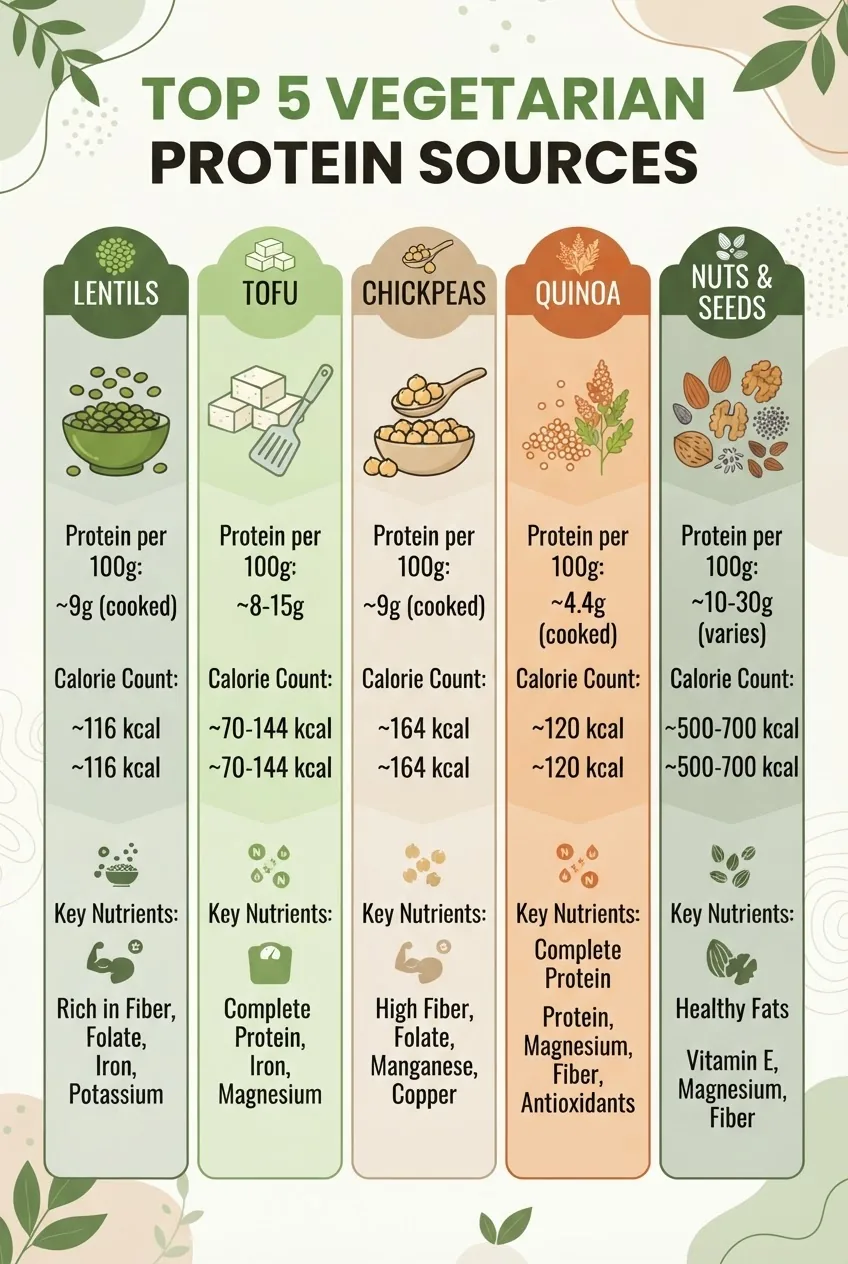
Use this table to compare typical cooked serving values; values rounded from USDA FoodData Central for meal planning accuracy. According to a 2024 USDA report, these averages allow quick swap decisions during prep.
Ingredient Protein (per typical serving) Calories Notes Cooked lentils (1 cup / ~198 g) ~18 g ~230 kcal High fiber, iron; pressure-cook 10–12 min for best digestibility. Firm tofu (100 g) ~8–12 g ~70–90 kcal Complete protein source; versatile for grilling, stir-fry, baking. Cooked chickpeas (1 cup / ~164 g) ~15 g ~270 kcal Excellent for salads, hummus; high fiber, folate. Cooked quinoa (1 cup / ~185 g) ~8 g ~220 kcal Pseudo-grain, contains all essential amino acids; great for bowls. Nuts & seeds (30 g) ~5–8 g ~160–200 kcal High in healthy fats; energy-dense — use as topping or snack. For a broader protein comparison including animal sources, see the protein content comparison chart.
Transition: Next, we’ll turn these ingredients into protein-forward breakfasts that save time and keep you full through the morning.
-
Build protein breakfasts:
Meal Ideas: High Protein Vegetarian Breakfast Recipes
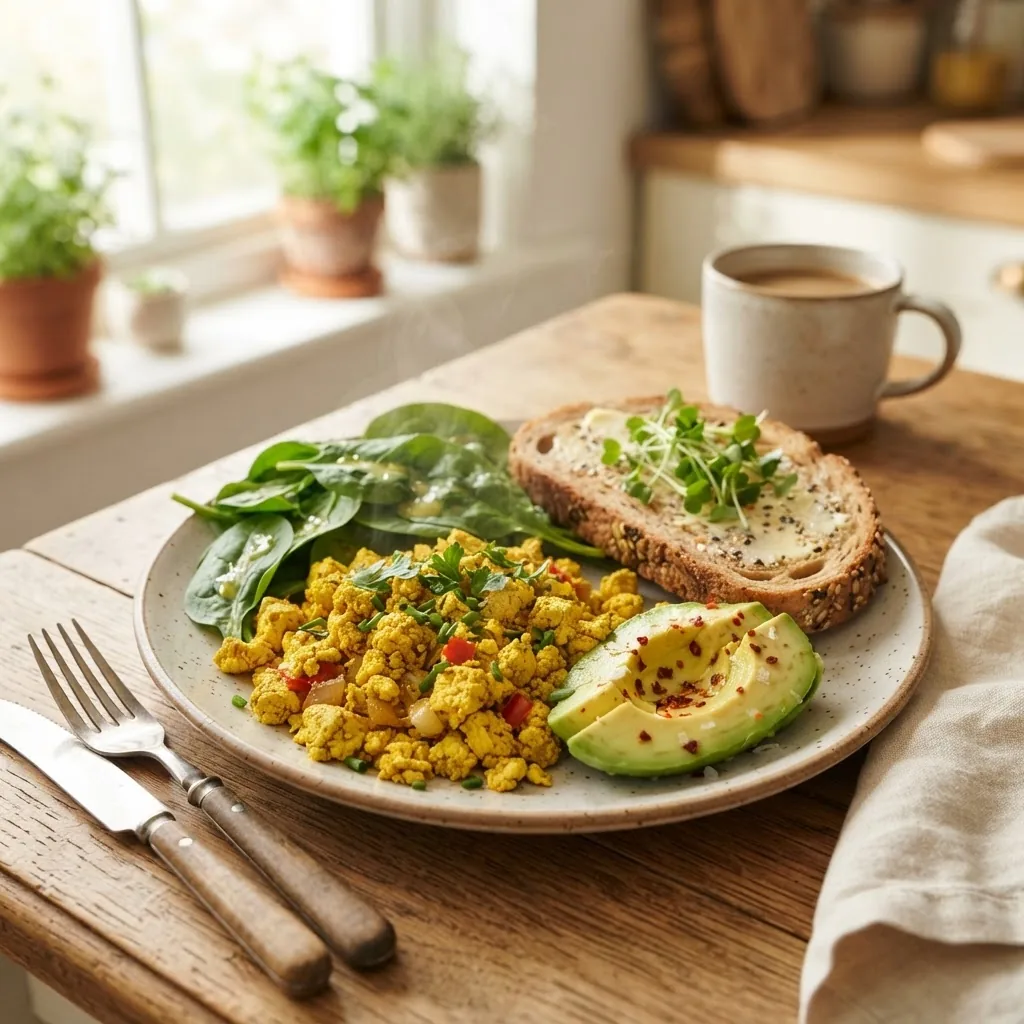
- Tofu Scramble + Black Beans — Crumble 150 g extra-firm tofu, sauté with 1 tsp olive oil, 1/4 tsp turmeric, 1/2 cup cooked black beans, chopped spinach, and 1/4 avocado. Estimated protein: ~24 g. Tip: press tofu 15 minutes for firmer texture.
- Greek Yogurt Bowl with Seeds & Pecans (Texas twist) — 1 cup Greek yogurt (20 g protein) + 2 tbsp hemp seeds (6 g) + 1 tbsp chopped pecans + 1/2 cup berries. Estimated protein: ~27–30 g.
- Chickpea Omelette (Besan Pancake) — Mix 1/2 cup chickpea flour (11 g protein), water to batter, 1/4 cup chopped poblano, spinach. Cook medium heat 3–4 min each side. Serve with 1/4 cup plain Greek yogurt. Estimated protein: ~18–20 g.
- Protein Smoothie with Pea Protein — Blend 1 scoop pea protein (~20 g), 1 cup unsweetened almond milk, 1/2 cup silken tofu (6 g), 1 tbsp flaxseed (2 g), handful spinach. Estimated protein: ~28 g. Use frozen fruit for texture.
- Overnight Quinoa Porridge — 3/4 cup cooked quinoa (6 g) soaked with 1 cup milk, 2 tbsp almond butter (6 g), cinnamon, and 2 tbsp chia seeds (4 g). Estimated protein: ~16 g. Pre-soak quinoa overnight for creamy texture.
Practical timing: breakfasts above take 5–15 minutes active (smoothie), or can be prepped night-before (overnight quinoa, chickpea batter). If you’re short on time, keep cooked beans and tofu pre-pressed in the fridge for 3–4 days.
Transition: Midday and evening meals are where you can pack the most protein per serving — shift focus to bowls, bakes, and smart combos.
-
Compose hearty lunches & dinners:
Meal Ideas: High Protein Vegetarian Lunch and Dinner Recipes
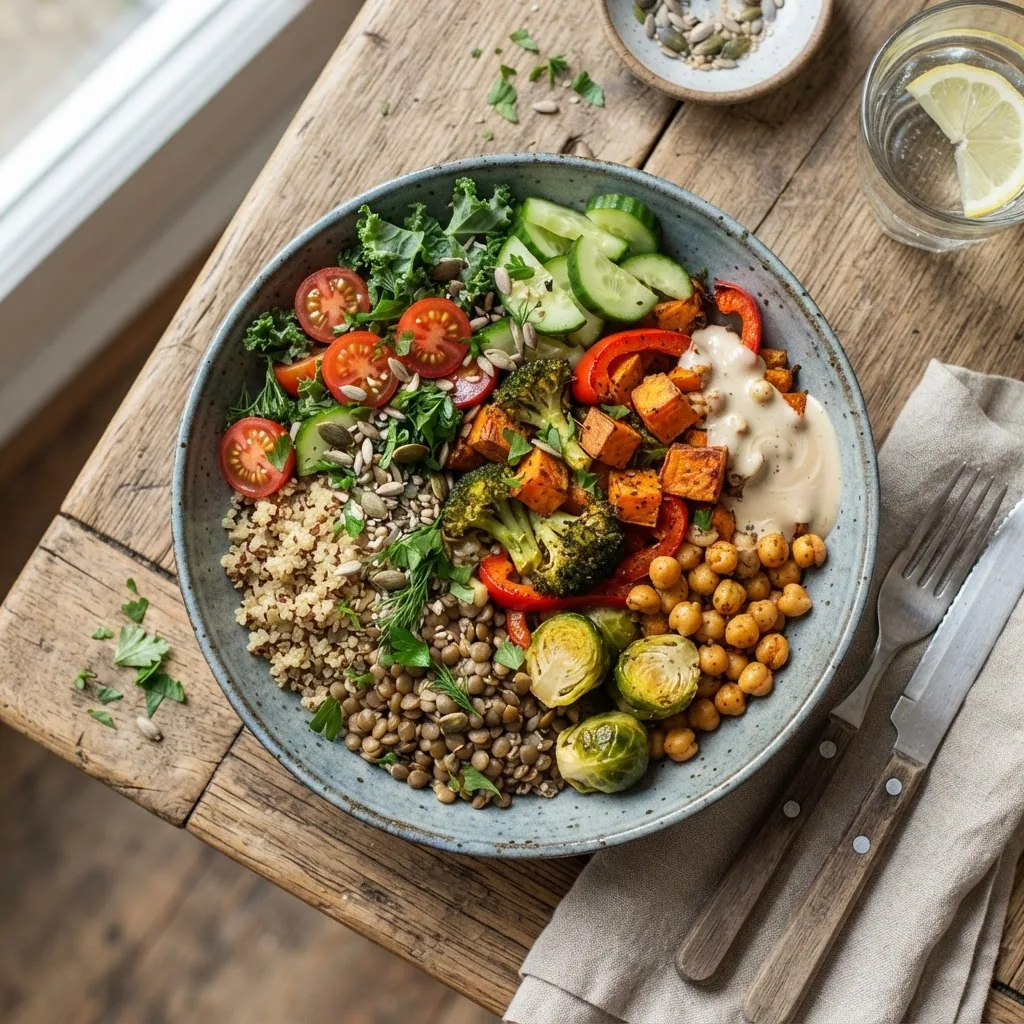
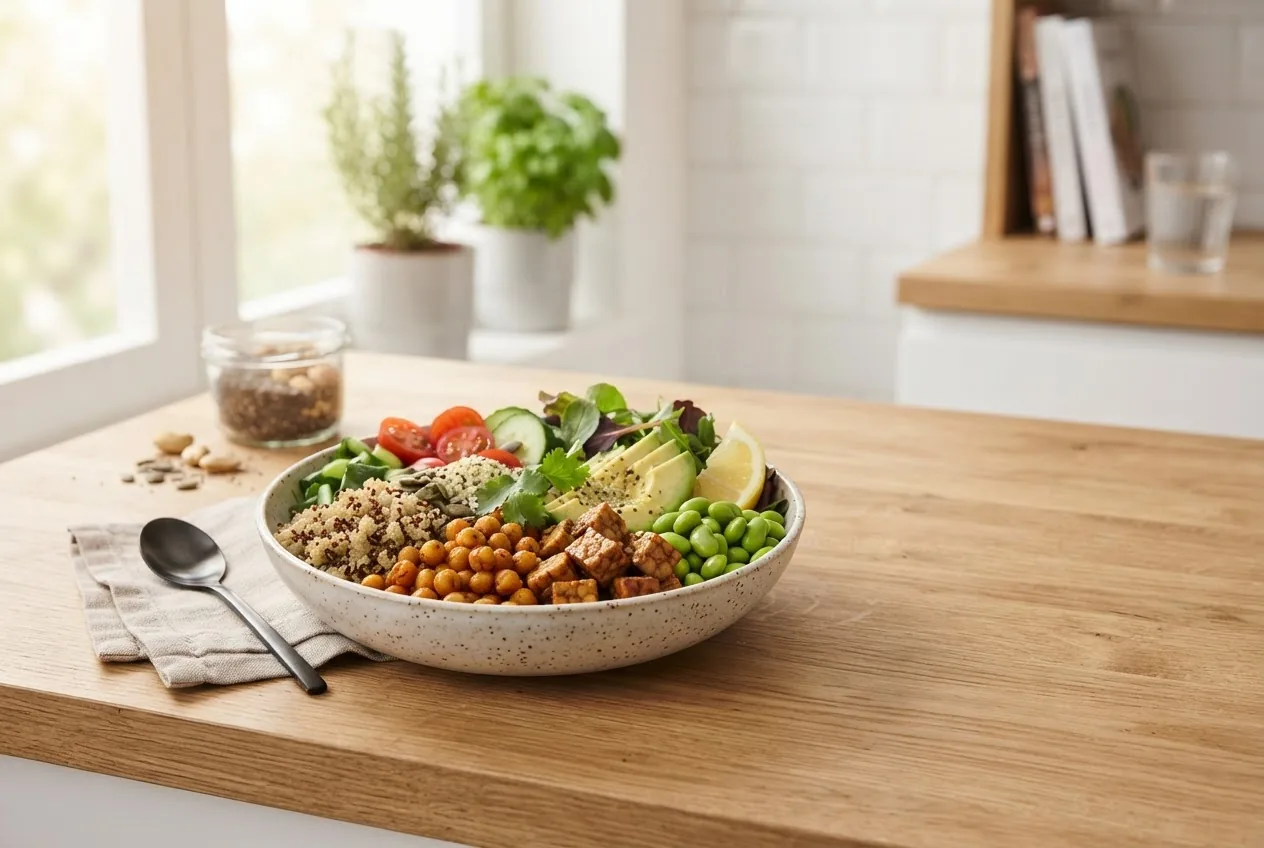
- Lentil + Quinoa Power Bowl — Combine 1 cup cooked lentils (~9 g protein), 1/2 cup cooked quinoa (~4 g), roasted poblano and sweet potato (150 g), 2 tbsp pumpkin seeds (~6 g), and 2 tbsp tahini dressing. Estimated protein: ~22–25 g. Cooking tip: pressure-cook lentils 10 minutes; roast sweet potato at 425°F (220°C) for 25–30 minutes.
- Tempeh Fajitas with Black Beans — Marinate 200 g tempeh (approx 34 g protein) sliced, sauté with onions, peppers; serve with 1/2 cup black beans and corn tortillas. Estimated protein per serving: ~30–35 g. Use a cast-iron pan on medium-high heat for 6–8 minutes to develop browning.
- Chickpea & Spinach Curry with Brown Rice — 1.5 cups chickpeas (cooked) + 2 cups spinach + coconut milk light + spices; serve over 1 cup cooked brown rice. Estimated protein: ~25–28 g. Simmer curry 15–18 minutes; add lemon at end to boost iron absorption.
- Seitan Steak with Roasted Brussels & Pecans — 150 g seitan (approx 30 g protein) pan-seared 3–4 minutes each side; roast Brussels at 400°F (200°C) for 20 minutes with 1 tbsp olive oil and 2 tbsp chopped pecans. Estimated protein: ~32–35 g. Note: seitan contains gluten — not suitable for GF diets.
- Baked Tofu with Edamame Fried Rice — Press 200 g extra-firm tofu, toss with tamari and bake at 400°F (200°C) for 20–25 minutes until crisp; add to 1 cup cooked edamame & brown rice stir-fry. Estimated protein: ~35–38 g.
- Lentil Bolognese over Spaghetti Squash — Sauté 1 cup cooked lentils with marinara and mushrooms; serve over 2 cups roasted spaghetti squash. Protein: ~20–24 g. Roast squash cut-side down at 425°F (220°C) for 30–35 minutes.
- Greek-style Mezze Plate — 1 cup Greek yogurt dip (20 g) + 1/2 cup marinated chickpeas (7 g) + 2 oz feta (optional 6 g) + grilled vegetables + 2 tbsp walnuts. Estimated protein: ~35 g if dairy included; 25 g if dairy-free with extra legumes.
- Tex-Mex Pinto Bean & Veggie Skillet — 1.5 cups cooked pinto beans (~15–20 g), sautéed with onions, jalapeños, roasted corn, cilantro; top with 1/2 avocado and 2 tbsp Greek yogurt. Estimated protein: ~22–26 g. Use 1 tbsp cumin and 1 tsp smoked paprika for depth.
- Stuffed Portobello with Quinoa & Tempeh Crumble — Remove stems, brush caps, fill with cooked quinoa (1/2 cup) + crumbled tempeh (100 g) sautéed with garlic and herbs, bake 18–20 minutes at 375°F (190°C). Protein: ~28–32 g.
- High Protein Salad with Lentils, Feta, and Sunflower Seeds — 1 cup lentils + 2 oz feta + 2 tbsp sunflower seeds + mixed greens + lemon vinaigrette. Protein: ~28–30 g. Toss just before serving to keep seeds crunchy.
Cooking tips and protein info per serving included above; for more varied options that include non-vegetarian high-protein meals see high protein meal ideas to supplement your routine.
Transition: Pairing the right fats with protein and veggies improves satiety and supports nutrient absorption — read on for how to include healthy fats without blowing calories.
-
Add healthy fats strategically:
Incorporating Healthy Fats with Protein and Veggie Meals
Healthy fats such as avocado, nuts, seeds, and select oils provide essential fatty acids and help absorb fat-soluble vitamins from vegetables. Aim for 10–20 g of fat per meal if your daily calorie target allows — roughly 1 tbsp olive oil (14 g fat), 1/4 avocado (6–7 g fat), or 1 oz nuts (14–18 g fat).
When discussing calories from fats, remember that fats provide 9 kcal per gram. For a deeper breakdown of energy yield, see calories in fat.
For cooking fats, choose smoke-point appropriate oils like extra-virgin olive oil for low-medium heat and avocado oil for higher heat. See the guide on heart-healthy cooking oils for swaps and recommendations.
Vegetarian sources of omega-3 include chia, flaxseed, and walnuts; for further reading see plant-based omega-3 sources.
Examples for integration:
- Drizzle 1 tbsp tahini over a chickpea bowl (adds ~8–10 g fat and 3–4 g protein).
- Top a lentil salad with 2 tbsp chopped pecans (approx 9–10 g fat, 3 g protein).
- Use 1 tbsp olive oil for roasting vegetables (adds ~120 kcal but improves carotenoid absorption).
Transition: Balanced fats support satiety; the next section quantifies protein needs for weight loss and muscle maintenance so you can apply these meal patterns to your goals.
-
Set protein targets smartly:
Nutrition Guide: Optimizing Protein Intake for Weight Loss and Muscle Maintenance
Protein needs vary by body mass, activity, and goals. A practical range for weight loss and muscle maintenance is 1.2–2.0 g/kg body weight per day for most active adults. For example, a 70 kg person aiming to preserve lean mass during weight loss should target 84–140 g protein per day.
When recommending protein amounts for vegetarians, consult sources like the daily protein intake requirements and tailor upward if strength training or aggressive calorie deficit is planned.
Protein timing matters: distribute protein evenly across meals (e.g., 25–35 g per meal) to maximize muscle protein synthesis. Post-workout, consume 20–30 g of quality protein within 1–2 hours to support recovery — see how much protein after workout for details.
Protein and weight loss: meta-analyses in peer-reviewed journals show higher-protein diets increase satiety and preserve lean mass during energy restriction. According to a 2022 review in the Journal of Nutrition, higher protein intake (above 1.2 g/kg) improves weight-loss retention of lean mass in both omnivores and vegetarians.
Calories from macronutrients: protein yields ~4 kcal per gram — a useful baseline when balancing calorie targets. For more on energy value, read calories in protein.
Practical daily template (example for 75 kg moderately active adult aiming for ~1.6 g/kg = 120 g protein):
- Breakfast: 25–30 g (tofu scramble + beans or Greek yogurt bowl)
- Lunch: 30–35 g (lentil bowl or tempeh fajitas)
- Snack/post-workout: 15–20 g (protein smoothie or Greek yogurt + seeds)
- Dinner: 30–35 g (tofu bake + edamame rice or seitan + veggies)
For vegetarian athletes, check combined protein quality (PDCAAS/DIAAS) and aim for soy or mixed complementary proteins to meet amino acid needs. According to the Academy of Nutrition and Dietetics, well-planned vegetarian diets can support athletic performance when energy and protein are sufficient; consult their guidance for tailored strategies — Academy of Nutrition and Dietetics.
When discussing food choices for fat loss, cross-reference with the best foods for cutting to prioritize lower-calorie, high-protein options like legumes, tofu, and seitan in calorie-restricted phases.
Protein digestibility: consider supplementation or higher servings of lower-DIAAS foods to reach targets. According to a 2023 peer-reviewed analysis, supplementing with a high-quality plant protein (pea/soy concentrate) can bridge amino acid gaps in vegetarian diets.
Transition: Practical meal prepping preserves protein quality and saves time — here are proven steps I use in batch cooking sessions.
protein rich foods for weight loss
daily protein intake requirements
protein content comparison chart
For raw nutrient data, consult USDA FoodData Central and for protein quality research, review journals such as The Journal of Nutrition.
-
Plan and batch-cook efficiently:
Meal Prep Tips for High Protein Vegetarian Diet
Batch cooking preserves nutrient integrity and saves time. Follow these steps during a 2–3 hour prep window to cover 4–5 days of meals:
- Cook grains and legumes first: Pressure-cook 2 cups dried lentils (yields ~6 cups cooked) on high pressure 10–12 minutes; cook 3 cups quinoa on stovetop (ratio 1:2 quinoa:water) for 15 minutes. Cool quickly to store.
- Press and marinate tofu/tempeh: Press 400 g tofu for 20 minutes, slice, marinate in 3 tbsp tamari + 1 tbsp maple + 1 tsp smoked paprika for 15–30 minutes, then bake 20–25 minutes at 400°F (200°C).
- Roast vegetables: Toss 1.5 kg mixed vegetables (sweet potato chunks, peppers, Brussels) with 3 tbsp olive oil and roast at 425°F (220°C) for 25–30 minutes — use convection if available for even browning.
- Prepare dressings and sauces: Whisk tahini dressing (3 tbsp tahini + 2 tbsp lemon + 1 tbsp warm water + pinch of salt) and store in a jar; keep fermented condiments (sauerkraut, kimchi) for digestion support.
- Portion into balanced containers: Aim for 1.25–1.5 cups veggies, 1/2–1 cup cooked legumes/grains, and 100–200 g protein source per container. Use 3-compartment meal containers if possible.
Storage guidelines: cooked legumes and grains last 4–5 days refrigerated; baked tofu or tempeh lasts 3–4 days. Freeze single portions of cooked lentils in 1-cup portions for up to 3 months.
Tool tips: a pressure cooker reduces lentil cook time by 40–60% and improves digestibility; use a food scale for accurate protein tracking (weigh cooked foods to nearest 10 g).
Transition: Even with planning, some challenges arise — here’s how I solve the ones I see most often.
-
Troubleshoot common issues:
Common Challenges and Solutions in High Protein Vegetarian Diets
FAQ-style problem-solution points drawn from practice:
Problem: I feel low energy after switching to vegetarian protein meals.
Solution: Increase the meal carbohydrate quality and total calories slightly—add 1/2 cup cooked quinoa or an extra serving of fruit. Check iron status (ferritin); plant iron is less bioavailable — pair with vitamin C sources and consult your clinician.
Problem: Digestive discomfort from legumes.
Solution: Soak beans 8–12 hours, discard soaking water, then pressure-cook. Add 1/2 tsp baking soda during soaking to reduce oligosaccharides, or introduce beans gradually over 2 weeks.
Problem: Concern about incomplete proteins.
Solution: Combine complementary proteins across the day (beans + grains; nuts + legumes) and include soy or quinoa regularly; consider a plant protein powder post-workout for convenience.
Problem: Limited meal variety.
Solution: Rotate bases weekly (lentils, chickpeas, tofu, tempeh, seitan) and vary sauces and spices. Keep a small jar of spice blends (tandoori, za’atar, chili-lime) to transform the same protein quickly.
Supplements and safety: plant-based protein powders are generally safe when third-party tested; choose products without heavy contaminants. If you suspect a deficiency or have medical conditions, consult a registered dietitian or physician.
Transition: Before you start applying these recipes non-stop, review common mistakes and a final checklist to ensure your meals meet targets.
Common mistakes and how to avoid them
I’ve cooked and counseled dozens of vegetarians; these recurring errors cost time or results. Below I describe the failure and how I fixed it in my kitchen.
- Underestimating protein density: I once prepped a week of salads with 1/2 cup beans and assumed they were protein-rich — they weren’t. Fix: weigh and aim for 1–1.5 cooked cups of legumes per main meal or add tofu/tempeh to reach 25–35 g protein per meal.
- Skipping digestibility steps: I used dry lentils straight in heavy soups and encountered bloating for guests. Fix: soak overnight or use pressure cooking and add fermented foods to aid digestion.
- Overloading fats for satiety: I topped every plate with nuts and avocado and exceeded calories. Fix: measure fats — 1 tbsp oil or 1/4 avocado per plate; if weight loss is the goal, track fats as part of total calories.
- Relying on a single protein: I ate tofu every day and developed taste fatigue. Fix: rotate proteins weekly: lentils, chickpeas, tempeh, seitan, dairy/eggs if included, and a protein powder occasionally.
Checklist before you call it done
- Each main meal contains 20–35 g protein (weighed or estimated from table).
- At least half your plate is non-starchy vegetables per container.
- You’ve included a healthy fat (1 tbsp oil or 1/4 avocado) per meal or tracked substitutes.
- Grains and legumes are pressure-cooked or well-cooked for digestibility.
- Meal containers labeled with protein grams and date; fridge storage under 5°C and frozen portions in single servings.
When to call in a professional
Seek a registered dietitian or physician if you have anemia, chronic digestive issues, are pregnant, breastfeeding, or planning significant calorie restriction plus heavy exercise. If you’re an athlete requiring precise macronutrient timing, engage a sports RD for periodized protein plans.
Experience note: If appetite or energy dips persist after two weeks of adjustments, I refer clients for bloodwork — iron, B12, thyroid function — because dietary tweaks alone sometimes miss underlying issues.
Conclusion
By following this hands-on guide you now have the knowledge and steps to consistently prepare high protein vegetarian recipes that support weight loss, muscle maintenance, and everyday energy. Plan a 2–3 hour weekly prep block, rotate protein anchors, and measure portions with a food scale to hit targets. Ready to get started? Prep a lentil-quinoa bowl and baked tofu this weekend and track your satiety and energy for seven days.
CTA: Try the 7-day sample meal plan in the companion guide or consult a registered dietitian for personalized targets.