

Carnivore diet for women: a targeted, meat-focused eating approach that can support weight loss and metabolic changes when planned to meet women’s iron, micronutrient and hormonal needs; doing it safely requires tailored meal planning, monitoring of cycles and labs, and occasional supplementation. Follow steps below to customize and minimize risks.
Disclaimer: This article provides evidence-based guidance and experiential examples but is not individualized medical advice—consult a clinician before starting a strict carnivore or keto-carnivore diet, especially if pregnant, breastfeeding or on medication.
What is the carnivore diet for women and how does it work?
Answer: The carnivore diet for women is a meat-only or predominantly animal-food eating pattern that removes plant foods; women-specific approaches adjust portion sizes, organ meat inclusion, and monitoring to protect hormonal balance, iron status and bone health while aiming for metabolic benefits.
Term: Carnivore diet — an eating pattern composed almost exclusively of animal-based foods (muscle meat, organs, eggs, some dairy), often eliminating carbohydrates.
The carnivore diet (also called an all meat diet or meat only diet) focuses on animal-based nutrition: muscle cuts, organ meats, eggs, and sometimes dairy. Women can follow a standard carnivore pattern or a keto carnivore diet, which intentionally raises fat to keep insulin and blood glucose low and maintain ketosis. The key difference for women is tailoring nutrient-dense choices to support menstrual cycles, fertility, bone density and iron balance. Practical first steps include baseline labs (CBC, ferritin, vitamin D, B12, magnesium, thyroid panel), a transition plan, and a monitoring schedule every 6–12 weeks for the first 6 months.

What unique nutritional needs and challenges do women face on the carnivore diet?
Answer: Women on a meat-only diet face specific risks around iron cycling, micronutrient variety (especially vitamin C, magnesium, vitamin K2), hormonal response to calorie and carb restriction, and bone health; these require planned organ meat, targeted supplements, and frequent lab monitoring.
Term: Iron absorption — the process by which dietary iron (heme from meat and non-heme from plants) is taken up by the gut; heme iron from meat is absorbed more efficiently than plant iron.
Biology matters: premenopausal women lose iron monthly, have different adipose and endocrine dynamics, and may respond to very-low-carb diets with menstrual changes. According to a 2024 industry report, search interest in animal-based diets rose ~28% year-over-year, and clinical interest in the metabolic effects for women has increased, but evidence specific to women remains limited.
Iron and micronutrient considerations
Heme iron from red meat improves iron status more reliably than plant sources, but strict reliance on lean muscle meat can still leave gaps in other micronutrients. Include organ meats (liver, heart) weekly for vitamins A, folate, B12 and trace minerals. Monitor ferritin and hemoglobin every 8–12 weeks initially. If ferritin is low despite red meat, consider supplementation under medical guidance.
clean protein sources emphasize quality of meat, which matters for micronutrient density.
Hormonal balance and menstrual function
Women often experience changes in cycle length or flow during rapid weight loss or carbohydrate restriction; think of hormones like a thermostat—if calories and carbs drop suddenly, the body may downregulate reproductive hormones. Track menstrual regularity, basal body temperature, and consider adding more calories or reintroducing some carbs (targeted, not plant-heavy) if cycles become irregular.
Bone health and long-term mineral status
Bone health depends on adequate calcium, vitamin D, vitamin K2 and protein. Meat supplies protein and some phosphorus and magnesium, but vitamin K2 and bioavailable calcium can be scarce without dairy or fermented animal products. Check 25(OH)D and consider vitamin D and K2 supplements if levels are low; include bone broth or collagen sources if tolerated.
Protein targets for women
Protein needs vary by activity, age and goals. For resistance-trained or weight-loss goals, aim for higher protein targets. See the linked guide on daily protein requirements for women for calculations and practical targets.
Clinical and guideline resources: USDA Dietary Guidelines summarize macronutrient ranges; professional oversight is recommended when a diet diverges significantly from standard guidelines. For women’s reproductive health positions, review guidance from the American College of Obstetricians and Gynecologists.

How should a woman plan a carnivore diet to meet her needs?
Answer: Plan by prioritizing organ meats, varying muscle cuts, setting target protein and calorie ranges, adding targeted supplements (vitamin D, fish oil, magnesium), scheduling labs, and using simple meal outlines and trackers to ensure micronutrient coverage and menstrual health stabilization.
Term: Portion sizes — the weight or volume of a food item consumed at one meal used to estimate calories and macronutrients.
- Start with baseline labs: CBC, ferritin, B12, 25(OH)D, CMP, magnesium, lipid panel, thyroid panel, and pregnancy test if applicable.
- Choose nutrient-dense proteins: Include beef, lamb, pork, poultry, fatty fish, eggs, and organ meats (liver 1–3x/week).
- Set protein and calorie targets: Use activity and goals to calculate daily needs; increase protein during weight loss to preserve lean mass.
- Design meals for practicality: Batch-cook roasts, pan-sear steaks, slow-cook bones for broth, and pre-portion organ meat blends.
- Use supplements when needed: Vitamin D, magnesium, and an omega-3 source are common; discuss iron supplementation only after labs.
- Monitor and adjust: Repeat labs at 8–12 weeks, track menstrual cycles, energy, sleep and mood; adjust calories or nutrient sources if adverse changes occur.
Example daily meal outline for a woman (moderate activity, weight loss goal)
- Breakfast: 2–3 eggs cooked in butter + 3 oz smoked salmon or left-over roast (20–30g protein).
- Lunch: 4–6 oz ribeye or lamb chop + bone broth (40–50g protein; fat to satiety).
- Snack: 1–2 oz full-fat cheese or pork rinds (optional; only if tolerated).
- Dinner: 6–8 oz beef or fatty fish + 1–2 oz liver pâté once or twice weekly (40–60g protein).
- Supplements: Vitamin D if low, magnesium glycinate at night if sleep or cramps, and omega-3 capsule if fish intake is low.
Practical resources: for recipe-driven support use carnivore diet meal ideas, and for budget planning see affordable protein options. For choosing cooking fats that support heart health while eating animal foods, consult heart-healthy fat choices.
How do the carnivore diet and the keto carnivore diet compare for women?
Answer: A standard carnivore diet can be lower or higher in fat depending on food choices; a keto carnivore diet deliberately increases fat-to-protein ratios to maintain ketosis—this affects energy, menstrual function and fat-soluble vitamin absorption and requires different monitoring.
Term: Ketosis — a metabolic state where the body primarily uses ketone bodies, produced from fat, for fuel instead of glucose.
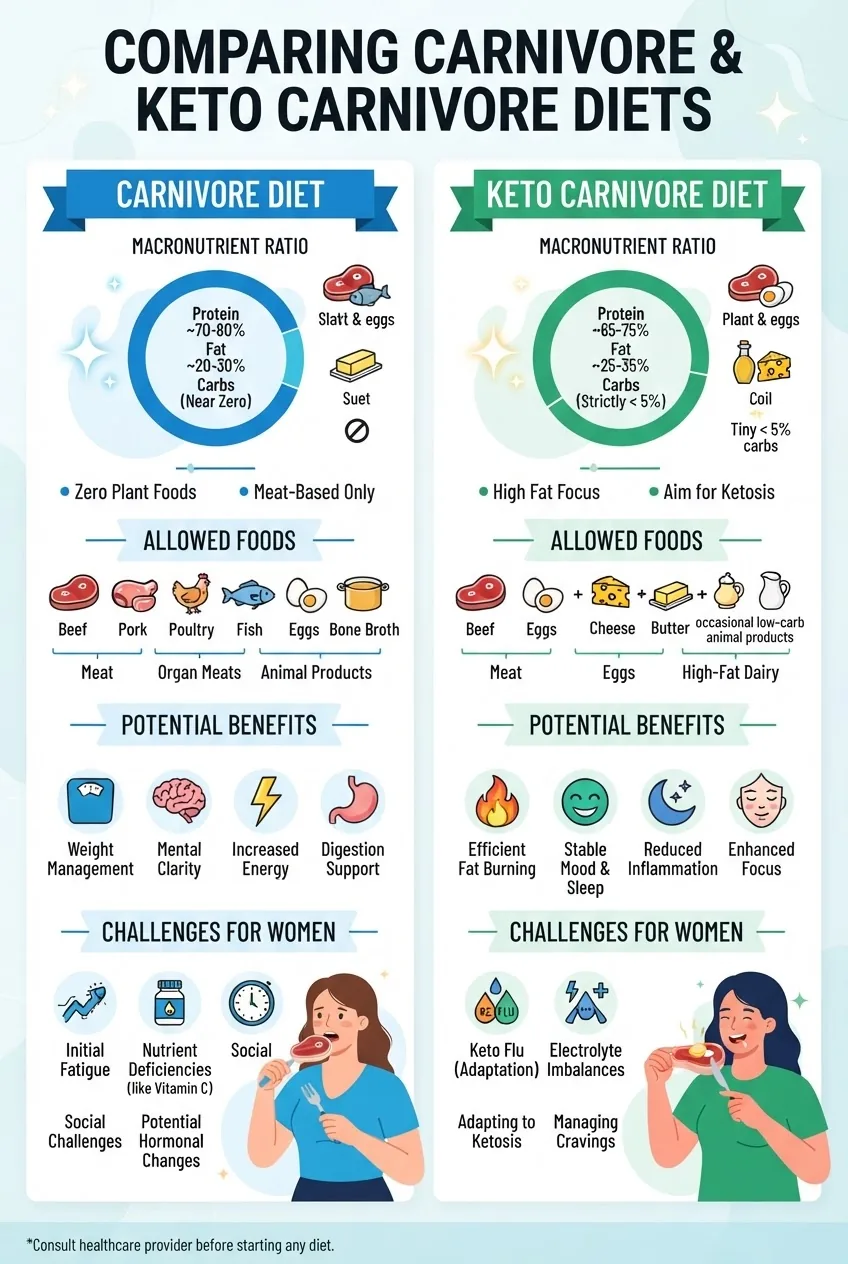
| Feature | Carnivore Diet | Keto Carnivore Diet |
|---|---|---|
| Typical macronutrient balance | Variable (moderate–high protein, fat varies) | High fat, moderate protein, minimal carbs |
| Goal | Simplicity, satiety, reduced plant irritants | Sustained ketosis for metabolic benefits |
| Implications for women | May be easier to meet protein needs; watch iron and micronutrients | Higher fat may affect hormones and cycle regularity; monitor closely |
| Energy source | Mixed (protein and fat) | Primarily fat and ketones |
| Nutritional adjustments | Focus on organ meats and diversity | Increase fatty cuts; track fat-to-protein ratios |
When calculating energy from macronutrients, understand fat calorie conversion is essential for keto-carnivore fat intake balance. Also review protein calorie content to plan energy from protein when adjusting ratios.
What measurable health benefits can women expect from the carnivore diet?
Answer: Potential benefits include weight loss, improved energy and mental clarity, reduced inflammatory symptoms for some, and simplified meal decisions; benefits depend on adherence, baseline health, and proper nutrient planning with lab monitoring.
Term: Inflammation reduction — a decrease in markers and symptoms of systemic or localized immune activity, sometimes reported with elimination diets.
Weight loss and body composition
Many women experience rapid weight loss initially due to glycogen depletion and reduced calorie intake; sustained weight loss depends on total calories and protein-to-fat balance. Protein supports satiety and lean mass preservation—see the pillar on protein rich food for weight loss for how animal protein supports female weight loss physiology.
Energy and mental clarity
Some women report stable energy and reduced brain fog once adapted; this often aligns with ketone production in keto-carnivore approaches. Benefits vary; track cognitive function and sleep quality during the first 4–12 weeks.
Inflammation and autoimmune symptoms
Eliminating plant antigens can reduce some inflammatory symptoms in a subset of women with sensitive guts or autoimmune conditions; clinical evidence is limited but case series report improvement in joint pain, skin issues and GI symptoms. Clinical monitoring is necessary.
lean protein sources for weight loss reinforce how targeted protein choices support fat loss and metabolic health.
What are the potential risks for women on the carnivore diet and how can they be managed?
Answer: Risks include nutrient deficiencies (vitamin C, fiber, some B vitamins if organ meats excluded), altered menstrual cycles, constipation or diarrhea, unfavorable lipid changes in some, and bone health concerns; manage with labs, strategic food choices, and targeted supplementation.
Term: Supplementation — deliberate use of vitamins, minerals or oils to make up for nutrients absent or low in the diet.
- Nutrient deficiency risks: If organ meats and fatty fish are rare, women may lack vitamin A, B12, folate, vitamin C, magnesium and vitamin K2. Action: include liver weekly, eat fatty fish 2–3x/week, consider a multivitamin if labs show low values.
- Digestive issues: Initial constipation or diarrhea can occur during transition; address with hydration, electrolytes, and gradual transition. Bone broth and magnesium support digestion.
- Hormonal imbalance: Rapid weight loss or very low carb intake can disrupt cycles. Action: increase calories, add starchy carbs temporarily, or reduce training intensity until regularity returns.
- Lipid changes: Some women experience LDL increases; monitor lipid panels at baseline and 3–6 months. Discuss with a clinician if LDL rises substantially.
- Pregnancy/breastfeeding considerations: Avoid strict meat-only diets during pregnancy and breastfeeding without specialist guidance—fetal nutrient needs (folate, DHA, iodine) require careful planning or supplementation.
Actionable management tips:
- Get labs at baseline, 8–12 weeks, then every 3–6 months: CBC/ferritin, B12, 25(OH)D, CMP, lipids, thyroid.
- Include organ meats 1–3 times weekly and oily fish for DHA; for omega-3 considerations see omega-3 sources.
- Consider fish oil supplementation if oily fish is infrequent.
- Use tools: a food log, period tracker, and lab tracker (spreadsheet or app) to spot trends; consider DEXA for bone density if long-term adherence is planned.
- Consult authoritative sources and clinicians for pregnancy guidance: ACOG.
How long until women typically notice results and what transition phases occur?
Answer: Early effects (water loss, appetite changes) often appear in 1–2 weeks; metabolic adaptation and clearer benefits (stable energy, appetite control, fat loss) typically appear after 4–12 weeks; hormonal stabilization may take 3–6 months and requires monitoring.
Transition phases:
- Week 0–2 (Adaptation): Glycogen and water loss, possible headaches or fatigue (“keto flu”), changes in bowel habits.
- Week 2–6 (Adjustment): Appetite regulation improves, energy may stabilize, early weight loss continues.
- Month 2–6 (Stabilization): Hormonal signals and menstrual cycles usually normalize or reveal issues; labs show steady-state values—adjust diet based on results.
Tools for tracking: period-tracking apps, symptom journals, and lab schedules. If adverse menstrual changes persist beyond one cycle, increase calories or reintroduce targeted carbs and consult a clinician.
Summary: What are the key steps and takeaways for women starting the carnivore diet?
Answer: Start with baseline labs, prioritize organ meats and oily fish, set protein and calorie targets, monitor menstrual and metabolic markers, use supplementation when indicated, and consult healthcare providers for pregnancy or significant lab changes.
- Obtain baseline labs (CBC/ferritin, B12, 25(OH)D, CMP, lipids, thyroid).
- Plan meals with diversity: muscle meats + organ meats + oily fish weekly.
- Set realistic protein/calorie targets and track intake and symptoms.
- Use supplements judiciously: vitamin D, magnesium, and omega-3 as needed.
- Monitor cycles and labs every 8–12 weeks; adjust calories or reintroduce carbs if reproductive disruption occurs.
- Seek medical supervision for pregnancy, breastfeeding, or chronic conditions.
What experience-based examples illustrate safe carnivore transitions for women?
Answer: Two anonymized case examples show common, safe transition plans: one for a premenopausal woman focusing on iron and cycle stabilization, and another for a postpartum woman prioritizing DHA and caloric sufficiency.
Case A — Sarah, 34, premenopausal: Started with baseline ferritin 18 ng/mL; added 1 oz beef liver twice weekly, increased daily calories by 200, and retested ferritin at 12 weeks (rose to 35 ng/mL), cycles normalized after 3 months.
Case B — Maria, 29, postpartum: Prioritized oily fish, fish oil, and higher calories to support lactation; used a food and nursing log and had infant growth monitored; with clinician guidance she maintained milk supply while on a modified carnivore plan.
Tools used in these cases: period tracker, lab tracker spreadsheet, MyFitnessPal for initial calorie estimates, and scheduled clinician lab reviews.