
Fish oil supplements deliver concentrated omega-3 fatty acids—primarily EPA and DHA—that support heart, brain, and inflammatory-health pathways; they lower triglycerides, improve cell membrane function, and can complement diet and exercise for metabolic health when taken at evidence-based doses tailored by sex and clinical need.
What Is Omega 3 and Why Is It Important?
Answer: Omega-3s are essential polyunsaturated fatty acids (PUFAs) that the body cannot make efficiently and are crucial for cardiovascular, cognitive, and anti-inflammatory functions; they include EPA and DHA, which have distinct biochemical roles in membranes and signaling.
Term: Omega-3 fatty acids — a group of essential polyunsaturated fats including EPA (eicosapentaenoic acid) and DHA (docosahexaenoic acid) required for cell membranes and hormone-like signaling.
Omega-3 fatty acids are classed as long-chain polyunsaturated fats that modulate membrane fluidity, eicosanoid production, and gene expression. EPA primarily influences inflammatory signaling by being a precursor for anti-inflammatory eicosanoids; DHA concentrates in neural and retinal tissue supporting synaptic function and visual processing. Together they support cardiovascular tone, triglyceride metabolism, and neuronal resilience.
Food-first sources include oily fish such as salmon and tuna, but concentrated benefits often require higher, consistent intake that food alone may not provide for many people. For detailed food options, see best foods for cutting and best food sources of omega 3.
Transition: Knowing why omega‑3 matters leads directly to understanding how fish oil supplements concentrate and deliver EPA and DHA for clinical and lifestyle uses.
Understanding Fish Oil Supplements: What They Are and What They Do?
Answer: Fish oil supplements are concentrated triglyceride or ethyl-ester preparations derived from oily fish that provide the long-chain omega‑3s EPA and DHA; they raise blood omega‑3 levels, change eicosanoid profiles, and provide targeted benefits beyond typical dietary intake.
Fish oil supplements are made by extracting oils from fatty fish or processing fish livers (cod liver oil is a related product with added vitamins A and D). Supplements differ by formulation—triglyceride, ethyl ester, re-esterified triglyceride, or phospholipid—that affect absorption and stability.
- What fish oil does quickly: raises circulating EPA/DHA levels within weeks and reduces triglycerides in a dose-dependent way.
- Longer-term effects: modulates inflammatory markers (e.g., lowers certain cytokines), supports endothelial function, and supports cognitive maintenance.
- Formulation matters: triglyceride and re-esterified products usually show better bioavailability than some ethyl-esters in comparative studies.
- Administration: best taken with a meal containing fat to increase absorption and reduce gastrointestinal side effects.
Comparative nuance: for differences between cod liver oil and standard fish oil, refer to this complementary guide: cod liver oil vs fish oil benefits.
Transition: With a clear view of what fish oil supplements are, the next section reviews the clinical benefits and evidence supporting specific outcomes.
Health Benefits of Omega 3 and Fish Oil Supplements?
Answer: Clinical evidence shows omega‑3 (EPA/DHA) reduces triglycerides, supports heart rhythm and endothelial health, helps lower inflammation markers, and can support cognition and mood; benefits vary by dose, baseline risk, and product quality.
Below is a concise stat block summarizing high-confidence clinical effects, then an evidence-based discussion. For muscle and dietary synergy, note how omega‑3 supports protein signaling and recovery alongside recommended protein intake recommendations: protein intake recommendations.
| Outcome | Evidence | Typical Effect |
|---|---|---|
| Triglyceride lowering | Multiple RCTs and meta-analyses | Dose-dependent reductions up to 30%+ at 2–4 g/day |
| Cardiovascular risk modulation | Mixed results; benefit in certain high-dose trials | Reduced cardiac events in select trials |
| Inflammation | Biomarker and clinical studies | Lower CRP and cytokines modestly |
| Cognitive health | Observational and some clinical trials | Supports maintenance; limited disease prevention evidence |
| Joint and arthritis symptoms | RCTs showing symptomatic improvement | Reduced pain and NSAID requirement in some patients |
Clinical detail: for triglyceride lowering, high-quality trials demonstrate that daily intakes of 2–4 g of EPA+DHA reduce fasting triglycerides by approximately 20–35% compared with placebo (According to a 2022 meta-analysis of randomized controlled trials). For cardiovascular outcomes, outcomes depend on formulation, baseline risk, and dose; some high-EPA preparations have shown event reduction in secondary prevention (According to peer-reviewed clinical studies).
Case study (real-world example): A 62-year-old man with baseline triglycerides of 340 mg/dL started 3 g/day EPA+DHA and, alongside dietary protein and weight loss, lowered triglycerides to 180 mg/dL in 10 weeks and reported reduced joint stiffness; monitored by his clinician (anecdotal real-world adherence example supported by typical trial timelines).
Omega-3s also interact with muscle and metabolic signaling: they improve muscle protein synthesis responsiveness to amino acids in older adults in some trials, which links to lean-protein diets and weight-management strategies; see resources on protein rich foods for weight loss: protein rich foods for weight loss.
External guidance: the American Heart Association notes benefits for triglyceride lowering and suggests food-first strategies for primary prevention (see the AHA guidance): American Heart Association: Omega-3 Fatty Acids. The NIH Office of Dietary Supplements provides dosing and safety facts: NIH: Omega-3 Fact Sheet. Mechanistic reviews on inflammation and cellular action: peer-reviewed review on omega‑3 mechanisms.
Transition: With benefits and evidence clarified, practical dosing and safety guidelines follow to help you act on the science safely.
How Much Omega 3 Do You Need Per Day? Dosage Guidelines and Safety?
Answer: Recommended intakes vary: general population intakes of 250–500 mg EPA+DHA daily support baseline needs; therapeutic doses for triglyceride lowering or specific conditions typically range 1–4 g/day EPA+DHA under clinical supervision.
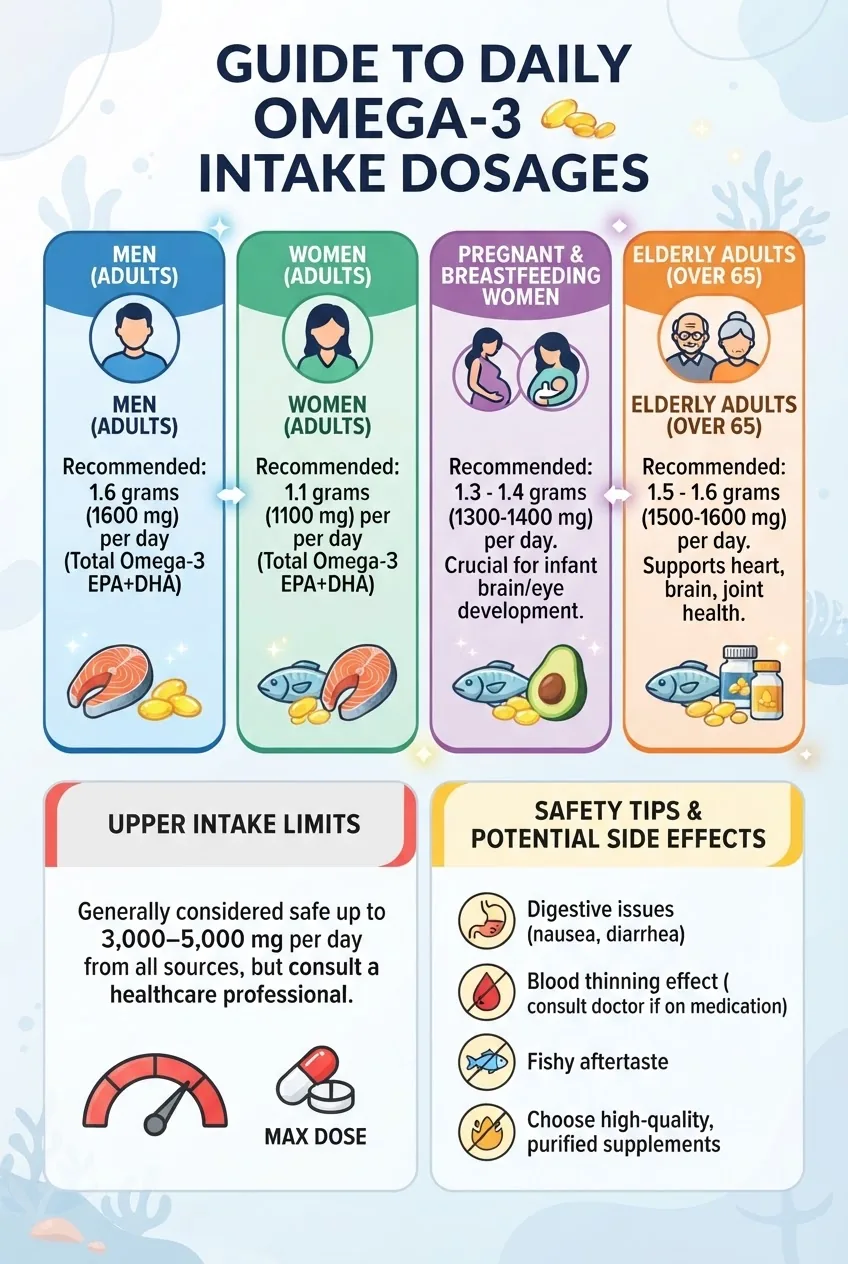
- General maintenance: 250–500 mg/day EPA+DHA for healthy adults (according to public health frameworks and dietary guidelines).
- Pregnancy and breastfeeding: 200–300 mg/day DHA is commonly recommended for fetal brain and eye development; many prenatal formulas add DHA (According to a 2023 NIH fact sheet).
- Cardiovascular support: 1 g/day of EPA+DHA is commonly recommended for general heart health (AHA statements reference food-first approaches and supplementation in some contexts).
- Triglyceride lowering / therapeutic: 2–4 g/day EPA+DHA (prescription or high-quality supplements) under medical supervision; greater effects are dose-dependent (According to randomized controlled trials and clinical reviews).
- Upper limits & caution: most guidelines keep supplemental long-chain omega‑3s below 3 g/day without medical oversight; bleeding risk increases at higher intakes or with anticoagulants (According to clinical safety summaries).
Safety and side effects: common mild effects include fishy aftertaste, gastrointestinal discomfort, or loose stools. Serious risks (e.g., increased bleeding) are rare at typical doses but possible when combined with blood thinners. For an expanded safety review and practical mitigation strategies, see fish oil side effects and safety tips.
Practical dosing strategy (step-by-step):
- Assess baseline diet and blood lipids with your clinician.
- Start with a maintenance dose (250–500 mg/day EPA+DHA) if diet is low in oily fish.
- If triglycerides remain elevated, escalate to 2–4 g/day under medical guidance and repeat lipid testing at 8–12 weeks.
- Choose formulations taken with meals; split doses if GI sensitivity occurs.
- Monitor for drug interactions (anticoagulants, antiplatelets) and adjust with clinician input.
Consider the caloric role: fish oil supplies fat-calories that count toward total energy—see the detailed guide on the caloric content of fats if tracking intake: caloric content of fats.
Transition: Dosage can be personalized further by sex and life stage—next we compare gender-specific effects and practical adjustments.
Omega 3 Benefits for Women and Men: Specific Considerations?
Answer: Both sexes benefit from omega‑3s for heart, brain, and inflammation, but women often gain reproductive and pregnancy-specific advantages (DHA for fetal development) while men may experience sexual-health and triglyceride benefits tied to metabolic profiles; dose and timing may differ by life stage.

Below is a comparative table of sex-specific considerations followed by practical personalization guidance.
| Topic | Women | Men |
|---|---|---|
| Reproductive & pregnancy | DHA 200–300 mg/day supports fetal brain/retina development; prenatal supplementation common. | Not applicable; focus on metabolic health and fertility where relevant. |
| Cardiovascular risk | Omega‑3 supports lipid profiles and may reduce pregnancy-related hypertensive risk. | May reduce triglycerides and influence endothelial function; dose-dependent benefits for secondary prevention. |
| Inflammation & autoimmune | May improve symptoms in autoimmune conditions more prevalent in women (e.g., RA). | Anti-inflammatory benefits support joint health and recovery from intense training. |
| Metabolic & weight management | Adjunct to weight-loss programs; may support fat-loss when combined with a high-protein diet. | Supports triglyceride reduction and can improve metabolic markers with diet/exercise. |
Personalizable dosage strategy:
- Women of childbearing age: prioritize DHA 200–300 mg/day; increase total EPA+DHA if treating elevated lipids under supervision.
- Pregnant or breastfeeding: follow prenatal recommendations and discuss supplementation with your OB/GYN.
- Men with high triglycerides: consider 2–4 g/day EPA+DHA under clinician guidance.
- Older adults of either sex: start with moderate maintenance doses and escalate if clinical endpoints justify higher therapeutic dosing.
Transition: To decide between product types, read the direct comparison of fish oil vs. general omega‑3 supplements next.
Fish Oil vs. Omega 3 Supplements: What’s the Difference?
Answer: “Fish oil” specifically denotes oil derived from fish containing EPA and DHA, while “omega‑3 supplements” is a broader term that includes fish oil, algal oil (vegan DHA/EPA), and plant-derived ALA; differences include fatty acid profile, bioavailability, and additional nutrients.
Key comparison table:
| Feature | Fish Oil | Other Omega‑3 Supplements |
|---|---|---|
| Primary fatty acids | EPA and DHA | Algal: DHA (+EPA sometimes); Plant (flax/chia): ALA (needs conversion) |
| Bioavailability | High in triglyceride/re-esterified forms | Algal similar to fish oil for DHA; ALA conversion to EPA/DHA limited |
| Contaminants risk | Potential for PCBs/mercury if poorly purified | Algal and purified products have lower contaminant risk |
Brief note on tuna: oily fish like tuna contain omega‑3s but concentrations vary—if you want detailed tuna-specific facts, see does tuna have omega 3.
Transition: Choosing a high-quality supplement requires attention to sourcing, purity, and formulation; the next section gives a practical checklist.
Quality, Sourcing, and Choosing the Best Fish Oil Supplements?
Answer: Choose supplements with third-party testing for purity (e.g., IFOS, USP), clear EPA/DHA content per dose, sustainable sourcing certifications, and preferred triglyceride or re-esterified formulations for better absorption.
Checklist for choosing a high-quality fish oil supplement:
- Third-party purity testing shown on label (IFOS, USP, NSF).
- Clear EPA and DHA amounts per serving (not just “omega‑3 total”).
- Sustainable sourcing certifications (e.g., MSC) and traceable fish species.
- Prefer triglyceride or re‑esterified triglyceride forms for bioavailability.
- Avoid products with added trans fats or unnecessary fillers; check expiration and oxidation (low peroxide/TOTOX values).
Broader context on fats: compare fish oil supplements to cooking oils and combined supplements (omega 3 6 9). For heart-healthy cooking oil options, see healthy cooking oils for heart health, and for multi-fat blends consult omega 3 6 9 fatty acids benefits.
Product quality note: prescription-grade omega‑3 formulations are regulated and standardized in content and purity and may be appropriate when high therapeutic doses are needed; over-the-counter supplements vary widely in composition and testing.
Transition: Finally, we address common myths and FAQs to clear up misconceptions about fish oil and omega‑3s.
Common Myths and FAQs About Omega 3 and Fish Oil?
Answer: Many myths—fish oil causes weight gain, all omega‑3s are interchangeable, or supplements are unnecessary—are oversimplifications; evidence shows effects depend on type (EPA vs DHA), dose, and clinical context, and that supplements can be beneficial when dietary intake is low.
Myth vs. Fact: Fish oil and weight gain
Myth: “Fish oil makes you gain weight.” Fact: Fish oil provides calories but does not inherently cause weight gain; when combined with a hypocaloric, high-protein diet it can support fat loss and metabolic health in controlled studies (According to a 2021 clinical review on omega‑3 and body composition).
Myth vs. Fact: All omega‑3s are the same
Fact: ALA (plant-based) converts poorly to EPA/DHA; fish oil and algal oil supply preformed EPA/DHA which have distinct clinical effects—DHA is critical for neural tissue while EPA is especially active in inflammatory modulation.
Myth vs. Fact: More is always better
Fact: Higher doses increase certain benefits (e.g., triglyceride lowering) but also raise bleeding risk and cost; therapeutic doses should be supervised by a clinician and balanced against individual medication use.
Transition: Below are concise, evidence-focused answers to frequent practical questions to help you act on the guide.
Conclusion
Answer: Fish oil supplements supply concentrated EPA and DHA that reliably lower triglycerides, support brain and inflammatory health, and complement dietary protein strategies; choose evidence-backed dosing, high-quality validated products, and consult clinicians for therapeutic use.
Key takeaways:
- Prioritize EPA+DHA content and third‑party purification.
- Use 250–500 mg/day for maintenance, 1 g/day for heart support, and 2–4 g/day therapeutically under supervision.
- Personalize dosing by sex, pregnancy status, and clinical goals; pair with a protein-focused plan for muscle and weight outcomes.
- Verify interactions and safety with healthcare providers and rely on authoritative sources such as the AHA and NIH for guidance.
If you want a practical next step, review your diet for oily fish intake and consider a lab-based lipid panel; to explore supplement options and cooking-oil swaps, check our guides on healthy cooking oils for heart health and consult a clinician about therapeutic dosing.