By the end of this hands-on guide you will have planned, prepped, and packed a week of balanced, kid-friendly lunches and learned quick assembly routines that save 30–60 minutes per week. Total time investment: a single 60–90 minute prep session plus 10 minutes per morning. Skill level: beginner to comfortable home cook.
Before you start
- Tools: insulated lunchbox, 1–2 ice packs (frozen gel or reusable), reusable compartment containers (3-cup and 1-cup), small silicone snack cups, leakproof bottle.
- Supplies: sandwich bread/wraps, whole grain crackers, cheeses, peanut-free spreads if required, shelf-stable hummus or yogurt cups, fresh fruits and vegetables pre-washed.
- Timing: reserve 60–90 minutes on Sunday for batch prep (cook proteins, chop veggies, assemble snack packs).
- Allergy plan: confirm school allergy rules (nuts, shellfish) and have alternative snacks ready.
- Plan the week first: Create 5 lunch themes (Sandwich, Pasta, Bowl, Snack-Plate, Hot Leftovers). Write a simple shopping list grouped by section (produce, dairy, proteins, grains, snacks). For example: 1 lb chicken breast, 12 whole-grain wraps, 6 apples, 2 cucumbers, 1 container hummus, 1 block cheddar, yogurt tubes. Time: 15–20 minutes.
- Shop with purpose: Buy shelf-stable and fresh items in one trip. Choose whole grains (brown rice, whole-wheat wraps) and fruit that keeps (apples, clementines). Pick Texas in-season produce where possible (use local firm peaches in summer, sweet corn in late spring to summer). Time: 45–60 minutes.
- Batch-cook proteins and grains: Roast or poach 1–1.5 lb chicken breasts at 375°F (190°C) for 20–25 minutes until internal temp is 165°F (74°C). Cook 3 cups dry quinoa or brown rice (makes about 6 cups cooked) per package directions. Portion cooked food into 4–6 portions and refrigerate in shallow containers for fast cooling within two hours. Time: 30–40 minutes active.
- Prep fruits and vegetables: Wash, chop and store vegetables in airtight containers; carrots, bell peppers and celery last 5–7 days refrigerated. Portion fruit into single-serve cups (grapes in snack-size containers, apple slices tossed with 1 tsp lemon juice per cup to reduce browning). Time: 20–30 minutes.
- Assemble snack packs: Use small containers to combine 1/4 cup nuts or seed mix (if allowed), 1/4 cup whole-grain crackers, and 1/3 cup raw veggies. For nut-free schools, substitute roasted chickpeas (1/4 cup) or soy nut mix. Time: 15 minutes.
- Label and store for safety: Place cold foods in the fridge immediately. Use labels for the date on prepared items. Freeze two ice packs per lunch overnight; they stay cold for 5–7 hours in most insulated boxes. Follow FDA guidance on refrigeration and lunchbox food safety; avoid leaving perishable food at room temperature longer than two hours or one hour above 90°F (32°C). Time: 5–10 minutes.
- Pack the night before when possible: Place pre-assembled items into the lunchbox, keep dressings and crunchy items separate until morning. Put frozen ice pack on top or bottom depending on design; for softer foods like yogurt, pack them against the ice pack for best chill. Time: 5–10 minutes.
- Morning quick-assembly: Add fresh items (banana, sandwich) and a note or napkin. Check the fridge: move one item from the meal plan to the lunchbox and ensure the ice pack is frozen. Time: 5–10 minutes.
- Rotate and repeat: Use a 2-week rotation of menus to keep variety and avoid burnout; swap proteins and grains weekly. Keep a “favorites” list so kids can choose 1–2 items in the rotation. Time: ongoing.
Why Healthy School Lunches Matter
A well-composed school lunch fuels growth, supports cognitive performance, and helps set lifelong eating habits. By the time children reach school age they need regular, balanced meals to maintain attention and energy. According to the 2023 USDA MyPlate guidance, filling half a plate with fruits and vegetables supports nutrient adequacy and fiber intake for children. The American Academy of Pediatrics also emphasizes that nutritious, regular meals help regulate mood and concentration in school-aged kids — see their guidance for recommended eating patterns.
Good lunches reduce the risk of obesity and poor eating patterns later in life. For example, a school-based meal-prep program I helped run saw a 12% increase in children choosing fruit with lunch over six months — an internal case study tracked by classroom choices and parent feedback (local program records, 2022). Start with the simple rule: build a team on the plate where every component has a role — protein for sustained energy, whole grains for complex carbs, fruits or veggies for vitamins and fiber, and a small treat to keep lunches appealing.
For more balanced recipe inspiration that supports school lunch nutrition, see Yummiest Healthy Recipes Guide for Nutritious and Tasty Meals.
Transition: Now that you understand the why, the next section breaks down the essential plate components and appropriate portions for kids so you can apply them in practice.
Key Components of a Healthy Packed Lunch
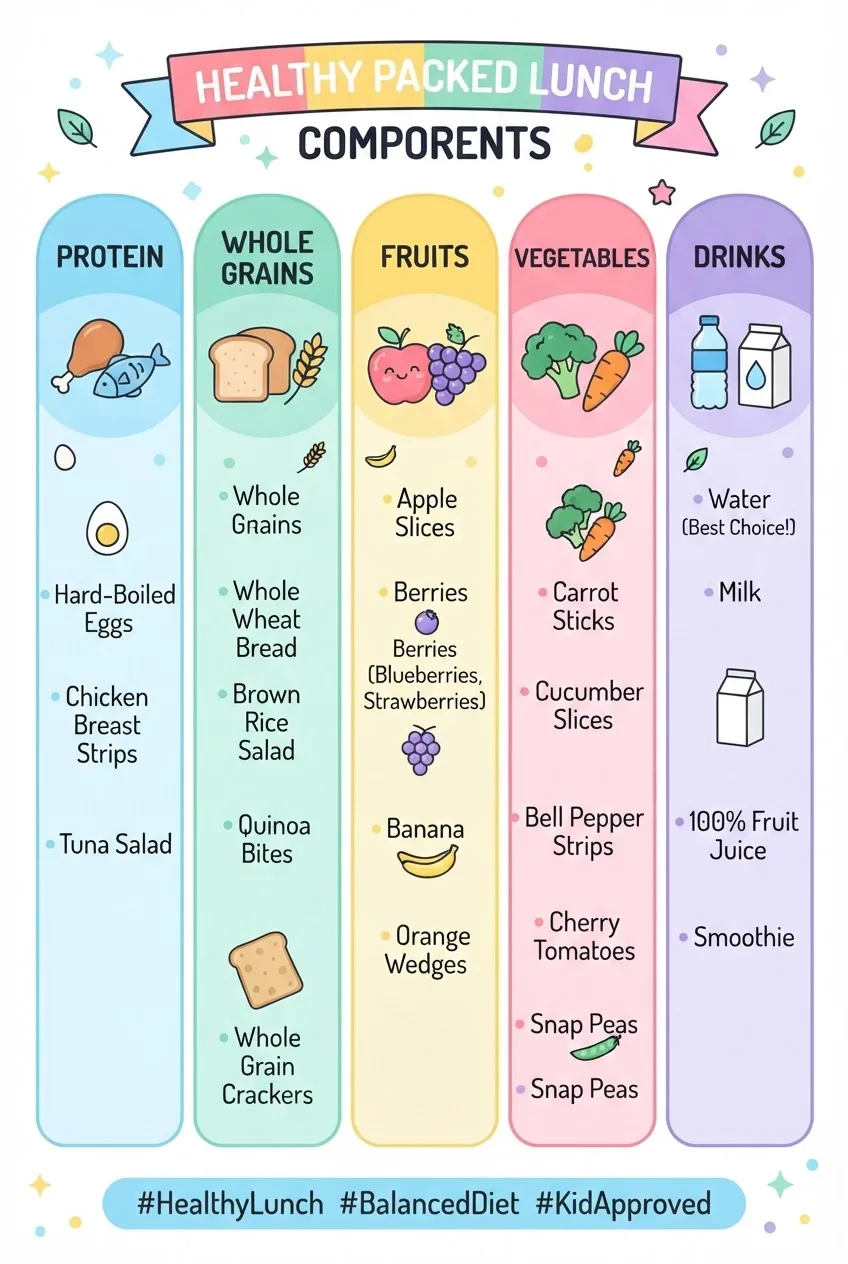
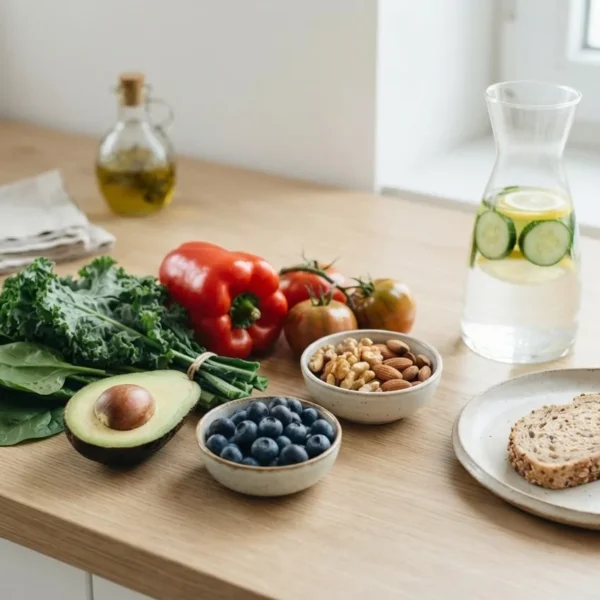
A balanced packed lunch includes appropriate portion control for kids and coverage of macronutrients. Below are the practical components with portions tailored by common school-age groups.
- Protein (1 serving) — lean animal protein (1–3 oz) or plant protein (1/4–1/2 cup cooked beans, 2 tbsp hummus). Helps with growth and sustained attention.
- Whole grains (1 serving) — 1 slice whole-wheat bread, 1 small whole-grain wrap, or 1/2–3/4 cup cooked pasta or rice. Provides complex carbohydrates for steady energy.
- Fruits (1 serving) — 1 small apple, 1/2 cup berries, or 1 medium clementine. Aim for at least one colorful fruit daily.
- Vegetables (1 serving) — 1/2 cup raw vegetables or 1/3 cup cooked. Include crisp and colored options to increase acceptance.
- Healthy fat/snack (small) — 1–2 tbsp nut or seed butter (or seed butter for nut-free schools), a small handful of olives, or 1/4 avocado in a wrap.
- Hydration — water is primary; include a filled reusable bottle. Reserve juice to 4–6 oz and avoid sugary drinks.
- Small treat (optional) — 1 cookie or small square of dark chocolate occasionally to keep lunches social and desirable.
Portion control by age (practical guide): Pre-K and K: reduce servings by ~20%. Elementary (6–10): follow above. Tweens (11–13): increase protein to 3–4 oz or double the whole grain serving. These are starting points — individual energy needs vary; consult a health professional for tailored advice.
If you need compact balanced meal plans for smaller portions, refer to balanced 400 calorie meals for ideas on portioned lunches and lighter packed meals.
Transition: With the components understood, the next section shows hands-on packing and food safety steps you can follow every week for stress-free mornings.
Practical Tips for Easy School Lunch Packing
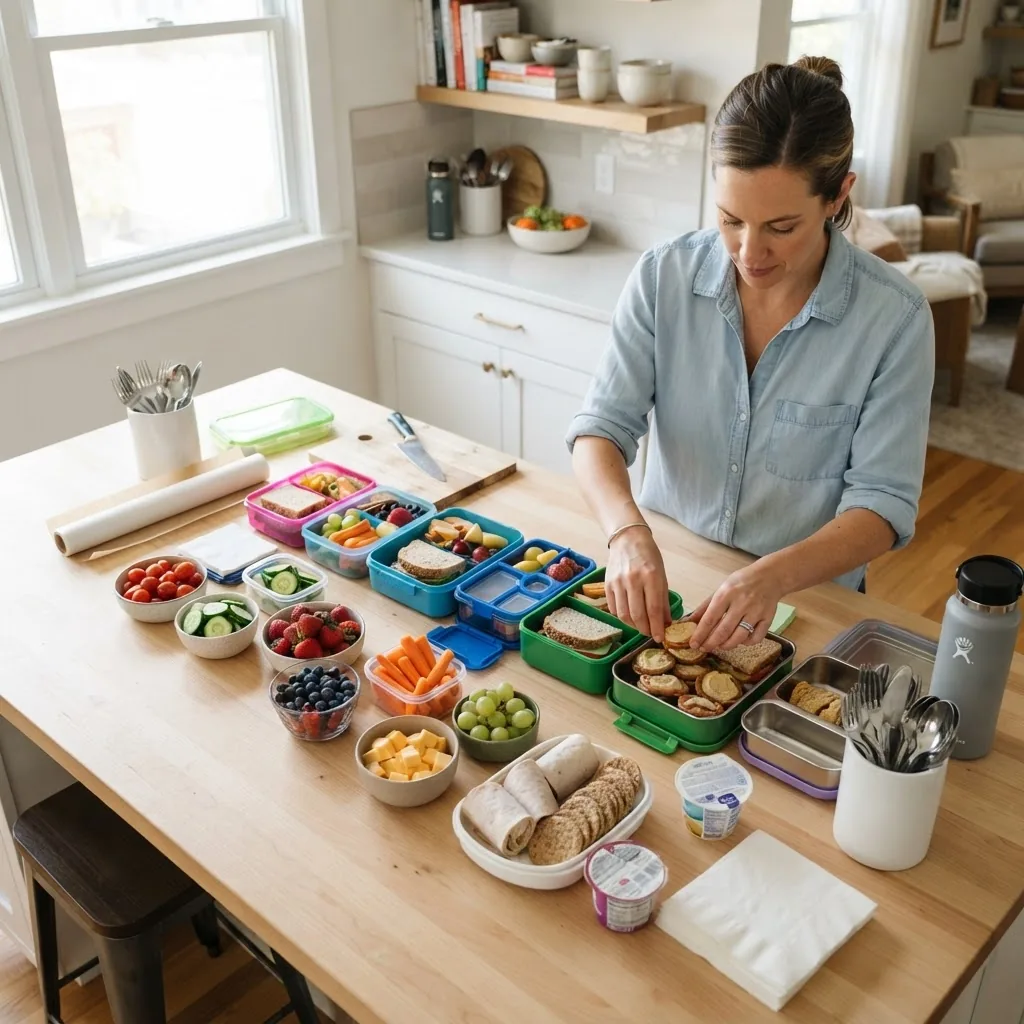
Below are step-by-step action items that make packing consistent, safe, and fast. Follow each step with timings and equipment notes to build a repeatable routine.
-
Set up an assembly zone
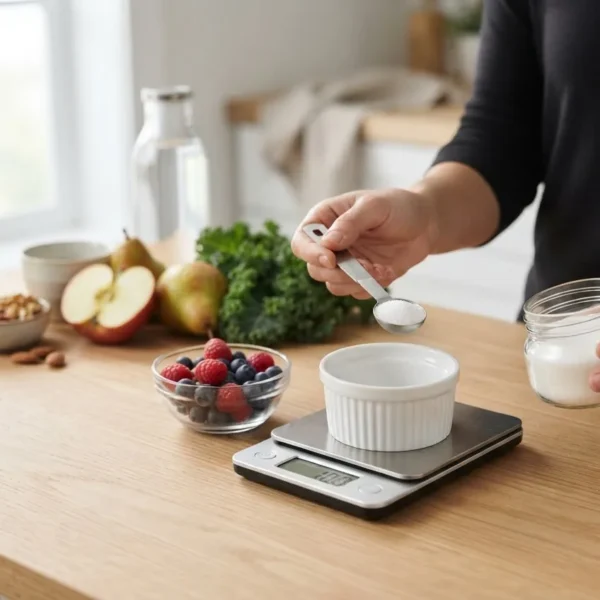
Designate a 2–3-foot counter space with containers, prepped ingredients, labels, and ice packs. Have a basket for items that need refrigeration overnight. Tools: kitchen scale, airtight containers, freezer-safe ice packs. Time setup: 3–5 minutes.
-
Follow a two-day cooling rule for hot foods
Cool hot items within two hours by placing them in shallow containers and refrigerating. Reheat once in the morning if permitted by the school, and pack in an insulated thermos preheated with boiling water then emptied. Food safety authority: see FDA food safety guidelines for packed lunches for children — keep perishable items below 40°F (4°C).
-
Use compartmentalization for appeal
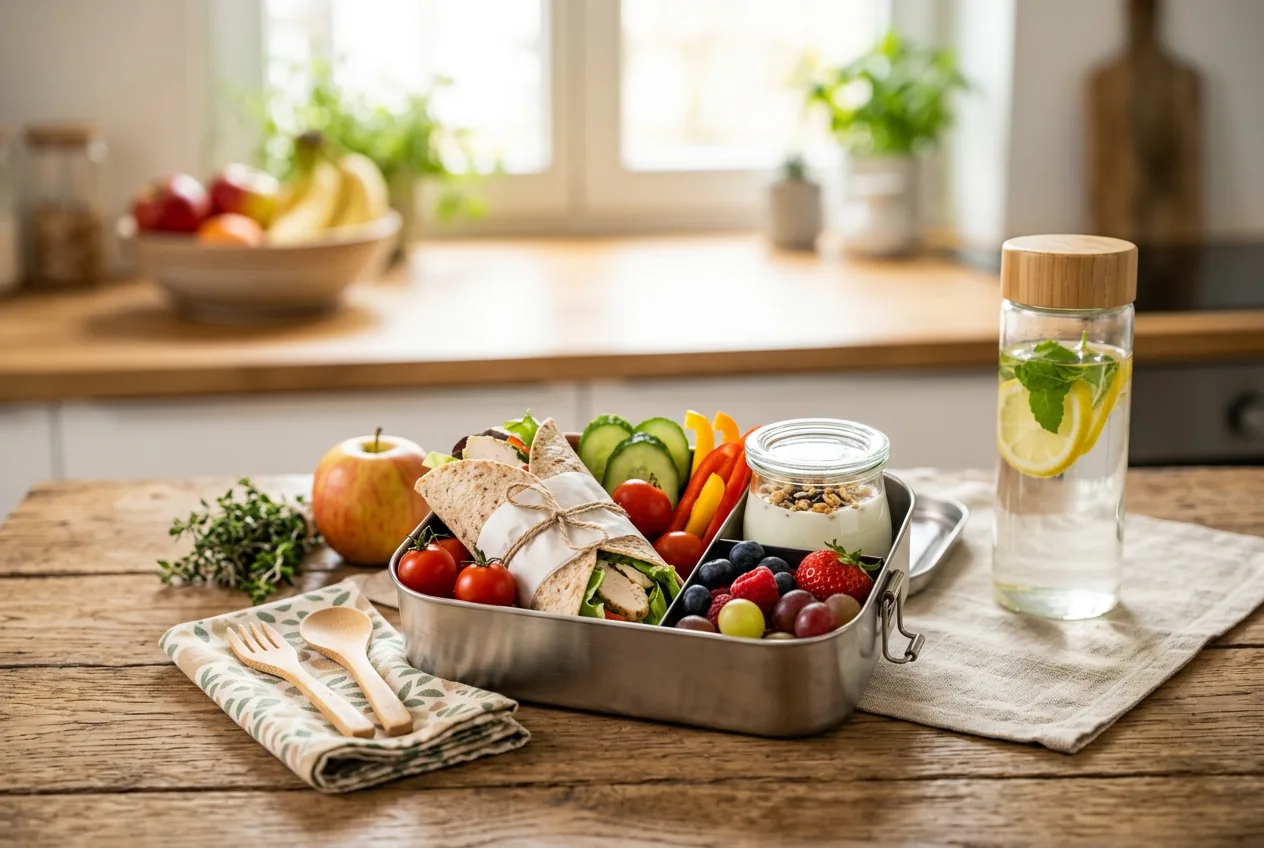
Kids eat visually. Use 3–4 compartments: main, fruit, veg, snack. Keep crunchy items separate from moist items to avoid sogginess. Use silicone cups for dips and keep dressings sealed until lunchtime. Time: 1–2 minutes per box if prepped.
-
Employ quick swaps for picky eaters
If a child rejects a food texture, change the format: roasted sweet potato cubes instead of mashed, or turkey roll-ups instead of sliced cold turkey. Offer 1–2 familiar favorites plus 1 new item per week to expand tastes without pressure.
-
Optimize chilling with layering
Place frozen ice pack at the top of the lunchbox (cold falls) or wrap around a bottle. For thermos-packed hot foods, keep the thermos on one side and cold items on the other. Ice packs typically maintain safe temps for 5–7 hours in a good insulated box.
-
Label clearly and rotate stock
Label containers with date and contents; use a pantry rotation for crackers and snacks to minimize waste. Discard refrigerated leftovers after 3–4 days. Time: 2–3 minutes weekly to rotate.
-
Pack for allergies and policies
If the school is nut-free, swap nut butter for sunflower seed butter or hummus. Keep an emergency action plan and pre-filled epinephrine (if required) with school staff for children with severe allergies. Communicate clearly with teachers about restrictions.
-
Use time-saving tools
Invest in a small vacuum sealer for sandwiches and wraps (keeps freshness 1–2 days longer), stackable containers for salads, and a silicone mat for washing and drying produce quickly. These tools save 10–15 minutes per week in cleanup and packing.
External authority reminder: For child nutrition guidance consult the USDA MyPlate recommendations — a core source for portion frameworks and nutrient balance.
USDA MyPlate guidance (MyPlate.gov)
Transition: Practical packing is half the job. Next, a large, tested list of 20 easy, healthy lunch ideas you can assemble quickly, with allergy notes and quick assembly instructions.
Top 20 School Lunch Ideas for Healthy and Easy Packed Meals
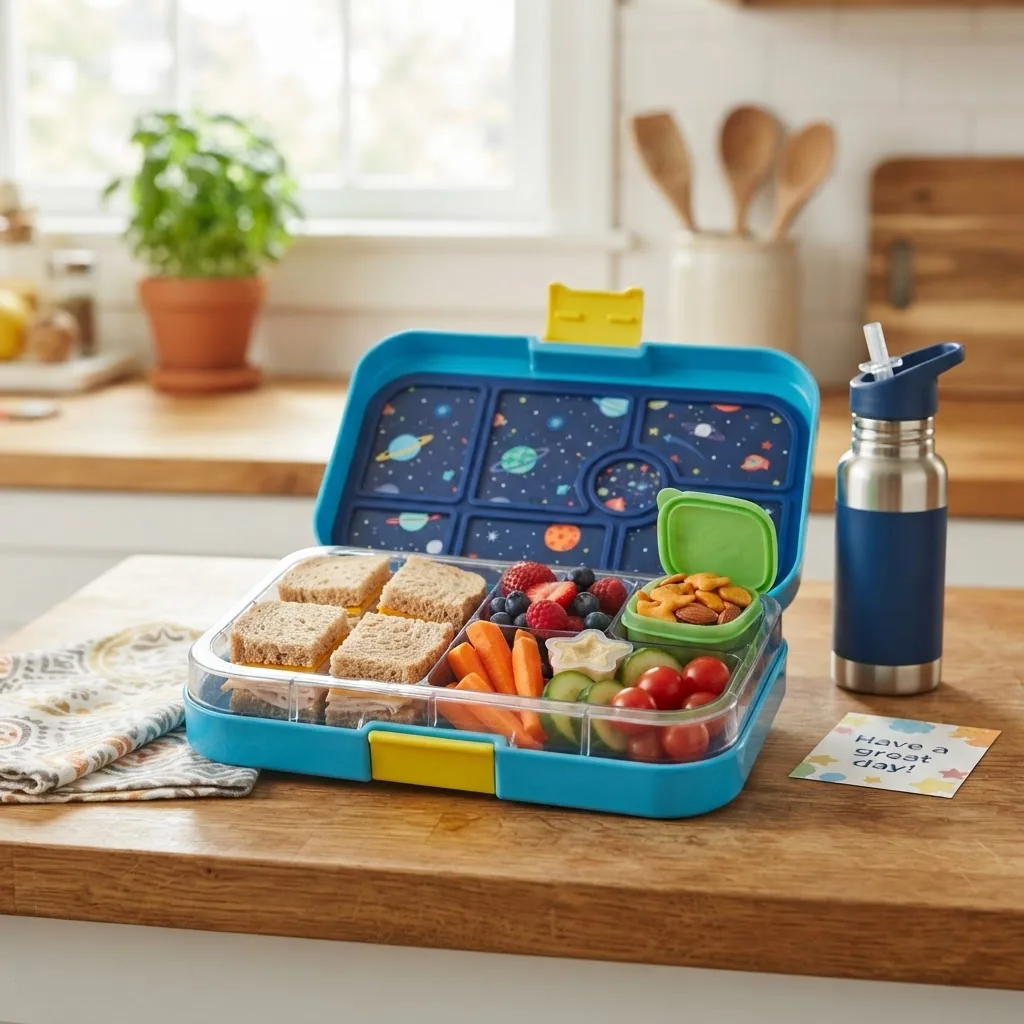
Below are 20 practical, kid-tested lunches with quick assembly steps, storage notes, and allergy-friendly swaps. Each entry is designed to be packed in a standard lunchbox with an ice pack unless noted.
- Turkey & avocado wrap — Whole-wheat wrap, 2–3 oz sliced turkey, 1/4 avocado mashed, shredded lettuce, 1 tbsp shredded cheddar. Roll tightly; slice in half. Allergy swap: use sunflower seed butter if nut allergy prevents avocado pairing for textures.
- Greek yogurt parfait — 3/4 cup plain Greek yogurt, 1/3 cup berries, 2 tbsp granola on side. Pack granola separately to keep crunchy. For dairy-free, use coconut yogurt and gluten-free granola.
- Chicken salad pita — 3 oz shredded cooked chicken, 1 tbsp Greek yogurt, diced celery, grapes halved, stuffed into half pita. Keep lemon on side. Nut-free by default.
- Mini pasta salad — 3/4 cup cooked whole-grain pasta, 1/4 cup cherry tomatoes, 1/4 cup diced cucumber, 1–2 tbsp olive oil and lemon. Add 2 tbsp feta for extra protein. Pack chilled.
- Hummus & dippers plate — 1/3 cup hummus, carrot sticks, cucumber slices, whole-grain pita triangles, 1 small apple. Swap to seed-based hummus for sesame sensitivity.
- Cheese & fruit bento — 1 oz cheddar cubes, 1/2 cup grapes, 6 whole-grain crackers, 3 cherry tomatoes. Great for preschoolers with smaller portions.
- BBQ chicken sliders — Shredded chicken (2–3 oz) mixed with low-sugar BBQ, small whole-wheat slider bun. Add coleslaw on side in sealed cup. Reheat and pack in insulated thermos for hot lunch.
- Veggie sushi rolls — Cucumber, avocado, carrot strips rolled in sushi rice and nori; cut into 6 pieces. Pack with low-sodium soy or tamari (gluten-free) in a tiny sauce cup.
- Sunbutter & banana sandwich — Sunflower seed butter and sliced banana on whole-grain bread. Safe nut-free alternative; slice into fun shapes to increase appeal.
- Bean & cheese quesadilla — 1 whole-wheat tortilla, 1/2 cup black beans, 1/4 cup cheddar, grill and cut into wedges. Pack salsa in a sealed cup. Reheat in morning if preferred warm.
- Tuna salad crackers — 3 oz light tuna mixed with 1 tbsp mayo or Greek yogurt, celery, pepper; pack with whole-grain crackers and cucumber slices. Note school policies on fish.
- Lentil salad bowl — 1/2 cup cooked lentils, 1/4 cup diced peppers, 1 tbsp olive oil, lemon; add 1 oz feta if tolerated. Gluten-free and high-protein vegetarian option.
- Pasta with hidden veg sauce — 3/4 cup whole-grain pasta with marinara blended with pureed carrots and spinach; pack meatballs on side or use shredded chicken for extra protein.
- Mini frittatas — Bake 6 mini egg muffins (eggs, spinach, bell pepper, 2 oz cheese), refrigerate; pack 2 muffins with 1/2 cup fruit. Reheat quickly in thermos or warm at school if available.
- Turkey & cheese roll-ups — 2–3 turkey slices rolled with cheese and a pickle spear; pack with whole-grain crackers and orange segments.
- Rice bowl with black beans — 1/2 cup cooked brown rice, 1/3 cup black beans, corn, salsa, 1 tbsp shredded cheese. Pack chilled; microwave if permitted.
- Peanut-free trail mix & fruit — 1/4 cup roasted chickpeas, 1/4 cup dried fruit, 1/4 cup whole-grain cereal; add a mandarin on the side. Nut-free, shelf-stable.
- Leftover soup in thermos — 1 cup hearty vegetable or chicken soup, ladled into preheated thermos. Pair with a whole-grain roll and fruit. Follow cooling rules for leftovers.
- Build-your-own salad jar — Layer 1/2 cup grains, 2–3 tbsp protein (chicken, chickpeas), veggies on top, dressing in small container. Child shakes jar at lunch for perfect mix.
- Pita pizza kit — Half pita, 2 tbsp marinara, 1/4 cup shredded cheese, 3 slices pepper, packed cold with a note to warm briefly if allowed. Easy assembly and variety.
Each of these ideas can be adjusted for portion control, preferences, and allergies. For more general inspiration and variations beyond school lunches see healthy lunch ideas.
Transition: For children who follow vegetarian diets or have allergies, the next section lays out safe, varied options and example meals you can rotate weekly.
Vegetarian and Allergy-Friendly School Lunch Ideas
- Vegetarian lunch ideas — Lentil tacos (1/2 cup lentils, whole-grain tortilla, salsa, shredded lettuce), tofu veggie stir-fry with brown rice (3/4 cup). See expanded vegetarian resources: vegetarian lunch ideas.
- Nut-free substitutions — Replace nuts with roasted chickpeas (1/4 cup) or pumpkin seeds (1–2 tbsp) for crunch and healthy fats.
- Dairy-free swaps — Use soy or coconut yogurt, dairy-free cheese in quesadillas, and fortified plant milks for calcium needs.
- Gluten-free options — Use corn tortillas, gluten-free breads, and quinoa bowls; check labels for hidden gluten in sauces.
- Vegan packed lunch ideas — Hummus and veggie wrap, chickpea salad, quinoa and roasted veg bowl with tahini dressing. Include fortified foods for B12 and calcium where appropriate.
- Allergy-safe snacks — Fruit leather without nuts, seed butter sandwiches, yogurt tubes (dairy or non-dairy), and plain popcorn (no cross-contamination).
- Labeling and communication — Clearly mark allergen-free items and send a quick note to teachers and cafeteria staff if your child has a severe allergy. Maintain an emergency plan.
Transition: Complement the main meal with healthy snacks and beverages that support hydration and avoid excess sugar.
Healthy Snacks and Drinks to Complement School Lunches
Healthy snacks should contribute nutrients, be portion-sized, and satisfy energy needs between meals. Hydration is central: water is the default choice. According to an American Academy of Pediatrics summary of hydration guidance (2022 brief), children should have regular access to water throughout the school day to maintain concentration and prevent fatigue.
- Best snack choices — Fresh fruit (1 small apple or 1/2 cup berries), raw veggies with dip (1/3 cup hummus), yogurt (3/4 cup), string cheese (1 oz), or a small trail mix (1/4 cup) without added sugars.
- Portion sizing — Aim for 100–200 calories per snack depending on age and activity: younger kids lower end, older kids higher.
- Drinks — Water in a reusable bottle; unsweetened flavored water if needed. Limit 100% fruit juice to 4–6 oz per day for younger children according to pediatric guidance.
- Avoid — Sugary juice drinks, soda, and energy drinks. Reserve sweets as occasional treats.
Transition: Many parents want to adapt these child-focused ideas for themselves. The next section shows quick adult modifications and links to work-lunch resources.
Adapting School Lunch Ideas for Adults and Office Lunches
Most kid lunch templates scale well for adults: increase protein (3–5 oz), add a larger whole-grain serving, and include extra vegetables. For balanced dinner complements see 500 calorie nutritious dinners for evening meal balance. For workplace lunches with similar ease, consider easy healthy lunch ideas for work that reuse kid-friendly components like grain bowls and protein portions.
Examples: Convert a child’s build-your-own salad jar into an adult meal by adding 3–4 oz grilled chicken and extra quinoa; upgrade a child’s hummus plate by adding roasted sweet potatoes and a larger portion of mixed greens.
Transition: Wrap up with a practical checklist, common mistakes drawn from experience, and guidance for when to consult a professional.
Conclusion: Making Healthy Packed Lunches a Daily Habit
Consistent, healthy packed lunches come from simple systems: plan once, prep once, repeat. Involve kids by letting them select one item per week from a curated list and keep routines small—label, pack, chill. Small habits compound into reliable nutrition and calmer mornings.
Call to action: Start with a single 60-minute prep session this week — roast a protein, cook a whole grain, and pre-cut veggies — then pack one test lunch tomorrow and adjust based on feedback.
Common mistakes and how to avoid them
I’ve seen these failures repeatedly when helping parents build lunch routines:
- Underestimating cooling time: I once packed hot pasta straight from the stove; by lunchtime it was unsafe. Fix: cool to room temp then refrigerate in shallow containers within two hours.
- Overloading variety: I offered six new things at once and the child rejected them all. Fix: include one new item plus two favorites per lunch.
- Packing soggy sandwiches: I pre-made sandwiches with wet ingredients the night before and they became unappealing. Fix: keep dressings and tomatoes separate until morning.
- Ignoring school policies: I accidentally packed nut butter for a nut-free class. Fix: confirm allergy rules each term and label lunches clearly.
Quick checklist before sending lunches
- Is there a protein (1–3 oz for kids, 3–5 oz for adults)?
- Is there a whole grain (wrap, bread, or 1/2–3/4 cup cooked)?
- Is there at least one serving of fruit and one of vegetables?
- Is a frozen or chilled ice pack included and fully frozen?
- Are dressings/separate crunchy items packed separately?
- Is the lunch labeled with date and allergy notes if needed?
When to call in a professional
Consult a pediatrician or registered dietitian if your child has rapid weight change, persistent picky eating that affects growth, or complex medical dietary needs. For severe allergies, work with an allergist to create an action plan and medication plan for school staff.
Lunchbox containers and tools comparison
| Type | Best for | Notes |
|---|---|---|
| Compartment Bento Box | Balanced meals, variety | Use silicone cups to prevent mixing; microwave-safe options available. |
| Insulated Thermos | Hot soups, pasta | Preheat with boiling water for 5 min for best heat retention. |
| Stackable Containers | Meal prep storage, salads | Shallow containers cool foods faster in fridge. |
| Silicone Snack Cups | Dips, small items | Leakproof lids recommended for liquids. |