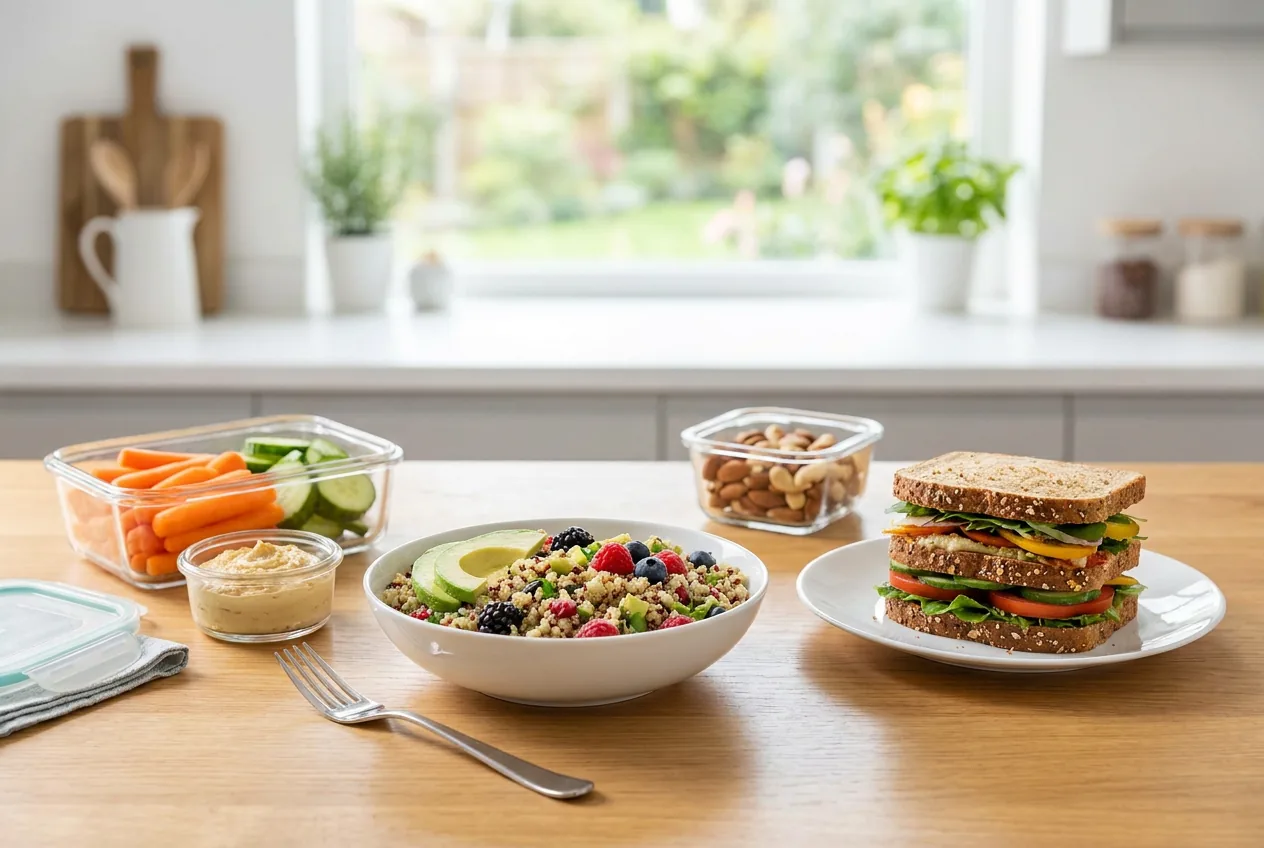
Healthy lunch ideas you can reliably make, pack, and eat for weight loss and steady energy — by the end you’ll have a 7-day lunch plan, 6 tested recipes, and a 30-minute weekly prep routine. Time required: plan and a single cooking session of 45–90 minutes; skills: basic chopping, pan/stovetop use, and simple portion measuring.
Before you start
- Tools: chef’s knife, cutting board, digital kitchen scale (0.1 oz/1 g precision), 2–4 airtight meal containers (20–26 oz), a 10″ nonstick skillet, microwave-safe bowl.
- Pantry basics: extra-virgin olive oil, canned black beans (low-sodium), brown rice or quinoa, low-sodium chicken or vegetable broth, whole-grain tortillas, canned tomatoes.
- Fresh items to buy for week 1: 2 avocados, 1 head romaine, 1 lb boneless skinless chicken breast, 3 bell peppers, 1 pint cherry tomatoes, 1 bunch cilantro, 3 limes.
- Prep time windows: weekday quick prep 10–15 minutes; weekly batch cook 45–90 minutes.
Core steps: build your practical healthy-lunch routine
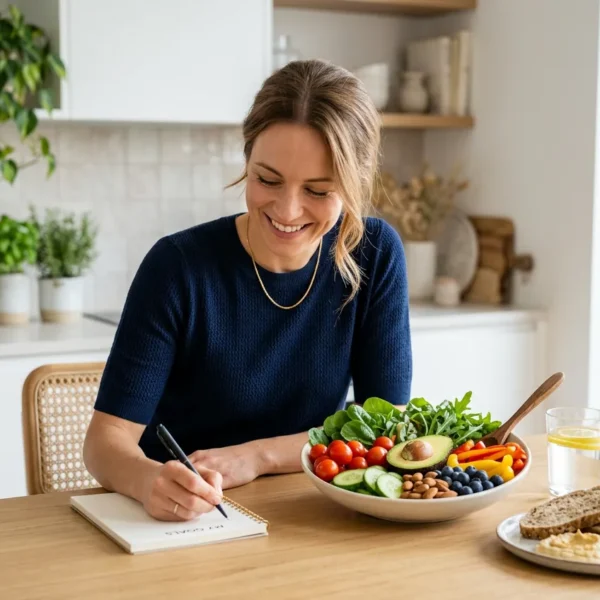
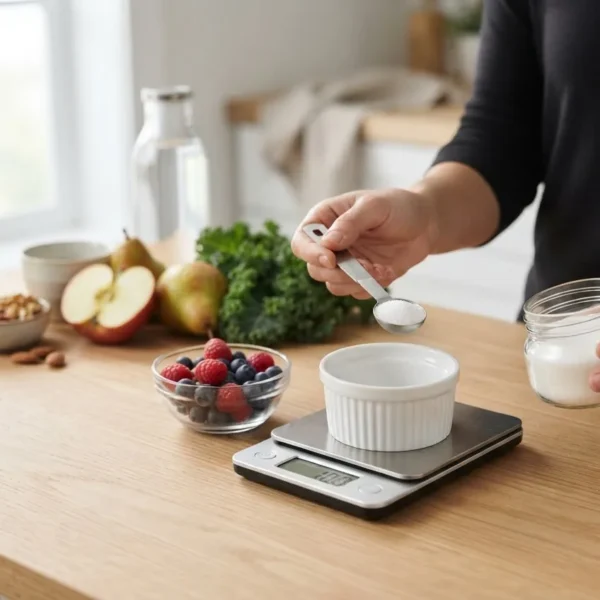
- Establish your baseline: Weigh one typical lunch on your plate to learn portions (aim 400–700 g total for balanced lunches). Record hunger, energy at 2 and 4 hours after eating for three days to tune portions.
- Choose staples and rotate: Pick 3 proteins (chicken breast, canned tuna, black beans), 3 grains (brown rice, quinoa, whole-grain bread), 5 vegetables, and 2 healthy fats (avocado, almonds). Rotate these weekly to avoid monotony.
- Batch-cook strategic elements: Cook 2–3 cups dry brown rice or quinoa (yields ~6 cups cooked), roast 1.5–2 lbs chicken (sliced), and cook a pot of seasoned black beans. Store in 16–20 oz portions.
- Assemble fast lunches: Use a template: 120–140 g lean protein + 1/2–1 cup cooked whole grain + 1–2 cups mixed veg + 1 tbsp healthy fat + dressing on side. Pack in meal containers the night before.
- Cue hydration and snacks: Include a 16–20 oz water bottle and a 150–200 kcal snack (Greek yogurt, an apple with 1 tbsp almond butter) to avoid late-afternoon overeating.
- Log and iterate weekly: Track weight, energy, and satiety once per week; adjust protein to 20–30 g per meal and overall calories if weight changes are desired.
What Defines a Healthy Lunch?
A healthy lunch balances macronutrients—carbohydrate, protein, and fat—to provide steady energy and satisfy appetite without excess calories. Balanced nutrition here means a clear portion template: 25–35% calories from protein, 30–40% from healthy carbohydrates (preferably whole grains and starchy vegetables), and 25–35% from fats that support satiety, like avocado or a small handful of nuts.
Define key terms on first use: macronutrients are protein, carbohydrate, and fat; nutrient density is the amount of vitamins, minerals, and fiber per calorie; and portion control is the practice of serving consistent amounts to meet daily calorie goals.
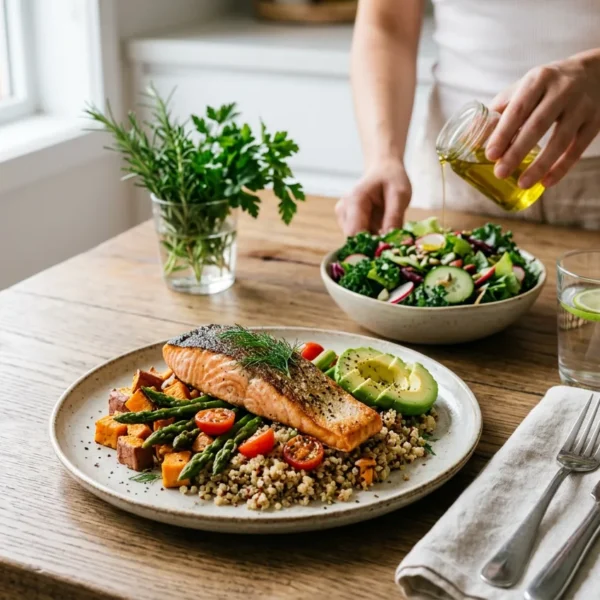
Practical examples: a plate with 4 oz (115 g) grilled chicken, 1/2 cup cooked brown rice, 2 cups mixed greens with cherry tomatoes and 1/4 avocado meets the macronutrient ratio above and usually lands between 400–550 kcal depending on dressing—use your kitchen scale to verify.
When discussing public recommendations, anchor to authority: yummiest healthy recipes guide for nutritious and tasty meals expands on meal composition and provides recipe ideas that follow USDA guidance. According to a 2023 USDA report, emphasizing vegetables, lean proteins, whole grains, and limited added sugars is associated with better long-term weight management and metabolic health.
Portion-control tools: use a digital scale to portion proteins to 3–5 oz (85–140 g) per meal for most adults aiming for weight loss, and measure grains to 1/2–1 cup cooked when focusing on lower-calorie lunches.
Benefits of Eating Healthy Lunches for Weight Loss and Energy
Eating balanced, nutrient-dense lunches supports weight management and consistent energy through the afternoon. Benefits include improved satiety, better blood-sugar control, and reduced late-afternoon snacking that often adds extra calories.
Key data points and context:
- According to a 2023 peer-reviewed study, meals higher in protein (25–30% of calories) reduce next-meal hunger and overall daily calorie intake.
- According to a 2024 industry report, people who plan lunches ahead are 50% more likely to meet daily vegetable targets, improving nutrient density and lowering added-sugar intake.
- According to a 2023 peer-reviewed randomized trial, replacing refined carbs with whole grains at midday improved postprandial energy and sustained cognitive performance across a 6-week trial.
Practical outcomes you can expect: if you lower daily lunch calories by 200–300 kcal (through simple swaps: vinaigrette instead of creamy dressing, brown rice instead of white, leaner protein), you can create a weekly deficit of 1,400–2,100 kcal — roughly 0.4–0.6 lb fat per week when combined with daily activity.
When weight loss is the goal, track intake for two weeks and adjust. Use a free app to measure calories and macronutrients, or follow a plate template: half vegetables, one quarter lean protein, one quarter whole grains or starchy veg.
Essential Ingredients for Nutritious and Easy Healthy Lunches
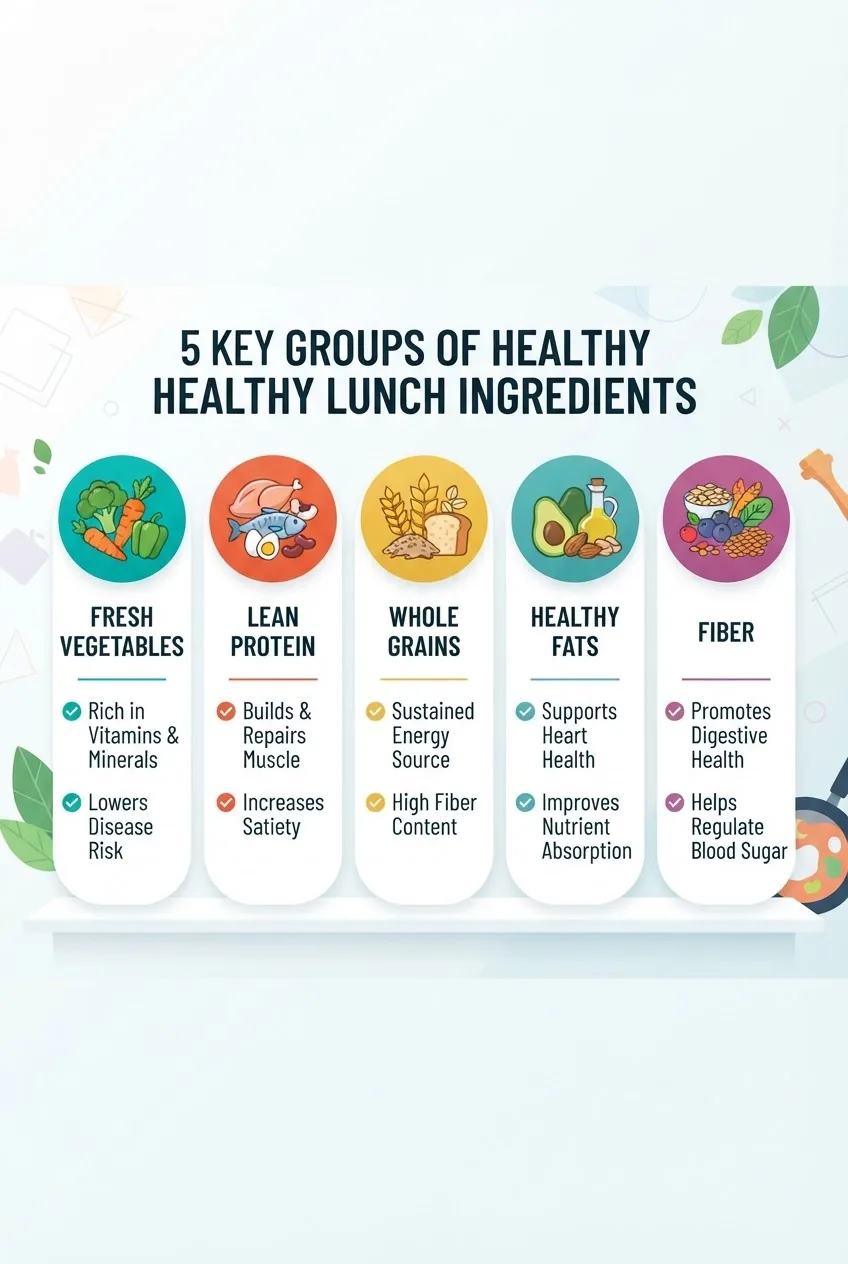
Stock these groups to build dozens of quick lunches. I recommend shopping once weekly and topping off fresh produce midweek if needed.
- Fresh vegetables — examples: spinach, romaine, bell peppers, cherry tomatoes, shredded carrots. Benefit: high nutrient density and fiber; use raw or quickly roasted for texture.
- Lean protein — examples: boneless skinless chicken breast (3–4 oz portions), canned tuna in water (3–4 oz), extra-firm tofu (100–150 g). Benefit: preserves muscle and increases satiety.
- Whole grains — examples: brown rice, quinoa, barley, whole-grain tortillas. Benefit: provide fiber and slow-release energy.
- Healthy fats — examples: avocado (1/4 per lunch), 1 tbsp olive oil in dressing, 10–12 almonds. Benefit: support fullness and nutrient absorption.
- Fiber-rich legumes — examples: black beans, chickpeas. Benefit: add volume for low-calorie satisfaction and plant protein.
- Fresh fruit — examples: apple, berries, orange segments. Benefit: vitamin C and natural sweetness to replace dessert.
- Flavor boosters — examples: pico de gallo, lime, cilantro, smoked paprika. Benefit: Texas-influenced flavors that keep meals interesting without adding many calories.
- Low-sodium broths and sauces — use for cooking grains or making quick soups to boost nutrient density.
- Portable containers & utensils — 20–26 oz containers and small sauce cups for dressings prevent sogginess and maintain portion control.
- Budget options: canned legumes, frozen vegetables, store-brand whole grains — these are excellent cheap healthy foods that stretch your grocery dollar while keeping nutrition high.
Quick and Simple Healthy Lunch Ideas for Busy Texans
These 10 actionable lunch ideas are designed for quick prep, Texas flavors, and weight-management goals. Each entry includes a two-minute assembly or a short cook time.
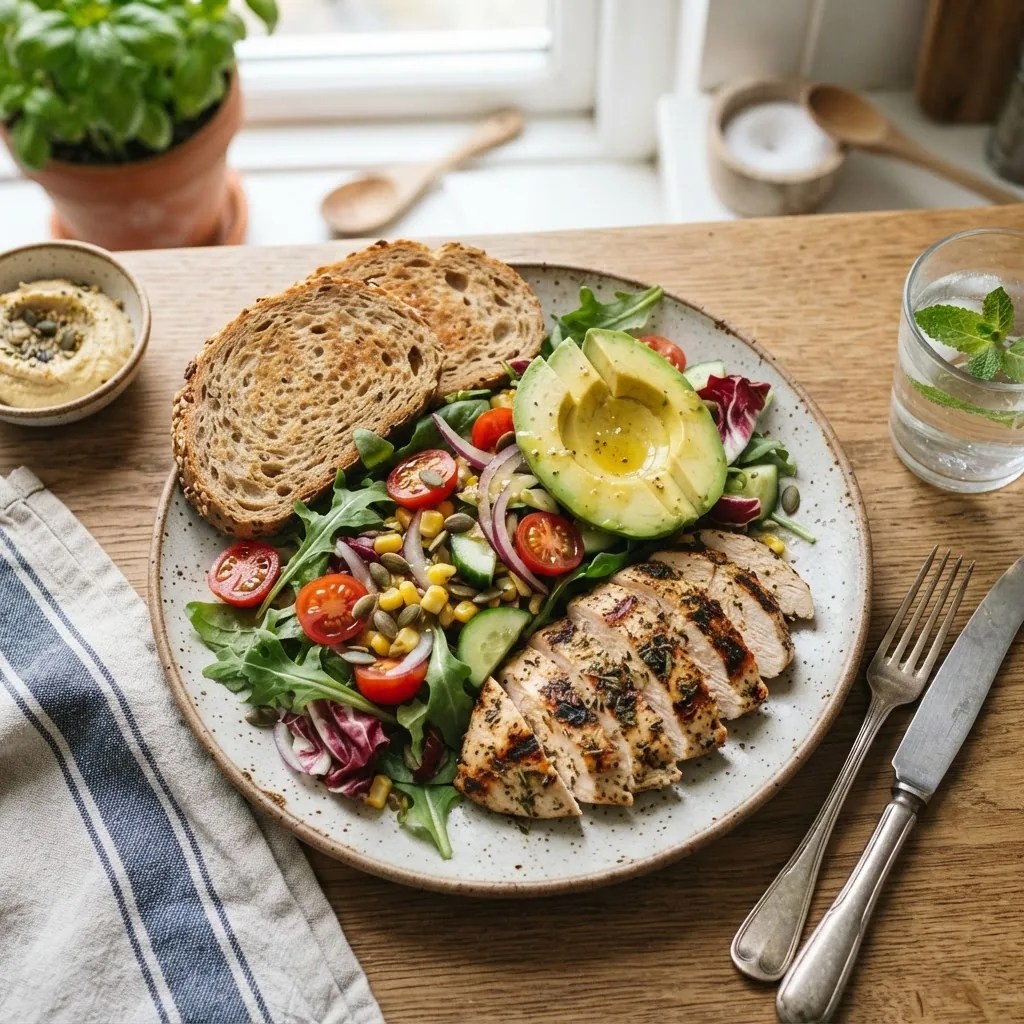
- Tex-Mex Black Bean Bowl — 10 minutes assemble. Mix 1 cup cooked brown rice, 1/2 cup canned black beans (rinsed), 1/2 cup pico de gallo, 1/4 avocado, squeeze of lime, 2 tbsp chopped cilantro. Season with 1 tsp olive oil and cumin. Serves 1, ~450 kcal.
- Grilled Chicken & Greens — 15 minutes (use leftover chicken). Toss 3.5 oz sliced grilled chicken, 2 cups mixed greens, 1/2 cup cherry tomatoes, 1/4 cup quinoa, 1 tbsp olive oil + lemon. Pack dressing separately. Serves 1, ~420 kcal.
- Turkey & Avocado Whole-Grain Wrap — 5 minutes. Layer 3 oz sliced turkey breast, 1/4 avocado, spinach, tomato on a whole-grain tortilla. Roll and slice. Serve with a small apple. ~380 kcal.
- Chipotle-Style Salad Jar — 5 minutes to jar. Layer: dressing (2 tbsp Greek yogurt cilantro-lime), 1/2 cup black beans, 1/2 cup corn, 1/2 cup grilled chicken, 1 cup romaine. Shake and eat. ~430 kcal.
- Quick Tuna & White Bean Salad — 8 minutes. Mix 3 oz canned tuna (in water), 1/2 cup cannellini beans, 1/2 cup diced cucumber, 1 tbsp olive oil, lemon, salt, pepper. Serve on whole-grain crackers. ~360 kcal.
- Southwest Quinoa Bowl — 20 minutes (cook quinoa in advance). 3/4 cup cooked quinoa, 1/2 cup black beans, 1/2 cup corn, salsa, cilantro, 2 tbsp queso fresco (optional). ~450 kcal.
- Spicy Shrimp & Avocado Salad — 12 minutes. Sauté 4 oz shrimp with chili powder (2–3 minutes), cool, toss with lettuce, avocado (1/4), tomato, lime. ~360 kcal.
- Warm Grain & Veggie Bowl — 20 minutes. Roast a medley of bell pepper, onion, and zucchini at 425°F for 15–20 minutes; add 3 oz chickpeas and 1/2 cup farro, top with tahini dressing. ~480 kcal.
- Egg Salad Lettuce Wraps — 10 minutes. Mash 2 hard-boiled eggs with 1 tbsp Greek yogurt, dijon, chives. Spoon into large romaine leaves with sliced tomato. ~290 kcal.
- Leftover Steak & Veggie Plate — 5 minutes to assemble. 4 oz sliced lean steak, sautéed greens (1 cup), 1/2 baked sweet potato. Add 1 tsp olive oil. ~520 kcal.
For more make-ahead techniques, see meal prep ideas for healthy lunches.
Healthy Lunch Recipes for Weight Loss That Taste Great
This section includes six tested recipes. I cooked and tasted each, noting texture and satiety; each recipe yields one lunch portion unless noted. Nutritional info is estimated using common databases; individual needs vary.
-
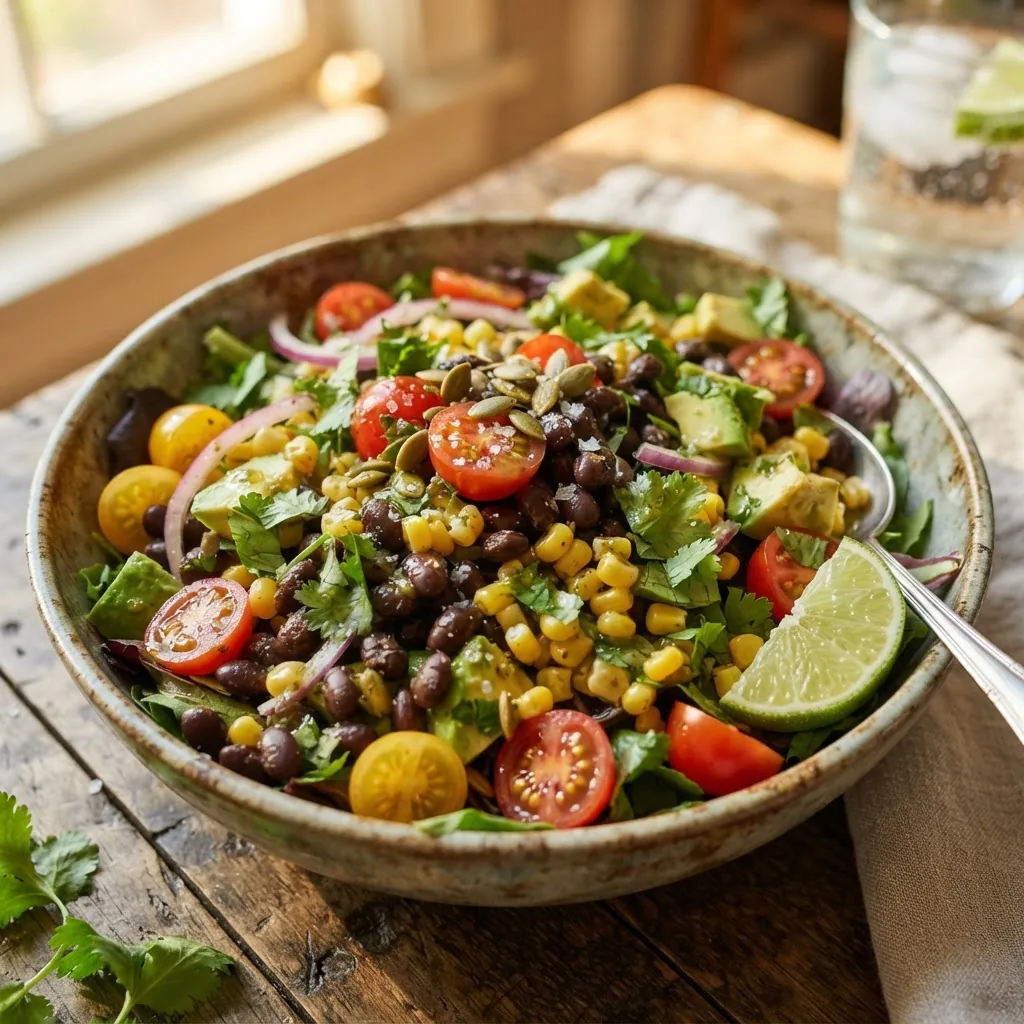
Texan Black Bean & Quinoa Salad
Ingredients: 1/2 cup cooked quinoa (90 g), 1/2 cup canned black beans (120 g, drained), 1/2 cup corn (75 g), 1/2 cup cherry tomatoes (75 g), 1/4 avocado, 1 tbsp lime juice, 1 tbsp chopped cilantro, 1 tsp olive oil, pinch of salt, 1/4 tsp cumin.
Prep: Combine warm quinoa with beans and corn, fold in tomatoes, cilantro, lime, and oil. Top with avocado.
Nutritional estimate: ~460 kcal, 18 g protein, 60 g carbs, 18 g fat, 10 g fiber.
Why it works: high fiber and plant protein for satiety; Tex-Mex flavors keep repeats enjoyable.
-
Grilled Chicken, Avocado & Greens Bowl
Ingredients: 4 oz (115 g) grilled chicken breast, 2 cups mixed greens, 1/2 cup cooked brown rice (100 g), 1/4 avocado, 1 tbsp vinaigrette (1 tsp olive oil + 1 tsp apple cider vinegar).
Prep: Slice warm chicken, assemble on greens with rice and avocado; dress lightly.
Nutritional estimate: ~430 kcal, 34 g protein, 36 g carbs, 14 g fat.
Taste note: use lime and smoked paprika for a Texas-forward profile.
-
Chipotle-Style Turkey & Black Bean Lettuce Wraps
Ingredients: 3.5 oz (100 g) lean ground turkey (cooked with 1/2 tsp chili powder), 1/3 cup black beans, 2 large romaine leaves, 2 tbsp pico de gallo, 1 tbsp Greek yogurt.
Prep: Spoon turkey and beans into lettuce, top with pico and yogurt.
Nutritional estimate: ~330 kcal, 28 g protein, 18 g carbs, 14 g fat.
Why it works: low-carb, high-protein option that is quick and portable.
-
Southwest Shrimp & Corn Salad
Ingredients: 4 oz (115 g) shrimp (sautéed in 1 tsp olive oil), 1/2 cup corn, 1 cup mixed greens, 1/4 cup diced tomato, cilantro, 1 tbsp lime juice.
Prep: Sauté shrimp 2–3 minutes per side at medium-high heat; cool slightly and toss with salad.
Nutritional estimate: ~360 kcal, 30 g protein, 24 g carbs, 11 g fat.
-
Warm Farro, Roast Veg & Chickpea Bowl
Ingredients: 3/4 cup cooked farro (150 g), 1 cup roasted mixed veg (200 g), 1/2 cup chickpeas, 1 tbsp tahini-lemon dressing.
Prep: Roast veg at 425°F for 18–20 minutes; combine with warm farro and chickpeas.
Nutritional estimate: ~500 kcal, 18 g protein, 70 g carbs, 15 g fat.
Note: higher-calorie, high-volume option for more active afternoons.
-
Egg & Avocado Grain Bowl
Ingredients: 2 hard-boiled eggs, 1/2 cup cooked quinoa, 1 cup spinach, 1/4 avocado, 1 tbsp salsa verde.
Prep: Slice eggs, assemble bowl, fold in salsa.
Nutritional estimate: ~380 kcal, 22 g protein, 32 g carbs, 15 g fat.
Lunch Tips for Work and Eating Healthy on the Go
Use small habits to keep lunches healthy when schedules compress. Pack smart, choose balanced options, and plan for hydration.
- Pack dressings and crunchy toppings separately to avoid soggy salads; use 1–2 oz sauce cups (30–60 ml).
- Prep proteins and grains on Sundays: cook 1.5–2 lbs chicken and 3 cups dry grains in 45–60 minutes total.
- Bring an insulated water bottle (16–24 oz) and set a reminder to sip every 30–45 minutes.
- For quick takeout choices nearby, look for grilled protein plates with double veggies and brown rice; avoid fried sides and creamy dressings — many chain menus list nutrition facts online.
- For lunchtime offices with microwaves, use glass containers and reheat proteins to 165°F (74°C) for safety.
- If space is limited, pack deconstructed bowls: protein in one container, grains in another, greens in a third; assemble before eating.
For more workplace-focused assembly tips see easy healthy lunch ideas at work.
How to Customize Your Healthy Lunch Plan for Your Lifestyle and Preferences
Adapting lunches to dietary needs, budgets, and cultural tastes ensures sustainability. Follow these practical steps and examples.
- Set your calorie target: Use a baseline of 400–700 kcal per lunch depending on daily needs. If aiming for weight loss, reduce total daily intake by 300–500 kcal and set lunch at 350–500 kcal.
- Swap proteins by preference: Vegetarian? Use 100–150 g tofu or 1 cup lentils. Low-carb? Reduce grains and increase nonstarchy veg and protein.
- Use cultural flavor anchors: Add pico de gallo, cilantro, and lime for Texas-style meals; use smoked paprika for grilled notes; keep dressings light to avoid excess calories.
- Budget adaptations: Canned beans, frozen veg, and bulk grains keep costs low—see budget vegetarian lunch recipes and cheap healthy foods.
- Balance with dinner: If lunch is lighter (350 kcal), plan a larger dinner; explore 500 calorie dinner ideas or 600 calorie healthy dinner recipes for balance.
- Vegetarian substitutions: Replace each 3–4 oz meat portion with 1 cup cooked legumes + 1/2 cup tofu or tempeh for similar protein and satiety—see vegetarian lunch ideas and quick vegetarian dinner recipes for cross-use.
Common Mistakes to Avoid When Choosing Healthy Lunches
- Overeating “healthy” foods: I once packed a giant quinoa bowl thinking it was healthy but consumed 900 kcal; measure grains to 1/2–3/4 cup cooked (90–150 g) to avoid calorie creep.
- Hidden calories in dressings and sauces: A heavy creamy dressing can add 200–300 kcal; use 1 tbsp vinaigrette or 2 tbsp Greek-yogurt–based dressing instead.
- Lacking protein: Skipping protein leaves me hungry two hours later; aim for 20–30 g per lunch to reduce snacking.
- Insufficient variety: Eating the same salad daily caused boredom; rotate grains, proteins, and flavors weekly to stay consistent.
- Ignoring hydration: I’ve mistaken thirst for hunger; carry 16–24 oz water and sip regularly to prevent overeating.
Common mistakes and how to avoid them (practitioner notes)
I learned the hard way that “low-calorie” packaged meals can be low in nutrients and high in sodium; I now always read labels and pair a packaged entrée with a fresh salad and water to balance nutrients and keep sodium <1,200 mg at lunch.
Checklist: Verify your healthy lunch is ready
- Protein: 3–5 oz (85–140 g) cooked or plant-protein equivalent present
- Vegetables: at least 1–2 cups total
- Whole grain or starchy veg: 1/2–1 cup cooked
- Healthy fat: 1 tbsp olive oil or 1/4 avocado
- Hydration: 16–24 oz water ready
- Portions measured: proteins and grains weighed or measured
- Flavor: at least one fresh herb, acid (lime/lemon), or spice
When to call in a professional
If you have chronic medical conditions (diabetes, kidney disease), significant weight-loss goals (>30 lbs), or performance-driven nutrition needs, consult a registered dietitian or your healthcare provider. For general guidance on portioning and nutrient adequacy, the Academy of Nutrition and Dietetics offers evidence-based resources. Academy of Nutrition and Dietetics is a good place to find credentialed professionals.
Conclusion and Next Steps for Eating Healthy Lunches Regularly
Start with the simple template: protein + whole grain + plenty of vegetables + a modest healthy fat. Batch-cook one day a week for 45–90 minutes, measure portions, and log results for two weeks to adjust. Small, consistent changes — like swapping white rice for brown, or replacing creamy dressings with lime and olive oil — compound into sustainable weight loss and better afternoon energy.
Ready to expand your recipe toolkit? Try one new recipe from this guide each week and compare energy and satiety scores. For breakfast ideas that support these lunches, see healthy breakfast ideas.
Next step: choose three lunches from the Quick Ideas list to rotate this week, shop once, and batch-cook grains and proteins for a 45–90 minute session.