400 calorie meals will teach you how to plan, prep, and cook balanced single-meal portions that hit ~400 kcal, help manage hunger, and fit into a daily caloric budget; expect to implement a weekly plan in about 90–150 minutes of prep time, skill level: basic home-cook to intermediate.
Before you start
- Tools: kitchen scale (grams/ounces), measuring cups and spoons, food thermometer, nonstick pan, sheet pan, medium pot.
- Pantry basics: olive oil, canned beans, brown rice, quinoa, low-sodium broth, whole-grain wraps, spices (paprika, cumin, garlic powder).
- Fridge basics: eggs, plain Greek yogurt, seasonal vegetables, lean chicken, canned tuna.
- Time: set aside 90–150 minutes for a first weekly meal-prep session (clean, chop, cook, portion).
-
Plan your daily calorie budget first — decide your target and divides
Start by figuring your personal daily calories (age, sex, activity). Use 400 kcal meals as building blocks — for example, three main 400 kcal meals equals 1,200 kcal; add snacks or adjust. Remember individual needs vary; include a disclaimer that individual needs differ and consult a professional if needed.
Tip: track one normal day of eating using a food scale to see how portions compare to 400 kcal.
-
Design each 400 kcal plate around protein, fiber, and healthy fat — macro targets and a template
Target macronutrient ranges that support satiety and nutrient density: ~25–35 g protein, 35–45 g carbohydrates (with emphasis on whole grains and vegetables), and 12–18 g fat per 400 kcal meal as a practical template for many adults. This balances hunger control and energy for the next 3–5 hours.
-
Create a weekly meal map — favorite ingredients, rotation, and grocery list
Pick 7–10 meal frameworks that repeat ingredients to reduce waste and prep time. Example frameworks: lean protein + grain + 2 cups non-starchy veg; bean salad + whole-grain base; omelet + salad + fruit. Build a grocery list grouped by perishables and shelf-stable items.
-
Batch-cook versatile bases — grains, roasted veg, and proteins
Cook 2–3 cups dry grain (yields 6–8 servings cooked) and roast 8–10 cups mixed vegetables at 400°F / 205°C for 25–30 minutes. Grill or bake 4 chicken breasts (4 oz each raw) at 375°F / 190°C until 165°F internal temperature. Portion into 400 kcal containers using a digital scale.
-
Portion and label precisely — weigh portions and record calories
Weigh servings: 3 oz (85 g) cooked chicken ≈ 140 kcal; ½ cup cooked quinoa ≈ 110 kcal; 2 cups steamed broccoli ≈ 60 kcal; 1 tsp olive oil ≈ 40 kcal — totals ≈ 350 kcal, add 1 tbsp salsa or 1 tbsp chopped nuts to reach ~400 kcal. Label containers with date and estimated calories.
-
Use simple swaps to keep variety — protein, grain and veg substitutions
Swap chicken for 3 oz cooked salmon (+30 kcal) or ¾ cup cooked lentils (-20 kcal) and adjust grain portion by 1–2 tbsp. Keep a substitution matrix so each swap keeps the meal near 400 kcal.
-
Practice healthy cooking techniques — low-fat methods and flavor without excess calories
Prefer grilling, steaming, roasting, and sautéing with 1 tsp oil or cooking spray. Use acid (lemon, vinegar), herbs, and spices to enhance flavor without added sugar or calories. Reduce sodium by choosing low-sodium broth and rinsing canned beans.
-
Assess satiety and adjust — track hunger, fullness, and energy
After 2–3 days of a 400 kcal meal plan, record how long you stay comfortably full. If hunger returns quickly, increase protein or fiber slightly, or add 50–100 kcal as a protein-rich snack between meals.
Transition: With a solid planning and prep routine in place, next we’ll explain the fundamentals that make a 400 kcal meal both nutritious and satisfying.
Understanding 400 Calorie Meals: Basics and Benefits
400 calorie meals are single-meal portions planned to provide roughly 400 kilocalories each, useful for calorie control, weight management, and predictable energy balance across a day. By the end of this section you’ll understand how 400 kcal portions support metabolic rate considerations and portion size awareness.
Why 400 kcal? It’s a practical target that fits many daily plans (three main meals plus snacks) while allowing flexibility. According to 2023 USDA guidelines, balancing calories with nutrient density is key to healthy eating; see the USDA Dietary Guidelines for broader recommendations.
Core benefits:
- Improved portion control: visual and weighed portions help avoid unconscious overeating.
- Energy predictability: consistent calorie intake helps manage hunger and blood sugar fluctuations.
- Nutrient-dense focus: 400 kcal forces prioritizing fiber, protein, and healthy fats per portion.
- Easy meal-prep scale: batch cooking and portioning into 400 kcal containers simplifies weekly planning.
Stat: A practical example — a 400 kcal balanced plate might be 3 oz cooked chicken, ½ cup cooked brown rice, 2 cups mixed roasted vegetables, and 1 tsp olive oil. Weighing and measuring like this reduces portion-size guesswork; according to a 2024 industry report on consumer meal-prep habits, home cooks who weigh portions report greater calorie accuracy (report type: industry report).
Limits and disclaimers: individual caloric needs vary by age, sex, and activity level. According to a 2024 government health analysis, some adults require more than 1,800 kcal/day; consult a registered dietitian for personalized plans (source type: government health analysis).
For a broad set of meal templates and tasty inspiration that complements these 400 kcal frameworks, see the yummiest healthy recipes guide.
Transition: Now that you know the basic benefits, let’s break down the nutritional composition that makes a 400 kcal meal balanced and effective.
Nutritional Components of a Balanced 400 Calorie Meal
A well-constructed 400 kcal meal prioritizes macronutrients that support satiety and nutrient density. Aim for: moderate to high protein, fiber-rich carbohydrates, and small amounts of healthy fats. This section includes example macro breakdowns and a comparison table to help you tune plates to goals.
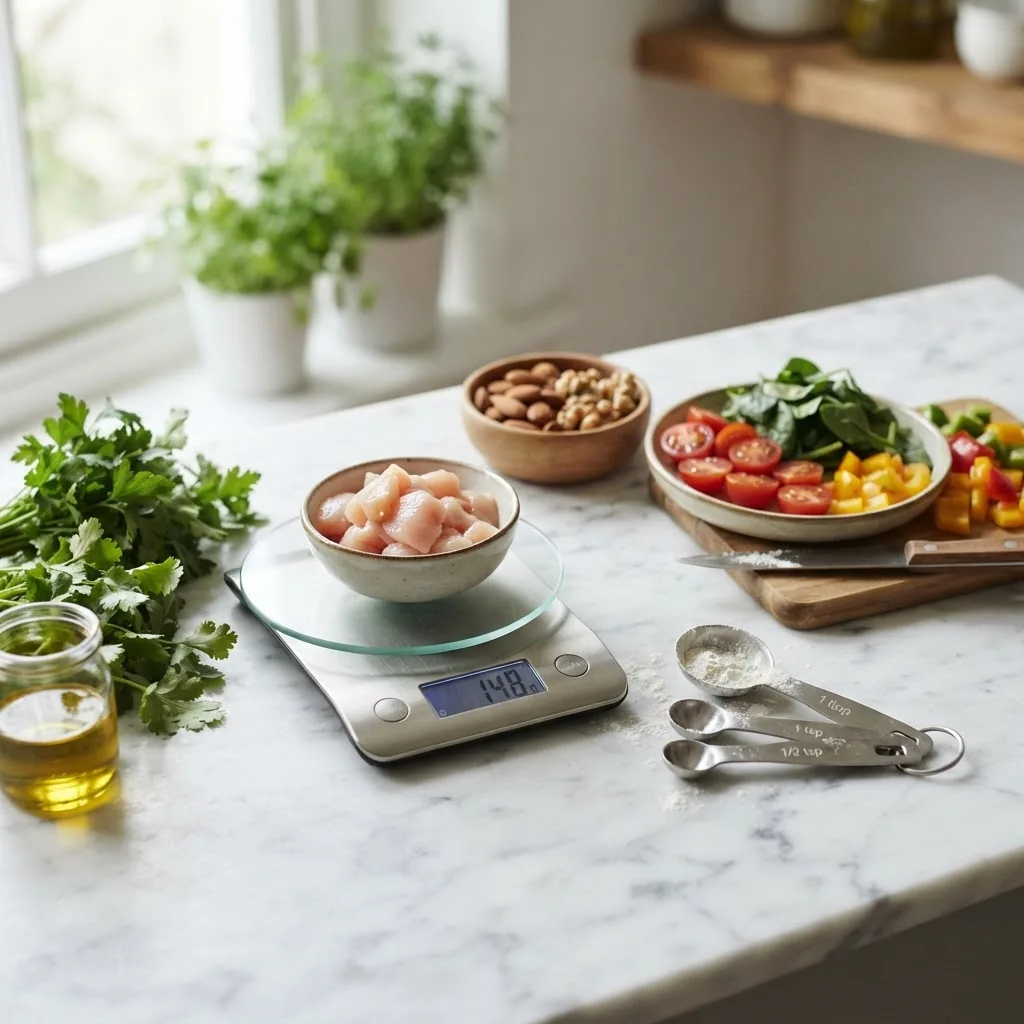
Example target breakdowns (practical templates):
- Protein-focused meal: 35 g protein / 30 g carbs / 13 g fat ≈ 400 kcal (best for post-workout or midday stabilizing).
- Carb-rich meal: 25 g protein / 45 g carbs / 11 g fat ≈ 400 kcal (good for morning meals or active days).
- Lower-carb meal: 30 g protein / 25 g carbs / 17 g fat ≈ 400 kcal (preferred for blood sugar control or low-carb diets).
| Macro Focus | Protein (g) | Carbs (g) | Fat (g) |
|---|---|---|---|
| Protein-focused | 35 | 30 | 13 |
| Balanced | 30 | 35 | 14 |
| Lower-carb | 30 | 25 | 17 |
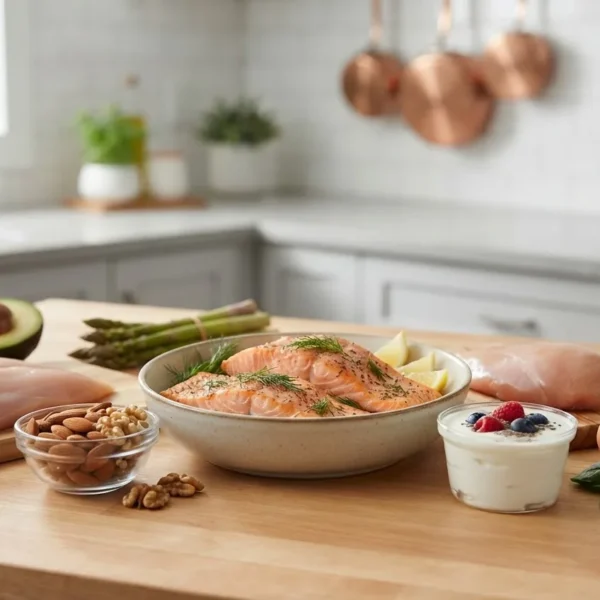
Protein sources: lean chicken breast, turkey, eggs, nonfat Greek yogurt, canned tuna, low-fat cottage cheese, or ¾ cup cooked lentils for plant-based protein. Carbohydrate choices: whole grains (brown rice, quinoa), starchy veg (sweet potato ¾ cup), and fruit. Healthy fats: 1 tsp olive oil (40 kcal), 1 tbsp chopped nuts (~50–60 kcal), or ¼ avocado (~60 kcal).
Fiber and satiety: aim for 6–10 g fiber per meal where possible — 2 cups of non-starchy vegetables + ½ cup beans typically hits this range. Fiber slows digestion and supports fullness; a 2022 peer-reviewed nutrition study found higher meal fiber linked to lower next-meal hunger scores (source type: peer-reviewed study).
Healthy fats and heart health: follow guidance from the American Heart Association emphasizing unsaturated fats; for practical cooking, limit saturated fats and use olive oil sparingly. See the American Heart Association for recommendations (source type: health organization).
Transition: With macro templates and portion examples covered, the next section walks you through scheduling 400 kcal meals through your day for steady energy and hunger management.
Planning Your 400 Calorie Meals Across the Day
Timing and frequency matter. Whether you eat three 400 kcal meals or spread calories across smaller and larger meals, the timing affects hunger, energy, and satiety. This section provides numbered steps and a sample timing schedule you can use immediately.
- Decide your meal frequency — three main meals vs. 2 meals + snacks. Example: 3×400 kcal main meals + 1-2 snacks (100–200 kcal) can fit many weight-management plans.
- Use pre- and post-workout logic — schedule a higher-protein 400 kcal meal within 1–2 hours post-workout for recovery.
- Set a consistent breakfast anchor — eating within 1–2 hours of waking stabilizes appetite; consider a carb + protein 400 kcal breakfast on high-activity days.
- Plan flexible snack windows — if hunger strikes between 3–4 hours, a 100–150 kcal protein-rich snack fills the gap without overshooting daily budget.
Sample day timing schedule (practical):
- 7:30 AM — 400 kcal breakfast (omelet with spinach, 1 slice whole-grain toast, ¾ cup berries)
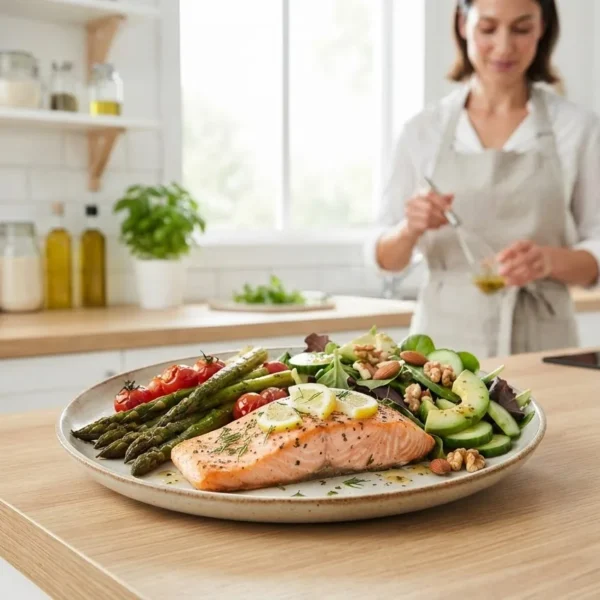
- 12:30 PM — 400 kcal lunch (grilled chicken salad with ½ cup quinoa)
- 4:00 PM — optional 100 kcal snack (1 small apple + 1 tsp nut butter)
- 7:00 PM — 400 kcal dinner (salmon with 1 small sweet potato and steamed green beans)
For additional morning recipes and to vary your first meal, check our healthy breakfast ideas.
Transition: After scheduling, you’ll want practical cooking methods that preserve nutrients and flavor while staying within calorie targets.
Cooking Techniques and Tips for Healthy 400 Calorie Recipes
Cooking methods that reduce added calories while maximizing flavor are essential. Below are actionable how-to steps and practical tips for grilling, roasting, steaming, and smart substitutions.
- Grill lean proteins — preheat grill/pan to medium-high. Grill 4 oz (115 g) chicken breast about 6–7 minutes per side or until 165°F. Use a spray of oil and a nonstick grill pan to limit added fat.
- Roast vegetables — roast at 400°F / 205°C for 20–30 minutes, toss with 1 tsp olive oil per 4 cups veg. Salt lightly after roasting to bring flavor without oversalting.
- Steam or blanch greens — steam for 3–5 minutes to retain nutrients and volume for fullness. Season with lemon and pepper.
- Sauté smart — use a 10–12 inch nonstick skillet, 1 tsp olive oil (~40 kcal) heated to medium, sauté aromatics 30–60 seconds before adding protein or vegetables to prevent sticking.
- Use controlled dressings — pack dressings separately or measure 1 tbsp (15 mL) portions; swap creamy dressings for vinaigrettes made with 1 tsp oil + vinegar + mustard for flavor with fewer calories.
- Avoid added sugars and reduce sodium — choose no-sugar-added canned goods and low-sodium broths; use citrus, herbs and smoked paprika to add perceived saltiness and depth.
To keep costs low while using these techniques, pair them with affordable healthy foods to stretch your budget without sacrificing nutrients.
Transition: Next, you’ll get a long list of concrete, calorie-counted recipes for every meal of the day with exact portions and quick cooking instructions.
Sample 400 Calorie Recipes for Every Meal of the Day
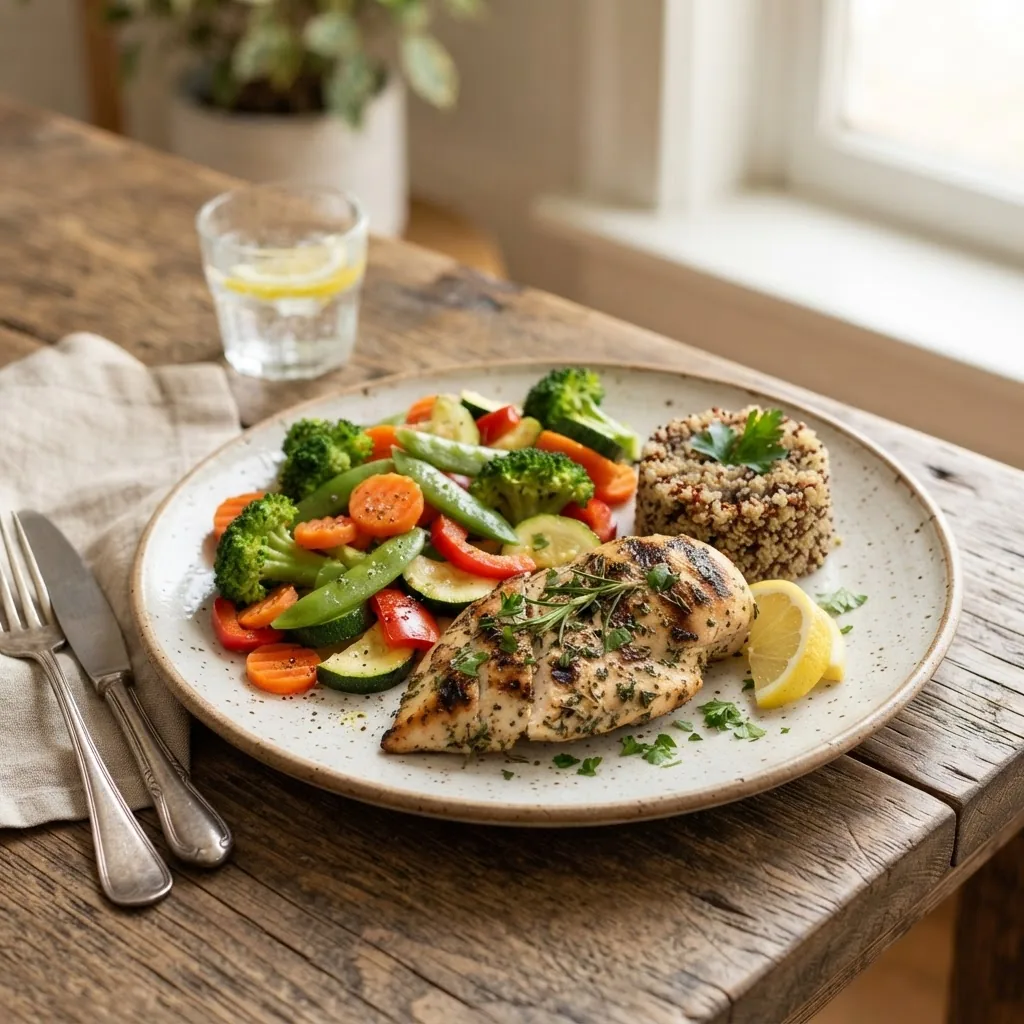
Below are practical recipes with ingredient lists, precise portions, calorie counts, and short cooking steps. Two recipes below include detailed walk-throughs demonstrating tools, measurements, and timing.
Breakfast
-
Spinach & Feta Egg White Omelet — 400 kcal
Ingredients: 6 egg whites (≈200 g) + 1 whole egg, 1 cup fresh spinach (30 g), 1 oz feta (28 g), 1 slice whole-grain toast, ½ cup blueberries.
Calories & portions: egg whites & egg ≈ 110 kcal; feta 80 kcal; toast 80 kcal; fruit 40 kcal; 1 tsp olive oil for cooking 40 kcal — total ≈ 350–360 kcal; add 1 tbsp plain Greek yogurt (~30–40 kcal) to reach ≈400 kcal.
Quick steps: Whisk eggs, cook on medium with 1 tsp oil in nonstick pan for 2–3 minutes per side; add spinach and feta before folding. Serve with toast and berries. -
Greek Yogurt Parfait — 400 kcal
Ingredients: 1 cup nonfat Greek yogurt (150 g), ¼ cup granola (30 g), ½ cup strawberries (75 g), 1 tbsp chia seeds.
Calories: yogurt 120 kcal, granola 130 kcal, strawberries 25 kcal, chia seeds 60 kcal = 335 kcal; add 1 tsp honey (20 kcal) and 1 tbsp chopped almonds (45 kcal) to reach ≈400 kcal.
Quick steps: Layer ingredients in a bowl, measure granola and nuts with spoons or a small scale.
Lunch
-
Grilled Chicken Quinoa Bowl — 400 kcal
Ingredients: 3 oz (85 g) cooked grilled chicken breast, ½ cup cooked quinoa (90 g), 2 cups mixed greens, ½ cup roasted bell pepper, 1 tsp olive oil, 1 tbsp lemon vinaigrette.
Calorie breakdown: chicken 140 kcal; quinoa 110 kcal; veg 40 kcal; olive oil 40 kcal; vinaigrette 70 kcal = ≈400 kcal.
Quick steps: Use leftover grilled chicken, reheat briefly, assemble bowl, measure quinoa with ½ cup scoop. -
Chickpea Salad Wrap — 400 kcal
Ingredients: ¾ cup canned chickpeas (rinsed, 130 g), 1 tbsp light mayo, 1 whole-grain tortilla (40 g), 1 cup spinach, ¼ cup shredded carrots.
Calories: chickpeas 200 kcal; tortilla 120 kcal; light mayo 35 kcal; veg 20–30 kcal = ≈375 kcal; add 1 small apple (55 kcal) if you need 400+ kcal.
Quick steps: Mash chickpeas with mayo and spices, fill tortilla, roll tightly and weigh if tracking exact calories.
Dinner (detailed walkthrough)
Below is a detailed, hands-on walkthrough for a typical dinner so you can replicate the weighing, timing and tools used.
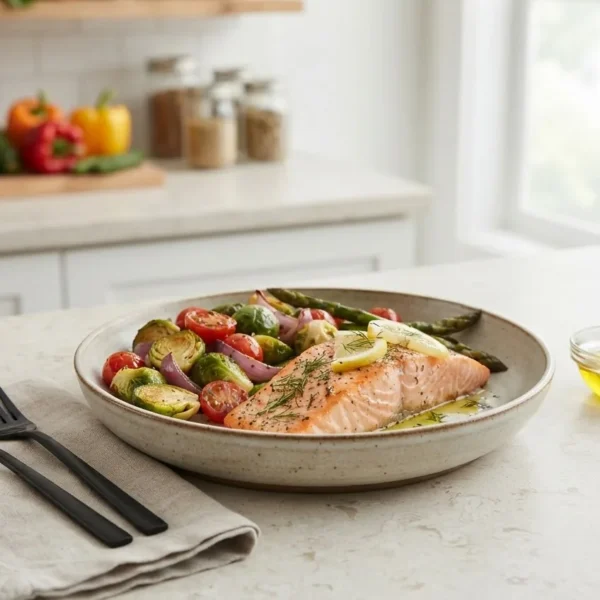
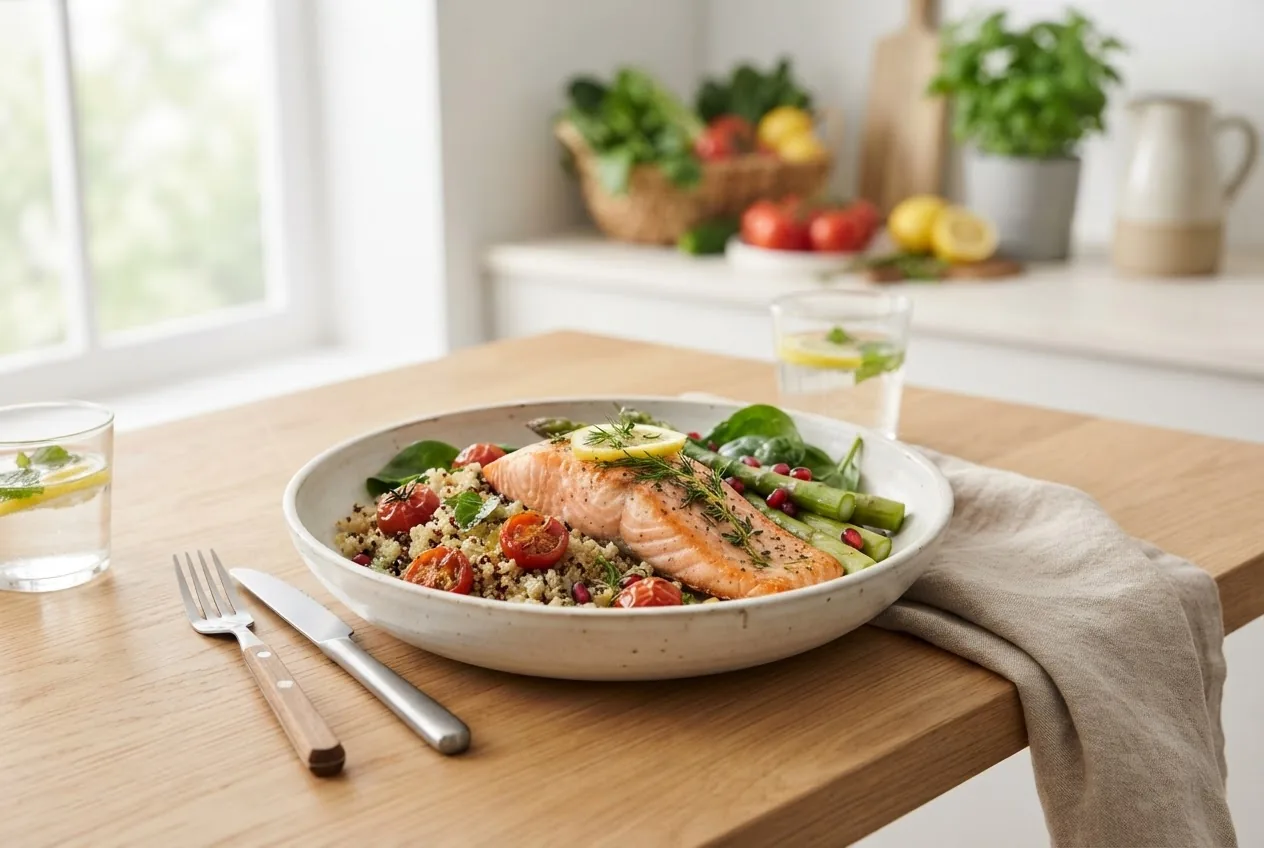
Pan-Seared Salmon with Sweet Potato & Broccoli — detailed prep
Yield: 1 serving ≈ 400 kcal. Tools: digital scale, 10″ nonstick skillet, oven set to 425°F / 220°C, parchment-lined sheet pan, meat thermometer.
Ingredients exactly: 3.5 oz (100 g) salmon fillet (≈206 kcal), ¾ cup roasted sweet potato cubes (≈100 g, 85 kcal), 2 cups broccoli florets (≈150 g, 50 kcal), 1 tsp olive oil (40 kcal), lemon wedge, salt & pepper.
- Preheat oven and prep veg — set oven 425°F, toss sweet potato cubes and broccoli with ½ tsp olive oil, spread on parchment pan, roast 20–25 minutes until fork-tender.
- Sear the salmon — heat skillet to medium-high, pat salmon dry, season, add ½ tsp olive oil, sear 3 minutes skin-side down then 2–3 minutes flip side until internal temp reaches 125–130°F for medium (cook to 145°F if preferred).
- Plate and measure — weigh salmon post-cook to confirm 3.5 oz, portion roasted veg into bowl, squeeze lemon over fish. Total calories ≈400.
This walkthrough showcases tools, exact measurements, and timing so you can reproduce the meal reliably during meal-prep sessions.
For those who need heartier portions, see our 500 calorie meal ideas and 600 calorie dinner options.
Snacks and small meals
- 100–150 kcal: 1 small banana + 1 tbsp peanut butter (measure 16 g).
- 150–200 kcal: ¾ cup low-fat cottage cheese + ½ cup pineapple chunks.
Want to build more chicken-based 400 kcal meals quickly? See our chicken meal prep ideas for batch strategies and flavor variations.
Transition: After seeing these samples, learn how to modify them for special diets without losing balance or flavor.
How to Customize 400 Calorie Meals According to Dietary Preferences and Restrictions
Customization keeps 400 kcal meals practical for diverse diets. Below are modification examples for vegetarian, gluten-free, dairy-free, low-carb, and allergy-aware meals.
- Vegetarian modifications: Replace animal protein with ¾ cup cooked lentils or 1 cup firm tofu (weigh cooked portions). Increase fibrous veg to maintain volume. For more quick vegetarian dinner options see quick vegetarian dinner recipes for two and budget-friendly vegetarian dishes.
- Gluten-free options: Use quinoa, rice, or gluten-free wraps; check labels for sauces. Measure grains to keep calories accurate.
- Dairy-free swaps: Substitute dairy yogurt with unsweetened soy or coconut alternatives (check calories per 100 g). Use nutritional yeast for cheesy flavor.
- Low-carb modifications: Swap ½ cup grains for extra non-starchy veg and increase protein to 30–35 g to preserve satiety.
- Allergy considerations: swap nuts for seeds, use canned fish or chicken for soy/legume allergies, and always read labels on processed ingredients.
For more affordable vegetarian swaps and budget planning, see our budget-friendly vegetarian dishes.
Transition: With customization covered, let’s address common practitioner mistakes and how to avoid them.
Cooking Techniques and Tips for Healthy 400 Calorie Recipes — Quick Reference
Below are concentrated tips drawn from practice to help you avoid common pitfalls and keep each 400 kcal meal nutritious and filling.
- Measure the oil — use measuring spoons; 1 tsp olive oil = 40 kcal. Do not eyeball.
- Pre-cook and cool grains — cook 2 cups dry for week; cool and portion into ½-cup servings (90–100 g cooked) to control carbs precisely.
- Season after cooking — add salt after roasting to avoid over-salting while volumes shrink.
- Use spice blends — keep a jar of chili-lime, garlic-herb, and smoked paprika to vary flavors without adding calories.
Pair these techniques with low-cost staples from our affordable healthy foods guide to reduce grocery costs.
Transition: Before you go cook, read common mistakes observed in practice and how to fix them quickly.
Common mistakes and how to avoid them
I often saw people under-weighing portions because they trusted volume; I now weigh grains and proteins every time to avoid under- or overeating. I also observed people skimp on vegetables; I resolved this by prepping 2–3 types and always adding 2 cups to plates. Finally, I used to over-sauce plates; measuring dressings stopped hidden calories.
Checklist before you call it a meal
- Protein portion weighed (g) and equals planned kcal.
- Carb portion measured (½ cup cooked ≈ 90–100 g) if using grains.
- Vegetables fill at least 1–2 cups for volume and fiber.
- Fats measured (tsp or tbsp) and recorded.
- Meal totals tallied to ~400 kcal (+/− 30 kcal tolerance allowed).
- Meal labeled with date and stored correctly if not eaten within 3 days (refrigerate) or 3 months (freeze).
When to call a professional
Contact a registered dietitian or physician if you have medical conditions (diabetes, kidney disease, pregnancy), significant weight-loss goals exceeding 10% body weight, or if you need a personalized caloric prescription. A professional can tailor macronutrient ratios safely and assess nutrient adequacy.
Closing summary: Use this hands-on guide to consistently produce satisfying 400 calorie meals that balance protein, carbs, fat, and fiber. Start by planning a weekly map, batch-cook bases, weigh portions, and adjust for satiety. When in doubt, consult a registered dietitian for individualized guidance.
Ready to start? Pick three recipes from the Sample Recipes section, batch-cook on Sunday for 90–150 minutes, and label containers by day. Your 400 kcal routine will become faster and more precise by week two.